






kostel svatého Mikuláše v Kladně Church
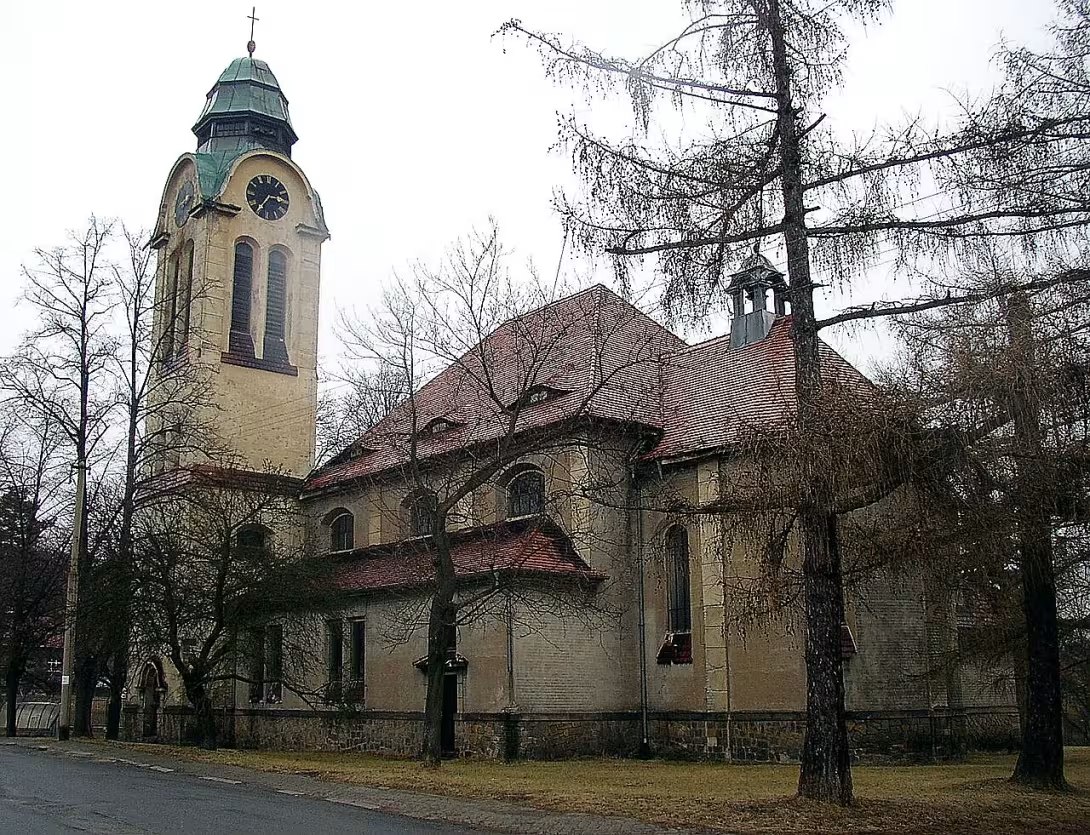
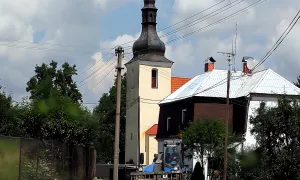
The Church of Saint Nicholas in Kladno is a notable historical monument located in the Švermov district of Hnidousy, within the Central Bohemian Region. Constructed between 1912 and 1913, this filial church dedicated to Saint Nicholas was designed by Anton Möller in the Art Nouveau (Secession) style. It stands as a testament to efforts aimed at revitalizing religious life in nearby mining villages during the early 20th century. The church has been protected as a cultural monument since April 5, 2022.
The origins of the Church of Saint Nicholas are rooted in the declining religious activity observed in the mining villages of Hnidousy and Motyčín at the start of the 20th century. In response to this decline, Archbishop Lev Skrbenský z Hříště initiated discussions with the Society of Saint Boniface in 1909 to establish a church in Motyčín. However, due to local resistance, the decision was made to build the church in Hnidousy instead. The project received financial support from the Ministry of Culture and Education in Vienna after the Society of Saint Boniface sought a subsidy of 35,000 crowns, as they could not gather the full estimated cost of 70,000 crowns independently. The Břevnov Monastery generously donated land for the construction.
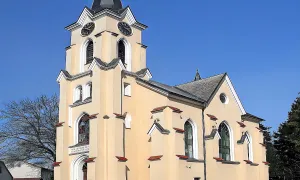
Architecturally, the Church of Saint Nicholas is characterized by its rectangular floor plan with an apse that concludes in a semicircle to the south. It features a sacristy and oratory attached to the eastern side, while a lower annex extends along the western wall. The church's distinctive western facade is dominated by a spire located at the northwestern corner. Constructed primarily from rendered brick, the building includes decorative elements such as shallow pilasters and imitation ashlar work. The entrance features three-arched doors set in a shallow portico, with a large thermal window above, framed by robust half-round arches supported by pilasters with cornice capitals. Boasting a flat ceiling in the nave and segmental vaulting in the apse, the church's design reflects the Art Nouveau style prevalent during its construction.
The church was completed and officially opened in 1913, with its consecration taking place on June 15, 1915, by dean Ferdinand Kučera. Although plans initially included a parish house near the church, this component of the project was never realized. Instead, the local community eventually built a parish house in 1926 on land originally designated for it.
Today, the Church of Saint Nicholas stands as an accessible cultural monument that offers visitors insight into early 20th-century religious and architectural history. Its preservation highlights its significance within the region's historical narrative. Visitors are encouraged to explore this site to appreciate its unique Art Nouveau architecture and understand its role in revitalizing faith during a period of social change.
Then and now
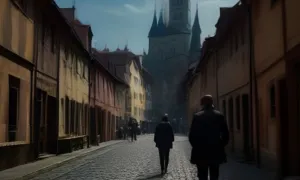
Drag the slider to compare how the landmark may have looked when it was built with the view today.
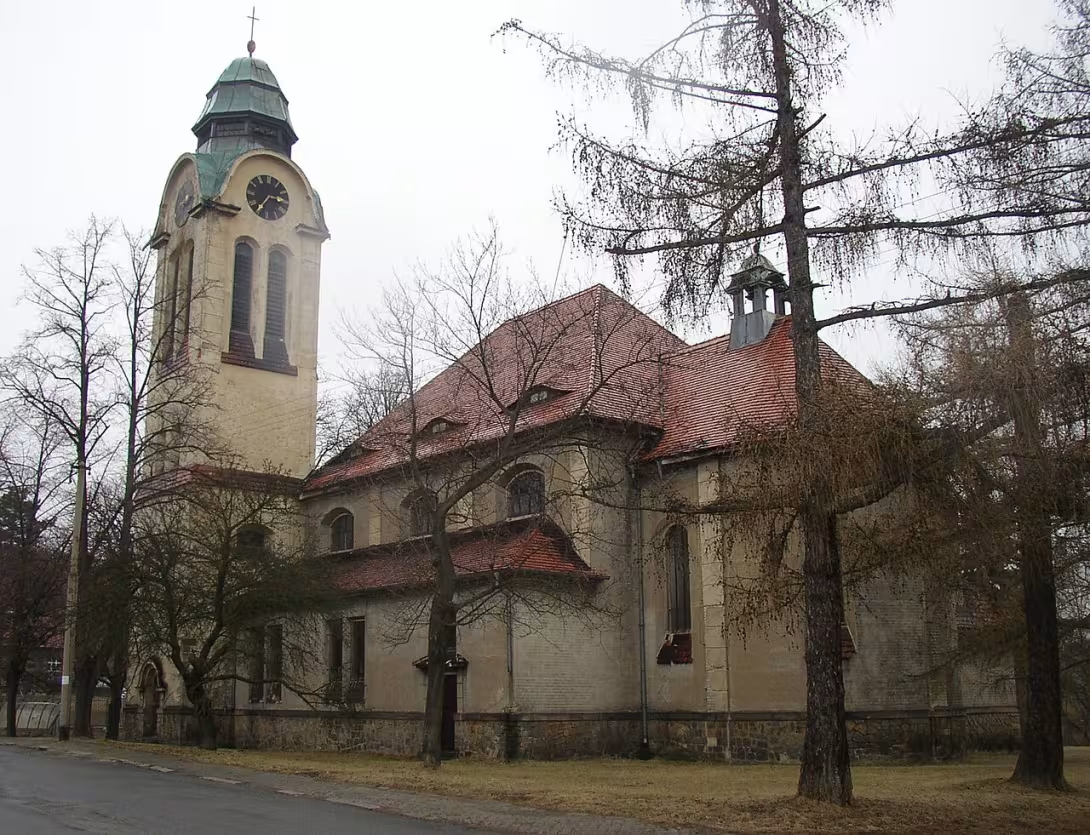
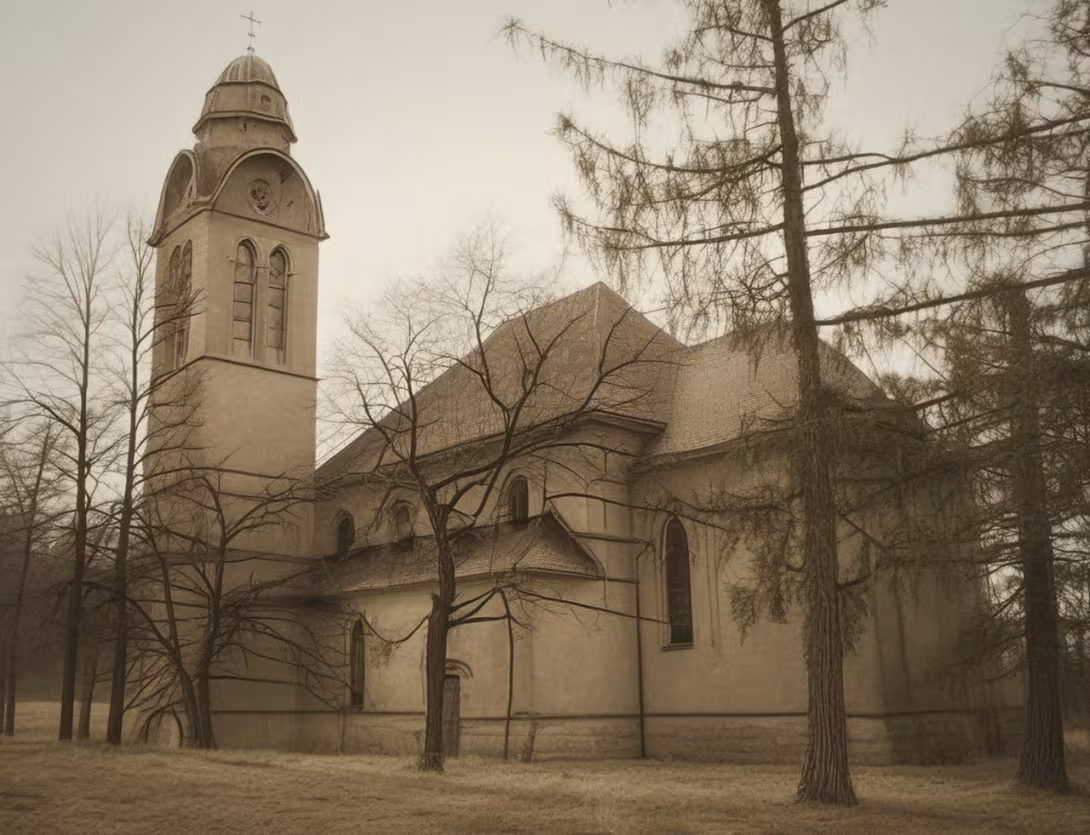
The historical appearance on the left is an AI-generated visualisation and serves as inspiration only.
Historical milestones
- 1913
- The church was completed and officially opened.
- 1915
- The church was consecrated by dean Ferdinand Kučera.
Architectural development
Designed by Anton Möller, the Church of Saint Nicholas features a rectangular floor plan with an apse and is oriented to the south. It includes a sacristy and oratory attached to the east side, while a lower annex extends along the west wall. The church's distinctive western facade is dominated by a spire in the northwestern corner. Constructed primarily from rendered brick, it features decorative elements such as shallow pilasters and imitation ashlar work.
Historical events
In 1909, Archbishop Lev Skrbenský z Hříště initiated discussions with the Society of Saint Boniface to establish a church in Motyčín due to declining religious activity. However, the church was ultimately built in Hnidousy.
The church was consecrated on June 15, 1915, by dean Ferdinand Kučera.
Points of interest
- The Church of Saint Nicholas was initially planned to be built in Motyčín but faced local opposition, leading to its construction in Hnidousy instead. This shift highlights the community's influence on architectural projects during that era.
- Despite receiving financial support from the Ministry of Culture and Education in Vienna, the Society of Saint Boniface could only secure half of the estimated 70,000 crowns needed for the church’s construction, showcasing early 20th-century challenges in funding religious buildings.
- The original plan included a parish house adjacent to the church, but this was never built. Instead, a parish house was constructed in 1926 on the designated land, reflecting changes in community priorities or financial capabilities over time.
- Architect Anton Möller designed the church in the Art Nouveau style, characterized by shallow pilasters and imitation ashlar work, which were innovative decorative techniques during its construction period around 1912-1913.
- The church’s consecration took place two years after its completion, on June 15, 1915, by dean Ferdinand Kučera. This delay between completion and consecration was not uncommon in that era due to various logistical or ceremonial reasons.
Guide
This guide is narrated by a synthetic voice generated by artificial intelligence.
Show guide text
This text was created by artificial intelligence and has not been editorially reviewed. It may contain inaccuracies.
Welcome to the Church of Saint Nicholas in Kladno's Švermov district—a captivating piece of architectural history that whispers tales from a bygone era. As you stand before this serene structure, take a moment to absorb its presence: the harmonious lines and elegant forms characteristic of the Art Nouveau style beckon your attention.
The story of this church begins in the early 20th century, a time when religious life was waning in nearby mining villages. Conceived by Anton Möller between 1912 and 1913, the Church of Saint Nicholas emerged as part of an effort to rejuvenate spiritual engagement in these communities. Its completion marked not just an architectural achievement but also a cultural milestone for Hnidousy.
As you gaze upon the church's exterior, notice how its Art Nouveau design seamlessly blends with the natural surroundings. The flowing lines and intricate details invite contemplation, reflecting Möller’s vision of beauty and spirituality intertwined. Although specific visual elements aren't detailed here, let your imagination wander across the façade, appreciating the craftsmanship that defines this period.
The church's history is rich with narratives, including its initial plan to be built in Motyčín—a decision thwarted by local opposition. This shift underscores the community’s significant influence on architectural endeavors of the time. It was finally consecrated in 1915 by Dean Ferdinand Kučera, adding a layer of spiritual significance to its history.
One intriguing aspect is the church's financial backing from the Ministry, which highlights the broader support for such cultural projects during that era—a testament to their perceived importance beyond mere architectural beauty.
As you continue your journey around this historic site, let yourself be drawn into its story. Explore every corner with curiosity and appreciation for the craftsmanship and community spirit it embodies.
We invite you to delve deeper into the church's history and architecture as you explore further. Thank you for joining us on this enriching experience at the Church of Saint Nicholas in Švermov.
Tips for visitors
The best time to visit the Church of Saint Nicholas in Kladno is during late spring or early autumn, when the weather is pleasant for walking around the area. These seasons offer mild temperatures and beautiful natural scenery, making it ideal for exploring both the church and its surroundings. Additionally, visiting outside of peak summer months can provide a more serene experience with fewer crowds.
The church’s location in the Švermov district of Hnidousy is well-connected, making it easy for visitors to reach.
When planning your visit, consider bringing comfortable walking shoes and weather-appropriate clothing, as you may want to explore the surrounding historical sites and natural features within a 5 km radius. A camera or smartphone with a good camera can be useful for capturing the architectural beauty of the church and its picturesque surroundings. Additionally, carrying a water bottle and some snacks is advisable if you plan on spending several hours exploring.
For photography enthusiasts, the best spots around the Church of Saint Nicholas are during the golden hour—shortly after sunrise or before sunset—when the light casts a warm glow over the church’s architecture. The natural landscape around the area also provides excellent backdrops for capturing stunning images. Be mindful of any restrictions on photography inside the church itself.
In terms of nearby attractions within a 30-minute drive, visitors can explore other historical sites in the region that highlight its mining village heritage. These include various landmarks and natural features that offer insight into the area's rich history. For families with children, these sites often provide educational opportunities as well as leisure activities suitable for all ages.
Frequently asked questions
Can the monument be visited?
Religious buildings are usually open mainly during services; at other times a visit is normally arranged with the parish or the operator. We have not verified specific times.
Where is the monument?
Location: Švermov, Středočeský kraj. The map on this page shows the exact spot.
Why is the monument protected?
It is listed in the Central List of Cultural Monuments of the Czech Republic as a cultural monument (register no. 106891).
Businesses nearby
Do you run a restaurant, accommodation, shop, museum, rental, wellness or other visitor service near this monument? Show yourself directly to the people heading to it — this is how they will see you in the app and on the web:
Nearby
Situated in the Švermov district of Hnidousy, the Church of Saint Nicholas is near other historical sites and natural features within a 5 km radius. The area was historically significant due to its mining villages.
Accommodation nearby
Trips and activities nearby
Guided tours, tickets and activities nearby from GetYourGuide
Affiliate link: if you buy from the partner, we may receive a commission. The price for you does not change.
Search tours and activities →Themed route
Thematic Tour Route: Church of Saint Nicholas and Surrounding Historical Sites
1. Church of Saint Nicholas, Švermov - Type: Religious Site - Why Visit: The Church of Saint Nicholas is a central historical landmark in the Švermov district, renowned for its architectural beauty and significance within the mining villages of the region. Visitors can explore the church's intricate design and learn about its role in local history.
2. Historical Mining Villages - Type: Cultural Heritage - Why Visit: Within a 5 km radius of the Church of Saint Nicholas, the historical mining villages offer a glimpse into the area's rich industrial past. These sites provide insight into the lives and work of miners who shaped the region’s development.
3. Local Historical Monuments - Type: Cultural Landmarks - Why Visit: Scattered around Švermov are various monuments that commemorate significant historical events and figures associated with the mining industry. These landmarks serve as a testament to the community's resilience and heritage, offering educational value for history enthusiasts.
This route offers an immersive experience into the cultural and historical fabric of the Švermov area, highlighting its unique past through religious architecture and industrial legacy.
Seasonal recommendations
Spring: Visiting the Church of Saint Nicholas in Kladno during spring offers a unique experience as nature awakens around this historic site. The surrounding landscapes are adorned with blooming flowers and fresh greenery, creating a picturesque setting that enhances the church's architectural beauty. The soft spring light adds a gentle glow to the stonework, making it an ideal time for photography enthusiasts. However, be prepared for occasional rain showers; wearing waterproof shoes or carrying an umbrella is advisable. This season tends to attract fewer visitors compared to summer, allowing for a more peaceful exploration of the church's interior and its serene atmosphere.
Summer: The summer months bring vibrant energy to the Church of Saint Nicholas in Kladno, with long daylight hours perfect for exploring both the church and its surroundings. During this peak tourist season, it’s best to arrive early in the morning or later in the afternoon to avoid crowds. Lightweight clothing is recommended due to warmer temperatures, but comfortable walking shoes are essential as you explore the area. The lush greenery of summer provides a stunning backdrop, making outdoor visits particularly enjoyable. Don’t forget your sunscreen and water bottle to stay hydrated while soaking up the sun.
Autumn: Autumn at the Church of Saint Nicholas in Kladno is characterized by its warm colors and crisp air. The changing foliage around the church creates a breathtaking scene, with vibrant reds, oranges, and yellows that beautifully complement the historic architecture. This season offers a more tranquil experience as visitor numbers dwindle compared to summer. Layered clothing is advisable due to cooler temperatures, especially in the evenings when it can get quite chilly. The softer autumn light provides a cozy atmosphere, perfect for leisurely strolls around the church and enjoying the natural beauty of the Středočeský region.
Winter: Winter transforms the Church of Saint Nicholas into a serene and enchanting destination. Snow-covered landscapes create a magical setting that enhances the historic charm of the site. The shorter daylight hours mean visiting earlier in the day is ideal to make the most of your time, while also ensuring you capture the church's beauty under winter lighting conditions. Be sure to dress warmly with layers, including a hat and gloves, as temperatures can be quite cold. While some events or services may have adjusted schedules due to shorter days, the quietness of this season offers a peaceful opportunity for reflection and appreciation of the church’s architecture against the stark yet beautiful winter backdrop.
Visualizations and artistic views


The visualisations are generated by artificial intelligence and serve as inspiration.
Photos from the area
Real photos taken near the monument


Zdroj a licence jsou uvedeny u každého snímku.
Tips from visitors
No tips yet. Be the first!
Log in and add your tip.
Sources and literature
Photos: Miaow Miaow / Public domain — Wikimedia Commons. The author and licence also appear when you hover over the image.
Faktickým podkladem tohoto textu byl článek na Wikipedii, jehož autory jsou přispěvatelé Wikipedie. Článek je dostupný pod licencí CC BY-SA 4.0.
Location on the map
Příběhy a pověsti
Legendy, pověsti a příběhy spjaté s touto památkou
Fotografie návštěvníků
Zatím žádné fotografie. Buďte první, kdo přidá fotografii z návštěvy!
Log in a přidejte svou fotografii nebo hodnoťte.
Za ověřenou návštěvu v aplikaci získáte víc bodů — poznáme podle GPS, že jste na místě.
Reviews and comments