



kostel svatého Mikuláše v Praze-Vršovicích Church
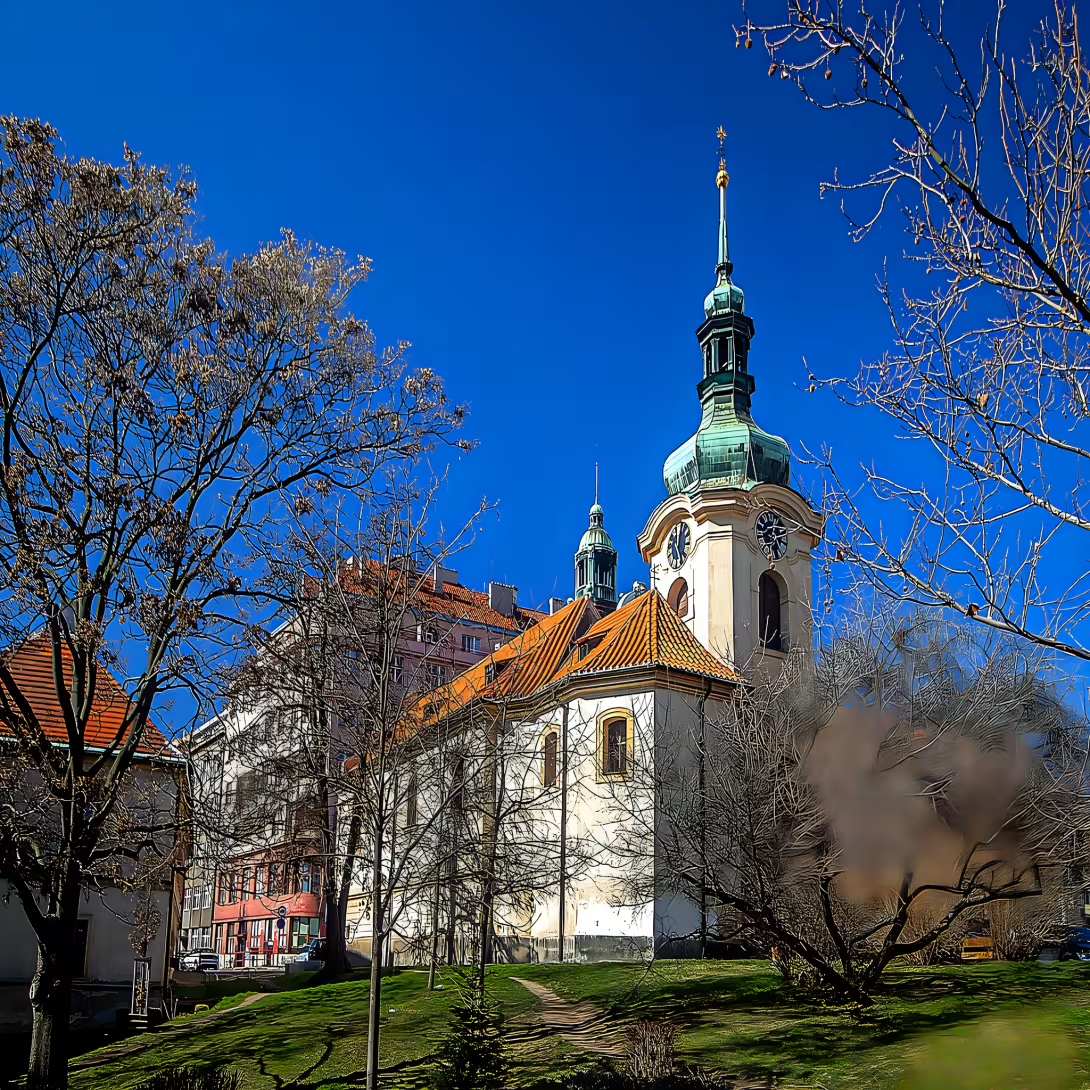
The Church of Saint Nicholas in Prague-Vršovice is a Roman Catholic parish church located at the northwest corner of Vršovické Square. Constructed in 1704, it is one of the oldest architectural monuments in both Vršovice and the broader Praha 10 district. This baroque structure replaced an earlier sacred site of Romanesque origin, likely a chapel dedicated to Saint Mary Magdalene. The church features a single-nave design with a closed presbytery and tower.
Its origins trace back to at least the 11th century when the first Christian church dedicated to Mary Magdalene was established on this site. By 1422, it had been elevated to a parish church and rededicated to Saint Nicholas. The original Romanesque chapel from 1028 underwent several transformations; by 1374, it had expanded into a Gothic structure. Following damage during the Hussite Wars, restoration efforts post-Thirty Years' War between 1668 and 1677 set the stage for the current baroque design completed in 1704.
Architecturally, the Church of Saint Nicholas is distinguished by its single-nave layout with a closed presbytery and tower. The building features baroque elements, including four large windows on the church's tower. A unique clock on the western side of the tower displays both time and lunar phases, adding to its artistic allure. In the 1890s, Bohumil Holeček expanded the façade to accommodate a growing population, adding an onion dome and a towering structure rising from the presbytery.
Throughout its history, the Church of Saint Nicholas has seen various changes under different administrations. Notably, during the early 18th century, when it was constructed in its current form, Bohemia was part of the Habsburg Monarchy—a period marked by significant baroque architectural developments influenced by the Counter-Reformation. The church's organ confessionals from the 19th century remain intact today. In a dramatic wartime event, one of the two bells was confiscated during World War II; however, the remaining large bell, dating back to 1511 and crafted by Bartoloměj of Prague, still resonates with history.
Several key events have marked the church's timeline. The first documented mention dates back to June 25, 1328. In 1422, it was elevated to a parish church dedicated to Saint Nicholas. A statue of the priest St. John of Nepomuk adorns the north wall, commemorating his martyrdom in 1393 at the behest of Wenceslaus IV of Bohemia for refusing to divulge confessional secrets. The church underwent renovations in 1973 and faced a theft in 1988 when an icon of Saint Nicholas was stolen; it was replaced in 2001.
Today, the Church of Saint Nicholas remains accessible to visitors as part of the European Heritage Days initiative since September 2012. Its historical significance, architectural beauty, and rich history make it a worthwhile destination for those interested in exploring Prague's cultural heritage. Visitors are invited to experience this remarkable monument, which stands as a testament to centuries of religious devotion and architectural evolution.
Then and now
Drag the slider to compare how the landmark may have looked when it was built with the view today.
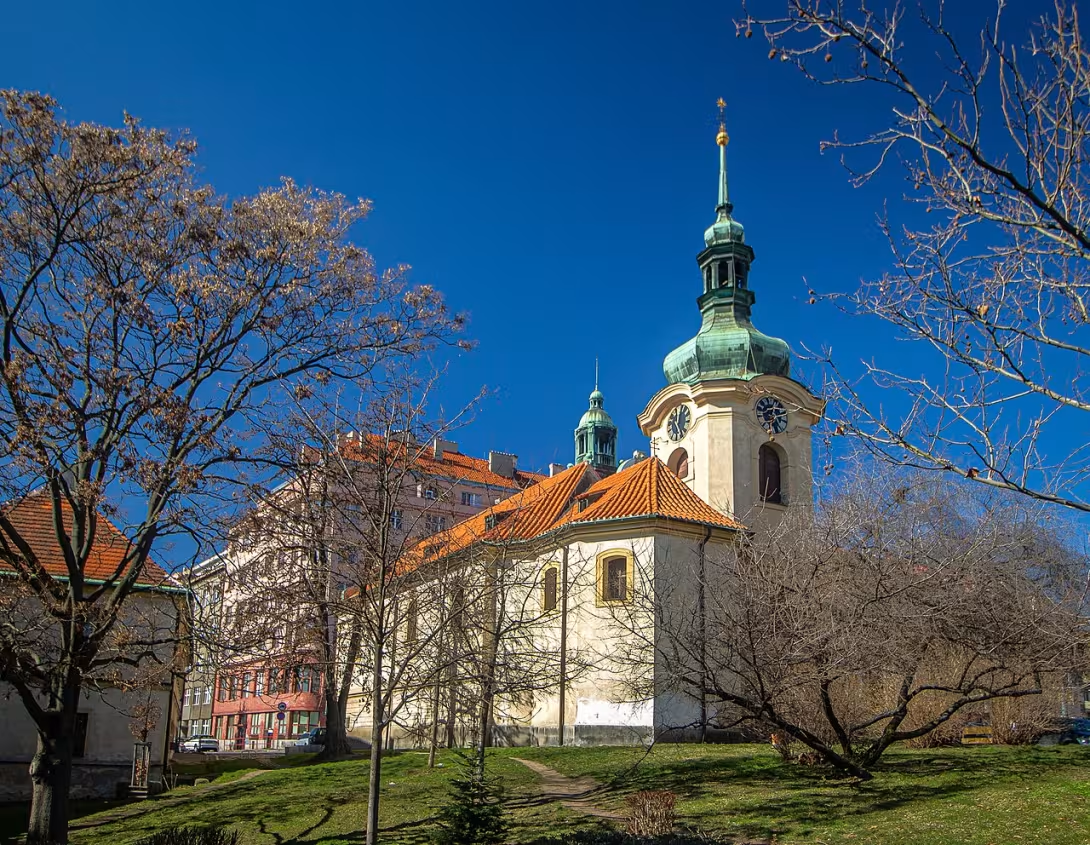
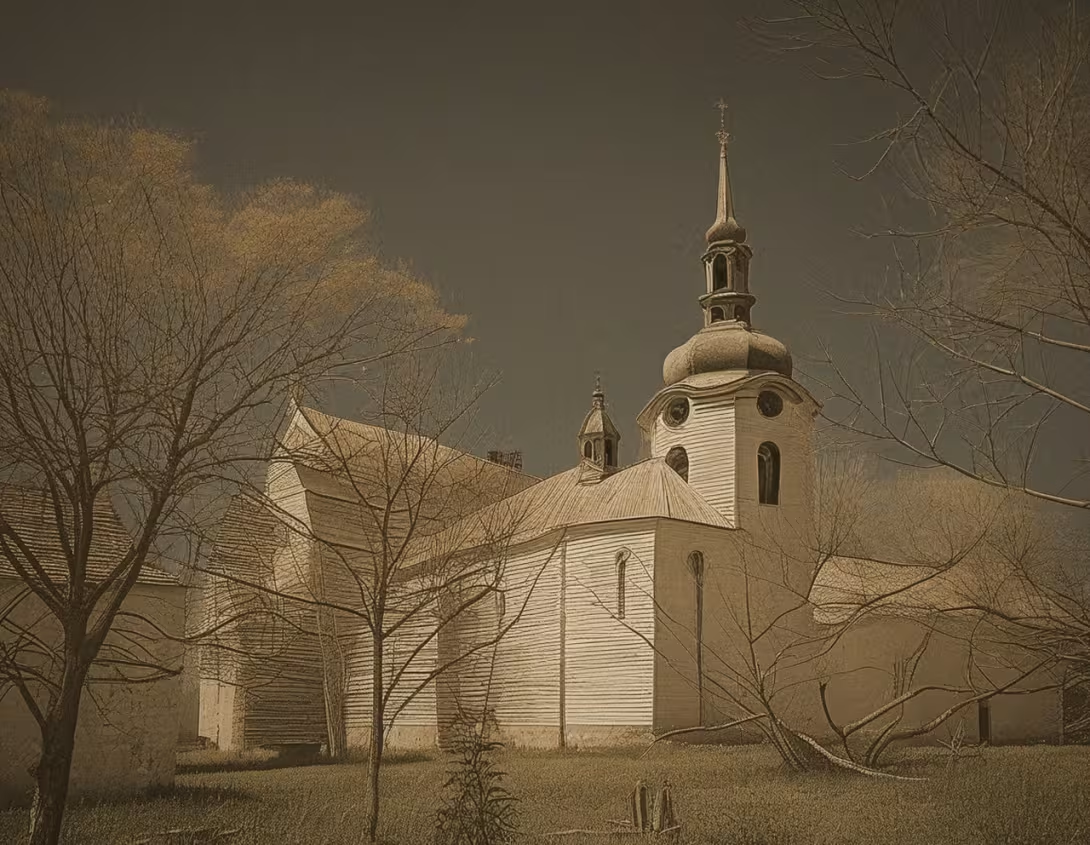
The historical appearance on the left is an AI-generated visualisation and serves as inspiration only.
Historical milestones
- 1028
- Founding of the original Romanesque chapel.
- 1374
- Transformation into a Gothic church.
- 1422
- Elevation to parish church, renamed St. Nicholas.
- 1668
- Begins reconstruction after the Thirty Years' War.
- 1704
- Construction of the current Baroque church completed.
Architectural development
Originally built on the site of a Romanesque chapel from 1028, the church underwent significant transformations. By 1374, it had been extended and converted into a Gothic structure. After being damaged during the Hussite Wars, it was restored post-Thirty Years' War between 1668 and 1677. The current baroque form dates to 1704.
Historical events
The first documented mention of the Church of Saint Nicholas in Vršovice dates back to June 25, 1328.
In 1422, the church was elevated to a parish church and dedicated to Saint Nicholas.
Points of interest
- The Church of Saint Nicholas originally featured a chapel dedicated to Saint Mary Magdalene before being rededicated to Saint Nicholas in 1422, reflecting the evolving religious focus over centuries.
- A unique feature of the church is its clock on the western side of the tower, which displays both time and lunar phases, showcasing an interesting blend of functionality and artistic design from the baroque period.
- During World War II, one of the church's two bells was confiscated by occupying forces, leaving behind a large bell dating back to 1511, crafted by Bartoloměj of Prague, as a solitary historical artifact that continues to resonate with history.
- The church houses an organ confessional from the 19th century, which is still intact today, offering insight into the religious practices and architectural details of that era.
- In 1988, the church experienced a theft where an icon of Saint Nicholas was stolen; this loss was later remedied in 2001 when the icon was replaced, highlighting ongoing efforts to preserve its cultural heritage.
Guide
This guide is narrated by a synthetic voice generated by artificial intelligence.
Show guide text
This text was created by artificial intelligence and has not been editorially reviewed. It may contain inaccuracies.
The Church of Saint Nicholas is a Roman Catholic parish church in Vršovice. It stands in the northwest corner of Vršovické náměstí, near Moskevská street. It is a single-nave Baroque building with a presbytery closed off in a three-sided shape and a tower, dated to the year 1704. It is one of the oldest architectural monuments of Vršovice and of all of Prague 10.
On its site there stood a Romanesque chapel, dedicated according to records from 1028 to Saint Mary Magdalene. It was small, barely five meters wide inside and five and a half meters long. A large stone table served as the altar. In 1374 it was extended and rebuilt as a Gothic church. Its dedication to Saint Nicholas is documented in 1422, when it became a parish church. However, the very first mention of the Church of Saint Nicholas in Vršovice comes from June 25, 1328. At that time, a Prague burgher named Albert Štuk sold the Vršovice manor together with the patronage rights to the church to the order of German knights. The Vršovice parish at that time extended all the way to the walls of the New Town of Prague.
During the Hussite wars, the church burned down and was restored only after the Thirty Years' War, between 1668 and 1677. Its tower is almost 28 meters high, has a distinctly Baroque character, and four large windows. It is crowned by a massive octagonal onion dome with a lantern and an apple finial. Besides the main altar, there were three side altars here: of the Virgin Mary of Sorrows, of Saint Anne, and of Saint John of Nepomuk. Next to the church lay a cemetery. It was closed in 1864 and burials began at the new cemetery at today's Svatopluka Čecha square.
In the same year, the church underwent a major interior renovation under the supervision of Father Urban. A new doorway to the old cemetery was then broken through from the sacristy. Until then, the church had been entered only through doors in the facade. On September 30, 1866, the parish acquired tower clocks with four dials. The one on the west side shows not only the time but also the phases of the Moon. The clock was made by the clockmaker Jan Prokeš from Sobotka and cost 600 gold crowns.
In 1879, Father Šebánek had the old main altar and large cross removed. The original painting of Saint Nicholas was repainted and placed on a new altar by sculptor František Hedielberg. The altar of Saint John of Nepomuk disappeared due to lack of space. A park then arose on the site of the old cemetery next to the church. The church underwent a fundamental transformation in 1896.
Tips for visitors
The best time to visit the Church of Saint Nicholas in Prague-Vršovice is during late spring or early autumn when the weather is pleasant, allowing for a comfortable stroll around Vršovické Square and its surroundings. Visiting on weekdays can help you avoid larger crowds typically seen on weekends. The natural light during these seasons enhances the architectural beauty of the church, making it an ideal time for photography enthusiasts.
Public transportation is recommended as a convenient alternative.
When visiting the Church of Saint Nicholas, consider bringing comfortable walking shoes if you plan on exploring nearby areas. A camera is recommended for capturing the church’s architectural details and the vibrant atmosphere of Vršovické Square. Additionally, carrying a light jacket might be useful as temperatures can vary throughout the day.
For photography enthusiasts, the best spots to capture the Church of Saint Nicholas are from outside its northwest corner or across Vršovické Square where natural lighting accentuates its features in the late afternoon. The church’s facade and interior details make for stunning photographs, especially during golden hour when the light is softer.
Nearby attractions within a 30-minute walk include the historic Vršovice Cemetery, known for its unique tombstones and serene atmosphere, making it an interesting site to explore after visiting the church. For families with children, consider planning a visit to nearby parks or playgrounds where kids can enjoy some outdoor activities while adults appreciate the local history and architecture.
Frequently asked questions
Can the monument be visited?
Religious buildings are usually open mainly during services; at other times a visit is normally arranged with the parish or the operator. We have not verified specific times.
Where is the monument?
Location: Vršovické náměstí, Vršovice, Praha, Hlavní město Praha. The map on this page shows the exact spot.
Why is the monument protected?
It is listed in the Central List of Cultural Monuments of the Czech Republic as a cultural monument (register no. 40767/1-1672).
Businesses nearby
Do you run a restaurant, accommodation, shop, museum, rental, wellness or other visitor service near this monument? Show yourself directly to the people heading to it — this is how they will see you in the app and on the web:
Events nearby

Zdroj akcí: otevřená data měst a obcí ČR (Národní katalog otevřených dat) a kalendář akcí Národního památkového ústavu.
Accommodation nearby
Trips and activities nearby
Guided tours, tickets and activities nearby from GetYourGuide
Affiliate link: if you buy from the partner, we may receive a commission. The price for you does not change.
Search tours and activities →Themed route
Tematická výletní trasa: Kostel svatého Mikuláše a jeho okolí
1. Kostel svatého Mikuláše
Typ: Religiozní památka
Proč stojí za návštěvu: Tento barokní kostel, postavený v roce 1737, je nejen architektonickou perli Prahy-Vršovic, ale také důležitým kulturním centrem pro místní obyvatele. Jeho krásná interiér a historie ho činí ideálním začátkem nebo koncem vaší výletu.
2. Náměstí Vršovice
Typ: Náměstí, veřejné prostranství
Proč stojí za návštěvu: Toto centrální náměstí je srdcem obce Vršovice a nabízí klidnou atmosféru idealní pro krátký odpolední oddech. Je to také místo, kde se můžete podívat na každodenní život místních a uvolnit si po návštěvě kostela.
3. Vršovický hřbitov
Typ: Hřbitov
Proč stojí za návštěvu: Tento historicky významný hřbitov je domovem mnoha památných hrobů a soch. Je to místo, kde se mohou cestovatelé dozvědět více o dějinách obce a jejích význačných osobnostech.
4. Kostel svatého Mikuláše (Vnitřní prostory)
Typ: Religiozní památka, expozice
Proč stojí za návštěvu: Pokud máte zájem o hlubší pochopení kostela svatého Mikuláše, doporučujeme prozkoumat jeho vnitřní prostory. Výstavy a umělecká díla v kostele nabízejí bohatý vhled do jeho historie a kulturního významu.
5. Kostel svatého Mikuláše (Věž)
Typ: Věž, panoramický pohled
Proč stojí za návštěvu: Návštěva věže nabízí jedinečný pohled na obec Vršovice a okolní krajinu. Je to nejen ideální místo pro fotografie, ale také pro tichou meditaci při pozorování městského panoramatu.
Tato trasa vám umožní hluboce se ponořit do historie a kultury obce Vršovice, s důrazem na její nejvýznamnější památku - kostel svatého Mikuláše.
Seasonal recommendations
Spring: Visiting the Church of St. Nicholas in Vršovice during spring offers a unique experience as nature awakens around this historic site. The blooming flowers and budding trees create a picturesque backdrop, enhancing the church's architectural beauty with soft natural light filtering through stained glass windows. This season is ideal for photography enthusiasts who wish to capture vibrant colors against the Gothic structure. Spring can bring unpredictable weather, so it’s wise to dress in layers. Early mornings are often quieter, allowing visitors to enjoy the serene atmosphere before larger crowds arrive.
Summer: Summer at St. Nicholas Church provides a lively and warm ambiance, perfect for those looking to explore Prague's historic sites during daylight hours. The longer days mean extended visiting times, but it’s advisable to arrive early in the morning or later in the afternoon to avoid the peak tourist rush. The lush greenery surrounding the church is in full bloom, creating an inviting atmosphere for leisurely strolls. Comfortable walking shoes and light clothing are recommended due to the warm weather, and carrying water is essential during summer visits.
Autumn: Autumn brings a magical transformation to the Church of St. Nicholas with its rich palette of golden and crimson hues adorning the surrounding landscape. The cooler temperatures make for pleasant exploration, as visitors can enjoy the crisp air and softer light that accentuates the church's intricate details. This is an excellent time for photography, capturing the contrast between nature’s fall colors and the historic architecture. It’s a good idea to wear slightly warmer clothing, as evenings can be chilly. The atmosphere tends to be quieter compared to summer, offering a more peaceful experience.
Winter: Winter at St. Nicholas Church offers a serene and enchanting setting with snow often blanketing the grounds, adding a touch of fairy-tale charm to this historic site. The shorter days mean earlier closures, so planning your visit for midday is ideal when lighting conditions are best for photography. The church’s Gothic features stand out starkly against the white landscape, creating unique visual opportunities. Visitors should dress warmly in layers and wear comfortable footwear suitable for potentially icy paths.
Visualizations and artistic views


The visualisations are generated by artificial intelligence and serve as inspiration.
Photos from the area
Real photos taken near the monument

Zdroj a licence jsou uvedeny u každého snímku.
Tips from visitors
No tips yet. Be the first!
Log in and add your tip.
Sources and literature
Photos: VitVit / CC BY-SA 4.0, rozlišení zvýšeno umělou inteligencí — Wikimedia Commons. The author and licence also appear when you hover over the image.
Faktickým podkladem tohoto textu byl článek na Wikipedii, jehož autory jsou přispěvatelé Wikipedie. Článek je dostupný pod licencí CC BY-SA 4.0.
Location on the map
Příběhy a pověsti
Legendy, pověsti a příběhy spjaté s touto památkou

Fotografie návštěvníků
Zatím žádné fotografie. Buďte první, kdo přidá fotografii z návštěvy!
Log in a přidejte svou fotografii nebo hodnoťte.
Za ověřenou návštěvu v aplikaci získáte víc bodů — poznáme podle GPS, že jste na místě.
Reviews and comments