






Kostel svatého Petra a Pavla (Horka) Church
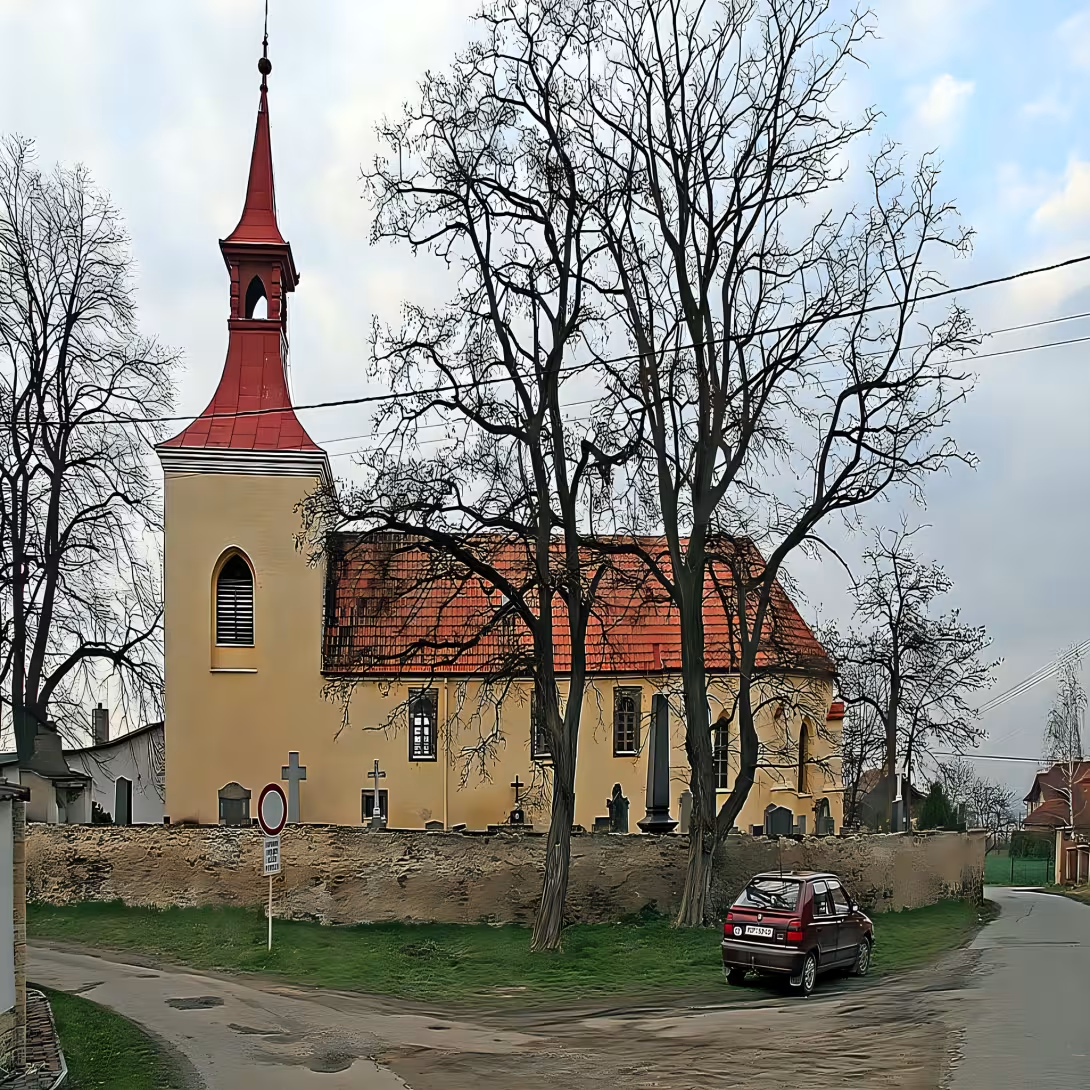
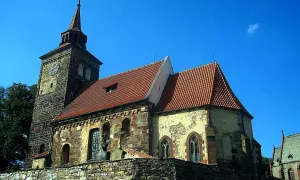
The Church of Saint Peter and Paul in Horka is a remarkable historical monument located in the village of Horka, within the Kolín District of the Central Bohemian Region. Originally constructed as a Romanesque church in the mid-13th century, it has undergone significant architectural transformations over the centuries, including Gothic and Renaissance modifications. This site stands out not only for its rich history but also because it is protected as a cultural monument.
The origins of this church trace back to the mid-13th century when it was initially built in the Romanesque style. During this period, Bohemia was part of the Holy Roman Empire under King Wenceslaus I, experiencing significant architectural development with many churches being constructed or renovated in the Romanesque style. By the 14th century, Gothic architecture had become prevalent across Europe and influenced local structures like this church. At that time, the church underwent expansion and reconstruction into the Gothic style, reflecting broader European trends.
Architecturally, the Church of Saint Peter and Paul began as a Romanesque structure but evolved significantly over time. A fragment of its original Romanesque window can still be seen on the northern wall of the nave, offering a glimpse into its early architectural form. The 14th-century Gothic reconstruction introduced new elements typical of that era, which were later complemented by Renaissance modifications after 1575. These changes included notable extensions and embellishments funded by Václav Smiřický ze Smiřic, who played a crucial role in the church's development during this period.
Throughout its history, the church has been closely associated with key figures such as Václav Smiřický ze Smiřic. His financial support was instrumental in the Renaissance modifications that enhanced the church’s architectural beauty and functionality. This patronage reflects the broader historical context of nobility playing a significant role in cultural and religious developments during this era.
The church is situated at the center of Horka, surrounded by an ancient cemetery enclosure and a mortuary chapel, adding to its historical ambiance. Today, it stands as a testament to the architectural evolution from Romanesque through Gothic to Renaissance styles. The site remains accessible to visitors who are interested in exploring its rich history and unique architectural features.
Visiting the Church of Saint Peter and Paul offers an opportunity to witness firsthand the layers of history embedded within its walls. Its significance lies not only in its architectural transformations but also in its role as a cultural monument that has stood the test of time. This church is a must-see for anyone interested in exploring the historical and architectural heritage of the Czech Republic.
Then and now
Drag the slider to compare how the landmark may have looked when it was built with the view today.
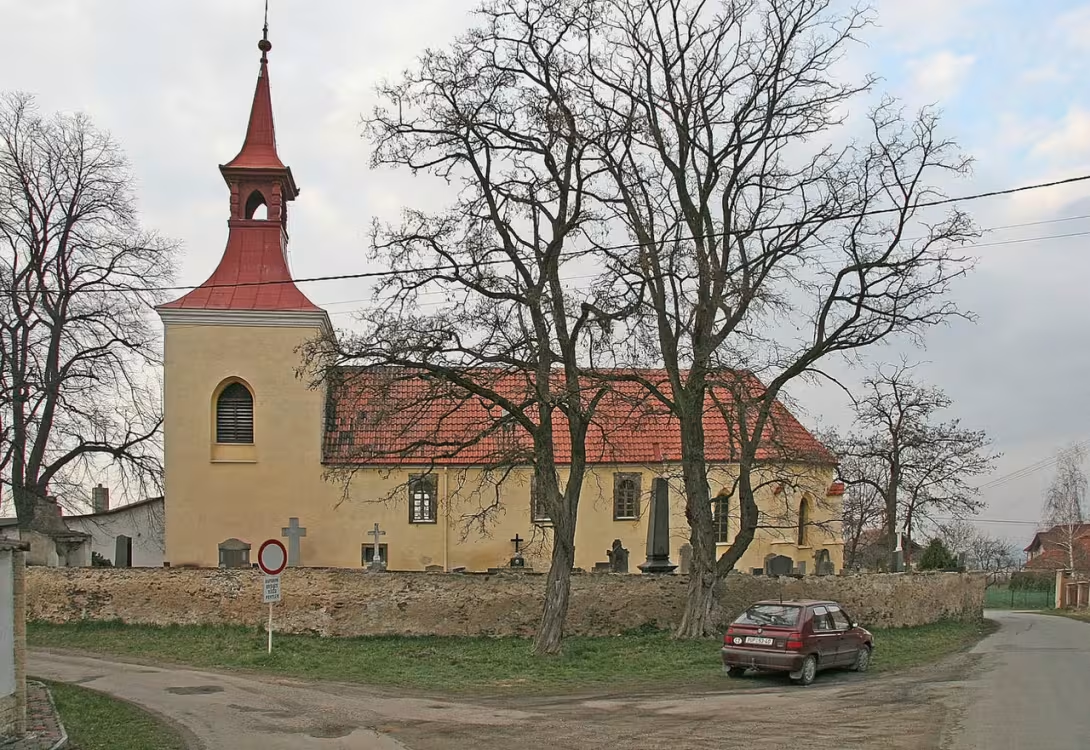

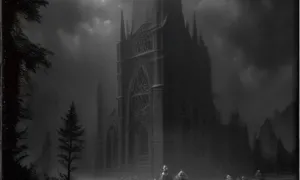
The historical appearance on the left is an AI-generated visualisation and serves as inspiration only.
Historical milestones
- 1250s
- The original building of the church in Romanesque style.
- 14th century
- Reconstruction and expansion into Gothic style.
- 1575
- Renaissance modifications supported by Václav Smiřický ze Smiřic.
Architectural development
The Church of Saint Peter and Paul began as a Romanesque structure in the mid-13th century. It was expanded and transformed into Gothic style during the 14th century, with surviving fragments of its original Romanesque windows. The Renaissance period brought further changes after 1575, including significant extensions and decorative elements funded by Václav Smiřický ze Smiřic.
Historical events
- mid-13th century
- Construction of the original Romanesque church.
- 14th century
- Expansion and Gothic reconstruction of the church.
- post-1575
- Renaissance modifications including extensions and details funded by Václav Smiřický ze Smiřic.
Points of interest
- The Church of Saint Peter and Paul in Horka was originally constructed as a Romanesque church in the mid-13th century. - It has undergone significant architectural transformations over the centuries, including Gothic and Renaissance modifications. - A fragment of its original Romanesque window can still be seen on the northern wall of the nave. - The 14th-century Gothic reconstruction introduced new elements typical of that era, later complemented by Renaissance modifications after 1575. - Václav Smiřický ze Smiřic played a crucial role in funding the Renaissance modifications that enhanced the church’s architectural beauty and functionality.
Guide
This guide is narrated by a synthetic voice generated by artificial intelligence.
Show guide text
This text was created by artificial intelligence and has not been editorially reviewed. It may contain inaccuracies.
The Church of Saints Peter and Paul stands in Horce, a local part of Přišimas in the Kolín region. It is protected as a cultural monument and its construction history dates back to the Middle Ages.
Already in the middle of the thirteenth century, a Romanesque church stood here. From this oldest structure, a fragment of a Romanesque window on the northern wall of the nave has survived to this day.
In the fourteenth century, the church was expanded and rebuilt in the Gothic style. Another major transformation came after fifteen seventy-five with the Renaissance. The nave was then significantly extended and acquired Renaissance details. This reconstruction was financed by Václav Smiřický ze Smiřic, who died in fifteen ninety-five.
In one structure, three stylistic periods thus meet: a Romanesque foundation, a Gothic rebuild, and a Renaissance expansion.
Tips for visitors
The best time to visit the Church of Saint Peter and Paul in Horka is during late spring or early autumn, when the weather is mild and pleasant for exploring outdoor sites. These seasons offer beautiful natural lighting that enhances the historical architecture without the crowds typical of peak tourist months. Additionally, visiting on a weekday can provide a more tranquil experience, allowing you to appreciate the church's serene atmosphere.
For those preferring public transport, regional buses serve the area, although it's advisable to check current schedules in advance using a travel planner or local transit website. This ensures you can plan your visit smoothly without unexpected delays.
When visiting the Church of Saint Peter and Paul, consider bringing comfortable walking shoes as there may be some uneven paths around the site. A camera is recommended for capturing the intricate details of the church's architecture, especially during golden hour when the light creates a warm glow on its stone surfaces. Additionally, carrying water and a hat can help you stay comfortable if you plan to explore the surrounding area.
Photography enthusiasts will find several spots around the church ideal for capturing stunning images. The best lighting is usually in the early morning or late afternoon when the sun casts long shadows that highlight the church's Romanesque features. Try positioning yourself at a slight angle to capture the full façade, and don't forget to explore inside where interior details can provide unique photographic opportunities.
Nearby attractions within 30 minutes include other historical sites in the Kolín District that offer insights into the region's rich cultural heritage. Exploring these areas can complement your visit by providing a broader context of local history and architecture. For families with children, consider planning a day trip to nearby parks or nature trails where kids can enjoy outdoor activities while adults appreciate the scenic landscapes.
Frequently asked questions
Can the monument be visited?
Religious buildings are usually open mainly during services; at other times a visit is normally arranged with the parish or the operator. We have not verified specific times.
Where is the monument?
Location: Horka, Středočeský kraj. The map on this page shows the exact spot.
Why is the monument protected?
It is listed in the Central List of Cultural Monuments of the Czech Republic as a cultural monument (register no. 41034/2-838).
Businesses nearby
Do you run a restaurant, accommodation, shop, museum, rental, wellness or other visitor service near this monument? Show yourself directly to the people heading to it — this is how they will see you in the app and on the web:
Events nearby
Zdroj akcí: otevřená data měst a obcí ČR (Národní katalog otevřených dat) a kalendář akcí Národního památkového ústavu.
Accommodation nearby
Trips and activities nearby
Guided tours, tickets and activities nearby from GetYourGuide
Affiliate link: if you buy from the partner, we may receive a commission. The price for you does not change.
Search tours and activities →Themed route
Route: Horka and its surroundings
1. Church of Saints Peter and Paul (Horka): This church is the dominant feature of the village of Horka and is worth visiting for its unique architecture and rich history. It is a beautiful example of Baroque architecture and deserves to be explored.
2. Horka: This village has a rich history and is interesting due to its rural setting. Visitors can see traditional Czech houses and experience the atmosphere of peaceful countryside life.
3. Chateau Horka: This chateau was once the residence of the lords of Horka and is worth visiting for its history and architecture. It is a beautiful example of Baroque style and offers views of the surrounding landscape.
Seasonal recommendations
Jaro
Spring is a time of blossoming in Horky, making it the ideal season to visit St. Peter and Paul's Church. The atmosphere is full of life and energy, as if the church is emerging from its winter slumber. The lighting here is also unique—soft and warm, like sunlight illuminating the space. We recommend visiting the church early in the morning or late afternoon to avoid tourist crowds. The best time for a visit is from April to June when the weather is pleasant and nature is in full bloom.
Summer
Summer is the peak season for visitors to Horky, and St. Peter and Paul's Church is bustling with tourists. Here, the warmth and sunshine illuminate the church both inside and out. We recommend visiting early in the morning or late afternoon to avoid crowds. Summer is also an ideal time to explore the surrounding nature and area around the church. Don't forget to bring sunglasses and water to stay comfortable in the hot weather.
Autumn
Autumn is a time of tranquility and relaxation in Horky, making it the perfect season to visit St. Peter and Paul's Church. The atmosphere is quiet and serene, as if the church is resting after a warm summer day. The lighting here is also unique—soft and warm, like sunlight illuminating the space. We recommend visiting early in the morning or late afternoon to avoid crowds. The best time for a visit is from September to November when the weather is pleasant and nature is dressed in beautiful autumn colors.
Winter
Winter is a time of quiet and stillness in Horky, making it an ideal season to visit St. Peter and Paul's Church. The atmosphere is calm and serene, as if the church is resting after a warm summer day. The lighting here is also unique—soft and warm, like sunlight illuminating the space. We recommend visiting early in the morning or late afternoon to avoid crowds. Winter is also an ideal time for a peaceful visit to the church, but don't forget to bring warm clothing to stay comfortable in the cold weather.
Visualizations and artistic views


The visualisations are generated by artificial intelligence and serve as inspiration.
Photos from the area
Real photos taken near the monument


Zdroj a licence jsou uvedeny u každého snímku.
Atmosphere of the place
This atmospheric visualisation of the place and period was generated by artificial intelligence. It is not real footage of the location.
Tips from visitors
No tips yet. Be the first!
Log in and add your tip.
Sources and literature
Photos: petr1868 / CC BY-SA 3.0, rozlišení zvýšeno umělou inteligencí — Wikimedia Commons. The author and licence also appear when you hover over the image.
Faktickým podkladem tohoto textu byl článek na Wikipedii, jehož autory jsou přispěvatelé Wikipedie. Článek je dostupný pod licencí CC BY-SA 4.0.
Location on the map
Příběhy a pověsti
Legendy, pověsti a příběhy spjaté s touto památkou
Fotografie návštěvníků
Zatím žádné fotografie. Buďte první, kdo přidá fotografii z návštěvy!
Log in a přidejte svou fotografii nebo hodnoťte.
Za ověřenou návštěvu v aplikaci získáte víc bodů — poznáme podle GPS, že jste na místě.
Reviews and comments