



kostel svatého Petra a Pavla (Jinošov) Church
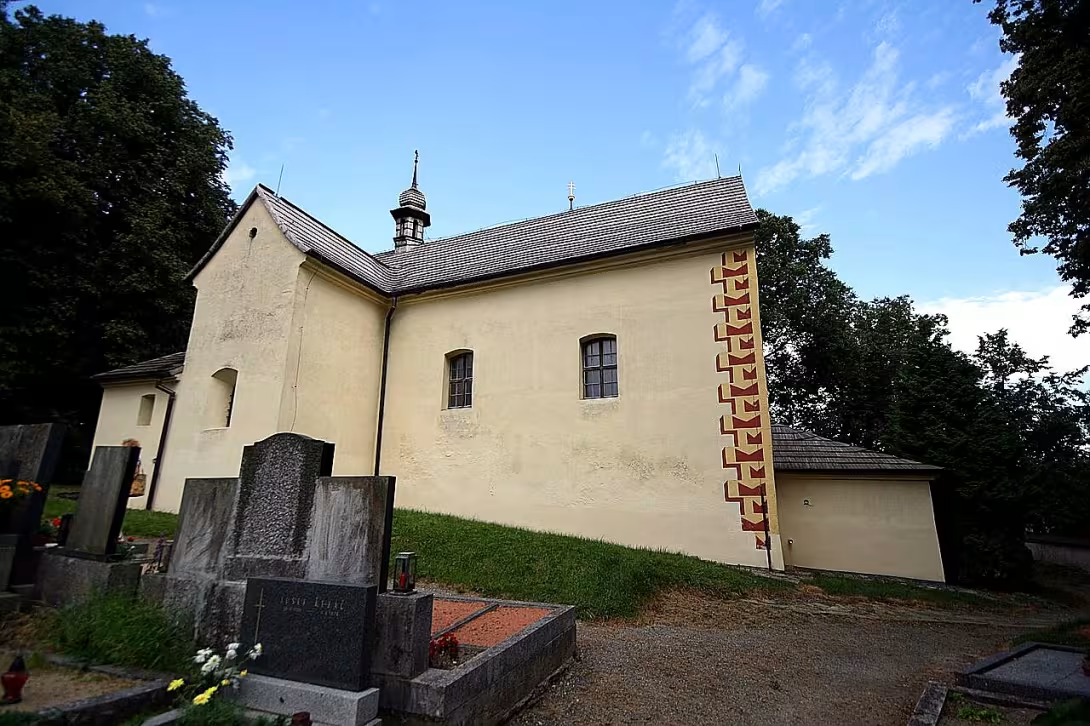
The church of St. Peter and Paul in Jinošov, the village of Vysočina in the district of Třebíč, is a parish temple with a rich history dating back to the 14th century. The oldest part, the presbytery with the begging arches and sacristy, testifies to the original Romanesque core of this sacral complex. Protected as a cultural monument of the Czech Republic, it stands out not only with architectural design but also with historical value.
The first written mention of the church dates back to 1368. A new priesthood was built in the 15th century, which shows its importance and need for enlargement. During the Thirty Years' War and after the Battle of White Mountain in 1620, the church was destroyed by Polish Cossacks, leaving a permanent mark in the structure and history of the building. After these events there were changes in the administration of the parish, which also affected the church.
Architecturally, it's a one-ship building with Romanesque core and Gothic elements. The oldest part is a presbytery with a begging arch, which added to the distinctive interior. Over the years, the main ship was built with bark, two towers and a crypt with chapel. In 1783 the side chapel was built, which further extended the church structure. The bell tower, which stands separately from the church, is a massive prism construction with three bells, the height of which was increased by several metres in 1902.
Key events in the history of the church include its reconstruction in 1984 under the leadership of architect Viktor Dohnal. This reconstruction not only restored structural integrity, but also brought new elements such as an altar table and an ambon from Dohnal, a new cross from Milos Vlček, a door of the shrine from Høman Kotrba and a stained glass with the patrons of the church according to the design of Karl Rechlík. These changes highlighted the historical value and aesthetics of the object.
Today the church is accessible to visitors who want to learn more about its rich history and architecture. It is situated on the roof of the cemetery with a number of valuable tombstones, which gives the overall complex an attractive character. Its history and architecture make it not only a spiritual centre for local residents, but also an interesting destination for passengers.
The Church of St. Peter and Paul in Jinošov is an example of how history and architecture together tell the story of the past. The preserved elements from different periods bear witness to the rich cultural heritage of the Highlands region and its importance to the local community. For those who want to understand the history of the Czech Middle Ages or enjoy a quiet moment in a noble environment, a visit to this church is truly worth a try.
Then and now
Drag the slider to compare how the landmark may have looked when it was built with the view today.
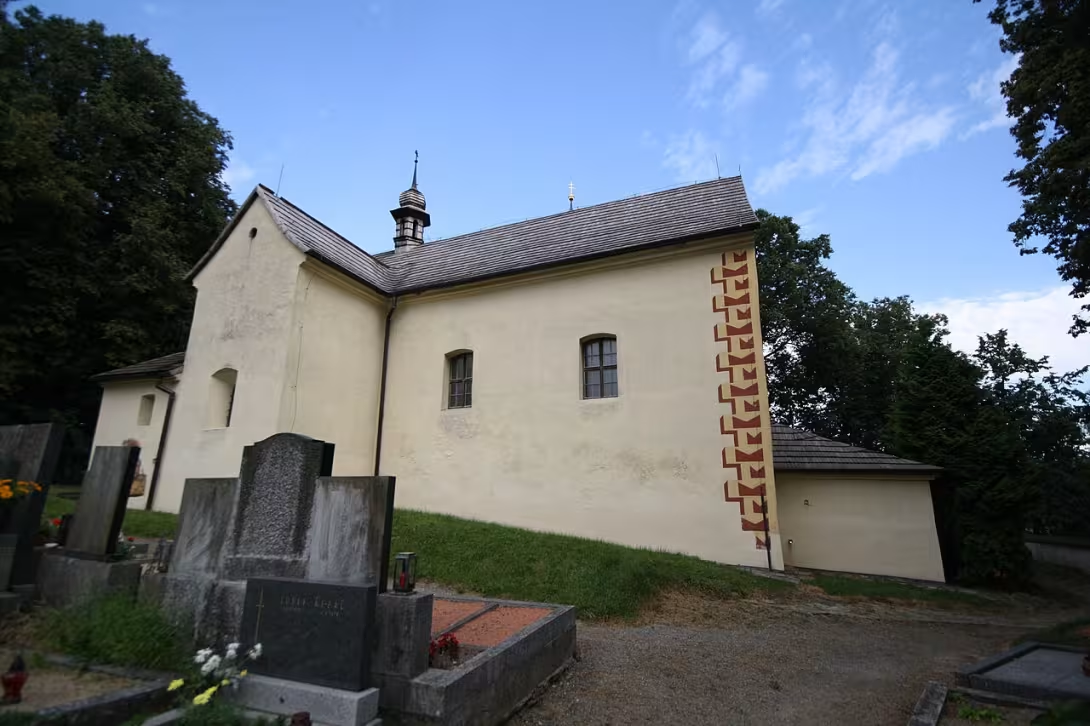

The historical appearance on the left is an AI-generated visualisation and serves as inspiration only.
Historical milestones
- 1368
- First written mention of the church.
- 1450
- Status of the new priesthood.
- 1620
- The church was destroyed by Polish Cossacks after the Battle of White Mountain.
- 1783
- Adjust the side chapel.
- 1902
- Increase the bell tower a few meters.
- 1984
- Reconstruction of the church by architect Viktor Dohnal.
Architectural development
The building has a Romanesque core and a gothic presbytery with ribs. Later was added the main boat, two towers and in 1783 side chapel. The hall was built in the 20th century.
Historical events
1368: first written mention of the church; 1620: damage to polish cossacks; 1984: reconstruction of the church.
Points of interest
- St. Peter and Paul's church has a rich history dating back to the 14th century. The oldest part of the church is a presbytery with a begging arch and sacristy that points to the original Romanesque core. The first written mention of the church dates back to 1368. - During the Thirty Years' War, the church was damaged by Polish Cossacks, leaving a permanent mark in the structure and history of the building. - In 1984 there was a reconstruction under the direction of architect Viktor Dohnal, which brought new elements such as an altar table and an ambon from Dohnal.
Guide
This guide is narrated by a synthetic voice generated by artificial intelligence.
Show guide text
This text was created by artificial intelligence and has not been editorially reviewed. It may contain inaccuracies.
The Parish Church of Saint Peter and Paul in Jinošův stands on a hilltop in the churchyard area, right in the center of the village. It is a single-nave building with an originally Romanesque core, and not far from it rises a prismatic bell tower. The church is protected as a cultural monument.
It was probably built around 1368. The first written mention of it also dates from that year. In the fifteenth century, it received a new chancel. The oldest surviving part is the presbytery with Gothic ribs and the sacristy. The main nave with a choir, two towers and a crypt with a chapel were added later. In 1783, a side chapel was built on, and in the twentieth century, a vestibule was added as well.
The origin of the bell tower is interesting. It was created from two original towers and held three bells. In 1902, it was raised by several meters.
The history of the parish was not peaceful either. In 1620, after the Battle of White Mountain, Polish Cossacks damaged the church. On the hillside, remnants of the parish building could still be seen in 1804. Around 1622, the Jinošův parish was joined to the parish in Mohelná. In 1739, a branch church was established in Jinošův and later a curacy. The curate at that time lived in an abandoned fortress, in a building that today serves as a rectory. Over time, the surrounding villages of Jasenice, Pucov and Jestřábí were added to the spiritual administration. In 1785, Kralice and Horní Lhotice were added to them, and later Jindřichov and Košíkov. An independent parish was restored only in 1834.
The current appearance of the interior was significantly influenced by a reconstruction in 1984. It was led by architect Viktor Dohnal, who also designed the altar table and the ambo. A new crucifix was created by Miloš Vlček and the doors of the tabernacle by Heřman Kotrba. The windows received new stained glass with the patrons of the church, Saint Peter and Paul, designed by Karel Rechlík.
Tips for visitors
The best time to visit the church of St. Peter and Paul in Jinošov is autumn or spring when vegetation in the surroundings is best visible and the atmosphere calm. These periods also offer pleasant temperatures for long walks around the cemetery with its historic tombstones.
When visiting, make sure you have protective clothing or umbrella with you because the weather can be unpredictable. The photographic device is also suitable for capturing historical details of the church and surrounding cemetery.
For photography it is recommended to visit a place in the early morning or in the evening when light is softer and shadow effects add drama to images. The best views of the church can be obtained from the north-west side, where its architectural detail stands out.
In the vicinity of the church you can visit many valuable tombstones in the cemetery which are interesting for those interested in history and art. For families with children it is advisable to visit the surrounding forests or stream, which offers opportunities to play outside.
Frequently asked questions
Can the monument be visited?
Religious buildings are usually open mainly during services; at other times a visit is normally arranged with the parish or the operator. We have not verified specific times.
Where is the monument?
Location: Jinošov, Kraj Vysočina. The map on this page shows the exact spot.
Why is the monument protected?
It is listed in the Central List of Cultural Monuments of the Czech Republic as a cultural monument (register no. 36851/7-2772). It is protected as part of a larger listed ensemble.
For kids
That we're going back to the past when around 1600 they built the church of St. Peter and Paul in Jinošov! It was like 426 years ago when the world was completely different. On the top of the cemetery was this beautiful church, which today is a monument to our history.
At the time, there were many people around who lived for a living through agriculture and trade. The church was their sanctuary, where they gathered for services and fragments of life. Although it looked like a perfectly normal village, there was something special.
Businesses nearby
Do you run a restaurant, accommodation, shop, museum, rental, wellness or other visitor service near this monument? Show yourself directly to the people heading to it — this is how they will see you in the app and on the web:
Events nearby
Zdroj akcí: otevřená data měst a obcí ČR (Národní katalog otevřených dat) a kalendář akcí Národního památkového ústavu.
Nearby
The cemetery area with a number of valuable tombstones in the centre of the village.
Accommodation nearby
Themed route
1. Church of St. Peter and Paul (Type: Church) - A tour of the sacral building in the centre of the village. 2. The cemetery area (Type: Historical area) - Walk between a number of valuable tombstones. 3. The cemetery area (Type: Art ensemble) - Detailed view of sculptures within this area.
Seasonal recommendations
In spring nature wakes up around the church and the surrounding landscape begins to color. The light is soft and soft in this period, which highlights the details of the building beautifully. We recommend a visit in the morning, when the air is the cleanest and the surroundings are the quietest. Prepare your layered clothes because the morning cold can still be felt.
In the summer months, the surrounding area is full of thick greenery and the sun hits the facade of the church very intensively. The atmosphere is alive and warm. Due to the increased number of people in the high summer season, it is best to arrive early in the morning to enjoy a crowd-free space. Dress lightly and don't forget enough fluids.
Autumn brings to Jinošova melancholic beauty, especially when morning fog spreads around the church and the trees turn golden. Lighting is very deep and malleable in this period, which is ideal for observing architecture. The perfect time to visit is this afternoon. Don't forget to wear tighter shoes for wet terrain and warmer jacket.
The winter season offers peace and quiet, when the church emerges from a freezing landscape. If snow covers the area, the building looks magical. In Advent Time, there is a strange, noble atmosphere. Due to short days and lower temperatures it is necessary to have very warm clothes and plan a visit in the time of the greatest daylight.
Visualizations and artistic views


The visualisations are generated by artificial intelligence and serve as inspiration.
Photos from the area
Real photos taken near the monument


Zdroj a licence jsou uvedeny u každého snímku.
Tips from visitors
No tips yet. Be the first!
Log in and add your tip.
Sources and literature
Photos: Jiří Sedláček / CC BY-SA 3.0 — Wikimedia Commons. The author and licence also appear when you hover over the image.
Faktickým podkladem tohoto textu byl článek na Wikipedii, jehož autory jsou přispěvatelé Wikipedie. Článek je dostupný pod licencí CC BY-SA 4.0.
Location on the map

Příběhy a pověsti
Legendy, pověsti a příběhy spjaté s touto památkou

Fotografie návštěvníků
Zatím žádné fotografie. Buďte první, kdo přidá fotografii z návštěvy!
Log in a přidejte svou fotografii nebo hodnoťte.
Za ověřenou návštěvu v aplikaci získáte víc bodů — poznáme podle GPS, že jste na místě.
Reviews and comments