






kostel svatého Salvátora v Praze Church
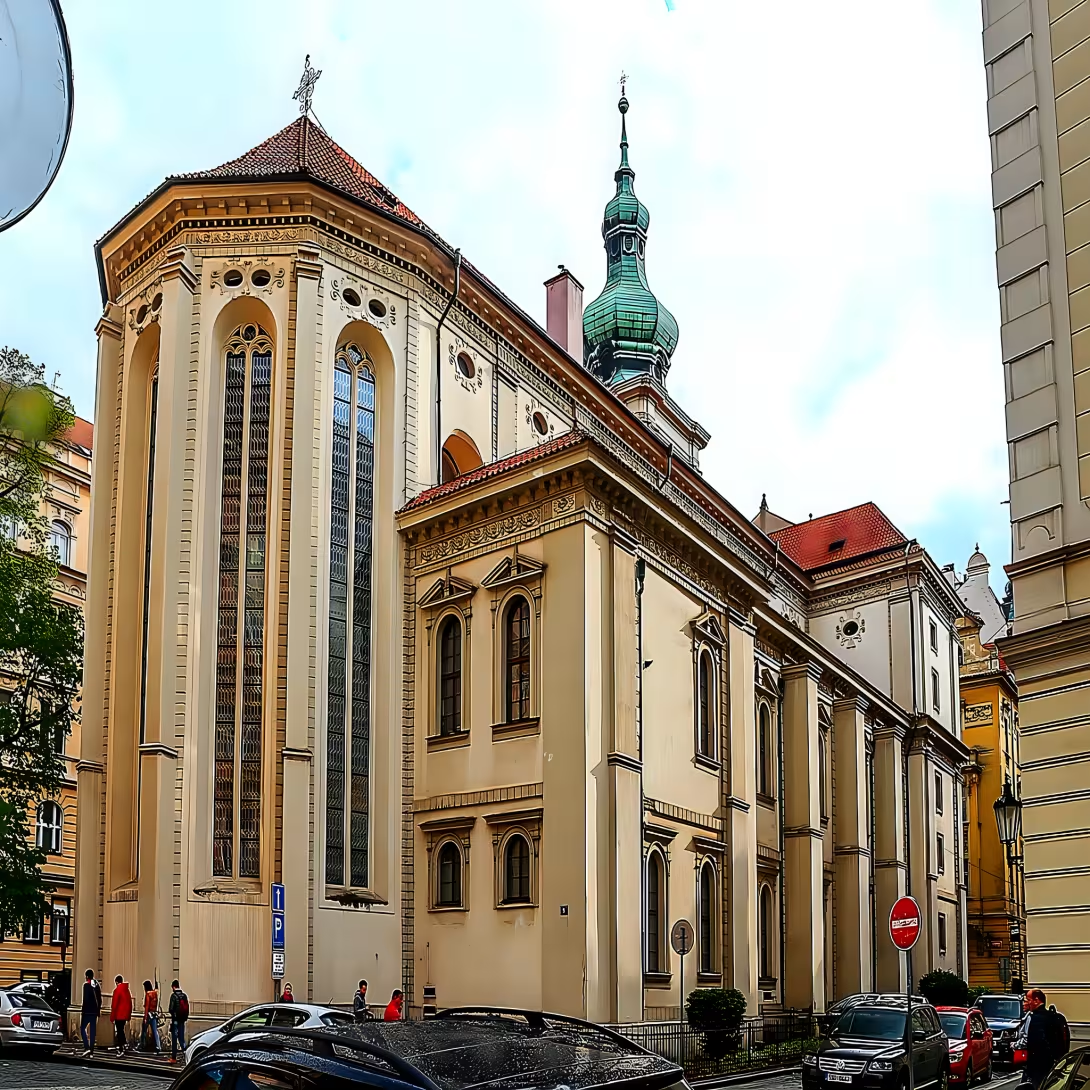
The Church of St. Salvatore, located in the Old Town of Prague between the streets of Salvatore, Kostěnná and Spirit, is an important historical monument. This temple of the Czech Brotherhood Church of the Gospel bears in its name a reference to the Savior, Jesus Christ, and is protected as a cultural monument. Its history dates back to the beginning of the 17th century, when it was built for the German Evangelical Choir by Jáchym Ondrej Šlik. The church is a late Renaissance new building from 1611-1614 and represents an important example of architectural heritage that has undergone several transformations.
The history of St. Salvator's Church is closely linked to political and religious events in the early 17th century in Bohemia. In 1610 he bought land for the construction of the church Jáchym Ondřej Šlik, a Protestant nobleman who planned to build not only the church, but also the parish, school and gymnasium. The foundation stone was laid on 27 July 1611 under the leadership of construction masters Johann Bartholomius zu Christoffen, Jan Dominika de Barifis or Giovanni Maria Filippia. The rough building was completed in about 1612 and the church was consecrated in October 1614.
After the Battle of White Mountain in 1620, which meant the suppression of Protestantism in Central Europe, the temple was confiscated by the evangelists. The Donor of the Church Jáchym Ondřej Šlik was executed in 1621 for attending the Czech State Uprising. In 1624 the church was handed over to the patrons who included it in their monastery at St. Salvator's. Unlike other confiscated Protestant churches, there is no evidence of any reconstruction, but probably towers were built, which is mentioned for the first time in the 1689 report. After the fire the hills restored the church, but the north tower probably didn't have a roof and it may have been destroyed by another fire in 1754. To this day, only the south tower was preserved, topically baroque in the second quarter of the 18th century.
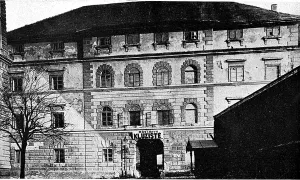
In 1777, building modifications of the monastery and the church were carried out under the leadership of construction master Jan Josef Prachner. The monastery of the patrons was abolished as part of the church reforms of emperor Joseph II in 1796 and he moved the church to the monetary office which used it as a mint. In 1848 the Mint ceased to exist and in 1863 the church was bought for 15,000 gold pieces by Prague evangelists of the Augsburg religion who renovated it and used it for their services so far.
Since the merger of evangelical churches in 1918, the church of the Old Town Choir of the Czech Brotherhood Church has been evangelical. In the 1950s he underwent a major renovation and in 1997 it was drawn from the Architectural Heritage Programme in 1997. In 1997- 2002 and again 2007- 2011 he worked here as a spiritual Svatopluk Karásek.
Today, the church of St. Salvator is not only an important cultural monument, but also a living place of religious and community life. Its history reflects the complicated history of Bohemia, where various religious and political currents intertwined. By examining this church, the traveler can not only appreciate its architectural beauty, but also understand the deeper historical context that shaped today's Prague. The Church of St. Salvatore is worth visiting not only for those interested in architecture and history, but also for anyone seeking a place full of historical stories and cultural significance.
Then and now
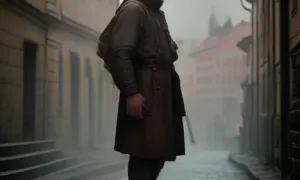
Drag the slider to compare how the landmark may have looked when it was built with the view today.
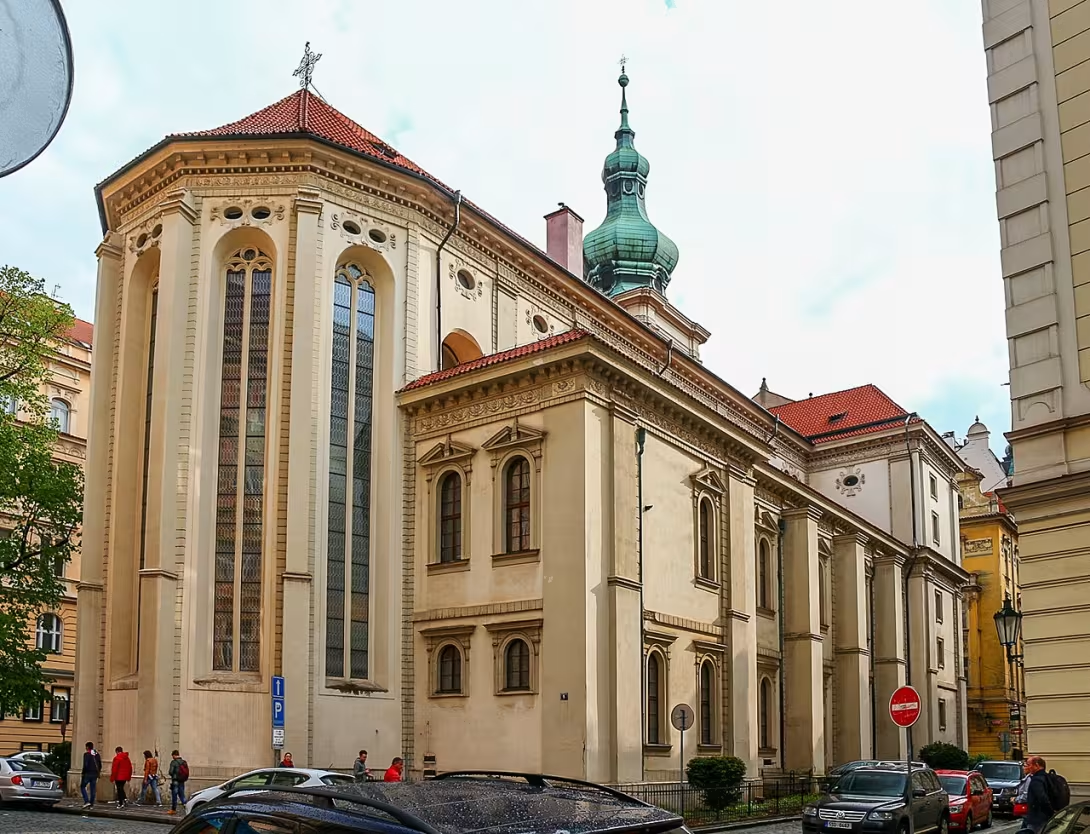
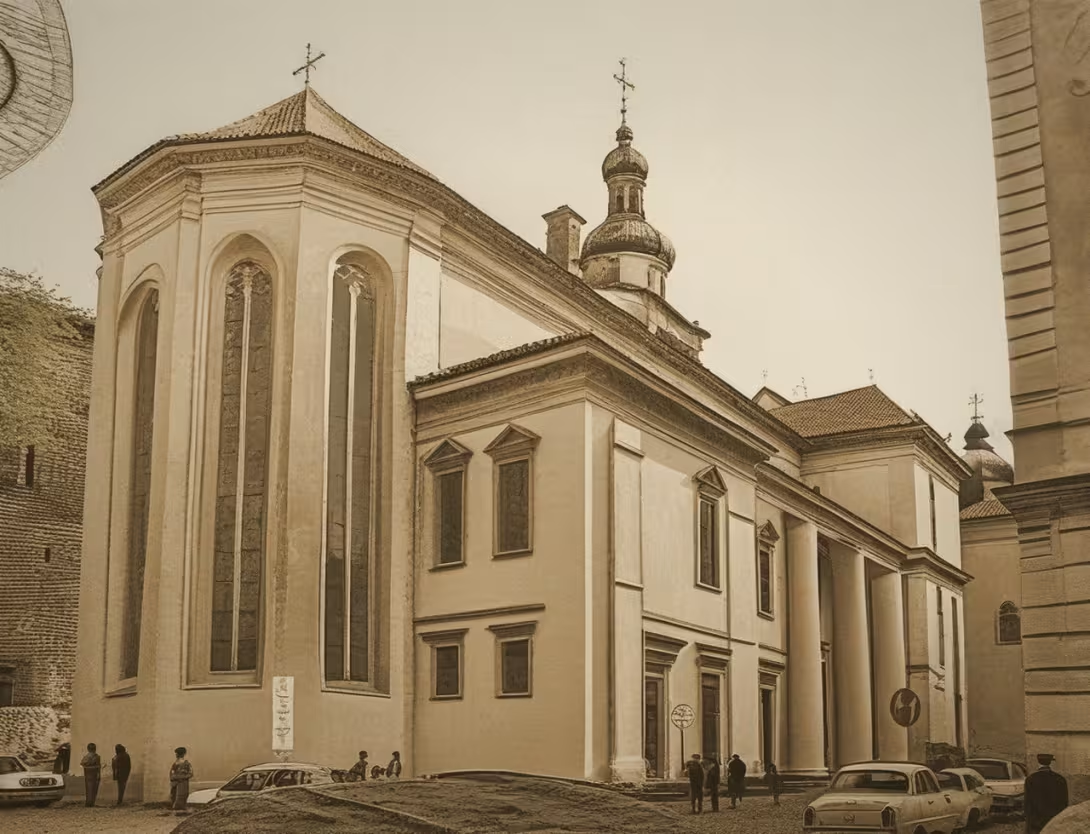
The historical appearance on the left is an AI-generated visualisation and serves as inspiration only.
Historical milestones
- 1611
- The cornerstone of the church was laid.
- 1689
- First mention of towers destroyed by fire.
Architectural development
The Church of Salvatore is a late Renaissance new building from 1611-1614. After the confiscation of the Battle of White Mountain, he was handed over to the patrons who integrated him into their monastery. Over the years, towers were built and baroque modifications were made. After the abrogation of the monastery he served as a mint, then he was renovated by evangelists.
Historical events
- 1611
- The cornerstone of the church was laid.
- 1624
- The church was handed over to the patrons after the battle on White Mountain.
- 1796
- Pavlín monastery and church were abolished as part of the church reforms of Joseph II.
- 1863
- The church was bought by Prague evangelists of the Augsburg religion.
Owners
- 1610-1621
- 1624-1796
- 1796-1857
- 1863-dosud
Points of interest
- St. Salvator's Church is the only church in Prague that has become a mint. After the demise of the Pavlín monastery he was transferred to this unusual use and served as a mint until 1848.
- The Church of St. Salvatore has the only standing tower, which is the most baroque. The North Tower was destroyed by fire in 1754 and never restored; The southern tower was preserved and renovated in the second quarter of the 18th century.
The Church of St. Salvatore was one of the few confiscated Protestant monuments that were not rebuilt after the Battle of White Mountain. Although the details of the changes were only partially preserved, the tower was probably built.
- The church was bought again by Prague evangelists of the Augsburg religion for 15,000 gold in 1863. This purchase allowed the church to serve as a place of religious service again for centuries when it was used for other purposes.
- Svatopluk Karásek, a famous Czech writer and poet, worked as the spiritual church of St. Salvator in 1997- 2002 and again 2007- 2011. His connection with this place adds another layer of cultural history to his already rich past.
Guide
This guide is narrated by a synthetic voice generated by artificial intelligence.
Show guide text
This text was created by artificial intelligence and has not been editorially reviewed. It may contain inaccuracies.
Welcome to the Old Town in Prague, where you are facing a unique historical monument - the church of St. Salvator. This church is not only an architectural work but also a witness to the rich history of this place. At first glance, note its elegant lines and carefully carved details that distinguish this building against the background of the Prague city panorama.
The church of St. Salvatore was built in 1611 with a cornerstone laid by the nobleman Jáchym Ondrej Šlik. It was designed as a house of prayer for the German Evangelical Choir, reflecting intense religious tension in the early 17th century in Bohemia. This church is a real clue to the past and its history is reflected in every stone.
The architecture of this church is a fascinating mix of different styles that reflect its rich history. When you look at the facade, notice the unique standing tower, which is the highest Baroque and represents the dominant elements of this building. This tower lasted time after the destruction of the north tower after the fire in 1689.
Among the key personalities associated with this monument is of course Jáchym Ondřej Šlik, who not only supported its foundation, but also was an important figure in the history of Czech Protestants. Its contribution to the religious and cultural heritage of this region is invaluable.
The interesting thing about this place is that St. Salvator's Church was the only church in Prague that became a mint. Following the demise of the Pavlín monastery, an unusual transformation of this sacral site into an industrial building, which served as a mint until 1848.
On further examination, notice the atmosphere that affects every visitor. This church is not only a monument to architecture, but also a witness to many historical events and transformations. Whether you're walking past his facade or looking up at the tower, every detail tells a story from the past.
I hope this guide inspired you to explore this fascinating place again. Whether you return later or continue your journey along the Old Town, remember the history and stories that this monument has to show. I hope you enjoyed this guide and do not hesitate to look at the other hidden treasures Praha has to offer.
Tips for visitors
The best time to visit St. Salvatore's church is an early afternoon when fewer people and sunlight light the interior of the church gently. This time also allows for better photo footage without changing the light.
When visiting a church, you can bring a camera or a mobile phone for a photo. Don't forget about the protective glasses too, if you have a sensitivity to light, and a handkerchief.
For photography is the best place inside the church, especially in the area of the altar where the sun rays can be projected through the windows. The best light for the photograph will be an early afternoon.
In the vicinity of the church you can visit several other attractions such as Old Town Square or Karlov Bridge. These places are ideal for a short walk after visiting the church.
For families with children, it is possible to visit the Museum of the City of Prague in the vicinity of the church, which offers interactive exhibitions suitable for younger and older visitors.
Frequently asked questions
Can the monument be visited?
Religious buildings are usually open mainly during services; at other times a visit is normally arranged with the parish or the operator. We have not verified specific times.
Where is the monument?
Location: Dušní 1045/5, Staré Město, Praha, Hlavní město Praha. The map on this page shows the exact spot.
Why is the monument protected?
It is listed in the Central List of Cultural Monuments of the Czech Republic as a cultural monument (register no. 68688/1-446).
Businesses nearby
Do you run a restaurant, accommodation, shop, museum, rental, wellness or other visitor service near this monument? Show yourself directly to the people heading to it — this is how they will see you in the app and on the web:
Events nearby

Zdroj akcí: otevřená data měst a obcí ČR (Národní katalog otevřených dat) a kalendář akcí Národního památkového ústavu.
Nearby
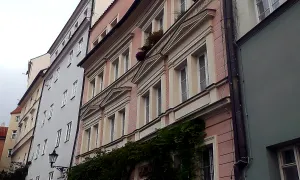
the church is located near Old Town Square, surrounded by historical buildings and monuments of Prague Old Town. There is a mix of architectural styles reflecting centuries of Czech history.
Accommodation nearby
Trips and activities nearby
Guided tours, tickets and activities nearby from GetYourGuide
Affiliate link: if you buy from the partner, we may receive a commission. The price for you does not change.
Search tours and activities →Themed route
Thematic cruise route: Church of St. Salvator and its surroundings
1. Church of St. Salvator * Type: * Historical monument, church * Why is it worth visiting: * This Baroque church is one of the oldest buildings in Prague and served as a monastery chapel. It is famous for its architectural beauty, especially the interior with rich frescos and Baroque altar. The church is also an important cultural centre for many concerts and events.
2. St. Salvator's monastery * Type: * Monastic complex, historical monument * Why is it worth a visit: * The adjoining monastery is part of the church and provides a view of life in history. It is possible to explore its atrium, where there is an exhibition with the history of the Dominican order and their contribution to the city of Praha.
3. Dominican courtyard * Type: * Historical courtyard, public space * Why is it worth a visit: * This quiet and green courtyard is an ideal place to relax after a church tour. It's a place with a historic atmosphere where you can observe the details of architecture and enjoy a quiet moment.
4. Tower of St. Salvator's Church * Type: * Historical tower, panoramic view * Why is it worth a visit: * It is possible to enjoy an impressive view of the surrounding part of the city. It is an ideal place to photograph and explore historical details of the church from a higher perspective.
5. Exposure in the Church of St. Salvator * Type: * Art exposition, cultural events * Why is it worth visiting: * The church often hosts various art and historical exhibitions. It is an opportunity to look at the current expositions that illuminate not only the history of the church, but also the wider cultural context.
This route offers a comprehensive view of the history and culture surrounding St. Salvator's Church in Prague.
Seasonal recommendations
Spring: In the spring period of St. Salvator in Prague lights up new chapters of history with pleasant sunlight, which emphasizes the architectural beauty of the church. Nature is waking up and the first flowers are blooming in the park by the church, which adds a colored touch to the overall atmosphere. Visitors are advised to come at dawn or on the middle of the day when they avoid crowds and can enjoy quiet moments on a walk around the church. Due to the still changing weather, it is advisable to wear clothes that can be easily added or reduced.
Summer: Summer offers the best conditions for visiting St. Salvator in Prague, when the church is lit with long sunny days and bright evenings. Flying birds around the church add comfort and tranquility to the atmosphere, while warm weather creates ideal conditions for long walks. Despite the beautiful weather, more visitors can gather at the church during the summer season, therefore it is recommended to come earlier on the day or visit the church in the early morning. Short gloves and sunglasses are essential for a comfortable visit.
Autumn: In the autumn period, St. Salvator in Prague offers a unique atmosphere when leaves on trees start to change colors and fall. The sunny days provide ideal conditions for photography of the church with its surrounding green surfaces which turn into colored mosaics. Despite the pleasant doses of the sun, it is advisable to wear long gloves and warm clothes to protect against cold, because the weather can change considerably. Visitors are advised to come at noon when they avoid crowds.
Winter: The winter period of St. Salvatore in Prague offers a calm and quiet atmosphere when the church is lit with cold lights and covered with snow. This time of year attracts fewer visitors, which makes it easier to explore the historical spatial elements of the church. Due to the cold weather and shorter opening times, it is important to have warm clothes to protect, including microfiber jackets and strong shoes. Visitors are advised to come early in the morning or in the middle of the day when they avoid crowds and enjoy a quiet moment in the quiet environment of the church.
Visualizations and artistic views


The visualisations are generated by artificial intelligence and serve as inspiration.
Photos from the area
Real photos taken near the monument

Zdroj a licence jsou uvedeny u každého snímku.
Tips from visitors
No tips yet. Be the first!
Log in and add your tip.
Sources and literature
Photos: VitVit / CC BY-SA 4.0, rozlišení zvýšeno umělou inteligencí — Wikimedia Commons. The author and licence also appear when you hover over the image.
Faktickým podkladem tohoto textu byl článek na Wikipedii, jehož autory jsou přispěvatelé Wikipedie. Článek je dostupný pod licencí CC BY-SA 4.0.
Location on the map
Příběhy a pověsti
Legendy, pověsti a příběhy spjaté s touto památkou
Fotografie návštěvníků
Zatím žádné fotografie. Buďte první, kdo přidá fotografii z návštěvy!
Log in a přidejte svou fotografii nebo hodnoťte.
Za ověřenou návštěvu v aplikaci získáte víc bodů — poznáme podle GPS, že jste na místě.
Reviews and comments