






Kostel svatého Stanislava (Hynčina) Church
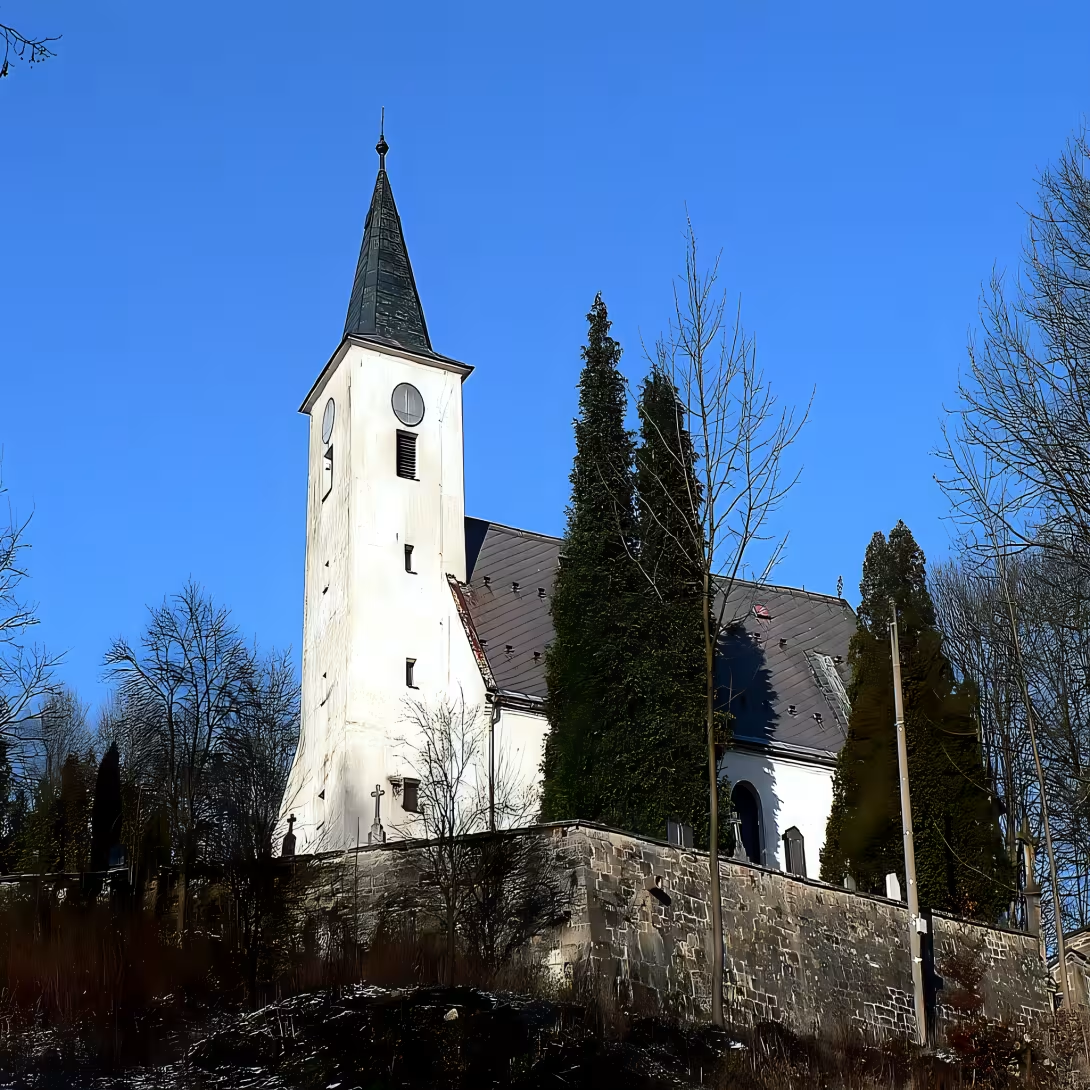
The Church of Saint Stanislaus in Hynčina is a notable Baroque structure built in 1725, replacing an earlier wooden church. Situated on a hilltop at the village's edge, it has been listed as a cultural monument since 1958. The church is renowned for its richly decorated interior and historical significance within the region.
The origins of this church date back to Hynčina's early days as a parish village. Initially, a wooden chapel was constructed in the 16th century on Kirchberg hill after new settlers arrived from Bavaria. By 1600, this structure had been expanded and dedicated to Saint Stanislaus. The current stone edifice replaced it in 1725, reflecting Baroque architectural influences prevalent during that era under the Habsburg Monarchy's reign.
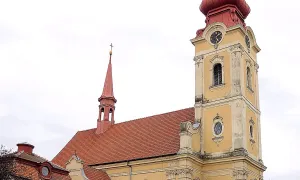
Architecturally, the Church of Saint Stanislaus is a single-nave building with a slightly recessed presbytery and an attached sacristy on its northern side. Its bell tower features a spire instead of the original dome and includes four rectangular windows on each face. The church's exterior has smooth facades interrupted by semi-circular windows—three on the southern wall and two on the northern. Inside, the nave and presbytery boast flat ceilings divided by a full triumphal arch. Noteworthy are the stucco decorations and paintings depicting biblical scenes such as the Adoration of the Magi and Doubting Thomas.
Throughout its history, the church has undergone several developments. In 1785, it became a local parish, and by 1843, it was elevated to full parish status. The bell tower underwent modifications between 1851 and 1854, and in 1910, new organs were installed by Gustav Nitsche from Krnov. A significant restoration project concluded in 2012, ensuring the church's preservation.
The interior of the church is particularly remarkable for its artistic elements. It features three frescoes with New Testament themes set within stucco frames: the Adoration of the Magi in the presbytery, Doubting Thomas near the triumphal arch, and the Annunciation above the choir loft. Additionally, there are two large wall paintings depicting scenes from Saint Stanislaus's life beside the main altar. The church also houses wooden carvings of two adoring angels, likely remnants from an earlier altar, dating back to the mid-18th century.
Today, the Church of Saint Stanislaus remains a significant cultural and historical site in Hynčina. Its well-preserved Baroque architecture and richly decorated interior offer visitors a glimpse into the artistic and religious heritage of the region. The churchyard is enclosed by a stone wall, adding to its serene ambiance, while nearby stands Hoffmann's Cross, enhancing the area's historical charm.
Visiting this monument provides an opportunity to appreciate not only its architectural beauty but also its role in the cultural history of Hynčina. It stands as a testament to the enduring legacy of Baroque artistry and religious devotion in the region.
Then and now
Drag the slider to compare how the landmark may have looked when it was built with the view today.
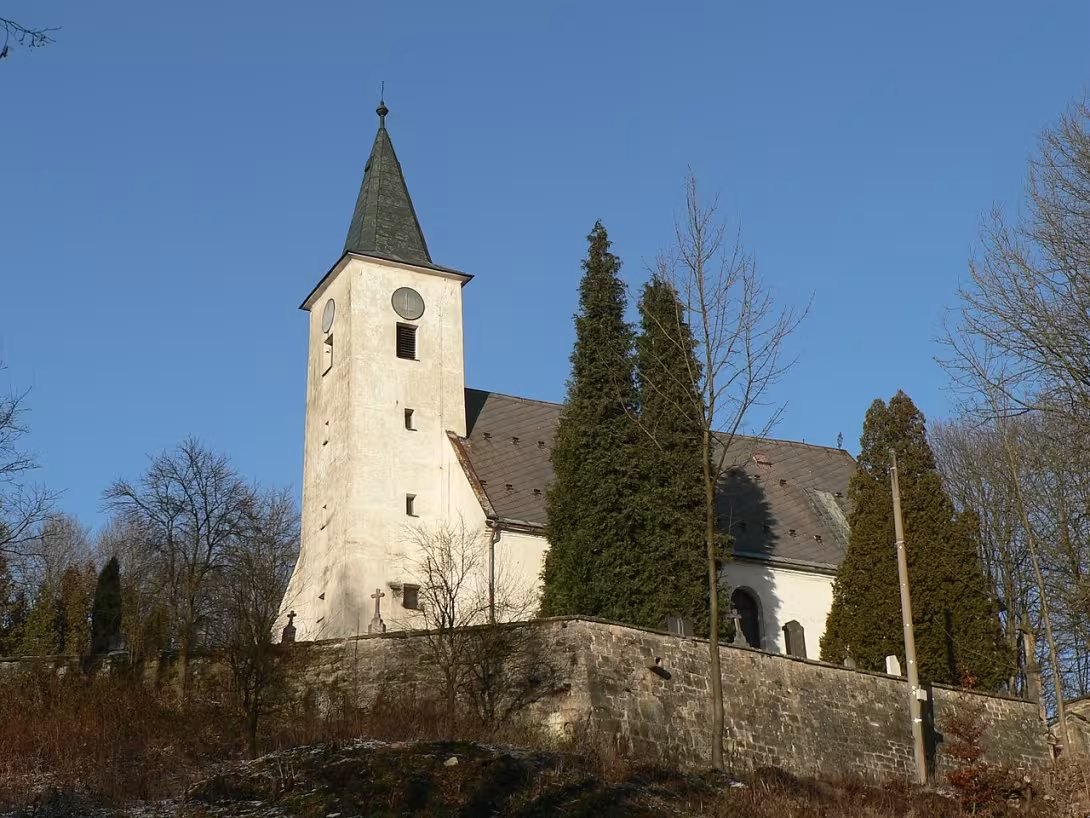

The historical appearance on the left is an AI-generated visualisation and serves as inspiration only.
Historical milestones
- 1722
- The wooden church was replaced by a stone structure.
- 1785
- A local parish was established at the site.
- 1843
- It was elevated to a full parish.
Architectural development
The Church of Saint Stanislaus underwent several architectural developments. Initially built in 1722 (or 1725) as a stone structure, its bell tower was modified between 1851 and 1854. The roof was covered with slate tiles, replacing the original dome with a spire. In 1910, new organs were installed by Gustav Nitsche from Krnov.
Historical events
In 1722 (or 1725), the original wooden church was replaced with a stone structure.
In 1785, a local parish was established at the site.
By 1843, it had been elevated to a full parish.
Points of interest
- The Church of Saint Stanislaus was originally built on Kirchberg hill with a wooden chapel in the 16th century by Bavarian settlers before being replaced by the current Baroque structure. - In 1851, the church's bell tower underwent significant modifications, transitioning from its original dome to a spire, reflecting architectural changes of that period. - The church houses unique mid-18th-century wooden carvings of two adoring angels, which are believed to be remnants from an earlier altar, adding historical depth to its interior decor. - A notable restoration project was completed in 2012, ensuring the preservation and continued cultural significance of this Baroque masterpiece within Hynčina. - The frescoes inside depict New Testament themes like the Adoration of the Magi and Doubting Thomas, set within stucco frames that highlight the church's rich artistic heritage.
Guide
This guide is narrated by a synthetic voice generated by artificial intelligence.
Show guide text
This text was created by artificial intelligence and has not been editorially reviewed. It may contain inaccuracies.
The Church of Saint Stanislaus in Hynčina is a Baroque structure from the year 1722, according to other sources from 1725. Due to its richly decorated interior, it was entered on the list of cultural monuments in 1958.
Hynčina became a parish village relatively early. The original church stood on a hill called Kirchberg. After the arrival of new settlers from Bavaria, a new small church was built in the 16th century, initially made of wood. In the year 1600 it was enlarged and dedicated to Saint Stanislaus. It was later replaced by today's stone building. In 1785 a small curacy was established here, and in 1843 a parish. Between 1851 and 1854 the tower was renovated. The roof was covered with slate and the original cupola was replaced by a high spire. In 1910 the church received new organs from the Krnov master Gustav Nitsche. From 1991 it was gradually restored. In 2006 the boundary wall and access roads were renovated and the overall reconstruction was completed in 2012.
The church with its cemetery lies on a high hill at the edge of the village and is surrounded by a stone wall. In a niche of its southeastern section stands a stone cross called the Hoffmann cross. The building is simple, single-nave, without architectural detail. To the west of the nave there is a prismatic tower with a pyramidal roof and round clock faces below the cornice. The main entrance leads under the tower, the side entrance on the southern wall of the nave. To the choir with cut-off corners a sacristy adjoins from the north. Smooth facades are pierced by windows arched in a semicircle.
Inside the church is richly decorated with painting and stucco. The nave and narrower choir have a flat ceiling and are divided by a triumphal arch. In the stucco frames on the ceiling are three scenes from the New Testament. In the choir it is the Adoration of the Magi, at the triumphal arch Doubting Thomas, and above the gallery the Annunciation of the Virgin Mary. On the triumphal arch on the left is depicted the Old Testament legend of the bronze serpent and on the right a blessing figure by a cross. Beside the main altar with an image of Saint Stanislaus are two large wall paintings from the life of this saint. The wooden choir with the organs is supported by two fluted columns with ornamental capitals.
The furnishings include wood carvings of two adoring angels from the second quarter of the 18th century, possibly from a dismantled altar, and a holy water font from 1617. Even older is the bell in the tower with a relief of a lion's head and an inscribed frieze. It was cast in 1599 by Jan Benešovský.
Tips for visitors
The best time to visit the Church of Saint Stanislaus in Hynčina is during late spring or early fall, when the weather is mild and pleasant for exploring outdoor areas like the churchyard. This period also offers beautiful natural lighting that enhances the Baroque architecture and interior decorations of the church. Additionally, visiting outside peak tourist seasons can provide a more tranquil experience, allowing visitors to appreciate the serene surroundings and detailed artwork without large crowds.
The village can also be accessed via public transportation; however, specific routes may vary, so it's recommended to verify current options using a travel planner or local transit resources.
When visiting the Church of Saint Stanislaus, it is advisable to bring comfortable walking shoes as you will be exploring both indoor spaces and outdoor areas like the churchyard. A camera or smartphone for photography can help capture the intricate stucco work and paintings inside the church. Additionally, carrying a small umbrella or raincoat might be useful in case of unexpected weather changes, especially since the site is located on a hilltop.
For capturing the best photographs at the Church of Saint Stanislaus, consider visiting during the golden hours—shortly after sunrise or before sunset—to take advantage of soft, warm lighting that beautifully highlights the Baroque details. The churchyard offers excellent vantage points for landscape shots, especially with the stone wall and hilltop view of the village in the background. Inside the church, try to photograph the stucco work and paintings during daylight hours when natural light is optimal.
Nearby attractions within a 30-minute drive include Hoffmann's Cross, an intriguing stone cross located close to the church. This site provides additional historical context and picturesque views of the area. For families with children, consider planning a visit to local parks or nature trails in the region for outdoor activities after exploring the church. These areas offer opportunities for picnics or leisurely walks, making it a well-rounded day trip.
Frequently asked questions
Can the monument be visited?
Religious buildings are usually open mainly during services; at other times a visit is normally arranged with the parish or the operator. We have not verified specific times.
Where is the monument?
Location: Hynčina, Olomoucký kraj. The map on this page shows the exact spot.
Why is the monument protected?
It is listed in the Central List of Cultural Monuments of the Czech Republic as a cultural monument (register no. 34253/8-2123).
Businesses nearby
Do you run a restaurant, accommodation, shop, museum, rental, wellness or other visitor service near this monument? Show yourself directly to the people heading to it — this is how they will see you in the app and on the web:
Nearby
The churchyard is enclosed by a stone wall and located on a hill overlooking the village. Nearby stands a notable stone cross known as Hoffmann's Cross.
Accommodation nearby
Themed route
Tematická výletní trasa: Kostel svatého Stanislava a okolí Hynčiny
1. Kostel svatého Stanislava (Hynčina)
Typ: Historická památka
Proč stojí za návštěvu: Tento kostel je nejstarším důkazem existence obce Hynčiny a představuje významnou část kulturního dědictví Olomouckého kraje. Jeho architektura a historie nabízejí cenný vhled do minulosti této oblasti.
2. Hřbitov u kostela svatého Stanislava
Typ: Historický hřbitov
Proč stojí za návštěvu: Hřbitov je ohraničen kamennou zeďí a nachází se na výšině nad vesnicí, což nabízí pohledy na okolní krajinu. Je to místo klidu a reflexe, kde můžete ocenit historické náhrobní desky a atmosféru.
3. Hoffmann's Cross
Typ: Historický kamenný kříž
Proč stojí za návštěvu: Tento významný kámen je umístěn nedaleko kostela a hřbitova. Kříž je nejen krásnou architektonickou strukturou, ale také symbolizuje historii a tradice oblasti Hynčiny.
Tato trasa nabízí pohled na kulturní a historický bohatství malé vesnice Hynčina. Vzdálenosti mezi jednotlivými body jsou krátké, což umožňuje snadný průchod celou trasou za několik hodin.
Seasonal recommendations
Spring: Visiting the Church of Saint Stanislaus in Hynčina during spring offers a serene experience as nature awakens around this historic site. The surrounding landscape is adorned with blooming flowers and fresh greenery, creating a picturesque setting that enhances the church's architectural beauty. This season often sees fewer visitors compared to summer, allowing for a more tranquil exploration of the area. To fully appreciate the outdoor surroundings, wearing comfortable walking shoes and layered clothing is advisable due to the variable weather. Morning visits are recommended as they tend to be quieter, providing an ideal opportunity to enjoy the peaceful ambiance without large crowds.
Summer: Summer at the Church of Saint Stanislaus is marked by vibrant natural beauty and longer daylight hours, making it a popular time for visitors. The lush greenery and warm sunshine create an inviting atmosphere perfect for leisurely strolls around the church grounds. However, this season also brings larger visitor numbers, especially during peak travel times. To avoid crowds, consider visiting early in the morning or later in the afternoon. Dressing in light, breathable clothing is essential to stay comfortable under the sun. Don't forget to bring water and sunscreen for a pleasant visit.
Autumn: Autumn transforms the Church of Saint Stanislaus into a stunning canvas of warm colors as the leaves change from green to shades of orange, red, and yellow. This season provides a unique opportunity to witness the church against a backdrop of picturesque fall foliage, offering an ideal setting for photography enthusiasts. The cooler temperatures make it comfortable for walking and exploring the area without the summer heat. While visitor numbers tend to decrease after the peak summer months, there can still be a moderate flow of tourists. Wearing layers is advisable as the weather can vary, and carrying a light jacket might come in handy during chilly evenings.
Winter: The Church of Saint Stanislaus takes on a magical quality in winter, with snow-covered surroundings creating a serene and enchanting atmosphere. This season offers a unique perspective of the church's architecture against a stark, white landscape. However, be prepared for shorter operating hours and potential accessibility challenges due to weather conditions. Visitors should dress warmly in layers, including hats, scarves, gloves, and waterproof boots, to stay comfortable during their visit. Arriving early is recommended as daylight hours are limited, allowing more time to explore the church and its surroundings before closing.
Visualizations and artistic views


The visualisations are generated by artificial intelligence and serve as inspiration.
Tips from visitors
No tips yet. Be the first!
Log in and add your tip.
Sources and literature
Photos: Martin Vavřík / Public domain, rozlišení zvýšeno umělou inteligencí — Wikimedia Commons. The author and licence also appear when you hover over the image.
Faktickým podkladem tohoto textu byl článek na Wikipedii, jehož autory jsou přispěvatelé Wikipedie. Článek je dostupný pod licencí CC BY-SA 4.0.
Location on the map

Příběhy a pověsti
Legendy, pověsti a příběhy spjaté s touto památkou
Příběh: Kostel svatého Stanislava (Hynčina)
Bylo to v pondělí ráno, kdy Martin Zelenka zjistil, že voda se jeho zádech zmrazila, jako byla sklem. S odvahou vyžadovanou nejen jedním selským životem, ale…
Číst příběh
Pověst: Kostel svatého Stanislava (Hynčina)
Staří obyvatelé Hynčiny vyprávějí, že na kopci zvaném Kirchberg stával kdysi kostelík tak starý, že si nikdo nepamatoval, kdy byl postaven. Říkalo se mu pros…
Číst příběhFotografie návštěvníků
Zatím žádné fotografie. Buďte první, kdo přidá fotografii z návštěvy!
Log in a přidejte svou fotografii nebo hodnoťte.
Za ověřenou návštěvu v aplikaci získáte víc bodů — poznáme podle GPS, že jste na místě.
Reviews and comments