






Kostel svatého Václava Church
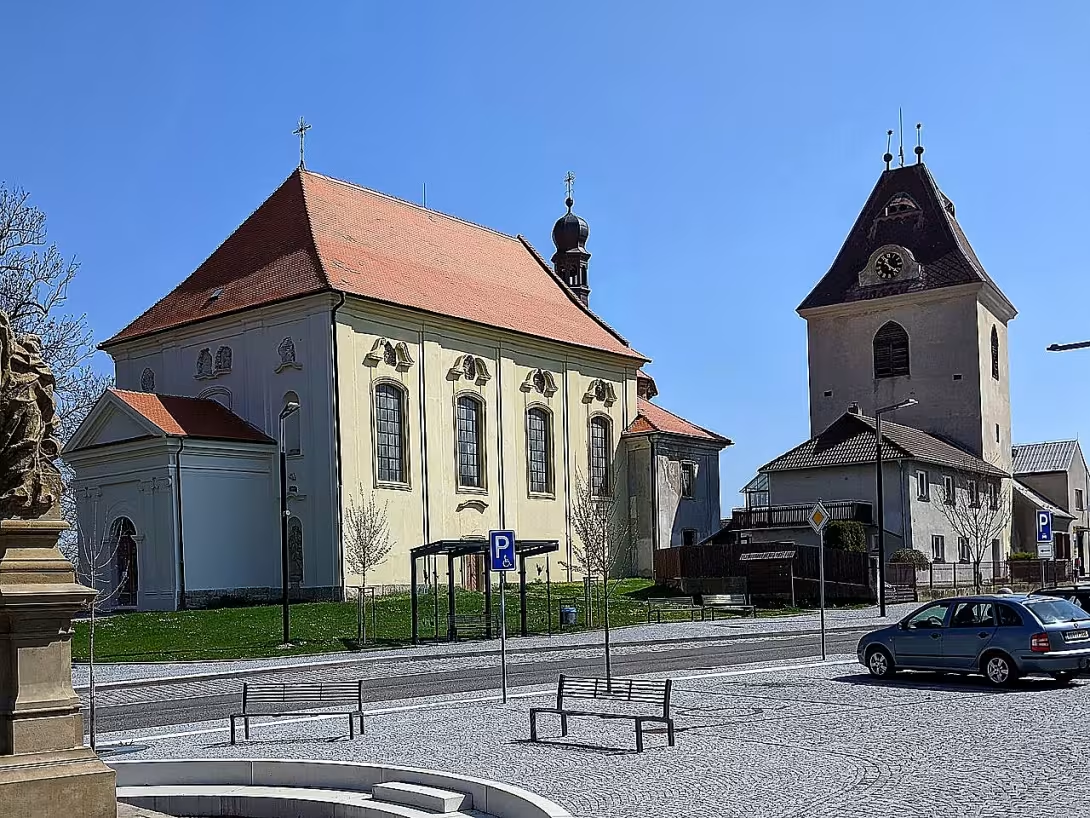
Kostel svatého Václava in Brno is a Baroque sacral monument with rich history and architectural elements from the 18th century. The building was built in 1718 by Count Adam Maxmilián z Bubna a Litic. The church represents not only an important cultural object of the Czech Republic, but also a fascinating example of Baroque style. Thanks to the position at the chateau and the rich sculpture decoration, it is a attraction for lovers of history.
The creation of the building is closely linked to this very nobleman. His decision to build in 1718 corresponded to the peak of the Baroque era in Central Europe. At that time, the nobles invested in sacral architecture to demonstrate their influence and wealth. The church was part of a wider intention to develop and decorate the local estate.
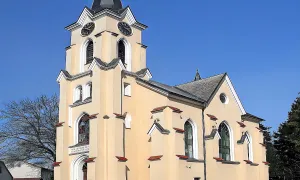
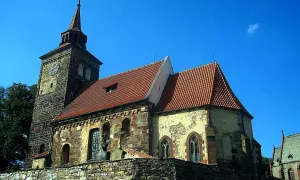
It is an architectural building with a rectangular plan and polygonal finish by a presbytery. The building contains a western hall, sacristy and side orator. The facades are decorated with eight statues and a bust of saints or evangelists from the cosmos sculptor's hut M. Jelinek, which we date back to 1760. The interior is dominated by a rolling vault with lunettes on wall pilasters.
The history of church administration was variable. After its establishment, Count Adam Maxmilián z Bubna a Litic played a key role, but during the communist era the construction remained closed for almost three decades. The fate of the monument changed after 2000 when intense reconstruction took place leading to its reoperation.
An important stage was repairs financed by the Architectural Heritage Rescue Programme in the years 1995- 2014, when 3 650 000 CZK was used for maintenance. The interior equipment dates back to around 1740 and mainly belongs to Jelínek's studio, which increases the historical value of the whole.
Today the church of St. Wenceslas in Brno is repaired and accessible to visitors. Rich sculpture decoration, historical details and the proximity of the chateau make it a unique destination for trips. A tour of this monument allows you to recognize the jewel of baroque art and the context of its origin.
The church is not only a relic of the past, but a living witness to the cultural tradition of the Czech countries. The visit offers insight into baroque art and shows how noble families influenced local architecture. For those interested in history, this monument represents not only a visual experience but also an intellectual journey into the past.
Then and now
Drag the slider to compare how the landmark may have looked when it was built with the view today.
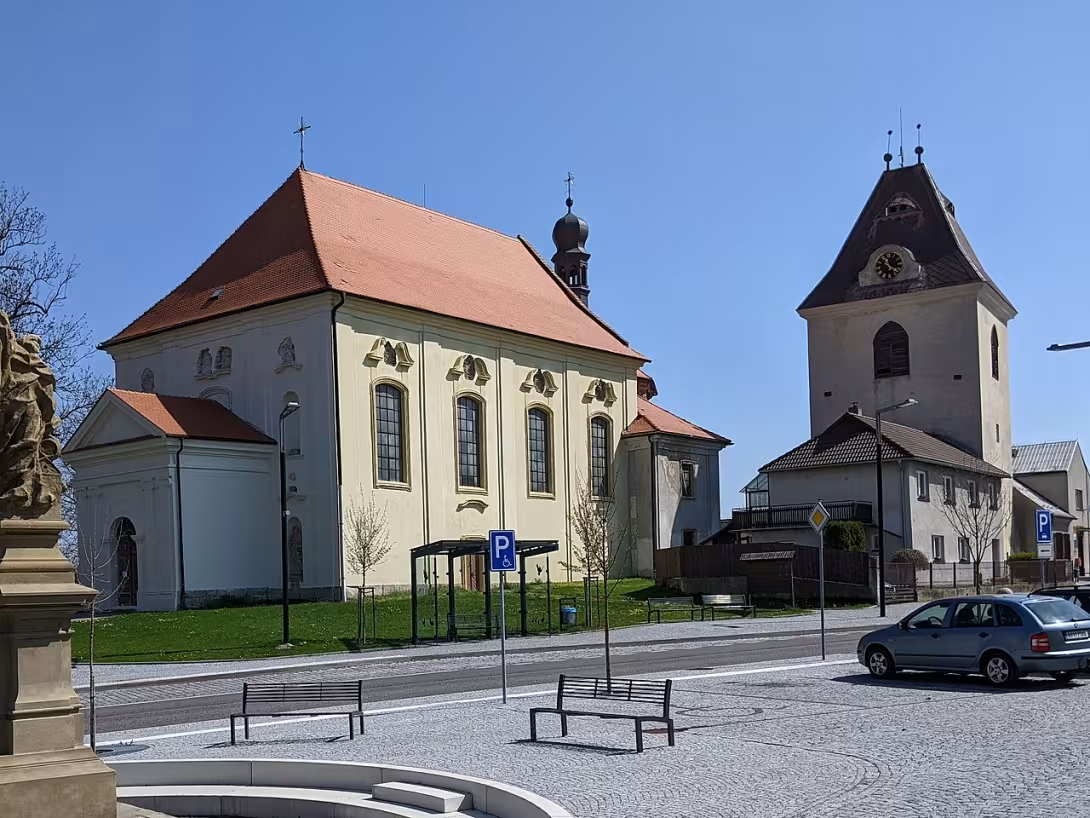
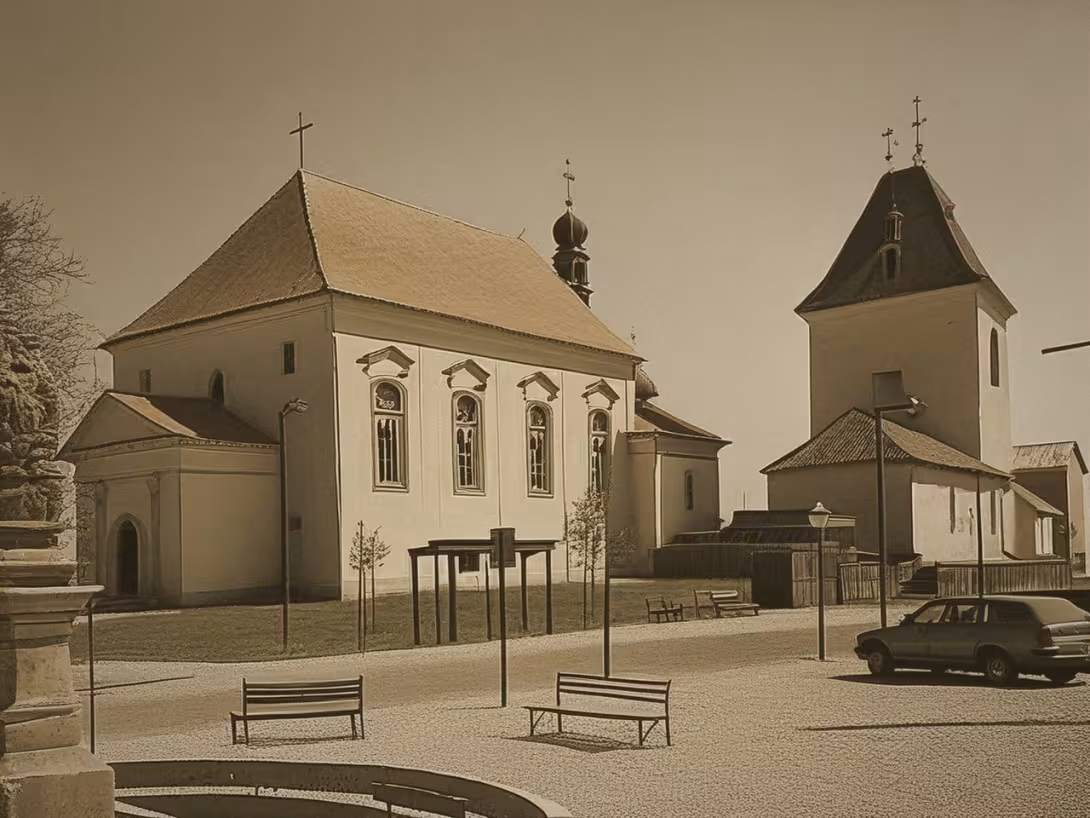
The historical appearance on the left is an AI-generated visualisation and serves as inspiration only.
Historical milestones
- 1718
- Status of the church by Count Adam Maximilian of Bubno and Litic
- 1820
- Creation of the Cross Path by A. Košatecký
- 1995
- Start of the recovery of funds under the Architectural Heritage Programme
Architectural development
A single-storey Baroque building with a vaulted vault and lunettes on wall pilavers. The facades are decorated with statues and busts of saints and evangelists from the cosmosian sculptor's hut. The internal equipment is mainly from around 1740.
Historical events
1718: The position of the church by Count Adam Maximilian of Bubno and Litic. 1998-2014: Period of repair financed by the Architectural Heritage Rescue Programme. After 2000: Intensive construction work for the purpose of reoperation.
Owners
Adam Maxmilián z Bubna a Litic (builder in 1718)
Points of interest
- Kostel svatého Václava in Brno is a Baroque sacral monument with rich history and architectural elements from the 18th century. The building was built by Count Adam Maxmilián z Bubna a Litic in 1718. - The church contains eight statues and a bust of saints or evangelists from the Kosmonose sculptor's hut M. Jelinek, which we date back to 1760. - After 2000 there were intense reconstruction leading to the reoperation of the church. - The repairs were financed from the Architectural Heritage Rescue Programme in 1995- 2014, when 3 650 000 CZK was used for maintenance.
Guide
Show guide text
This text was created by artificial intelligence and has not been editorially reviewed. It may contain inaccuracies.
Welcome, dear listeners, and welcome to this moment when you are standing in front of the Baroque sacral structure that dominates the region of March. In front of you is the church of St. Wenceslas, whose massive stone facade and calm form tells the story of timeless faith and noble patronage. Notice how heavy stone walls meet the surrounding chateau, which is part of the historical complex, and how such architectural interplay becomes the gateway to a world where spiritual dimension and artistic skill are combined.
You are standing here in the place where in 1718 Count Adam Maxmilián z Bubna a Litic had built this church. His decision was motivated not only by personal piety, but also by the desire for a lasting legacy that would link the family to the local community and to the divine. At the time the Baroque style spread across Europe, a new spiritual oasis was born in Brno to serve as a centre of liturgical life and as a reminder of the noble patronage. The creation of this building was part of a broader cultural and social context, when noble families invested in religious structures to strengthen their social position while supporting the spiritual development of the region.
When looking at the architecture itself, pay attention to several key elements that are typical of the Baroque period while unique to this particular church. The building is single-storey, which means that its main body is made up of one large hall, which extends in a rectangular plan. This simple but majestic shape was chosen for its functionality and for the possibility of creating a spacious interior where believers gather. On the east side there is a polygonal presbytery whose multiwall shapes extend the space and provide it with dynamics typical of baroque play of light and shadow. The west hall, which welcomes you at the entrance, serves as a crossing between the outside world and the sacred interior. In it you can perceive the first touch of the Baroque atmosphere, which gradually develops to the main hall. Behind the hall there is a sacristy where liturgical objects are prepared and valuable artifacts are preserved. This spatial organization - hall, main hall and sacristy - reflects the careful planning of architects M. Jelinek, J. Jelinek and A. Košatecký, who participated in the completion of the construction.
Now let's focus on the details that you can see right now on the facade and in the nearby area. Notice how stone blocks are arranged into regular rows, creating the impression of strength and stability. Decorative niche and windows, although not detailed in historical records, suggest typical baroque motifs that should be decorated with reliefs or statues. Through the main entrance leads the west hall, where you can meet the first signs of rich decoration that develops in the interior. The entrance portal is probably lined with columns and pilastri, which is characteristic of baroque entry compositions and prepares visitors for other aesthetic experiences.
When you look inside, your attention immediately draws a richly decorated interior, which is exceptional not only by its artistic rendition, but also by the craft skills with which it was created. The Baroque elements that you will find here are supplemented by eight statues and busts of saints or evangelists, made in the cosmos sculptor's hut by M. Jelinek. These statues represent not only religious figures, but also evidence of a high level of sculpture tradition that developed in the region. Each one bears his own expression, which reveals not only the spiritual meaning, but also the personal character of the sculptor. Since they are located in the church space, they serve as a visual reminder of the saints to whom the believers turn in prayer.
Key stories associated with this place include not only the construction itself, but also other historical events that shaped the church. In 1820 there was a cross road created by A. Košatecký. This journey, guided on the ground around the church, represents a spiritual journey during which believers can focus on reflection and contemplation. Every step along the cross road is linked to prayer and a reminder of Christ's suffering, and thus becomes part of the wider religious context that enriches St. Wenceslas's church. Another important event is 1995, when the programme for the conservation of architectural heritage was launched. This programme started to draw on the means to repair and maintain the church, indicating that even after more than two centuries this building remains a living and valuable element of Czech cultural and religious life.
The Count Adam Maxmilián z Bubna a Litic, whose initiative and financial support have enabled the creation of this baroque pearl, stands out among the people closely associated with this place. His name is inseparably linked to the history of the church and the importance he had for the local community. Another important figure is Heřman Št. z Bubna, whose role in the history of the church is not described in detail, but his presence in historical records suggests that he was also involved in the support and development of this spiritual centre. Both of these noble figures represent a bridge between aristocracy and religious life, which was so important in the 18th century.
The interesting thing that may interest you is that the eight statues and bust that decorate the interior come from the Kosmonose sculpting plant M. Jelínek. At that time, this sculpture workshop was one of the few places where such sophisticated and quality sculptures were produced. Each of them bears not only religious significance, but also traces of a craft tradition passed down from generation to generation. Think about the importance of having such a work of art in the church at the time - not only as an object of worship, but also as a symbol of cultural flourishing and technical progress. Moreover, the crossing path created in 1820, although not known as some other pilgrimage routes, is a unique element that combines the historical period with spiritual practice and gives visitors the opportunity to experience personal reflection in the context of the historical environment.
When you look around, see how the church of St. Wenceslas stands close to the chateau, creating a dialogue between secular and spiritual. This location underlines the historical interplay of power and faith, where noble forces supported religious institutions and, on the contrary, the church strengthened social cohesion. Note that even after more than three centuries the building is protected as a cultural monument of the Czech Republic, which shows its importance not only to the local population but also to the whole country. Protecting and maintaining such a building is proof that society cares about its historical roots and that future generations can admire and learn from the past.
Now that you have put on headphones and listened to this guide voice, you have a unique opportunity to immerse yourself in the atmosphere that persists here. Step into the hall, walk down the cross road, look at the statues and let the baroque details surrounding you carry you. Every step you take is linked to history, art and faith. Let yourself be guided by this space and see how the different layers of time intersect in one whole.
Finally, I invite you to move on and explore not only the church itself, but also its surroundings. Walk through the courtyard, listen to the whisper of the wind between the stones and imagine how believers, nobles and craftsmen met here in the past centuries. Every detail you discover here is part of a rich story waiting for your listener. Thank you for joining this audio guide, and I wish you to keep your visit to St. Wenceslas's church in mind as an unforgettable experience that links the past to the present. Say goodbye to this place with the feeling that you have become part of a long chain of people who have found refuge, inspiration and beauty here. Goodbye and look forward to your further discovery of historical treasures.
Tips for visitors
The best time to visit St. Wenceslas' church is in the spring or autumn period, when nature is particularly lovely in the surroundings and temperatures are favourable for long stay. The Baroque architecture of the church is perfectly illuminated by sunlight in these months, which increases its beauty.
For those travelling by public transport, it is advisable to verify the current connection using an online search engine.
What to take with you: It is recommended to wear comfortable shoes and clothes suitable for walking in the countryside. Don't forget the umbrella, goggles and water, especially if you plan to stay in the area.
Photography: The best places for photos are gardens around the church or from the east side where the sun appears behind a rectangular plan. The sunny light of the afternoon illuminates architectural details and the trees around the church form an attractive landscape.
What to visit nearby: There is a chateau nearby in Brno, which is suitable to explore after visiting the church. The chateau offers beautiful architecture and historical information about the region. For families with children the chateau is an interesting place where they can learn about the past and explore the natural environment.
Frequently asked questions
Can the monument be visited?
Religious buildings are usually open mainly during services; at other times a visit is normally arranged with the parish or the operator. We have not verified specific times.
Where is the monument?
Location: Středočeský kraj. The map on this page shows the exact spot.
Why is the monument protected?
It is listed in the Central List of Cultural Monuments of the Czech Republic as a cultural monument (register no. 1000133073).
Businesses nearby
Do you run a restaurant, accommodation, shop, museum, rental, wellness or other visitor service near this monument? Show yourself directly to the people heading to it — this is how they will see you in the app and on the web:
Events nearby
Zdroj akcí: otevřená data měst a obcí ČR (Národní katalog otevřených dat) a kalendář akcí Národního památkového ústavu.
Nearby
The chateau in March.
Accommodation nearby
Themed route
1. Kostel svatého Václava, church, tour of sacral architecture and the history of the local community. 2. Kostel svatého Václava, interior, here you can admire religious art and historical elements. 3. Chateau in Brno, chateau, tour of the historical nobility and its architecture. 4. Chateau in Brno, the complex, offers a pleasant walk in the immediate vicinity of the chateau.
Seasonal recommendations
Spring brings the surroundings of the church to life and fresh greenery gives the historic place a new touch. Light is soft and pleasant in this period, which allows a detailed tour of stoning without sharp shadows. We recommend wearing layered clothes because the weather can change quickly. It is best to visit the memory of the morning when the air is fresh and the traffic is still reasonable.
In the summer months the atmosphere around the monument is very lively and the sun illuminates every tower and detail of architecture. Due to high temperatures and the greatest pressure on people, it is best to arrive first thing in the morning after opening to avoid the biggest crowds and heat. Dress lightly and in the air, and if you plan to stay in the area longer, have water with you.
Autumn brings peace and melancholy to the church, underscored by golden shades of leaves and morning fog. Low sun creates interesting playful shadows on the facade, which is ideal for photography. It is advisable to take warmer layers and a scarf, because afternoon cooling is usually considerable. A visit in late afternoons offers the best lighting conditions for the perception of history.
Zimą is a noble church and quiet in its interior offers shelter from frost. If snow covers the surrounding area, the whole looks fabulous. It is absolutely essential to wear very warm clothes and quality shoes. The opening time is shorter in advent time and during freezing days, so check it in advance and plan a visit on clear days when visibility is best.
Visualizations and artistic views


The visualisations are generated by artificial intelligence and serve as inspiration.
Photos from the area
Real photos taken near the monument


Zdroj a licence jsou uvedeny u každého snímku.
Tips from visitors
No tips yet. Be the first!
Log in and add your tip.
Sources and literature
Photos: MartinVeselka / CC BY-SA 4.0 — Wikimedia Commons. The author and licence also appear when you hover over the image.
Faktickým podkladem tohoto textu byl článek na Wikipedii, jehož autory jsou přispěvatelé Wikipedie. Článek je dostupný pod licencí CC BY-SA 4.0.
Location on the map

Příběhy a pověsti
Legendy, pověsti a příběhy spjaté s touto památkou
Fotografie návštěvníků
Zatím žádné fotografie. Buďte první, kdo přidá fotografii z návštěvy!
Log in a přidejte svou fotografii nebo hodnoťte.
Za ověřenou návštěvu v aplikaci získáte víc bodů — poznáme podle GPS, že jste na místě.
Reviews and comments