






Kostel svatého Václava (Boč) Church
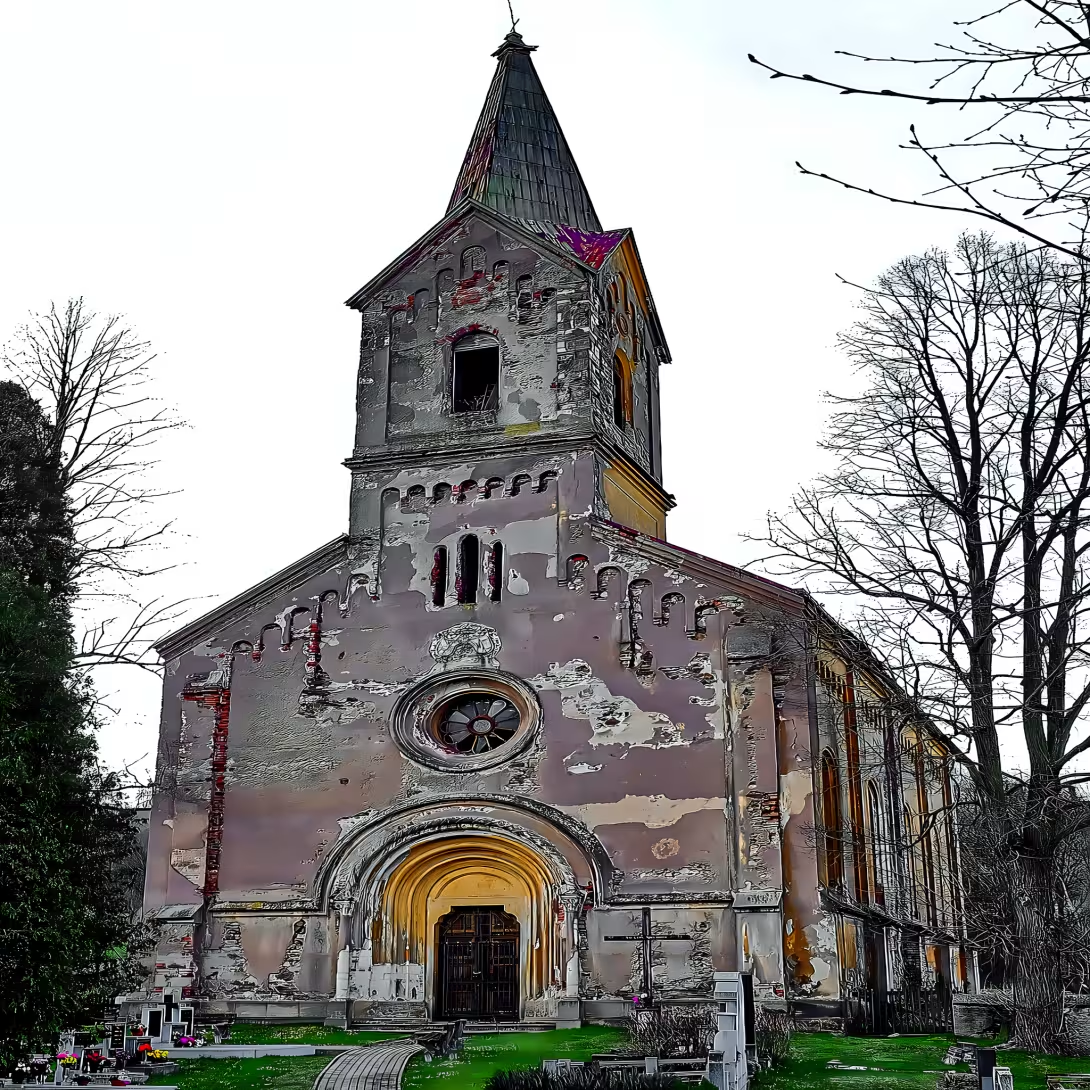
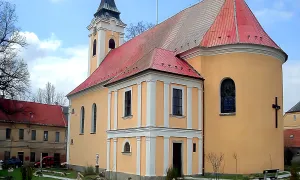
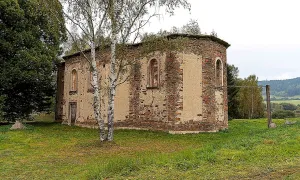
The Church of Saint Wenceslas in Boč is a Roman Catholic church dedicated to Saint Wenceslas. It is located in the village of Boč within the Stráž nad Ohří district of Karlovarský kraj. First mentioned in 1277 as part of a provostship held by monks from Postoloprty Monastery, this historical monument has undergone several transformations over the centuries. The current Neo-Romanesque structure was built between 1874 and 1875, replacing an earlier church demolished after its last known reconstruction in 1789.
The origins of the Church of Saint Wenceslas trace back to 1277 when it was first documented as part of a provostship managed by monks from Postoloprty Monastery. The church served as compensation for lost property at Klášterec nad Ohří, highlighting its significance within ecclesiastical and local history. Over the centuries, the original structure underwent multiple reconstructions to adapt to changing needs and circumstances. By 1789, significant modifications were made before it was demolished entirely. This led to the construction of a new church in the Neo-Romanesque style between 1874 and 1875, reflecting architectural revival trends prevalent across Europe during that period.
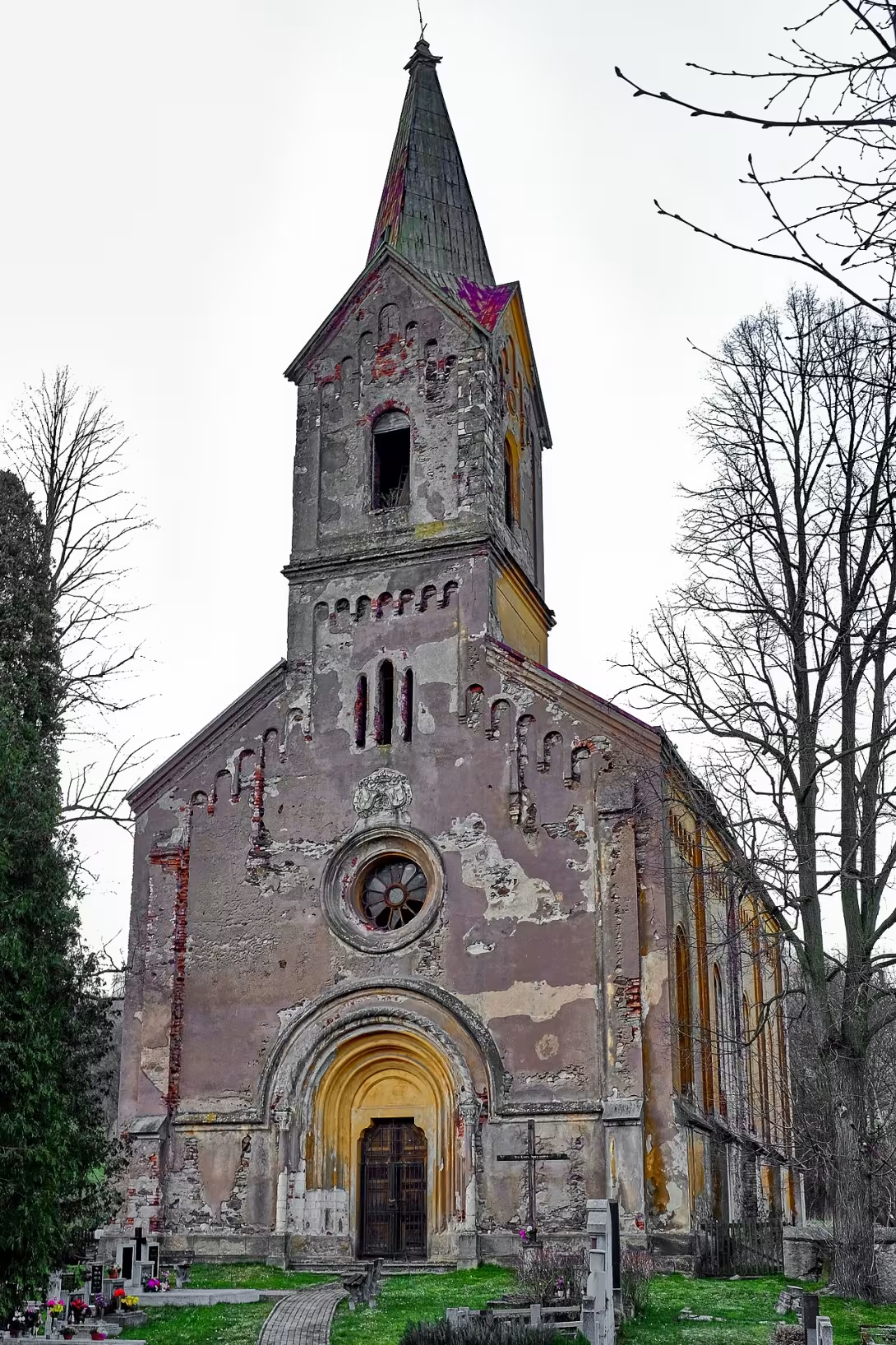
Architecturally, the Church of Saint Wenceslas is characterized by its Neo-Romanesque design. The building features an oblong nave with a square presbytery and sacristy attached to its northern side. A distinctive element of the church's southern façade is the Neo-Romanesque portal, adorned with two coats of arms and a large circular window that adds to its aesthetic appeal. Additionally, the structure includes a square tower rising from the roofline above this portal, contributing to its imposing presence.
Throughout its history, the Church of Saint Wenceslas has been an integral part of the local community's spiritual life. The interior houses pseudo-style furnishings and a Gothic statue of Madonna dating back to the mid-15th century, adding historical depth to the church’s artistic elements. Furthermore, the church features a set of 1820 pipe organ pipes crafted by Jan Ferdinand Guth, enhancing its cultural significance.
The church is situated in an area rich with heritage, including a nearby 18th-century parsonage that stands as a protected monument south of the church. This setting offers visitors a glimpse into the historical and architectural landscape typical of Bohemian countryside, providing context to the church’s enduring legacy.
Today, the Church of Saint Wenceslas remains an accessible site for visitors interested in exploring its historical and architectural significance. Its Neo-Romanesque design, coupled with its rich history dating back to 1277, makes it a noteworthy destination for those keen on understanding the cultural heritage of the region. The church’s preserved artifacts, such as the Gothic Madonna statue and historic organ pipes, further enhance its appeal.
The Church of Saint Wenceslas in Boč stands as a testament to the enduring legacy of architectural evolution and historical continuity within Bohemia. Its significance is not only rooted in its religious function but also in its representation of broader European trends during the 19th century. Visitors are invited to explore this remarkable site, where history and architecture converge to tell the story of a community's spiritual journey through time.
Then and now
Drag the slider to compare how the landmark may have looked when it was built with the view today.
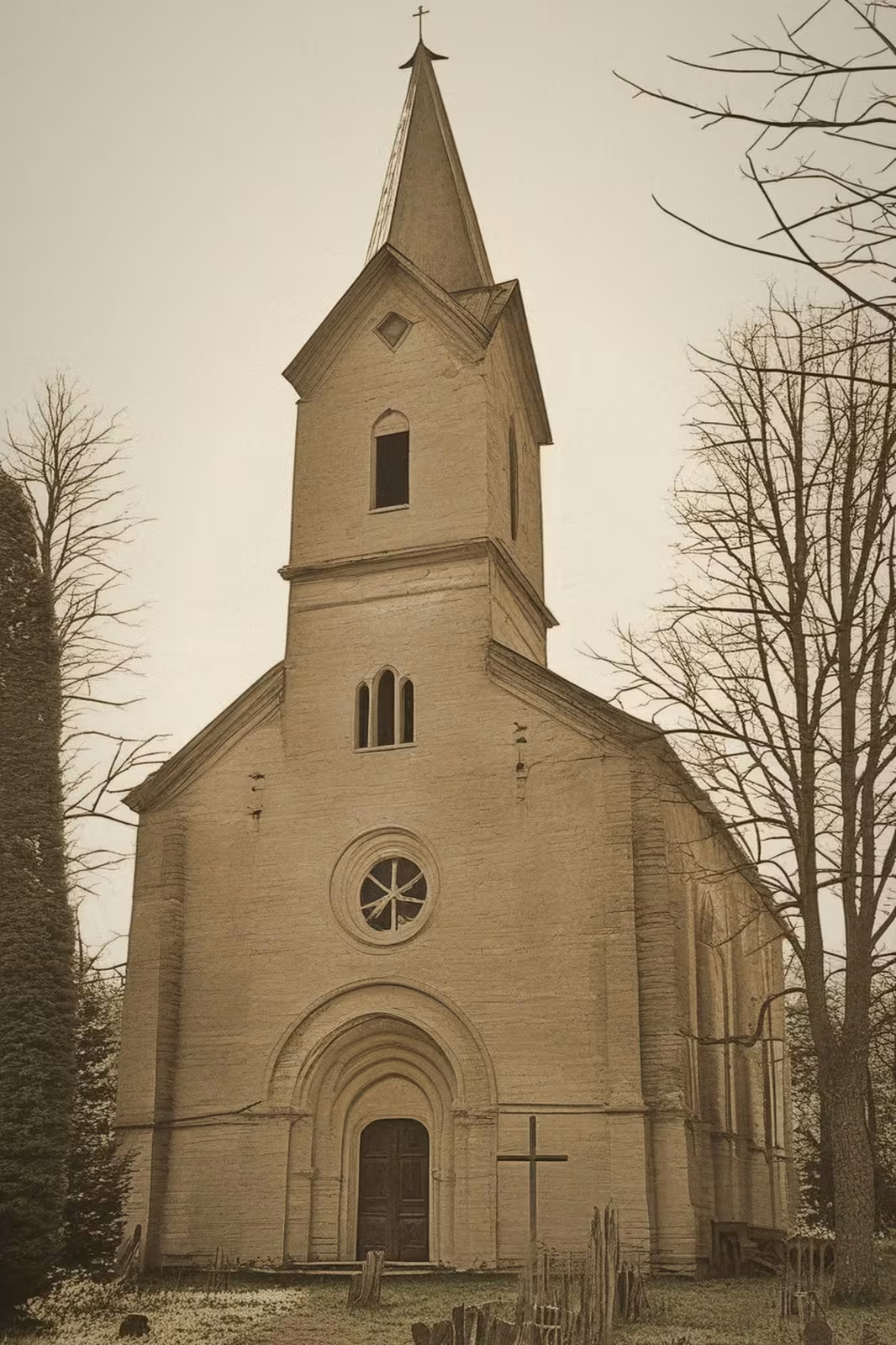
The historical appearance on the left is an AI-generated visualisation and serves as inspiration only.
Historical milestones
- 1277
- Church first mentioned as part of a provostship.
- 1789
- Last known reconstruction before demolition.
- 1874
- Construction of current Neo-Romanesque church begins.
- 1875
- Construction of current Neo-Romanesque church completed.
Architectural development
The Church of Saint Wenceslas has a rich architectural history, initially constructed in an unspecified style and mentioned as early as 1277. It underwent several reconstructions over the centuries, with significant changes made in 1789. The original structure was eventually demolished and replaced by a new church built between 1874 and 1875 in the Neo-Romanesque style.
Historical events
1277: The church is first mentioned as part of the provostship held by monks from Postoloprty Monastery.
1789: Last known reconstruction before the original structure was demolished.
Guide
This guide is narrated by a synthetic voice generated by artificial intelligence.
Show guide text
This text was created by artificial intelligence and has not been editorially reviewed. It may contain inaccuracies.
Welcome to the Church of Saint Václav in Boč, a remarkable testament to both history and architecture nestled within this charming village. As you stand here, take a moment to soak in the serene atmosphere surrounding this Neo-Romanesque structure. Its presence is a gentle whisper from the past, inviting you to explore its storied walls.
The origins of this church date back to 1277 when it was first mentioned as part of a provostship managed by monks from Postoloprty Monastery. This connection highlights an early intertwining with monastic life and ecclesiastical administration, setting the stage for centuries of religious significance in Boč. Over time, the church underwent various transformations, reflecting the evolving architectural styles and needs of its community.
In 1789, significant modifications were made to the original structure, marking a pivotal moment before it was eventually demolished. This led to the construction of the current Neo-Romanesque edifice between 1874 and 1875. As you gaze upon it now, notice the distinctive features characteristic of this style—robust forms, rounded arches, and symmetrical facades that evoke a sense of grandeur and timelessness.
While specific architects remain unknown, their vision has left an indelible mark on Boč’s landscape. The church stands not just as a place of worship but as a monument to the community's resilience and dedication through the ages.
One intriguing aspect of this site is its historical connection with Postoloprty Monastery. This relationship underscores the church's role in the broader religious network, serving as a spiritual hub for monks who played a crucial part in shaping the region’s ecclesiastical history.
As you continue your exploration, let yourself be drawn into the stories and mysteries that this place holds. Each stone seems to carry echoes of prayers and gatherings from centuries past, inviting reflection on the lives intertwined with its existence.
We invite you to delve deeper into Boč’s rich heritage as you wander through its streets and discover other hidden gems. Thank you for joining us on this journey; may your visit be both enlightening and memorable. Safe travels as you continue exploring the wonders of Karlovarský kraj!
Tips for visitors
The best time to visit the Church of Saint Wenceslas in Boč is during late spring or early autumn when the weather is pleasant, allowing you to fully enjoy both the church's architecture and the surrounding Bohemian countryside. This period also offers softer light for photography and fewer crowds, enhancing your experience. The 18th-century parsonage nearby adds a historical context that complements the visit.
Public transport is accessible, with routes connecting major towns within the Karlovarský kraj region. For those traveling by car, checking a reliable map service for the most current route information is recommended.
When visiting the Church of Saint Wenceslas in Boč, it's advisable to bring comfortable walking shoes and weather-appropriate clothing, as you may wish to explore the surrounding countryside or the parsonage nearby. A camera with a good zoom lens can be beneficial for capturing detailed shots of the church's architecture, especially during golden hours when the light is most flattering.
For photography enthusiasts, the best spots around the Church of Saint Wenceslas are those that capture its silhouette against the Bohemian landscape, particularly at sunrise or sunset. The 18th-century parsonage provides a contrasting architectural element for interesting compositions. Families with children will find the area welcoming, with plenty of space to explore outdoors.
In addition to the Church of Saint Wenceslas and the nearby parsonage, families can enjoy exploring the typical Bohemian countryside within a 30-minute drive. This includes walking trails that offer beautiful views and opportunities for picnics in scenic settings. These activities are perfect for engaging children with nature and history.
Frequently asked questions
Can the monument be visited?
Religious buildings are usually open mainly during services; at other times a visit is normally arranged with the parish or the operator. We have not verified specific times.
Where is the monument?
Location: Boč, Karlovarský kraj. The map on this page shows the exact spot.
Why is the monument protected?
It is listed in the Central List of Cultural Monuments of the Czech Republic as a cultural monument (register no. 106912).
Businesses nearby
Do you run a restaurant, accommodation, shop, museum, rental, wellness or other visitor service near this monument? Show yourself directly to the people heading to it — this is how they will see you in the app and on the web:
Nearby
South of the church stands an 18th-century, heritage-protected single-story parsonage. The surrounding landscape includes typical Bohemian countryside.
Accommodation nearby
Trips and activities nearby
Guided tours, tickets and activities nearby from GetYourGuide
Affiliate link: if you buy from the partner, we may receive a commission. The price for you does not change.
Search tours and activities →Themed route
Thematic Walking Tour: The Church of St. Wenceslas and Surroundings
1. Church of St. Wenceslas (Kostel svatého Václava) - Type: Historical Landmark - Why Visit: This stunning Baroque church, located in the village of Boč, is a testament to the rich architectural heritage of the region. Its intricate design and historical significance make it an essential stop for anyone interested in religious architecture or local history.
2. 18th-Century Parsonage - Type: Heritage-Protected Building - Why Visit: Situated just south of the church, this single-story parsonage offers a glimpse into 18th-century rural life. Its well-preserved structure and historical importance provide insight into the everyday lives of those who served in the church community.
3. Bohemian Countryside - Type: Scenic Landscape - Why Visit: The surrounding landscape is characterized by typical Bohemian countryside features, offering picturesque views that enhance the tranquility of your visit. Walking through this area allows you to appreciate the natural beauty and serene environment that complements the historical sites.
This tour provides a comprehensive exploration of Boč's cultural and natural heritage, focusing on significant landmarks within the village itself.
Seasonal recommendations
Spring: Visiting the Church of Saint Wenceslas in Boč during spring offers a unique opportunity to witness the surrounding landscape coming back to life, with blooming wildflowers and lush greenery creating a picturesque setting. The gentle sunlight enhances the natural beauty around the church, casting soft shadows that add depth to its historic architecture. During this time, the church may host various cultural events celebrating renewal, making it an ideal period for those interested in experiencing local traditions. Visitors should dress in layers due to variable temperatures and consider arriving early to avoid crowds during popular event days.
Summer: Summer is a vibrant season to explore the Church of Saint Wenceslas, with long daylight hours providing ample time for sightseeing. The warm weather invites visitors to enjoy outdoor activities nearby, such as hiking or picnicking in the scenic countryside. This is also the peak tourist season, so it's advisable to plan your visit early in the day to avoid larger crowds and ensure a more tranquil experience. Light clothing and comfortable shoes are recommended for navigating both the church grounds and surrounding areas.
Autumn: Autumn transforms Boč into a tapestry of warm colors, with golden leaves creating a stunning backdrop for the Church of Saint Wenceslas. The cooler temperatures make it an ideal time to explore without the summer heat, while shorter days mean planning your visit during daylight hours is essential. This season often brings a quieter atmosphere as tourist numbers dwindle, allowing for a more intimate experience. Dressing in layers and bringing a light jacket can help you stay comfortable as temperatures fluctuate.
Winter: Winter offers a magical setting for visiting the Church of Saint Wenceslas, with snow-covered landscapes providing a serene and enchanting atmosphere. The church may be illuminated by soft lighting, enhancing its historic charm against the snowy backdrop. This season typically sees fewer visitors, allowing for a peaceful exploration. However, it's important to dress warmly in insulated clothing and wear boots suitable for potentially icy conditions.
Visualizations and artistic views


The visualisations are generated by artificial intelligence and serve as inspiration.
Photos from the area
Real photos taken near the monument

Zdroj a licence jsou uvedeny u každého snímku.
Tips from visitors
No tips yet. Be the first!
Log in and add your tip.
Sources and literature
Photos: Lubor Ferenc / CC BY-SA 4.0, rozlišení zvýšeno umělou inteligencí — Wikimedia Commons. The author and licence also appear when you hover over the image.
Faktickým podkladem tohoto textu byl článek na Wikipedii, jehož autory jsou přispěvatelé Wikipedie. Článek je dostupný pod licencí CC BY-SA 4.0.
Location on the map
Příběhy a pověsti
Legendy, pověsti a příběhy spjaté s touto památkou
Fotografie návštěvníků
Zatím žádné fotografie. Buďte první, kdo přidá fotografii z návštěvy!
Log in a přidejte svou fotografii nebo hodnoťte.
Za ověřenou návštěvu v aplikaci získáte víc bodů — poznáme podle GPS, že jste na místě.
Reviews and comments