






Kostel svatého Václava (Bubovice) Church
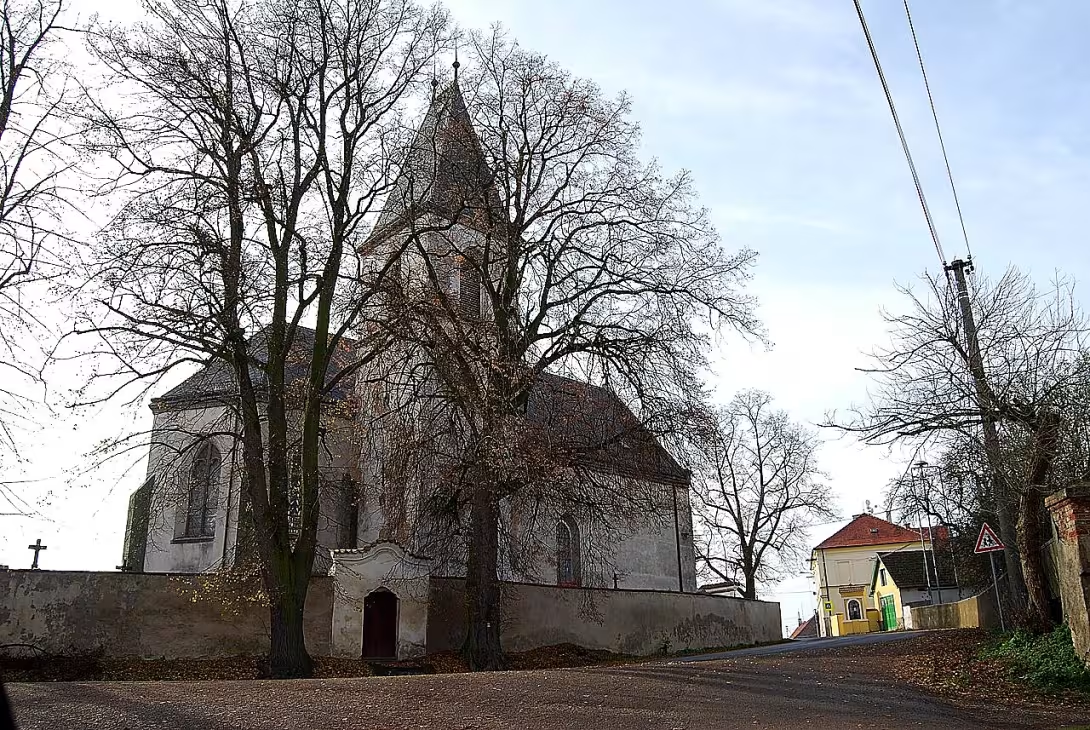
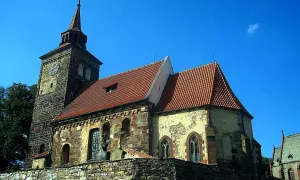
The Church of Saint Wenceslas in Bubovice is a single-nave Gothic church that has undergone various architectural modifications over the centuries, including Renaissance, Baroque, and Neogothic styles. Located within the village of Bubovice, part of Volenice municipality in the Středočeský region, this cultural monument stands as a testament to its historical significance through art and architecture. Originally established by the end of the 13th century, it became a parish church in 1361 and features valuable 14th-century paintings depicting scenes from the lives of Christ and Mary.
The origins of the Church of Saint Wenceslas trace back to the late 13th century when Bohemia was part of the Holy Roman Empire. During this period, Gothic architecture emerged as a dominant form across Europe. Although historical sources do not provide precise details about its initial construction, it is assumed that the church existed by 1340, evidenced by valuable paintings in the presbytery. By 1361, the church had been elevated to parish status, reflecting its growing importance within the community.
Architecturally, the Church of Saint Wenceslas began as a Gothic structure and has since been modified through various styles. In the early 17th century, between 1626 and 1629, significant Baroque renovations were initiated by royal procurator Přibík Jeníšek z Újezda. These changes marked the beginning of a series of transformations that continued into the late 17th century when the Jesuit order took over its administration in 1659, implementing further Baroque modifications. The early 18th century saw the church equipped with Baroque furnishings, including a main altar featuring a statue of Saint Wenceslas.
Ownership and administrative changes have played crucial roles in the church's history. After the suppression of the Jesuit order by Pope Clement XIV in 1773, the church lost its parish status in 1788. This marked the beginning of a prolonged period of neglect that lasted throughout the 19th century. Despite this decline, the bubovické farnost was re-established in 1858, although it did not prevent further deterioration.
Key events in the church's history include its Baroque renovations and later Neogothic modifications from 1905 to 1907, which added new elements such as a bell tower. The early 20th century also saw the installation of electric lighting and new stained glass windows, reflecting ongoing efforts to preserve and enhance the structure. Despite these improvements, by the late 20th century, the church had seen little maintenance until significant repairs were undertaken in the 1990s.
Today, the Church of Saint Wenceslas stands as a cultural monument open for visitors to explore its rich history and architectural beauty. Although it lost its parish status in 2019 and became a filiální (filiated) church under Březnice, its historical significance remains undiminished. The church's valuable 14th-century paintings and its journey through various architectural styles make it a worthwhile destination for those interested in history and art.
Visiting the Church of Saint Wenceslas offers a unique opportunity to delve into the layers of Bohemian history and appreciate the artistic endeavors that have shaped this remarkable monument over centuries. Its enduring legacy as a cultural treasure invites exploration and reflection, making it an essential stop for anyone journeying through the heart of the Czech Republic.
Then and now
Drag the slider to compare how the landmark may have looked when it was built with the view today.
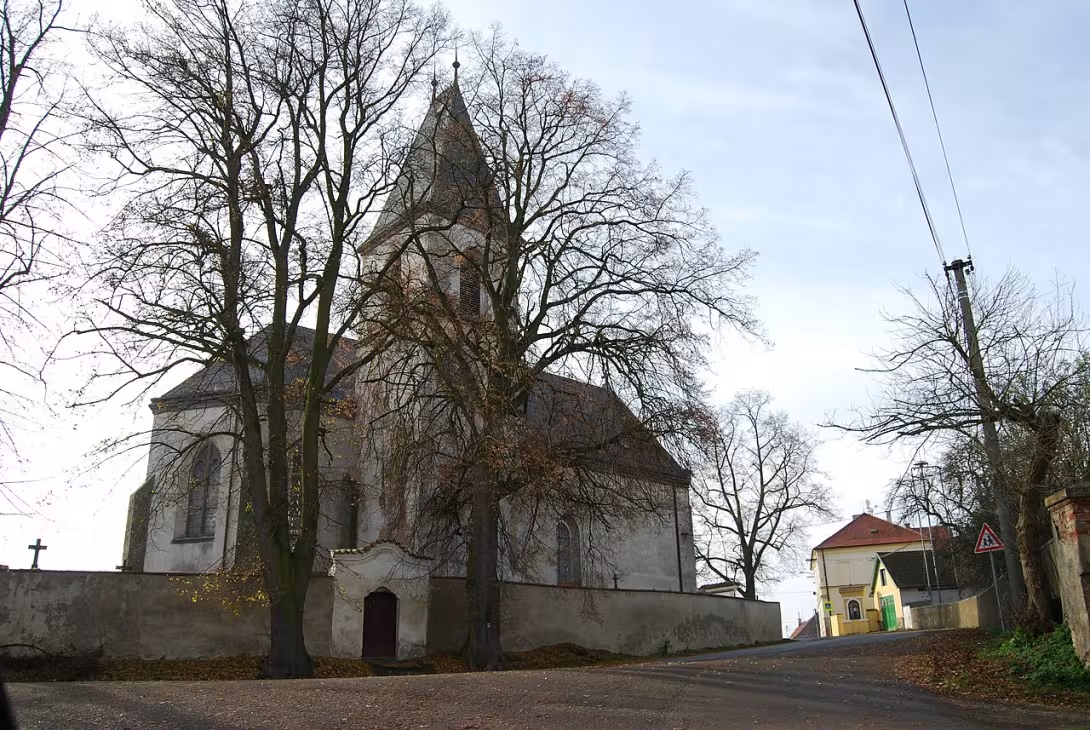
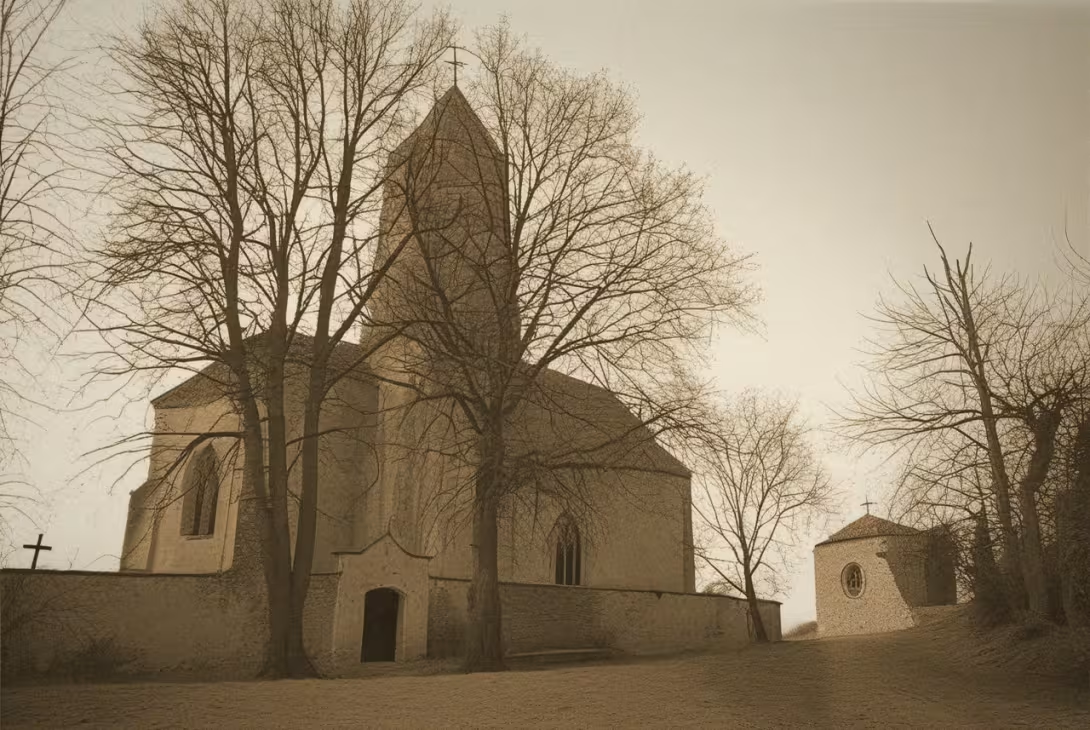
The historical appearance on the left is an AI-generated visualisation and serves as inspiration only.
Historical milestones
- 1340
- The church existed by this year as evidenced by valuable paintings in the presbytery.
- 1361
- Elevated to parish status.
- 1626-1629
- Underwent Baroque renovations initiated by Přibík Jeníšek z Újezda.
- 1659
- Jesuit order took over administration and made further Baroque modifications.
- 1905-1907
- Neogothic renovation added new elements like a bell tower.
Architectural development
Originally a Gothic structure from the late 13th century, the Church of Saint Wenceslas has been modified through various architectural styles. It underwent Baroque renovations between 1626 and 1629, followed by further changes under the Jesuit order in the late 17th century. The church was later equipped with Baroque furnishings in the early 18th century. A significant Neogothic renovation occurred from 1905 to 1907, adding new elements like a bell tower.
Historical events
The church was elevated to a parish status in 1361.
In 1626-1629, significant Baroque renovations were initiated by royal procurator Přibík Jeníšek z Újezda.
In 1659, the Jesuit order took over its administration and made further Baroque modifications.
The church lost its parish status in 1788 after the suppression of the Jesuits.
Points of interest
- The Church of Saint Wenceslas is home to rare 14th-century paintings depicting scenes from the lives of Christ and Mary, offering a unique glimpse into medieval religious art in Bubovice.
- Despite losing its parish status in 1788 following the suppression of the Jesuit order, the church underwent significant Baroque renovations initiated by royal procurator Přibík Jeníšek z Újezda between 1626 and 1629, showcasing a blend of historical influences.
- In an unusual twist of fate, after centuries of architectural evolution from Gothic to Neogothic styles, the church experienced a period of neglect in the 19th century before being revitalized with electric lighting and new stained glass windows in the early 20th century.
- The church's history includes ownership by the Jesuit order until their suppression in 1773, after which it saw little maintenance through much of the 19th century, highlighting a dramatic shift from religious prominence to decline.
- Although the church lost its parish status again in 2019 and became filiální under Březnice, it remains a cultural monument open for visitors, preserving its historical significance despite administrative changes.
Guide
This guide is narrated by a synthetic voice generated by artificial intelligence.
Show guide text
This text was created by artificial intelligence and has not been editorially reviewed. It may contain inaccuracies.
Welcome to the Church of Saint Václav in Bubovice, a remarkable testament to architectural evolution and cultural heritage nestled in the heart of Středočeský kraj. As you stand before this historical monument, take a moment to absorb its Gothic origins, now interwoven with layers of Renaissance, Baroque, and Neogothic styles that speak volumes about its storied past.
The church's roots trace back to at least 1340, as evidenced by the precious paintings adorning the presbytery. These artworks are silent witnesses to a time when religious art flourished in Bubovice. By 1361, the church had risen to parish status, becoming a central hub for spiritual life in the community.
As you look around, notice how the architectural journey of this church unfolds before your eyes. The original Gothic structure has been lovingly modified over centuries, each era leaving its mark. In the mid-17th century, under the guidance of Přibík Jeníšek z Újezda, Baroque renovations began to transform the space, adding a layer of opulence and grandeur. The Jesuits further enhanced this style in 1659, infusing the church with their distinctive touch.
Fast forward to the early 20th century, where from 1905 to 1907, Neogothic elements were introduced, including a new bell tower that now punctuates the skyline. These renovations not only preserved but also enriched the church's architectural narrative, making it a living mosaic of styles and eras.
As you explore further, let your gaze linger on the rare 14th-century paintings depicting scenes from the lives of Christ and Mary. These masterpieces offer a unique glimpse into medieval religious art, capturing both devotion and artistic expression in their vibrant strokes.
Despite losing its parish status in 1788 with the suppression of the Jesuit order, this church has stood resilient through time, adapting to changes while preserving its essence. Its walls hold countless stories, each corner whispering tales of faith, artistry, and community life spanning centuries.
As we conclude our journey here, I invite you to continue exploring Bubovice's rich tapestry of history and culture. May the Church of Saint Václav inspire your curiosity and appreciation for the enduring legacy it represents. Thank you for joining me on this auditory exploration, and may your visit be both enlightening and memorable.
Tips for visitors
The best time to visit the Church of Saint Wenceslas in Bubovice is during late spring or early fall when the weather is mild, allowing for a comfortable exploration of both the church and its surroundings. This period often coincides with fewer tourists, providing a more serene experience. Additionally, the natural light during these seasons enhances the architectural details of the Gothic, Renaissance, Baroque, and Neogothic styles that characterize the church.
For those opting for public transit, it's advisable to check current routes in advance to ensure a smooth journey. The area around Středočeský kraj is well-connected, making access relatively easy from larger cities.
When visiting the Church of Saint Wenceslas, consider bringing comfortable walking shoes and weather-appropriate clothing, as you may want to explore the surrounding areas of Bubovice. A small backpack with water, snacks, a camera, and perhaps a guidebook on Czech Gothic architecture can enhance your visit. Since the church has undergone various architectural modifications, having some background knowledge or resources can enrich your understanding and appreciation.
Photography enthusiasts will find several spots around the Church of Saint Wenceslas ideal for capturing its beauty. The best light is usually in the early morning or late afternoon when the sun casts soft shadows that accentuate the church's intricate details. Try to capture the contrast between the Gothic structure and the surrounding landscape, which can provide a stunning backdrop.
For families with children visiting the Church of Saint Wenceslas, Bubovice offers a peaceful setting for exploration. While there are no specific child-focused attractions within 30 minutes of the church, the area's natural beauty provides ample opportunity for outdoor activities like walking or picnicking in nearby green spaces. It’s a great chance to introduce children to historical architecture and discuss its significance in an engaging way.
Frequently asked questions
Can the monument be visited?
Religious buildings are usually open mainly during services; at other times a visit is normally arranged with the parish or the operator. We have not verified specific times.
Where is the monument?
Location: Bubovice, Středočeský kraj. The map on this page shows the exact spot.
Why is the monument protected?
It is listed in the Central List of Cultural Monuments of the Czech Republic as a cultural monument (register no. 35882/2-2596).
Businesses nearby
Do you run a restaurant, accommodation, shop, museum, rental, wellness or other visitor service near this monument? Show yourself directly to the people heading to it — this is how they will see you in the app and on the web:
Events nearby

Zdroj akcí: otevřená data měst a obcí ČR (Národní katalog otevřených dat) a kalendář akcí Národního památkového ústavu.
Accommodation nearby
Themed route
Thematic Guided Tour: Church of Saint Wenceslas (Bubovice)
1. Church of Saint Wenceslas - Type: Historic church - Why visit: This baroque church, built in the first half of the 18th century, is not only a spiritual center for the village of Bubovice but also an architectural gem with rich history and artistic elements. Its interior offers visitors views of beautiful sculptures and frescoes.
2. Church Courtyard - Type: Historic courtyard - Why visit: The courtyard in front of the Church of Saint Wenceslas is an ideal spot for relaxation and rest. Here, you can enjoy peaceful moments while admiring the church tower or chatting about the village's history with other visitors.
3. Chapel of Saint John of Nepomuk - Type: Chapel - Why visit: This small chapel located near the church offers a tranquil place for prayer or meditation. It is known for its historical value and simplicity, attracting visitors seeking peace.
4. Nature Park behind the Church - Type: Local green space - Why visit: Just a short distance from the church lies a picturesque nature park, perfect for short walks or picnics. Here, you can enjoy peaceful moments in nature while exploring flowers and trees.
This tour offers visitors the opportunity to explore both historical and natural beauties of the village Bubovice, all around one central point – the Church of Saint Wenceslas.
Seasonal recommendations
Spring: The arrival of spring brings a gentle transformation to the Church of St. Wenceslas in Bubovice, with blooming flowers and fresh greenery enhancing the natural beauty surrounding this historic site. As daylight extends, the church is bathed in soft morning light that highlights its architectural details, creating an inviting atmosphere for visitors. During this season, it's advisable to wear comfortable layers as temperatures can vary, and early mornings are ideal for exploring before larger crowds gather. The air is filled with a sense of renewal, making springtime visits particularly enchanting.
Summer: Summer at the Church of St. Wenceslas offers vibrant days under clear skies, perfect for appreciating the lush landscape that frames this historic landmark. Warm afternoons can attract more visitors, so arriving early in the morning or later in the afternoon is recommended to avoid crowds and enjoy a quieter experience. Lightweight clothing is essential due to higher temperatures, and carrying water is advisable for comfort during your visit. The long daylight hours provide ample time for exploration, making summer an excellent season to immerse yourself in the church’s serene environment.
Autumn: Autumn transforms the Church of St. Wenceslas into a picturesque scene with its warm hues of reds, oranges, and yellows reflecting off the historic architecture. The cooler temperatures create a cozy atmosphere perfect for leisurely strolls through the surrounding area. As daylight shortens, it's best to visit in the morning when light enhances the beauty of the landscape. Layered clothing is recommended to adapt to fluctuating temperatures throughout the day. Autumn’s tranquil ambiance makes it an ideal time to enjoy the church and its surroundings at a relaxed pace.
Winter: Winter envelops the Church of St. Wenceslas with a serene, snow-covered charm that accentuates its historic features against the crisp winter sky. The shorter days mean visiting in daylight hours is essential, and mornings are often quieter as fewer tourists venture out in the cold. Dressing warmly in layers is crucial to stay comfortable during your visit. Winter’s unique atmosphere can offer a peaceful and reflective experience, with the church standing majestically amidst the quiet of the season.
Visualizations and artistic views


The visualisations are generated by artificial intelligence and serve as inspiration.
Photos from the area
Real photos taken near the monument


Zdroj a licence jsou uvedeny u každého snímku.
Tips from visitors
No tips yet. Be the first!
Log in and add your tip.
Sources and literature
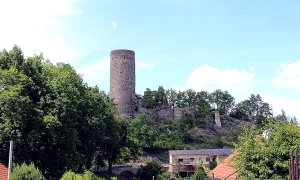
Photos: Chmee2 / CC BY-SA 3.0 — Wikimedia Commons. The author and licence also appear when you hover over the image.
Faktickým podkladem tohoto textu byl článek na Wikipedii, jehož autory jsou přispěvatelé Wikipedie. Článek je dostupný pod licencí CC BY-SA 4.0.
Location on the map
Příběhy a pověsti
Legendy, pověsti a příběhy spjaté s touto památkou
Fotografie návštěvníků
Zatím žádné fotografie. Buďte první, kdo přidá fotografii z návštěvy!
Log in a přidejte svou fotografii nebo hodnoťte.
Za ověřenou návštěvu v aplikaci získáte víc bodů — poznáme podle GPS, že jste na místě.
Reviews and comments