






Kostel svatého Václava (Dolní Krupá) Church
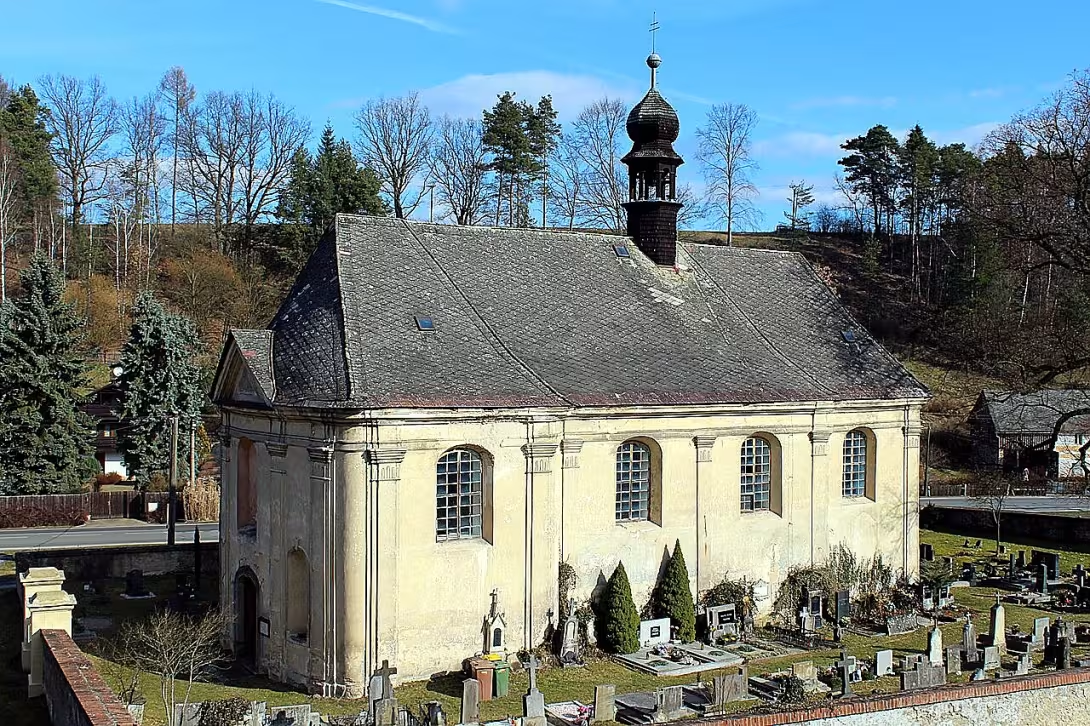
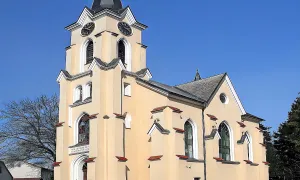
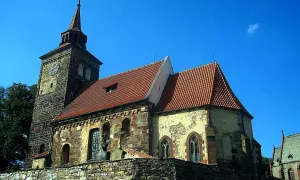
The Church of Saint Wenceslas in Dolní Krupá is a notable Baroque-style sacred building centrally located within the village. Originally constructed in the second half of the 13th century, it underwent significant modifications to reach its current form by 1783. This church, along with an adjoining cemetery wall and mortuary chapel, holds cultural monument status due to its historical significance and architectural beauty.
Historically, the origins of the Church of Saint Wenceslas date back to the late 13th century, with documentation as early as 1283 or 1293. By 1767, Dolní Krupá welcomed its parish priest after centuries, marking a significant moment in the village's history and leading to the canonical re-establishment of the parish. The construction of a notable two-story timber-framed parsonage with a mansard roof was completed by 1785 for the parish priest. These developments underscored the church’s importance as a religious and community center.
Architecturally, the Church of Saint Wenceslas showcases Baroque elements significantly incorporated in 1783. The structure features a rectangular nave with rounded corners, a right-angled presbytery, and an adjoining sacristy on the north side. Inside, the church boasts vaulted ceilings with lunettes, pilasters, and segmental pediments, reflecting its rich Baroque modifications. These architectural details highlight the evolution of the building from its original Gothic influences to its current Baroque style.
Throughout its history, the church has been a focal point for religious and community activities in Dolní Krupá. The interior is adorned with a mix of Baroque and Rococo elements, including a notable Rococo altar supported by angels from around 1745. Original sculptures of Saints Vitus and Ludmila enhance this altar, while a newer image of Saint Wenceslas dates back to the mid-19th century. Additionally, two early Baroque side altars feature porticoes with spiral columns and pediments, dating from around 1700. The church also houses a baptismal font made of tin from 1607 and valuable Baroque statues of the Calvary created in the early 18th century.
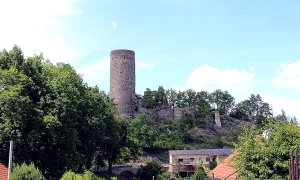
The surrounding area adds to the historical ambiance of the site. A Baroque bell tower stands on a hilltop near the church, while a late Baroque statue of Saint John Nepomucene from 1786, restored in 1892, is also present in the village. These elements contribute to the cultural and architectural richness of Dolní Krupá.
Today, the Church of Saint Wenceslas remains an accessible site for visitors interested in exploring its historical and architectural significance. Its preservation as a cultural monument ensures that it continues to be a testament to the region's rich history and artistic heritage. Visitors are invited to experience this remarkable Baroque church, which stands as a symbol of Dolní Krupá’s enduring legacy and vibrant past.
Then and now
Drag the slider to compare how the landmark may have looked when it was built with the view today.
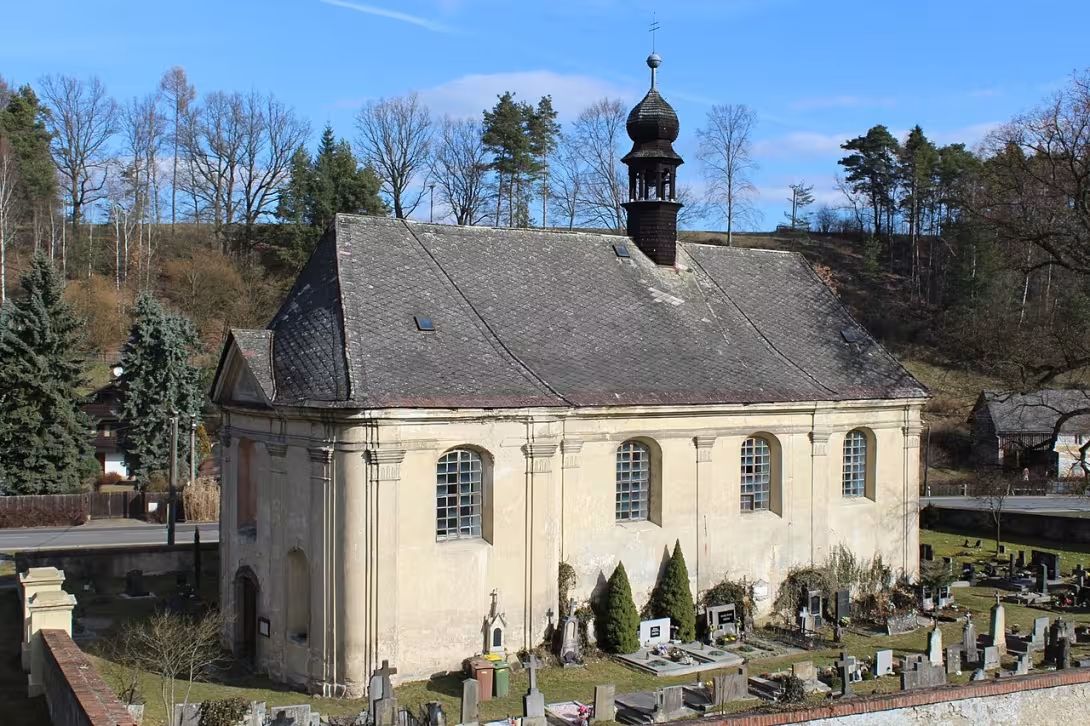
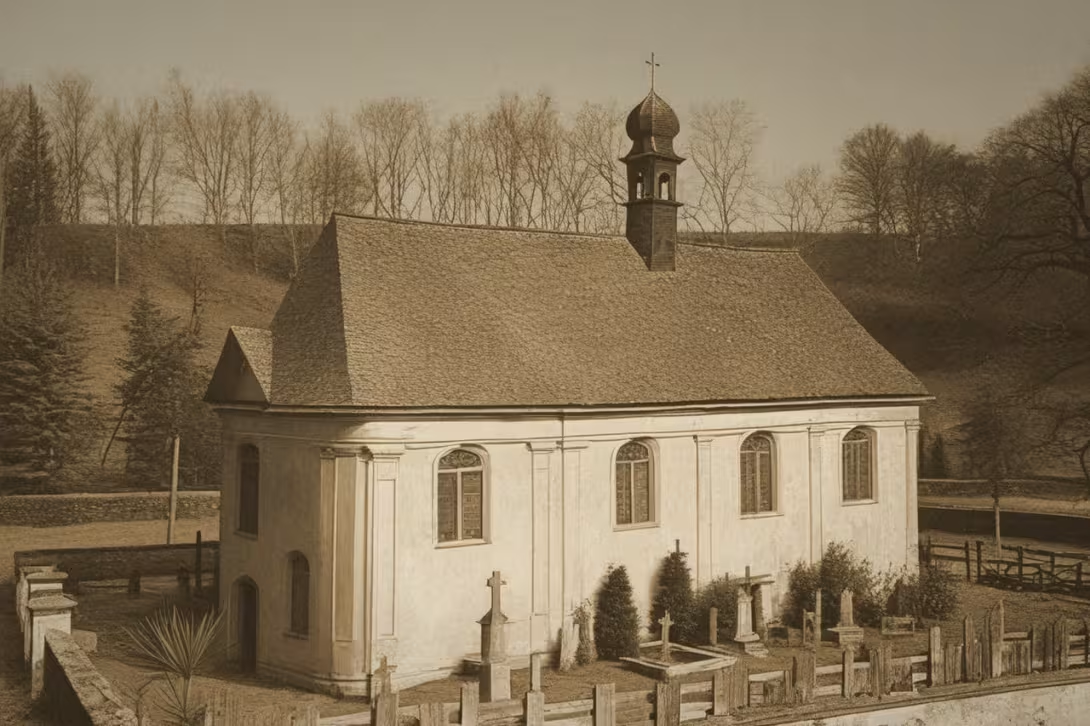
The historical appearance on the left is an AI-generated visualisation and serves as inspiration only.
Historical milestones
- 1283
- The church is documented in historical records.
- 1767
- Dolní Krupá welcomed its parish priest after centuries.
- 1785
- Construction of the parsonage for the parish priest was completed.
- 1783
- The church underwent baroque modifications and expansions.
Architectural development
Originally from the late 13th century, the Church of Saint Wenceslas has undergone several architectural phases. It was significantly modified in a baroque style by 1783, featuring rounded corners on its rectangular nave and a right-angled presbytery with an adjoining sacristy. The church's interior includes vaulted ceilings with lunettes, pilasters, and segmental pediments.
Historical events
The church's historical origins date back to the 13th century, documented as early as 1283 (1293).
In 1767, Dolní Krupá welcomed its parish priest after centuries, leading to the canonical re-establishment of the parish.
By 1785, a notable two-story timber-framed parsonage with mansard roof was constructed for the parish priest.
The church underwent significant baroque modifications and expansions in 1783.
Points of interest
- The Church of Saint Wenceslas was originally documented as early as 1283 or 1293, making it one of the oldest religious structures in Dolní Krupá with a rich history spanning several centuries.
- In 1767, the appointment of a parish priest marked a significant moment for the village, leading to the canonical re-establishment of the parish and highlighting the church's central role in community life.
- The Baroque altar inside the church is supported by angels dating from around 1745, blending artistic styles with religious symbolism that adds depth to its historical narrative.
- A notable feature within the church is a baptismal font made of tin crafted in 1607, showcasing early craftsmanship and serving as a tangible link to the village's past.
- The presence of a Baroque bell tower on a hilltop near the church enhances the site’s historical ambiance, offering both architectural beauty and a strategic vantage point for observing the surrounding area.
Guide
This guide is narrated by a synthetic voice generated by artificial intelligence.
Show guide text
This text was created by artificial intelligence and has not been editorially reviewed. It may contain inaccuracies.
Welcome to the Church of Saint Wenceslas in Dolní Krupá, a remarkable testament to the enduring spirit and history of this charming village nestled in Středočeský kraj. As you stand here, enveloped by the serene atmosphere of this sacred site, take a moment to absorb its presence—a central figure within the community since time immemorial.
The origins of this church trace back to the second half of the 13th century, with historical records documenting its existence as early as 1283 or 1293. This makes it one of Dolní Krupá's most ancient religious structures, a silent witness to centuries of faith and transformation. Imagine the hands that laid its first stones, driven by devotion and community spirit.
Over time, the church underwent significant changes. By 1783, it had been transformed into the baroque-style masterpiece you see today. This period marked an era of expansion and modification, reflecting both architectural trends and the evolving needs of its parishioners. As you look around, notice the rectangular nave—a hallmark of its design—offering a glimpse into the past while maintaining its sacred purpose.
The church's history is intertwined with notable events that shaped Dolní Krupá. In 1767, the appointment of a parish priest marked a pivotal moment for the village, rekindling spiritual guidance and community cohesion after many years without one. This was followed by the construction of a parsonage in 1785, providing a home for those who would lead the congregation.
While much about its architects and early patrons remains shrouded in mystery, the Church of Saint Wenceslas stands as a cultural monument, protected alongside an adjoining cemetery wall and mortuary chapel. These elements together tell stories of generations past, each stone and archway holding secrets waiting to be discovered.
As you explore this historic site, let your curiosity guide you. Consider the countless individuals who have walked these grounds before you, their lives and stories woven into the very fabric of this place. What tales might the walls whisper if they could speak?
We invite you to continue exploring Dolní Krupá and its treasures. Each corner of this village holds a piece of history waiting to be uncovered. Thank you for visiting the Church of Saint Wenceslas, where the past meets the present in a timeless embrace.
Frequently asked questions
Can the monument be visited?
Religious buildings are usually open mainly during services; at other times a visit is normally arranged with the parish or the operator. We have not verified specific times.
Where is the monument?
Location: Dolní Krupá, Středočeský kraj. The map on this page shows the exact spot.
Why is the monument protected?
It is listed in the Central List of Cultural Monuments of the Czech Republic as a cultural monument (register no. 35666/2-1544).
Businesses nearby
Do you run a restaurant, accommodation, shop, museum, rental, wellness or other visitor service near this monument? Show yourself directly to the people heading to it — this is how they will see you in the app and on the web:
Events nearby
Zdroj akcí: otevřená data měst a obcí ČR (Národní katalog otevřených dat) a kalendář akcí Národního památkového ústavu.
Nearby
The church is situated on a hilltop, with a baroque bell tower nearby. The village also features a late baroque statue of Saint John Nepomucene from 1786, restored in 1892.
Accommodation nearby
Trips and activities nearby
Guided tours, tickets and activities nearby from GetYourGuide
Affiliate link: if you buy from the partner, we may receive a commission. The price for you does not change.
Search tours and activities →Themed route
Tematická Výletní Trasa: Dolní Krupá
1. Kostel svatého Václava (Dolní Krupá) - Typ: Kostel - Proč stojí za návštěvu: Tento kostel, nacházející se na vrcholu kopce, je centrem duchovního života v Dolní Krupé. Jeho barokní charakter a historický význam přitahují milovníky architektury i náboženských tradic.
2. Barokní věž (přibližně 50 metrů od kostela) - Typ: Věž - Proč stojí za návštěvu: Barokní věž, která se pyšní svou elegantní architekturou, nabízí jedinečný pohled na Dolní Krupu a okolní krajinu. Je to ideální místo pro ty, kdo chtějí pochopit významné architektonické prvky oblasti.
3. Statue svatého Jana Nepomuckého - Typ: Socha - Proč stojí za návštěvu: Tato pozdně barokní socha, vystavená z roku 1786 a obnovena v roce 1892, je ikonou místní kultury. Její historie a umělecký význam přitahují návštěvníky, kteří se zajímají o kulturní dědictví oblasti.
4. Nádvoří kostela svatého Václava - Typ: Nádvoří - Proč stojí za návštěvu: Nádvoří před kostelem nabízí klidnou atmosféru pro odpočinek a reflexi. Je to ideální místo k procházce po navštívění hlavního chrámu, kde si můžete užít pohledu na okolní krajinu.
5. Interiér kostela svatého Václava - Typ: Interiér - Proč stojí za návštěvu: Uvnitř kostela můžete ocenit bohatou vnitřní dekoraci a umělecká díla, která představují historický význam tohoto místa. Je to nezapomenutelné zážitkové zažití pro ty, kdo chtějí hlouběji pochopit kulturní a duchovní tradice oblasti.
Tato trasa nabízí komplexní pohled na kulturní a historický význam Dolní Krupy, zaměřený na její klíčové památky.
Seasonal recommendations
Spring: The arrival of spring at the Church of Saint Wenceslas in Dolní Krupá brings a refreshing burst of life to the surrounding landscape, with vibrant wildflowers and budding trees creating a picturesque setting. This season is ideal for capturing the church's architecture against a backdrop of lush greenery. Visitors can enjoy a tranquil atmosphere as the crowds are generally lighter compared to summer months. It’s recommended to wear comfortable walking shoes and layers that can be adjusted to accommodate varying temperatures throughout the day.
Summer: Summer in Dolní Krupá is characterized by warm, sunny days perfect for exploring the Church of Saint Wenceslas when its surroundings are at their most vibrant. The lush greenery and blooming flowers enhance the church’s historical charm. However, this is also the peak tourist season, so it's wise to visit early in the morning or later in the afternoon to avoid larger crowds. Light, breathable clothing is advisable, along with sun protection such as hats and sunscreen.
Autumn: Autumn transforms Dolní Krupá into a kaleidoscope of warm colors, offering a stunning backdrop for visiting the Church of Saint Wenceslas. The cooler temperatures make it an ideal time for leisurely exploration without the summer heat. As leaves fall, they create a serene atmosphere that complements the historical ambiance of the church. Visitors should dress in layers to adapt to changing weather conditions and consider bringing a light jacket or sweater as evenings can be brisk.
Winter: Winter at the Church of Saint Wenceslas presents a magical experience with its snow-dusted surroundings, creating a fairy-tale-like atmosphere that enhances the church’s historic beauty. The shorter days mean visiting hours may be reduced, so planning is essential to make the most of your visit. It's crucial to dress warmly in insulated layers and wear waterproof boots for walking on potentially icy paths. Despite fewer visitors during this season, the serene winter landscape offers a unique perspective on the site.
Visualizations and artistic views


The visualisations are generated by artificial intelligence and serve as inspiration.
Photos from the area
Real photos taken near the monument


Zdroj a licence jsou uvedeny u každého snímku.
Tips from visitors
No tips yet. Be the first!
Log in and add your tip.
Sources and literature
Photos: VitVit / CC BY-SA 4.0 — Wikimedia Commons. The author and licence also appear when you hover over the image.
Faktickým podkladem tohoto textu byl článek na Wikipedii, jehož autory jsou přispěvatelé Wikipedie. Článek je dostupný pod licencí CC BY-SA 4.0.
Location on the map
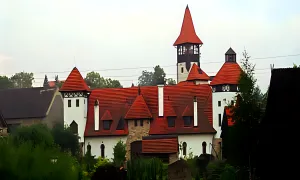
Příběhy a pověsti
Legendy, pověsti a příběhy spjaté s touto památkou
Příběh: Kostel svatého Václava (Dolní Krupá)
Bylo to v pondělí ráno, kdy Jakub zjistil, že jeho cesta k kostelu svatého Václava již nemohla být další návratem ke stejným starostem. Klesající ranní mraky…
Číst příběh
Pověst: Kostel svatého Václava (Dolní Krupá)
Podle místní pověsti, která se v Dolní Krupé traduje již po generace, kostel svatého Václava nikdy nestál v obci zcela sám. Staří lidé vyprávějí, že od nepam…
Číst příběhFotografie návštěvníků
Zatím žádné fotografie. Buďte první, kdo přidá fotografii z návštěvy!
Log in a přidejte svou fotografii nebo hodnoťte.
Za ověřenou návštěvu v aplikaci získáte víc bodů — poznáme podle GPS, že jste na místě.
Reviews and comments