






kostel svatého Václava (Fukov) Church
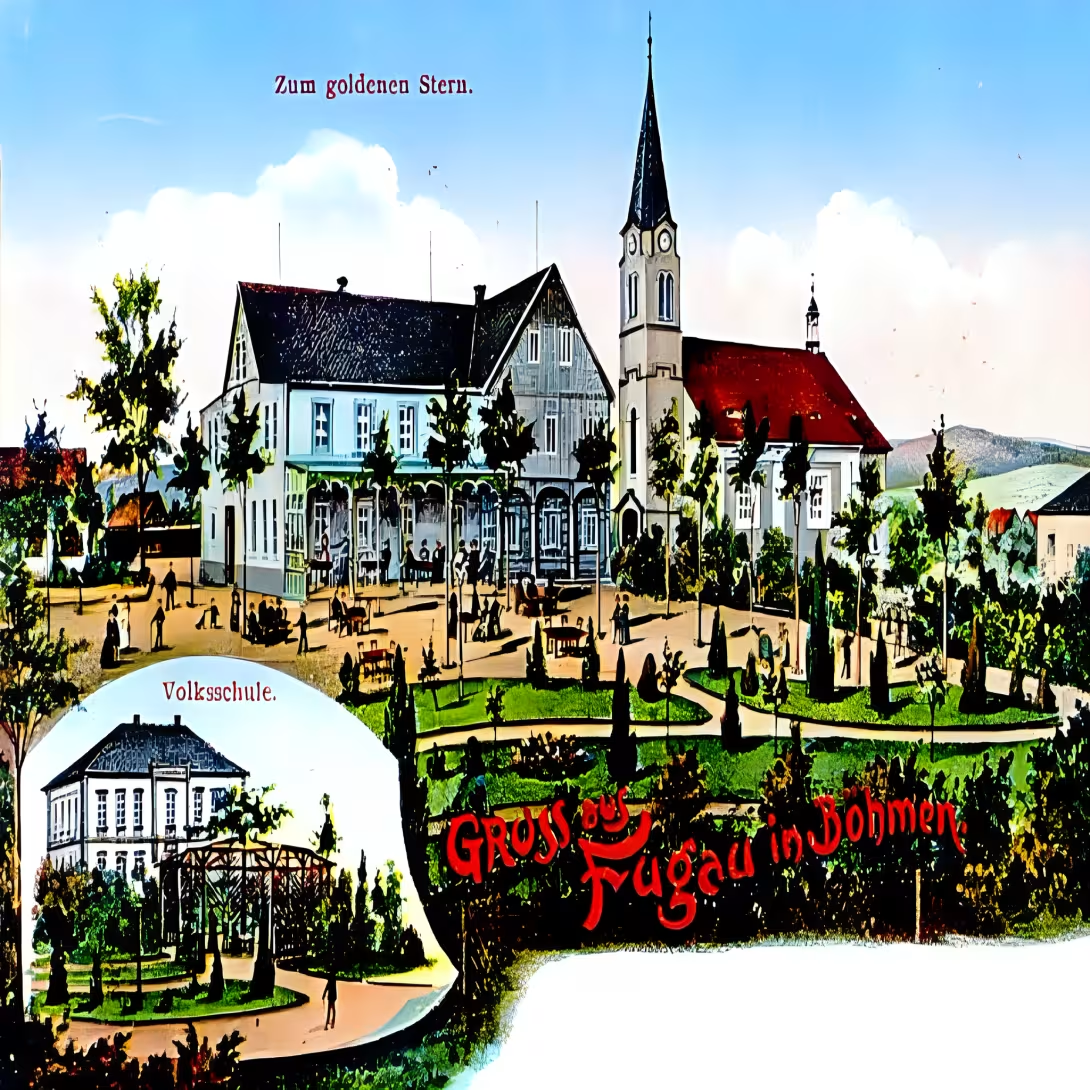
Objekt se nedochoval — na místě dnes nestojí. Následující text popisuje jeho historii, ne současnou návštěvu.
The Church of Saint Wenceslas in Fukov, located in the Ústí region of Ústecký kraj, represents a late Baroque architecture and historical importance in the Czech Republic. This Roman Catholic church was built between 1784 and 1788 as the northernmost church within the Austrian Empire, later Austria-Hungary and Czechoslovakia. Its architectural elements included a five-sided presbytery headed north and in 1864 added the Neo-Romanesque tower. Despite its historical significance, the church died on September 23, 1960.
The origin of St. Wenceslas' church was deeply rooted in religious and social dynamics of the late 17th century. Originally Fukov lacked his own church or chapel with residents of the parish in Spremberg, located west of the village. During the reformation, several families were associated with the church in Taubenheim. The resistance to reCatholisation was strong due to the predominantly Protestant environment in Saxony. In 1688, under the influence of the property owner Count Philipp Zikmund von Dietrichstein, Fukov became part of the Šluknov parish. This transition meant the end of its Protestant ties until 1697. Difficulties of travel to Šluknova led villagers to build a chapel for common worship.
The church was designed as a single-boat building with a rectangular plan and a distinctive five-sided presbytery heading north. The construction began in 1784 for architect Jan Václav Kosch and ended with a ceremonial consecration on 30 November 1788. The Neo-Romanesque tower added its architectural attraction to the southern facade in 1864. In 1895 a covered staircase was built on the west wall, which provides access to the gallery.
the church has experienced several important events and changes throughout its history. Until 1852 she became an independent parish church after the establishment of the separate parish of Fukov. Adding the bell tower in 1823 for 104 players meant another milestone. However, the devastating fire in either 1942 or 1947 seriously damaged the interior, including its tubular organ and side altar. After World War II, there was a gradual shift of indigenous inhabitants and subsequent demolition of surrounding buildings. The church itself was demolished on 23 September 1960.
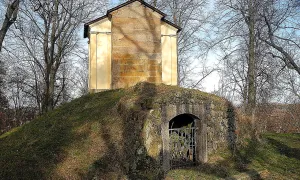
Today, the place where the church of St. Wenceslas once stood is a pitiful reminder of Fukov's historical story. Although the physical structure no longer exists, efforts have been made to preserve its memory. In 2014, the city of Šluknov reconstructed part of the cemetery and in the ruins in 1980 a wooden cross was built indicating the date of sanctification and demolition of the church. The parish grounds are owned by the Roman Catholic parish of Fukov, run by the Šluknov dean.
The St. Wenceslas Church in Fukov offers a unique view of the region's religious and architectural history. His story reflects broader historical shifts within the Austrian Empire and beyond. Visitors interested in discovering this site can witness the remains of his past, gaining insight into the cultural heritage that once prospered here. The legacy of continues to resonate and calls for reflection on the permanent impact of history on our current landscape.
Then and now
Drag the slider to compare how the landmark may have looked when it was built with the view today.
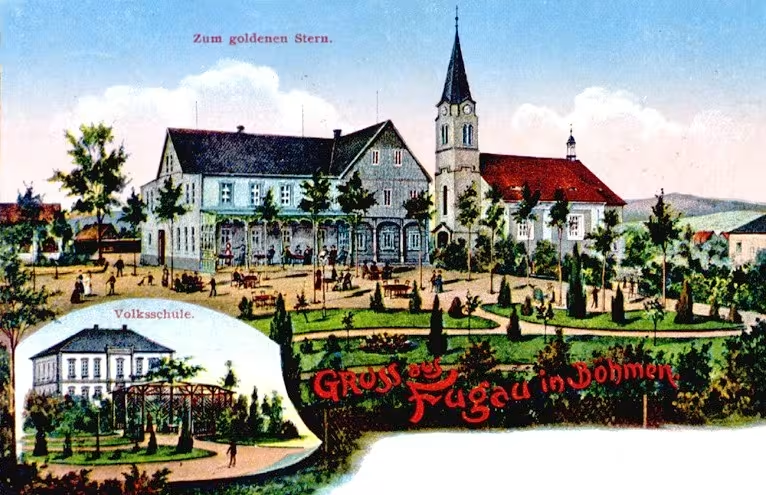
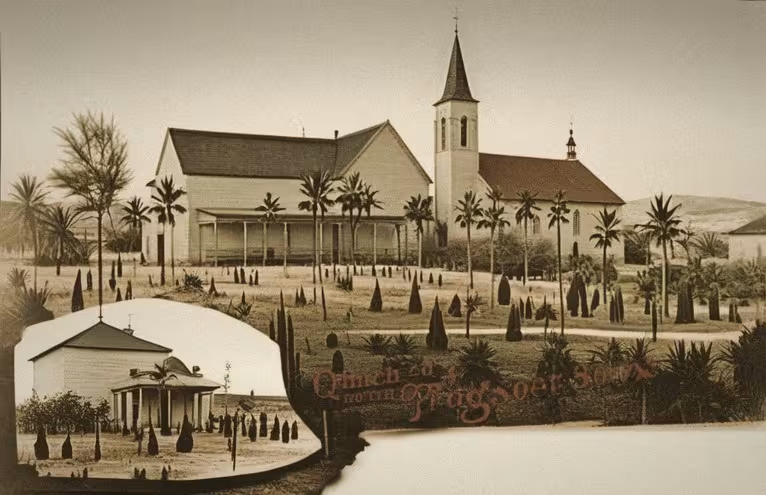
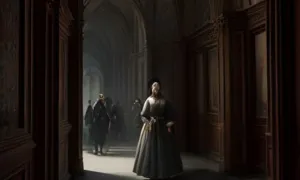
The historical appearance on the left is an AI-generated visualisation and serves as inspiration only.
Historical milestones
- 1688
- Fukov becomes part of the Šluknov parish.
- 1697
- The end of Protestant relations in Fukov.
- 1784
- The construction of St. Wenceslas' church begins.
- 1788
- Church sanctified on November 30.
- 1823
- Bells added to the church.
- 1864
- Neo-Romanesque tower added to the south facade.
Architectural development
The construction started in 1784 for architect Jan Václav Kosch, which led to a late Baroque structure with a rectangular plan. The Neo-Romanesque tower was added to the south facade in 1864 and a covered staircase was built on the west wall in 1895 providing access to the gallery.
Historical events
1788: The church was festively sanctified on 30 November, becoming the northernmost church of the Austrian Empire.
1864: The church tower was added to the facade.
1960: the church and the surrounding cemetery were destroyed.
Points of interest
- St. Wenceslas Church was the northernmost church within the Austrian Empire, a unique difference reflecting its strategic and religious importance in the region.
- Originally, the inhabitants of Fukov were part of the parish in Spremberg due to a lack of their own church, which highlighted evolving religious ties over time.
- The chapel was built by villagers for common worship due to the difficulty of travelling to Šluknova, showing local initiative and adaptation before the church was built.
- the church underwent a transformation from being at the Šluknov parish in 1688 to become an independent parish church in 1852, indicating significant changes in its church status.
- A devastating fire in 1942 or 1947 seriously damaged the interior of the church, including its tubular organs and lateral altars, evidencing the vulnerability of historical structures to unforeseen disasters.
Guide
This guide is narrated by a synthetic voice generated by artificial intelligence.
Show guide text
This text was created by artificial intelligence and has not been editorially reviewed. It may contain inaccuracies.
The Church of Saint Václav in Fukův was throughout its entire existence the northernmost church in the land. Today only ruins remain of it, because in nineteen sixty it disappeared together with the entire village.
Until the end of the seventeenth century, Fukův had neither its own church nor a chapel. The inhabitants belonged to the parish in Saxon Spremberg and during the Reformation several families adhered to the church in Taubenheim. The village was almost completely surrounded by Protestant Saxony and resisted recatholization for a long time. In sixteen eighty-eight the owner of the estate, Count Philip Zikmund of Ditrichstein, therefore joined it to the parish of Šluknov. In sixteen ninety-seven recatholization definitively ended. However, the path to Šluknov was roughly three times longer than to Spremberg, so the people of Fukův soon built a chapel for common prayers.
The actual church was built in the years seventeen eighty-four to seventeen eighty-eight. The construction was apparently led by the Prague builder Jan Václav Kosch. It was consecrated on the thirtieth of November seventeen eighty-eight and like the parish church in Šluknov it was dedicated to Saint Václav. It was the northernmost church of the Austro-Hungarian monarchy, later of Austria-Hungary and Czechoslovakia. Along with it a brick rectory was built and the old chapel soon disappeared. In eighteen twenty-three a sanctus tower was added. It became the parish church in eighteen fifty-two, when an independent parish of Fukův was established. In eighteen sixty-four a Neo-Romanesque tower completed the southern facade.
It was a single-nave late Baroque structure with a five-sided presbytery facing north. The main altar stood in the presbytery and on its sides two side altars. The image of Saint Václav for the main altar was painted in eighteen fifty-five by the painter Johann Birnbaum from Jiřetín. In eighteen ninety-four it was replaced by a painting by Anton Wenzel from Saxon Reichenau. The clock from nineteen thirty-four was paid for by a local society of Easter singers. Its mechanism was stored in Rumburk deanery before demolition and after renovation it is now displayed in the Loreto in Rumburk.
On Ash Wednesday in nineteen forty-two or nineteen forty-seven the church caught fire. The fire destroyed the organ and damaged the side altars and sculptural decoration. Services were then held at the rectory. After the war the original inhabitants were resettled and empty houses demolished. The deliberate liquidation of the village in the nineteen fifties was survived only by the church and the school. On the twenty-third of September nineteen sixty after eight o'clock in the evening the church was blown up and the cemetery destroyed.
At the fortieth anniversary of the church's disappearance a festive mass was held at its ruins, celebrated by the vicar general of the Litoměřice diocese Karel Havelka. A wooden cross with the dates of the church's consecration and demolition was placed in the ruins. In two thousand and fourteen the town of Šluknov renovated part of the cemetery.
Businesses nearby
Do you run a restaurant, accommodation, shop, museum, rental, wellness or other visitor service near this monument? Show yourself directly to the people heading to it — this is how they will see you in the app and on the web:
Nearby
PHARMAShow interactive okolí - Restaurant, accommodation, numerous and other city in the district 15 km.
Data: OpenStreetMap contributors, district 15 km.
Historical monuments
- Friedersdorfer Schloss (3.6 km)
- Heimat- & Landwirtschaftsmuseum (7.8 km - Oppacher Straße 33)
- Niedermühle (9.0 km - Mühlweg 6)
- Hochstein - mittelalterlicher Steinwall (9.4 km)
- Löfflerstein (10.4 km)
- Spreequelle (10.6 km)
- Moral column (10.9 km)
- Spreequelle (11.0 km)
ANNEX
- Eiscafé Zum Teich (1.9 km - Am Teich 6)
- Bierhalle (2.2 km)
- USAL Döner (2.7 km)
- Gasthaus Kretscham zu Oberfriedersdorf (5.2 km - Hauptstraße 12)
- Hainberg (6.0 km - Hainbergstraße 28)
- Schweizerhaus (6.7 km)
- Botan (7.4 km - Hauptstraße 52)
- Schanzenbaude (7.5 km)
ANNEX
- Heiter Blick (1.0 km - August-Bebel-Straße 60)
- Gondelfahrt (1.3 km - Am Alten Graben 5)
- Kretscham (5.4 km - Löbauer Straße 1)
- Marktstuben (6.3 km)
- Am Stadtbad (7.7 km)
- An der Bockwindmühle (9.1 km)
- Zameck (9.3 km)
- Pension Pufe (11.2 km - Lange Gasse 45)
Handlebars and sports
- Radland (2.4 km - Talstraße 22)
- Reisemobile & Freizeitbedarf (4.1 km - Hauptstraße 97a)
- Fahrradgeschäft Vogt (6.1 km - Hauptstraße 59)
- HiT-Bikes (6.4 km - Sauerstraße 4)
- TSV 1859 Wehrsdorf e.V. Abteilung Kegeln (7.8 km)
- Bike Factory - Brade (10.0 km - Dresdener Straße 14)
- Oberlausitzer Gesundhaus / Ellmar (10.6 km)
- Radsport Oberlausitz (11.7 km - Hauptstraße 214)
Garantica Tourism and nature
- Hänscheberg (2.1 km)
- Hahnegg (2.2 km)
- Ziegelberg (3.9 km)
- Schlechteberg (7.9 km)
- Chernobouh (8.7 km)
- Mönchwallder Berg (10.0 km)
- Kottmar (11.4 km)
- Großer Picho (12.6 km)
Visualizations and artistic views


The visualisations are generated by artificial intelligence and serve as inspiration.
Photos from the area
Real photos taken near the monument


Zdroj a licence jsou uvedeny u každého snímku.
Tips from visitors
No tips yet. Be the first!
Log in and add your tip.
Sources and literature
Photos: autor neuveden / Public domain, rozlišení zvýšeno umělou inteligencí — Wikimedia Commons. The author and licence also appear when you hover over the image.
Faktickým podkladem tohoto textu byl článek na Wikipedii, jehož autory jsou přispěvatelé Wikipedie. Článek je dostupný pod licencí CC BY-SA 4.0.
Location on the map
Příběhy a pověsti
Legendy, pověsti a příběhy spjaté s touto památkou
Fotografie návštěvníků
Zatím žádné fotografie. Buďte první, kdo přidá fotografii z návštěvy!
Log in a přidejte svou fotografii nebo hodnoťte.
Za ověřenou návštěvu v aplikaci získáte víc bodů — poznáme podle GPS, že jste na místě.
Reviews and comments