






Kostel svatého Václava ve Šluknově Church
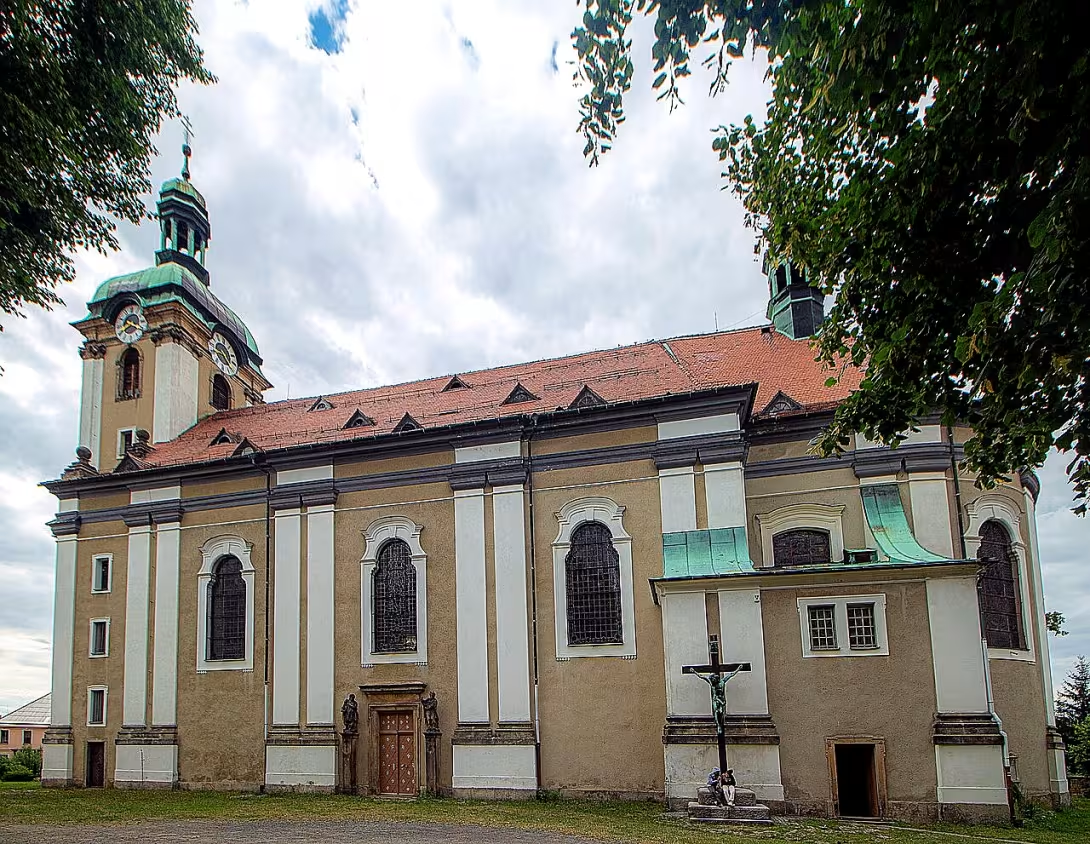
The Church of Saint Wenceslas in Šluknov is a remarkable Baroque architectural monument located in the town of Šluknov, within Děčín District, Ústecký Region. Constructed between 1711 and 1722 on the site of an older church destroyed by fire, it stands as the third iteration at this location. Designed by Zacharias Hoffmann with influences from Johann Bernhard Fischer von Erlach, the church is renowned for its elegant Baroque style and rich interior decoration. It became an archdeaconal church in 1922 and has been protected as a cultural monument since 1966.
The origins of the Church of Saint Wenceslas are rooted in the early 18th century when Bohemia was part of the Habsburg Monarchy, experiencing significant cultural and architectural development under Baroque influence. The church was built on the site of an older structure destroyed by fire, reflecting a common practice of rebuilding with enhanced designs during this period. Zacharias Hoffmann, a Lipovský architect, created the plans for the church, incorporating ideas from Johann Bernhard Fischer von Erlach, a prominent Austrian architect. This collaboration resulted in a building that exemplifies the elegance and grandeur typical of Baroque architecture.
Architecturally, the Church of Saint Wenceslas is characterized by its single-nave structure with an oblong floor plan, culminating in a semi-circular presbytery oriented towards the northeast. The exterior features double pilasters adorning the walls, while the main entrance is flanked by sculptures of Saints Paul and John the Baptist. Inside, the church boasts altars dedicated to various figures such as Jesus Child, Saint John Nepomucene, Saint Barbara, the Virgin Mary, among others. Notably, the main altar houses a late 18th-century painting depicting the Assassination of Saint Wenceslas by Jan Jiří Schmidt. The church also contains an organ built between 1939 and 1940 by Andreas Schuster & Sohn, featuring over three thousand pipes.
Throughout its history, the Church of Saint Wenceslas has undergone significant changes in status and function. In 1922, it was elevated to an archdeaconal church, reflecting its growing importance within the ecclesiastical community. Its designation as a cultural monument in 1966 underscores its architectural and historical significance.
The area surrounding the church once included a cemetery that has since been removed. However, several classicist tombstones remain, including works by Drážďany sculptor Franz Pettrich. Additionally, statues of Czech saints such as Saint Adalbert, Saint John Nepomucene, and Procopius were relocated from various parts of the town to stand near the church.
Today, the Church of Saint Wenceslas remains a significant cultural and historical site in Šluknov. Its preservation as a cultural monument ensures that visitors can appreciate its architectural beauty and rich history. The church's intricate design, coupled with its storied past, makes it a worthwhile destination for those interested in Baroque architecture and Czech heritage.
The Church of Saint Wenceslas stands not only as a testament to the artistic and architectural achievements of its time but also as a cherished cultural landmark. Its preservation allows visitors to connect with the historical narrative of Šluknov and the broader region, offering insights into the religious and cultural life of 18th-century Bohemia. Visitors are invited to explore this Baroque gem, where history and artistry converge in a captivating display of architectural splendor.
Then and now
Drag the slider to compare how the landmark may have looked when it was built with the view today.
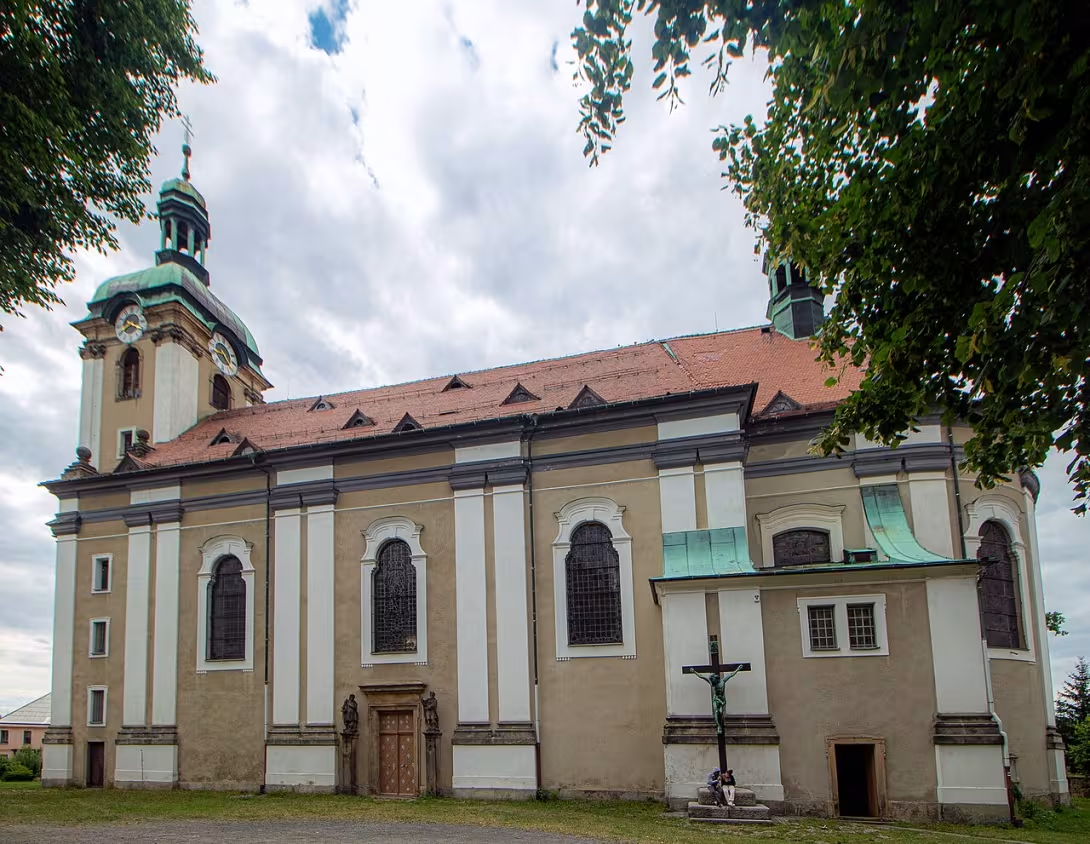

The historical appearance on the left is an AI-generated visualisation and serves as inspiration only.
Historical milestones
- 1711
- Construction began on the site of a previously destroyed older church.
- 1722
- Completion of construction.
- 1714
- The church began to be used for services.
Architectural development
The Church of Saint Wenceslas was built on the site of a previously destroyed older church. Its design reflects Baroque style, characterized by double pilasters and sculptures of saints at the main entrance. The interior features include altars dedicated to various figures such as Jesus Child and Saint John Nepomucene.
Historical events
The church was constructed between 1711 and 1722, with its use beginning in 1714.
In 1922, the church became an archdeaconal church.
It has been protected as a cultural monument since 1966.
Points of interest
- The Church of Saint Wenceslas was constructed on the site of an older church that had been destroyed by fire, a practice common in the Baroque period to rebuild with enhanced designs. This reflects the resilience and evolving architectural ambitions of the time.
- One of the intriguing aspects of the church's interior is its main altar painting depicting the Assassination of Saint Wenceslas, created by Jan Jiří Schmidt in the late 18th century. This artwork captures a pivotal moment in Czech history with dramatic flair typical of Baroque artistry.
- The organ within the Church of Saint Wenceslas, built between 1939 and 1940 by Andreas Schuster & Sohn, boasts over three thousand pipes. Its presence adds both musical grandeur and historical value to the church's cultural offerings.
- In a nod to its rich heritage, several classicist tombstones from the former cemetery near the church remain on site. These include works by Drážďany sculptor Franz Pettrich, adding an element of artistic continuity and remembrance to the church grounds.
- Statues of Czech saints such as Saint Adalbert, Saint John Nepomucene, and Procopius were relocated from various parts of Šluknov to stand near the Church of Saint Wenceslas. This relocation highlights the community's effort to preserve its religious heritage and enhance the church’s spiritual ambiance.
Guide
This guide is narrated by a synthetic voice generated by artificial intelligence.
Show guide text
This text was created by artificial intelligence and has not been editorially reviewed. It may contain inaccuracies.
The Church of Saint Václav in Šluknov is a Roman Catholic parish church. Most likely, there is already a third building standing in this location. The present Baroque church was built in the years 1711 to 1722, but services were held in it already from 1714. The plans were created by the Lipov builder Zacharias Hoffmann and he incorporated remarks from the Austrian architect Johann Bernhard Fischer von Erlach. In 1922 the church became an archdecanal church and since 1966 it has been protected as a cultural monument.
It is a single-nave structure with a rectangular floor plan. On the northeast side it is terminated by a presbytery with a semicircular choir. The walls are divided by doubled pilasters. The main entrance is framed by statues of Saint Paul and Saint John the Baptist.
The high altar bears a painting of the Assassination of Saint Václav by Jan Jiří Schmidt, which dates from the end of the eighteenth century. On the pedestals and consoles stand statues of Saint Vitus, Saint Ludmila, Saint Procopius and Saint Adalbert. The side altars are dedicated to the Infant Jesus, the Most Sacred Heart of Jesus, Saint Barbara, the Virgin Mary and Saint John of Nepomuk.
In the church there are also large Christmas cribs measuring six by two meters. Many nativity scene builders from the Šluknov region participated in making them. The organ was built in the years 1939 and 1940 by the Zittau firm Andreas Schuster und Sohn. It has 47 stops, three manuals and pedal and more than three thousand pipes.
The church was once surrounded by a cemetery which was later abolished. A number of Neoclassical tombstones have been preserved on it and several of them were created by the Dresden sculptor Franz Pettrich. North of the church stand statues of Saint Adalbert, Saint John of Nepomuk and Saint Procopius, which were moved here from various places in the town. East of the church stands the parsonage from 1842 and in front of it a statue of Saint Václav.
Tips for visitors
The best time to visit the Church of Saint Wenceslas in Šluknov is during late spring or early autumn. During these months, the weather is typically mild, allowing for a comfortable exploration of both the church and its surrounding areas. Additionally, visiting outside of peak tourist seasons ensures a more tranquil experience while appreciating the baroque architecture and historical sculptures without large crowds.
It's recommended to check the latest schedules and routes online before your visit.
When visiting, consider bringing comfortable walking shoes as there are several notable sculptures and tombstones in the former cemetery area that you might want to explore on foot. A hat and sunscreen can be useful if you're planning a midday visit during warmer months. Additionally, carrying a small backpack with water and snacks is advisable, especially if you plan to spend an extended period exploring.
For photography enthusiasts, early morning or late afternoon light provides the best conditions for capturing the church's intricate baroque details and surrounding sculptures. The soft lighting at these times enhances textures and shadows, creating dramatic effects. Try positioning yourself near the entrance or along the pathways in the former cemetery to capture both the church and its historical context.
Families with children will find the area around the Church of Saint Wenceslas engaging due to its rich history and art. The relocated statues of Czech saints offer a visual storytelling experience that can be educational for kids. Additionally, the nearby former cemetery is not just about tombstones; it's an open space where families can enjoy a leisurely walk while learning about local heritage.
Frequently asked questions
Can the monument be visited?
Religious buildings are usually open mainly during services; at other times a visit is normally arranged with the parish or the operator. We have not verified specific times.
Where is the monument?
Location: Šluknov, Ústecký kraj. The map on this page shows the exact spot.
Why is the monument protected?
It is listed in the Central List of Cultural Monuments of the Czech Republic as a cultural monument (register no. 36773/5-3968).
Businesses nearby
Do you run a restaurant, accommodation, shop, museum, rental, wellness or other visitor service near this monument? Show yourself directly to the people heading to it — this is how they will see you in the app and on the web:
Nearby
The area surrounding the Church of Saint Wenceslas includes a former cemetery with several notable sculptures and tombstones. Nearby, statues of Czech saints were relocated to the vicinity of the church.
Accommodation nearby
Themed route
Tematická výletní trasa: Kostel svatého Václava ve Šluknově
1. Kostel svatého Václava - Typ: Historická památka, kostel - Proč stojí za návštěvu: Kostel svatého Václava ve Šluknově je architektonickým důkazem barokního umění a historie regionu. Jeho bohatá historie, spojená s místními tradicemi a kulturním vývojem obce, činí z něj nezbytnou prozkoumatelnou památku.
2. Bývalé hřbitovisko - Typ: Historické místo - Proč stojí za návštěvu: Toto místo je domovem řady významných soch a pohřebních kamenů, které nabízejí jedinečné historické a umělecké poznatky. Každý prvek na hřbitovisku vypráví svou vlastní příběh o minulých generacích obce.
3. Sochy českých svatých - Typ: Umělecké památky - Proč stojí za návštěvu: Tyto sochy, které byly přemístěny blízko kostela svatého Václava, jsou výjimečnými příklady uměleckého díla a poskytují pohled na náboženskou historii regionu. Každá socha je nejen uměleckým dílem, ale také symbolem kulturní identity.
Tato trasa nabízí hluboký vhled do historie a kultury obce Šluknov prostřednictvím jejích klíčových památek.
Seasonal recommendations
Jaro: Visiting St. Wenceslas Church in Šluknov during the spring offers a unique view of the church, illuminated by sunlight and surrounded by blooming gardens. This time of year brings warm afternoons with mild evenings, creating an ideal atmosphere for a relaxed visit. Despite possible brief showers, it's advisable to wear light clothing that can be easily added or removed depending on the weather. Visitors should consider coming early in the morning or later in the evening to minimize potential crowds and enjoy a peaceful ambiance.
Léto: In summer, St. Wenceslas Church in Šluknov is surrounded by lush greenery and blooming flowers, contributing to its celebrated rural charm. Sunny days provide ideal conditions for photographing the church with clear and vibrant lighting. Despite the appeal of summer weather, visits during peak tourist seasons can be quite busy, so it's recommended to arrive early in the morning to enjoy the church without a large crowd. Warm clothing and sunscreen are essential to ensure comfort during your visit.
Podzim: In autumn, St. Wenceslas Church in Šluknov offers views of colorful foliage that provide a beautiful backdrop for the church. The atmosphere is mildly warm and tranquil, with windy evenings adding a romantic touch. Visitors should be prepared for winter weather as autumn days become colder and shorter; warm clothing and possibly an umbrella are recommended. This time of year is ideal for peaceful strolls, as there is usually less crowd than in summer.
Zima: A winter visit to St. Wenceslas Church in Šluknov offers a unique atmosphere with the possibility of seeing the church lit up during cold evenings. Winter brings calm and quiet, allowing visitors to enjoy the monument without a crowded feeling. Visitors should wear warm clothing, including sweaters, hats, and hand protection, to guard against the cold. Despite the cold conditions, a visit can be especially captivating due to the serene environment and opportunity to enjoy the church in soft lighting.
Visualizations and artistic views


The visualisations are generated by artificial intelligence and serve as inspiration.
Photos from the area
Real photos taken near the monument


Zdroj a licence jsou uvedeny u každého snímku.
Atmosphere of the place
This atmospheric visualisation of the place and period was generated by artificial intelligence. It is not real footage of the location.
Tips from visitors
No tips yet. Be the first!
Log in and add your tip.
Sources and literature
Photos: VitVit / CC BY-SA 4.0 — Wikimedia Commons. The author and licence also appear when you hover over the image.
Faktickým podkladem tohoto textu byl článek na Wikipedii, jehož autory jsou přispěvatelé Wikipedie. Článek je dostupný pod licencí CC BY-SA 4.0.
Location on the map
Příběhy a pověsti
Legendy, pověsti a příběhy spjaté s touto památkou
Příběh: Kostel svatého Václava ve Šluknově
Bylo to v pondělí ráno, kdy Václav zjistil, že je ve špatném světle se svým životem. Šluknov se otevřel mu jako obraz malovaný na bledé barokní hvězdě, a pře…
Číst příběh
Pověst: Kostel svatého Václava ve Šluknově
Traduje se, že v noci, kdy starý šluknovský kostel shořel do základů, nebylo na nebi ani mráčku. Plameny vyšlehly náhle, bez varování, a žár byl tak prudký, …
Číst příběhFotografie návštěvníků
Zatím žádné fotografie. Buďte první, kdo přidá fotografii z návštěvy!
Log in a přidejte svou fotografii nebo hodnoťte.
Za ověřenou návštěvu v aplikaci získáte víc bodů — poznáme podle GPS, že jste na místě.
Reviews and comments