






Kostel svatého Václava (Kalek) Church
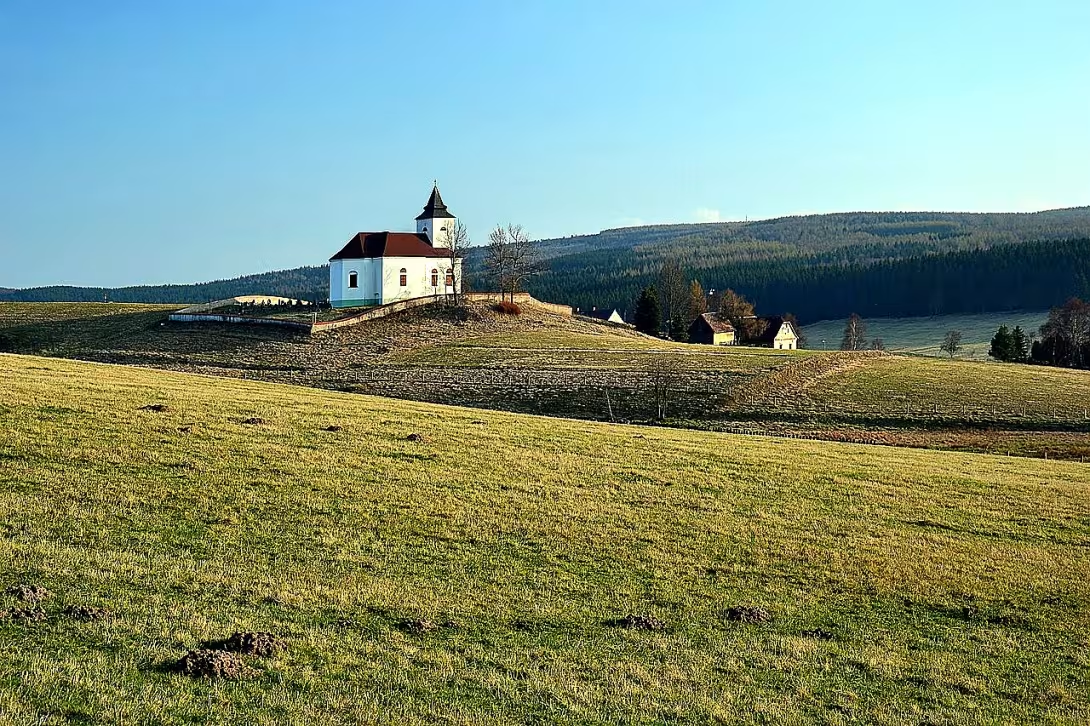
The Church of Saint Wenceslas in Kalek is a Roman Catholic filial church dedicated to Saint Wenceslas, notable for its Baroque architecture and historical significance. Situated on a low hill in the southern part of Kalek village near a cemetery, this cultural monument has been under state protection since 1963. Constructed between 1702 and 1822, it benefited from contributions by Ferdinand Maxmilián Hrzán z Harasova and later enhancements by Gabriela Buquoyová.
The church's origins trace back to the early 18th century when Baroque architecture was flourishing across Europe. Founded by Ferdinand Maxmilián Hrzán z Harasova, a key figure in its establishment, it was consecrated in 1702, marking its completion and dedication to Saint Wenceslas. Between 1821 and 1822, Gabriela Buquoyová commissioned significant additions, including side annexes and a tower, enhancing the structure's architectural complexity.
Architecturally, the church is characterized by its Baroque style, evident in its single-nave design with a flat ceiling. The presbytery features a semi-circular interior but appears triangular from outside, adding to its unique aesthetic appeal. Side annexes attached to both sides of the nave include oratories on the upper level, while a tower stands prominently at the south-western frontage. These elements reflect architectural trends and functional needs of the period.
Ownership and administration have seen notable figures such as Ferdinand Maxmilián Hrzán z Harasova initiating its construction and Gabriela Buquoyová overseeing later enhancements. The church's history includes a significant deterioration phase in the mid-20th century, culminating in a partial ceiling collapse in 1971. This led to extensive reconstruction efforts beginning in 1996.
Key events include its consecration in 1702 and architectural enhancements by Gabriela Buquoyová between 1821 and 1822. The interior features elements from the late 19th century, including an altar painting by Ebehart Eysert created in 1915 and a marble baptismal font dating back to 1872. These contribute to its historical and artistic value.
Today, the Church of Saint Wenceslas stands as a testament to the architectural and cultural heritage of the region. Despite challenges over the years, restoration efforts have preserved its significance as a cultural monument. Visitors can appreciate its Baroque architecture and historical artifacts, making it a worthwhile destination for those interested in history and religious art.
The church offers a unique glimpse into the past, embodying both architectural beauty and historical depth. Its preservation allows visitors to connect with the rich cultural tapestry of the region, inviting exploration and appreciation of its enduring legacy.
Then and now
Drag the slider to compare how the landmark may have looked when it was built with the view today.
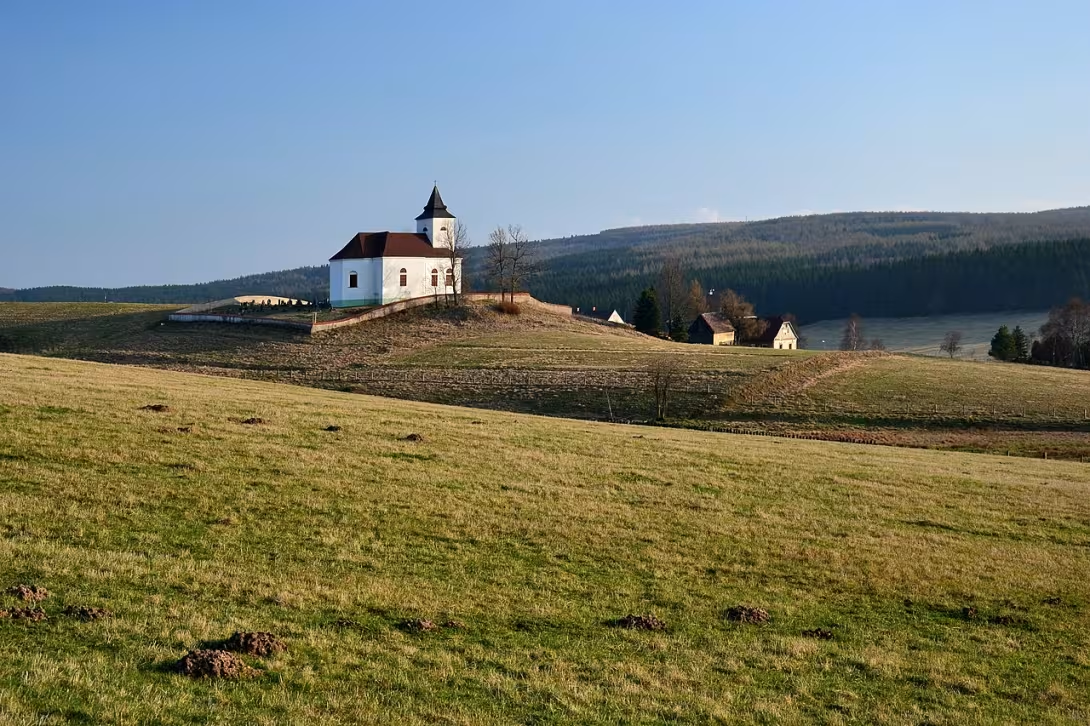
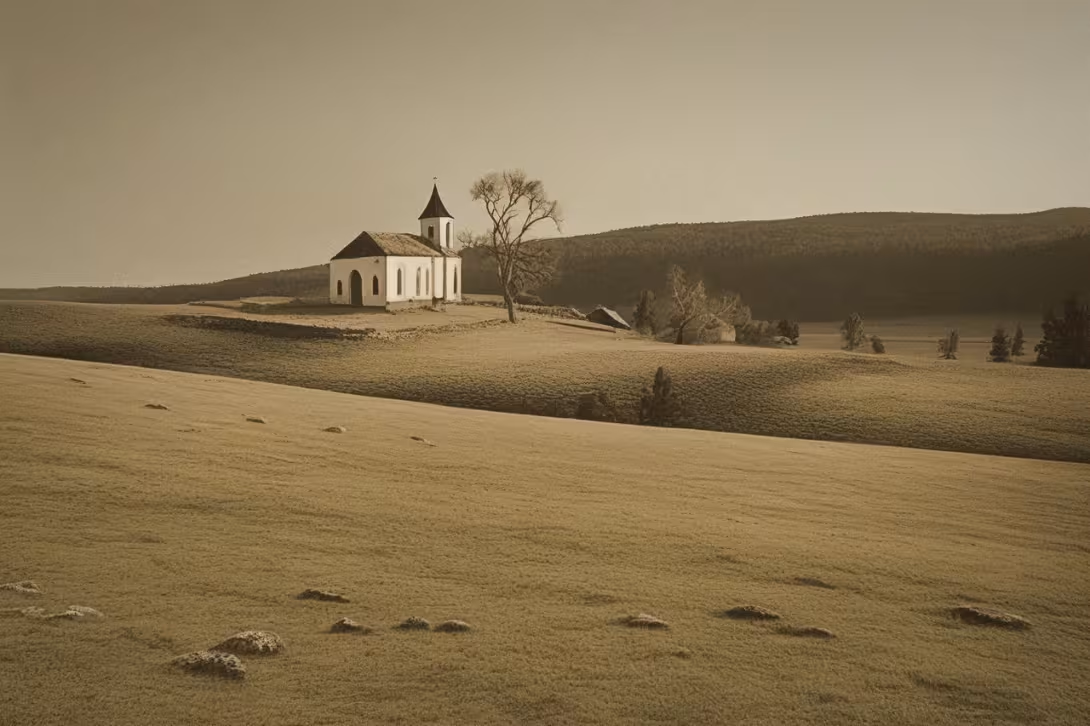
The historical appearance on the left is an AI-generated visualisation and serves as inspiration only.
Historical milestones
- 1702
- The church was consecrated.
- 1821
- Construction of side annexes and a tower commenced.
- 1971
- Partial collapse of the ceiling occurred.
- 1996
- Reconstruction efforts began.
Architectural development
The church was originally built in a Baroque style and consecrated in 1702. In the early 19th century, side annexes and a tower were added under Gabriela Buquoyová's direction. The interior features from the late 19th century include an altar painting by Ebehart Eysert (1915) and a marble baptismal font from 1872. Restoration efforts began in 1996 to address significant deterioration.
Historical events
The church was consecrated in 1702, marking its completion and dedication to Saint Wenceslas.
In 1821-1822, Gabriela Buquoyová added side annexes and a tower to the structure.
Significant deterioration occurred by the mid-20th century, leading to partial collapse of the ceiling in 1971.
Reconstruction efforts began in 1996 to restore the church.
Owners
Ferdinand Maxmilián Hrzán z Harasova initiated the construction; Gabriela Buquoyová commissioned additions in 1821-1822. The church has been under state protection since 1963.
Guide
This guide is narrated by a synthetic voice generated by artificial intelligence.
Show guide text
This text was created by artificial intelligence and has not been editorially reviewed. It may contain inaccuracies.
The Church of Saint Wenceslaus stands together with a cemetery on a low hilltop in the southern part of Kalka in the Chomutov district. It is a Roman Catholic subsidiary church and has been protected as a cultural monument since 1963.
It was founded by the estate owner Ferdinand Maxmilian Hrzán from Harasov. The Baroque building was consecrated in 1702. More than a hundred years later, in 1821 to 1822, Countess Gabriela Buquoyová had side extensions and a tower added. The gallery came from 1894.
In the second half of the twentieth century, the church fell into severe disrepair. As early as 1971, part of the ceiling collapsed. Deterioration nonetheless continued until 1996, when reconstruction began.
The church is single-aisled and has a flat ceiling. The presbytery is vaulted with a conch, that is a half-dome. Inside it has a semicircular floor plan, but from outside it is triangular. From the southern side, a sacristy adjoins it. Where the nave transitions into the presbytery, two-story extensions with oratories adjoin both side walls. The tower stands in the middle of the southwestern façade.
The church furnishings dated from the second half of the nineteenth century. On the main altar there was a painting by Eberhart Eysert from 1915. The furnishings also included a pulpit, statues of Saint Wenceslaus and the Virgin Mary, and a marble baptismal font from 1872.
Tips for visitors
The best time to visit the Church of Saint Wenceslas in Kalek is during late spring or early autumn, when the Bohemian countryside offers mild weather and vibrant natural scenery. This period provides pleasant conditions for exploring both the church and its surroundings without the summer crowds or winter chill. The lighting during these times also enhances the Baroque architecture's details, making it ideal for photography.
For those preferring public transport, regional buses can be used, though exact routes should be verified through a transportation search tool or local tourist information centers. This ensures a smooth journey to and from the church.
When visiting, consider bringing comfortable walking shoes, especially if you plan to explore beyond the church grounds. A camera is recommended for capturing the stunning Baroque architecture and picturesque landscapes. Additionally, carrying a light jacket can be beneficial due to variable weather conditions in the region, ensuring comfort throughout your visit.
For photography enthusiasts, early morning or late afternoon offers the best natural lighting to capture the Church of Saint Wenceslas's intricate details against the soft hues of dawn or dusk. The church’s southern hillside location provides a scenic backdrop, making it an excellent spot for landscape shots as well. Remember to respect any photography restrictions that may be in place.
Within a 30-minute drive from Kalek, visitors can explore nearby attractions such as the serene cemetery adjacent to the church and other historical sites within the Ústecký kraj region. These locations offer additional insights into local history and culture, making them worthwhile stops for those interested in expanding their exploration beyond the church itself.
Families with children will find the Church of Saint Wenceslas a fascinating visit due to its rich history and architectural beauty. To keep younger visitors engaged, consider incorporating interactive elements like storytelling about Saint Wenceslas or a simple scavenger hunt focusing on architectural details. The nearby cemetery can also serve as an educational spot for discussing local heritage.
Frequently asked questions
Can the monument be visited?
Religious buildings are usually open mainly during services; at other times a visit is normally arranged with the parish or the operator. We have not verified specific times. According to the heritage register restoration is under way, so access may be restricted.
Where is the monument?
Location: č.ev. 35, Kalek, Ústecký kraj. The map on this page shows the exact spot.
Why is the monument protected?
It is listed in the Central List of Cultural Monuments of the Czech Republic as a cultural monument (register no. 18064/5-534).
Businesses nearby
Do you run a restaurant, accommodation, shop, museum, rental, wellness or other visitor service near this monument? Show yourself directly to the people heading to it — this is how they will see you in the app and on the web:
Nearby
Kostel svatého Václava is situated on a low hill in the southern part of Kalek village, near a cemetery. The surrounding landscape includes typical Bohemian countryside features.
Accommodation nearby
Themed route
Tematická Výletní Trasa: Kostel svatého Václava (Kalek)
1. Kostel svatého Václava (Kostel) - Začněte vaším výletem u kostela svatého Václava, který se pyšní bohatou historií a architektonickými rysy. Tento kostel je nejen duchovním centrem obce Kalek, ale také místem plným krásného středověkého umění. Proč stojí za návštěvu? Uživte si jeho klidné prostředí a uchylte se na chvilku od moderního života, abyste prozkoumali jeho historické interiéry.
2. Okolní Kostelový Nádvoří (Nádvoří) - Přibližně 0 metrů od kostela najdete jeho nádvoří, které slouží jako místo pro klidné chvíle a reflexi. Toto místo je ideální k procházce po okolním prostoru, kde můžete užít si přírodní krásy typických českých venkovských krajin. Proč stojí za návštěvu? Nádvoří nabízí klidný útočiště, kde můžete uvolnit mysl a ocenit mírumilovné prostředí.
3. Kalekské Hřbitovy (Hřbitov) - Přibližně 200 metrů na jih od kostela se nachází hřbitov, který je nejen místo pohřbu, ale také částí kulturního dědictví obce. Proč stojí za návštěvu? Hřbitovy jsou plné historických památek a pomníků, které vyprávějí příběhy minulosti a poskytují vhled do života obyvatel Kalek. Je to místo pro uctívání a vzpomínku.
4. Okolní Lesní Chodníky (Chodníky) - Přibližně 500 metrů od kostela se rozprostírají lesní chodníky, které vás zavedou do klidné přírody. Proč stojí za návštěvu? Tyto chodníky nabízejí příležitost prozkoumat bohatý ekosystém a užít si pohledů na okolní krajinu, což je ideální způsob, jak se spojit s přírodou.
5. Kostelová Věž (Věž) - Znovu uvnitř kostela svatého Václava si všimněte jeho věže, která je nejen architektonickým dílem, ale také poskytuje jedinečné pohledy na obec a okolní krajinu. Proč stojí za návštěvu? Vystoupením do věže si můžete užít panoramatických zábřehů, které nabízejí vzrušující perspektivu na celý region.
Tato trasa nabízí kombinaci duchovního klidu a přírodní krásy, což vám umožňuje plně prozkoumat obec Kalek a její okolí.
Seasonal recommendations
Spring: The arrival of spring at the Church of Saint Wenceslas (Kalek) brings a fresh burst of life, with blooming flowers and lush greenery enhancing the natural beauty surrounding this historic site. As the church is undergoing reconstruction, visitors can enjoy the unique interplay between historical architecture and vibrant nature. Spring evenings offer enchanting light as the sun sets earlier, creating a serene atmosphere ideal for photography or peaceful reflection. It's advisable to dress in layers, as temperatures can vary throughout the day. This season tends to have fewer crowds compared to summer, allowing for a more intimate experience of both the church and its natural surroundings.
Summer: Summer at the Church of Saint Waveslao (Kalek) is characterized by long days filled with sunshine, making it an ideal time for exploring the historic site during daylight hours. The vibrant colors of the surrounding landscape are particularly striking in this season, offering a picturesque backdrop to the church's architecture. However, the popularity of summer as a travel season means that visitors should plan to arrive early to avoid larger crowds. Comfortable walking shoes and light clothing are recommended due to warmer temperatures, and carrying water is essential for staying hydrated while exploring.
Autumn: Autumn transforms the Church of Saint Wenceslas (Kalek) into a stunning tapestry of reds, oranges, and yellows as the leaves change color. This season offers a particularly atmospheric setting, with cooler weather enhancing the historical ambiance of the site. The shorter days mean that visitors should plan their visit to make the most of daylight hours, while the crisp air makes for comfortable exploration. Autumn is also a quieter time than summer, allowing for a more leisurely experience without large crowds. Layered clothing is advisable to adapt to fluctuating temperatures throughout the day.
Winter: Winter at the Church of Saint Wenceslas (Kalek) provides a magical and serene setting, with snow often blanketing the area in a peaceful white layer. The church's architecture takes on a new character against the stark winter landscape, offering unique photo opportunities during this season. Dressing warmly with thermal layers and sturdy footwear is essential, and it's wise to check ahead for any seasonal updates on accessibility or services. Despite fewer tourists in winter, the charm of the site remains undiminished, offering a quiet retreat from the bustling holiday season.
Visualizations and artistic views


The visualisations are generated by artificial intelligence and serve as inspiration.
Photos from the area
Real photos taken near the monument


Zdroj a licence jsou uvedeny u každého snímku.
Tips from visitors
No tips yet. Be the first!
Log in and add your tip.
Sources and literature
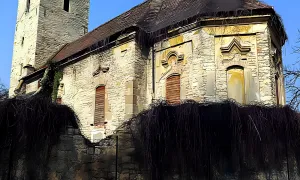
Photos: Petr Kinšt / CC BY-SA 4.0 — Wikimedia Commons. The author and licence also appear when you hover over the image.
Faktickým podkladem tohoto textu byl článek na Wikipedii, jehož autory jsou přispěvatelé Wikipedie. Článek je dostupný pod licencí CC BY-SA 4.0.
Location on the map

Příběhy a pověsti
Legendy, pověsti a příběhy spjaté s touto památkou
Fotografie návštěvníků
Zatím žádné fotografie. Buďte první, kdo přidá fotografii z návštěvy!
Log in a přidejte svou fotografii nebo hodnoťte.
Za ověřenou návštěvu v aplikaci získáte víc bodů — poznáme podle GPS, že jste na místě.
Reviews and comments