






Kostel svatého Václava (Libouň) Church
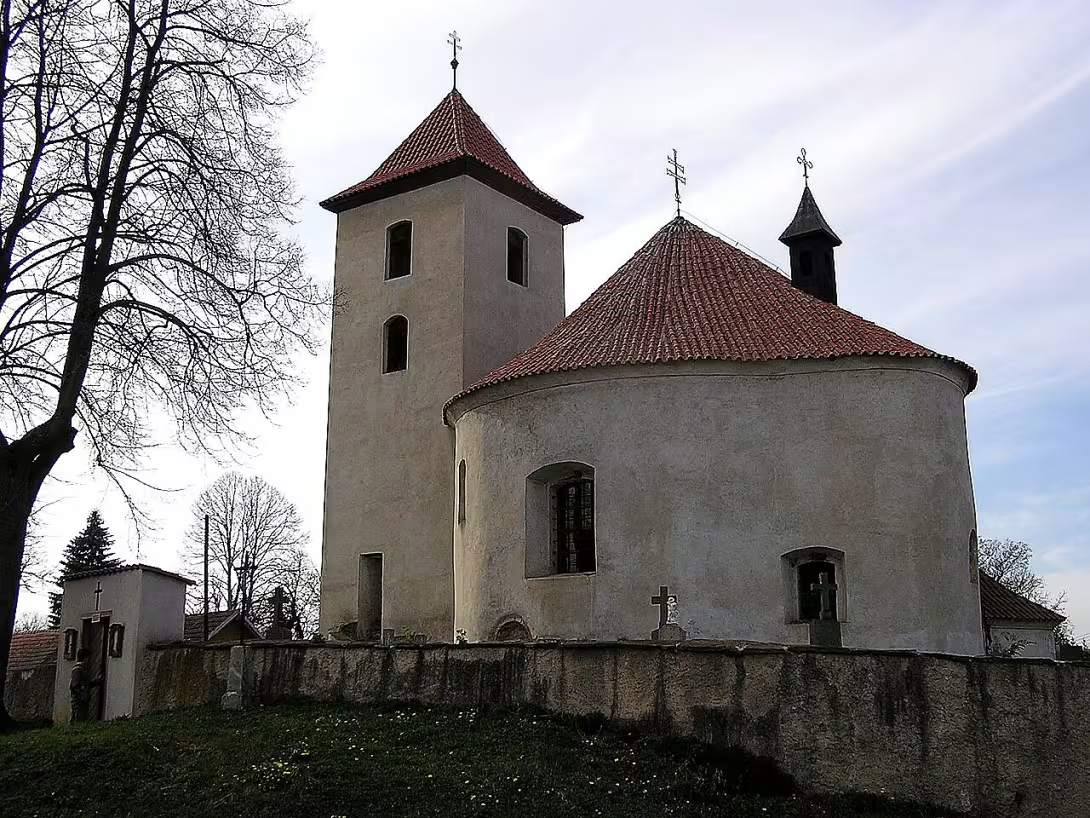
The Church of St. Wenceslas in Libouň is a Romanesque rotunda likely founded at the turn of the 12th and 13th centuries. Situated in the village of Libouň within Zvěstov municipality, Středočeský kraj, this church stands out for its remarkable survival through turbulent historical periods, including the Hussite Wars. It served as a parish church under the administration of the Premonstratensian monastery in Louňovice, established by monk Jindřich in 1149. The church remains an important monument due to its architectural integrity and historical significance.
The origins of St. Wenceslas Church are rooted in a period when Bohemia experienced significant ecclesiastical and political developments. During this time, the Premonstratensian order was gaining influence, contributing to the establishment of monasteries like Louňovice by monk Jindřich in 1149. Although its exact founding date is not precisely documented, historical sources suggest construction occurred between the 12th and 13th centuries. The first written records date back to the mid-14th century, indicating that by then, it had already been functioning as a parish church under Louňovice monastery's administration.
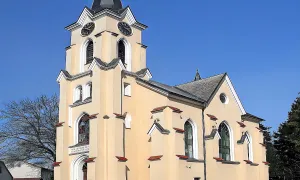
Architecturally, St. Wenceslas Church is characterized by its Romanesque style, featuring a nave, sacristy, and tower constructed from quarry stone. The building boasts a saddleback roof over the nave and a spire-shaped roof over the tower. Notably, the windows are non-original; they have been expanded through chiseling to flat-arched segments. In the 19th century, a new entrance was added on the south side of the church, reflecting changes made during its long history.
Throughout its existence, St. Wenceslas Church has seen various owners and administrators. Initially serving as a parish under Louňovice monastery, it faced abandonment during the Hussite Wars in the early 15th century when many other structures were destroyed. Despite this upheaval, the church remained intact, an anomaly among its contemporaries. In later years, particularly in the 17th century, Libouň was associated with Načeradce and subsequently linked to the newly established šlapánovská faře.
The church's history is marked by several key events and curiosities. Remarkably, it survived the Hussite Wars unscathed while many other structures were destroyed. This resilience has contributed significantly to its historical value. Additionally, a small octagonal belfry with a fresco depicting figures in purgatory stands on the north side of the church, adding an intriguing element to its architectural ensemble.
Over time, St. Wenceslas Church underwent various restorations and modifications. In 1907-1908, local funds were used for repainting and paving the church. Comprehensive restoration efforts in the early 21st century focused on the interior, including altars and frescoes, ensuring its preservation for future generations. The church's exterior and surrounding area also received attention during these restorations.
Today, St. Wenceslas Church remains a testament to its historical resilience and architectural beauty. Visitors can explore its well-preserved Romanesque structure, admire the restored frescoes, and reflect on its survival through centuries of change. Its enduring presence makes it a worthwhile destination for those interested in history, architecture, or simply seeking a moment of tranquility amidst nature.
St. Wenceslas Church invites visitors to step back in time and appreciate its unique story—a narrative of endurance, faith, and community effort that has preserved this remarkable monument through the ages.
Then and now
Drag the slider to compare how the landmark may have looked when it was built with the view today.
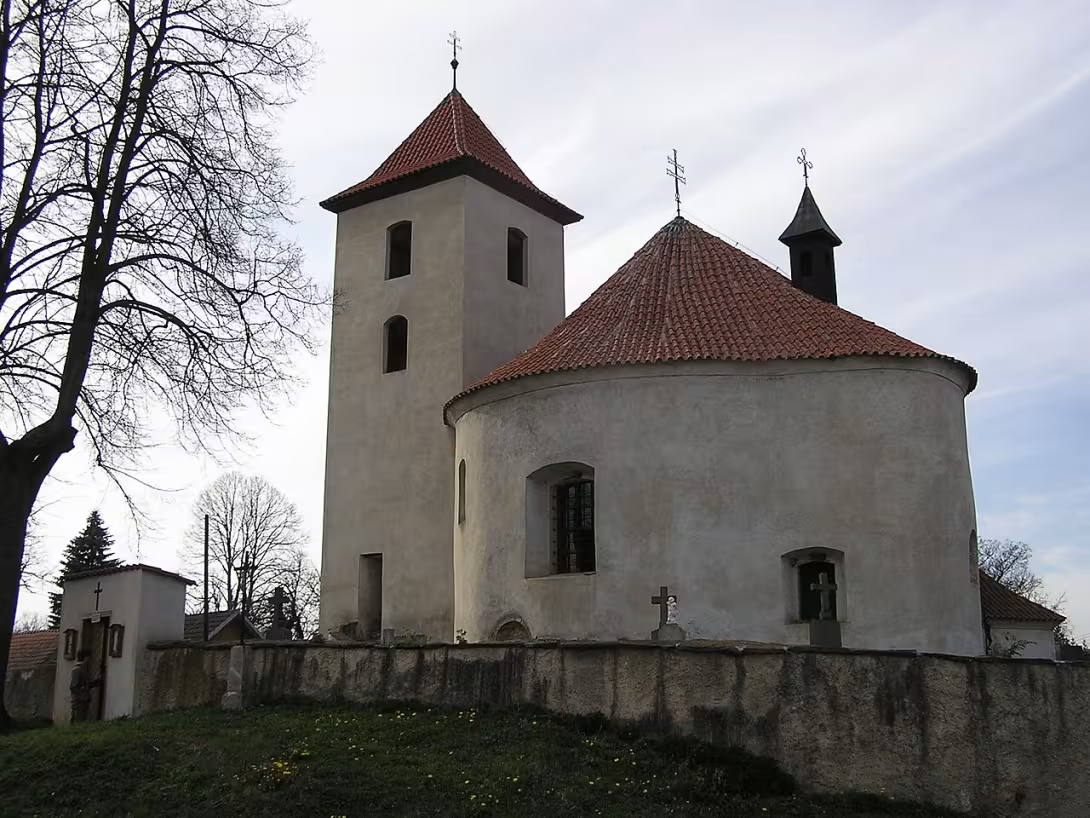

The historical appearance on the left is an AI-generated visualisation and serves as inspiration only.
Historical milestones
- 1149
- Monk Jindřich founded the Premonstratensian monastery in Louňovice.
- 1420
Architectural development
The church features a nave, sacristy, and tower constructed from quarry stone with a saddleback roof over the nave and spire-shaped roof over the tower. The windows are non-original, flat-arched segments expanded by chiseling. In the 19th century, a new entrance was added to the south side of the church.
Historical events
The church served as a parish under the Louňovice monastery from its founding until the Hussite Wars in the early 15th century when it was abandoned.
In 1907-1908, local funds were used for repainting and paving the church.
Comprehensive restoration of the interior, including altars and frescoes, occurred after 2000.
Points of interest
- Despite its survival through the tumultuous Hussite Wars, St. Wenceslas Church in Libouň is unique for having an octagonal belfry with a fresco depicting figures in purgatory on its north side, adding a distinctive artistic and spiritual element to its architecture.
- The church's endurance as a parish under the administration of the Premonstratensian monastery in Louňovice is notable, especially considering that many other religious structures were abandoned or destroyed during the Hussite Wars, highlighting its resilience and strategic importance.
- In 1907-1908, local community efforts funded significant restoration work, including repainting and paving, demonstrating a long-standing commitment to preserving this historical monument despite financial constraints typical of rural areas in early 20th-century Bohemia.
- The church's architectural evolution is marked by the addition of a new entrance on its south side during the 19th century, reflecting broader trends in ecclesiastical architecture where functionality and accessibility were increasingly prioritized over original design elements.
- Although originally constructed with Romanesque features like quarry stone walls and a saddleback roof, St. Wenceslas Church underwent significant changes to its windows, which were chiseled into flat-arched segments from their non-original forms, indicating adaptive reuse practices that preserved the building's structural integrity while accommodating changing aesthetic preferences over time.
Guide
This guide is narrated by a synthetic voice generated by artificial intelligence.
Show guide text
This text was created by artificial intelligence and has not been editorially reviewed. It may contain inaccuracies.
Welcome to the historic site of Kostel svatého Václava in Libouň, a remarkable testament to resilience and architectural beauty. As you stand here, take a moment to absorb the serene atmosphere surrounding this Romanesque rotunda, likely founded at the turn of the 12th and 13th centuries. Its presence is both imposing and inviting, with its rich history etched into every stone.
Let's delve into its origins. In 1149, Monk Jindřich established the Premonstratensian monastery in Louňovice, under whose administration this church served as a parish church. This period marked an era of religious fervor and architectural innovation, with monasteries playing crucial roles in community life.
As you gaze upon Kostel svatého Václava, notice its unique octagonal belfry—a distinctive feature that sets it apart from other structures of the time. The north side of this belfry is adorned with a fresco depicting figures in purgatory, adding an artistic and spiritual dimension to its architecture. This element not only enhances its visual appeal but also invites contemplation on themes of redemption and eternity.
The church's survival through the tumultuous Hussite Wars is nothing short of miraculous. While many structures were destroyed during this period, Kostel svatého Václava stood firm, a silent witness to the passage of time and turmoil. This resilience speaks volumes about its construction and the community that cherished it.
Monk Jindřich's role in founding the monastery is central to understanding the church's historical significance. His vision laid the groundwork for what would become a spiritual hub in the region, influencing countless lives over centuries.
Now, let your curiosity lead you further. Explore the surroundings and imagine the stories these ancient stones could tell if they had voices. Each step around this site offers new perspectives and insights into its storied past.
As we conclude our tour, I invite you to linger a while longer, absorbing the quiet dignity of Kostel svatého Václava. Whether you're drawn by history, architecture, or spirituality, there's always more to discover here. Thank you for joining me on this journey through time, and may your visit inspire further exploration and reflection.
Frequently asked questions
Can the monument be visited?
Religious buildings are usually open mainly during services; at other times a visit is normally arranged with the parish or the operator. We have not verified specific times.
Where is the monument?
Location: Libouň, Středočeský kraj. The map on this page shows the exact spot.
Why is the monument protected?
It is listed in the Central List of Cultural Monuments of the Czech Republic as a cultural monument (register no. 29508/2-90).
Businesses nearby
Do you run a restaurant, accommodation, shop, museum, rental, wellness or other visitor service near this monument? Show yourself directly to the people heading to it — this is how they will see you in the app and on the web:
Accommodation nearby
Themed route
Tematická výletní trasa: Kostel svatého Václava (Libouň)
1. Kostel svatého Václava (Libouň) - Hlavní cíl
- Typ: Náboženská památka
- Proč stojí za návštěvu: Tento barokní kostel je nejen duchovním centrem obce Libouň, ale také architektonickým pokladem s bohatou historií. Jeho interiér nabízí pohled na krásné umělecké prvky a stojí za to prozkoumat jeho vnitřní prostor pro zážitky plné klidu a duchovního naplnění.
2. Nádvoří kostela svatého Václava
- Typ: Historický areál
- Proč stojí za návštěvu: Nádvoří kolem kostela nabízí klidnou atmosféru pro relaxaci a refleksi. Je to místo, kde můžete užít si přírodního prostředí okolních stromů a možná i nějaké historické informace o kostele zobrazené na výstavbách nebo tabulkách.
3. Okolní obec Libouň
- Typ: Místní komunita
- Proč stojí za návštěvu: Prozkoumání samotné obce Libouň může být zajímavé pro ty, kteří chtějí získat pocit o životě v malé české vesnici. Navštívte místní tradiční domy a užijte si atmosféru místa, kde historie a současnost spolu existují.
4. Zvuková cesta kostela svatého Václava
- Typ: Audio exkurze
- Proč stojí za návštěvu: Pro ty, kteří se zajímají o historii a architekturu, je zvuková cesta ideálním doplňkem. Nabízí podrobné informace o historickém vývoji kostela, jeho architektonických detailů a duchovním významu, což může zvýšit pochopení a ocenění tohoto místa.
Tato trasa nabízí kombinaci náboženského zážitku, historických informací a příležitost k relaxaci v klidné venkovské atmosféře.
Seasonal recommendations
Spring: Visiting the Church of St. Wenceslas in Libouň during spring offers a unique blend of blooming nature and gentle weather, creating an idyllic setting for exploration. The surrounding landscape is transformed with vibrant wildflowers and budding trees, providing picturesque views that enhance the historical charm of the church. Soft sunlight filters through the foliage, casting dappled patterns on cobblestone paths leading to the site. This season sees moderate visitor numbers, making it a pleasant time to explore without the crowds typical in peak tourist months. It's advisable to wear layers as temperatures can vary; early mornings and evenings may be cool while afternoons are warmer. A comfortable pair of walking shoes is recommended for navigating uneven terrain.
Summer: Summer at the Church of St. Wenceslas in Libouň is characterized by long, sunny days that illuminate the church's architecture beautifully, allowing visitors to appreciate its intricate details. The lush greenery surrounding the site provides a refreshing backdrop and offers ample opportunities for leisurely walks or picnics nearby. However, this season also attracts more tourists, so it’s wise to arrive early in the morning to avoid larger crowds and ensure a peaceful experience. Light, breathable clothing is essential due to the warmer temperatures, along with sunscreen and a hat for sun protection. Staying hydrated is crucial, especially during midday when the sun is at its peak.
Autumn: Autumn brings a stunning display of colors to the Church of St. Wenceslas in Libouň, as the leaves change from green to rich hues of orange, red, and gold. This seasonal transformation creates a magical atmosphere that complements the historical ambiance of the church. The cooler temperatures make for comfortable walking conditions, ideal for exploring the area at a leisurely pace. Visitor numbers are generally lower than in summer, providing a more serene experience. Wearing layers is recommended to accommodate fluctuating weather, and sturdy footwear will help navigate any damp or uneven paths.
Winter: Winter transforms the Church of St. Wenceslas into a picturesque scene with snow-covered surroundings that enhance its architectural beauty. The quietness of the season offers an intimate atmosphere for reflection and appreciation of the church's historical significance. However, colder temperatures mean it’s essential to dress warmly in layers, including a hat, gloves, and insulated footwear. Be mindful of potential icy paths, which can make walking more challenging. Despite these considerations, winter provides a unique opportunity to experience the church in a tranquil setting, away from the summer crowds.
Visualizations and artistic views


The visualisations are generated by artificial intelligence and serve as inspiration.
Photos from the area
Real photos taken near the monument


Zdroj a licence jsou uvedeny u každého snímku.
Tips from visitors
No tips yet. Be the first!
Log in and add your tip.
Sources and literature
Photos: Tereza Kostohryzová / CC BY-SA 4.0 — Wikimedia Commons. The author and licence also appear when you hover over the image.
Faktickým podkladem tohoto textu byl článek na Wikipedii, jehož autory jsou přispěvatelé Wikipedie. Článek je dostupný pod licencí CC BY-SA 4.0.
Location on the map
Příběhy a pověsti
Legendy, pověsti a příběhy spjaté s touto památkou
Fotografie návštěvníků
Zatím žádné fotografie. Buďte první, kdo přidá fotografii z návštěvy!
Log in a přidejte svou fotografii nebo hodnoťte.
Za ověřenou návštěvu v aplikaci získáte víc bodů — poznáme podle GPS, že jste na místě.
Reviews and comments