






Kostel svatého Václava (Louka) Church
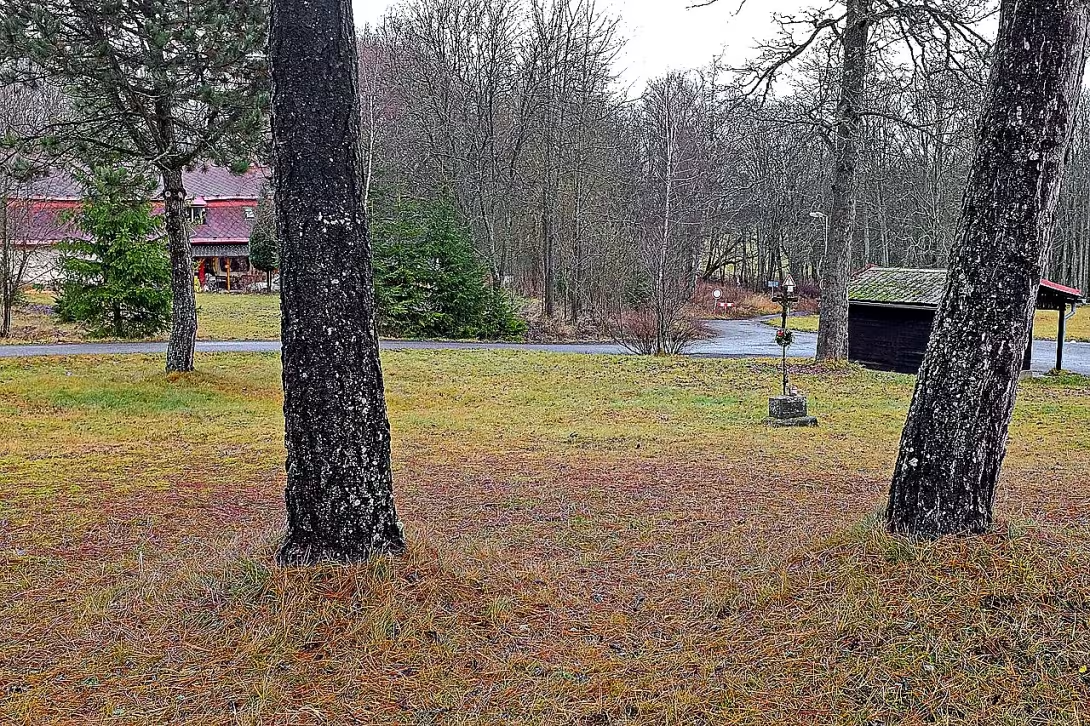
Objekt se nedochoval — na místě dnes nestojí. Následující text popisuje jeho historii, ne současnou návštěvu.
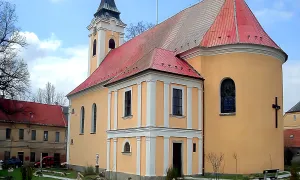
The Church of Saint Wenceslas in Louka was a Baroque structure built between 1725 and 1728, reflecting the region's rich historical tapestry. Situated in Louka village within Nová Ves district of Karlovarský kraj, it initially belonged to the parish under St. Peter and Paul’s Church in Mnichov. It gained independence with a nearby chapel constructed in 1788. Despite its demolition in 1987, the site remains significant for its architectural evolution and historical context.
The church's origins date back to the Baroque period, featuring an oblong floor plan with a narrower presbytery. Its cornerstone was laid on May 26, 1728. Initially part of St. Peter and Paul’s Church in Mnichov, it became independent after the chapel's erection nearby in 1788. In 1789, its equipment was enriched by acquisitions from the suppressed Minorite monastery in Stříbro, reflecting broader religious reforms under Habsburg rule during the 18th century.
Architecturally, the church underwent significant changes over time. A pseudoromanesque renovation led by Josef Scherbaum between 1850 and 1853 introduced a new tower to the western façade, enhancing its structural complexity. Originally featuring a shingle roof, this was replaced with tiles in 1960, altering its appearance. The church's main altar, an intricately carved masterpiece from the late 17th century, highlighted its artistic value.
Throughout its history, the church experienced dramatic shifts in fortune. Following World War II, the expulsion of the German population led to its disuse. By 1950, it was officially decommissioned and eventually demolished in 1987 due to neglect. Despite these changes, the site retains historical significance, now marked by a bus stop surrounded by trees.
Today, while the physical structure no longer exists, the location offers a poignant reminder of the region's past. Visitors can reflect on its architectural evolution and historical context, appreciating its role in the local community before its decline. The site invites exploration for those interested in the layers of history that have shaped this area.
Then and now
Drag the slider to compare how the landmark may have looked when it was built with the view today.
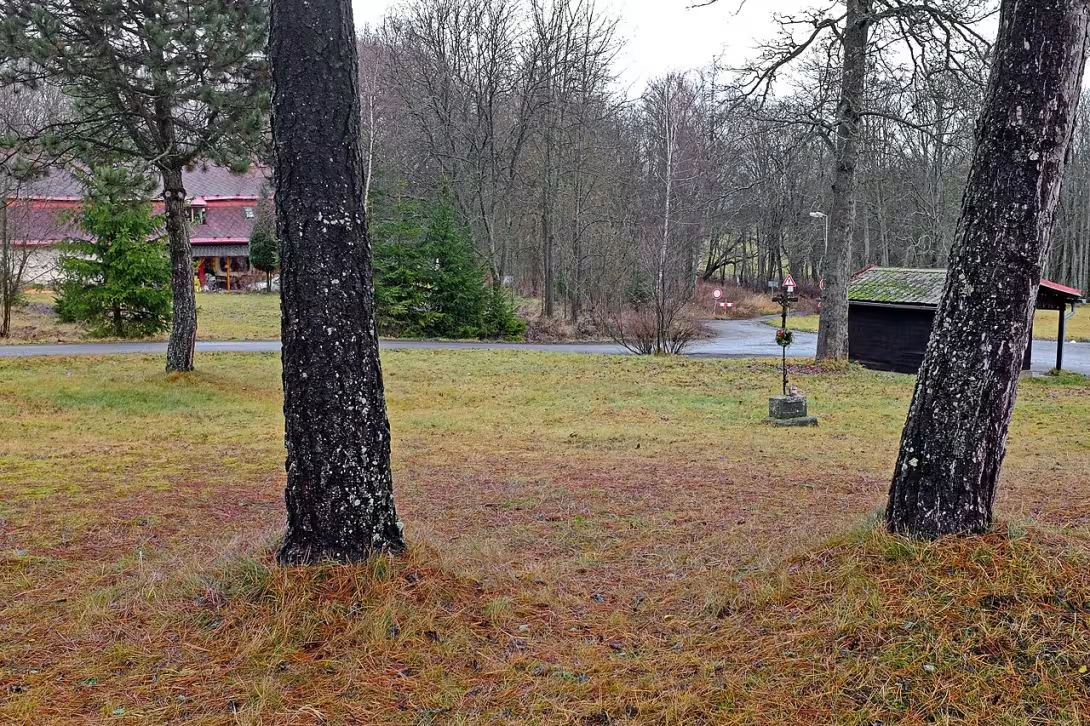

The historical appearance on the left is an AI-generated visualisation and serves as inspiration only.
Historical milestones
- 1728
- Cornerstone of the church was laid.
- 1789
- Church acquired equipment from the suppressed Minorite monastery in Stříbro.
Architectural development
Originally a Baroque structure with an oblong floor plan and a narrower presbytery, the church underwent a pseudoromanesque renovation between 1850 and 1853. This included adding a new tower to the western façade and replacing the shingle roof with tiles in 1960.
Historical events
Construction of the church began with a cornerstone laid on May 26, 1728.
In 1789, parts of the church's equipment were acquired from the suppressed Minorite monastery in Stříbro.
The church was demolished in 1987 after falling into disrepair.
Points of interest
- The Church of Saint Wenceslas in Louka was originally part of the parish under St. Peter and Paul’s Church in Mnichov before gaining independence following the construction of a nearby chapel in 1788.
- In 1789, the church's equipment was enriched by acquisitions from the suppressed Minorite monastery in Stříbro, reflecting broader religious reforms during Habsburg rule in the 18th century.
- Architecturally, the church underwent significant changes with a pseudoromanesque renovation led by Josef Scherbaum between 1850 and 1853, which introduced a new tower to its western façade.
- The church's main altar was an intricately carved masterpiece from the late 17th century, highlighting its artistic value even before it was decommissioned in 1950.
- Following World War II, the expulsion of the German population led to the church’s disuse and eventual demolition in 1987 due to neglect, leaving only a bus stop surrounded by trees as a reminder of its historical significance.
Guide
This guide is narrated by a synthetic voice generated by artificial intelligence.
Show guide text
This text was created by artificial intelligence and has not been editorially reviewed. It may contain inaccuracies.
Welcome to the Church of Saint Wenceslas in Louka, a remarkable testament to Baroque architecture nestled within the scenic landscape of Karlovarský kraj. As you stand here today, enveloped by its historic aura, imagine stepping back into the early 18th century when this church first rose from the ground.
The journey of this sacred site began between 1725 and 1728, a time marked by architectural innovation and spiritual devotion. Originally part of the parish under St. Peter and Paul’s Church in Mnichov, it served as a beacon for local worshippers. The cornerstone laid in 1728 was not just the foundation of a building but the beginning of a legacy that would endure through centuries.
As you gaze upon its structure, take note of the Baroque elements that define its character. Though the architect remains unknown, their vision brought forth a design that harmoniously blends with the natural surroundings. The church’s facade and overall form invite you to reflect on the craftsmanship of an era where artistry was deeply intertwined with faith.
The Church of Saint Wenceslas underwent significant transformations over time, including a pseudoromanesque renovation by Josef Scherbaum between 1850 and 1853. This period of change reflects the evolving tastes and spiritual needs of its community, ensuring that the church remained a relevant and cherished place of worship.
In 1789, following the suppression of the Minorite monastery in Stříbro, the church acquired valuable equipment from this institution. This event not only enriched the church’s interior but also connected it to a broader historical narrative, weaving together stories of faith across different monastic communities.
One intriguing aspect of this church is its transition from being part of another parish to becoming an independent entity in 1788. This shift was facilitated by the construction of a nearby chapel, highlighting how physical structures can influence spiritual and administrative boundaries within communities.
As you continue your exploration, let the Church of Saint Wenceslas inspire you with its resilience and beauty. Each stone tells a story, each corner holds a memory. We invite you to delve deeper into its history, perhaps imagining the countless individuals who have passed through these doors over the centuries.
Thank you for joining us on this journey through time at the Church of Saint Wenceslas in Louka. May your visit be both enlightening and enriching, leaving you with lasting impressions of a place where history and spirituality converge. Safe travels as you continue to discover more hidden gems within Karlovarský kraj.
Businesses nearby
Do you run a restaurant, accommodation, shop, museum, rental, wellness or other visitor service near this monument? Show yourself directly to the people heading to it — this is how they will see you in the app and on the web:
Events nearby

Zdroj akcí: otevřená data měst a obcí ČR (Národní katalog otevřených dat) a kalendář akcí Národního památkového ústavu.
Visualizations and artistic views


The visualisations are generated by artificial intelligence and serve as inspiration.
Photos from the area
Real photos taken near the monument


Zdroj a licence jsou uvedeny u každého snímku.
Tips from visitors
No tips yet. Be the first!
Log in and add your tip.
Sources and literature
Photos: Lubor Ferenc / CC BY-SA 4.0 — Wikimedia Commons. The author and licence also appear when you hover over the image.
Faktickým podkladem tohoto textu byl článek na Wikipedii, jehož autory jsou přispěvatelé Wikipedie. Článek je dostupný pod licencí CC BY-SA 4.0.
Location on the map
Příběhy a pověsti
Legendy, pověsti a příběhy spjaté s touto památkou
Příběh: Kostel svatého Václava (Louka)
Bylo to v pondělí ráno, kdy Matyáš zjistil, že jeho svět se rozpadá. Vrátiv se do Louky po několika letech, narazil na vesnici bez její dřívější náruživosti …
Číst příběh
Pověst: Kostel svatého Václava (Louka)
Podle místní pověsti nikdo v celém louckém kraji nikdy nevěděl, kdo vlastně kostel svatého Václava navrhl. Přišel prý jeden muž za letního úsvitu roku 1725, …
Číst příběhFotografie návštěvníků
Zatím žádné fotografie. Buďte první, kdo přidá fotografii z návštěvy!
Log in a přidejte svou fotografii nebo hodnoťte.
Za ověřenou návštěvu v aplikaci získáte víc bodů — poznáme podle GPS, že jste na místě.
Reviews and comments