






kostel svatého Václava (Obřany) Church
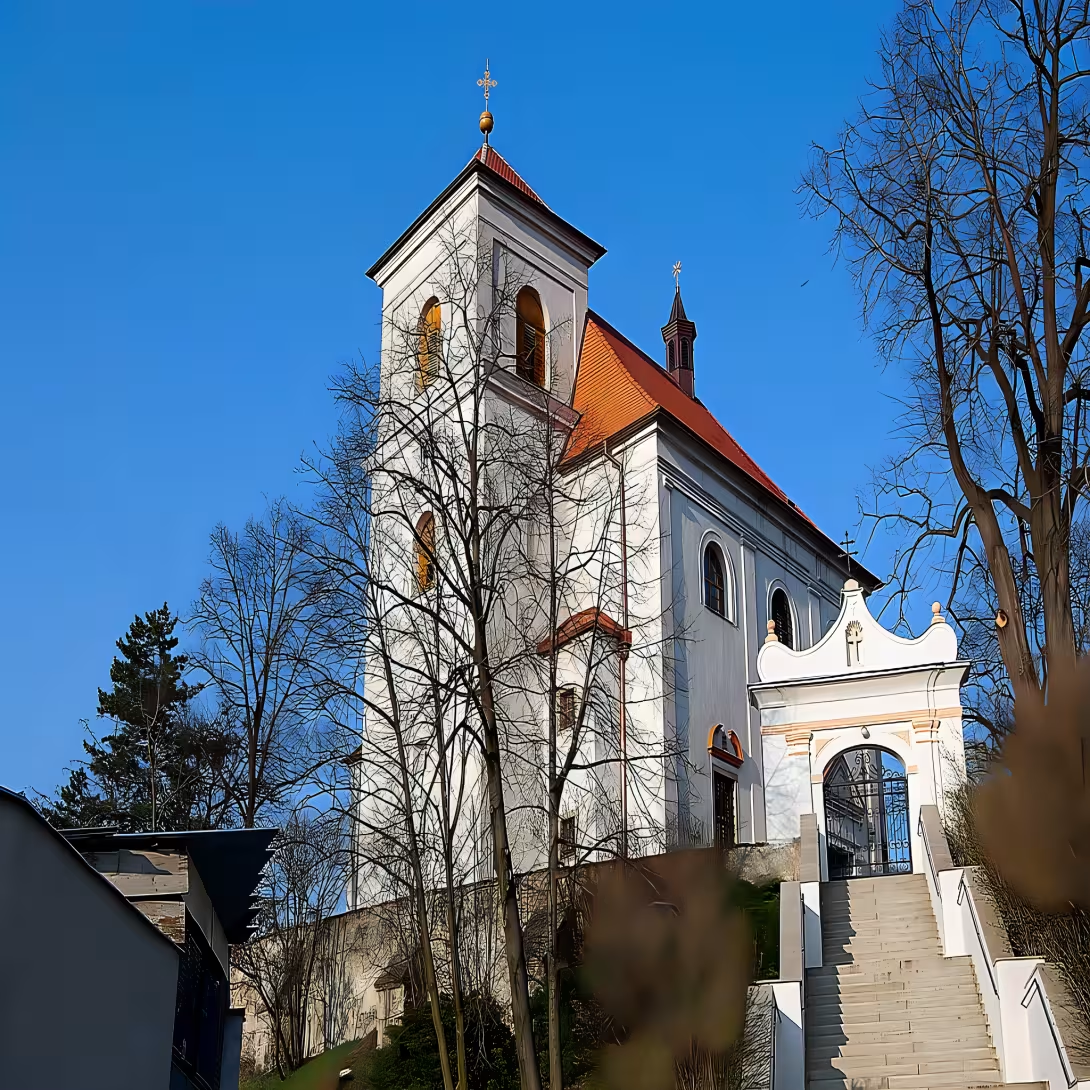
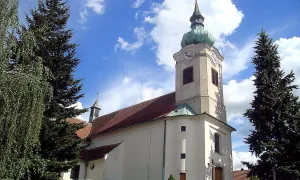
The Church of Saint Wenceslas in Obřany is a Roman Catholic parish church located in the Brno-Obřany district. This historical monument features a medieval core from the early 14th century and has undergone significant transformations, including baroque reconstructions in the mid-17th century. Recognized as a cultural monument of the Czech Republic, it stands out for its rich history and notable artworks within.
The church's origins trace back to the early 14th century, with its medieval core likely established around this period. The first documented mention dates to 1368, indicating its existence then. During the medieval era when the church was founded, Bohemia was an important region within the Holy Roman Empire. Although Gothic architecture began to rise across Europe in the 14th century, this church retains a medieval core with later baroque influences.
Architecturally, the Church of Saint Wenceslas originally featured a Romanesque structure before evolving into its current form. The significant baroque reconstruction between 1643 and 1645 included raising the nave's vaulting and adding a chapel dedicated to Saint Barbara. Following another reconstruction in 1713, the church was restored after suffering damage from a fire in 1780.
Throughout its history, notable figures have been associated with it, such as Tomáš Fryčaj. Serving as a parish priest and writer from 1819 to 1839, Fryčaj made significant contributions during his tenure and is buried nearby on the local cemetery opposite the church entrance.
The interior houses several noteworthy artworks that enhance its historical significance. The main altarpiece features an image of Saint Wenceslas by Franz Werner from 1805. Additionally, sculptures by Ondřej Schweigl, including those of Saints Peter and Paul, enrich the church's artistic heritage. Early baroque sculptures of Saint Wenceslas and the Madonna further complement the interior, alongside a side altar dedicated to Saint John Nepomucene with figures of Saints Luke and Mark from the early 19th century. The church also features a pulpit and baptismal font dating back to the same period.
Today, the Church of Saint Wenceslas remains an accessible cultural monument that continues to attract visitors interested in its historical and architectural significance. Its status as a protected site underscores its importance within the Czech Republic's rich cultural tapestry. Visitors are invited to explore this remarkable church, where history and art converge, offering a glimpse into the past while standing proudly in the present.
Then and now
Drag the slider to compare how the landmark may have looked when it was built with the view today.
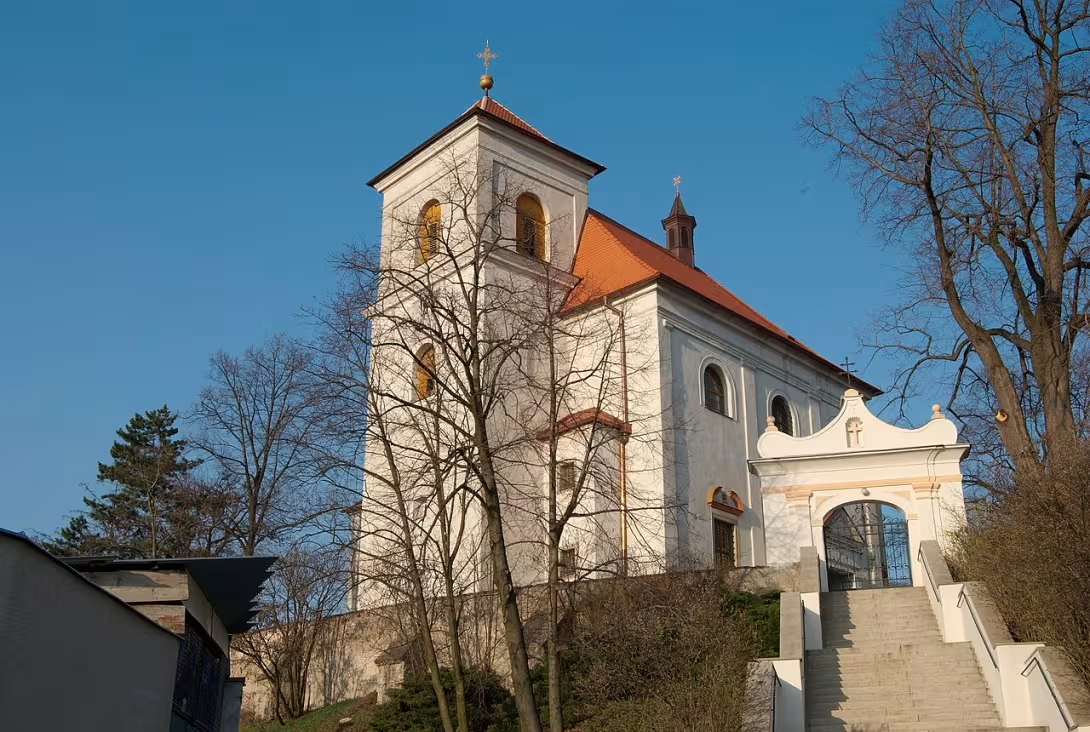
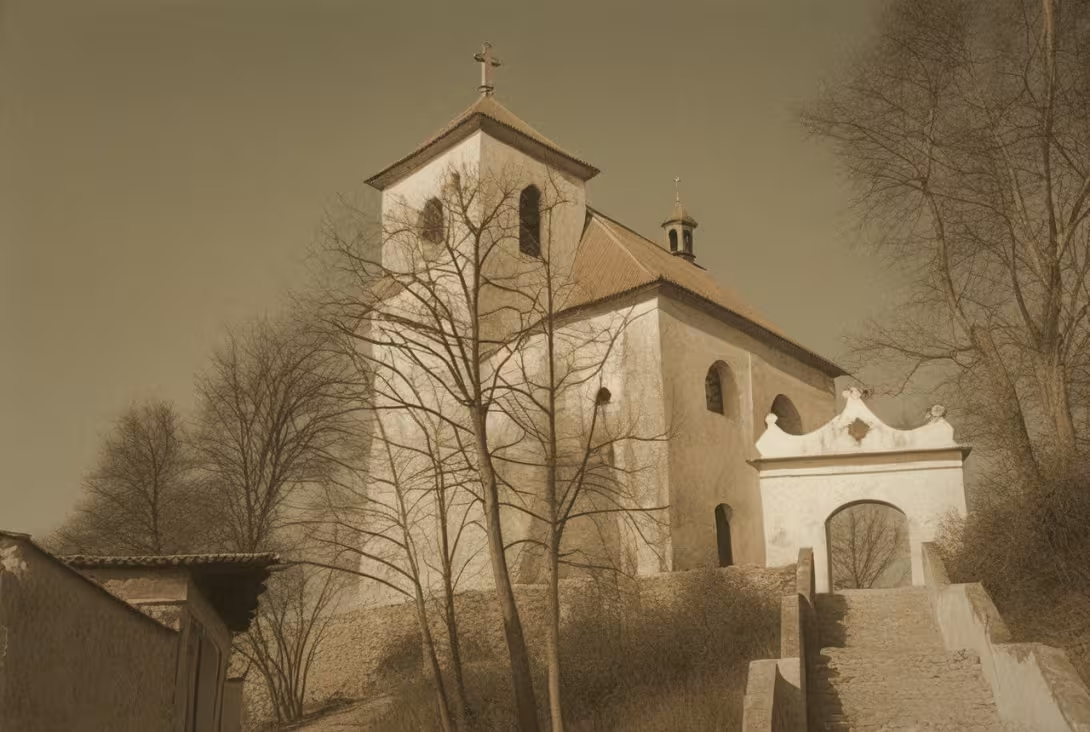
The historical appearance on the left is an AI-generated visualisation and serves as inspiration only.
Historical milestones
- 1368
- First documented mention of the church.
- 1643
- Baroque reconstruction began, including raising the nave's vaulting and adding a chapel of Saint Barbara.
- 1713
- The church was reconstructed.
- 1780
- Reconstruction after a fire.
Architectural development
The church originally had a Romanesque structure with its medieval core dating back to the early 14th century. It underwent significant baroque reconstruction between 1643 and 1645, which included raising the nave's vaulting and adding a chapel of Saint Barbara. After being rebuilt in 1713, it was restored following a fire in 1780.
Historical events
First documented in 1368, indicating its existence during that period.
Baroque reconstruction between 1643–1645, which included raising the nave's vaulting and adding a chapel of Saint Barbara.
Reconstruction after a fire in 1780.
Guide
This guide is narrated by a synthetic voice generated by artificial intelligence.
Show guide text
This text was created by artificial intelligence and has not been editorially reviewed. It may contain inaccuracies.
The Church of Saint Václav stands on Kmochova Street in the Obřany district of Brno. It is the parish church of the Roman Catholic parish Brno-Obřany and is protected as a cultural monument of the Czech Republic.
Its origins date far back to the Middle Ages. The original building was possibly Romanesque. Today's church has a medieval core that probably dates from the beginning of the 14th century. The first written mention of the church is from 1368.
Between 1643 and 1645, the church was damaged. This was followed by a sensitive Baroque reconstruction, during which the nave vault was raised and the Chapel of Saint Barbara was added. In 1713, the church underwent reconstruction. In 1780, a fire struck it and it was later restored again.
The name Tomáš Fryčaj is connected with Obřany. This priest, revivalist, and writer worked there from 1819 to 1839. He is buried in the local cemetery, opposite the entrance to the church.
The interior decoration comes largely from the beginning of the 19th century. The main altar was created in 1805 and bears a painting of Saint Václav by Franz Werner. The statues of Saint Peter and Saint Paul are the work of Ondřej Schweigl. Older are the early Baroque statues of Saint Václav and the Madonna. The side altar is dedicated to Saint John of Nepomuk and is decorated with sculptures of Saint Luke and Saint Mark. The church furnishings are completed by a pulpit and a baptismal font.
Tips for visitors
The best time to visit the Church of Saint Wenceslas in Obřany is during late spring or early autumn, when the weather is pleasant for walking around the church grounds and enjoying its architectural details without the crowds that summer might bring. The soft light during these seasons also enhances the medieval features of the church, making it ideal for photography enthusiasts.
When visiting, it's advisable to bring comfortable walking shoes as you may want to explore the surrounding area of Obřany. A camera with a zoom lens can be beneficial for capturing the intricate details of the church’s architecture from various angles. Additionally, consider bringing water and snacks if planning an extended visit or exploring nearby attractions.
For photography enthusiasts, the best spots to capture the Church of Saint Wenceslas are during the golden hours—shortly after sunrise or before sunset—when the light is soft and warm, highlighting the church's medieval architecture. The eastern facade offers a stunning view with the morning sun illuminating its details, while the western side provides dramatic lighting in the late afternoon.
Nearby attractions within 30 minutes include the historic center of Brno, which is rich with cultural sites such as the Špilberk Castle and the Cathedral of St. Peter and Paul. Families with children might enjoy a visit to the Brno Zoo or the interactive Science Center Expolab, both offering engaging experiences for all ages.
Frequently asked questions
Can the monument be visited?
Religious buildings are usually open mainly during services; at other times a visit is normally arranged with the parish or the operator. We have not verified specific times.
Where is the monument?
Location: Kmochova, Obřany, Brno, Jihomoravský kraj. The map on this page shows the exact spot.
Why is the monument protected?
It is listed in the Central List of Cultural Monuments of the Czech Republic as a cultural monument (register no. 24414/7-72).
Businesses nearby
Do you run a restaurant, accommodation, shop, museum, rental, wellness or other visitor service near this monument? Show yourself directly to the people heading to it — this is how they will see you in the app and on the web:
Events nearby


Zdroj akcí: otevřená data měst a obcí ČR (Národní katalog otevřených dat) a kalendář akcí Národního památkového ústavu.
Accommodation nearby
Trips and activities nearby
Guided tours, tickets and activities nearby from GetYourGuide
Affiliate link: if you buy from the partner, we may receive a commission. The price for you does not change.
Search tours and activities →Themed route
Tematická výletní trasa: Kostel svatého Václava (Obřany)
1. Kostel svatého Václava (Obřany) - Hlavní cíl
Typ: Religiozní památka
Proč stojí za návštěvu: Tento barokní kostel je architektonickým pokladem s bohatou historií, která sahá až do 13. století. Jeho vnitřek je vybaven původními freskami a sochami, které přitahují návštěvníky svým uměleckým i historickým významem.
2. Nádvoří kostela
Typ: Historické nádvoří
Proč stojí za návštěvu: Nádvoří před kostelem nabízí klidnou atmosféru, kde si můžete užít panoramatických výhledů na okolní krajinu. Je to ideální místo pro relaxaci a reflektování po prozkoumání interiéru kostela.
3. Věž kostela
Typ: Historická věž
Proč stojí za návštěvu: Výška věže nabízí jedinečný pohled na okolní oblast, což je zvláště přitažlivé pro milovníky fotografování a historie. Navíc je to místo, kde můžete slyšet hlasité zvony, které dodnes oznamují čas.
4. Park u kostela
Typ: Místní park
Proč stojí za návštěvu: Park při kostele je ideálním místem pro krátkou procházku a relaxaci v zeleni. Jeho klidné křoviny a staré stromy poskytují útočiště od každodenního života, což činí tento park perfektním místem pro odpočinek po návštěvě kostela.
Tato trasa nabízí komplexní zážitek o historii a kultuře obce Obřany prostřednictvím jejího nejvýraznějšího památkového objektu, Kostela svatého Václava.
Seasonal recommendations
Spring: Visiting the Church of Saint Wenceslas during spring offers a unique experience as nature begins to awaken around Obřany. The soft, dappled light filtering through budding trees creates a serene atmosphere that enhances the historical beauty of the church. Spring showers can bring out vibrant colors in the surrounding landscape, making it an ideal time for photography enthusiasts. Visitors should be prepared for occasional rain by wearing waterproof footwear and carrying an umbrella or raincoat. Although crowds are generally lighter than in summer, arriving early is advisable to fully enjoy the tranquil morning light.
Summer: Summer at the Church of Saint Wenceslas is marked by long daylight hours that illuminate the church's intricate architecture beautifully. The lush greenery surrounding Obřany provides a picturesque backdrop for visitors exploring this historical site. However, it’s also the peak tourist season, so expect larger crowds and potentially longer wait times to enter the church. To avoid the midday heat, plan your visit in the early morning or late afternoon when temperatures are cooler. Comfortable walking shoes and light clothing are recommended, along with sunscreen for protection against strong sunlight.
Autumn: Autumn offers a stunning display of colors as the foliage around Obřany turns into vibrant hues of red, orange, and yellow. This seasonal transformation creates a magical atmosphere that enhances the church’s historical allure. The cooler temperatures make it comfortable to explore without the summer heat, though visitors should bring layers in case of chilly winds. As tourist numbers dwindle compared to summer, this is an excellent time for those seeking a more peaceful visit. Carrying a light jacket or sweater will ensure comfort as you wander through Obřany’s charming surroundings.
Winter: Winter transforms the Church of Saint Wenceslas into a serene and almost mystical site with snow-covered landscapes adding to its historical charm. The shorter days mean that visiting early is crucial, especially if you want to capture the church in the soft glow of morning light or under the enchanting hues of sunset. While crowds are minimal during this season, it’s important to dress warmly in layers, including a hat and gloves, as temperatures can be quite low.
Visualizations and artistic views


The visualisations are generated by artificial intelligence and serve as inspiration.
Photos from the area
Real photos taken near the monument


Zdroj a licence jsou uvedeny u každého snímku.
Tips from visitors
No tips yet. Be the first!
Log in and add your tip.
Sources and literature
Photos: Kirk / CC BY-SA 3.0, rozlišení zvýšeno umělou inteligencí — Wikimedia Commons. The author and licence also appear when you hover over the image.
Faktickým podkladem tohoto textu byl článek na Wikipedii, jehož autory jsou přispěvatelé Wikipedie. Článek je dostupný pod licencí CC BY-SA 4.0.
Location on the map

Příběhy a pověsti
Legendy, pověsti a příběhy spjaté s touto památkou
Fotografie návštěvníků
Zatím žádné fotografie. Buďte první, kdo přidá fotografii z návštěvy!
Log in a přidejte svou fotografii nebo hodnoťte.
Za ověřenou návštěvu v aplikaci získáte víc bodů — poznáme podle GPS, že jste na místě.
Reviews and comments