






Obřanská textilní továrna Textile factory
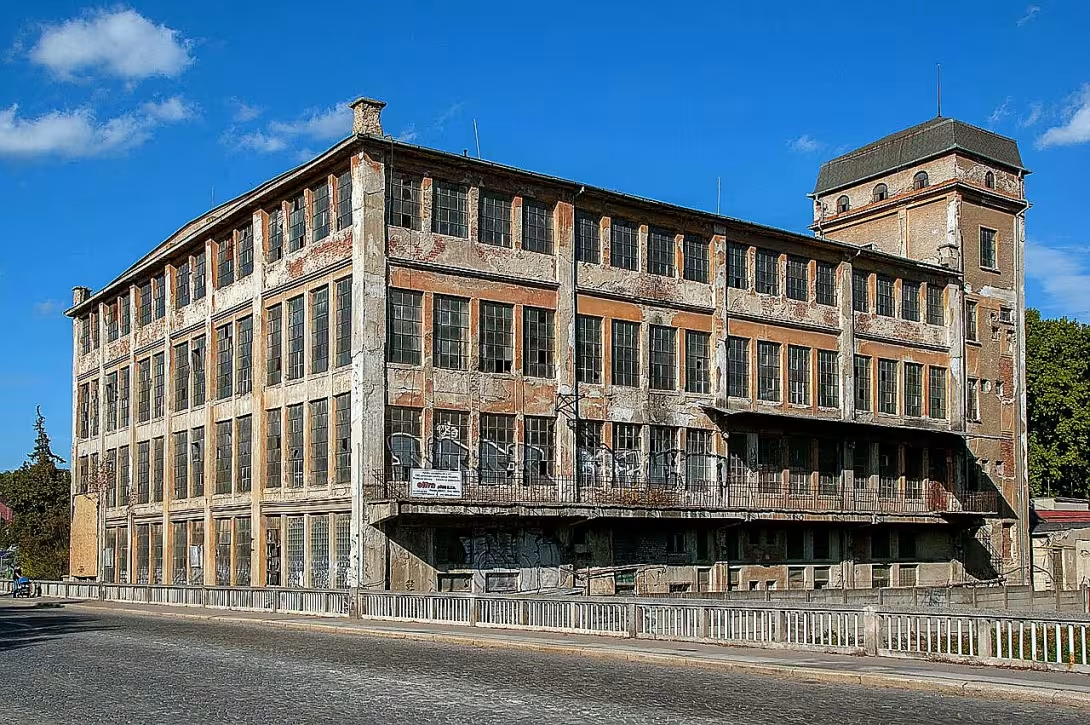
Obřanská textilní továrna, located in the area of Obřany in Brno, is a historical monument which represents an interesting chapter in the industrial development of the region. This former textile factory, built on the site of the original Slámov Mill, is exceptional in its location on a small island between the main flow of the Svitavy River and the Giant Drive. Its history relates not only to industrial change, but also to the dramatic events of the 20th century, which reflect broader social and political transformation.
The original use of the site was the Slám Mill, which used the drive for propulsion. Before 1885 there was already a small mill rented by the textile company of Beran. In 1900, Eduardo Ernst Essler bought the mill and mill, which laid the foundations for the future development of the textile factory. This industrial effort was dramatically interrupted by the fire in 1913, which destroyed the original building. In its place was built a new factory which Adolf Essler took over from his father in 1915 and started expanding, especially in the post-war years.
Architecturally Obřanská textilní továrna is a representative example of industrial functionalism. A new building was built after the fire in 1913, which was subsequently expanded by Adolf Essler. In 1922 a four-storey reinforced concrete building was built for the aprature and in 1934 a new building for the weaving plant was completed. This gradual expansion reflects the technological progress and economic prosperity of the factory, which employed up to 600 people in the interwar period.
The history of owners of the Giant Textile Factory is as dramatic as its architecture. After the occupation of Czechoslovakia by Germany, the factory was seized as Jewish property and Adolf Essler, then owner, was dragged to a concentration camp. After the liberation of Czechoslovakia, Essler was designated a collaborator and his property was nationalized. Since 1948, the factory has been incorporated into Moravian-Silesian plants and renamed to the national enterprise Moravian-Silesian wave plants.
The key events in the history of the factory were the fire in 1913, which led to the construction of a new building, and the installation of the Kaplan turbine in 1933. These technological innovations have made it possible to expand production capacities and improve efficiency. In 1992, textile production was definitively terminated, reflecting global economic change and the transition to other sectors.
Today, Obřanská textilní továrna stands unused and is being considered for its future. Its unique location on the island between the river Svitavou and the drive makes it an interesting place to visit, although the current state of the buildings requires further processing. This monument is important not only as a reminder of Brno's industrial development, but also as a witness to the dramatic events of the 20th century.
Obřanská textilní továrna is therefore more than just a former industrial building; It is a living document of history that reflects technological innovation, economic prosperity and the tragedy of the Holocaust. Her visit offers a unique view of Brno's industrial past and recalls the importance of remembering the historical events that shaped the current society.
Then and now
Drag the slider to compare how the landmark may have looked when it was built with the view today.
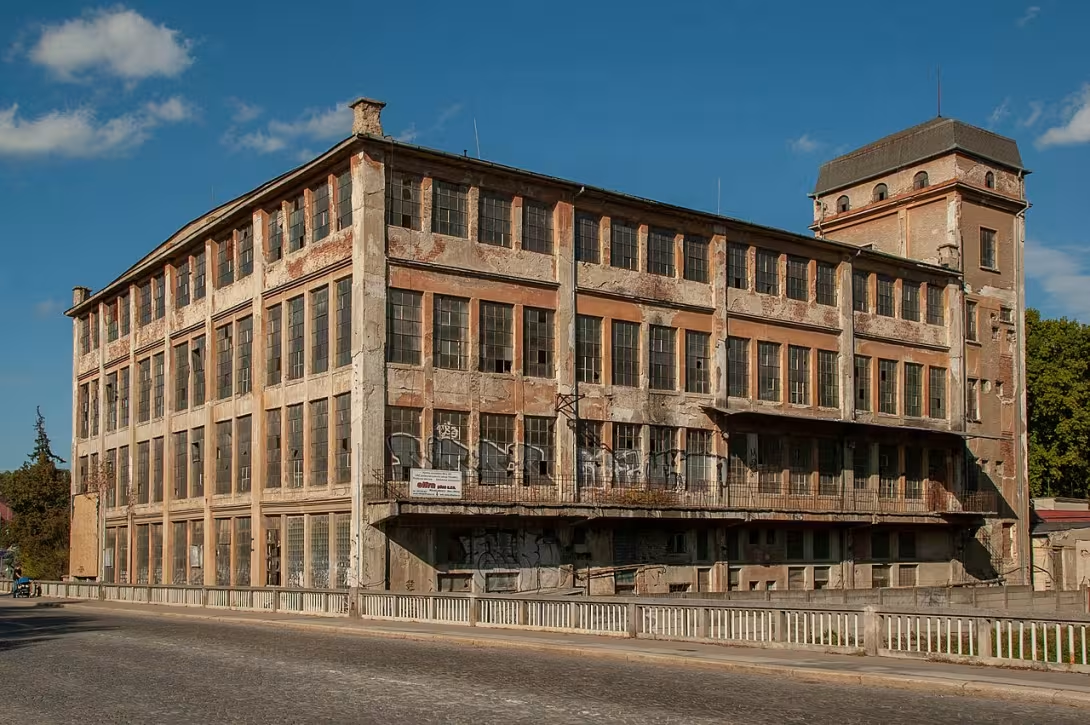
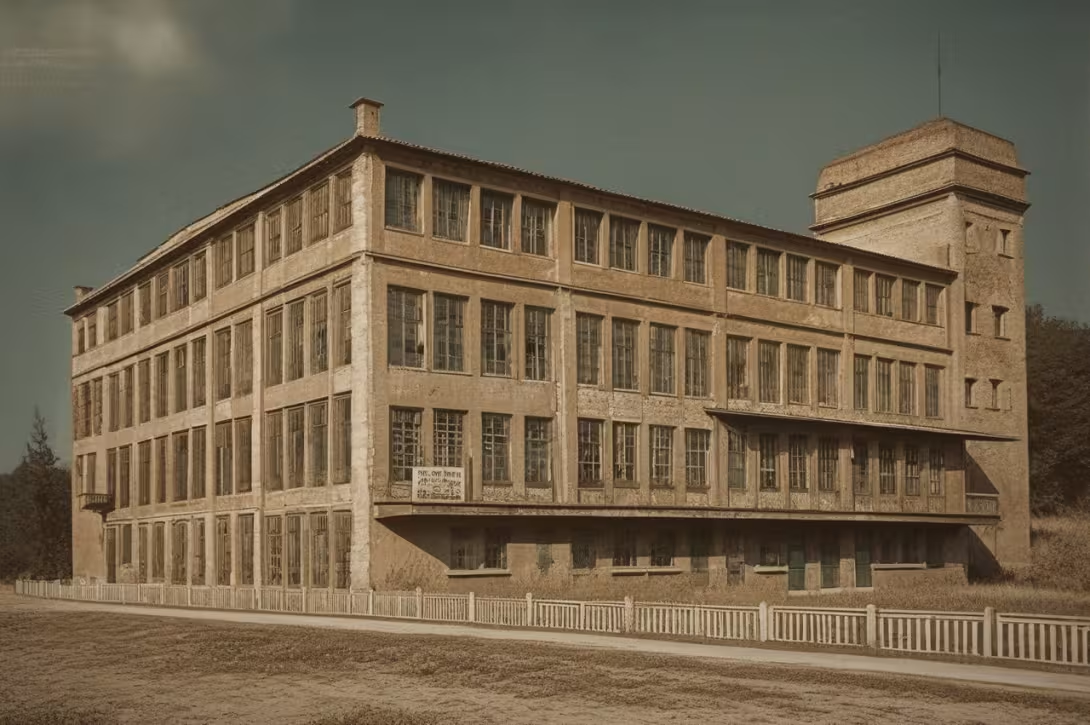
The historical appearance on the left is an AI-generated visualisation and serves as inspiration only.
Historical milestones
- 1900
- The purchase of the mill and mill by Eduardo Ernst Essler.
- 1913
- The factory fire and subsequent construction of a new building.
- 1917
- Establishment of a hydroelectric power plant for public lighting of the municipality.
- 1922
- The creation of a department for the aprature and construction of a reinforced concrete building.
- 1933
- Installation of the new Kaplan turbine.
- 1934
- Construction of the new building of the weaving plant.
- 1992
- Stopping production at the factory.
Architectural development
The original mill and mill were replaced by a new building after 1913. In 1922, a four-storey reinforced concrete building was built for the aprature and in 1934 a new building for the weaving plant was built.
Historical events
1913 - burning down the original factory and building a new building; 1940-1945 - seizure of property as jewish property; 1992 - complete stop of textile production.
Owners
Slámov mill (originally), firm of entrepreneur Beran (rental up to 1885), Eduard Ernst Essler (from 1900), Adolf Essler (from 1915), state / national enterprise Moravian-Silesian wave plants (after 1948)
Points of interest
- Obřanská textilní továrna is a historical monument representing the chapter of industrial development of the region. - This former textile factory, built on the site of the original Slámov Mill, is exceptional in its location on a small island between the main flow of the Svitavy River and the Giant Drive. - The fire in 1913 led to the construction of a new building which was subsequently expanded by Adolf Essler. - The installation of the Kaplan turbine in 1933 enabled the expansion of production capacity and improved efficiency of the factory. - After the liberation of Czechoslovakia, the owner Adolf Essler was designated a collaborator, his property was nationalized and the factory was renamed the national enterprise of Moravian-Silesian wool racing.
Guide
Show guide text
This text was created by artificial intelligence and has not been editorially reviewed. It may contain inaccuracies.
Welcome to the Brno Ceremony. Stop for a moment, take a breath and look around you. You are standing in front of the site of the former textile factory, which is now a silent witness to the turbulent industrial flourishing of our entire region. If you look ahead, you'll see a complex of buildings that once formed the heart of local economic life. The first thing that will interest you is the very location of this place. Note that the area is not just ice where, but is uniquely set on a small island. This island was created by the distribution of the flow of the Svitavy River, where the main stream of the river separates from the so-called Giant Flange. This position was not random, but it was absolutely crucial for the whole business to function because water was the most valuable source of energy at the time.
Now let's go back in time together to understand how this complex happened. The history of this place does not begin with a big factory, but much more modest. Originally there stood the Slám Mill, which served to grind grain and process raw materials. The break occurred at the very beginning of the twentieth century, exactly nine hundred years ago, when a man named Eduard Ernst Essler bought this mill and the adjacent mill. It was the Essler family, and specifically Eduard and later Adolf, who put a new look on this place and turned it into a modern textile business.
When you watch the buildings in front of you today, it is important to know that what you see is not the result of one plan, but rather a series of changes and unfortunate events. In the year nine hundred and thirteen something dramatic happened here, which fundamentally changed the face of the complex. There was a big fire, which destroyed a significant part of the building at the time. For many, such a disaster would mean an end, but it has become an opportunity for the Essler family to start over. It is after this fire that a new building was built, which forms the basis of the current complex.
Now pay attention to the overall layout of the premises. Even though the machines are no longer running today, you can imagine what kind of activity there must have been. Notice how buildings copy the shape of the island and how closely connected to the water. In the year nine hundred and seventeen, a hydroelectric power plant was set up here. This was a huge step forward at the time, because this power plant did not serve only the needs of the factory, but provided public lighting for the entire municipality at the time. Imagine the contrast where the electric lights first lit up in the surrounding houses, thanks to the energy flowing right here, beneath your feet.
If you look at buildings from a later period, notice those that are more robust. In the year nine hundred twenty-two there was a special department designed for aprature, which in the textile industry is the final finish of fabrics to obtain the desired appearance and properties. A modern reinforced concrete building was built for this department. This material, iron concrete, was a symbol of modernity and strength at the time, and made it possible to build larger and more resilient spaces.
The next milestone that you can perceive in the history of this place is the year of nine hundred thirty-three. At that time a new Kaplan turbine was put into operation. Even though you can't see it from the outside today, it was the technological tip of its time that made it even more effective to use the power of the water from the drive. Just a year later, in the year nine hundred and thirty-four, a new building of the weaving mill was built, which definitely sealed the complex into the form we know.
When we think about this place, we can't forget about people. This factory was not only about machines and concrete, but mainly about thousands of hours of work. At the time of its greatest expansion, i.e. in the 1930s, up to 600 people worked here. Imagine every morning hundreds of men and women who came from nearby streets and villages, crossing bridges to this small island, creating substances in the noise of the weaving plant that then traveled to the region and beyond. It was a whole community where people knew each other, worked together, and worked together to build the prosperity of the Ceremony.
It's fascinating to consider the path this place has taken. From the simple mill, to the devastating flames of fire, to the modern industrial complex with its own power plant and top turbine. It's a story about courage, the ability to start over and the constant search for new technical solutions.
You might wonder why this place is so special today. The answer lies in its very essence. Obřanská textilní továrna is not only a set of old walls, but a historical monument, which represents a whole chapter of the industrial development of our regions. It is a reminder of when water was the main engine of progress and when large enterprises were born in small neighborhoods such as Obřany.
Take another look around you at the stream of the Svitavy River and the quiet drive. Feel the atmosphere of this place where nature, in the form of an island, has encountered hard industrial architecture. It is a strange harmony, which does not have many similarities in Brno. Even though the halls are quiet today, history is still breathing here.
Now they invite you to walk quietly around the premises, look at the facade of the buildings and try to imagine the incredible noise of weaving machines and the smell of processed textiles that once mixed with the damp air of the river. Explore the surrounding shores and note how the landscape around the factory gradually changed.
Thank you for spending time with us at the Giant Textile Factory. We hope you are interested in this short trip to history and that you have felt proud of our city's industrial legacy. We wish you a pleasant continuation in discovering other hidden corners of our Ceremony. Goodbye.
Tips for visitors
Best time to visit Giant textile factory is in spring or autumn season when the weather is pleasant and light suitable for photography. This time also offers a beautiful view of the surrounding green landscape.
Parking near the monument is limited, so we recommend using public transport. You can get by bus or tram and then a short piece pass through your feet. You can verify the current connection in the online search engine.
When visiting, remember the appropriate clothes, especially if you plan to walk outside. In winter the temperature can be cold and in summer the sunny days can be very hot.
For photography is the best place for a factory with a remote angle where you can capture both the object itself and the surrounding landscape. The best light offers periods before and after the sun.
It is possible to visit the river Svitavu or Giant Drive near the monument, where you can enjoy beautiful walks. For families with children, the factory is an interesting historical location and surrounding nature offers space for playing.
Businesses nearby
Do you run a restaurant, accommodation, shop, museum, rental, wellness or other visitor service near this monument? Show yourself directly to the people heading to it — this is how they will see you in the app and on the web:
Events nearby


Zdroj akcí: otevřená data měst a obcí ČR (Národní katalog otevřených dat) a kalendář akcí Národního památkového ústavu.
Nearby
Řeka Svitava, Obřanský náhon a Obřanský most.
Accommodation nearby
Trips and activities nearby
Guided tours, tickets and activities nearby from GetYourGuide
Affiliate link: if you buy from the partner, we may receive a commission. The price for you does not change.
Search tours and activities →Themed route
1. Giant bridge (Type: Construction). Great point for starting walking through the water. 2. Giant Drive (Type: Water Road). This path leads along the water towards the main destination. 3. River Svitava (Type: Water flow). A large water element that flows through the entire area. 4. Obřanská textilní továrna (Type: Building). The main destination of the journey, which represents the history of local industry.
Seasonal recommendations
Spring: Obřanská textilní továrna offers a pleasant experience during this period thanks to warm sunlight and flowering bushes that revive the surroundings. Nature awakens from the winter sleep, which adds colored shine to the visit. It is recommended to visit on the early days of Saturday or Sunday when there are fewer people, and clothes should be mild with the possibility to add a layer to any cooler morning.
Summer: In summer Obřanská textilní továrna takes up life when the sun is highest and visitors can relax on green surfaces. The atmosphere is full of energy and nature in bloom adds beauty and freshness. We recommend visiting early in the morning or late in the evening to avoid the climax of crowds. Don't forget the warm clothes, sunscreen and water.
Autumn: In autumn, the factory offers a more peaceful visit with colorful leaves and mild climate. Beautiful colored trees and sunny days bring a unique atmosphere that is ideal for photography. Visit on Sunday or Wednesday when there are fewer people, and dress up for mild weather with the possibility to add a layer to a cooler afternoon.
Winter: In winter, Obřanská textilní továrna has a magical look, where the surrounding area is covered with snow and sunlight. The atmosphere is calm and slightly cold, which brings a sense of disconnection. We recommend visiting early in the morning or Wednesday when opening is shorter, and equipping yourself with warm clothes, gloves and shoes suitable for snow conditions.
Visualizations and artistic views


The visualisations are generated by artificial intelligence and serve as inspiration.
Photos from the area
Real photos taken near the monument

Zdroj a licence jsou uvedeny u každého snímku.
Tips from visitors
No tips yet. Be the first!
Log in and add your tip.
Sources and literature
Photos: MIGORMCZ / CC BY-SA 4.0 — Wikimedia Commons. The author and licence also appear when you hover over the image.
Faktickým podkladem tohoto textu byl článek na Wikipedii, jehož autory jsou přispěvatelé Wikipedie. Článek je dostupný pod licencí CC BY-SA 4.0.
Location on the map

Příběhy a pověsti
Legendy, pověsti a příběhy spjaté s touto památkou

Fotografie návštěvníků
Zatím žádné fotografie. Buďte první, kdo přidá fotografii z návštěvy!
Log in a přidejte svou fotografii nebo hodnoťte.
Za ověřenou návštěvu v aplikaci získáte víc bodů — poznáme podle GPS, že jste na místě.
Reviews and comments