






Hradisko u Obřan Hillfort
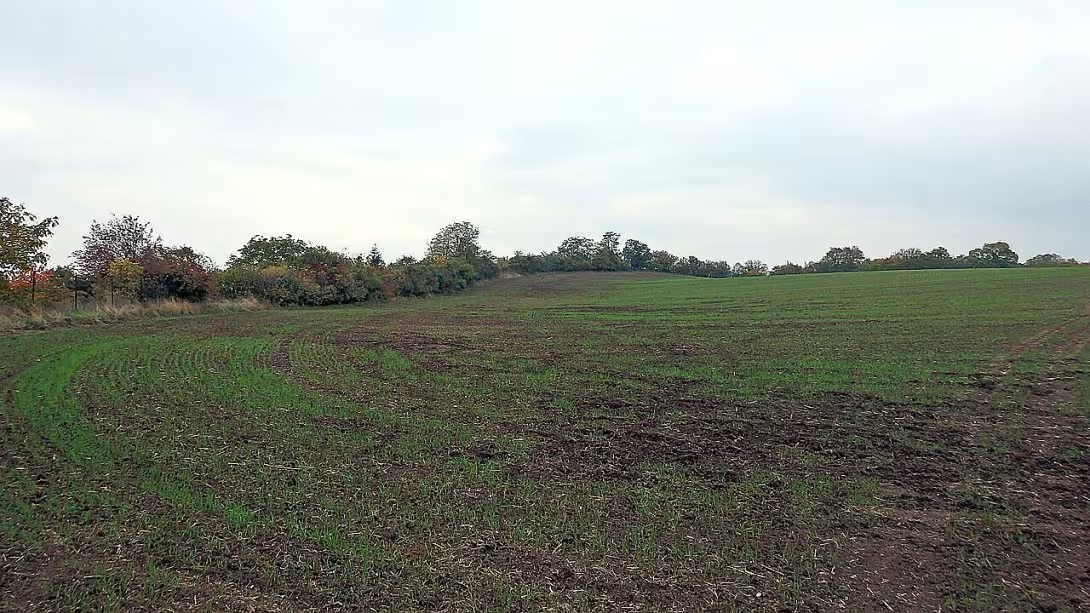
Hradisko u Obřan is an important archaeological site of the late Bronze Age, located in the Brno district of Obřany on the syenite island above the Svitavou River. This cultural monument of the Czech Republic excels with a continuous settlement that lasted for over 1300 years.
The origins of the settlement date back to the younger Bronze Age, namely the Velatic Culture. The main flowering occurred in the late Bronze Age, in the 9th to 8th century B.C., within the Dumpster Field Culture, known as the Podolite Culture. Subsequently, the site was used by people from the older times of the Iron Age (Halštat and Horace culture), the Celts from the younger times of the Iron Age (Latin culture), and later the inhabitants of the Roman era and the period of movement of nations.
The area of 42 hectares is protected by massive walls that reach a height of up to 5 metres on the north and east sides. A complement to the main fort is the settlement in the position of the Rock, where the walls form an aluminium embankment with a reinforced wooden front wall; their crown exceeds the surrounding terrain by 4 to 4.5 metres. Remains of residential buildings, artisanal workshops, pottery furnaces, fires and storage pits were discovered in the area.
Research of the site has been drawing attention since the beginnings of Moravian archaeology. At the end of the 19th and in the first half of the 20th century, amateurs worked around the Brno Museum Association, among them Florián Koudelka, Josef Hladík, Jan Fila, brothers Slovak or Eduard Vodička. The professional survey was dominated by František Adámek, which published a comprehensive monograph in 1961. In 1981, rescue research was carried out in connection with the construction of a gas pipeline, in which a first-century blacksmith's workshop was examined.
The key find is a large heat burial site near the west section of the north wall. Although 250 graves have been explored, the total number is estimated at up to 2000. The dead were mostly placed in circular pits. Grave equipment consisted of vessels of various shapes and sizes, which originally contained food. Some of the vessels used to serve as an urn for ashes and burnt bones, other times the remains were stored directly at the bottom of the pit. Other items include bronze ornaments, weapons or tools.
Hradisko u Obřan is today protected as a cultural monument and forms part of the educational path. The location represents a unique testimony about the long history of the settlement of the region and is worth visiting every interested person in ancient history.
Historical milestones
- 9. to 8th century B.C.
- Main flowering of the castle within the Dumpster Field Culture
- 1st Century B.C.
- Function of the smiths workshop in the site
- End of the 19th Century
- Beginning of archaeological research by amateurs around Brno Museum Association
- 1961
- Issue of a comprehensive monograph about the location of František Adádek
- 1981
- Rescue research related to gas pipeline construction
Architectural development
The fortifications consisted of massive walls in the form of valleys which reach a height of up to 5 meters. The body of the wall was constructed as an aluminium filling with a reinforced wooden front wall. The area contained various buildings from residential houses to craft workshops and pottery ovens.
Historical events
In 1961 František Adámek published a comprehensive monograph on this site. In 1981, rescue archaeological research was carried out in connection with the construction of the pipeline.
Points of interest
- The settlement in this location lasted continuously over 1300 years. - An area of 42 hectares is protected by massive walls that reach a height of up to 5 meters. - Remains of residential buildings, artisanal workshops, pottery furnaces, fires and storage pits were discovered in the area. - A key find is a large heat burial ground, where up to 2,000 graves are estimated. - During rescue research in 1981, the first century B.C.
Guide
Show guide text
This text was created by artificial intelligence and has not been editorially reviewed. It may contain inaccuracies.
Welcome to the historical site Hradisko u Obřan, a mysterious and fascinating archaeological site that awaits you as a friend from the past. You are now standing according to the syenite sharpness above the Svitavou River, where history and nature intersect into a unique pattern. Under your feet, there is an area of the castle with massive walls that reach a height of up to five meters. If you notice their impressive size, you can't get carried away in the thousands of years of history of this place.
Let us immerse ourselves in the origin and historical context of the Boundary of Ceremony. This site is mainly linked to the late bronze age, namely the period of the garbage fields when the main settlement appeared. For millennia, until the Middle Ages, it served as an important centre with diverse functions - from living spaces to craft workshops. The interesting thing is that there was even a blacksmith's workshop from the 1st century B.C., which shows the diversity of activities in the region.
Look up and observe the architectural elements that are still visible today: the walls and the natural defenses that protected the inhabitants. Although specific architects are not known, massive structures suggest advanced construction techniques from the time of their creation.
Now let's look at the key stories and personalities associated with this place. František Adámek, Florián Koudelka, Josef Hladík, Jan Fila and Eduard Vodička are some of the historians and archaeologists who have been studying this site. František Adámek, in particular, published in 1961 a comprehensive monograph on Hradisk near the Ceremony, which recorded and analysed many important findings.
This place has been interesting for more than 1300 years. Here the remains of residential buildings, craft workshops, pottery furnaces and fires were discovered, allowing us to imagine the everyday life of the people at the time. A key finding is a large heat burial site that shows the cultural significance of this place.
If we take a look at the end, we will invite you to further explore the Hradir of the Ceremony. Every step of this area is like a trip to the past and every detail can tell its story. Save time to experience this location in full and remember to look at other attractions in the surrounding region.
Thank you for your visit to the Hostile Ceremony. We hope this guide was inspiring and entertaining for you. Let this history remind you of the rich past of our region. Goodbye!
Tips for visitors
The best time to visit the Přány Hrastí is spring and autumn, when mild weather and light on the slope underlines historical layers; in summer it can be hot and in winter reduced accessibility due to snow. Parking is provided on the reserved land at the entrance where the places for cars and cyclists are indicated; the location is also available by bus from nearby cities, check the current connections in timetables. Take comfortable shoes, plenty of fluids, sun protection and possibly a map or mobile phone with offline map; If you are planning a longer stay, pack a light snack and blanket. The best places for photography are the view over the Svitavou River and on the edge of the rock, where sunlight creates contrasting shadows during morning and late afternoon; We recommend using a tripod for long exposure at sunset. Within half an hour you can find Svitavu, explore the location of the Rocks and walk through the educational trail which offers information boards about bronze time; families with children appreciate interactive field games and safe paths suitable for smaller explorers.
Businesses nearby
Do you run a restaurant, accommodation, shop, museum, rental, wellness or other visitor service near this monument? Show yourself directly to the people heading to it — this is how they will see you in the app and on the web:
Events nearby


Zdroj akcí: otevřená data měst a obcí ČR (Národní katalog otevřených dat) a kalendář akcí Národního památkového ústavu.
Nearby
The river Svitava, the locality of the Rock, the educational trail.
Accommodation nearby
Trips and activities nearby
Guided tours, tickets and activities nearby from GetYourGuide
Affiliate link: if you buy from the partner, we may receive a commission. The price for you does not change.
Search tours and activities →Themed route
1. River Svitav, water flow. A walk along the shore offers a quiet atmosphere and beautiful views. 2. Teache, walking route. This path will guide you through interesting places and provide information about the surroundings. 3. locality Skály, natural unit. This area represents an interesting stop with unique terrain. 4. Hradisko u Obřan, archaeological site. The main destination of the trip, where you can explore traces of ancient history.
Seasonal recommendations
Spring: In the spring season, the castle near the Ceremony is revived by flowers and new leaves, creating an attractive atmosphere for visiting. The sun's rays illuminate the historical remains finer than in summer, thus highlighting their architectural character. Visit this archaeological site on the early days of the week to enjoy a quieter environment and avoid ever more frequent visitors. It is recommended to wear warm clothes with the possibility of approach because the weather can be variable.
Summer: Summer is the perfect time to visit the dam of the Ceremony thanks to long days and warm sunshine, which dazzles historical remains. This season the area becomes a popular destination for tourists, which can lead to a higher frequency of visitors. We recommend arriving at the place early in the morning or late in the afternoon to avoid the top mountains of the crowd. Don't forget the protective sunglasses and enough drinking, because warm weather can be challenging.
Autumn: In autumn, the castle at the Ceremony of Melancholic Beauty becomes a colour of leaves and a quieter atmosphere. Sun rays illuminate historical remains more gently, creating unique visual impressions. Visit this archaeological site in between hours, when the probability of a higher number of visitors is lower. It is recommended to wear warm clothes and suitable footwear for cooler autumn climate.
Winter: Winter visit to the Přány castle offers a quiet atmosphere without large crowds, allowing you to explore archaeological remains more closely. The sun's rays illuminate historical structures with fine light, which provides unique visual impressions. The opening hours can be limited, so make sure of the current times before visiting. We recommend wearing warm clothes and protective shoes because the weather can be cold and snow conditions can affect the way to the place.
Visualizations and artistic views

The visualisations are generated by artificial intelligence and serve as inspiration.
Photos from the area
Real photos taken near the monument


Zdroj a licence jsou uvedeny u každého snímku.
Tips from visitors
No tips yet. Be the first!
Log in and add your tip.
Sources and literature
Fotografie: BíláVrána / CC BY-SA 4.0 — Wikimedia Commons. The author and licence also appear when you hover over the image.
Faktickým podkladem tohoto textu byl článek na Wikipedii, jehož autory jsou přispěvatelé Wikipedie. Článek je dostupný pod licencí CC BY-SA 4.0.
Location on the map
More monuments – Obřany
Show all in the municipality
Příběhy a pověsti
Legendy, pověsti a příběhy spjaté s touto památkou

Fotografie návštěvníků
Zatím žádné fotografie. Buďte první, kdo přidá fotografii z návštěvy!
Přihlaste se a přidejte svou fotografii nebo hodnoťte.
Za ověřenou návštěvu v aplikaci získáte víc bodů — poznáme podle GPS, že jste na místě.
Reviews and comments