






Kostel svatého Václava (Rovensko pod Troskami) Church
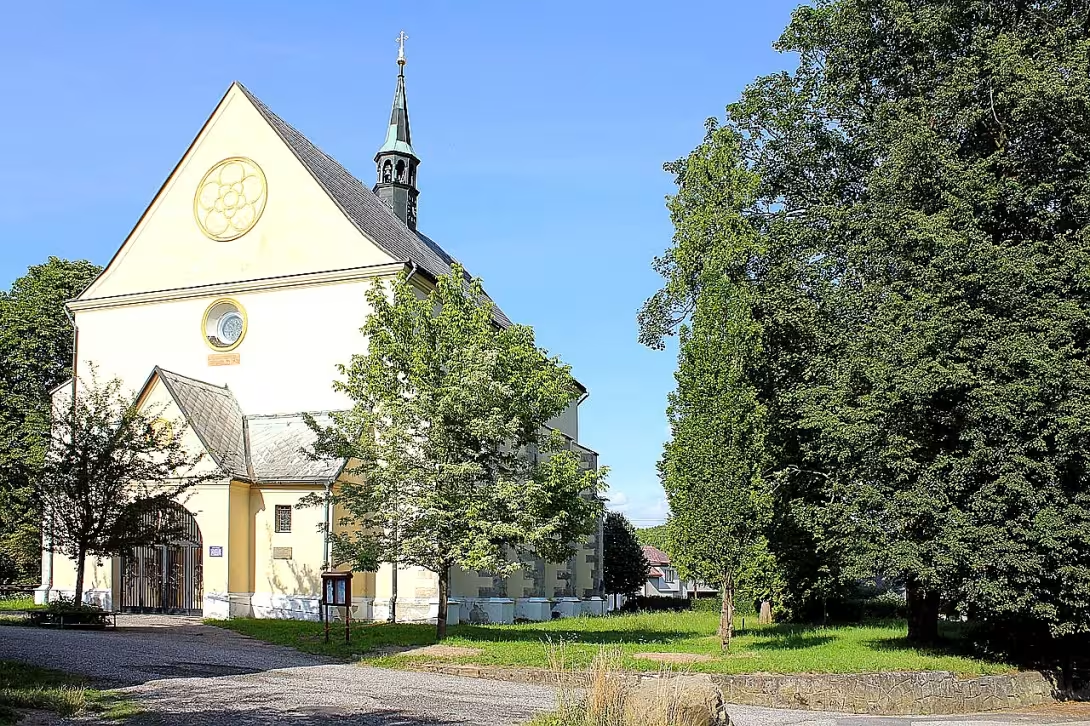
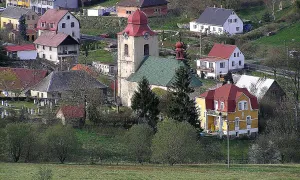
The church of Saint Wenceslas in Rovensk under Troskami is a fortified Gothic sacred building from the 14th century, originally built on the site of an older settlement known as Týn. This church is located in a picturesque village in the Liberec Region and since 1964 it has been protected as a cultural monument. Its historical significance underlines its architectural evolution from Gothic to Renaissance styles, along with its unique location of bells.
the church was built in two stages during the second half of the 14th century, starting with presbytery and northern sacristy. This original construction laid the foundation for what would become an important religious place. In 1563, after the damage to Hussite wars, the ship underwent reconstruction in the Gothic-Renaissance style. These modifications were part of a wider effort to restore and strengthen the church structure after the conflict periods. Other architectural changes included baroque modifications in 1724 and minor neogotic modifications at the turn of the 19th and 20th centuries.
The church of St. Wenceslas is equipped with a single-boat structure with almost square ground plan and polygonal presbytery. The building is built from a rough sandstone (rough sandstone), typical of Gothic architecture in Bohemia during this period. The remarkable elements include pointed windows with original arches and western veranda. The presbytery boasts a Gothic chest ceiling from the 14th century, supported by image corbels, while the ship has barrels with lunnets. The Renaissance Corps is supported by Tuscan columns.
The interior and exterior of the church are decorated with significant historical artifacts. Inside is the main altar of pseudo-gothic creation from 1904. Bushka z Husa u Sychrova with Baroque painting of St. Wenceslas Vavřinec Reiner. Two rococo altars dedicated to Saint Anne and the Virgin Mary will preserve their original statues. The Renaissance stone pulpit from the 16th century stands on a Tuscan pole. Other remarkable items include tin baptism font from 1575 by Jan z Hradec and marble rain water from 1639. A copy of the painting of the Virgin Mary Klatova dates back to 1737.
the church is also housed in the tomb of Smiřických, containing the remains of important historical figures such as Zikmund I., an outstanding landowner who died in 1548, and Henry George, the last member of his family who died on the Gross Rock in 1630. The stone epitaph from 1569 contains a figure inside the niche.
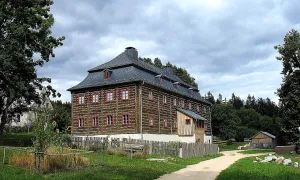
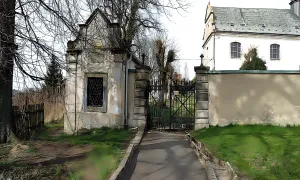
Outside the church stands a double Empire-style grave monument of Dorota Sparrow and Catherine Cymbal. In front of the church stands a wooden bell tower from 1630 on a brick base. This structure replaced earlier destroyed during the uprising against feudal commitments and religious oppression in 1629. The bell tower has three unique bells, known as Václav, Jan Křetitel and Jiří, which are a unique position with crowns towards the top - a style that was common until it was banned by Maria Therese because of safety concerns.
Today, the Church of St. Wenceslas remains a testament to its rich historical tapestry. Its architectural evolution and unique features make it an interesting place for visitors who are interested in Gothic architecture and Czech history. The cultural importance of the church is further strengthened by its surrounding monuments and legends that offer a view of the past while remaining accessible to those who want to explore its walls. Visitors are invited to experience this remarkable monument and appreciate its lasting legacy in the historical landscape of the Czech Republic.
Then and now
Drag the slider to compare how the landmark may have looked when it was built with the view today.
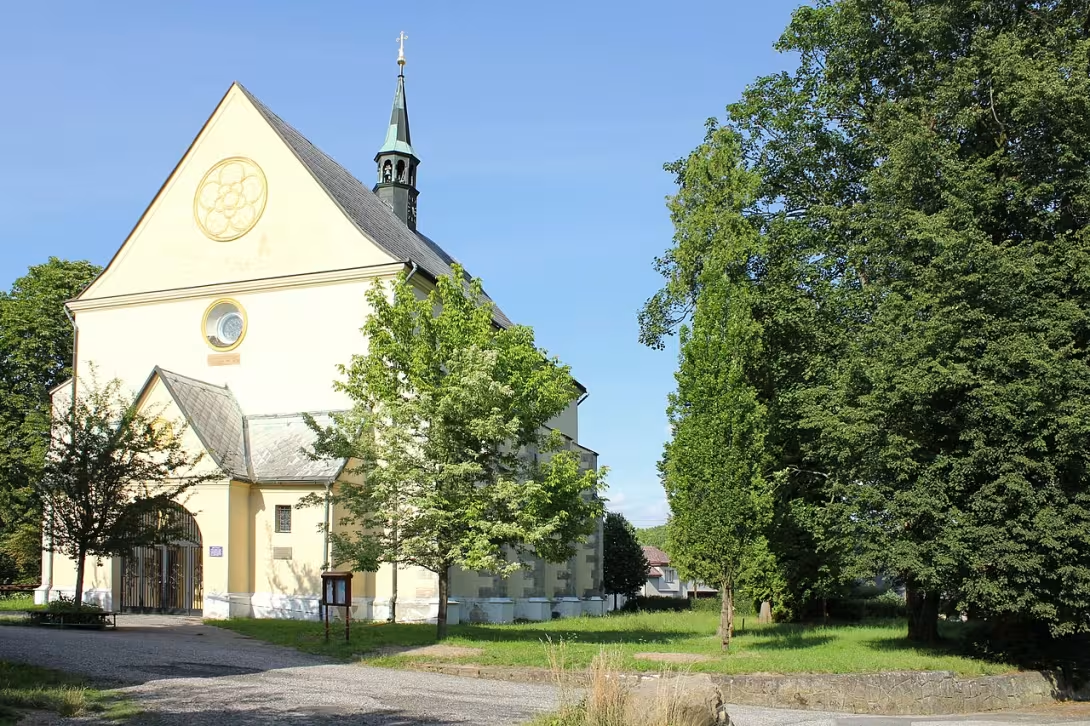

The historical appearance on the left is an AI-generated visualisation and serves as inspiration only.
Historical milestones
- 14th Century
- Construction of the original Gothic presbytery.
- 1563
- Reconstruction of the ship in Gothic-Renaissance style after damage from wars.
Architectural development
Construction of the church began in the second half of the 14th century with presbytery and northern sacristy. The ship was later added and underwent a major reconstruction in Gothic-Renaissance style after damage from Hussite wars in 1563. Other adjustments included baroque modifications in 1724 and minor neo-gothic changes at the turn of the 19th and 20th centuries.
Historical events
the church was originally built in two stages during the second half of the 14th century, starting with presbytery and northern sacristy.
In 1563, after the damage to Hussite wars, the ship was reconstructed in Gothic-Renaissance style.
Points of interest
- The Church of Saint Wenceslas was originally built on the site of an older settlement known as Týn, indicating its long-term importance in the history of the region.
- After the damage from the Hussite wars, the church underwent reconstruction in the Gothic-Renaissance style in 1563 which reflects the stormy religious and political climate of that time.
- The church is located in the tomb Smiřických, which contains the remains of Zikmund I., an outstanding landowner who died in 1548 and highlights his connection with remarkable historical figures.
- The stone epitaph from 1569 contains a figure inside a niche outside the church, which represents one of the few remaining examples of such epitaph in Bohemia.
- A wooden bell tower, built in 1630 after the former structure was destroyed during the uprising against feudal commitments and religious oppression in 1629, is a proof of community resilience.
Guide
This guide is narrated by a synthetic voice generated by artificial intelligence.
Show guide text
This text was created by artificial intelligence and has not been editorially reviewed. It may contain inaccuracies.
Welcome to the church of St. Wenceslas in Rovensk under Troskami, the remarkable law of Gothic architecture and history. As you stand in front of this fortified sacred building, imagine moving back to the 14th century, when it first rose from the ground in the place of an older settlement known as Týn. This church was a beacon for nearby communities, its importance was deeply rooted in the past of the region.
The Church of Saint Wenceslas was originally built during the Gothic period and its presbytery was built in the 14th century. Over time, it faced challenges that transformed its structure and purpose. After the damage to Hussite wars, a major reconstruction took place in 1563, which made the ship a mixture of Gothic and Renaissance styles - proof of resistance and adaptation.
When you take a church in architecture, notice its one-ship arrangement with almost square ground plan. Polygonal presbytaly stands out as a focal point, drawing your view towards its complex design. Even though the architects remain unknown, their visions left an indelible mark in this sacred place.
The Smiřických family has played a key role in shaping and maintaining this church throughout history. Their influence underlines the link between local nobility and religious institutions during stormy times.
One of the fascinating aspects of this church is its original location on the site of Tyn, which highlights its long-term importance for the spiritual and shared life of the region. This historical layer adds depth to your visit and invites you to think about the stories and lives that have intertwined here for centuries.
When we finish our tour, I urge you to explore further and immerse yourselves in the atmosphere surrounding this cultural monument. Whether it's a walk on the ground or just take a moment to think about your history, there is much more to discover. Thank you for joining me today in the church of St. Wenceslas, where history and architecture intertwine beautifully.
Tips for visitors
The best time to visit St. Wenceslas church is at the end of spring or early autumn when the weather is pleasant, allowing you to fully enjoy its picturesque surroundings without crowds typical of the top tourist season. Natural lighting during this time increases architectural details and fresh greenery surrounding the church, making it ideal for photographic enthusiasts.
When visiting, consider bringing comfortable walking shoes because there are several steps leading to the church and around its premises. The camera is recommended to capture a stunning view of the Gothic architecture of the church, especially during the golden hour when the light illuminates the structure beautifully. In addition, carrying a bottle of water and some refreshments can improve your visit, especially if you plan to explore the surroundings.
For photo lovers are the best places around the facade of the church and wooden bell tower from 1630. Soft morning or late afternoon light highlights complicated details of Gothic architecture. Outside, Empire-style two-seater tomb monument offers a unique subject for photographers who want to capture historical elements in their shots.
When it comes to the surroundings of attractions within a 30-minute drive, visitors can explore other charming places around Rovensko pod Troskami. Natural beauty and landscape offers opportunities for peaceful walks or picnics. Families with children appreciate open spaces suitable for outdoor activities, so it is a pleasant day for all ages.
Frequently asked questions
Can the monument be visited?
Religious buildings are usually open mainly during services; at other times a visit is normally arranged with the parish or the operator. We have not verified specific times.
Where is the monument?
Location: Na Týně, Rovensko pod Troskami, Liberecký kraj. The map on this page shows the exact spot.
Why is the monument protected?
It is listed in the Central List of Cultural Monuments of the Czech Republic as a cultural monument (register no. 21260/6-2766).
Businesses nearby
Do you run a restaurant, accommodation, shop, museum, rental, wellness or other visitor service near this monument? Show yourself directly to the people heading to it — this is how they will see you in the app and on the web:
Nearby
the church is located in a picturesque environment near Rovenska pod Troskami and is accompanied by a wooden bell tower from 1630 and offers a two-seater grave Empire-style monument outside.
Accommodation nearby
Trips and activities nearby
Guided tours, tickets and activities nearby from GetYourGuide
Affiliate link: if you buy from the partner, we may receive a commission. The price for you does not change.
Search tours and activities →Themed route
Thematic cruise route: St. Wenceslas Church and its surroundings
1.Kostel svatého Václava (Rovensko pod Troskami) * Type: * Historical landmark * Why is it worth a visit: * The Church of St. Wenceslas is a beautiful example of sacral architecture that offers the use of the atmosphere and historical value. His interior and art elements depend on what happens when he does.
2. Wooden bell tower (1630) * Type: * Architectural element * Why is it worth visiting: * Wooden bell tower, built in 1630, is once an architectural monument to its time. It is the history and structure of recalculated milestones of antiques and architectures that are included in traditional construction techniques.
3. Empire-style double grave * Type: * Historical landmark * Why is it worth visiting: * Outside the church you can find Empire-style Double Grave, which is an important historical and artistic monument. It is a legislative proposal and the historical background of rebuilding for own resources about history and use.
This route offers support for the cultural heritage of Rovenska pod Trokami, the chateau transition to the church of St. Wenceslas and its surroundings. Each point of the route is connected to historical and artistic value, making a trip for milestones of history and architecture.
Seasonal recommendations
Spring: Church of St. Wenceslas in the spring possible acquisition of a one-man atmosphere, when nature passes through a lubricating sleep. The woods to which the bones are covered with new growing leaves and which have shrubs that enjoy a living and rosy background for the historical monument. The sun's rays of engravings through the misty clouds multiply the moving atmosphere of the skeleton. For determination it is advisable to transmit early in the morning when change is necessary and the temperature is mild. Based on the fact that they are excluded for non-state aid to green forest regions, this light skirt and purse is a good market.
Summer: In the summer church of St. Wenceslas offers the best support for large projects around the surrounding countryside. The sunny days depict the colors of the church and forest, while warm evenings are ideal for relaxing at their own expense or within cafes. This time of the year's trade is also slight, which means that the obvious information should be transmitted early in the morning to enjoy the church in peace. Clothes should be light and light, with an edge against the sun such as the Hat or the Hat, and must not miss enough drinking for all day support.
Autumn: Autumn the conversion of St. Wenceslas Church to melancholic charm with its colourful palette of leaves. Gold, red and orange forest counties supplied with goods for a photo of the skeleton. The sunny days are still the same, but in reality the cold, which is locked, has moved that there is a married division of length until a real forest heavy effect has been achieved. For the purpose of providing services there is no need to make any adjustments, a gap with possibilities to move to the warm day, and not to forget a solid object because you can make the corridor difficult.
Winter: The winter intensity of St. Wenceslas Church offers liquid facilities with chemical products and the possibility to see the church in the lubricant of the saint. If it is possible to get honest, the forests around the monument can be used by snow, whatever the landscape magical view. Church of Greek shorter time in the day means that it is best early in the morning to enjoy the church and surrounding in peace. The wall units should be put into service, with warm shirts under the hat or cap and fixed shoes for the choose after possible dreaming or left.
Visualizations and artistic views


The visualisations are generated by artificial intelligence and serve as inspiration.
Photos from the area
Real photos taken near the monument


Zdroj a licence jsou uvedeny u každého snímku.
Tips from visitors
No tips yet. Be the first!
Log in and add your tip.
Sources and literature
Photos: This image is a work by Miloslav Rejha (User:M.Rejha). When reusing, please credit me as: Miloslav Rejha, Wikimedia Comm / CC BY-SA 3.0 — Wikimedia Commons. The author and licence also appear when you hover over the image.
Faktickým podkladem tohoto textu byl článek na Wikipedii, jehož autory jsou přispěvatelé Wikipedie. Článek je dostupný pod licencí CC BY-SA 4.0.
Location on the map
More monuments – Rovensko pod Troskami
Show all in the municipality
Příběhy a pověsti
Legendy, pověsti a příběhy spjaté s touto památkou

Příběh: Kostel svatého Václava (Rovensko pod Troskami)
Bylo to v pondělí ráno, kdy Bartoloměj z Rovenska, mladý farmář trpící bezmocnou touhou nahlédnout do minulosti své rodiny, se ocitl ve stínu Kostela svatého…
Číst příběh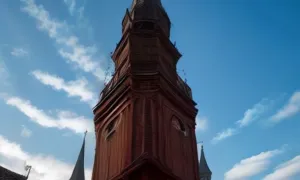
Pověst: Kostel svatého Václava (Rovensko pod Troskami)
Podle místní pověsti visí zvony na dřevěné zvonici u kostela svatého Václava v Rovensku pod Troskami srdcem vzhůru od nepaměti — a není to náhoda ani omyl te…
Číst příběhFotografie návštěvníků
Zatím žádné fotografie. Buďte první, kdo přidá fotografii z návštěvy!
Log in a přidejte svou fotografii nebo hodnoťte.
Za ověřenou návštěvu v aplikaci získáte víc bodů — poznáme podle GPS, že jste na místě.
Reviews and comments