



Kostel svatého Václava (Staňkovice) Church
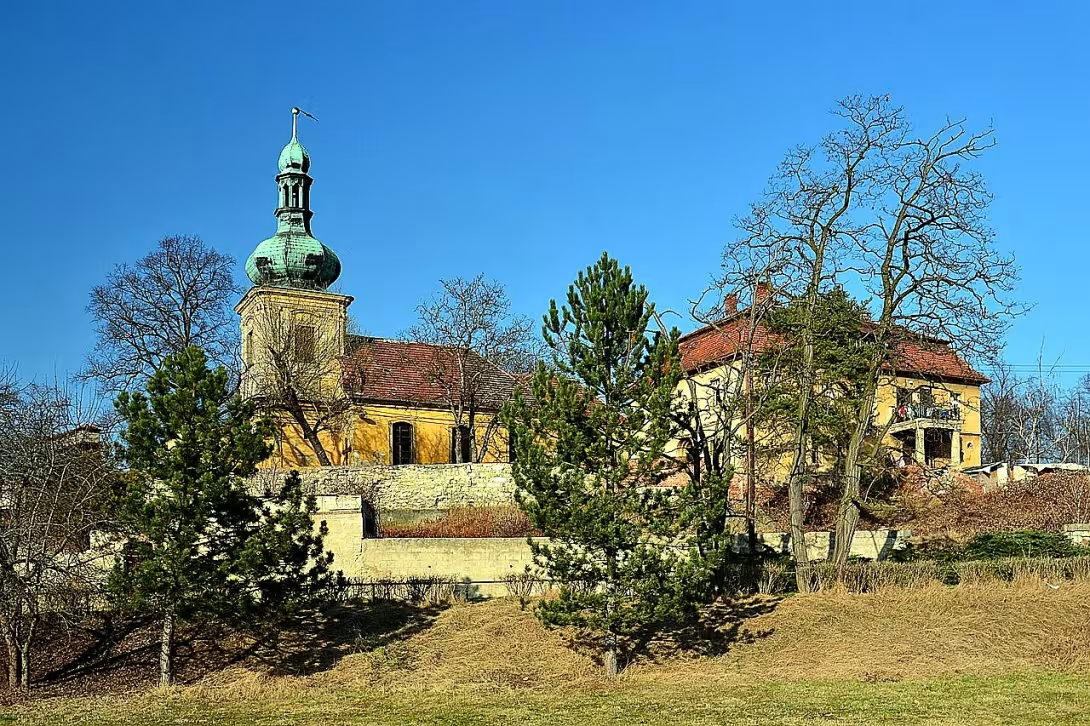
The Church of Saint Wenceslas in Staňkovice is a Roman Catholic parish church situated on a low hill at the village center. Designated a cultural monument since 1964, this historic structure stands out for its architectural development and rich history from the transition between the 15th and 16th centuries. Its importance extends beyond religious functions to represent regional architectural trends during Bohemia's politically and religiously transformative period.
The church's origins are linked with Strahov Monastery, which owned it while leasing Staňkovice to Žatec citizens in 1272. The earliest documented mention of the church dates back to this time, though its original architectural form no longer exists. Historical sources propose various construction theories, ranging from the late 14th century to the early 15th century. By the end of the Middle Ages, it had become a central religious site, despite being described as "pauper" in papal tithing records by 1384.
Architecturally, the Church of Saint Wenceslas features a single-nave design with a five-sided presbytery. The current structure mainly dates from the transition between the 15th and 16th centuries but has undergone significant changes over time. A sacristy was added in the late 16th century, while early 18th-century renovations introduced new windows, a tower, and roofs. These modifications reflect broader architectural trends emphasizing functionality and aesthetic adaptation.
Ownership and administrative control of the church have shifted throughout its history. Initially under Strahov Monastery's ownership, it transitioned from a parish to a filial church after the Thirty Years' War before regaining independent parish status in 1802. Notable figures associated with the church include Petr řečený Prus and Mikuláš Haymann ze Žatce, who served as priests during different periods.
Key events highlight the church's resilience and adaptability. The significant reconstruction between 1717 and 1721 marked a pivotal moment, transforming its architectural character with new structural elements. This renovation period underscores the community's commitment to preserving their place of worship despite historical challenges.
Today, the Church of Saint Wenceslas remains an important cultural and religious site in Staňkovice. Its preservation as a cultural monument ensures that visitors can appreciate its historical significance and architectural beauty. The church is accessible to those interested in exploring Bohemia's rich heritage, offering insights into the region's medieval past and subsequent transformations.
Visiting the Church of Saint Wenceslas provides an opportunity to connect with Staňkovice's history and culture. Its enduring presence as a cultural monument invites exploration and reflection on its historical journey and architectural evolution.
Then and now
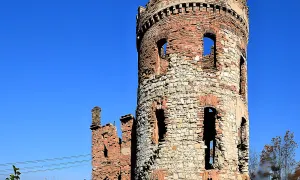
Drag the slider to compare how the landmark may have looked when it was built with the view today.
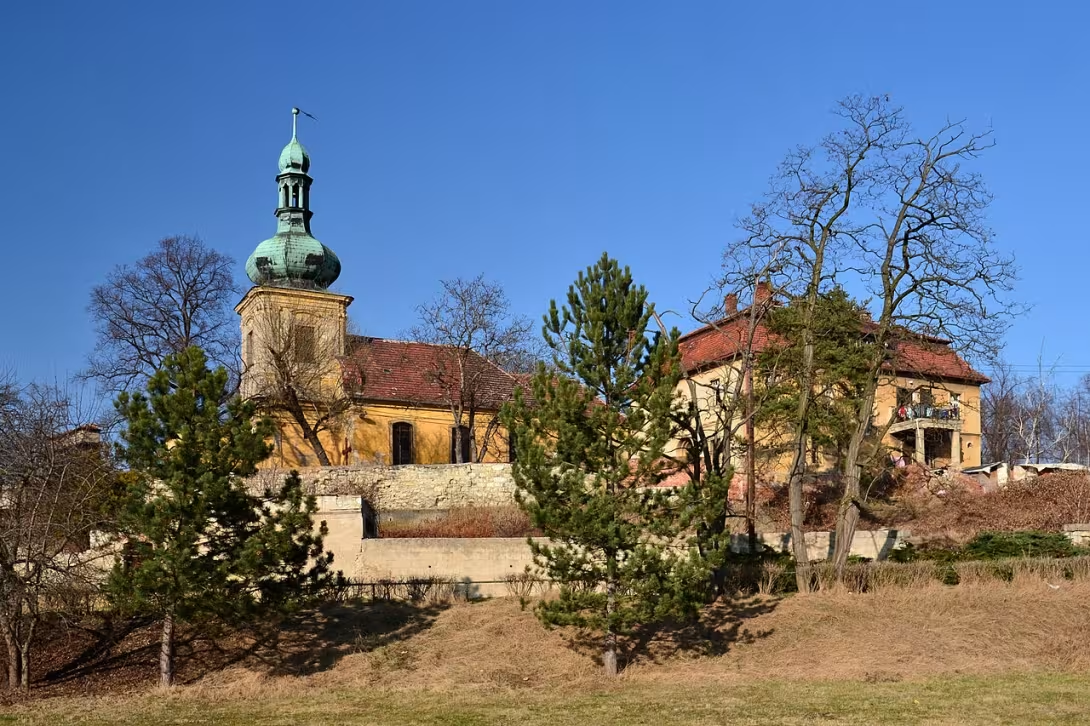
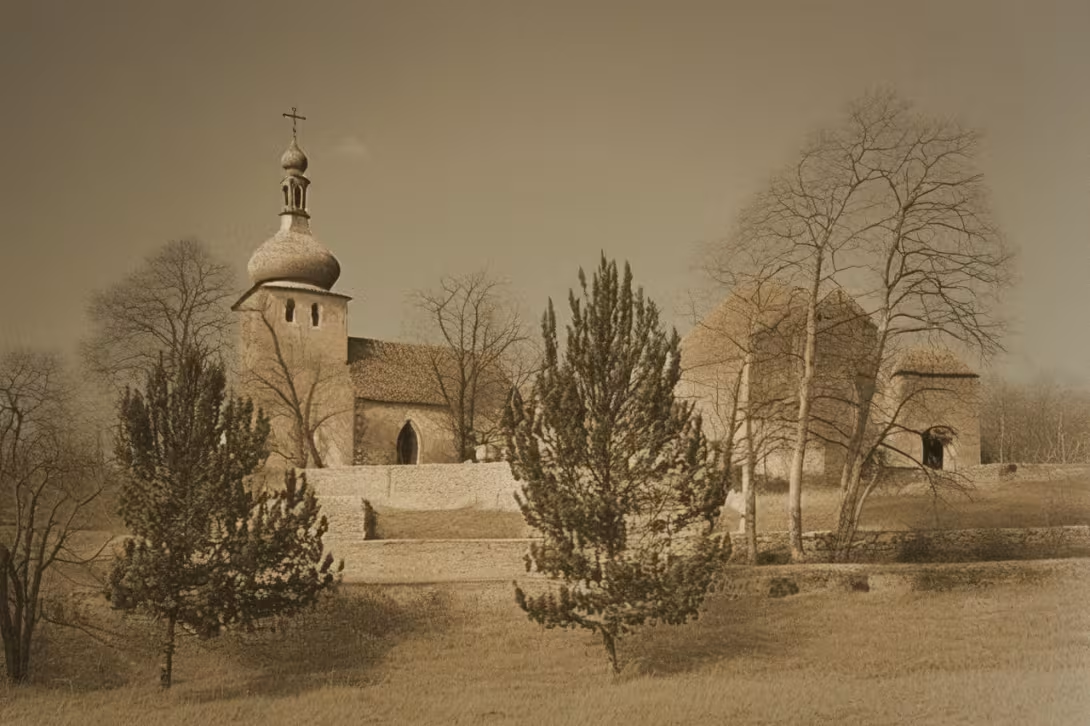
The historical appearance on the left is an AI-generated visualisation and serves as inspiration only.
Historical milestones
- 1272
- Strahov Monastery leased Staňkovice but retained ownership of the church.
- 1359
- Petr řečený Prus was installed as a priest by Strahov Monastery.
- 1717-1721
- The church underwent significant reconstruction, including new windows and a tower.
Architectural development
Originally built at the transition from the 15th to the 16th century, the church's presbytery and nave have been preserved. A sacristy was added in the late 16th century. The early 18th-century reconstruction involved new windows, a tower, and roofs. Further modifications occurred in 1731 with the construction of a choir and belfry.
Historical events
In 1272, Strahov Monastery leased the village of Staňkovice but retained ownership of the church.
The church underwent significant reconstruction between 1717 and 1721, including new windows, a tower, and roofs.
Owners
The church was originally under the ownership of Strahov Monastery, which retained control over it while leasing Staňkovice to citizens of Žatec in 1272. Over time, it transitioned from a parish to a filial church and later regained its status as an independent parish.
Points of interest
- Despite its designation as a cultural monument since 1964, the Church of Saint Wenceslas in Staňkovice has been described as "pauper" in papal tithing records by 1384, highlighting a contrast between its historical significance and economic status during that period.
- The church's connection with Strahov Monastery is notable; it was owned by the monastery while being leased to Žatec citizens in 1272. This arrangement reflects medieval practices of land and property management involving monastic institutions.
- Architectural modifications over centuries have significantly altered the Church of Saint Wenceslas, including a sacristy added in the late 16th century and major renovations in the early 18th century that introduced new windows, a tower, and roofs. These changes illustrate how local architecture evolved to meet both functional needs and aesthetic preferences.
- The church transitioned from parish status to a filial church after the Thirty Years' War before regaining independent parish status in 1802, reflecting broader socio-political shifts affecting religious institutions in Bohemia during that era.
- Notable figures associated with the church include Petr řečený Prus and Mikuláš Haymann ze Žatce, who served as priests during different periods. Their roles underscore the personal histories intertwined with this historical site's legacy.
Guide
This guide is narrated by a synthetic voice generated by artificial intelligence.
Show guide text
This text was created by artificial intelligence and has not been editorially reviewed. It may contain inaccuracies.
The Church of Saint Václav in Staňkovice in the Louny region stands on a low hill in the middle of the village. It is a Roman Catholic parish church and has been protected as a cultural monument since nineteen sixty-four.
The first written mention of the church dates from twelve seventy-two. At that time, the Strahov monastery leased the village to Žatec citizens, but kept the church and a plot of land for itself. However, today's building has nothing in common with the Romanesque church from that period except for its location. Only an archaeological excavation could show what it looked like.
Experts disagree on when the current church was built. Their estimates range from the late fourteenth to the fifteenth century. The most recent work on medieval churches in the Louny region dates the construction to the turn of the fifteenth and sixteenth centuries. If that is true, the church was built by the town of Žatec, to which Staňkovice belonged at that time.
From an earlier period, we know at least the names of some of the priests who were appointed by the Strahov abbot. In thirteen fifty-nine, Peter called Prus became the parish priest. A year later, he sent a list of tithes owed to the church to the papal curia in Avignon. However, in thirteen eighty-four, the church is listed in the papal register as poor and paid one of the lowest tithes in the Žatec deanery. Before the Battle of White Mountain, the Utraquist priest Martin Nepomucký, a Žatec citizen, served there. Before his death in sixteen twelve, he bequeathed his library to the Žatec school.
After the Thirty Years' War, the church lost its status as a parish church and fell under the jurisdiction of the Žatec deanery cathedral. It became an independent parish again only in eighteen oh two.
From the original structure, the presbytery and nave have been preserved. The sacristy was added apparently at the end of the sixteenth century. A major reconstruction took place between seventeen seventeen and seventeen twenty-one. At that time, the tower was created, new roof trusses were added, and the present windows were installed. In seventeen thirty-one, the choir and ossuary were added, and in the nineteen thirties, a western vestibule was added.
The church is single-naved with a pentagonal presbytery and a prismatic tower in the western front. The presbytery is vaulted with a cross rib vault. From the time of the church's construction comes a round window in the eastern wall with tracery of four-leaf clovers and three-leaf clovers. In the northern wall of the presbytery is a Gothic sanctuary decorated with four-leaf clovers, a donkey back motif, and columns shaped like crabs.
Frequently asked questions
Can the monument be visited?
Religious buildings are usually open mainly during services; at other times a visit is normally arranged with the parish or the operator. We have not verified specific times.
Where is the monument?
Location: Staňkovice, Ústecký kraj. The map on this page shows the exact spot.
Why is the monument protected?
It is listed in the Central List of Cultural Monuments of the Czech Republic as a cultural monument (register no. 43389/5-1431).
Businesses nearby
Do you run a restaurant, accommodation, shop, museum, rental, wellness or other visitor service near this monument? Show yourself directly to the people heading to it — this is how they will see you in the app and on the web:
Events nearby

Zdroj akcí: otevřená data měst a obcí ČR (Národní katalog otevřených dat) a kalendář akcí Národního památkového ústavu.
Accommodation nearby
Themed route
Tematická výletní trasa: Kostel svatého Václava (Staňkovice)
1. Kostel svatého Václava, Staňkovice
- Typ: Historická památka
- Proč stojí za návštěvu: Tento barokní kostel je centrem historie a kultury obce Staňkovice. Jeho architektura, bohaté interiéry a duchovní atmosféra nabízejí cestujícím hluboký pohled do minulosti této lokalitě.
2. Nádvoří kostela svatého Václava
- Typ: Historické nádvoří
- Proč stojí za návštěvu: Nádvoří okolo kostela nabízí klidné prostory, kde si můžete užít krásných zahrad a architektonického prostředí. Je to ideální místo pro relaxaci a reflektování po návštěvě kostela.
3. Výstava v expozici kostela svatého Václava
- Typ: Historická expozice
- Proč stojí za návštěvu: Expozice poskytuje cenné informace o historii a architektuře kostela, stejně jako o životě v obci Staňkovice. Je to skvělý způsob, jak se dozvědět více o místním dědictví.
4. Věž kostela svatého Václava
- Typ: Historická věž
- Proč stojí za návštěvu: Návštěva věže nabízí jedinečný pohled na okolní krajinu. Je to nejen architektonicky zajímavé, ale také poskytuje možnost si užít panoramatického záběru obce Staňkovice a jejích okolí.
Tato trasa vám umožní prozkoumat nejen kostel svatého Václava, ale i jeho bezprostřední prostředí, což poskytne komplexní pohled na historii a kulturu obce Staňkovice.
Seasonal recommendations
Spring: Visiting the Church of St. Wenceslas in Staňkovice during spring offers a refreshing experience as nature awakens around the historic site. The surrounding landscape is adorned with blooming flowers and lush greenery, creating an idyllic atmosphere for photography enthusiasts. As daylight hours lengthen, visitors can enjoy extended viewing times under the soft glow of morning or late afternoon light. It's advisable to wear comfortable layers, as temperatures can vary throughout the day. Early mornings are ideal for exploring the church with fewer crowds, allowing a more intimate experience with its architectural details.
Summer: Summer is an excellent time to visit Staňkovice’s Church of St. Wenceslas due to its vibrant atmosphere and longer daylight hours. The warm weather encourages outdoor exploration around the church grounds, where visitors can enjoy picnics amidst scenic views. However, it's wise to arrive early in the day as this is peak tourist season; arriving before noon helps avoid larger crowds. Comfortable walking shoes and light clothing are recommended due to the warmer temperatures, while sunscreen and a hat provide protection from the sun.
Autumn: Autumn brings a spectacular display of colors to the Church of St. Wenceslas in Staňkovice, with the surrounding foliage transforming into shades of red, orange, and gold. This season offers a serene atmosphere as visitors are treated to picturesque views that are particularly stunning during sunrise or sunset. The cooler temperatures make for pleasant walking conditions, so wearing layers is advisable to adapt to changing weather throughout the day. As the number of tourists typically decreases compared to summer, it’s an ideal time for those seeking a quieter visit.
Winter: Winter at the Church of St. Wenceslas in Staňkovice offers a magical experience with snow-covered surroundings that enhance its architectural beauty. The shorter days mean visiting hours are reduced, so planning your trip during daylight is crucial to make the most of your visit. The church often exudes a cozy atmosphere, especially if visited on a crisp, sunny day when sunlight filters through the windows, creating warm patterns on the stone floors. Due to colder temperatures and potential snowfall, dressing warmly in layers and wearing waterproof boots are essential for comfort during your exploration.
Visualizations and artistic views


The visualisations are generated by artificial intelligence and serve as inspiration.
Photos from the area
Real photos taken near the monument

Zdroj a licence jsou uvedeny u každého snímku.
Tips from visitors
No tips yet. Be the first!
Log in and add your tip.
Sources and literature
Photos: Salim2 / CC BY-SA 3.0 — Wikimedia Commons. The author and licence also appear when you hover over the image.
Faktickým podkladem tohoto textu byl článek na Wikipedii, jehož autory jsou přispěvatelé Wikipedie. Článek je dostupný pod licencí CC BY-SA 4.0.
Location on the map
More monuments – Staňkovice
Show all in the municipality
Příběhy a pověsti
Legendy, pověsti a příběhy spjaté s touto památkou
Fotografie návštěvníků
Zatím žádné fotografie. Buďte první, kdo přidá fotografii z návštěvy!
Log in a přidejte svou fotografii nebo hodnoťte.
Za ověřenou návštěvu v aplikaci získáte víc bodů — poznáme podle GPS, že jste na místě.
Reviews and comments