



Kostel svatého Václava a svaté Anežky České Church
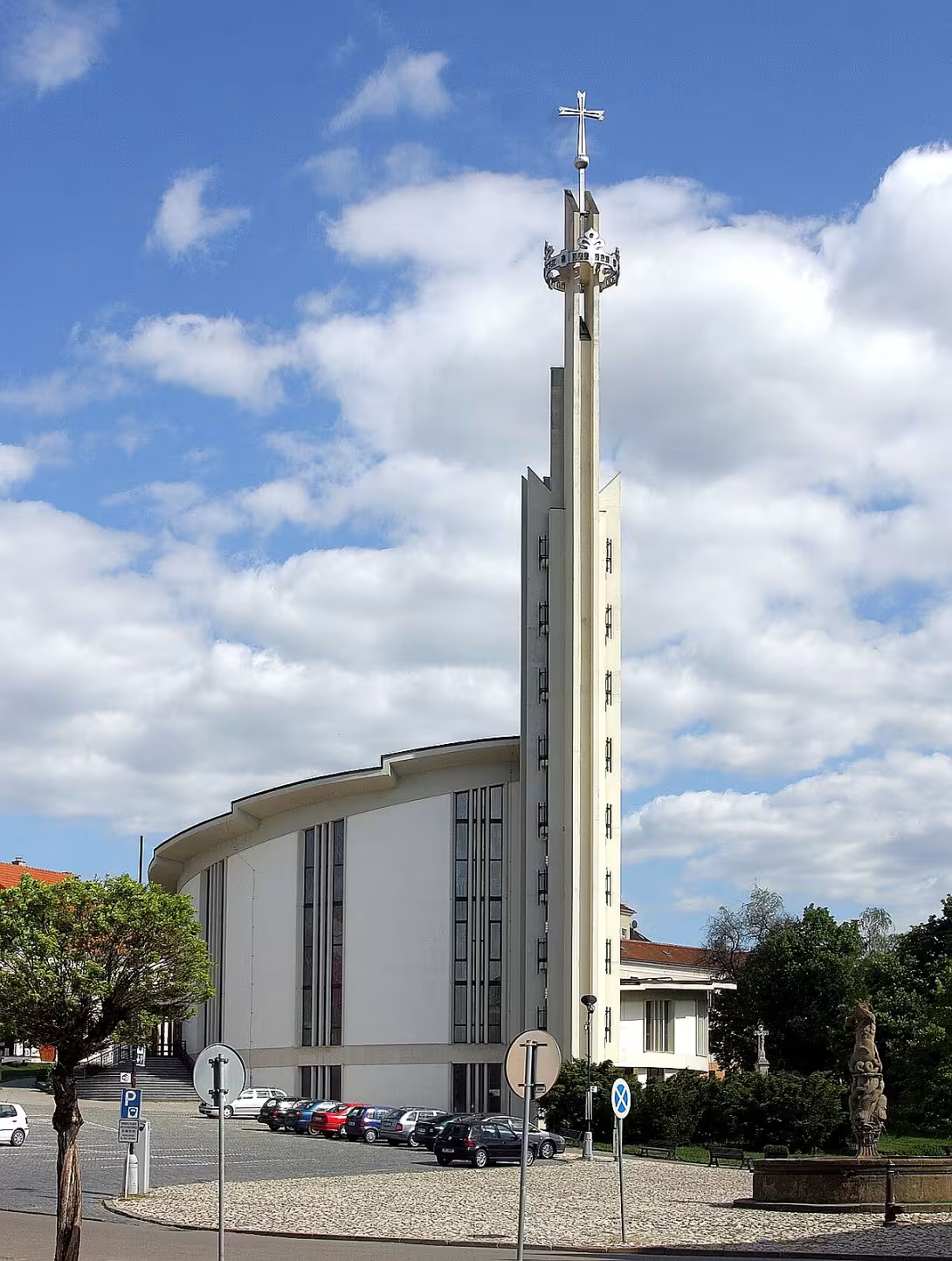
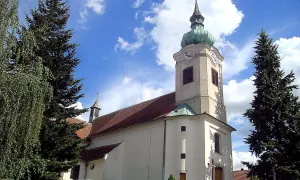
Kostel svatého Václava a svaté Anežky České in Hustopchi is the parish temple first known for its modern construction, which it is essentially not - under this name hides its long and dramatic past. Today's building dates from 1992- 1994 and is part of the parish Hustopeče near Brno. But her story begins several hundred years earlier.
The original church in today's Dukel Square was built probably with the foundation of the city in the second half of the 13th century. The first preserved mention of him is from 1324. During the 14th century, the original building was expanded with a new ship of approximately 22 × 11 metres and a tower was built on the north side. At the end of this century, another extension was added to the north wall.
At the turn of the 15th and 16th centuries, the church was significantly rebuilt. The chapel of St. John on the north side was created, which replaced the older buildings. Between 1512 and 1517, a massive presbytery with a mains vault was built and the church ship was newly encapsulated by a cross vault - modifications that gave it a permanent late Gothic form. The tower was later modified renaissance, especially in the 16th century. Other adjustments were made in 1858 and 1903. The tower gradually reached a height of 74 metres, but it was built on unstable ground, which led to its noticeable tilt from the end of the 19th century.
World War II brought serious damage to the church and no repairs were made after it was completed. The building was fading. In 1953, dangerous cracks appeared on the tower. The combination of static problems and vibrations from growing car transport - around the church was led by the state road Brno-Bratislava - culminated in the night on 26 February 1961 by the collapse of the tower. Although the presbytery with an architecturally valuable vault remained intact, then the authorities decided to demolish the entire building. Despite public protests, the demolition was carried out in September 1962. Only internal equipment and some architectural elements were saved.
The idea of a new church appeared in the 1970s, but it was only possible to implement it after 1989. The base stone was sanctified on April 22, 1990 by Pope John Paul II in Velehrad during his first visit to Czechoslovakia. A competition was announced in the form of a new temple, where twenty architects applied. The winner was the design of the Brno artist Louis Kolka - a spiral-shaped building with a tower designed for 250-300 people.
Construction work started in April 1992 and lasted 2.5 years. The combined consecration was carried out by Bishop Vojtěch Cikrel on 25 September 1994. In 1995 four bells were made, in 1997 new organ. The costs amounted to CZK 27.5 million, financed by the state contribution, sponsorship and religious contributions, in particular from Germany and Austria.
Then and now
Drag the slider to compare how the landmark may have looked when it was built with the view today.
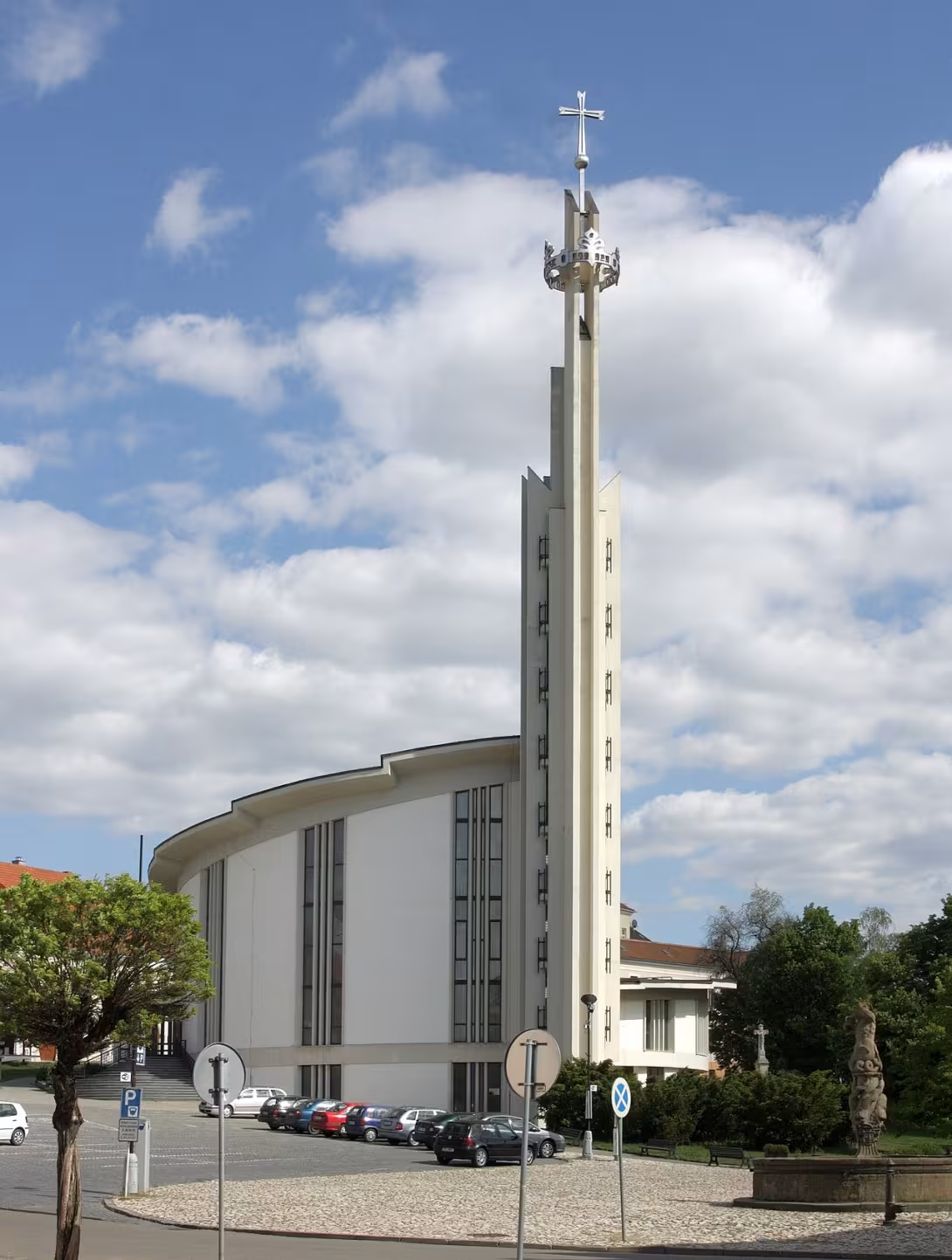

The historical appearance on the left is an AI-generated visualisation and serves as inspiration only.
Historical milestones
- 1324
- First written mention of the original church of St. Wenceslas.
- 1512-1517
- Construction of late Gothic presbytery with mains vault.
- 1961
- The collapse of the tower of the original church, the subsequent demolition in 1962.
- 1990
- The consecration of the cornerstone of the new church by Pope John Paul II.
- 1994
- The ceremonial consecration of the new church by Bishop Vojtěch Cikrl.
Architectural development
The original church was built probably in the 2nd half of the 13th century, later expanded and rebuilt in Gothic style (14th and 16th centuries). In the 19th century it underwent Renaissance adaptations of the tower and neo-gothic changes. The new church from 1992- 1994 is a modern building with concrete construction and glass elements, designed as a spiral with a tower. Materials include concrete, glass and metal elements.
Historical events
The destruction of the original Gothic tower in 1961 and the subsequent demolition of the church in 1962.
The consecration of the foundation stone of the new church by Pope John Paul II in 1990.
The completion and consecration of the new church in 1994 by Bishop Vojtěch Cikrel.
Owners
St. Agnes' monastery
Points of interest
- The church was originally built probably in the second half of the 13th century in parallel with the founding of the city Hustopeče.
The first written mention of the church dates back to 1324.
- In the 14th century, the original building was expanded with a boat of 22 × 11 metres and a tower was built on the north side.
- At the turn of the 15th and 16th centuries, St. John's Chapel was established on the north side and the church gained a late Gothic form with a mains vault in the presbytery.
- The tower, which reached 74 metres, was built on unstable ground and in the 19th century it began to bend significantly.
Guide
This guide is narrated by a synthetic voice generated by artificial intelligence.
Show guide text
This text was created by artificial intelligence and has not been editorially reviewed. It may contain inaccuracies.
The Church of Saint Václav and Saint Anežka Česká in Hustopeče is a modern Roman Catholic church and parish church of the parish of Hustopeče near Brno. It was built between 1992 and 1994 according to a design by Brno architect and artist Ludvík Kolek. It replaced the old Gothic church that had stood on Dukelské náměstí for centuries.
The original Church of Saint Václav probably originated with the founding of the city in the second half of the thirteenth century. The first written mention of it dates from 1324. In the fourteenth century, it was extended with a new nave approximately 22 by 11 meters and a tower was added on the north side. At the turn of the fifteenth and sixteenth centuries, a chapel of Saint John was added. Between 1512 and 1517, a powerful late Gothic presbytery with a net vault was built and the nave received a cross vault. The tower was adapted in the Renaissance style in the sixteenth century and was rebuilt again in 1858 and 1903. It reached a height of 74 meters, but it stood on unstable ground and had already begun to lean by the end of the nineteenth century.
At the end of the Second World War, the church was damaged during fighting for Hustopeče and subsequently deteriorated without repairs. In 1953, cracks appeared on the tower. The compromised structural integrity and vibrations from traffic on the former road from Brno to Bratislava led to the tower collapsing in the night of February 26, 1961, destroying much of the nave as well. The authorities then decided to demolish the entire church, including the undamaged presbytery. Despite protests from the cultural public, the demolition was carried out in September 1962. Only the interior furnishings and some architectural elements were saved. Services were held in the Chapel of Saint Roch or at the rectory.
Discussions about a new church appeared as early as the beginning of the seventies, but it was only possible to realize them after 1989. Pope John Paul the Second blessed the cornerstone on April 22, 1990, at Velehrad. Twenty architects entered the architectural competition. Ludvík Kolek won with a two-story building in the shape of a spiral, which is connected to a tower. Construction began in April 1992 and the church was consecrated on September 25, 1994, by Brno bishop Vojtěch Cikrle. Later, four new bells were added and in 1997, an organ.
The construction cost 27 and a half million crowns. The money came from a state subsidy and from donations by believers from Czechia and abroad, primarily from Germany and Austria. Great credit for the construction belongs to Hustopeče's parish priest and dean Václav Fišer.
Frequently asked questions
Can the monument be visited?
Religious buildings are usually open mainly during services; at other times a visit is normally arranged with the parish or the operator. We have not verified specific times.
Where is the monument?
Location: Hustopeče, Jihomoravský kraj. The map on this page shows the exact spot.
For kids
Imagine coming back 678 years and finding yourself in the beautiful city of Prague. The city is full of lives, noisy markets and narrow streets. And among them, in the heart of the city, stands the church of St. Wenceslas and St. Agnes of Bohemia.
Businesses nearby
Do you run a restaurant, accommodation, shop, museum, rental, wellness or other visitor service near this monument? Show yourself directly to the people heading to it — this is how they will see you in the app and on the web:
Nearby
Dukel Square with surrounding historical houses from the 19th century.
The parish house and chapel of St. Rocha (preserved from the original premises).
Natural park Hustopec hills (up to 10 km).
Castle Hustopeče (lock in the distance of about 1 km).
Accommodation nearby
Trips and activities nearby
Guided tours, tickets and activities nearby from GetYourGuide
Affiliate link: if you buy from the partner, we may receive a commission. The price for you does not change.
Search tours and activities →Themed route
Thematic cruise route: Kostel svatého Václava a svaté Anežky České
1. Kostel svatého Václava a svaté Anežky České (church) - This church is the main destination of a trip whose architecture reflects the rich history of the village Hustopeče. It's a place of quiet reflection and beautiful views of the surrounding countryside.
2. Dukel square (historical location) - Distance: approx. 0.5 km from the church. - Visit Dukel Square offers a view of historic houses from the 19th century, which represent the architectural value of the village. It is an ideal place for a moment of relaxation and sightseeing.
3. Parish house and chapel of St. Roka (parish building) - Distance: cca 0.2 km from Dukel Square. - These buildings are part of the original church area and represent an important historical context for understanding local spiritual life. St. Rocha's Chapel is an important monument that deserves attention.
4. Castle Hustopeče (lock) - Distance: about 1 km from the parish buildings. - The chateau is one of the most significant historical buildings in the area and offers a view of the beautiful Hustopera hills. It is an ideal place to end the route where you can enjoy the quiet and view of the vast landscape.
This route offers visitors the opportunity to become acquainted with the history and architecture of the village Hustopeče while enjoying a beautiful outdoor area.
Seasonal recommendations
Spring: In the spring period, the environment around St. Wenceslas and St. Anežka of Bohemia in Hustopeč is full of life, when the green nature is fully awakened. The sun rays illuminate the church and its surroundings in warm light, which gives the atmosphere a mild comfort. Visitors can appreciate flowering shrubs and trees that add color shine to the historical background. It is recommended to visit in the early afternoon to avoid the morning frost, and to have fun with warm but not excessively demanding clothes such as light jackets that can be easily introduced or removed. Despite generally mild crowds it is advisable to come earlier to enjoy the peace and beauty of the spring environment.
Summer: The church of St. Wenceslas and St. Anežka of the Czech Republic in Hustopeči offers the most tourists, which means a lively atmosphere with a full crowd. The sunny days illuminate buildings in bright and warm light, while the sun may be a little uncomfortable, especially around noon. Visitors should plan a visit to early afternoon time and wear sun protective clothing such as hats and long gloves. It is also important to consider water and a first aid kit with a cooler for a more comfortable stay. Despite high temperatures, church visits can be of full value, especially if visitors choose moments with fewer people.
Autumn: In autumn, Hustopeče and their historical landmark will turn in the atmosphere of mood colours when tree leaves pass into a vibrant palette of golden, orange and red shades. Sunlight becomes less intense, creating a mild and calm atmosphere ideal for visiting the church. Despite decreasing temperatures, it is advisable to wear laminated clothing to allow for adaptation to changing conditions. The best time to visit will be an early afternoon when the temperature is still pleasant and the crowd is usually smaller than in the main summer season.
Winter: The winter period offers the church of St. Wenceslas and St. Anežka České in Hustopečí a unique atmosphere where historical buildings become even more impressive in winter lighting. Freezing conditions and possible snow sheets provide a romantic atmosphere but also require specific preparation. Visitors should wear warm clothes, including shirts and tops, and suitable shoes for cold floors. Despite cold temperatures and possible snow, winter visits can become an exceptional experience, especially if visitors choose a calmer time during the day.
Visualizations and artistic views


The visualisations are generated by artificial intelligence and serve as inspiration.
Photos from the area
Real photos taken near the monument

Zdroj a licence jsou uvedeny u každého snímku.
Tips from visitors
No tips yet. Be the first!
Log in and add your tip.
Sources and literature
Photos: RomanM82 / CC BY-SA 3.0 — Wikimedia Commons. The author and licence also appear when you hover over the image.
Faktickým podkladem tohoto textu byl článek na Wikipedii, jehož autory jsou přispěvatelé Wikipedie. Článek je dostupný pod licencí CC BY-SA 4.0.
Location on the map



Příběhy a pověsti
Legendy, pověsti a příběhy spjaté s touto památkou
Fotografie návštěvníků
Zatím žádné fotografie. Buďte první, kdo přidá fotografii z návštěvy!
Log in a přidejte svou fotografii nebo hodnoťte.
Za ověřenou návštěvu v aplikaci získáte víc bodů — poznáme podle GPS, že jste na místě.
Reviews and comments