



Kostel svatého Václava v Nuslích Church
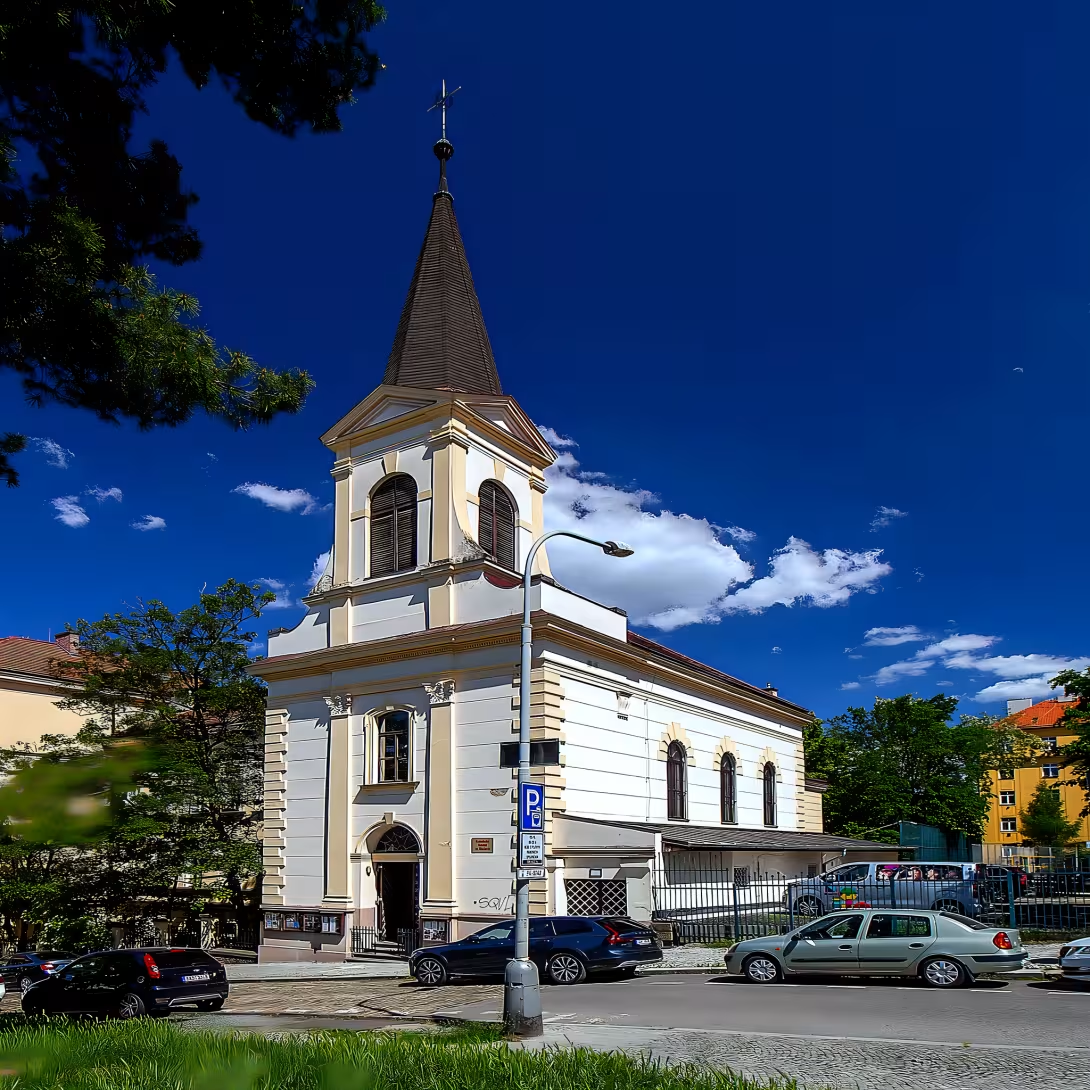
The Church of Saint Wenceslas in Nusle is a historic Roman Catholic parish church with neoclassical architecture located at the corner of Vladimírova and Pod Vilami streets in Prague's Nusle district. Constructed in 1898 when Emperor Franz Joseph I elevated Nusle to royal city status, this church stands as a testament to both architectural elegance and significant religious history. Notably, it was among the first sites for Czech language liturgies before the establishment of the Church of the Czechoslovak Hussite Church.
The church's origins are deeply intertwined with urban development and cultural shifts in Prague during the late 19th century. Built as a neoclassical chapel to coincide with Nusle’s elevation, it was elevated to parish status in 1903 following its separation from Michle. This period marked an era of modernization and national identity formation across Europe, reflected in the church's establishment.
Architecturally, the Church of Saint Wenceslas is characterized by its neoclassical style, aligning with broader European trends of the time. The interior features unique artwork by Jan Kristofori, including a depiction of Christ’s crucifixion at three o'clock in the afternoon, adding to its artistic significance. Following a devastating fire in 1962, the church underwent significant renovations between 1967 and 1968, with further updates post-1989 that included new bells and interior changes.
Throughout its history, the church has been associated with several notable figures. Monsignor Alois Tylínek, a personal archdeacon and former prisoner of concentration camps, celebrated his ordination anniversary here in 1957. Other significant personalities include Piotr Henryk Adamczyk, the current administrator, and various clergy members who have contributed to its rich liturgical tradition.
Key events at the church underscore its importance in Czech religious history. In 1919, it hosted the first Czech language services before the official establishment of the Church of the Czechoslovak Hussite Church. By 1923, a new liturgy by Patriarch Dr. Karl Farský was introduced here. The church also played host to significant liturgical celebrations in recent years, including those led by Bishop Václav Malý and Apostolic Nuncio Jude Thaddeus Okolo.
Today, the Church of Saint Wenceslas remains an active parish under the administration of Piotr Henryk Adamczyk. It continues to be a focal point for liturgical celebrations not only within its walls but also in surrounding Nusle streets. The church's rich history and unique artwork make it a worthwhile visit for those interested in both religious heritage and architectural beauty.
Visitors are invited to explore this historic site, where the blend of neoclassical architecture and significant cultural events offers a glimpse into Prague’s vibrant past. Whether drawn by its artistic treasures or its role in Czech history, the Church of Saint Wenceslas promises an enriching experience.
Then and now
Drag the slider to compare how the landmark may have looked when it was built with the view today.
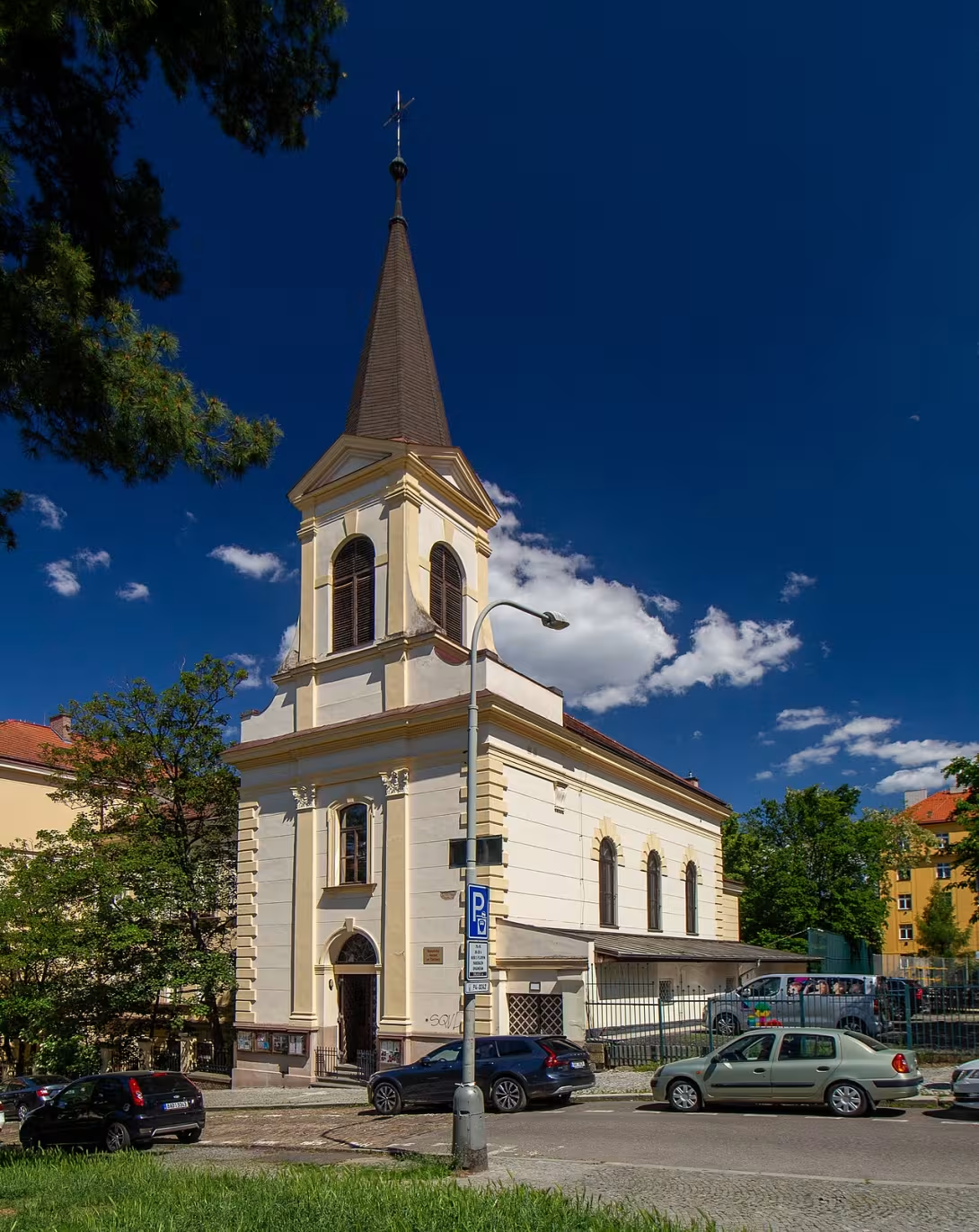

The historical appearance on the left is an AI-generated visualisation and serves as inspiration only.
Historical milestones
- 1898
- The church was constructed as part of the elevation of Nusle to a royal city.
- 1903
- The chapel was elevated to parish church status.
- 1919
- Czech language liturgies were first celebrated at the church.
- 1923
- A new liturgy by Patriarch Dr. Karl Farský was first served in the church.
- 1962
- The church suffered a fire leading to significant interior renovations.
- 1997
- A new bell named 'Sv. Václav' was installed on the church tower.
Architectural development
Originally built as a neoclassical chapel in 1898, the church was elevated to parish status in 1903. After a devastating fire in 1962, it underwent major renovations between 1967 and 1968, with further updates post-1989 including new bells and interior changes.
Historical events
In 1903, the chapel was elevated to parish church status after Nusle became an independent city.
1919 marked the first celebration of services in Czech at the church, preceding the official establishment of the Church of the Czechoslovak Hussite Church.
The church underwent significant interior renovations between 1967 and 1968 following a fire in 1962.
Points of interest
- The Church of Saint Wenceslas was one of the pioneering sites for Czech language liturgies before the official establishment of the Church of the Czechoslovak Hussite Church, marking a significant moment in the cultural and religious autonomy movement within Bohemia.
- A unique artwork inside the church by Jan Kristofori depicts Christ’s crucifixion at three o'clock in the afternoon, a detail that aligns with historical accounts and adds to the artistic narrative of the space.
- Monsignor Alois Tylínek, who celebrated his ordination anniversary here in 1957, was notable not only for his role as a personal archdeacon but also for having survived imprisonment in concentration camps during World War II, illustrating the church's connection to resilience and survival stories from that era.
- In 1923, the Church of Saint Wenceslas introduced a new liturgy by Patriarch Dr. Karl Farský, reflecting its role as an innovative religious center at a time when Czech national identity was being redefined post-World War I.
- After suffering a devastating fire in 1962, the church underwent significant renovations between 1967 and 1968, symbolizing not only physical restoration but also resilience and continuity of community spirit through challenging times.
Guide
This guide is narrated by a synthetic voice generated by artificial intelligence.
Show guide text
This text was created by artificial intelligence and has not been editorially reviewed. It may contain inaccuracies.
The Church of Saint Wenceslaus in Nusle is a Roman Catholic parish church. It stands at the corner of Vladimírova and Pod Vilami streets and faces the adjoining small park with its main façade. This neoclassicist building was erected in eighteen ninety-eight. That same year, Emperor Francis Joseph the First elevated Nusle to a royal city.
Initially, it was not a parish church, but a chapel. It belonged to the Nusle civic school for boys and girls on Svatoslavova street. Only in nineteen oh three, when the independent city of Nusle was separated from the parish in Michle, did its own Nusle parish come into being. The Chapel of Saint Wenceslaus then became a parish church.
An interesting chapter of religious history is also connected with this church. At Christmas in nineteen nineteen, Nusle catechists began holding services in Czech here. This happened even before the proclamation of the Czechoslovak Church on January eighth, nineteen twenty. The new church then shared the building with the Roman Catholic Church for some time. On the feast of Saint Wenceslaus, September twenty-eighth, nineteen twenty-three, a service according to the liturgy of Karel Farský was held here for the first time. Later, the Czechoslovak Church built its own premises in Nusle.
In nineteen sixty-two, a fire damaged the church. The arsonist irretrievably destroyed the original Stations of the Cross. The interior was thoroughly renovated in nineteen sixty-seven and nineteen sixty-eight according to a design by architect Jaroslav Čermák. The design better reflected the conclusions of the Second Vatican Council. From him comes the red sculpture of Saint Wenceslaus above the sanctuary. After nineteen eighty-nine, the interior underwent further renovation and the church received new bells. In nineteen ninety-seven, the bell Saint Wenceslaus from the workshop of Rudolf Perner in Passau was hung on the tower.
A distinctive feature of the church is the wall painting by artist Jan Kristofori from nineteen ninety-eight. It depicts, among other things, Christ's death on the cross at three o'clock in the afternoon among clouds. The same artist created in the year two thousand a modern Stations of the Cross with fourteen stops in the main nave. Until then, it was replaced by a pseudo-Gothic Stations of the Cross borrowed from the Church of Saint Pancras. The organ from the turn of the nineteenth and twentieth centuries suffered greatly in the fire. The parishioners paid for its repair and in nineteen ninety-nine it was moved to the choir loft and restored again.
The church was served by, for example, Father Alois Tylínek, a prisoner in the concentration camps in Terezín and Dachau. In July nineteen fifty-seven, he celebrated fifty years since his priestly ordination here. Since nineteen ninety, liturgical celebrations from the church have extended into the surrounding Nusle streets, such as at Carnival time or on the feast of Saint Wenceslaus, the patron of the church.
Tips for visitors
The Church of Saint Wenceslas in Nusle is best visited during the late morning or early afternoon, particularly on weekdays when it's less crowded. This timing allows you to appreciate its neoclassical architecture and serene atmosphere without the hustle of peak tourist hours. The natural light filtering through the church windows creates a beautiful ambiance perfect for photography.
When visiting the Church of Saint Wenceslas, consider bringing comfortable walking shoes as there are steps leading up to the entrance. A small flashlight can be handy if you plan to explore any dimly lit areas inside. Don't forget your camera or smartphone for capturing the intricate architectural details and stained glass windows that make this church unique.
For photography enthusiasts, the best spots include the corner of Vladimírova and Pod Vilami streets where you can capture the full façade of the church in natural light. Inside, aim to photograph during times when sunlight streams through the windows, highlighting the interior's neoclassical features. Early morning or late afternoon is ideal for softer lighting conditions.
Nearby attractions within a 30-minute walk include the Nusle Water Tower and the Výtoň Castle, offering picturesque views of Prague. For families with children, consider visiting the nearby Botanical Garden in Troja, which provides an engaging outdoor experience with its diverse plant collections and interactive exhibits.
Frequently asked questions
Can the monument be visited?
Religious buildings are usually open mainly during services; at other times a visit is normally arranged with the parish or the operator. We have not verified specific times.
Where is the monument?
Location: Nusle, Hlavní město Praha. The map on this page shows the exact spot.
Businesses nearby
Do you run a restaurant, accommodation, shop, museum, rental, wellness or other visitor service near this monument? Show yourself directly to the people heading to it — this is how they will see you in the app and on the web:
Events nearby

Zdroj akcí: otevřená data měst a obcí ČR (Národní katalog otevřených dat) a kalendář akcí Národního památkového ústavu.
Accommodation nearby
Trips and activities nearby
Guided tours, tickets and activities nearby from GetYourGuide
Affiliate link: if you buy from the partner, we may receive a commission. The price for you does not change.
Search tours and activities →Themed route
Tematická výletní trasa: Kostel svatého Václava v Nuslích
1. Kostel svatého Václava v Nuslích (Kostel)
Začněte svou cestu na hlavním místě této trasy, kostelem svatého Václava. Tento barokní kostel je architektonickým dílem od Josefa Mockera a sloužil jako farní chrám pro obyvatele Nuslí. Jeho bohatě zdobená interiéry a historie činí z něj nezbytnou návštěvu pro milovníky dějin a architektury.
2. Náměstí Nuselského kostela (Veřejný prostor)
Po prozkoumání kostela se podívejte na okolní náměstí, které je centrem místní komunity. Toto místo slouží jako důležitý veřejný prostor pro setkávání obyvatel a hostů Nuslí. Jeho klidné prostředí nabízí krásný pohled na kostel a okolní architekturu.
3. Náměstí Vítězného praporu (Veřejný prostor)
Krátkou chůzí přes ulice se dostanete k náměstí Vítězného praporu, které je známé svou historickou významností. Toto místo bylo důležité během různých období města a poskytuje vhled do minulosti Nuslí. Je to ideální místo pro relaxaci a prohlédnutí se po okolí.
4. Kostel svatého Václava v Nuslích - Vnitřní areál (Kostel)
Po prozkoumání veřejných prostor se vrátíme k kostelu, tentokrát zaměřením na jeho vnější nádvoří a věž. Tyto prvky jsou klíčové pro pochopení architektonického designu Mockera a nabízejí jedinečný pohled na kostel zvenku. Věž je ideálním místem pro odpočinek s výhledem na okolní oblasti.
Tato trasa nabízí komplexní pohled na historii a architekturu Nuslí, zaměřenou kolem kostela svatého Václava.
Seasonal recommendations
Spring: Visiting the Church of Saint Wenceslas in Nusle during spring offers a refreshing experience as nature awakens around this historic site. The blooming flowers and budding trees create a picturesque backdrop, enhancing the church's architectural beauty. This season typically sees moderate crowds, making it an ideal time for those who appreciate a quieter visit to absorb the serene atmosphere. As daylight hours increase, visitors can enjoy longer exploration times without feeling rushed. It is advisable to wear comfortable walking shoes and layered clothing, as temperatures can vary throughout the day.
Summer: Summer in Nusle brings vibrant life to the Church of Saint Wenceslas with lush greenery enveloping the area. The long daylight hours provide ample time for visitors to explore both the church's interior and its surroundings. However, this is also the peak tourist season, so arriving early can help avoid larger crowds. The warm weather encourages outdoor activities, making it a perfect opportunity to stroll through nearby parks or along the Vltava River before or after your visit. Light, breathable clothing and sunscreen are recommended to stay comfortable during your exploration.
Autumn: Autumn transforms the Church of Saint Waveslas in Nusle into a stunning canvas of warm colors as leaves turn shades of red, orange, and gold. This season offers a unique atmospheric charm with its crisp air and softer light, ideal for photography enthusiasts or those seeking a tranquil experience. While visitor numbers may decrease compared to summer, it's still wise to check the church’s schedule in advance, as some services might be affected by shorter daylight hours. Layered clothing is essential to adapt to the fluctuating temperatures typical of this season.
Winter: Winter presents a magical setting for visiting the Church of Saint Wenceslas in Nusle, with snow often blanketing the area and creating a serene, almost ethereal atmosphere. The church's architecture stands out sharply against the white landscape, offering a unique visual experience. During this time, visitor numbers are usually lower, providing a peaceful environment to appreciate the site’s historical significance. Warm clothing, including coats, hats, gloves, and sturdy boots, is essential to stay comfortable during your visit.
Visualizations and artistic views


The visualisations are generated by artificial intelligence and serve as inspiration.
Photos from the area
Real photos taken near the monument


Zdroj a licence jsou uvedeny u každého snímku.
Tips from visitors
No tips yet. Be the first!
Log in and add your tip.
Sources and literature
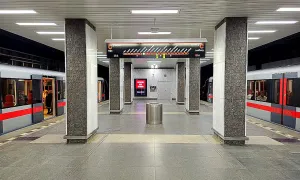
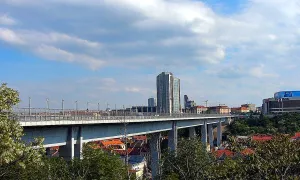
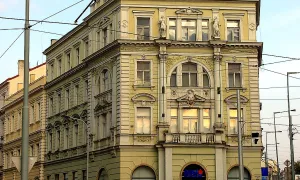
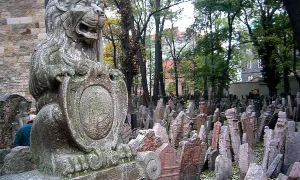
Photos: VitVit / CC BY-SA 4.0, rozlišení zvýšeno umělou inteligencí — Wikimedia Commons. The author and licence also appear when you hover over the image.
Location on the map
Příběhy a pověsti
Legendy, pověsti a příběhy spjaté s touto památkou
Fotografie návštěvníků
Zatím žádné fotografie. Buďte první, kdo přidá fotografii z návštěvy!
Log in a přidejte svou fotografii nebo hodnoťte.
Za ověřenou návštěvu v aplikaci získáte víc bodů — poznáme podle GPS, že jste na místě.
Reviews and comments