






Nuselský pivovar Brewery building
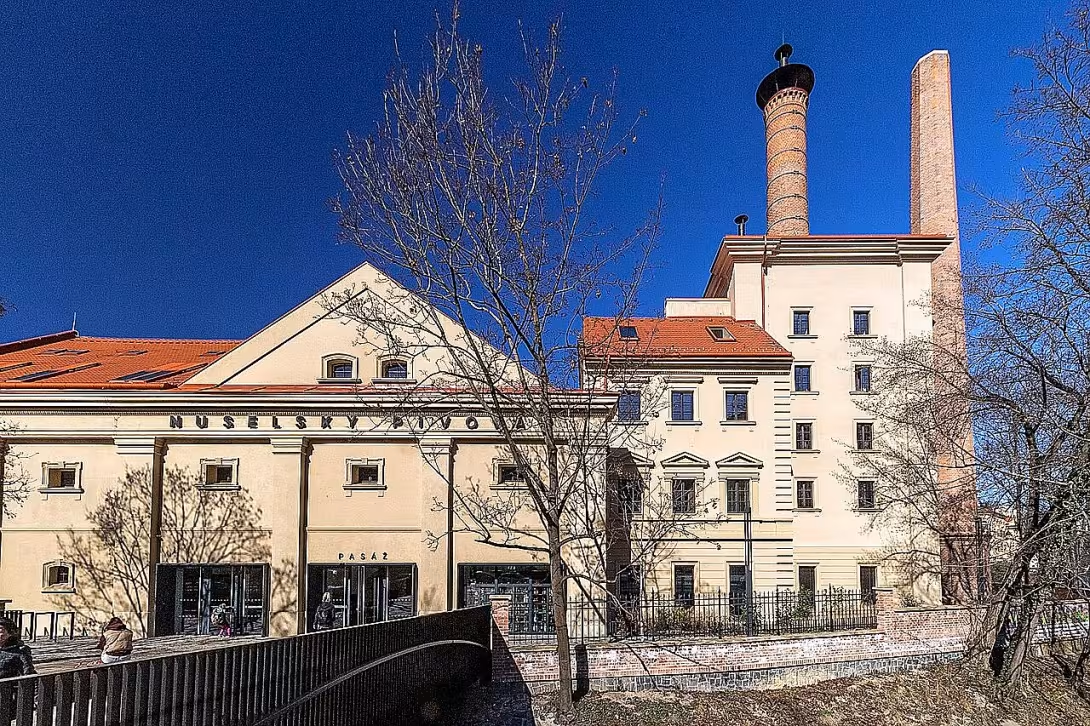
Nuselský pivovar is an important monument to industrial architecture located in the Nusel Valley on the right bank of Botič in Prague 4. This building, which dates back to the end of the 17th century, has gradually evolved into one of the largest breweries of Central Europe and since 2003 it has been protected as a cultural monument.
The tradition of growing vines and brewing beer in this area has a long history, the first written mention of the Noslas dates back to 1088. Although it is said that the brewery was founded by Jan Josef z Vrtby in 1694, the first documented mention of the brewery in this place is from 1757.
The architecture of the complex combines historical elements and the buildings underwent significant reconstruction in 1876, 1929 and 1935. The best preserved elements include the main entrance gate from Belgrade Street with two brewery barrels from 1918. In some parts of the building, arched ceilings are still preserved.
After its foundation, the brewery passed through several owners. In 1857 it was purchased by Alois Procháska, which rented it to the Waldstein family, which deserved the development of the company and its present form. In 1897, the complex was purchased by the Prague Credit Bank, which created an Equity Brewery in Nusla near Prague. After the closing of beer production in 1960, the area became the seat of the Czech wine factories and served as a malting plant.
The area was a place of important social and cultural events. In the brewery garden mentioned by Jaroslav Foglar, Edvard Beneš performed in 1929. On a small theatre scene, the first cabaret performance was performed by the comedian Jaroslav Štercl. The most famous products of the brewery included a 14-degree dark Nusel prelate, which was also intended for export to Podkarpatské Rusi.
The area is currently undergoing a transformation within the residential project. While part of the operating buildings was replaced by new construction, historically protected buildings in the southern part of the complex were modernised and are now used for commercial, cultural and administrative purposes.
Nuselský pivovar represents a key point on the map of industrial history of Prague. It is a place worth visiting for anyone who wants to learn more about the history of local craft and architecture.
Then and now
Drag the slider to compare how the landmark may have looked when it was built with the view today.
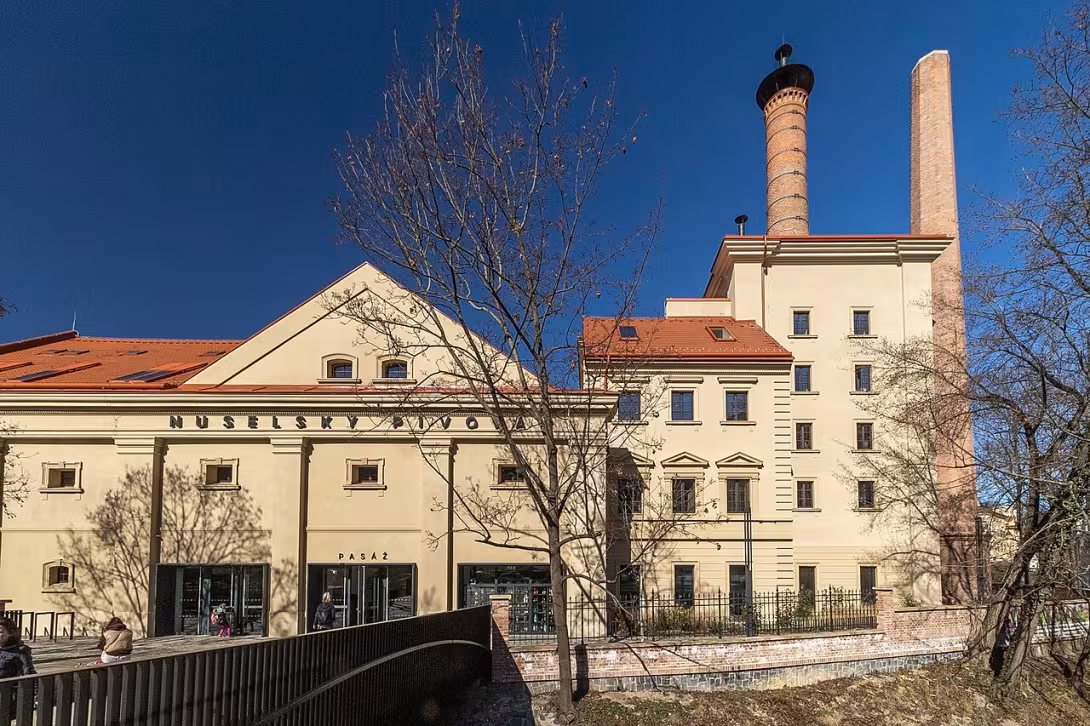
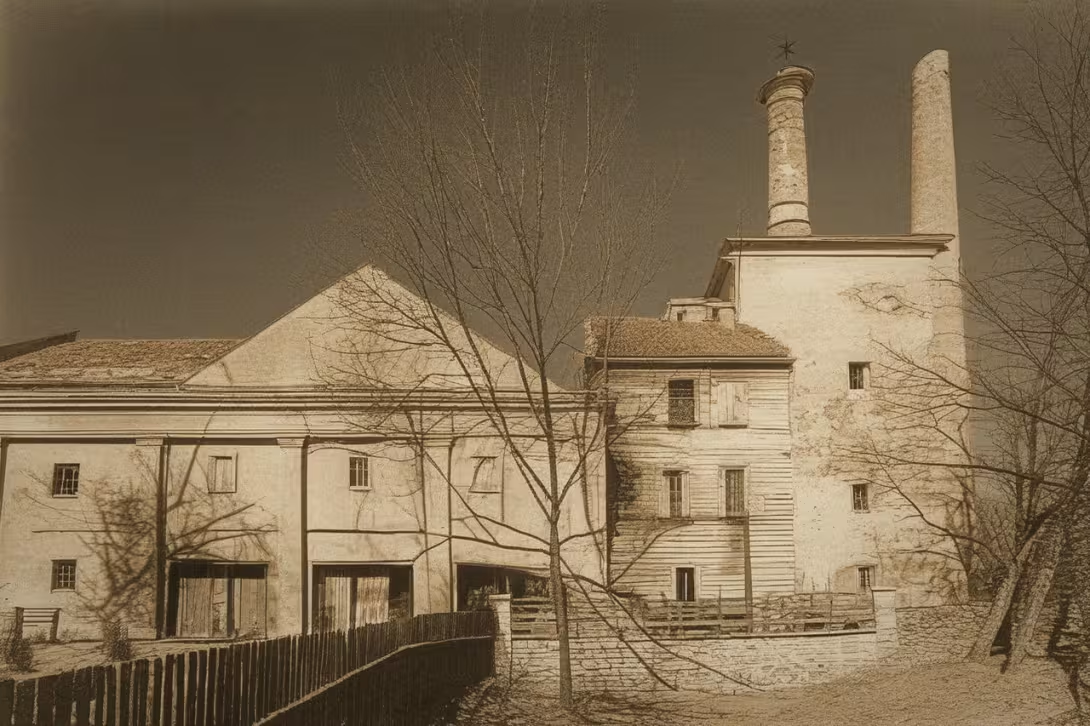
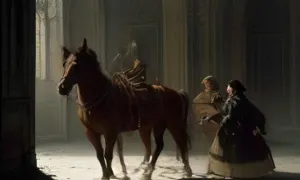
The historical appearance on the left is an AI-generated visualisation and serves as inspiration only.
Historical milestones
- 1694
- Establishment of brewery Jan Josef from Vrtba
- 1857
- Buying a brewery by Alois Procháškou
- 1897
- Purchase by Prague Credit Bank and the creation of a stock brewery
- 1960
- Closure of the brewery
- 2003
- Registration of the premises as cultural monuments
Architectural development
The buildings underwent significant reconstruction in 1876, 1929 and 1935. Today's appearance is the result of the Waldstein family activities. The main entrance gate from Belgrade Street, decorated with beer barrels from 1918, remained well preserved.
Historical events
1897: The creation of an equity brewery in Nusla near Prague. 1929: Edvard Beneš's pre-election meeting in the brewery garden. 1960: Closure of the brewery and leave only the malting room.
Owners
Jan Josef z Vrtby (founder), noble family, Alois Procháska (from 1857), Waldstein family (tenants), Prague credit bank (from 1897)
Points of interest
- The brewery has evolved into one of the largest in Central Europe and since 2003 it has been protected as a cultural monument. - The main entrance gate from Belgrade Street contains two brewery barrels from 1918. - Edvard Beneš performed in the brewery garden in 1929 and on the small stage he had the first cabaret performance Jaroslav Štercl. - Among the most famous products were a 14-degree dark Nusel prelate, which was also intended for export to Podkarpathian Russia. - After the beer production in 1960, the area served as a malting plant for Czech wine factories.
Guide
Show guide text
This text was created by artificial intelligence and has not been editorially reviewed. It may contain inaccuracies.
Welcome to Nusli. You are standing in front of one of the most important pillars of the industrial history of this valley, a place where over the centuries the artisanal um has interconnected with the great history of the national economy. Before your eyes, the Nusel Brewery complex, a monumental complex that dominates the whole area with its presence, in which every brick and every stone seems to be filled with the stories of the people who worked here, formed and dreamed. Feel this atmosphere. Feel the feeling that you are walking through time, which flows a little differently here in the Nusel Valley than in the busy center of Prague.
Let's go back deep into the past together to understand why this place is so special. The whole story of this complex began a long time ago, in 164,94. At that time Jan Josef z Vrtby laid the first foundation under the budowę brewery, which at that time was still a small beginning in the wider context of agricultural and local production. But history tends to surprise. What began as a modest enterprise has gradually evolved into something completely unprecedented thanks to constant development and visionary approach. Imagine the growth, the incredible rise, when this brewery became one of the largest industrial breweries in all of Central Europe. It was a real engine of economics, a place that powered the whole neighborhood and was known far beyond today's state borders.
Over the next century, the brewery's ownership and direction changed, reflecting the stormy history of the entire region. In a thousand and eight hundred and fifty-seven, the brewery bought Alois Procháska. Under his leadership, the site further deepened and strengthened its position. Later, at the end of the nineteenth century, namely in the year one thousand eight hundred ninety-seven, another major transformation took place when the brewery was purchased by the Prague Credit Bank and a stock brewery was created. This move meant entering the era of modern capitalism and mass production, which was absolutely crucial for the time being.
Now pay attention to what's right in front of you. Take a look at the main entrance gate from Belgrade Street. It's right here at this entrance that you can best feel the weight of history. Notice the two brewery barrels that are part of the gate. These barrels come directly from the year one thousand nine hundred and eighteen. Imagine how many different epoch, wars and political twists these barrels have seen in their lives. They are silent but very strong witnesses to the end of one era and the beginning of a new one. They are a symbol of the craft that has evolved into an industrial power in this place. Take a look at the facade and see the mass and integrity that this area radiates. Even if we don't look at every single detail, believe me, the overall structure of this place tells you the story of strength, endurance and technical progress that has been going on here for centuries.
However, this site was not just about machines, barrels and production. It was a space that lived by people and their fates. It is associated with many names that we will not forget in Czech history. Apart from the founder of Jan Josef from Vrtba and the successful owner Alois Prochásek, other important people left their trail. Here we can think of figures like Jaroslav Foglar or Jaroslav Štercl whose names are closely linked to this neighborhood and its spirit. But the brewery was also a place where politics and culture met. Imagine the atmosphere in the brewery garden. In the year one thousand nine hundred twenty-nine, Edvard Beneš himself performed here. Imagine that scene, that little theater scene, where there were events at that time that affected the fate of the entire nation. This garden was not just a place to relax, it was a part of the vibrant cultural life of Nusle.
Sometimes history may seem to stop, but this complex has its own dynamic. Although in the year one thousand nine hundred sixty brewery had to close because of the conditions at the time and the machines were silent, its legacy never disappeared. On the contrary, its value was so high that in the year two thousand and three the entire complex was officially registered as a cultural monument. This is proof that although the function of the site is changing, its substance and importance remain unquestionable. What you see is not just old buildings, it's a protected piece of our common identity.
The interesting thing that may interest you is the constant transformation. A small brewery operation founded by a nobleman became an industrial giant and eventually became a rare monument that teaches us about our roots. The gate of a thousand and nine hundred and eighteen barrels serves as a symbolic bridge between all these ages. It's like you're touching the very heart of history, which is still beating, even though there's no more beer brewing like it was done a hundred years ago.
Now I won't hold you back any longer in your next discovery. I suggest you continue to walk around the premises, perceive its dimensions, perceive its presence in this valley and look in its vicinity for further traces of the past. Every corner of this place, every street that leads to it has its own story, waiting for you to discover it. Thank you for spending this moment with us and for choosing to understand the history of the Nusel brewery. I wish you a pleasant and inspiring further journey.
Tips for visitors
For the best experience we recommend a visit in the afternoon when the atmosphere of the historic industrial building becomes the most distinctive. You can visit by public transport and by car; the current connection and parking options are best checked in internet maps or on the official website of traffic.
If you plan to photograph, the best places to capture the details of architecture are the walls of historical buildings, especially in the days of morning or evening light, when the shadows highlight beautifully the texture of the materials. For comfortable movement in the surroundings we recommend taking quality shoes with you.
Within a short walk in the surroundings you can visit Botič or the theatre Na Fidlovačka. For families with children is the ideal combination of history and nature, which is offered for example by Havlíček orclose Vysehrad.
Before the trip itself we recommend making sure that the monument is accessible at a given time and check the current programs directly on its official website.
Businesses nearby
Do you run a restaurant, accommodation, shop, museum, rental, wellness or other visitor service near this monument? Show yourself directly to the people heading to it — this is how they will see you in the app and on the web:
Events nearby

Zdroj akcí: otevřená data měst a obcí ČR (Národní katalog otevřených dat) a kalendář akcí Národního památkového ústavu.
Nearby
Botič, theatre Na Fidlováčka, Havlíček orchards (Grebovka), Vyšehrad
Accommodation nearby
Trips and activities nearby
Guided tours, tickets and activities nearby from GetYourGuide
Affiliate link: if you buy from the partner, we may receive a commission. The price for you does not change.
Search tours and activities →Themed route
Thematic cruise route from Nusel Brewery
1.Nuselský pivovar * Type: * Historical brewery * Why is it worth a visit: * Visit this historic place where traditional Czech beer is produced. During the tour you can learn about brewing technology and enjoy tasting experience.
2. Theatre Na Fidlovacce * Type: * Theatre hall * Why is it worth a visit: * This theatre offers quality cultural programs and is famous for its history. Visit him for a performance of Czech theatre or opera, which will open the door to the rich cultural life of Prague.
3. Havlíček orchards (Grebka) * Type: * Park and garden * Why is it worth a visit: * Beautiful park where you can walk along the Botič stream. Here you can find the T.G. Masaryk memorial and places overlooking Prague, which is an ideal break after visiting the theatre.
4. * Type: * Historical Castle * Why is it worth visiting: * Vysehrad is one of the oldest houses in Prague, offering a view of Vltava and historical architecture. Visit the cemetery with monuments of famous personalities or see yourself after the bell tower.
This route allows you to explore the cultural and natural beauty surrounding the Nusel brewery.
Seasonal recommendations
Spring: Nuselský pivovar offers a unique atmosphere in the spring, when the green nature is awakening around it and the whole surrounding area begins to bloom. Sun rays illuminate ancient buildings in a new light, giving an impression of life and renewal. At this time it is advisable to visit the brewery on Wednesday week, when crowds do not get as much as on weekends. It is recommended to wear light clothes with the possibility to add a layer on a colder day.
Summer: During the summer season Nuselský pivovar is a popular place for afternoon relaxation. The sunny days and warm atmosphere create ideal conditions for sightseeing. Summer is also a time when more visitors can appear here, so it is a good idea to come earlier on the day to enjoy a place without long queues. Don't forget to bring sunglasses and UV protection.
Autumn: In autumn Nuselský pivovar offers visitors a view of the colorful nature when tree leaves start to change colour. Sunshine days are warmer and often brighter than in winter months, making the visit comfortable even in colder weather. In this season it is advisable to wear layered clothes that allow you to adapt to rapid temperature changes during the day.
Winter: The winter visit to the Nusel Brewery offers a different atmosphere, where the freezing air and snow paintings add a romantic character. The sunny days are shorter, but they shine stronger, which illuminates ancient buildings in beautiful winter brightness. This season it is advisable to visit the brewery early in the morning or late in the evening due to shorter opening times and cold temperatures, so we recommend wearing warm clothes and perhaps even a hat and gloves.
Visualizations and artistic views


The visualisations are generated by artificial intelligence and serve as inspiration.
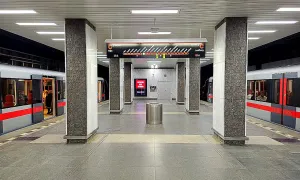
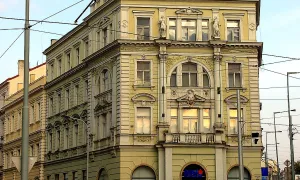
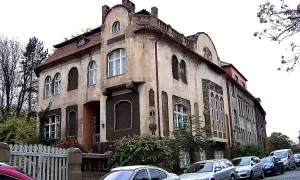
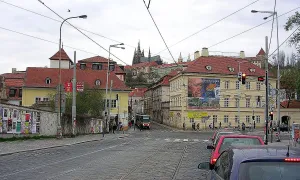
Photos from the area
Real photos taken near the monument

Zdroj a licence jsou uvedeny u každého snímku.
Tips from visitors
No tips yet. Be the first!
Log in and add your tip.
Sources and literature
Photos: ŠJů (cs:ŠJů) / CC BY-SA 3.0 — Wikimedia Commons. The author and licence also appear when you hover over the image.
Faktickým podkladem tohoto textu byl článek na Wikipedii, jehož autory jsou přispěvatelé Wikipedie. Článek je dostupný pod licencí CC BY-SA 4.0.
Location on the map

Příběhy a pověsti
Legendy, pověsti a příběhy spjaté s touto památkou
Fotografie návštěvníků
Zatím žádné fotografie. Buďte první, kdo přidá fotografii z návštěvy!
Log in a přidejte svou fotografii nebo hodnoťte.
Za ověřenou návštěvu v aplikaci získáte víc bodů — poznáme podle GPS, že jste na místě.
Reviews and comments