



Kostel svatého Václava (Vraclav) Disappeared church
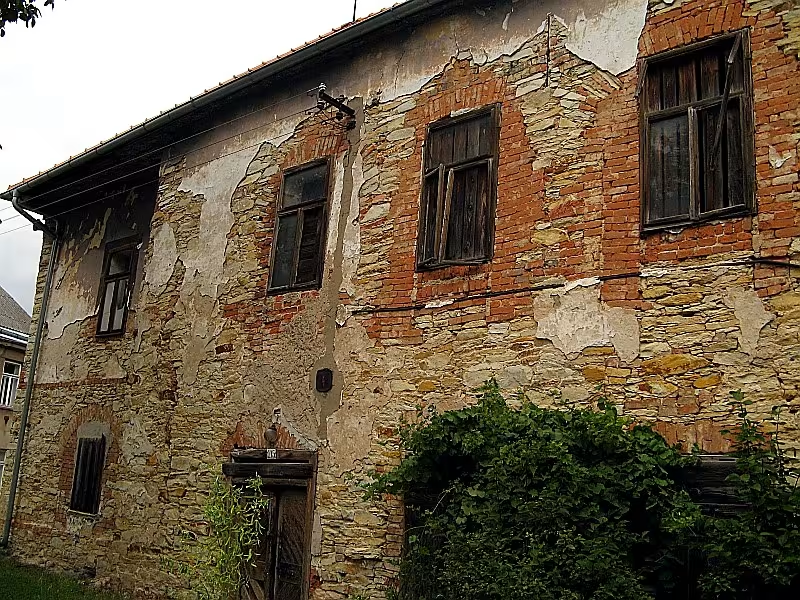
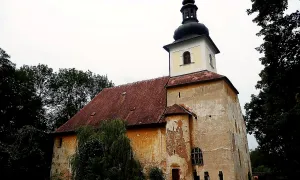
Former Church of St. Wenceslas in Vraclavi is a Roman building from the 13th century. Over time, it was converted into a granary and then into an inn. The building is located on the village Vraclav and has been registered as a cultural monument since 1958. It represents an unusual example of the transformation of the sacral space for lay use.
The first piece of references to the church dates back to the middle of the 14th century. The construction itself was built in the 13th century, at the time of the expansion of Romanesque architecture in Czech countries. Reports of the initiation of the building to St. Wenceslas are documented from the Baroque period.
The original Romanesque church consisted of an underground tower of 9,7 × 5,5 metres, a slightly rectangular boat of 11,3 × 10,2 metres and an apsid. The masonry from the quarry is 1.1 meters thick. Later modifications, specifically the maturation around the inputs and windows, are made from bricks. The current form of the building is the result of several adaptations which have significantly transformed the original sacral appearance.
In 1666, the church was restored by the High-Cote Dean Samuel Hattaš, who added the bell tower to the building. After the fire in 1737, the construction was rebuilt in 1743. The break in the fate of the monument occurred in 1786, when the church was closed under the Josephin Decrees. From that time until 1841, the object served as a granary. After the next fire in 1841, the building was converted into a storey inn with a bunk bed in the yard. It remained operational until the 1970s. Currently the building is owned by the municipality Vraclav.
An archaeological survey from the late 20th century revealed 16 very disturbed graves in the building. Among the findings are fragments of forage ceramics, fragment of earring and products from the young forage period. A significant finding was the bracket dating back to 1278 to 1300.
The building today stands as a testament to the layered history of the village and changes in the use of architecture. It is recognised as a cultural monument, which confirms its historical value. Visiting this place allows you to observe a unique connection of Romanesque foundations with later adjustments from the time of the inn.
Historical milestones
- 1666
- Restoration of the church by the High House dean Samuel Hattashem and addition of the bell tower
- 1737
- Church fire
- 1743
- Rebuilding the church
- 1786
- Closure of the church under Josephine decrees
- 1841
- The fire of the granary and subsequent conversion to the inn
- 1958
- The object is declared a cultural monument
Architectural development
The original Romanesque church from the quarry was made up of a sunken tower, a rectangular boat and an apsida. In 1666 the bell tower was built and after the fire in 1841 the building was converted into a storey inn with a bunk bed. Later modifications of windows and inputs are made from bricks.
Historical events
1786: Cancellation of the church under the Josephine Decrees. 1841: The granary fire and subsequent reconstruction of the building to the inn.
Owners
Municipality of Vraclav (current owner)
Points of interest
- It's a 13th-century Romanesque building that was converted into a granary and an inn. - Reports of the initiation of the building to St. Wenceslas are documented from the Baroque period. - The original wall of the quarry is 1.1 meters thick. - In 1666, the High House Dean Samuel Hattaš brought the bell tower to the building. - Archaeological research revealed 16 disturbed graves and a bracket from 1278 to 1300.
Guide
Show guide text
This text was created by artificial intelligence and has not been editorially reviewed. It may contain inaccuracies.
Welcome to Vraclavi. Please stop for a moment and take a deep breath. You're standing in front of a building that hides a fascinating story of transformation, survival and constant adaptation to new times. At first glance, there may not be a magnificent temple with high towers as we know from the great cities, but in the very modesty and mystery of this building lies its true value. Look at its shapes and perceive the atmosphere of the place where spiritual silence is blended with the noise of pubs and the smell of grain grains over the centuries.
This building brings us back deep into the past until the 13th century. Imagine the early Middle Ages when this building was built in Romanesque style. At that time, architecture was an expression of stability and faith, which was reflected in the actual implementation of this building. Roman buildings were basically stone forts of the spirit, and that is what you can feel here today. Originally there was a church dedicated to St. Wenceslas, the protectors of the Czech lands. It was the center of the community, a place where people sought escape, prayed and celebrated the most important moments of their lives.
Now I ask you to pay attention to the image itself. If you come any closer and look at the surface of the walls, remember one incredible thing. The original masonry is made of quarry, which is a typical local stone. But beware, the thickness of these walls reaches an incredible one and ten tenths of a meter. Imagine, stand by the wall and try to imagine in your mind the massive layer of stone that separates the inner space from the outer world. This thickness was not only a matter of the technology of the time, but it was to ensure that the construction lasted forever, and as you can see, it succeeded. It is this stone matter that is the most faithful witness to everything that has happened here in the last 800 years.
If we move forward in time, we get to the seventeenth century. In the year six hundred and sixty-six, a man named Samuel Hattaš appeared here, who acted as a high-tech dean. He put new energy into the building. Under his leadership, the church was restored and there was a very important architectural supplement. Notice the bell tower that was installed at the time. The bell tower changed the silhouette of the building and gave it a new dimension because the sound of the bell was at that time the only way to call the whole village to prayer or warn them of danger.
But history is not only about building, but also about fighting the elements. The life of this place was marked by tragic events. In seven hundred and thirty-seven buildings K hit a devastating fire. The fire is the greatest enemy of wooden roofs and interior equipment, and even though the stone walls from the opposites remained standing, the church was badly damaged. But the people did not fall into despair, and six years later, in seven hundred forty-three, the church was rebuilt. This ability to rise again from the ashes is very distinctive in the history of Vraclavi.
But then came the year seven hundred eighty-six and with it a major break that changed the fate of the building forever. The so-called Josephine Decrees, a state decree from the reign of Emperor Joseph, were impacted on it. These rules have led to the abolition of many smaller churches and monasteries that did not fulfil their main function or were redundant in the region. The church of St. Wenceslas was closed. Imagine that instead of the silence and smell of scented candles, the building suddenly became a practical space. The former temple became a granary, a place for storing grain. The holy places were replaced by piles of grains, and the prayers were replaced by the work of farmers.
The fate of the building, however, struck fire again in the year eight hundred forty-one. The granary fire led to another big change. The building was rebuilt and acquired a whole new, secular identity. She became an inn. It's a fascinating contrast, don't you think? In the thirteenth century, a place dedicated to God and the Holy One became a place of social gathering, where people gathered by beer, talking about crops and resting after a difficult day in the fields. The sacred space became space for joy and folk entertainment.
But there is one little mystery in this place that might interest you. Although we are still connecting the building today with Saint Wenceslas, the reports that the building has been dedicated to this very saint are documented in the documents from the Baroque period. It means that in the first centuries of his existence he may have had another name, or his initiation was not so clearly recorded. It's one of those little white scripts in history that reminds us that even the buildings we see every day don't need to know everything.
Today, the building no longer serves as an inn or a granary. Since a thousand and nine hundred and fifty-eight, it has been officially registered as a cultural monument, which means that the state has acknowledged its invaluable historical value. Currently, the building is in the possession of the village, which thus guards the memory of its ancestors.
If you look at this building again, you don't just see the old house. You see the Roman masonry from the 13th century, you see the bell tower of Samuel Hattas, you feel the heat of two great fires and you hear echoes of prayers, the rustling of grain and the calls of guests in the former inn. It's a building that survived changes in regimes, beliefs and social habits.
Thank you for accompanying me on this short journey through time. Now I encourage you to take a closer look at the building from your own side. Touch those thick walls from the optics, examine the facade details, and think about how many generations of people have passed around this building. Let her perseverance inspire you. When you are ready, continue your Vraclavi journey and discover other hidden corners of this beautiful place. I wish you the rest of the day and many new experiences. Goodbye.
Tips for visitors
Best time to visit St. Wenceslas church in Vraclavi is in the spring or autumn season when the weather is quiet and pleasant. This time of year offers ideal conditions for walking around a historic building without excessive sunlight or humidity, which can be problematic in summer.
It is possible to use both a passenger car and public transport to access the church. When planning a visit, it is advisable to take a umbrella with you to protect the skin from the sun.
When shooting St. Wenceslas' church, you will notice the best places to capture its historical details. Morning and evening hours offer mild light, which is ideal for photography of architectural structures.
Other historical and cultural places can be visited in the vicinity of St. Wenceslas church. If you have time, explore local sights or enjoy nature in nearby forests. For families with children it is advisable to consider visiting a park or other place where children can play and have fun.
Frequently asked questions
Can the monument be visited?
According to the heritage register the structure no longer exists; there is nothing left to see on site.
Where is the monument?
Location: Vraclav. The map on this page shows the exact spot.
Why is the monument protected?
It is listed in the Central List of Cultural Monuments of the Czech Republic as a cultural monument (register no. 1000138040).
Businesses nearby
Do you run a restaurant, accommodation, shop, museum, rental, wellness or other visitor service near this monument? Show yourself directly to the people heading to it — this is how they will see you in the app and on the web:
Nearby
🏰 Historic sites (118)
- 1918-2018: 100 let ČSR a 910 let od vyvraždění Vršovců na Vraclavi 0.3 km
- pomník Vršovcům 0.3 km
- Hradiště Vraclav 0.3 km
- bývalé lázně 0.5 km
- pomník Františka Ladislava Riegera 2.0 km
- památník padlým v 1. světové válce 2.3 km
- Tvrziště Popovec 3.2 km web
- František Skočílek 3.2 km
- Tvrziště Štěnec 4.2 km web
- Památník padlým v 1. světové válce 4.2 km
- „Stánina vyhlídka“ 4.4 km web
- +5.5.1945 Alexandr Lepšín Sáška 4.5 km
- Na Valech 4.9 km web
- Václav Jaroslav Klofáč 5.0 km web
- Přemysl Otakar II. 5.0 km
- památník M. Tyrše 5.1 km
- Pamětní deska Josefa Sodomky ml. 5.1 km
- Mariánský sloup 5.2 km
- Muzeum českého karosářství 5.3 km web
- Regionální muzeum 5.4 km
🍽️ Restaurants and dining (64)
- Chráněná dílna - Kavárna Coffee club Berenika 4.7 km
- Druzba 4.8 km
- Smé Café 4.8 km web
- Hotel Slávie 5.0 km
- Cedrový penzion 5.0 km
- Pod věží 5.0 km +420 465 322 529 web
- Rest Münster 5.1 km
- restaurace Tošovský 5.2 km
- Kavárna LaCasa 5.3 km Litomyšlská 57 web
- Kavárna LaCasa 5.3 km Litomyšlská 57 +420 737 467 007 web
- Via Ironia 5.4 km +420 465 635 732 web
- Motorest Cha Cha 7.1 km
- Grand 7.1 km náměstí Josefa Haška 6
- Restaurace mlýn Jangelec 7.2 km Kpt. Poplera 180 web
- BBQ Smokehouse 8.7 km +420 778 545 945 web
- Fontánka 9.2 km
- Restaurace Vídeň 9.3 km
- U Osla 9.5 km
- Borová šiška 9.5 km Polská 1320
- Zlatá hvězda 9.9 km
🏨 Accommodation (10)
- Hotel Kobylka 5.0 km
- Pod věží 5.0 km +420 465 322 529 web
- Via Ironia 5.3 km +420 465 635 731 web
- Pension mlýn Jangelec 7.2 km Kpt. Poplera 180 +420 465 421 000 web
- Camping Na Venkově 8.1 km +420720302683 web
- Hotel Vídeň 9.3 km
- Hana 9.7 km
- Hotel Peliny 10.2 km náměstí Tyršovo 298
- Penzion Karafiát 12.9 km Štěpánov 50 +420 777 300 494 web
- BezKempu 14.8 km
🚲 Rentals and sport (13)
- Donocykl 4.9 km
- Cyklosport Bendl 5.3 km
- Sportisimo 5.9 km
- Karting Vysoke Myto 6.5 km
- Autodrom Vysoké Mýto 6.6 km web
- Stadion HZS 6.7 km
- Zimní stadion 9.1 km
- Cyclosport KOLMO 10.1 km Dolní 286 +420 739 556 030 web
- Cycli 10.2 km
- Vomit 13.4 km Nádražní 242
- Sportovní hala 13.7 km Holubova 1037
- Koupaliště Roudná 14.6 km
- Motokrosová trať Holice 15.0 km
🥾 Hiking and nature (80)
- Kamanec 0.7 km
- Homole 1.7 km
- Bětník 2.8 km
- Šejval 3.6 km
- Tvrziště Hradisko 3.6 km web
- Stráň u Trusnova 4.7 km
- Borek 4.7 km
- Pramen a historické máchadlo 5.0 km
- Pravěká studna 5.0 km web
- Havlíčkovy sady 5.0 km
- Masarykovy sady 5.0 km
- park Otmara Vaňorného 5.1 km
- U Koruny 5.2 km
- Jungmannovy sady 5.4 km
- Bučkův kopec 5.5 km
- Boršov u Litětin 6.6 km
- 50. rovnoběžka Sruby 7.0 km
- studánka Řepnický pramen 7.3 km
- Čertova studánka 7.4 km web
- Lokace zrušené vojenské střelnice. 7.5 km
Accommodation nearby
Themed route
Thematic cruise route from the village Vraclav
1.Kostel svatého Václava (Vraclav)
Type: Church
Why is it worth visiting: This church is a historical monument that attracts attention with its architectural design and spiritual significance. It is an ideal place for those interested in the history of Czech church and want to immerse themselves in a quiet atmosphere.
2. Municipal Office Vraclav
Type: Public administrative object
Why is it worth a visit: Visit the municipal office can be interesting for those who want to get information about local services and current events in the village. Here are also some historical documents that are important for understanding the past of Vraclav.
3. Local Museum (if any)
Type: Museum
Why is it worth visiting: The local museum offers exhibitions that focus on the history and culture of the village. It's a great way to better understand local traditions and lifestyle.
4. St. John of Nepomuk Chapel
Type: Chapel
Why is worth a visit: This chapel is known for its historical architecture and spiritual importance. It's a place of peace where you can relax your mind and appreciate the beauty of a small sacral structure.
5. The village
Type: Public area
Why is worth a visit: Naves is the center of local life where various events and markets take place. It is an ideal place to walk and meet the locals.
This route allows you to discover not only the main monument, but also other attractions of Vraclav and its surroundings.
Seasonal recommendations
Spring: In the spring period the surroundings of St. Wenceslas church in Vraclav are full of green leaves and flowering shrubs, which provide a view of the construction of live shiny paint. The sun illuminates the church with its warm light, creating an attractive atmosphere for visitors. It is recommended to visit this historical object in the early spring, when there are fewer people and nature is in its most beautiful flower. Due to the warm weather today, it is advisable to choose light clothes with the possibility of adding layers because morning and evening can be colder.
Summer: For years, the surroundings of St. Wenceslas' church will turn into a place full of life thanks to long sunny days that highlight architectural details of the building. The warm noon may be challenging to temperature, but in the morning and evening they offer ideal conditions for walking around the church. This season, it is recommended to visit the memory in the early morning or late afternoon time when the temperature is more pleasant and the sun illuminates the building from angle perspective. Don't forget to wear a sunblock and light clothes suitable for warm weather.
Autumn: In the autumn period, the surrounding area of St. Wenceslas church is coloured with yellow, red and orange colours of leaves, creating a nice atmosphere. The sun becomes less intense and longer lasting evenings offer pleasant conditions for visiting the sights. This season it is advisable to visit the church at an early morning time when fewer people and the temperature is still pleasant. It is recommended to wear layered clothes with the possibility of adding warm coats or jackets because autumn weather can be variable and cold evenings are frequent.
Winter: Winter brings a completely different look to St. Wenceslas's church when the country is covered with snow and glacier. Sunshine days illuminate the building with its warm light, creating a magical atmosphere. Visit the church on a sunny day when winter light turns into attractive colors and shadows on the facades. This season it is important to choose warm clothes such as a jacket or a baker's coat, with a protective head against the wind and snow. Visiting a memorial in the morning offers less weather and fewer people on the streets.
Visualizations and artistic views

The visualisations are generated by artificial intelligence and serve as inspiration.
Photos from the area
Real photos taken near the monument


Zdroj a licence jsou uvedeny u každého snímku.
Tips from visitors
No tips yet. Be the first!
Log in and add your tip.
Sources and literature
Photos: Sovicka169 / CC BY-SA 3.0 — Wikimedia Commons. The author and licence also appear when you hover over the image.
Faktickým podkladem tohoto textu byl článek na Wikipedii, jehož autory jsou přispěvatelé Wikipedie. Článek je dostupný pod licencí CC BY-SA 4.0.
Location on the map

Příběhy a pověsti
Legendy, pověsti a příběhy spjaté s touto památkou
Fotografie návštěvníků
Zatím žádné fotografie. Buďte první, kdo přidá fotografii z návštěvy!
Log in a přidejte svou fotografii nebo hodnoťte.
Za ověřenou návštěvu v aplikaci získáte víc bodů — poznáme podle GPS, že jste na místě.
Reviews and comments