



kostel svatého Vavřince (Hodonín) Church
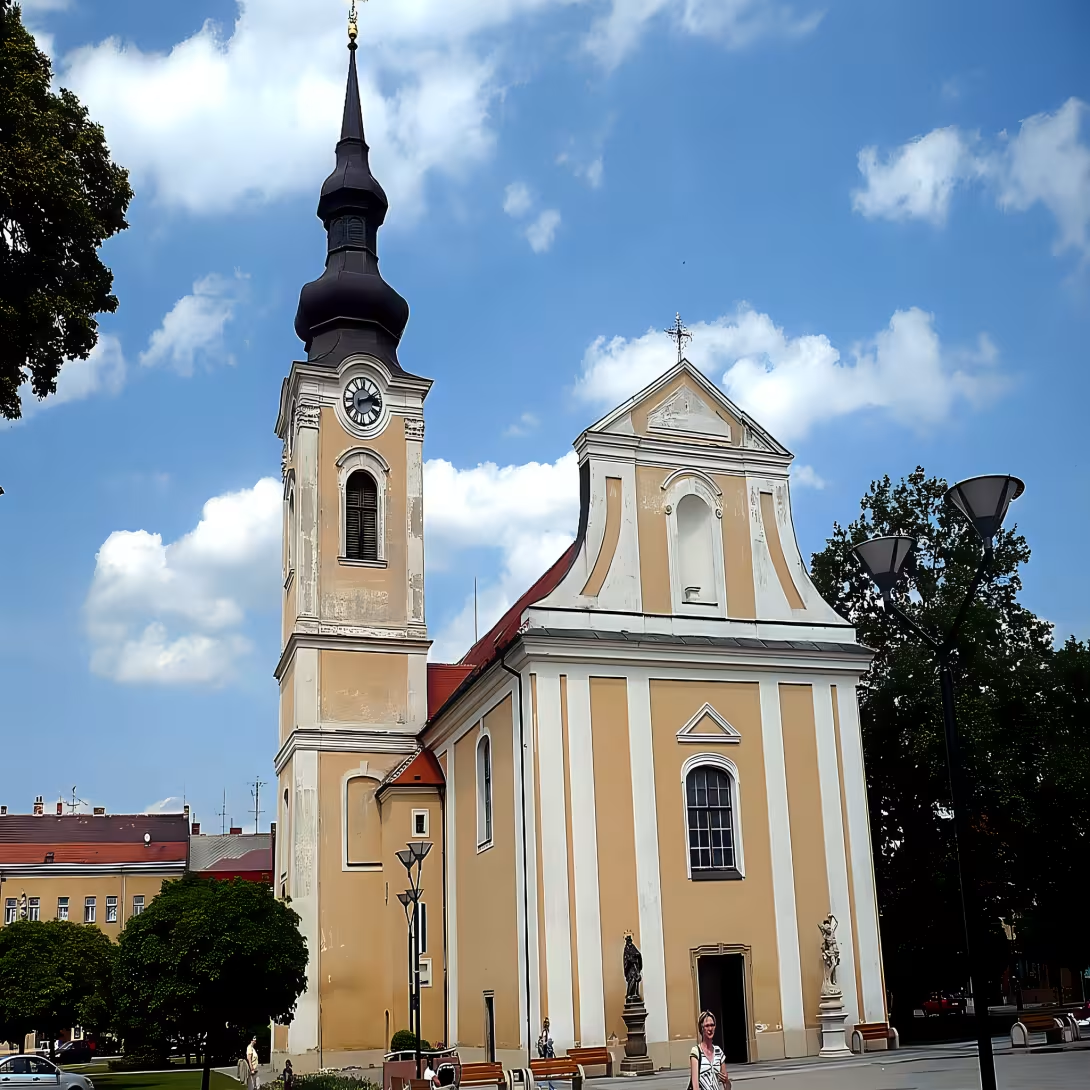
The Church of Saint Lawrence in Hodonín stands as a testament to the rich cultural heritage of this Czech town. Located at the heart of Hodonín on Masaryk Square, it is a Roman Catholic church that serves not only as a place of worship but also as a significant historical monument. Constructed between 1780 and 1786, the Church of Saint Lawrence replaced an earlier early Baroque structure while retaining its north-south orientation. This continuity in design underscores the architectural evolution from the early to late Baroque period, reflecting broader cultural shifts during Habsburg rule over Bohemia.
The origins of religious structures on this site trace back to a church likely established after 1200, with documented mention as early as 1240 in a charter for the Tišnov convent. Over time, the initial small church was replaced by an early Baroque building around 1686 during the tenure of the Oppersdorf family. This structure eventually gave way to the current late Baroque edifice, which preserved the tower from its predecessor with modifications to its bell stage. The addition of a chapel of the Holy Sepulchre in 1853 and an oratory above the sacristy further enriched the church's architectural narrative.
Architecturally, the Church of Saint Lawrence is characterized by its single-nave late Baroque style. It features a rectangular nave that concludes with a choir marked by a segmental closure. The east side of the nave hosts both a tower and a sacristy topped with an oratory. The church's facades are adorned with lisenas, adding to its aesthetic appeal. A notable element is the main altar, which boasts a neoclassical retable depicting Saint Lawrence from 1841. This is complemented by three marble side altars added in the early 20th century and interior elements such as a pulpit and baptismal font dating back to 1788.
Throughout its history, the Church of Saint Lawrence has remained under the administration of the local parish, serving as the focal point for religious activities in Hodonín. Its status as a cultural monument underscores its importance not only as a place of worship but also as a custodian of regional heritage. The church underwent significant restoration at the beginning of the 1990s and received a new façade in 2016, ensuring its preservation for future generations.
Today, the Church of Saint Lawrence stands as a beacon of historical and architectural significance. Its accessibility to visitors allows them to explore its rich history and appreciate its artistic elements firsthand. The church's blend of historical continuity and architectural beauty makes it an essential stop for anyone interested in the cultural tapestry of Hodonín. Visitors are invited to experience this remarkable monument, which continues to be a vibrant part of the community's spiritual and cultural life.
Then and now
Drag the slider to compare how the landmark may have looked when it was built with the view today.
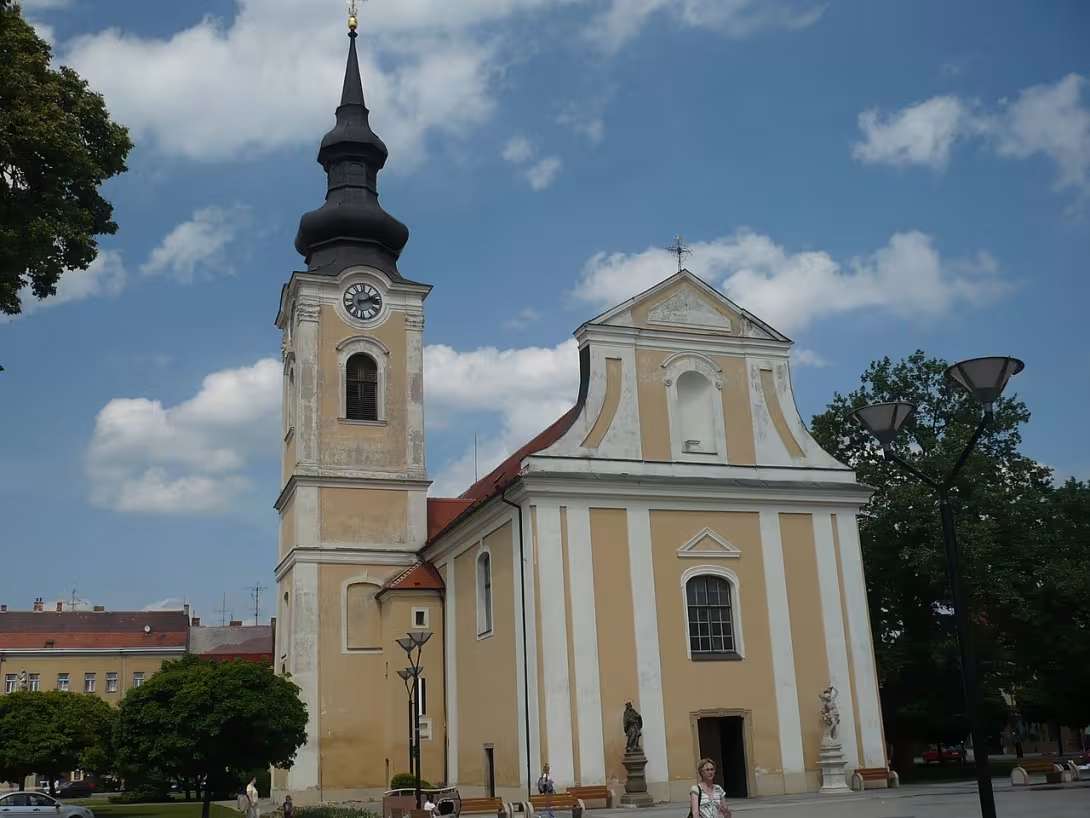
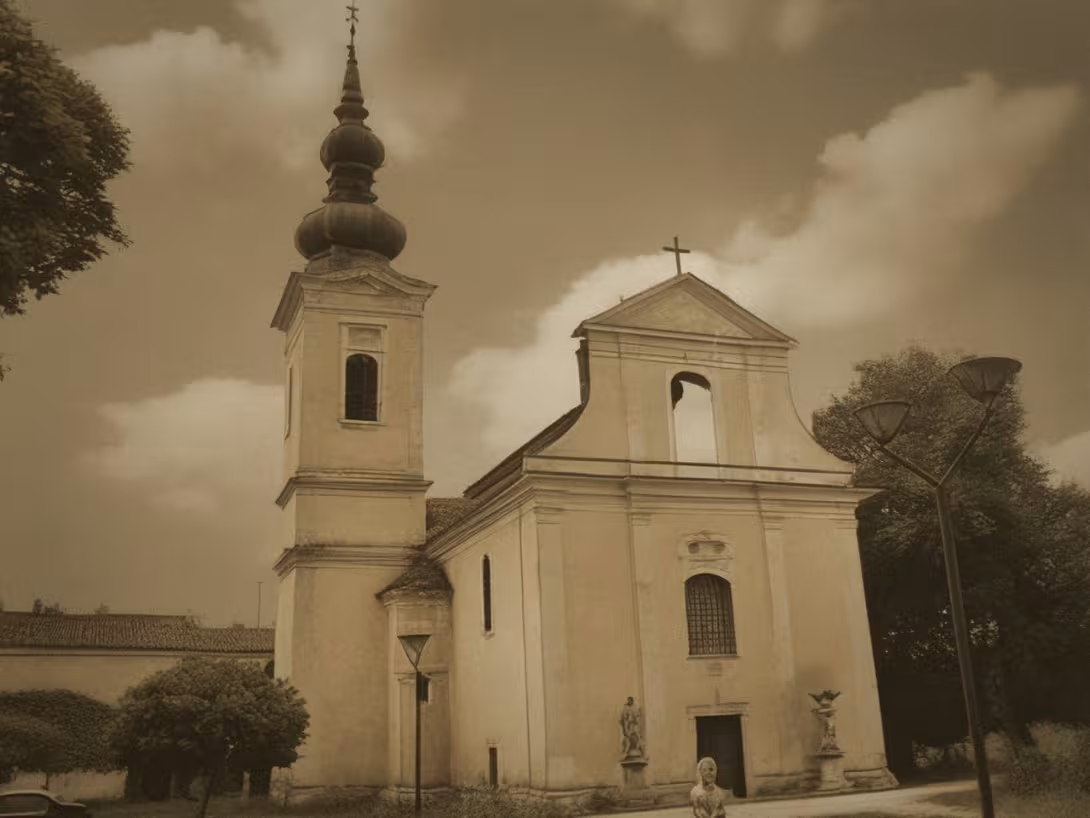
The historical appearance on the left is an AI-generated visualisation and serves as inspiration only.
Historical milestones
- c. 1240
- First mention of the church in a record for the Tišnov Monastery.
- 1686
- Construction of an early Baroque church on the site of a previous smaller church.
- 1780–1786
- Building of the current late Baroque Church of Saint Lawrence.
- 1853
- Addition of the Chapel of the Holy Sepulchre to the church.
- 1788
- Creation of interior elements such as the pulpit and baptismal font.
Architectural development
The Church of Saint Lawrence underwent significant architectural changes over centuries. Initially, a small church built after 1200 was replaced by an early Baroque structure around 1686. This building was later substituted by the current late Baroque church in the late 18th century, maintaining the north-south orientation. The tower from the earlier church was preserved with modifications to its bell stage. Further developments included the addition of a chapel and oratory in the 19th century.
Historical events
The first church in Hodonín, likely located in the northern part of today's square, was probably established after 1200 and mentioned in 1240 in a charter for the Tišnov convent.
A small church was replaced by an early Baroque church oriented north-south around 1686 during the Oppersdorf family's tenure.
In 1853, a chapel of the Holy Sepulchre was added to the tower base.
Points of interest
- The Church of Saint Lawrence's tower originally belonged to the early Baroque structure built in 1686 and was preserved with modifications when the current late Baroque church was constructed. This architectural continuity highlights the blending of different historical periods within a single monument.
- A unique feature of the church is its chapel of the Holy Sepulchre, added in 1853, which enriches the religious narrative by providing a dedicated space for commemorating the Passion of Christ, reflecting the evolving devotional practices over time.
- The main altar's neoclassical retable, created in 1841 and depicting Saint Lawrence, contrasts with the church’s late Baroque style. This stylistic juxtaposition illustrates the transition from Baroque to Neoclassicism within ecclesiastical art during that period.
- In 2016, the church received a new façade as part of its ongoing preservation efforts. This restoration not only maintained its historical integrity but also revitalized its appearance for contemporary visitors, blending past and present aesthetics.
- The interior includes a pulpit and baptismal font dating back to 1788, which have survived through centuries of change. These elements serve as tangible links to the church's origins in the late 18th century, offering insights into the liturgical practices of that era.
Guide
This guide is narrated by a synthetic voice generated by artificial intelligence.
Show guide text
This text was created by artificial intelligence and has not been editorially reviewed. It may contain inaccuracies.
The Church of Saint Lawrence stands in the middle of Masaryk Square in the centre of Hodonín. It is a Roman Catholic parish church of the Hodonín parish and is protected as a cultural monument. The present late Baroque structure was built between 1780 and 1786, but the church has a much longer tradition here.
The first Hodonín church was probably built after 1200 and apparently stood in the northern part of today's square. It is first mentioned in 1240 in a charter for the women's convent in Tišnov. This small church eventually became too small, and so it was replaced by an early Baroque building. That was probably built around 1686 during the rule of the Oppersdorf family. A hundred years later came another reconstruction. The new late Baroque church retained the previous north-south orientation and kept the bell tower from the older building. Only the bell chamber was modified.
Later changes were minor. In 1853, a chapel of the Holy Sepulchre was built in the vestibule. In the second half of the 19th century, the sacristy was renovated and an oratory was added above it. The last major restoration took place at the beginning of the 1990s and in 2016 the church received a new facade.
The church is single-naved and is not traditionally oriented to the east. Its axis runs from south to north. The main entrance is on the south facade, which is crowned by a triangular gable. The rectangular nave is closed by a chancel with a segmental vault. A bell tower and sacristy with an oratory above are attached to the east side of the nave. The facades are divided by pilasters, which are vertical flat strips in the masonry. The nave and chancel have barrel vaults, the sacristy and vestibule have a barrel vault, and the oratory has a flat ceiling. The vestibule opens into the nave through a semicircular arch. In the southern part of the nave is a gallery, whose parapet is supported by pillars.
The main altar has a classical retable with a painting of Saint Lawrence from 1841. It is complemented by three marble side altars from the 1920s. The pulpit and baptismal font date from 1788. In the bell chamber hangs a bell decorated with reliefs, cast in 1640, and in the bell tower lantern there is a Memento Mori from 1714.
Tips for visitors
The best time to visit the Church of Saint Lawrence in Hodonín is during late spring or early autumn, when the weather is pleasant for walking around Masaryk Square and exploring nearby areas. These seasons offer mild temperatures and typically less crowded conditions compared to summer, allowing you to fully appreciate the church's architectural details without the rush. Additionally, visiting on a weekday can provide a quieter experience as opposed to weekends which might be busier with both locals and tourists.
For the most current schedules and routes, use a transportation search tool online. This flexibility in transportation ensures that visitors have multiple ways to arrive at this historical site.
When visiting the Church of Saint Lawrence, it's recommended to bring comfortable walking shoes as you might want to explore the surrounding area or take leisurely walks around Masaryk Square. Additionally, carrying a camera is advisable for capturing the church’s late Baroque architecture and the serene atmosphere of the square. If you plan on spending several hours at the site, consider bringing water and perhaps a light snack to stay refreshed.
For photography enthusiasts, the best spots to capture the Church of Saint Lawrence are from different angles around Masaryk Square, especially during the golden hour in the early morning or late afternoon when the sunlight enhances the building's architectural features. The soft lighting at these times can add depth and warmth to your photos, highlighting the intricate details of the church’s facade.
Nearby attractions within a 30-minute drive from Hodonín include the historic town of Břeclav, known for its charming Old Town Square and the nearby Danube River. Another option is visiting the picturesque village of Valtice, which boasts an impressive castle with beautiful gardens. These locations offer additional cultural experiences and scenic views that complement your visit to the Church of Saint Lawrence.
Frequently asked questions
Can the monument be visited?
Religious buildings are usually open mainly during services; at other times a visit is normally arranged with the parish or the operator. We have not verified specific times.
Where is the monument?
Location: Hodonín, Jihomoravský kraj. The map on this page shows the exact spot.
Why is the monument protected?
It is listed in the Central List of Cultural Monuments of the Czech Republic as a cultural monument (register no. 17465/7-2218).
Businesses nearby
Do you run a restaurant, accommodation, shop, museum, rental, wellness or other visitor service near this monument? Show yourself directly to the people heading to it — this is how they will see you in the app and on the web:
Events nearby
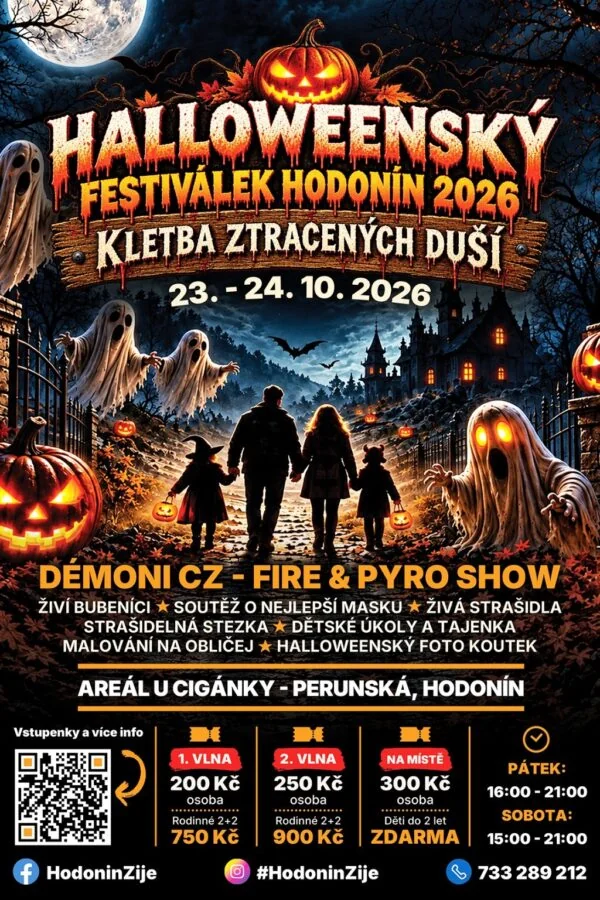
Zdroj akcí: otevřená data měst a obcí ČR (Národní katalog otevřených dat) a kalendář akcí Národního památkového ústavu.
Accommodation nearby
Themed route
Thematic Walking Tour: Hodonín and its Surroundings
1. Kostel svatého Vavřince (Hodonín) - Church Begin your journey at the heart of Hodonín with the stunning Kostel svatého Vavřince. This church is renowned for its beautiful architecture, featuring elements from various historical periods that reflect the rich cultural tapestry of the region. Its impressive tower offers panoramic views of Hodonín and beyond, making it a must-visit for both history enthusiasts and those seeking breathtaking vistas.
2. Městský dům (Hodonín) - Town Hall Just a short walk from the church, visit the historic Městský dům. This town hall is an architectural gem with its classic design that has stood as a central point of governance and community life in Hodonín for centuries. The building's intricate details and historical significance provide insight into the civic history of this charming Moravian town.
3. Náměstí Republiky (Hodonín) - Town Square Continue to explore by strolling through Náměstí Republiky, the vibrant heart of Hodonín. This bustling square is surrounded by picturesque buildings and serves as a lively gathering place for locals and visitors alike. It's an ideal spot to experience the local culture, enjoy street performances, or simply relax in one of the nearby cafes.
4. Muzeum vodního stavu (Hodonín) - Water Management Museum Conclude your tour with a visit to the unique Muzeum vodního stavu. This museum offers fascinating insights into the history and technology of water management in the region, highlighting its importance to agriculture and daily life in Hodonín. The exhibits provide an educational experience that connects visitors with the area's environmental heritage.
This thematic tour provides a comprehensive exploration of Hodonín’s cultural and historical highlights, offering both architectural beauty and insightful narratives about this captivating part of Moravia.
Seasonal recommendations
Spring: Visiting the Church of Saint Lawrence in Hodonín during spring offers a unique experience as nature begins to awaken around this historic site. The lush greenery and blooming flowers create a picturesque backdrop, enhancing the church's architectural beauty with vibrant colors and fresh scents. This season provides an opportunity for pleasant walks through the surrounding parkland before or after your visit. As the weather can be unpredictable, layering is advisable; bring a light jacket to stay comfortable during cooler mornings or evenings. Although it’s less crowded than in summer, arriving early ensures you have ample time to explore without feeling rushed.
Summer: The Church of Saint Lawrence shines under the bright summer sun, with its stone façade reflecting the warmth and inviting visitors to bask in the long daylight hours. This is an ideal time for those who enjoy exploring historical sites when nature is at its peak vibrancy. However, be prepared for larger crowds as this is a popular season for tourism. To make the most of your visit, consider arriving early in the morning or later in the afternoon to avoid the midday heat and throngs of tourists. Comfortable walking shoes and light clothing are recommended, along with sunscreen and a hat to protect against the sun.
Autumn: Autumn transforms the Church of Saint Lawrence into a serene haven, as the surrounding landscape is painted with warm hues of reds, oranges, and yellows. The crisp air and gentle rustling of leaves create a tranquil atmosphere perfect for reflection and appreciation of the site's historical significance. This season offers fewer visitors compared to summer, allowing for a more intimate experience. Dress in layers to accommodate the cooler temperatures, and consider bringing an umbrella or raincoat as autumn weather can be unpredictable with occasional showers.
Winter: The Church of Saint Lawrence takes on a mystical quality during winter, when snow blankets the landscape and soft light filters through frosted windows. This season offers a quiet and contemplative atmosphere, ideal for those seeking solitude amidst historical beauty. However, shorter daylight hours mean planning your visit carefully to make the most of the available time. Ensure you dress warmly in layers, with a coat, hat, gloves, and scarf, as temperatures can be quite cold. Keep in mind that some facilities may have reduced opening times during this season.
Visualizations and artistic views


The visualisations are generated by artificial intelligence and serve as inspiration.
Photos from the area
Real photos taken near the monument

Zdroj a licence jsou uvedeny u každého snímku.
Tips from visitors
No tips yet. Be the first!
Log in and add your tip.
Sources and literature
Photos: Palickap / CC BY-SA 4.0, rozlišení zvýšeno umělou inteligencí — Wikimedia Commons. The author and licence also appear when you hover over the image.
Faktickým podkladem tohoto textu byl článek na Wikipedii, jehož autory jsou přispěvatelé Wikipedie. Článek je dostupný pod licencí CC BY-SA 4.0.
Location on the map



Příběhy a pověsti
Legendy, pověsti a příběhy spjaté s touto památkou

Fotografie návštěvníků
Zatím žádné fotografie. Buďte první, kdo přidá fotografii z návštěvy!
Log in a přidejte svou fotografii nebo hodnoťte.
Za ověřenou návštěvu v aplikaci získáte víc bodů — poznáme podle GPS, že jste na místě.
Reviews and comments