



Kostel svatého Vavřince (Hořetice) Church
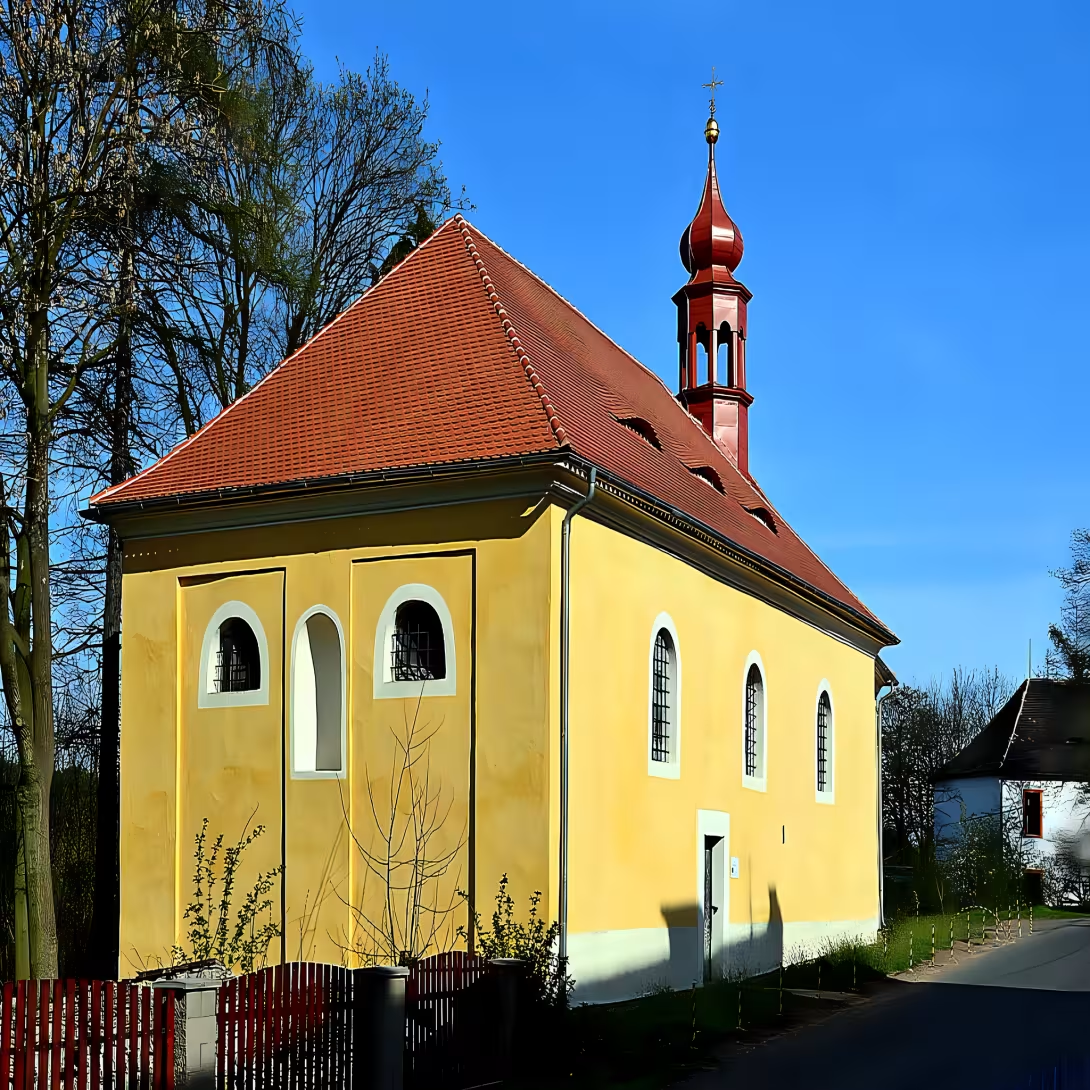
The Church of St. Vavrnice in Horítice is an interesting example of Gothic architecture in Lounsk and Podbořanska, protected as a cultural monument of the Czech Republic. The construction can be included in the early Gothic period of the last quarter of the 13th and first quarter of the 14th century. The first written mention of the church dates back to 1356.
The Middle Ages also brought their peripherals to Hořetice. During Hussite wars, the church had its priest - in 1387 Jeklín served here, in 1412 Jan and in 1430 Peter from Žatka. But after the 30-year war, he suffered severe decline. He lost his parochial status and became only a filial church, gradually connected to various parishes - Žatci, Highlands, Minice and finally to Stranné. It was only in 1810 that he was granted his own spiritual administrator, and in 1856 he was repromoted to parish church. Josef Seemann was the first newly appointed priest.
A significant break in the architecture of the church brought family ownership of Michnů. In 1628 Hořetice bought Pavel Michna from Vacín and his descendants owned the village until 1772. It was during their reign, namely in 1689, that the church was radically rebuilt. The ship was extended west, Gothic windows replaced by semi-circular, and the main entrance moved from north to south. These interventions transformed the appearance of the temple, but its early Gothic core - the circumferential masonry of the presbytery and the eastern part of the ship - has been preserved until today.
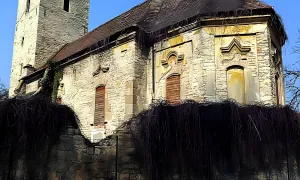
The building appearance of the church reflects its long history. It is a single-boat building with a detached square presbytery, which with its floor plan ranks among early Gothic churches similar to those in Bushkovice, Břešně and Vrbna nad Lesy. The ship reaches a length of less than 17 metres and a width of 7,5 metres, the presbytery measures less than 6 meters on the side. There's a rectangular portal from the south. The presbytery lights up one window on the south side while the ship has three arc windows on both sides. The whole building is filled with valb roof. On the northeast side of the ship stands the pillar of support.
The 20th century was not favourable to the church. After World War II, he quickly began to decay. In the 1970s, sacristy, south hall and cemetery wall were removed. In the second half of the 1980s, he even made it to the demolition sites. It was political change that brought him salvation after 1989. In 2013, the walls, roof and facade were fixed. The interior remains unrepaired and no original equipment in the church has been preserved.
In the vicinity of the church there is the rectory No. 9 from 1908 - Art Nouveau one-storey building which complements the parish area. At the rectory stood a statue of St. John Nepomuk from the period around 1720, which they carried to the Church of the Mother of God in Louny in the 1970s. After so many building changes, the Horetic church retains its Gothic face and reminds of the thousands of years of the roots of Czech sacral architecture.
Then and now
Drag the slider to compare how the landmark may have looked when it was built with the view today.
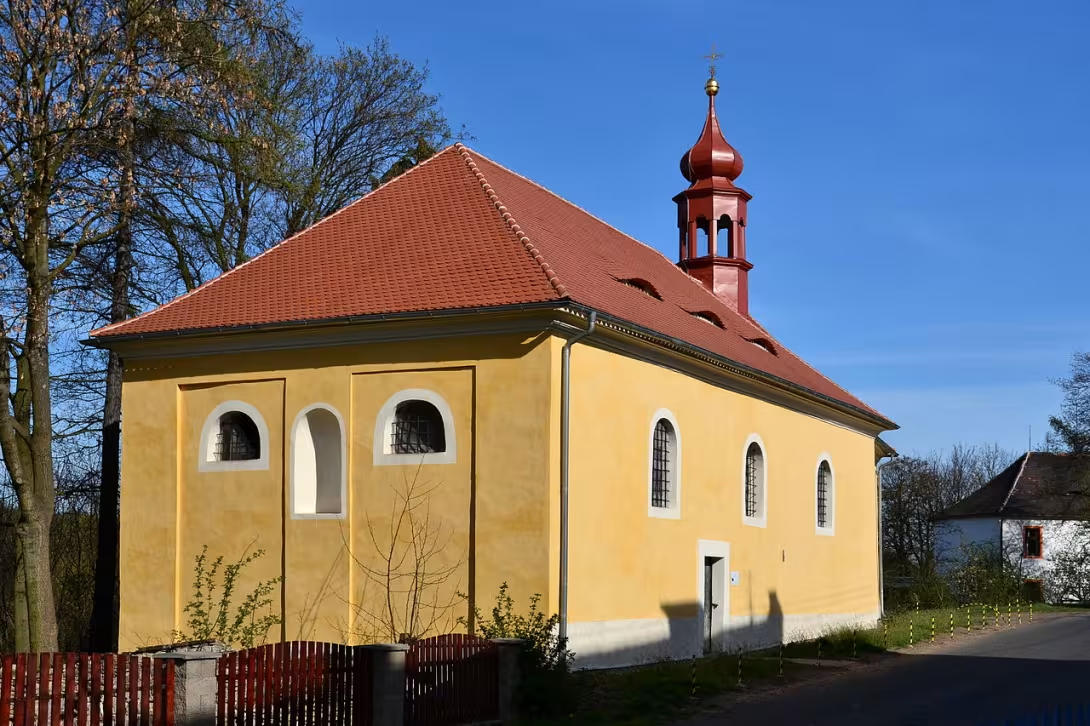

The historical appearance on the left is an AI-generated visualisation and serves as inspiration only.
Historical milestones
- 1356
- First written mention of the church, when the priest Smil was mentioned.
- 1689
- Baroque reconstruction of the church, extension of the ship and change of disposition.
- 1810
- The church regained its own spiritual administrator.
- 2012-2013
- Static restoration and reconstruction of the church.
Architectural development
The original Gothic church with a rectangular boat and a square presbytery was rebuilt in 1689 when the boat was extended, the circle set up and the windows replaced by semicircular. The original Gothic form preserved the circumferential masonry of the presbytery and the eastern part of the ship. In the 16th century, the original Gothic vault was replaced by a vault in the presbytery. In the 20th century, sacristy and cemetery walls were demolished.
Historical events
- 1356
- The first written mention of the church, when the Knights of Horítice presented for vicar Smil.
- 1689
- Baroque reconstruction of the church to order Pavel Michna from Vacín.
- 2012-2013
- Reconstruction of the church after years of neglect.
Owners
- 1628-1772
Points of interest
- The church of St. Lawrence is an early Gothic building from the last quarter of the 13th and first quarter of the 14th century.
The first written mention of the church dates back to 1356.
- During the Hussite wars here in 1387, 1412 and 1430 they served as priests Jeklín, John and Peter of Žatka.
- After the Thirty Years War, the church lost its parochial status and became filial, until in 1810 it regained its own spiritual administrator.
- In 1689 the church was rebuilt by the Michnů family from Vacín, while the boat was extended and the layout of the entrance changed.
Guide
This guide is narrated by a synthetic voice generated by artificial intelligence.
Show guide text
This text was created by artificial intelligence and has not been editorially reviewed. It may contain inaccuracies.
The Church of Saint Lawrence in Hořetice is an originally Gothic structure, today protected as a cultural monument. According to its floor plan with a slightly rectangular nave and an offset square presbytery, it belongs among early Gothic churches, which on the Podbořansko and Lounsko regions also include churches in Buškovice, Běšno and Vrbno nad Lesy. It was likely built between the end of the thirteenth and the beginning of the fourteenth century. From that time, the perimeter masonry of the presbytery and the eastern part of the nave have been preserved.
The first written mention dates from the year 1356. At that time, the knights from Hořetice named Jarohněv, Pešek and Čáslav presented the priest Smila, who replaced the deceased Father Peter. From the period before the Hussite Wars, we know of other clergy as well. In the year 1387, it was Jeklín, who was in dispute with the priest Smila from Prostiboř, in 1412 it was Jan and in 1430 Peter from Žatec.
After the Thirty Years' War, the church ceased to be a parish church and became a filial one. It first belonged to Žatec, from the year 1683 to Vysočany, in the years 1751 to 1755 to Minice and then to Stranná. It acquired its own spiritual administrator in the year 1810 and became a parish church again in 1856. The first priest was Josef Seemann.
In the sixteenth century, a cross vault replaced the original Gothic vault of the presbytery. In 1628, Pavel Michna of Vacínov purchased Hořetice and his family held the village until the year 1772. During the time of the Michnas, in 1689, the church was reconstructed. The nave was extended to the west and a gallery was built at its end, which has not survived. The Gothic windows were replaced with semicircular ones and the entrance was moved from the north to the south.
The nave is nearly seventeen meters long and seven and a half meters wide, the side of the presbytery measures less than six meters. The nave with its timber ceiling is entered through a southern rectangular portal. The nave has three arched windows on each side, the presbytery has a single window on the south. The structure is covered with a hip roof.
After the Second World War, the church fell into disrepair. In the early seventies, the sacristy, the southern vestibule and the cemetery wall were dismantled. In the second half of the eighties, it was even designated for demolition, which was prevented only by the changes after 1989. In 2013, the walls were structurally secured and the roof and facade were repaired. The interior was not restored and no furnishings have been preserved.
Nearby stands an Art Nouveau single-storey rectory from 1908. Near it there used to be a statue of Saint John of Nepomuk from around 1720. In the seventies of the twentieth century it was moved to the Church of the Mother of God in Louny.
Tips for visitors
The best time to visit the church of St. Lawrence is in the morning when the sun is low and illuminates the interior from one side. It creates pleasant light effects on Gothic elements such as broken windows or stone statues. If you want to avoid crowds, come here on Monday or Wednesday when the traffic is lower. In the summer months it is advisable to visit to choose time outside the main tourist days, for example Tuesday or Thursday.
It is recommended to use public transport where possible. The location is well accessible from the main roads, but find the current connection and departure times in the traffic search engine.
When visiting, wear comfortable clothes and shoes, since the church is located in the historical part of the village and the path to it may not be equal. It's cold in the interior, so bring a light sweater or coat. Children can take small laptops or colour rings that can be filled during the tour. Do not forget the camera or mobile phone, but check in advance if photo is allowed.
The best places for shooting are mainly the entry portal with Gothic elements, broken windows and interior with baroque modifications. For quality images it is ideal to use natural light from window holes. In the interior avoid flashing of lightning to avoid damaging sensitive historical elements. The best time to take pictures is in the morning or afternoon when the light is softer.
It is worth visiting the Art Nouveau rectory from 1908, located near the church. If you have time, go to the Louns, which are about five kilometers from the Horace. There is the Church of Mother of God, which is another interesting historical place. It is also advisable for families with children to visit the local playground or walk around the surrounding forests and fields where children can enjoy and exhale.
For families with children, a visit to the church of St. Lawrence is interesting because of its historical importance and the possibility to explore Gothic architecture. Children can talk about the legends associated with the church, such as its original purpose or the events that took place here. It is interesting for children of older age to compare Gothic elements with baroque adjustments that the church has passed. You can also play a game of detectives and try to discover the differences between the original and newer parts of the church.
Frequently asked questions
Can the monument be visited?
Religious buildings are usually open mainly during services; at other times a visit is normally arranged with the parish or the operator. We have not verified specific times. According to the heritage register restoration is under way, so access may be restricted.
Where is the monument?
Location: Hořetice, Ústecký kraj. The map on this page shows the exact spot.
Why is the monument protected?
It is listed in the Central List of Cultural Monuments of the Czech Republic as a cultural monument (register no. 43280/5-1521).
For kids
Imagine coming back 676 years, until the church of St. Lawrence was still standing. When only a few people lived here and the surrounding forest was full of secrets.
It was like a game where the heroes were looking for treasure. At that time, this area was full of rivers and ponds where fishermen were fishing and catching fish. Who lived here? They were people who fed on agriculture, pasture and trade. They were people who enjoyed their lives and hoped for a better future.
Businesses nearby
Do you run a restaurant, accommodation, shop, museum, rental, wellness or other visitor service near this monument? Show yourself directly to the people heading to it — this is how they will see you in the app and on the web:
Events nearby

Zdroj akcí: otevřená data měst a obcí ČR (Národní katalog otevřených dat) a kalendář akcí Národního památkového ústavu.
Accommodation nearby
Themed route
Thematic cruise route around the Church of St. Lawrence in Hořítice
1.Kostel svatého Vavřince (Hořetice) - * Type: * Church - * Why is it worth visiting: * This historical church is not only the spiritual centre of the village, but also an architectural pearl with a rich history. Its views and interior offer a view of the past and artistic value of the region.
2. Fara (Hořetice) - * Type: * Art Nouveau single storey building - * Why is it worth visiting: * Built in 1908, the rectory is an example of Art Nouveau architecture. Its proximity to the church of St. Vavrnice allows you to understand the historical and cultural context of the area.
3. Church of the Mother of God (Louny) - * Type: * Church - * Why is it worth a visit: * This church, located within 5 km from Horátice, is another important religious and historical place. Its architecture and location in Louny brings another dimension to understanding regional cultural heritage.
This route offers travelers the opportunity to explore the rich religious and architectural monuments around Horátice, focusing on the main historical sites of the given territory.
Seasonal recommendations
Spring In the spring months, the church of St. Vavrnice is surrounded by blooming nature when meadows with first flowers and young tree leaves spread around it. The light of the sun, which is reflected from stone walls, gives the monument a gentle, golden touch, while the warm wind brings the scent of wet earth. The atmosphere is quiet, almost meditative, because there are still no summer crowds of tourists around. It is an ideal time for photography, when the church manifests itself in full beauty without disturbing shadows. It is recommended to visit it early in the morning or in the afternoon when light falls slightly and creates harmonious images. Clothes should be easy, but with the possibility of covering - spring weather is variable, and rain can come unexpectedly. Due to the reconstruction, it is advisable to check in advance whether the church is accessible because some parts may be closed for now.
Summer In the summer months, especially in the high season, the church of St. Vavránek is gaining its life as it becomes a popular destination for tourists from around and abroad. The sun shines intensively here, so it is advisable to visit the memory early in the morning to avoid direct sunlight and crowds starting to gather from late morning. Warm days and bright skies create sharp shadows that highlight the architectural details of the church, but also make photography difficult. It is recommended to wear light, breathable clothes, hat and sunglasses, and not forget enough water. Due to the reconstruction, some rooms may be inaccessible, so it is good to inform you in advance about restrictions. The evening visit is pleasant when the heat retreats and the church is surrounded by a slight twilight.
Autumn Autumn brings golden and red colors to the Horace Church of St. Lawrence, which are reflected in the windows of the church and create contrast with its dark stone walls. The colder air and quieter atmosphere give the memory a more mysterious, almost fairy tale, especially in November, when leaves begin to accumulate on the ground. Light is softer than summer, which is ideal for detailed photos. It is recommended to visit the church in the morning when the air is clean and warm. Clothes should be warmer than in summer, but still comfortable - autumn weather changes rapidly, and rain can be a frequent guest. Due to the reconstruction, it is advisable to check that some parts of the church are closed as some work may continue at this time.
Winter The winter visit to the church of St. Lawrence is a unique experience, as the snow blanket and the freezing air create a magical atmosphere that emphasizes its historical nature. The church appears to be redeemed from past times, surrounded by a white landscape, while the ice crusts on the windows supply the interior with mysterious shine. The light is weaker and therefore it is advisable to visit the memory in the afternoon, when the sun is reflected from snow and creates fine shadows. It is recommended that warm, layered clothes that protect against cold, and solid shoes, as the paths can be slippery. In advent time the surroundings can be decorated with candles and Christmas motifs, which adds even more magic to the visit.
Visualizations and artistic views


The visualisations are generated by artificial intelligence and serve as inspiration.
Photos from the area
Real photos taken near the monument


Zdroj a licence jsou uvedeny u každého snímku.
Atmosphere of the place
This atmospheric visualisation of the place and period was generated by artificial intelligence. It is not real footage of the location.
Tips from visitors
No tips yet. Be the first!
Log in and add your tip.
Sources and literature
Photos: Petr Kinšt / CC BY-SA 4.0, rozlišení zvýšeno umělou inteligencí — Wikimedia Commons. The author and licence also appear when you hover over the image.
Faktickým podkladem tohoto textu byl článek na Wikipedii, jehož autory jsou přispěvatelé Wikipedie. Článek je dostupný pod licencí CC BY-SA 4.0.
Location on the map
Příběhy a pověsti
Legendy, pověsti a příběhy spjaté s touto památkou
Fotografie návštěvníků
Zatím žádné fotografie. Buďte první, kdo přidá fotografii z návštěvy!
Log in a přidejte svou fotografii nebo hodnoťte.
Za ověřenou návštěvu v aplikaci získáte víc bodů — poznáme podle GPS, že jste na místě.
Reviews and comments