



kostel svatého Vavřince (Horní Bojanovice) Church
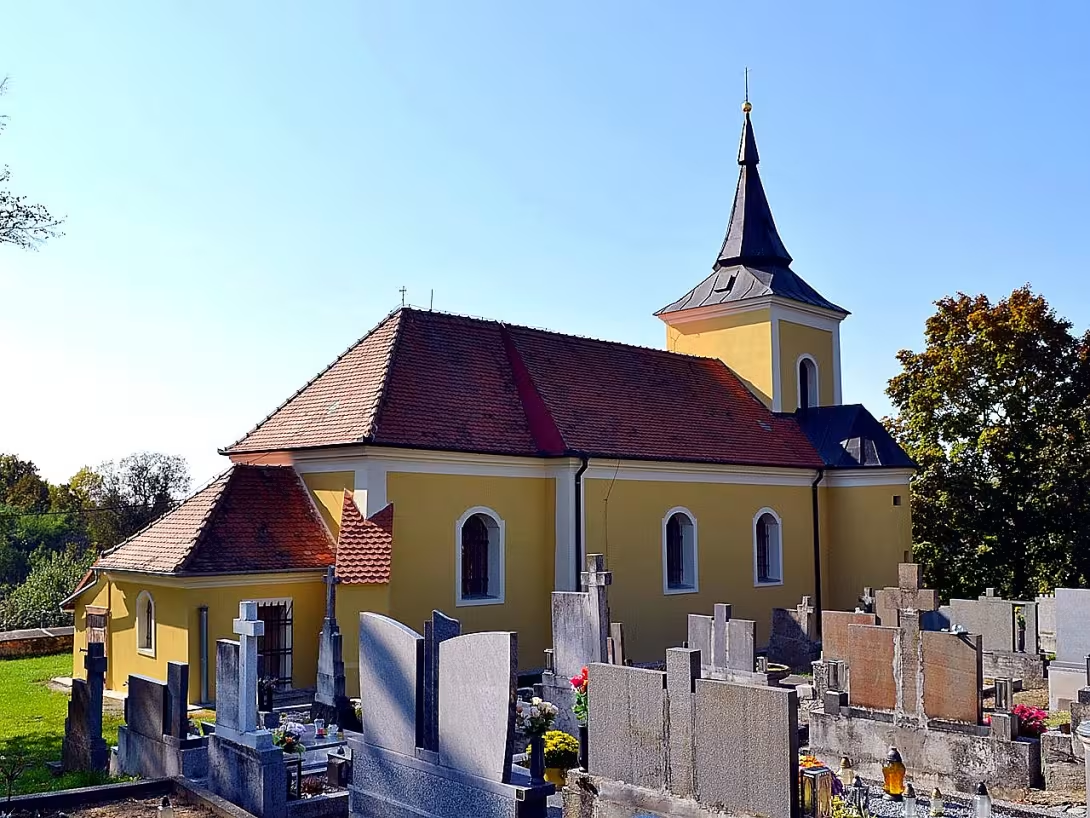
The church of St. Vavrnice is the parish temple of the parish Horní Bojanovice in the district of Břeclav and is one of the protected cultural monuments of the Czech Republic. The construction kept a record of several building modifications which gradually shaped its present appearance.
The temple grows from Gothic roots - its oldest layer is the original Gothic core. Today the visible form of the building dates back to the end of the 16th century, when the temple was subjected to an extensive reconstruction. In 1792, a new cycle of building modifications followed: an entrance unit with a tower was added, a staircase cylinder was built in the sacristy and new windows were broken. At the same time, the original entrance was walled - changes that changed the passage into the temple and its lighting.
The most valuable equipment belongs to the bells in the bell tower. The bell of St. Vavřinec, according to which the temple bears its name, dates back to 1562 and reaches 105 centimeters. An even older bell from 1504 was preserved with characteristic decoration - the relief of the Virgin Mary with Jesus украuje his coat. The height is 85 centimeters. Both bells are an immediate witness to the medieval bell trade and long-term life of the temple.
There are other valuable items in the interior. The Renaissance tombstone of the township Michal Wahilaba from Vizovice from 1603 is placed in the wall under the crust. Outside the temple, although it is part of the cultural wealth of the site, there remains the Gothic Hornoboyanova Madonna - an exceptional sculpture that a visitor in the temple will not find.
Visiting the church reveals layers of Czech sacral history - from Gothic foundations to Renaissance adjustments to the 18th century. The bells speak the language of time: the older bell from 1504 and its younger sibling from 1562 are a link to the craft and piety of the past centuries. The Church of St. Lawrence remains a reminder of the architectural and artistic heritage of Upper Bojanovice.
Then and now
Drag the slider to compare how the landmark may have looked when it was built with the view today.
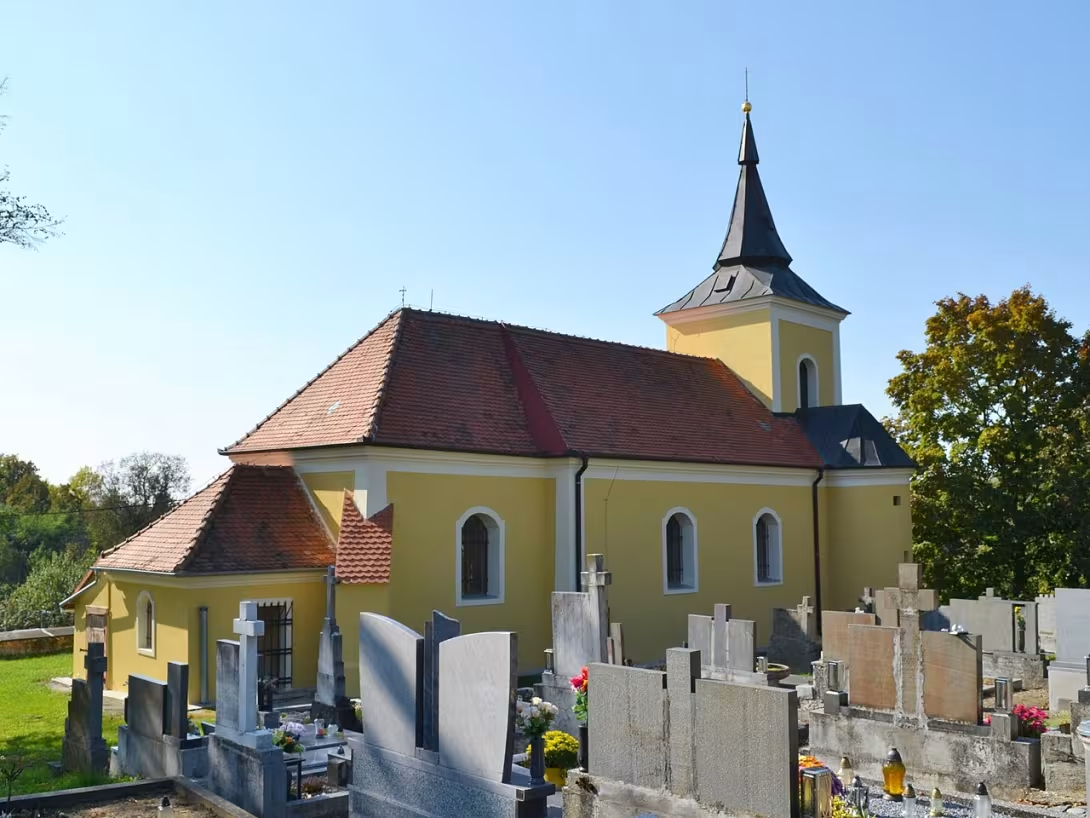
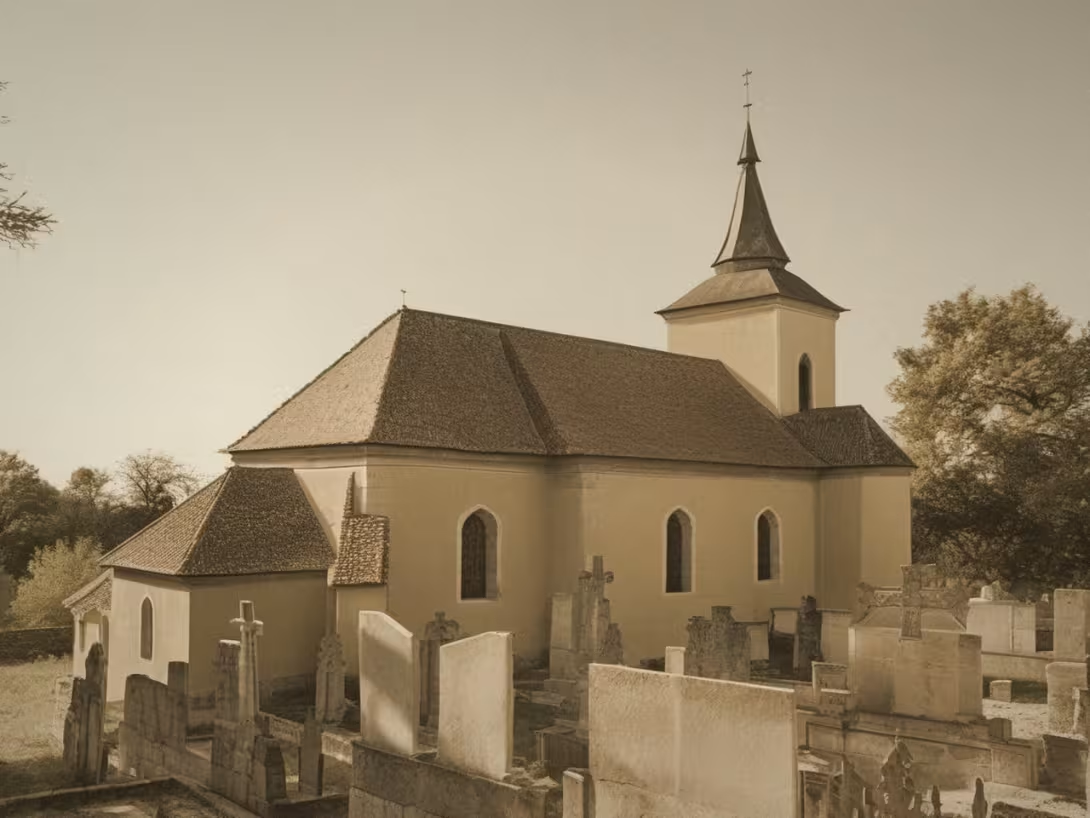
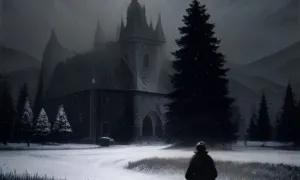
The historical appearance on the left is an AI-generated visualisation and serves as inspiration only.
Historical milestones
- After 1250
- The founding of the original Romanesque church as a parish temple.
- 1504
- The first bell with the relief of the Virgin Mary and Jesus.
- 1562
- The second bell, Saint Vincent.
- 1792
- Complete baroque modifications with the addition of tower and sacristy.
Architectural development
The original church was built as a one-ship Romanesque building with a floor plan from the period after the mid-13th century. In the 16th century it underwent a Renaissance reconstruction which affected its internal and external form. In the 18th century, Baroque modifications were made, including the addition of a tower and sacristy. The construction is made of stone and bricks, with typical elements of late Romanesque and Baroque style.
Historical events
- After 1250
- The creation of the original Romanesque core of the church, probably part of the early medieval parish.
- 16th Century
- Obtaining Renaissance features and installing historical bells from 1504 and 1562.
- 1792
- Adjust the entrance unit with tower and baroque modifications, including new windows and sacristy.
Points of interest
- The Church of St. Lawrence is a protected cultural monument of the Czech Republic.
- The oldest part of the temple is the Gothic core, while today's appearance comes from the reconstruction of the late 16th century.
- In 1792 an entrance tower was built, a staircase cylinder was built in the sacristy and new windows were broken.
- The bell of St. Vavřinec from 1562 and the bell of 1504 with the relief of the Virgin Mary are the most valuable equipment of the temple.
- In the interior is bet Renaissance tombstone of the township Michal Wahilaba from Vizovice from 1603.
Guide
This guide is narrated by a synthetic voice generated by artificial intelligence.
Show guide text
This text was created by artificial intelligence and has not been editorially reviewed. It may contain inaccuracies.
The Church of Saint Lawrence is a Roman Catholic parish church in Horní Bojannovice in the Břeclav district. It is protected as a cultural monument of the Czech Republic.
The building underwent several modifications. Its core is still Gothic, but the church acquired its present appearance at the end of the sixteenth century. Another major reconstruction came in seventeen ninety-two. At that time, an entrance structure with a tower and a sacristy were added to the church, and a cylindrical staircase was created. New windows were cut into the walls and the original entrance was sealed up.
The bells that have been preserved in the bell tower from the Renaissance period deserve attention. The bell dedicated to Saint Lawrence dates from fifteen sixty-two and measures one hundred and five centimetres in height. The second bell is even older, from fifteen oh-four. It is eighty-five centimetres high and its surface is decorated with a relief of the Virgin Mary with the Christ Child.
A Renaissance tombstone from sixteen oh-three is set into the wall below the gallery. It belongs to the townsman Michael Wahilab from Vizovice.
Another precious monument is also connected with the village, the Gothic Hornobojanovická Madonna. However, it is not located in the church.
Tips for visitors
The best time to visit the church of St. Lawrence is during the spring and summer months when the outdoor environment is pleasant and sunlight creates ideal conditions for the tour. In summer there are often religious services and cultural events that can enrich the visit.
It is recommended to arrive by car because public transport to the village is not very common. Find out the current connection and departure times in the traffic search engine.
When visiting, wear comfortable clothes and shoes because the church and its surroundings offer different terrain. In the summer months, bring sunglasses and sunscreen, because there is little shade around the church. It is advisable for children to take something to think about or paint because the church offers space for peaceful reflection.
Photography is allowed, but always respect the peace and sanctity of the place. The best places for photos are the exterior facade of the church, which is rich in historical details, and the interior at daylight, which shows the beauty of the original elements. The best time for photography is in the morning or in the afternoon when the light is not too strong.
In the vicinity of the church it is worth visiting Castle Horní Bojanovice, which is located about a kilometer from the church.
For families with children it is advisable to visit the church at a time when services or cultural events are being held that children can take. Castle Horní Bojanovice can be interesting for children due to its historical character and possibilities of exploration.
Frequently asked questions
Can the monument be visited?
Religious buildings are usually open mainly during services; at other times a visit is normally arranged with the parish or the operator. We have not verified specific times.
Where is the monument?
Location: Horní Bojanovice, Jihomoravský kraj. The map on this page shows the exact spot.
Why is the monument protected?
It is listed in the Central List of Cultural Monuments of the Czech Republic as a cultural monument (register no. 25402/7-1249).
For kids
Imagine going back to when Horní Bojanovice was a small village mansion. The church of St. Vavrnice stood in the middle of the village and was the center of all social activity.
There were people living here who lived off land and agriculture. It was the country peasants who gathered in the church hall on services and on holiday. And that's when the church of St. Lawrence stood as a cultural and religious centre in the village.
Businesses nearby
Do you run a restaurant, accommodation, shop, museum, rental, wellness or other visitor service near this monument? Show yourself directly to the people heading to it — this is how they will see you in the app and on the web:
Accommodation nearby
Themed route
Thematic cruise route: Baroque and natural beauty Upper Bojanovic
1. Church of St. Lawrence * Type: Sacral landmark * A unique example of Baroque architecture with rich decoration, built in the 18th century. In the interior, frescoes and altar paintings reflect the spiritual and artistic value of the region.
2. Castle Horní Bojanovice * Type: Renaissance residence * It lies only about a mile from the church and offers a view of the historical residence with the park. Its original form dates back to the 16th century, later modified in Baroque style.
3. Natural Reservation Certova Mill * Type: Protected area * Located about three kilometers from the village and is an ideal place for walking between old trees and a damp meadow. Reservation is home to rare plants and birds, ideal for nature lovers.
* The route combines cultural heritage with natural wealth, with all stops connected by short paths. *
Seasonal recommendations
Spring In the spring, the church of St. Lawrence in Upper Bojanovice is dressed in a green dress, where the surrounding meadows and forests flourish and the sun's rays penetrate through the bright crowns of trees. The morning and afternoon hours offer a calm atmosphere, while the noon sun creates warm, golden reflections on the stone walls of the church. The sound environment is also specific - the singing of birds and the noise of wind in tree crowns complements the quiet ringing from the church, which stretches far in the spring air. It is practically appropriate to visit the memory early in the morning when you avoid tourist groups starting to arrive in the afternoon. It is recommended that clothing suitable for variable weather - light jackets, sunglasses and comfortable shoes, as spring rains can leave mud on the road. The best time is between April and May, when nature is not overpopulated yet, but already offers the first flowers and green colors.
Summer In the summer months, the church of St. Lawrence will turn into a magnet for visitors who come here not only for its architectural beauty, but also for a pleasant sitting in its shadow. The warm sun days create hot reflections on the stone walls of the church, while in the shade of the lips and maple trees there is pleasant cooling. The evening lighting is also specific, when at sunset the church is dressed in soft, golden light, which emphasizes its silhouette against the darkening sky. It is practically best to come before noon to avoid the crowds that gather in the high summer season. Light, breathable clothes, a sun hat and plenty of water are recommended, because in the summer months the church area is often visited by families with children. The most suitable period is July and August, when the weather is the most stable, but a visit before 11 o'clock will ensure a quiet tour.
Autumn Autumn brings a rich palette of red, yellow and brown shades to the surroundings of the church of St. Lawrence, which are reflected in the windows of the church and create a unique atmosphere. The colder air and noise of leaves that roll along the way, provide a mysterious, almost fairy tale touch to the church. The lighting is also specific - the morning fog often covers the church in a silvery veil, while the afternoon sun illuminates it from the side, making its details look like carved into stone. It is practically advisable to visit the memory in the morning when the air is clean and the crowd is minimal. Warmer clothes are recommended - sweater or light jacket, because autumn weather is usually variable and the winds can be cold. The best period is September and October, when nature offers a rich variety of colors and the church looks as if it was completely immersed in the autumn magic.
Winter In the winter months, the church of St. Lawrence will turn into a peaceful shelter from the freezing outdoor weather, when its stone walls and high windows offer a cozy environment. The snow covers the surrounding landscape and creates a white carpet that reflects the light of the sun and the church lights from the outside with a soft silver shine. The specific environment is also quiet - without crowds of tourists and with a minimum of excitement, allowing a focused visit. In advent time, the church often becomes a place for Christmas concerts or services that add Christmas magic to the atmosphere. It is recommended that warm, laminated clothing, gloves and firm footwear, as the paths can be slippery. The most suitable period is December and January, when the church is surrounded by winter beauty and offers a calm, meditative atmosphere.
Visualizations and artistic views


The visualisations are generated by artificial intelligence and serve as inspiration.
Photos from the area
Real photos taken near the monument


Zdroj a licence jsou uvedeny u každého snímku.
Tips from visitors
No tips yet. Be the first!
Log in and add your tip.
Sources and literature
Photos: RomanM82 / CC BY-SA 4.0 — Wikimedia Commons. The author and licence also appear when you hover over the image.
Faktickým podkladem tohoto textu byl článek na Wikipedii, jehož autory jsou přispěvatelé Wikipedie. Článek je dostupný pod licencí CC BY-SA 4.0.
Location on the map


Příběhy a pověsti
Legendy, pověsti a příběhy spjaté s touto památkou
Fotografie návštěvníků
Zatím žádné fotografie. Buďte první, kdo přidá fotografii z návštěvy!
Log in a přidejte svou fotografii nebo hodnoťte.
Za ověřenou návštěvu v aplikaci získáte víc bodů — poznáme podle GPS, že jste na místě.
Reviews and comments