






Kostel svatého Vavřince (Vysoké Mýto-Město) Church
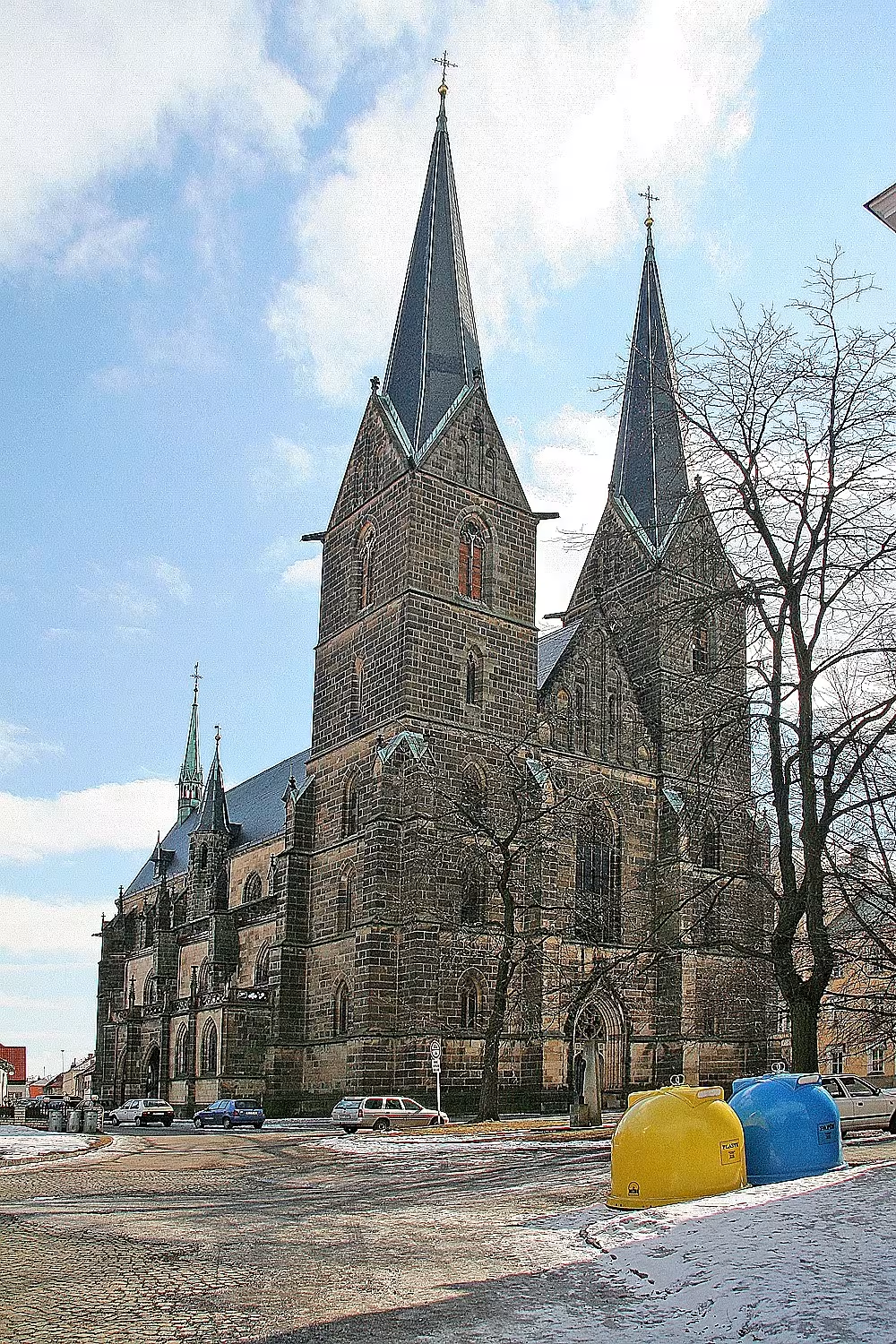
St. Lawrence Church in Vysoké Mýto- The city is the architectural peak of the Pardubice region of the Czech Republic. This late Gothic church, built of ground stone with two towers on the facade, was founded at the end of the 13th century. It has cultural heritage status due to its historical and architectural importance. From 1875 to 1904 she underwent regotization and introduced neo-gothic elements to replace the former Baroque vaults.
The origin of the church comes from late Gothic Bohemia, a period of cultural growth within the Holy Roman Empire despite political challenges. Its main construction was completed around 1375 after it was originally built at the end of the 13th century. In 1461 and 1774, she faced several reconstructions after the fires. Regitisation between 1875 and 1904, led by architects František Schmoranz, Josef Mocker, J. Podhájský and A. Živný, introduced new Gothic elements that replaced baroque vaults with neo-gothic ones.
the church is an architectural three-boat construction with a long arch supported by external butlets. On its south side, the sacristy adjunctions, consisting of three crucially arched bays. On the facade there are two towers and an open porch framed by a triangular shield between them. Inside, the ship is divided into three arched parts: the main and southern ships have cross vaults, while the northern ship has a star vault. The unique fresco decoration of the secesionist painter Karl Vítnezslav Maška covers all walls and ceilings. He is entrusted with Hermenegild Jirèek and his family, they are displayed on the walls in an unconventional way.
during his history, the church experienced various ownership and administrative changes during reconstruction and rebooking. The main altar is a painting of Peter Brandle from 1728, taken after a fire in 1774. This piece comes from the monastery Sedlec near Kutná Hora, dissolved by imperial decree in 1783.
Today, the church of St. Lawrence is open to visitors and remains a place of historical and architectural interest. Its rich history and unique artistic elements, such as the baptism of the scripture created by Master Ondřej Ptáček in 1499, are a valuable goal for interested people in Gothic architecture and Czech cultural heritage. Visitors are invited to explore this remarkable monument, which is proof of the historical resilience and artistic innovation of the region.
Then and now
Drag the slider to compare how the landmark may have looked when it was built with the view today.
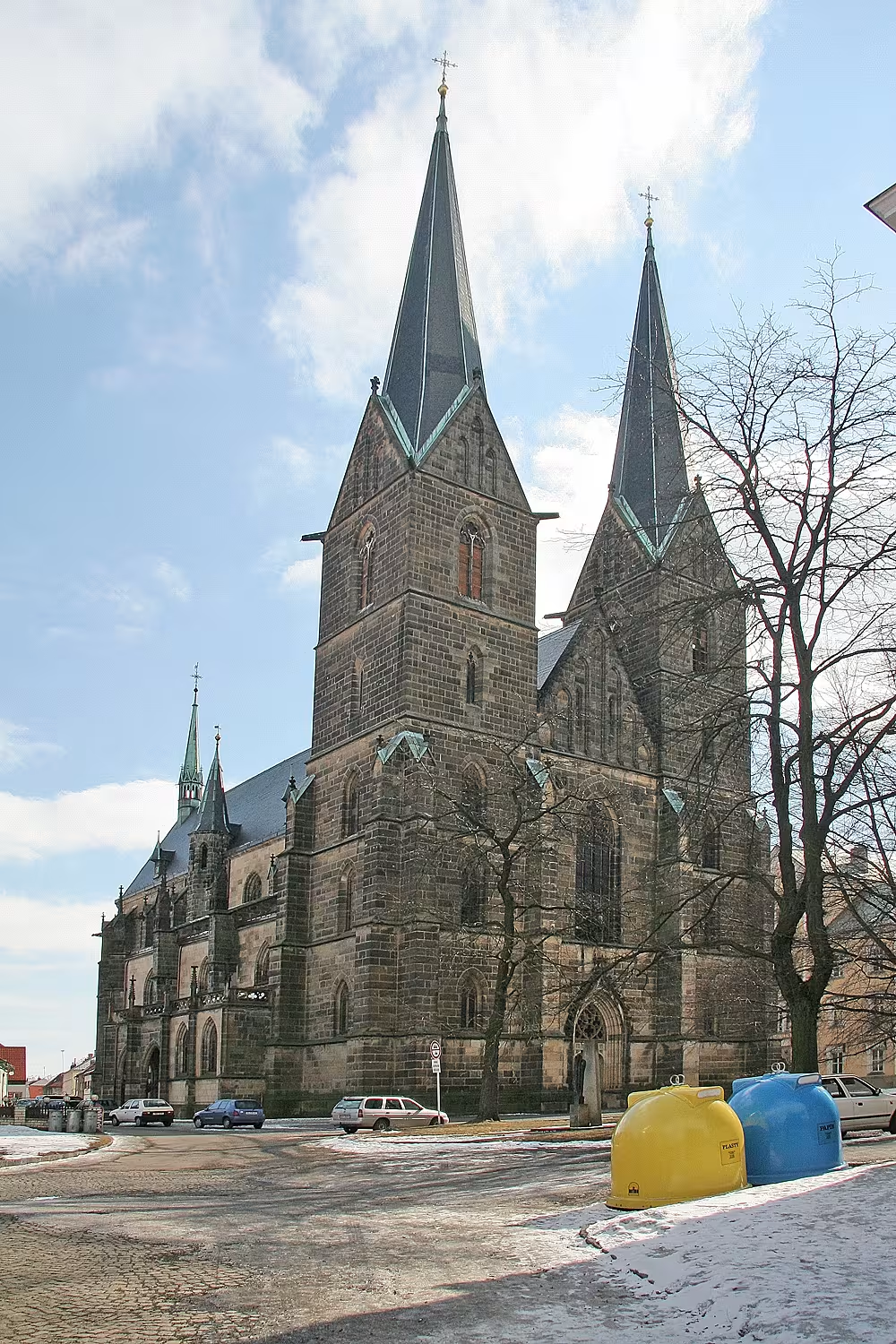

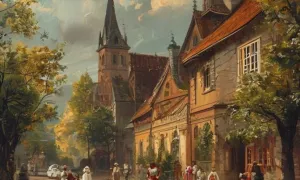
The historical appearance on the left is an AI-generated visualisation and serves as inspiration only.
Historical milestones
- 1461
- Rebuilding the main ship after the fire.
- 1774
- Buying the main altar with Brandl's painting after a big fire.
- 1875
- The beginning of the rebooking of architect František Schmoranz.
- 1892
- The process continued under Josef Mocker.
Architectural development
Initially built at the end of the 13th century, the church of the main construction was completed around 1375. In 1461 and 1774 there were several reconstructions after the fires. Regitization in 1875 to 1904 introduced new Gothic elements that replace baroque vaults with neo-gothic ones.
Historical events
The main ship was rebuilt after the fire in 1461.
Significant regotization took place between 1875 and 1904.
Points of interest
- The Church of Saint Lawrence underwent a major transformation during its regotisserization of the period 1875 to 1904 when it adopted neo-gothic elements that replaced the former Baroque vaults, reflecting architectural trends and tastes of the late 19th century.
- The unique fresco by the secesionist painter Karl Vítěslav Mašek will decorate all walls and ceilings inside the church. These frescoes were commissioned by Hermenegild Jirèek and his family, who are displayed on the walls in an unconventional way and add a personal touch to the historical monument.
- The main altar is a 1728 Peter Brandle painting that was taken after a devastating fire in 1774. This work originally came from the monastery Sedlec near Kutná Hora, which was dissolved after the imperial decree in 1783, adding layers of history to its present position.
The baptism of the church is a remarkable piece created by Master Ondrej Bird in 1499. This artifact highlights the skill and artistic heritage of late Gothic Bohemia, which makes it one of the historical treasures in St. Lawrence's Church.
- Although the church faced multiple reconstructions after fires in 1461 and 1774, it remained a resilient symbol of cultural and architectural importance. His ability to resist such disadvantages and continue as an interesting place shows the continuing legacy of Gothic architecture in the region.
Guide
This guide is narrated by a synthetic voice generated by artificial intelligence.
Show guide text
This text was created by artificial intelligence and has not been editorially reviewed. It may contain inaccuracies.
The Church of Saint Lawrence in Vysokém Mýtě is a three-naved late Gothic stone building with two towers on its façade. It is protected as a cultural monument of the Czech Republic.
At the site of an older church, a stone three-naved temple was built at the end of the thirteenth century. Its southern nave and tower have been preserved to this day. The largest part of the church was built around the year 1375 and was restored after a fire in 1461. After another major fire in 1774, the church acquired its main altar from a dissolved monastery in Sedlci u Kutné Hory.
Between 1875 and 1892, the church underwent extensive re-Gothicization under the direction of architect František Schmoranze. From 1892 to 1899, Josef Mocker led the work, and until 1904, Podhájský and Živný continued it. The Baroque vaults were then replaced with Neo-Gothic ones, and new interior furnishings were created. At the beginning of this century, between 2000 and 2005, the roofs were repaired.
The church has a long chancel ending with a five-sided apse with external buttresses. A sacristy adjoins it from the south side. Between the two towers on the façade is an open vestibule with a triangular gable, and within it a richly profiled Gothic portal. The main and southern naves have ribbed vaults, while the northern nave has a star vault. South of the church stands a massive Renaissance bell tower from 1583, which is no longer in use today.
The main altar is a work by Jäckel from the year 1700. It bears a large painting of the Assumption of the Virgin Mary, painted by Petr Brandl in 1728. The other altars are mostly Neo-Gothic. A valuable monument is a tin baptismal font on three legs with sculptures of bearded men and reliefs of apostles. It was made in 1499 by Master Ondřej Ptáček of Kutná Hora. In the northern chapel of Saint John the Baptist stands a polychromed statue of the Virgin Mary from the beginning of the sixteenth century, and there are also stone tombstones from the fourteenth to sixteenth centuries. The smaller bell, Lawrence, dates from 1466. The large bell, George, weighing 2080 kilograms, was obtained from a public collection in 2003.
A unique work of European significance is the Art Nouveau fresco decoration that covers all the walls and ceiling. Its author is the painter and interior architect Karel Vítězslav Mašek. The patron of the decoration was Hermenegild Jireček with his family. Therefore, the Jirečks are portrayed on the church wall, which goes against the rules of decoration, which is meant to serve the glorification of God.
Tips for visitors
The best time to visit the church of St. Lawrence in the High Town is at the end of spring or early autumn when the weather is pleasant, which allows a comfortable examination of its architectural details. These seasons also offer finer natural light, improving your experience as you admire the complex Gothic features and window stained glass. In addition, a visit outside the top tourist season can provide a calmer atmosphere that will allow you to appreciate the historical environment of the church without large crowds.
For those who prefer public transport, regional buses connect High Town with nearby cities and cities and make them accessible to visitors who prefer not to drive. It is advisable to check local transport websites or applications for the most common plans and routes.
When visiting the church of St. Lawrence, consider bringing comfortable walking shoes as you may wish to explore the surrounding city except the church itself. The camera is recommended to capture stunning architecture and details of the church, especially during the golden hour, when the light illuminates its facade beautifully. In addition, carrying a small umbrella or raincoat can be helpful when visiting during unpredictable spring or autumn weather.
For photographic enthusiasts, the best places to capture the church of St. Lawrence are from the front, where both towers provide an impressive background, and from side angles that highlight the church's three-nave structure. The morning light is ideal for shooting the facade while the late afternoon offers warm lighting on the inside details. Remember to observe any restrictions on the photograph inside the church.
Near attractions within a 30-minute drive include the historic town of Litomysl, famous for its Renaissance chateau and lively cultural events. Another option is a picturesque landscape around the High Town, ideal for short trips or peaceful walks in nature. These nearby places offer additional opportunities to explore the rich history and natural beauty of the Pardubice region.
For families with children, visiting St. Lawrence's Church can be an educational experience. Consider bringing a guide or download audio tour app that provides historical findings tailored for younger audiences. The city centre around the churches has cafes and small shops where families can relax and enjoy local entertainment after exploring the site.
Frequently asked questions
Can the monument be visited?
Religious buildings are usually open mainly during services; at other times a visit is normally arranged with the parish or the operator. We have not verified specific times.
Where is the monument?
Location: nám. Vaňorného, Vysoké Mýto-Město, Vysoké Mýto, Pardubický kraj. The map on this page shows the exact spot.
Why is the monument protected?
It is listed in the Central List of Cultural Monuments of the Czech Republic as a cultural monument (register no. 14570/6-4109).
Businesses nearby
Do you run a restaurant, accommodation, shop, museum, rental, wellness or other visitor service near this monument? Show yourself directly to the people heading to it — this is how they will see you in the app and on the web:
Nearby
ITEX Show interactive overview of the surroundings - restaurants, accommodation, rentals and other places within a 15 km radius.
Data: OpenStreetMap contributors, 15 km radius.
‡ Historical monuments
- Regional Museum (0.3 km)
- Monument of the guerrilla Bogdanova (6.5 km)
- Žižek's table - White Horse Fortress (10.0 km)
- ruin New Hrady (10.9 km)
- First Czech Cycling Museum (11.0 km)
- ruin Košumberk (11.7 km)
- Castle Upper Deer (11.9 km)
- Marian column (12.0 km)
Restaurant and catering
- Drusz (0.9 km)
- Restaurant Splla (7.3 km - Pernerova 80)
- Rest Münster (8.8 km - 1)
- Grand (11.9 km - Josef Haška Square 6)
- Fontánka (12.0 km)
- Chata Polanka (12.2 km)
- U Studios (13.4 km)
- Pub On the porch at Toulovce (13.8 km)
Accommodation
- Via Ironia (0.2 km)
- Under tower (0.2 km)
- Hotel Kobylka (0.3 km)
- Pension mill Jangelec (2.2 km - Kpt. Popera 180)
- Hotel Marilyn (6.5 km - Pernerova 355)
- Hotel Peliny (7.1 km - Tyršovo 298)
- Camping On Rural (10.8 km)
- Hotel Vienna (11.4 km)
› Rental and sports
- Cyclosport Bendl (0.2 km)
- Donocycl (0.3 km)
- FITNESS KINESIS s.r.o. (0.8 km - Vraclavská 175)
- Sportisimo (1.1 km)
- Karting Vysoke Myto (1.8 km)
- Automotive High Myto (1.9 km)
- Winter Stadium (6.3 km)
- Cyclosport KOLMO (7.0 km - Lower 286)
© Tourism and nature
- Buček kopec (1.9 km)
- Klapalka (10.2 km)
- Nedošín grove NS (11.0 km)
- InfoCenter Upper Deer (12.0 km)
- Black over Eagle (Zw.) (12.7 km)
- Chlum (12.9 km)
- Homole (13.2 km)
- Vlčkov (rozc., BUS) (13.5 km)
Accommodation nearby
Themed route
Thematic cruise route: Kostel svatého Vavřince (Vysoké Mýto-Město)
1. Church of St. Vavřice - Type: Historical church - Why it is worth it: St. Vavřice Church is the oldest sacral volume and represents an architectural pearl. His history dates back to 13. The amount of assigned revenue in accordance with Article 21 (3) of the Financial Regulation is estimated at EUR 5000000.
2. The Square of the Republic - Type: Historical mission - Proc stands behind the roof: The Republic Square is the heart of High Mita and offers a beautiful view of historic buildings, its own town hall. It is an ideal place to tame urban development, which is from beginning to present.
3. City Hall - Type: Historical Town Hall - The reason is worth fulfilling: This Baroque building, studied in the 18th century, is an icon of local administration and history. It eats elegant architecture and rich historical background it owns a fascinating cell for its own resources about urban life in small things.
4. Church of St. Gilji - Type: Historical church - Why is it worth fulfilling: St. George's Church, proportional in the 15th century, is another example of Gothic architecture in the municipalities. It is rich in history and art elements are made by an important system for the use of rich traditions in the region.
5. Memorial Winner - Type: Historical memorial - The cause is worth the difficulty: This monument, proportional to the celebration of Napoleon, is a symbolic goal and postponement. The Republic should be declared in the Square, which should be included in the scope for determining the conditions with the approval of the territory.
This route offers a comprehensive use of the history and culture of the High Měta prostednicí.
Seasonal recommendations
Spring: Vysoké Mýto-Město offers in the spring district one combined new revival mixture and a quiet atmosphere around St. Vavřice Church. Green folk wheels of trees and which produce a shrub of extracted goods that make up a historical church. This time of year is ideal for challenges that can be used without special heat or cold. Invitational in early spring cities, such as April and May, is supplied for the minimization of crowds, as the main tourist services that are uncompensated. Exceedance of all rights and obligations under the regulation for a smaller number of rights with the possibilities of transferring a case concerning rights of use.
Summer: Summer in Vysoké Město - Cities offer full days and sunny services that have ideal support for demanding Vavřinec. The sun brightens the church interior in living colours and creates it with historical beauty, which is an especially breathtaking sunny delayed clock. However, the main summer station goes to the time when the regulation was issued in order to determine that the aid is considered to be State aid within the meaning of Article 107 (1) of the Treaty. Wearing a light and light round is a click to use these summer days, along with a sufficient time and an omed sun.
Autumn: Autumn offers Vysoké Mýto-Město in excellent gold and red compensation, when tree leaves started falling. This season converting a quiet atmosphere around the Church of St. Vavřice, which has ideal circumstances for relaxing work without supplies from the crowd. Sunshine conditioning facts are perfect for Chadba all over and have to decompose while small temperatures make the proms possible.
Winter: In winter cities, the Church of St. Vavřice in the High Town offers a magical atmosphere with historical structures and facade of all worlds. A cool energy source can be used to increase energy consumption in a quiet and quiet environment. This time of year is ideal for those who seek rest from the summer crowd, with the possibility of storing a skeleton without many other rights. Warm rounded and secure shoes are persistent for the use of cold days, while short days characterized by planned formalities to allow a large number of verified interiors.
Visualizations and artistic views


The visualisations are generated by artificial intelligence and serve as inspiration.
Photos from the area
Real photos taken near the monument

Zdroj a licence jsou uvedeny u každého snímku.
Atmosphere of the place
This atmospheric visualisation of the place and period was generated by artificial intelligence. It is not real footage of the location.
Tips from visitors
No tips yet. Be the first!
Log in and add your tip.
Sources and literature
Photos: Prazak / CC BY 2.5 — Wikimedia Commons. The author and licence also appear when you hover over the image.
Faktickým podkladem tohoto textu byl článek na Wikipedii, jehož autory jsou přispěvatelé Wikipedie. Článek je dostupný pod licencí CC BY-SA 4.0.
Location on the map
More monuments – Vysoké Mýto-Město
Show all in the municipality

Příběhy a pověsti
Legendy, pověsti a příběhy spjaté s touto památkou
Fotografie návštěvníků
Zatím žádné fotografie. Buďte první, kdo přidá fotografii z návštěvy!
Log in a přidejte svou fotografii nebo hodnoťte.
Za ověřenou návštěvu v aplikaci získáte víc bodů — poznáme podle GPS, že jste na místě.
Reviews and comments