






Kostel svatého Víta (Soběslav I) Church
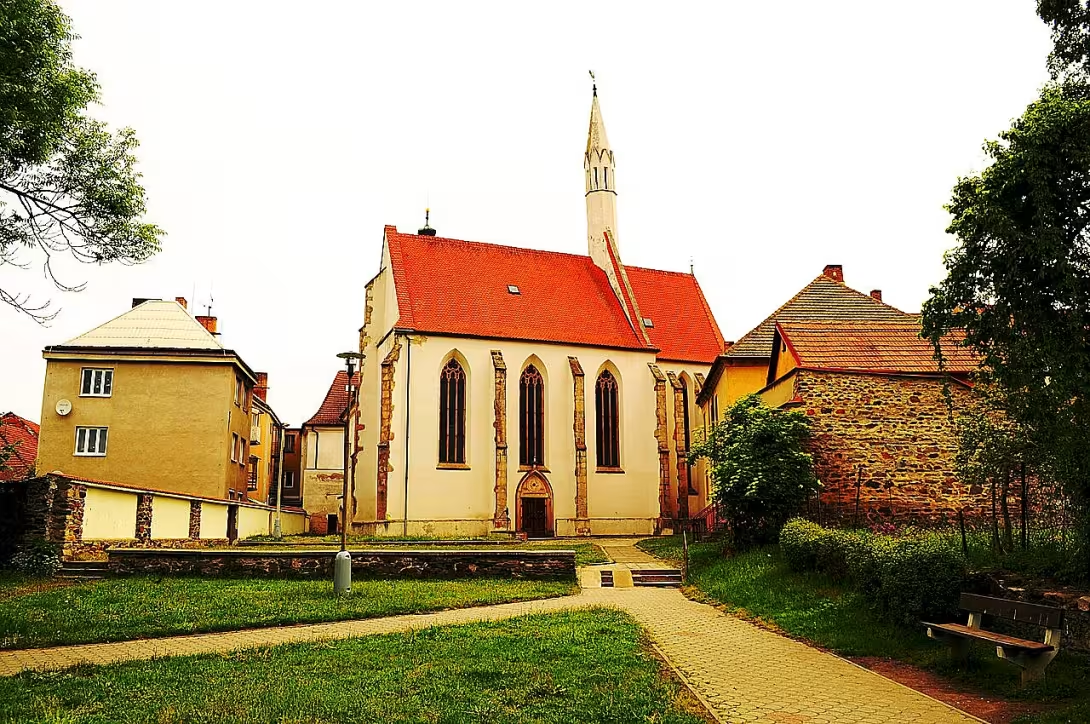
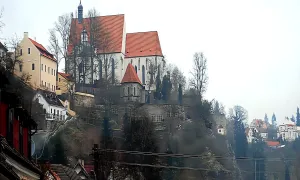
The Church of Saint Vitus in Soběslav is a historical monument dating back to around 1375. Founded by the descendants of the Vítkovci family during Oldřich I. z Rožmberka's administration, it has undergone numerous transformations over time. Initially serving as a hospital church, it later became a granary during the Hussite Wars and was restored in various phases across centuries. Today, it is managed by the Soběslav parish and functions as a filial church, hosting occasional services and concerts.
Founded around 1375 by the Vítkovci family descendants, the Church of Saint Vitus emerged during significant political and religious changes in Bohemia. This period saw tensions leading up to the Hussite Wars and the influence of noble families like the Rožmberks. The church's initial role as a hospital church reflects the era's social and healthcare needs, likely accompanied by an adjacent infirmary.
Architecturally, the Church of Saint Vitus has experienced multiple phases since its foundation. Initially built as a hospital church, it underwent significant changes over centuries. During the Hussite Wars, it was repurposed as a granary. Restoration efforts were made in 1612 by Řehoř Smrčka ze Sabinova. A major fire in 1719 caused extensive damage to its interior and roof, leading to further reconstruction. Successful restoration efforts in the early 20th century were led by Jan Zadražil and František Kročák, who played crucial roles in preserving the church's historical integrity.
Ownership and administration of the Church of Saint Vitus have seen dramatic changes over time. Initially founded by the Vítkovci family descendants, it later came under various influences, including Dorota z Hobzí, who contributed to its restoration in the late 15th century. The church was managed by different entities until 1937 when the Society for Re-establishment of the Church took over, leading to significant reconstruction efforts. Since then, it has been administered by the Soběslav parish.
Key events include its use as a granary during the Hussite Wars and restoration in 1612 by Řehoř Smrčka ze Sabinova. A significant fire in 1719 destroyed much of its interior and roof, necessitating further reconstruction. The early 20th century saw successful efforts to restore the church, spearheaded by Jan Zadražil and František Kročák.
Today, the Church of Saint Vitus stands as a testament to its rich history and architectural evolution. Managed by the Soběslav parish, it serves as a filial church where occasional services and concerts are held. Its historical significance and unique journey through various transformations make it a worthwhile visit for those interested in exploring Bohemia's cultural heritage.
The Church of Saint Vitus is not only a place of worship but also a symbol of resilience and adaptation over centuries. Its storied past, marked by periods of conflict, restoration, and community involvement, offers visitors a glimpse into the historical tapestry of Soběslav. Whether drawn to its architectural beauty or intrigued by its historical narrative, this monument invites exploration and appreciation.
Then and now
Drag the slider to compare how the landmark may have looked when it was built with the view today.
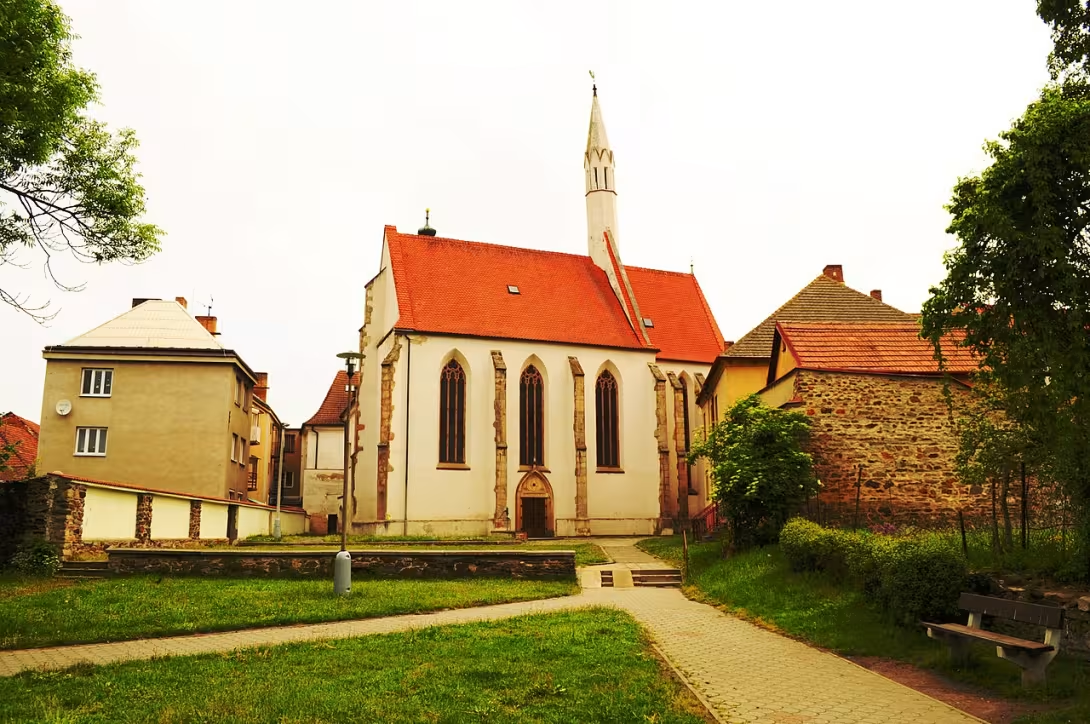

The historical appearance on the left is an AI-generated visualisation and serves as inspiration only.
Historical milestones
- 1375
- Foundation of the Church of Saint Vitus.
- 1612
- Restoration by Řehoř Smrčka ze Sabinova.
- 1719
- The church burned down due to unknown causes.
- 1936
- Reconstruction efforts led by the Society for Re-establishment of the Church.
Architectural development
The Church of Saint Vitus has experienced multiple architectural phases, starting from its foundation around 1375. It was initially built as a hospital church with a probable adjacent infirmary. Over time, it underwent significant changes, including restoration after being used as a granary during the Hussite Wars and reconstruction following a fire in 1719. The early 20th century saw successful efforts to restore the church, led by Jan Zadražil and František Kročák.
Historical events
During the Hussite Wars, the church was used as a granary.
In 1612, it was restored by Řehoř Smrčka ze Sabinova.
The church burned down in 1719 due to unknown causes.
Reconstruction efforts led by Jan Zadražil and František Kročák were completed in the early 20th century.
Owners
Founded by Vítkovci family descendants around 1375
Managed by Soběslav parish since acquisition from the Society for Re-establishment of the Church in 1937
Points of interest
- The Church of Saint Vitus was originally built as a hospital church, reflecting the era's focus on social care and healthcare needs, likely supported by an adjacent infirmary for patients.
- During the Hussite Wars, this religious site was transformed into a granary, showcasing its adaptability during times of conflict when resources were scarce.
- A significant fire in 1719 devastated much of the church’s interior and roof, leading to extensive reconstruction efforts that preserved its historical essence through various architectural changes over time.
- The restoration work in 1612 by Řehoř Smrčka ze Sabinova was a pivotal moment in preserving the church's structure, highlighting early efforts to maintain this cultural landmark amidst changing ownership and uses.
- In the early 20th century, Jan Zadražil and František Kročák spearheaded successful restoration projects that played crucial roles in maintaining the church’s historical integrity, ensuring its survival for future generations.
Guide
This guide is narrated by a synthetic voice generated by artificial intelligence.
Show guide text
This text was created by artificial intelligence and has not been editorially reviewed. It may contain inaccuracies.
Welcome to the Church of Saint Vitus in Soběslav, a remarkable testament to history and resilience nestled in the heart of Jihočeský kraj. As you stand before this venerable structure, take a moment to absorb its serene presence—a silent witness to centuries of change.
This church was founded around 1375 by descendants of the Vítkovci family during the administration of Oldřich I. z Rožmberka. Its initial purpose as a hospital church reflects an era deeply invested in social care and healthcare, likely supported by an adjacent infirmary for patients. Over time, it has undergone numerous transformations, each layer adding to its rich historical tapestry.
As you gaze upon the Church of Saint Vitus, notice how its architecture tells stories without words. While specific architectural details aren't explicitly documented here, take in the general atmosphere and the craftsmanship evident in its enduring presence. The church's resilience is palpable, having weathered fires and restorations, most notably a significant restoration by Řehoř Smrčka ze Sabinova in 1612.
This site has been touched by many notable figures throughout history. Oldřich I. z Rožmberka played an instrumental role during its founding, while Dorota z Hobzí, Markvart Kraselovského z Kraselova, Jan Valerián Jirsík, Jan Zadražil, and František Kročák are among the historical personalities connected to this sacred space. Each contributed to its legacy in unique ways.
One fascinating aspect of this church is its transformation during the Hussite Wars when it served as a granary—a testament to its adaptability and importance within the community. This period highlights how religious sites were repurposed to meet the needs of their time, showcasing both ingenuity and resilience.
In 1719, the church faced a devastating fire due to unknown causes, yet it rose from the ashes through reconstruction efforts led by the Society for Re-establishment of the Church in 1936. These events underscore the enduring spirit that defines this sacred place.
As you continue your exploration, let the stories and history of the Church of Saint Vitus inspire you. Each step around its grounds is a journey through time, inviting you to delve deeper into its mysteries and marvels. Thank you for joining us on this auditory tour, and we hope it enriches your understanding and appreciation of this historical gem.
Tips for visitors
The best time to visit the Church of Saint Vitus is during late spring or early autumn when the weather is pleasant, and the surrounding landscapes are particularly beautiful. This period offers a comfortable climate for exploring both the church and its surroundings without the summer crowds. Additionally, these seasons provide excellent lighting conditions for photography, with softer light that enhances the architectural details of the church.
When visiting the Church of Saint Vitus, it’s recommended to bring comfortable walking shoes as you’ll likely explore the surrounding areas. A camera is also a must for capturing the stunning architecture and landscapes. Given the church's historical significance, bringing along a guidebook or downloading an app about its history can enrich your visit.
For photography enthusiasts, the best spots around the Church of Saint Vitus are those that capture both the church itself and its natural surroundings. Early morning light offers soft shadows and warm tones, ideal for highlighting the architectural details. The area surrounding the church provides various angles for capturing its beauty against the backdrop of southern Bohemia’s landscape.
Within a 30-minute drive from the Church of Saint Vitus, visitors can explore other historical sites that enrich their understanding of the region's history and culture. These include additional castles or ruins that showcase medieval architecture and offer insights into the area's past. Natural landscapes in the vicinity also provide opportunities for leisurely walks or picnics amidst beautiful scenery.
For families with children, visiting the Church of Saint Vitus can be a delightful experience when planned with their interests in mind. Engaging them with stories about the church’s history and its significance might pique their curiosity. Additionally, exploring nearby natural landscapes offers opportunities for outdoor activities that are both educational and entertaining.
Frequently asked questions
Can the monument be visited?
Religious buildings are usually open mainly during services; at other times a visit is normally arranged with the parish or the operator. We have not verified specific times.
Where is the monument?
Location: náměstí Republiky, Soběslav I, Soběslav, Jihočeský kraj. The map on this page shows the exact spot.
Why is the monument protected?
It is listed in the Central List of Cultural Monuments of the Czech Republic as a cultural monument (register no. 32442/3-5042).
Businesses nearby
Do you run a restaurant, accommodation, shop, museum, rental, wellness or other visitor service near this monument? Show yourself directly to the people heading to it — this is how they will see you in the app and on the web:
Nearby
The Church of Saint Vitus is located in Soběslav, surrounded by a landscape typical of southern Bohemia. The area features other historical sites and natural landscapes within a five-kilometer radius.
Accommodation nearby
Themed route
Thematic Walking Tour: Soběslav I and Its Historical Surroundings
1. Kostel svatého Víta (Church of Saint Vitus) - Type: Religious Monument - Why Visit: The Church of Saint Vitus is a stunning example of Romanesque architecture, dating back to the 12th century. It serves as a testament to the region's rich religious and cultural history. Visitors can admire its intricate stone carvings and learn about its significance in local folklore.
2. Soběslav I Historical Center - Type: Urban Area - Why Visit: Just a short walk from the Church of Saint Vitus, the historical center of Soběslav I offers charming cobblestone streets lined with traditional Czech houses. This area provides an authentic glimpse into the town's past and is perfect for leisurely strolls or exploring local shops and cafes.
3. Soběslav I Cemetery - Type: Historical Site - Why Visit: Located within a few kilometers of the Church, this cemetery is notable for its historical gravestones and monuments that reflect the town's long history. It offers a quiet place to appreciate the past and provides insight into the lives of those who have shaped Soběslav I over the centuries.
4. Soběslav I Local Museum - Type: Cultural Institution - Why Visit: Situated close to the Church, this museum houses artifacts and exhibits that delve into the history and culture of Soběslav I. It's an ideal spot for those interested in deepening their understanding of the area’s heritage through interactive displays and historical documents.
This tour offers a comprehensive exploration of Soběslav I, focusing on its religious, cultural, and historical significance while providing a serene experience amidst southern Bohemia's picturesque landscape.
Seasonal recommendations
Spring: Visiting the Church of St. Vitus (Soběslav I) during spring offers a unique experience as nature awakens around this historic landmark. The blooming flora and the gentle play of sunlight through budding leaves create an enchanting atmosphere, ideal for photography enthusiasts. This period often sees moderate visitor numbers, allowing for a more intimate exploration of the church's architectural details. It is advisable to wear comfortable layers that can accommodate the variable temperatures typical of spring weather. Early mornings or late afternoons are recommended times to visit, as they tend to be quieter and provide softer natural lighting.
Summer: The summer months bring vibrant life to the Church of St. Vitus (Soběslav I), with lush greenery surrounding this historic site. This season is characterized by longer daylight hours, offering ample time for visitors to appreciate both the church's architecture and its serene environment. However, it is also a peak tourist period, so arriving early in the day can help avoid larger crowds. Light, breathable clothing is recommended due to warmer temperatures, along with sunscreen and a hat for protection against the sun. Exploring during the quieter hours of morning or late afternoon can enhance your experience by providing cooler temperatures and softer light.
Autumn: Autumn at the Church of St. Vitus (Soběslav I) presents a picturesque setting as the foliage transforms into vibrant hues of red, orange, and yellow. The crisp air and golden sunlight create an atmospheric backdrop that enhances the historic charm of the church. This season often sees fewer visitors compared to summer, making it an excellent time for those who prefer a more tranquil experience. Layered clothing is advisable due to cooler temperatures, and carrying a light jacket can be beneficial as evenings tend to get chilly. Visiting during this time allows you to enjoy both the natural beauty of the surroundings and the church's serene ambiance.
Winter: The Church of St. Vitus (Soběslav I) in winter offers a unique charm with its historic architecture set against a backdrop of snow-covered landscapes, creating a magical atmosphere. Shorter daylight hours mean that visits should be planned early to make the most of available light. Winter can also bring unpredictable weather conditions, so dressing warmly is essential, including wearing thermal layers and waterproof outerwear. Despite potentially fewer visitors due to cold weather, the quietness provides an opportunity for a peaceful exploration of this historic site.
Visualizations and artistic views


The visualisations are generated by artificial intelligence and serve as inspiration.
Photos from the area
Real photos taken near the monument


Zdroj a licence jsou uvedeny u každého snímku.
Tips from visitors
No tips yet. Be the first!
Log in and add your tip.
Sources and literature
Photos: Petrabackovska / CC BY-SA 4.0 — Wikimedia Commons. The author and licence also appear when you hover over the image.
Faktickým podkladem tohoto textu byl článek na Wikipedii, jehož autory jsou přispěvatelé Wikipedie. Článek je dostupný pod licencí CC BY-SA 4.0.
Location on the map

Příběhy a pověsti
Legendy, pověsti a příběhy spjaté s touto památkou
Fotografie návštěvníků
Zatím žádné fotografie. Buďte první, kdo přidá fotografii z návštěvy!
Log in a přidejte svou fotografii nebo hodnoťte.
Za ověřenou návštěvu v aplikaci získáte víc bodů — poznáme podle GPS, že jste na místě.
Reviews and comments