






Soběslav Castle
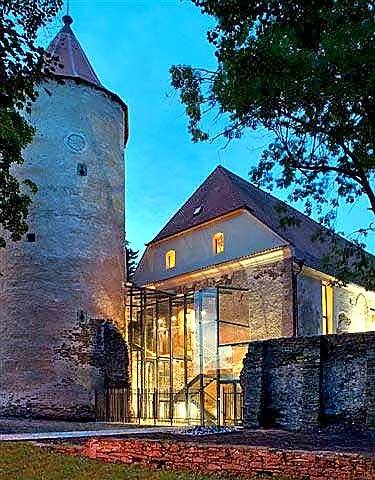
Soběslav Castle, also known as Soběslavský hrad Hláska, is a partially preserved medieval castle in the town of Soběslav within the Tábor District of the Czech Republic. Located at an elevation of 410 meters and surrounded by remnants of medieval fortifications, this cultural monument has been protected since 1963. It holds historical significance for its role during the Hussite Wars when it successfully resisted attacks from Jan Žižka and the Taborites in 1421 and again in 1435.
The castle's origins trace back to the Rožmberk family, likely founded in the 13th century. It served as a military stronghold and played a pivotal role during political disputes when King Václav IV was imprisoned there due to conflicts with the nobility. Ownership shifted from Jan II. z Rožmberka to Zdeňek ze Šternberka, then back to the Rožmberks by 1481. In the early 17th century, part of it was converted into a Czech school by Jan Jiří ze Švamberka.
Architecturally, Soběslav Castle integrated with the town's fortifications features a three-quarter round tower likely constructed after the mid-15th century. The ground floor of an adjoining cellar palace has vaulted ceilings, while upper floors have flat roofs. Notably preserved are a large hall and smaller residential room from the late 14th century. Remnants of a Renaissance school building on the southern side highlight its historical evolution through multiple renovations.
Throughout history, Soběslav Castle witnessed significant events. During the Hussite Wars, it withstood sieges by Jan Žižka in 1421 and the Taborites in 1435, although the town was burned during the latter attack. After the Thirty Years' War, its function shifted to a granary and later a brewery until 1951. In recent history, after serving various roles, it became home to the town library in 2010.
Today, Soběslav Castle stands as an emblem of the region's rich historical tapestry. Visitors can explore its well-preserved structures and gain insight into its multifaceted past. The castle is easily accessible within the historical center of Soběslav, offering a glimpse into medieval life and architecture. Its significance extends beyond military history to educational and cultural contributions over the centuries.
Soběslav Castle's enduring legacy as both a fortress and a beacon of learning makes it a compelling destination for those interested in Czech history. Its well-preserved structures invite exploration and reflection on the region's past, making it an enriching experience for visitors seeking to connect with the historical narratives that shaped this area.
Then and now
Drag the slider to compare how the landmark may have looked when it was built with the view today.
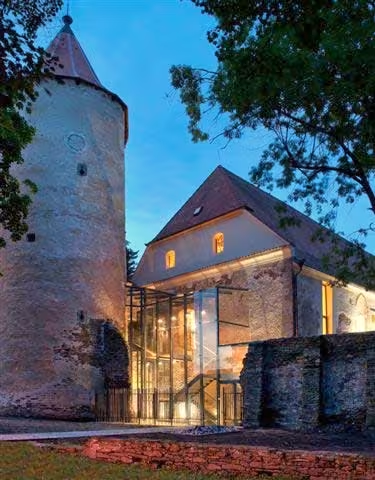

The historical appearance on the left is an AI-generated visualisation and serves as inspiration only.
Historical milestones
- 1385
- First documented mention of Soběslavský hrad.
- 1421
- The castle resisted an attack by Jan Žižka during the Hussite Wars.
- 1435
- The castle withstood a siege by the Taborites, although the town was burned.
- 1613-1615
- Part of the castle was converted into a Czech school by Jan Jiří ze Švamberka.
Architectural development
The castle was integrated into the town's fortifications, featuring a three-quarter round tower likely built after mid-15th century. The ground floor of an adjoining cellar palace has vaulted ceilings, while upper floors have flat roofs. A large hall and smaller residential room from the late 14th century are preserved. The southern side once housed a Renaissance school building that underwent multiple renovations.
Historical events
In the Hussite Wars, the castle resisted attacks in 1421 by Jan Žižka and again in 1435 by the Taborites.
After the Thirty Years' War, the structure was repurposed as a granary and later a brewery until 1951.
Owners
The castle was likely founded by the Rožmberk family in the 13th century. It served as a prison for King Václav IV during disputes with the nobility. Ownership shifted from Jan II. z Rožmberka to Zdeňek ze Šternberka, then back to the Rožmberks by 1481. In the early 17th century, it was transformed into a school by Jan Jiří ze Švamberka.
Points of interest
- Soběslav Castle's resistance during the Hussite Wars is notable because it was one of the few fortresses to withstand attacks from Jan Žižka and the Taborites twice, in 1421 and again in 1435, highlighting its strategic importance and robust defenses.
- King Václav IV's imprisonment at Soběslav Castle underscores the site’s role in political power struggles of the time. His detention there due to conflicts with the nobility illustrates how castles served not just as military strongholds but also as instruments of political control.
- In an unusual shift from its original purpose, part of Soběslav Castle was transformed into a Czech school by Jan Jiří ze Švamberka in the early 17th century. This adaptation reflects the castle's evolving role within the community beyond military and noble functions to education.
- After enduring significant historical events such as sieges during the Hussite Wars, Soběslav Castle was repurposed multiple times throughout history, including serving as a granary and brewery post-Thirty Years' War until 1951. This highlights its adaptability and continued relevance in local life over centuries.
- The integration of Soběslav Castle with the town's fortifications, featuring structures like a three-quarter round tower built after the mid-15th century, exemplifies medieval architectural ingenuity. These features not only enhanced defense but also contributed to the castle’s aesthetic and historical value.
Guide
This guide is narrated by a synthetic voice generated by artificial intelligence.
Show guide text
This text was created by artificial intelligence and has not been editorially reviewed. It may contain inaccuracies.
The castle in Soběslavi is only partially preserved. It stands in the northwestern corner of the city's historic center, on Horní příkopy street, at an elevation of 410 meters. Since 1963 it has been protected as a cultural monument.
The castle was probably founded by the Rožmberk family in the 13th century, but the first written mention of it dates only from 1385. During disputes between the nobility and the ruler, King Václav the Fourth was captured and Prince Jindřich the Third of Rožmberka imprisoned him briefly here at the Soběslavi castle.
During the Hussite Wars, the castle withstood two attacks. In 1421 Jan Žižka attempted to capture it and in 1435 the Taborites did. The city was burned on both occasions, but the castle was not. However, historian Tomáš Durdík assumes that during one of the subsequent attempts, the castle also burned. In 1467 the town's fortifications were repaired. A year later, during the Bohemian civil war, the owner Jan the Second of Rožmberka switched from the royal side to the green mountain union. The city therefore had to be surrendered to Lord Zdeněk of Šternberk, but the castle remained his. The Rožmberks regained the city only in 1481.
According to the will of Petr Vok of Rožmberka, Jan Jiří of Švamberka had part of the castle converted into a Czech school between 1613 and 1615. After the Thirty Years' War, the city turned it into a granary and later into a malthouse. A brewery was established in the castle palace, which operated until 1951. In the second half of the 20th century the castle fell into disrepair. Repairs began only after 2001 and since September 2010 the city library has been housed in the northern part of the castle.
The castle was part of the town's fortifications and the walls connected seamlessly to it. A tower in the shape of three quarters of a circle with a flat rear wall stands directly in the corner. It was probably built only after the middle of the 15th century and was entered through a stone portal with a saddle-roof termination. A rectangular vaulted basement palace adjoined the northern fortification. The rooms in its basement have barrel vaults, while the ground floor and first floor have flat ceilings. A large hall was located on the floor, accessed from a balcony on the courtyard side through a portal that is still preserved today. Next to the hall was a smaller living chamber from the last quarter of the 14th century.
We do not know how the other buildings and fortifications on the city side looked in the Middle Ages. The Renaissance building of the former school on the southern side was rebuilt several times.
Tips for visitors
The best time to visit Soběslavský hrad is during the late spring or early autumn months, when the weather is mild and pleasant for exploring outdoor sites. During these seasons, you can enjoy the lush greenery surrounding the castle without the discomfort of summer heat or winter cold. Additionally, visiting in shoulder seasons often means fewer crowds, allowing for a more peaceful experience as you wander through the historical site.
When visiting Soběslavský hrad, it’s recommended to bring comfortable walking shoes, as there are uneven paths around the castle ruins. A hat and sunscreen are also useful if you're planning to explore during sunny days. Don't forget your camera for capturing the scenic views and historical architecture. Additionally, carrying a water bottle is wise, especially in warmer months, to stay hydrated throughout your visit.
For photography enthusiasts, early morning or late afternoon offers the best natural lighting conditions at Soběslavský hrad. The soft light during these times enhances the textures of the castle ruins and creates beautiful shadows that add depth to your photos. Some recommended spots include the eastern side of the hill where you can capture panoramic views of the surrounding landscape, as well as close-ups of the remaining structures.
The town boasts charming medieval architecture and several museums that delve into local history. Additionally, nature lovers might enjoy visiting nearby parks or walking trails for a relaxing outdoor experience after exploring the castle.
For families with children, Soběslavský hrad offers an engaging historical adventure. Young visitors can learn about medieval life through interactive exhibits at local museums in Soběslav. The surrounding area is also suitable for family-friendly activities like picnicking or short hikes. Be sure to check the castle grounds for any guided tours that might be available, as these often include stories and information tailored to younger audiences.
Frequently asked questions
Can the monument be visited?
Some buildings of this kind are open for guided tours, others serve another purpose or are privately owned. We have not verified whether and when this monument is open – please ask the operator.
What are the opening hours and admission?
We have not verified the opening hours or admission. Current information is published by the operator.
Where is the monument?
Location: Soběslav I, Jihočeský kraj. The map on this page shows the exact spot.
Why is the monument protected?
It is listed in the Central List of Cultural Monuments of the Czech Republic as a cultural monument (register no. 25772/3-5029).
Businesses nearby
Do you run a restaurant, accommodation, shop, museum, rental, wellness or other visitor service near this monument? Show yourself directly to the people heading to it — this is how they will see you in the app and on the web:
Nearby
Soběslavský hrad is situated within the historical center of Soběslav, surrounded by remnants of medieval fortifications. The area offers a glimpse into the region's rich history and cultural heritage.
Accommodation nearby
Themed route
Tematická výletní trasa: Soběslavský hrad a jeho okolí
1. Soběslavský hrad - Typ: Hrad, historické centrum - Proč stojí za návštěvu: Soběslavský hrad je klíčovou památkou, která vás přenesou do minulosti. Nachází se uprostřed historického centra města a nabízí pohled na zbytky středověkých opevnění. Je to ideální místo pro ty, kdo mají rádi historii a architekturu.
2. Staroměstské náměstí - Typ: Náměstí - Proč stojí za návštěvu: Toto centrální náměstí je srdcem Soběslavu a nabízí pohled na historickou architekturu okolních budov. Je to perfektní místo pro relaxaci a prohlédnutí se po místech, kde kdysi probíhala důležitá historie.
3. Kostel svatého Jiří - Typ: Kostel - Proč stojí za návštěvu: Tento kostel je jedním z nejstarších a nejvýznamnějších sakrálních objektů v Soběslavi. Jeho historie a architektonické rysy jsou fascinující pro návštěvníky, kteří mají zájem o duchovní i kulturní dědictví města.
4. Soběslavský muzeum - Typ: Muzeum - Proč stojí za návštěvu: I když nebylo specifikováno v okolí, je přirozenou součástí areálu hradu a nabízí hluboký vhled do historie a kultury Soběslavského regionu. Je to ideální místo pro ty, kdo chtějí pochopit kontext a význam místní památky.
Tato trasa nabízí komplexní pohled na historickou a kulturní bohatost Soběslavského hradu a jeho okolí, přičemž každý bod je plný významu a krásy.
Seasonal recommendations
Jaro: In the Soběslav Castle, springtime brings a unique atmosphere as blooming shrubs and trees celebrate the return of warmth. Sunlight filters through leafy canopies, creating striking light effects on the historic walls and city streets. This is also when visitors start coming more frequently, but it's still not too crowded. A visit in the early afternoons is recommended when temperatures are pleasant and sunlight enhances the beauty of the surroundings. Given the possibility of rain, it’s advisable to wear a lightweight raincoat or moisture-resistant clothing.
Léto: In summer, Soběslav becomes a popular destination for visitors seeking an escape from city heat. The castle and its surroundings offer peaceful moments in natural greenery, but one should be prepared for higher visitor numbers. A sunny day is ideal for exploring the historic spaces of the castle; however, arriving earlier is recommended to avoid long lines at the entrance gates. Due to warm weather, clothing should be light and bright, with an emphasis on sun protection—don't forget a hat, sunglasses, and plenty of drinking water.
Podzim: Autumn offers Soběslav a unique atmosphere with a colorful display of leaves turning into golden and reddish hues. Sunny days remain enjoyable, allowing comfortable walks around the castle with views of the city and surrounding landscape. This period is ideal for visiting as it doesn’t see the same crowds as summer. For a comfortable walk, layered clothing that allows adaptation to relatively variable temperatures is recommended. Humidity and low sun can be common in this season, so having an umbrella or raincoat is advisable.
Zima: A winter visit to Soběslav Castle has its own special atmosphere, with cold air and snow often adorning the historic walls. Beautiful light effects created by icy crowns on trees or frosty patterns on windows have a magical charm that attracts visitors seeking a peaceful winter getaway. Warm clothing is essential—a sturdy coat with hood and gloves, warm footwear, and a protective neck gaiter against moisture will ensure comfort during your walk. Given the possibility of snow, appropriate boots with good traction are also recommended.
Visualizations and artistic views


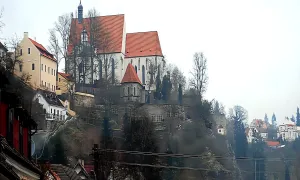
The visualisations are generated by artificial intelligence and serve as inspiration.
Photos from the area
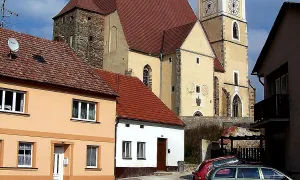
Real photos taken near the monument

Zdroj a licence jsou uvedeny u každého snímku.
Tips from visitors
No tips yet. Be the first!
Log in and add your tip.
Sources and literature
Photos: Městský úřad Soběslav / CC BY-SA 3.0 — Wikimedia Commons. The author and licence also appear when you hover over the image.
Faktickým podkladem tohoto textu byl článek na Wikipedii, jehož autory jsou přispěvatelé Wikipedie. Článek je dostupný pod licencí CC BY-SA 4.0.
Location on the map

Příběhy a pověsti
Legendy, pověsti a příběhy spjaté s touto památkou
Fotografie návštěvníků
Zatím žádné fotografie. Buďte první, kdo přidá fotografii z návštěvy!
Log in a přidejte svou fotografii nebo hodnoťte.
Za ověřenou návštěvu v aplikaci získáte víc bodů — poznáme podle GPS, že jste na místě.
Reviews and comments