






Kostel svatého Víta (Srbice) Church
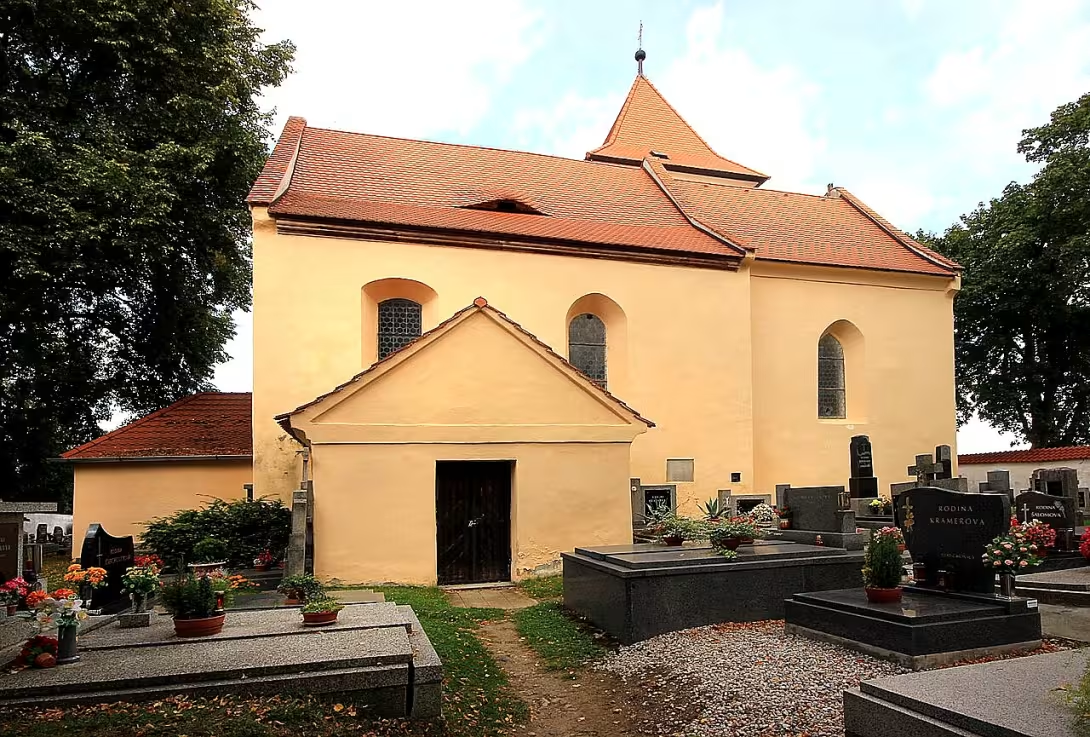
The Church of Saint Vitus in Srbice is a cultural monument on Mount Horka, which offers panoramic views and historical significance. Since October 28, 1199 has a Romanesque architecture with early Gothic features. His strategic position was historically important for defence and as part of the route from Bavaria to Pilsen and further to Bohemia. The church underwent architectural changes during the Baroque period and later centuries.
The Church of St. Vitus, founded on 28 October 1199, marks its initial stage of construction. This time coincided with the growth of the settlement and the development of architecture at the end of the 12th century Bohemia. This time it reflects a mixture of Romanesque and early Gothic styles and reflects wider European trends. Its location on top of Hůrka probably provided natural defensive advantages because the site was probably fortified since the 12th century.
Architectural church began with the style of Romanesque and early Gothic influences. It is a single-boat building with western and southern portions and a square shaft with adjacent north tower. The roofs are reinforced and lined with ridges, while the tower has roof towers covered with shale tiles. Both ships and Chancel facades are smoothly plastered with profiled main corn. The shaft windows are rectangular with segmental arcs; The ones in the office are slightly spiked with smooth mullion. The triangular eastern gable adorns the pods.
Significant architectural changes occurred around 1500, followed by baroque modifications during the 17th and 18th centuries. The southern part of its closure wall dates from the 16th century, with other sections from the 19th and 20th centuries. Inside the main vault has an undecorated interior lit with three windows and covered with flat ceiling. The wooden loft is accessible from the west end. The triumphal arch is non-profiled, with archiving based on profiled cords. The box is illuminated by two windows and arched by a cross-ribbed safe, whose ribs lie on the consoles. Fragments of gothic fresco are preserved on the north and east walls.
Today, the Church of St. Vitus remains an accessible cultural monument, offering visitors a view of the rich historical tapestry. Its mixture of architectural styles and strategic location is remarkable for those interested in medieval history and architecture. Visitors can appreciate not only the aesthetic and structural elements of the church, but also its role in connecting regions from Bavaria to Bohemia. The Church of Saint Vitus is a testament to the historical importance of the region, which calls for exploration and recognition.
Then and now
Drag the slider to compare how the landmark may have looked when it was built with the view today.
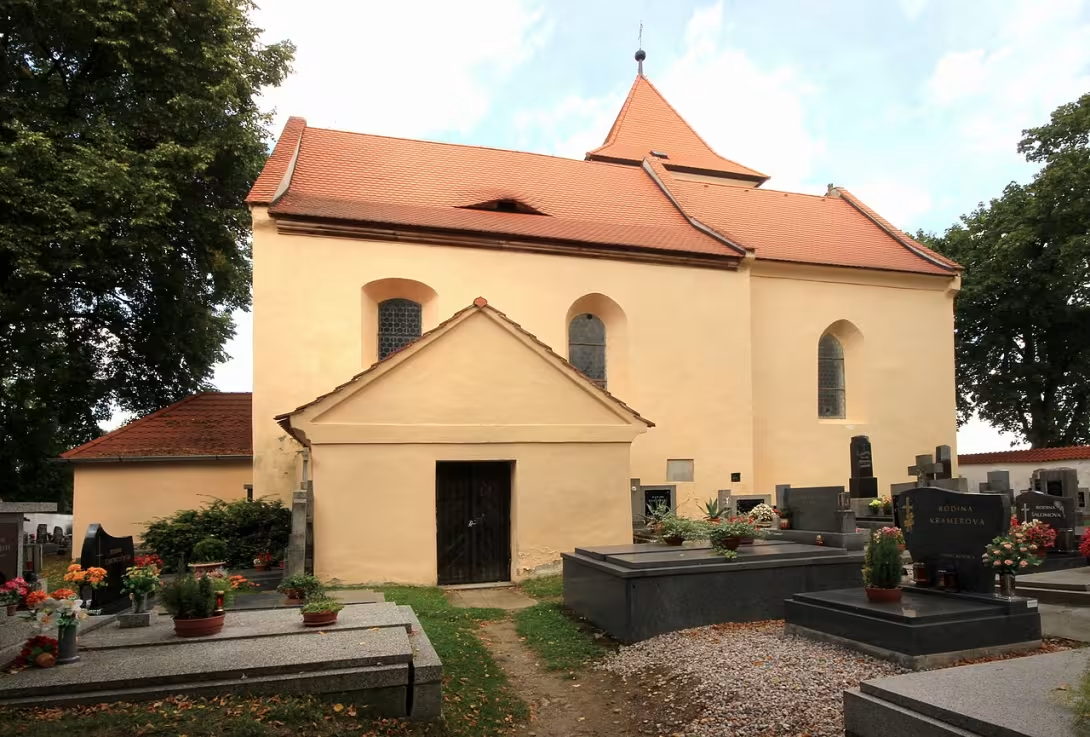

The historical appearance on the left is an AI-generated visualisation and serves as inspiration only.
Historical milestones
- 1199
- The church was founded on 28 October 1199.
Architectural development
Originally built in Romanesque style with early Gothic influences, the church of St. Vitus went through several architectural phases. There were significant changes around 1500, followed by Baroque adjustments in the 17th and 18th centuries. The southern part of its closure wall dates from the 16th century, with other sections from the 19th and 20th centuries.
Historical events
The church was founded on 28 October 1199, which marked its initial stage of construction.
Significant architectural changes occurred around 1500, with further modifications during the Baroque era in the 17th and 18th centuries.
Points of interest
- The strategic location of the Church of Saint Vitus on Horice suggests that it may have been part of a medieval patrol system that used its height to monitor the entire region. - During the Baroque renovation in the 17th and 18th centuries, local craftsmen could incorporate unique regional motifs into the interior design of the church, which blends Czech and Bavarian influences. - The preserved fragments of gothic fresco on the northern and eastern walls are rare examples of medieval art, which depicts scenes from local folklore and offers a view of the cultural stories of the 12th century Srbice. - Legends suggest that hidden tunnels linked the church of St. Vitus to nearby fortifications, serving as escape routes or supply lines during historical conflicts in the region. - Instead of the church on top of Horka was once considered a sacred place of local tribes before Christianization, with ancient rituals that may be taking place on his base.
Guide
This guide is narrated by a synthetic voice generated by artificial intelligence.
Show guide text
This text was created by artificial intelligence and has not been editorially reviewed. It may contain inaccuracies.
Welcome to the Church of St. Vitus in Srbice, a remarkable cultural monument on Mount Horka. As you stand here, take a moment to immerse yourself in the panoramic view that stretches before you - proof of the historical importance of this place and of strategic importance.
On October 28, 1199, the Church of St. Vitus stood as a beacon for centuries. Its origin is covered in history, without known architects or figures directly associated with its construction. Yet it remains a permanent symbol of medieval spirituality and social life. The church was not chosen at random; strategically located in Horce, offered defence benefits and served as a vital part of the route from Bavaria to Pilsen and beyond.
As you approach, take the architectural style that defines this sacred space. The Church of Saint Vitus presents a mixture of Romanesque architecture with early Gothic elements. Notice how these styles combine smoothly, creating a structure that is robust and elegant. The processing apparent in his walls speaks of the skills of medieval builders who worked in difficult conditions.
While specific stories or personalities directly associated with this church may not be well documented, its presence tells stories about pilgrims, medieval hourly systems and social gatherings. Imagine the generations that walked on these grounds, each leaving its mark in history in a gentle way.
One of the interesting aspects of this site is its potential role in the medieval watch system. The position high on the hill Hůrek probably served as a point of view that offers supervision throughout the region - a strategic advantage for those who needed to monitor movement and ensure security.
As you continue your visit, let yourself be drawn into the atmosphere surrounding this church. While the concrete details of his baroque renovations remain elusive, know that local craftsmen once worked here, bringing their unique regional sense into what we see today.
Before you go any further, think about the layers of history in these stones and landscapes. This site is more than just an architectural miracle, it's a living story waiting for you to explore further.
Thank you for joining us at St. Vitus Church. Let your journey through Srbice be full of discoveries and wonders as you uncover the stories this historic jewel offers.
Tips for visitors
The best time to visit the church of St. Vitus in Srbice is at the end of spring or early autumn when the weather is mild and pleasant for exploring outdoor areas such as Hůrka. During these seasons you can enjoy panoramic views without the discomfort of summer heat or winter. In addition, a visit outside the top tourist season ensures a calmer experience and appreciates the historical architecture of the church.
The proximity of Srbice to the main routes is accessible both from Bavaria and Plzeň, which increases its attractiveness for passengers who explore the region.
When planning your visit, consider bringing comfortable walking shoes as you will probably explore the area on foot. The camera is recommended to capture amazing views from hill Horka and architectural details of the church. Morning or late afternoon visits are ideal for photography thanks to soft light conditions that illuminate the landscape and structure beautifully.
For families with children, St. Vitus Church offers a quiet environment ideal for a day in nature. The surrounding area provides enough space for children to play while parents are looking forward to the historic place. Near attractions within 30 minutes include other cultural monuments along the historic route from Bavaria to Pilsen, offering educational opportunities and other possibilities of exploration for the whole family.
Frequently asked questions
Can the monument be visited?
Religious buildings are usually open mainly during services; at other times a visit is normally arranged with the parish or the operator. We have not verified specific times.
Where is the monument?
Location: Srbice, Plzeňský kraj. The map on this page shows the exact spot.
Why is the monument protected?
It is listed in the Central List of Cultural Monuments of the Czech Republic as a cultural monument (register no. 22985/4-2206).
Businesses nearby
Do you run a restaurant, accommodation, shop, museum, rental, wellness or other visitor service near this monument? Show yourself directly to the people heading to it — this is how they will see you in the app and on the web:
Nearby
Located on top of Hůrka, the churches depict the surrounding landscape. The area is historically important as part of the route from Bavaria to Pilsen and further to Bohemia.
Accommodation nearby
Themed route
Thematic walking tour: Srbice and Surrices
1.Kostel svatého Víta (Srbice) - Type: Church - Why Visit: This stunning church, set on hill Horka, offers a stunning view of the surrounding countryside. As a historic place on an ancient route from Bavaria to Pilsen and further to Bohemia it provides insight into the rich past of the region.
2. Hippo Hill - Type: Natural brand - Why Visit: After exploring the church, have time to wander around the hill hill itself. Panoramic views from this point of view are exceptional and allow visitors to appreciate the natural beauty of the area while reflecting its historical importance as part of a significant medieval route.
3. Historical route - Type: Cultural trail - Why Visit: Follow the remnants of the ancient route that once connected Bavaria to Pilsen and further to Bohemia. This journey offers a unique opportunity to walk in the footsteps of travelers from the past centuries, providing context of the historical importance of Srbice as a transit point.
This thematic tour summarises the nature of the cultural and natural heritage Srbice and focuses on its central role on the historical route while enjoying picturesque landscapes.
Seasonal recommendations
Spring: The St. Vitus Church in Srbice during spring offers an unambiguous contribution to new production with the arrival of shrubs and trees for historical status. Sunshine days can be an ideal time for a tour, because temperature is a pleasant and sunny radial change of architectural declaration. The entrants should have the same data as set out in the Annex to this Regulation. Due to the prevailing spring weather, you should have the convenience of a light suit and maybe a natural parallus because no rain is rare.
Summer: Summer is the Church of St. Vitus in Serbia's favorite destination for hiking, which is the escape from heat. The sunny days of providing the ideal decision for the photographic consignment and its surrounding affluent park. Summer is also the period of the highest rights subject to these rights, in all cases. We propose to visit the morning or late afternoon in order to avoid excessive giving. The overrun of the scope of public rights shall be conditional either on a parallel or a parallel to be used but shall be adjusted to allow the same quantity to be used.
Autumn: Autumn offers a peaceful atmosphere for St. Vitus Church in Serbice. Medium temperatures and less difficult contribution can be made possible by the proms around the skeleton, while the leafy trees provided a beautiful color. This time of year is ideal for those affected by the need and a dying atmosphere without the upcoming crowd of tourists. Despite the generally peaceful setting, you should make it harder for the suits that lean towards rapid materialisation, because the conditional days can be b't promotional. Short-rain and cold intentions are the same this season, so the surplus is delayed by siege.
Winter: The St. Vitus Church in Serbice during winter offers a calm and quiet atmosphere where they have intruders which can be used for domestic sale. The remaining amount granted to one existing state on the facade churches, which is its historical value. The complexity is general, except for the advent period or different worlds that may be investigated. New products intended for use in small quantities are moved, boti with antitskavine profile and possible even parapels not intended for production because the same quantity and the same quantity can be used.
Visualizations and artistic views


The visualisations are generated by artificial intelligence and serve as inspiration.
Photos from the area
Real photos taken near the monument

Zdroj a licence jsou uvedeny u každého snímku.
Tips from visitors
No tips yet. Be the first!
Log in and add your tip.
Sources and literature
Photos: This file is available under Creative Commons BY-SA license. Basically: You can use this picture for any purpose, provid / CC BY-SA 3.0 — Wikimedia Commons. The author and licence also appear when you hover over the image.
Faktickým podkladem tohoto textu byl článek na Wikipedii, jehož autory jsou přispěvatelé Wikipedie. Článek je dostupný pod licencí CC BY-SA 4.0.
Location on the map
More monuments – Srbice
Show all in the municipality

Příběhy a pověsti
Legendy, pověsti a příběhy spjaté s touto památkou
Fotografie návštěvníků
Zatím žádné fotografie. Buďte první, kdo přidá fotografii z návštěvy!
Log in a přidejte svou fotografii nebo hodnoťte.
Za ověřenou návštěvu v aplikaci získáte víc bodů — poznáme podle GPS, že jste na místě.
Reviews and comments