






Kostel svatého Vojtěcha (Kruh) Church
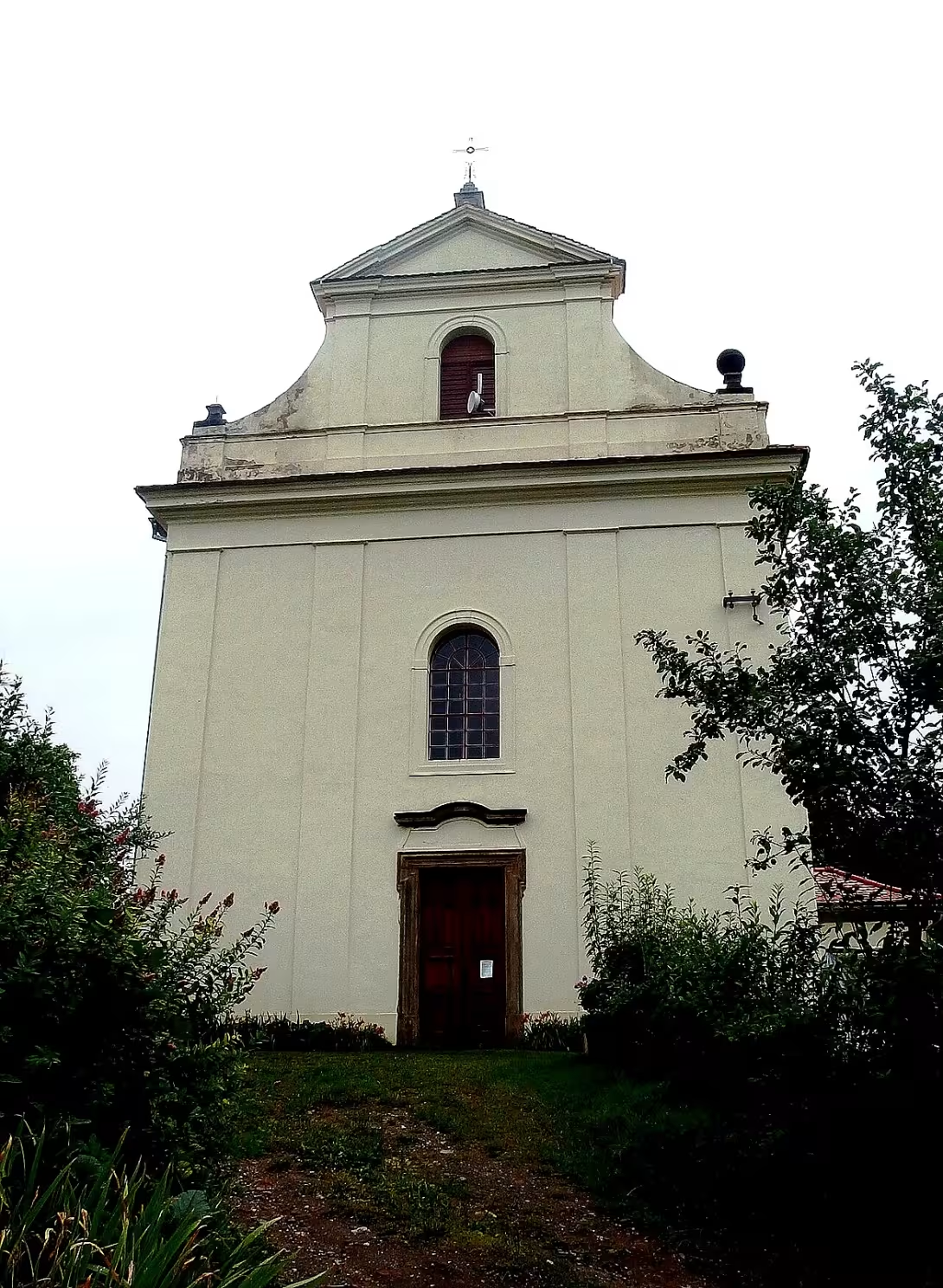
The Church of Saint Vojta in Kruh is a Baroque sacred building located in the eastern part of the village, near the terrain break above the gorge. The structure between 1723 and 1724 in an earlier place, it was entrusted by Countess Marie Markéta z Valdštejna. The church has been protected as a cultural monument since 1965 due to its architectural importance and historical value.
Church of Saint Vojty is an example of the influence of the Baroque period in Bohemia in the early 18th century, when the region was part of the Habsburg monarchy. It replaced the older structure entrusted to Countess Marie Markéta z Valdštejna. The construction probably included Niccolo Raimondi (Raymondi) as designer and Melchior Oppelt as builder. This time has seen significant religious and architectural developments under noble patronage, reflecting the wider cultural influences of baroque art.
In the architecture, the church is equipped with a single rectangular structure with a rectangular presbytery and square sacristy in the north. The design includes pilastrially decorated facades and prismatic portico on the western front, which ends with a half-circle window. Its interior boasts a cross-arched presbytery and sacristy, while the ship has a barrel safe with lunettes. The main altar of the church is a painting of St. Vojts, signed by Jiří Hörtl in 1725, which represents the artistic work of the era.
The Church of St. Vojts has experienced various stages of wealth and renewal throughout its history. After World War II, the expulsion of German-speaking citizens led to neglect and deterioration. However, significant reconstruction efforts began after 2000 with funding from the architectural heritage conservation programme between 1995 and 2014, thereby ensuring its preservation.
Today, the Church of St. Vojts remains a cultural monument in municipal care, which was entrusted to the city of Doksy in 2013. Its renewal involved overshooting and securing safes, maintaining its structural integrity for future generations. Visitors can appreciate the Baroque architecture and historical importance of the church, which makes it a valuable destination for interested people in the Czech heritage.
Church of Saint Vojty is not only an architectural miracle, but also a cultural beacon that reflects the rich history of Kruh and its surroundings. Its preservation allows visitors to connect with the past while appreciating the artistic achievements of the Baroque period. This monument invites to explore and offers a view of the historical story of the region and a permanent legacy of its patrons and craftsmen.
Then and now
Drag the slider to compare how the landmark may have looked when it was built with the view today.
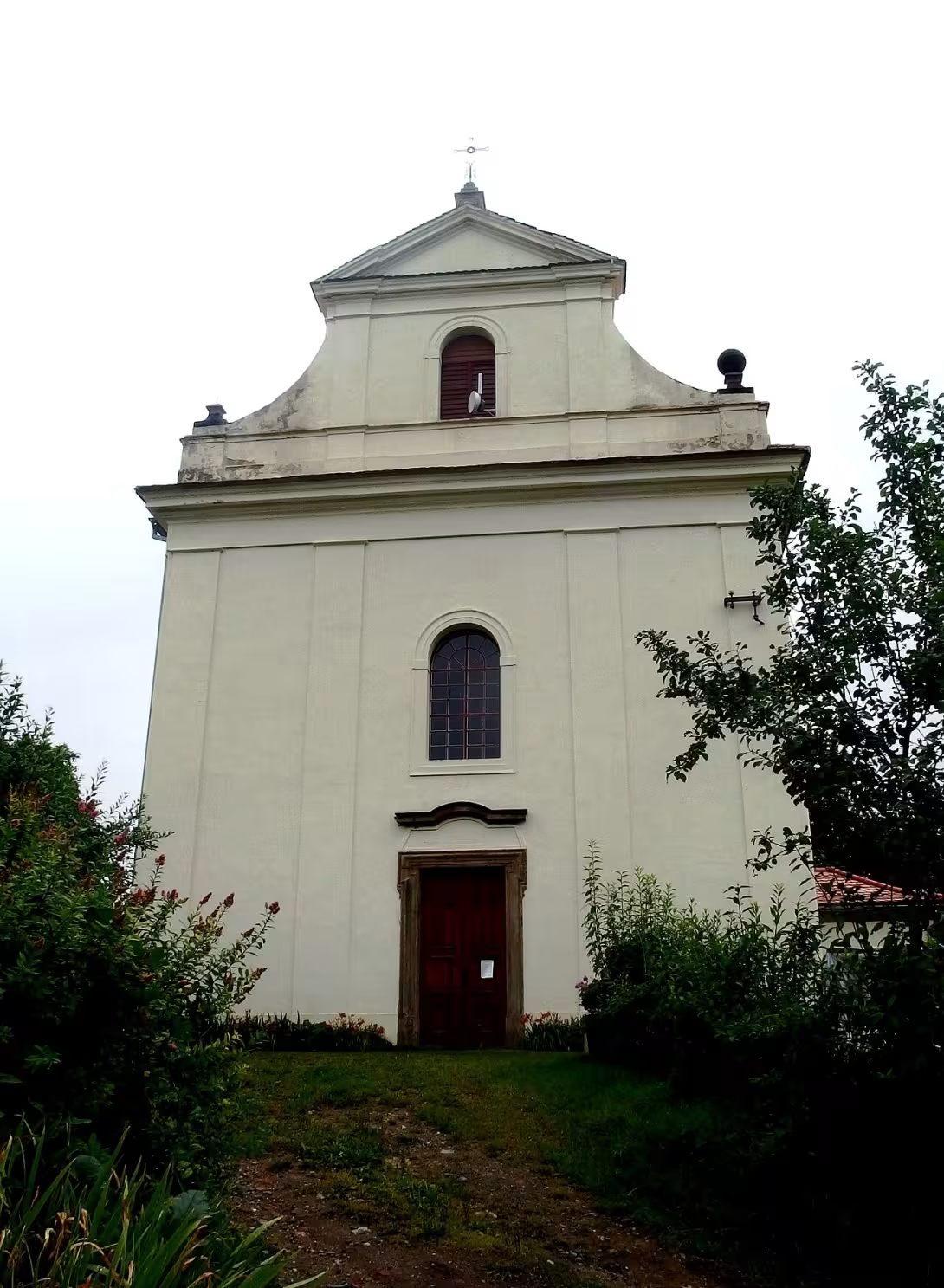
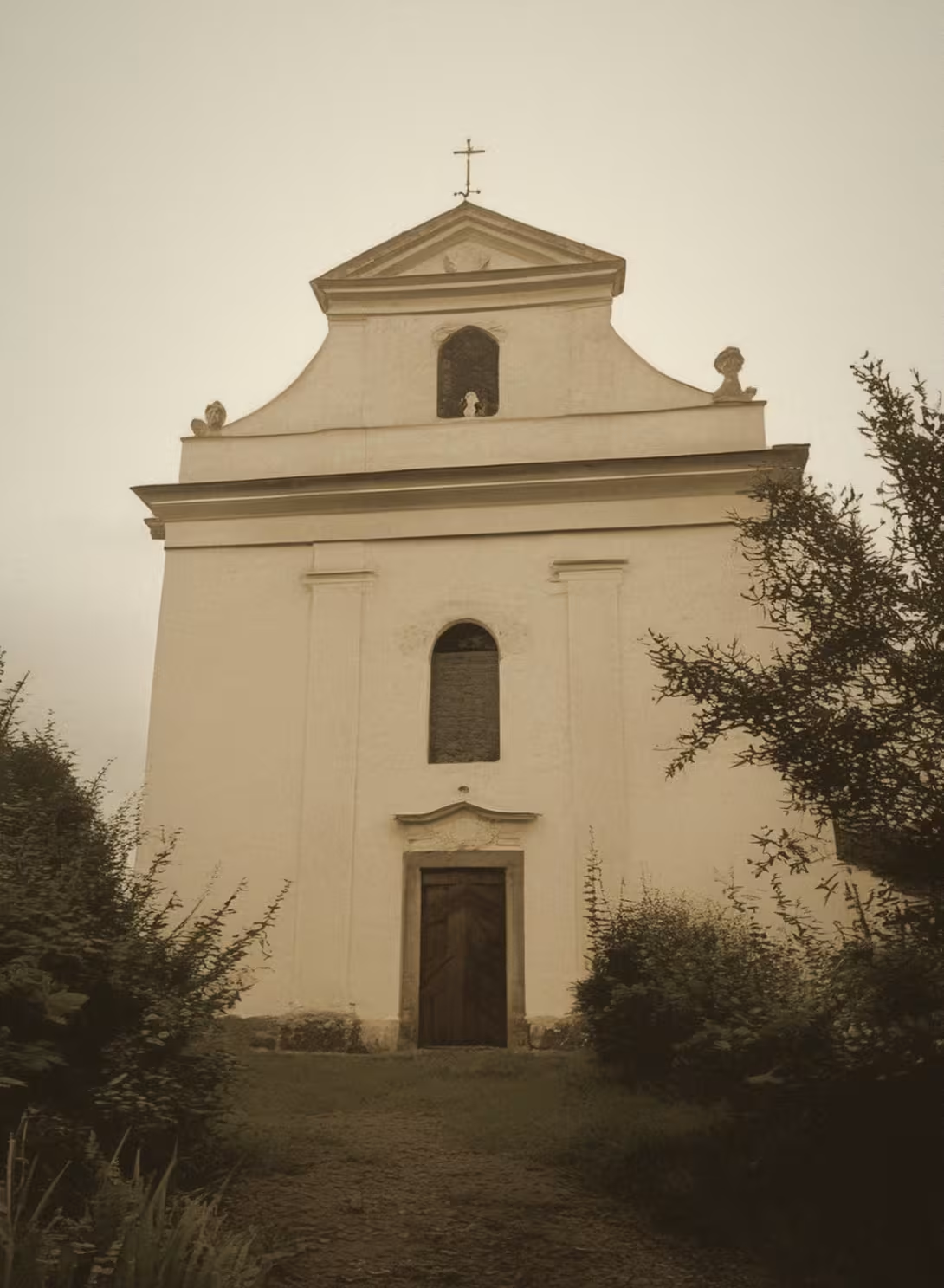
The historical appearance on the left is an AI-generated visualisation and serves as inspiration only.
Historical milestones
- 1723-1724
- Construction of St. Vojt church in Kruh.
- 1965
- the church was marked with a cultural monument.
- 1725
- Jiří Hörtl signed the painting of St. Vojt.
- Post - World War II
- the church experienced neglect and deterioration.
- 2000
- A significant reconstruction effort has been launched for the church.
- 2013
- the church was entrusted to the city of Doksy.
Architectural development
the church was built in Baroque style, which replaced the older structure. The original materials from the predecessor were used again to build a nearby bell tower. The reconstruction efforts focused on rebuilding and securing vaults, with important work financed by heritage protection programmes.
Historical events
Construction completed in 1724 by Countess Marie Markéta z Valdštejna.
Post-1945 decline due to expulsion of the Germanic-speaking population, leading to worsening.
Efforts for renewal began after 2000 with significant funding from the architectural heritage programme between 1995 and 2014.
Points of interest
- Church of Saint Vojty was built on a site with geological significance because it is located near the terrain defect above the gully that could affect its location and design.
- Countess Marie Markéta z Valdštejna, who entered the church, played a key role in the Czech Baroque architecture, but her contributions are often overshadowed by the major figures of the era.
- The main altar painting of St. Vojts was created by Jiří Hörtl and signed in 1725, marked as one of the few surviving works from this specific period and artist who offers a rare view of the early 18th century Czech art.
- After World War II, the church was embarrassed by the expulsion of the Germanic-speaking people, reflecting the wider socio-political changes that affected many historical sites in post-war Europe.
- The re-efforts financed by the Programme for the Conservation of the Architectural Heritage between 1995 and 2014 highlight the modern commitment to preserve the cultural heritage and ensure the survival of the church as proof of Baroque architecture.
Guide
This guide is narrated by a synthetic voice generated by artificial intelligence.
Show guide text
This text was created by artificial intelligence and has not been editorially reviewed. It may contain inaccuracies.
Welcome to the Church of St. Vojts in Kruh, the magnificent law of Baroque architecture nestled in the eastern part of this picturesque village. As you stand here, take a moment to absorb your surroundings. The church is located near the terrain defects above the gorge, its presence commanding but harmonically integrated into the landscape.
The genesis of this sacred building dates back to 1723-1724, the period when Countess Marie Markéta z Valdštejna entered her building. Imagine her vision and determination trying to replace her older predecessor with a structure that could withstand a time trial. This church was not only a place of worship, but also a reflection of the cultural vibrations of Czech Baroque art.
As you take the architecture, notice the one-ship rectangular structure that defines its form. The design choices of the architects Niccolo Raimondi and Melchior Oppelt are visible in every detail. While specific elements such as the main altar may not be visible from your current perspective, they make a significant contribution to the spiritual environment of the church.
Let's dive into some of the key stories associated with this place. In 1725 Jiří Hörtl added a touch of artistic brilliance by signing the painting of St. Vojts on the main altar, leaving an indelible mark on its history. Yet, after World War II, the church faced neglect and deterioration, a silent witness to the passage of time.
However, resistance is part of the story of this church. In 2000, considerable efforts began to restore, breathing new life into his honorable walls. By 2013, Doksy took responsibility for its care so that future generations could appreciate its beauty and historical significance.
An interesting aspect of this site is its geological context. Built near the terrain defects above the gorge, one cannot help but wonder how these natural features affected its location and design. This unique setting adds another layer to the story of the church and invites you to think about the interaction between nature and human creativity.
As we conclude our short journey through time and art, I urge you to explore further, perhaps wander the village of Kruh or dive deeper into the stories that shaped this remarkable place. Thank you for joining me and appreciating the Church of St. Vojt - a true jewel in the heart of the Liberec Region.
Safe travels and your curiosity can continue to lead to extraordinary discoveries!
Tips for visitors
The best time to visit the Church of St. Vojts in Kruh is at the end of spring or early autumn when the weather is pleasant, and the surrounding rural Czech landscapes are especially beautiful. This season offers comfortable temperatures for exploring both the church and its surroundings without summer crowds. In addition, lighting conditions at these times are ideal for photography, capturing complex baroque details of the church in natural light.
Parking and transport to Kruh can be controlled by driving or by public transport. The village is accessible via the main road leading to the Liberec Region. For those who prefer not to drive, local bus transport can provide access, although it is advisable to check current routes and plans online. On arrival, parking should be available nearby, allowing easy access to the church and its surrounding areas.
When visiting, consider bringing comfortable walking shoes as you will probably explore both church grounds and adjacent cemetery. To capture Baroque architecture church and picturesque view of the gorge below is recommended camera or smartphone. Moreover, due to the changing weather conditions in this part of the Czech Republic, a light jacket could be useful.
For photographic enthusiasts, a bell tower built from square stones offers excellent views of the capture of the church and its rural environment. The best natural lighting is usually found during the golden hours - shortly after sunrise or before sunset - when light throws heat into the landscape. Exploring various angles around the terrain defects above the gorge can also bring unique views on the site.
Families with children find the area around the Church of St. Vojts in Kruh, which is active, especially due to its proximity to the natural landscape and historical cemetery, which offers educational knowledge into local history. The rural environment provides children with sufficient space to safely explore under supervision. For those interested in extending their visit, nearby attractions within 30 minutes include other historical monuments and nature reservations typical of Liberecký kraj, offering opportunities for hiking or simply enjoying outdoors.
Businesses nearby
Do you run a restaurant, accommodation, shop, museum, rental, wellness or other visitor service near this monument? Show yourself directly to the people heading to it — this is how they will see you in the app and on the web:
Events nearby
Zdroj akcí: otevřená data měst a obcí ČR (Národní katalog otevřených dat) a kalendář akcí Národního památkového ústavu.
Nearby
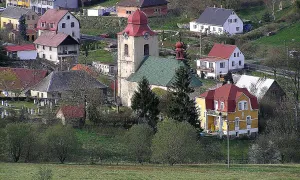
Near the site of the original church, there is a bell tower built from square stones probably coming from an old building. The surrounding area includes a cemetery and typical of rural Czech landscapes.
Accommodation nearby
Themed route
Thematic walking tour: Saint Vojta Church and its surroundings
1. Church of St. Vojt (Kruh) - * Type: * Historical church - * Why Visit: * Start your journey in the heart of Kruh with this charming church, wills of local history and architecture. The Church of Saint Vojta offers a view into the spiritual life of the community and contains traditional Czech design elements that attract visitors.
2. Old Belfry - * Type: * Historical structure - * Why Visit: * This bell tower is located at the site of the original church and is built from square stones which probably come from an old building. It is a silent witness to the past of the area and provides an interesting contrast to its modern environment.
3. Cemetery - * Type: * Historical cemetery - * Why Visit: * Explore the cemetery at the church where you can think about the lives of those who once called this village home. The calm atmosphere offers a moment of peace and connection with history as you walk between tombstones that tell stories of generations.
4. Rural Czech Landscape - * Type: * Natural scenery - * Why Visit: * Go through surrounding rural landscapes, characterized by rolling hills and lush greenery typical of the region. This area provides a picturesque background for your visit, offering opportunities for peaceful contemplation or photography amidst the beauty of nature.
This tour surrounds the essence of Kruh and invites you to immerse yourself in its historical charm and natural charm when exploring places directly associated with the Church of St. Vojt.
Seasonal recommendations
Spring: St. Vojta's Church's bridge in spring management offers a uniform command on the reconstructed monument when green tree leaves count the manifolds and acquire the church globally. The atmosphere is valid and promises the permitted quantities necessary in terms of the number of pieces. This time of year is ideal for those who are a mirni crowd because people still prepare for summer sessions. They should be considered comparable to the possible transmission of data on changes in data and the addition of names soon on the day in order to be aware of the changes that could be made available.
Summer: For the summer, the Church of St. Vojt is not ever tied up and calls for a corresponding contribution to the restructuring of the monument throughout the country. The day spreads out for long hours, allowing the outsiders to explore the church and the surrounding supply. The atmosphere is vibrant and full of energy, with many tourists who welcome this time on vacation. The insurer is recommended to make a contribution to ensure their place and minimise the Czech. Wearing a reclining device for Sunshine Day and not denying water is tricky because temperatures can be high, especially in the main summer zone.
Autumn: Autumn offers the Church of St. Vojta a melancholy and excellent view with colorful leaves of trees that are provided for the restructuring of the monument. The atmosphere is calm and presentable, which implies an ideal choice for those intended for small masses. This Decision concerns upcoming events that transfer magic to new activities. They will ensure that it is not carried out for temperature changes and that they plan early in the day to set up a moderate crowd and do not give up for photography. Given the cold evening, depending on the costs that are not included in the costs that could be incurred.
Winter: The winter value of the Holy Vojta Church is encouraged by the reconstructed chip under the snow cover to be put into service and usable for this purpose. It is important that these measures be taken as they are confidential. No less opening hours can be shorter than cold ground and dreaming. Encouraging the fact that it is not necessary to warm the suit, the beehat and the sausage, and to plan for the holidays of the day to enjoy the best light. Despite the cold weather, they can appreciate the peaceful experience and the one-numbered atmosphere that winter offers.
Visualizations and artistic views


The visualisations are generated by artificial intelligence and serve as inspiration.
Atmosphere of the place
This atmospheric visualisation of the place and period was generated by artificial intelligence. It is not real footage of the location.
Tips from visitors
No tips yet. Be the first!
Log in and add your tip.
Sources and literature
Fotografie: Palickap / CC BY-SA 4.0 — Wikimedia Commons. The author and licence also appear when you hover over the image.
Faktickým podkladem tohoto textu byl článek na Wikipedii, jehož autory jsou přispěvatelé Wikipedie. Článek je dostupný pod licencí CC BY-SA 4.0.
Location on the map
Příběhy a pověsti
Legendy, pověsti a příběhy spjaté s touto památkou
Fotografie návštěvníků
Zatím žádné fotografie. Buďte první, kdo přidá fotografii z návštěvy!
Přihlaste se a přidejte svou fotografii nebo hodnoťte.
Za ověřenou návštěvu v aplikaci získáte víc bodů — poznáme podle GPS, že jste na místě.
Reviews and comments