



Kostel svatého Vojtěcha (Libice nad Cidlinou) Church
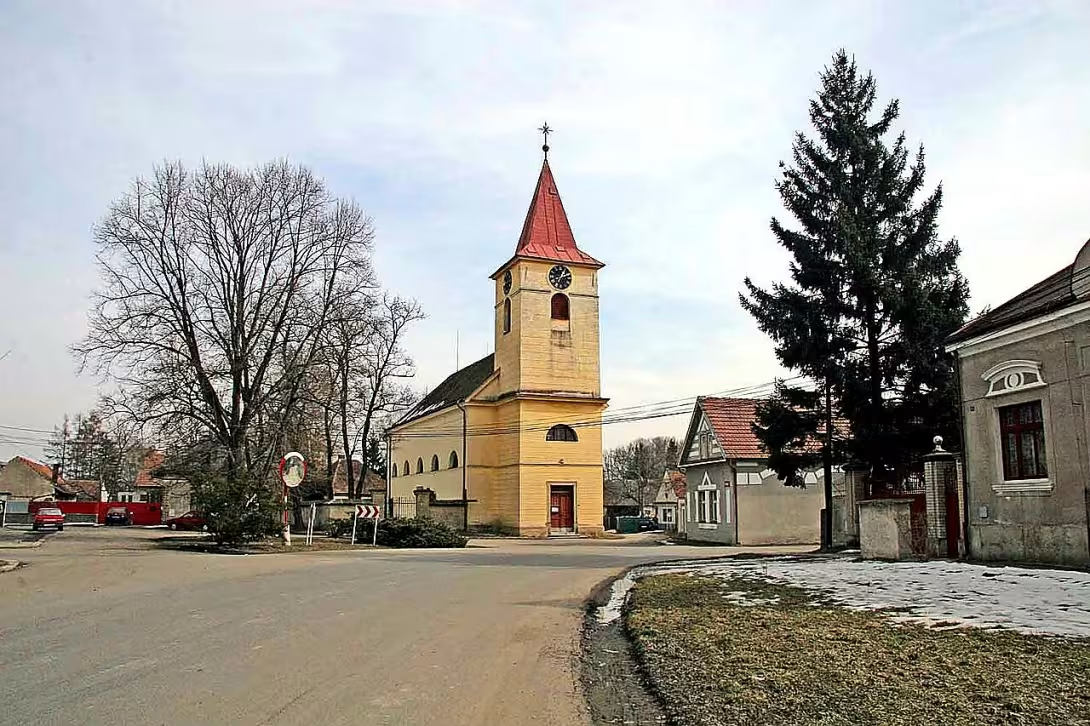
The church of St. Vojtěv lies at the eastern end of the village Libice nad Cidlinou in the district Nymburk. It's a parish church with a tomb house and a boundary wall. The consecration of the church refers to Saint Vojtěch, the second Bishop of Prague, who lived here part of his childhood and youth.
The origins of the temple go deep into the Middle Ages. Originally there was a wooden church, which apparently served as a burial place for the sons of Slavíkovice. He was dedicated to probably St. Bonifas, later St. George. At the end of the 14th century, after the fire, a new temple was created to replace the old Romanesque church, which is still preserved in the foundations. In the 18th century, since 1746, a painting of St. Vojtěv appeared on the main altar. In 1832 the church was officially dedicated to this holy man, but in the same year another fire seized him. Restoration in 1835-1836 brought an extension of the temple ship, empirical treatment of the windows and addition of the tower. In 1875 the builder Štěpnička z Týnce nad Labem modified the facade in pseudorenesance style.
It is an architectural church with a polygonal end of the presbytery and a rectangular sacristy on the south side. The tower is attached to the west facade. The construction dates back to the last quarter of the 14th century, but the window circles indicate a third quarter. The ship is glazed with five fields of tortillas with wide semicircular interclave belts reaching a height of about seven metres. The presbytery carries two identical arches of cross arches with radiated ribs of pear profile. The four broken two-piece windows of the presbytery decorate the circles with trileaves and four-leaf, the elements used since the beginning of the 14th century. The sacristy with a rectangular plan is inserted in the rib arch. A pulpit, crucifix and organ from the 18th century, a neo-gothic main altar from 1897 with a painting by František Masek from 1836, have been preserved from the Cредневикововового equipment.
The Church of St. Vojtěv presents an exceptional witness to the Gothic architecture of Bohemia. The preserved gothic presbytery and sacristy are among the most valuable parts of the building. The Czech history offers a combination of architectural wealth and the personal legend of the Holy Bishop who grew up here.
Then and now
Drag the slider to compare how the landmark may have looked when it was built with the view today.
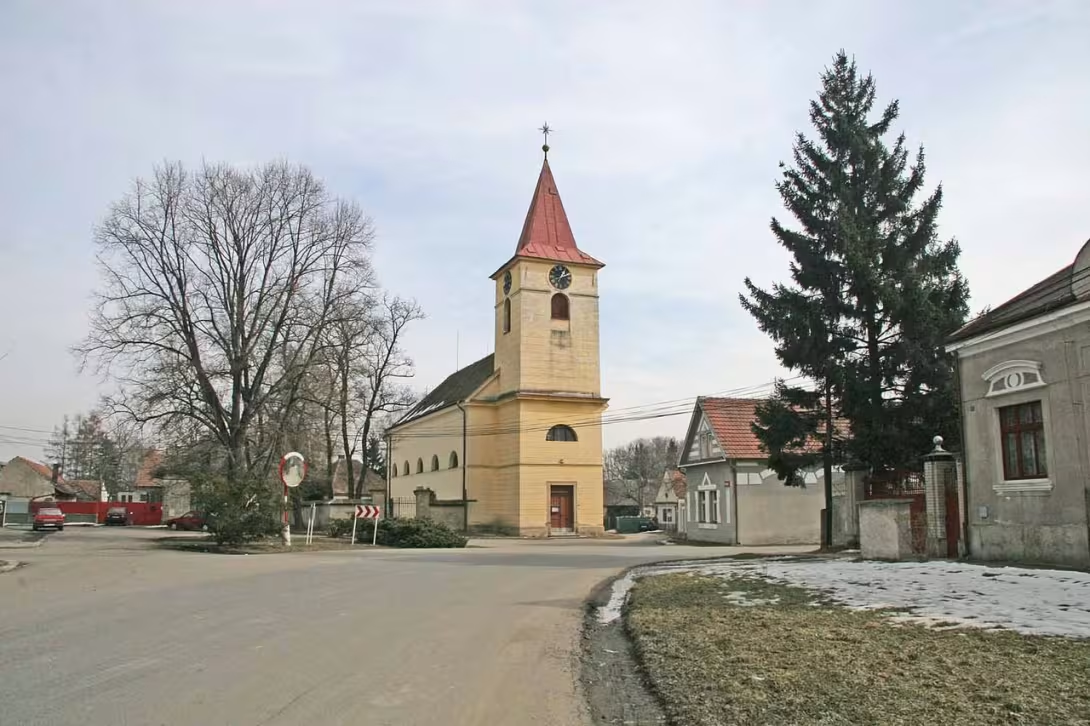
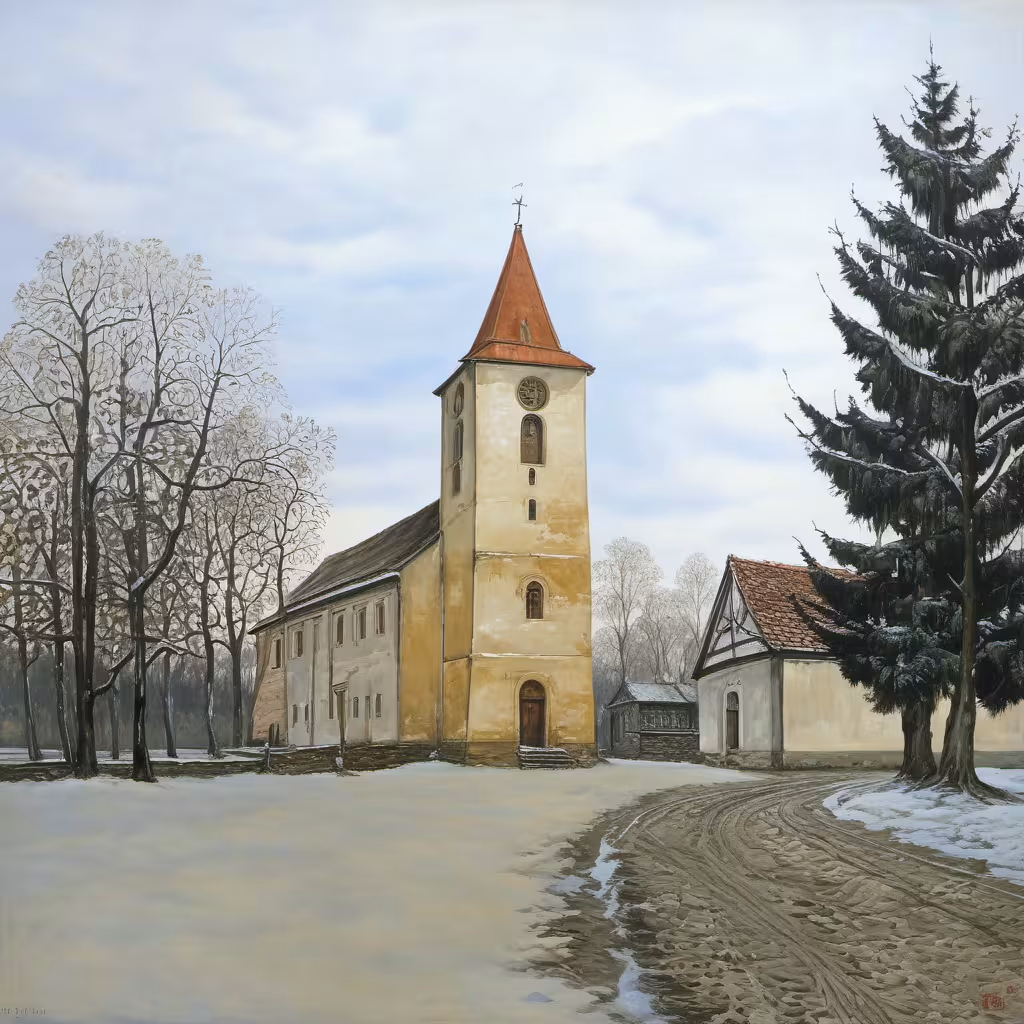
The historical appearance on the left is an AI-generated visualisation and serves as inspiration only.
Historical milestones
- 1746
- Location of St. Vojtěv's painting on the main altar
- 1832
- The official initiation of the church to Saint Vojtech
- 1835-1836
- Restoration after fire, extension of ship and addition of tower
- 1875
- Pseudorenesance adjustment of the facade by the builder Štěpnik
Architectural development
Originally wooden and subsequently Romanesque building was replaced by a Gothic church in the 14th century. In 1836 an empirical treatment of the windows was carried out and in 1875 a pseudorenesance adjustment of the facade was carried out. A gothic presbytery was preserved with radiated ribs and rectangular sacristy.
Historical events
A new church was built after the fire in the late 14th century. In 1832 the temple was officially dedicated to Saint Vojtech. In the years 1835-1836 there was extensive restoration after another fire, including the extension of the ship and the addition of the tower.
Owners
Parish Libice nad Cidlinou
Points of interest
- The church is dedicated to Saint Vojtěv, who lived here for a part of his childhood and youth. - Originally there was a wooden church, which probably served as a burial place for the sons of Nightingale. - The present temple was created in the late 14th century as a substitute for the old Romanesque church after the fire. - In 1875 the builder Štěpník modified the facade in pseudorenesance style. - The interior preserved pulpit, crucifix and organ from the 18th century.
Guide
This guide is narrated by a synthetic voice generated by artificial intelligence.
Show guide text
This text was created by artificial intelligence and has not been editorially reviewed. It may contain inaccuracies.
The Church of Saint Adalbert is a Roman Catholic parish church in Libice nad Cidlinou in the Nymburk district. It stands at the eastern end of the village square and is accompanied by a sexton's cottage and a boundary wall. Its dedication commemorates the most significant native of this place, Adalbert of Slavníkovci. He was the second bishop of Prague and spent part of his childhood and youth in Libice.
On the site of today's building stood first a wooden church. It apparently served as a burial church for the sons of the Slavníkovci family. It was probably dedicated to Saint Boniface, later to Saint George, and was allegedly consecrated by Saint Adalbert himself.
By the end of the 14th century, fire had destroyed the old Romanesque church and a new one was built in its place. From 1746, an image of Saint Adalbert hung on the main altar. The church was officially dedicated to him only in 1832. In the same year, the building was struck by fire again. During restoration in 1835 and 1836, the nave was extended, the windows were given late Empire style, and a tower was added to the church. In 1875, builder Štěpnička from Týnec nad Labem redesigned the façade in a pseudo-Renaissance spirit. From the Middle Ages, a Gothic presbytery and sacristy have been preserved.
The church is single-naved. The wide rectangular nave is vaulted with five bays of barrel vaults with wide semicircular ribs and the vault is approximately 7 metres high. The gallery rests on two pillars. In each side wall of the nave there are five arched windows and on the south side a stone holy water font is set into the wall.
The most valuable part is the presbytery, which is oriented to the east according to medieval principle. It is separated from the nave by a brightly highlighted triumphal arch. It is covered with a cross vault with pear-profiled ribs that converge in a massive keystone. The termination is lit by four pointed windows with tracery. Motifs of trefoil and quatrefoil appear in their tops. At the entrance to the sacristy is a sedilia, a niche in the wall where the priest and his assistants would sit during the service. On the outside of the north wall of the presbytery, three bricked-up niches are visible. These are probably remnants of an Empire oratory that was added in 1835 and demolished in 1926.
The pulpit, crucifix and organ date from the 18th century. The Neo-Gothic main altar is from 1897 and bears a painting by František Mašek from 1836.
A prismatic tower stands at the western façade with the main entrance leading through it. It has large round clocks on all four sides and is crowned with a steep spire.
Tips for visitors
The best time to visit the church of Saint Vojtěv in Libica nad Cidlinou is autumn or spring, where it is quieter and nature offers beautiful colors. These periods also provide ideal lighting conditions for photography.
For the most convenient route we recommend to verify the current connection in the routing system.
When visiting the church, bring protective clothing if you plan to walk through the nearby cemetery. Photography is possible at different times of the day, but the best lighting conditions offer a period before and after the sun.
In the vicinity of the church there is a abolished cemetery with a number of valuable tombstones that are interesting for lovers of history. It is advisable for families with children to prepare fairy tales or information about the history of the place to make the visit more entertaining.
Frequently asked questions
Can the monument be visited?
Religious buildings are usually open mainly during services; at other times a visit is normally arranged with the parish or the operator. We have not verified specific times.
Where is the monument?
Location: Kostelní, Libice nad Cidlinou, Středočeský kraj. The map on this page shows the exact spot.
Why is the monument protected?
It is listed in the Central List of Cultural Monuments of the Czech Republic as a cultural monument (register no. 21003/2-1857).
For kids
Imagine going back to the past... The Middle Ages! When you're standing in front of the Gothic Church of Saint Vojtěv in Libica over Cidlina. Everyone around you will wear cloth clothes and hats on their heads.
How did it look here? Who lived here? What happened here? At the time, Libice was a small town. This is where artisans, farmers and merchants lived. They had a chateau here to protect the city from enemy attacks.
Businesses nearby
Do you run a restaurant, accommodation, shop, museum, rental, wellness or other visitor service near this monument? Show yourself directly to the people heading to it — this is how they will see you in the app and on the web:
Nearby
The church is surrounded by a abolished cemetery with a number of valuable tombstones.
Accommodation nearby
Trips and activities nearby
Guided tours, tickets and activities nearby from GetYourGuide
Affiliate link: if you buy from the partner, we may receive a commission. The price for you does not change.
Search tours and activities →Themed route
Thematic cruise route: Kostel svatého Vojtěcha (Libice nad Cidlinou)
1. St. Vojtěv Church * Type: * Historical landmark * Why is it worth visiting: * This church is one of the oldest Gothic temples in the Czech Republic, built on the site of the older Romanesque church. Its architecture and history attract visitors who are interested in the spiritual and cultural heritage of the region.
2. Cancelled cemetery * Type: * Historical site * Why is it worth a visit: * Surrounded church, this cemetery is home to a number of valuable tombstones. It is a unique example of local history and artistic expression from the past, which offers a view of the lives of the people who shaped this area.
3. Tombs in the cemetery * Type: * Art monuments * Why is it worth visiting: * Each tombstone tells its own story and reflects the historical context of the time in which it was created. Visitors can explore the diversity of styles and motifs that tombstones display.
4. Church Tower * Type: * Architectural element * Why is it worth a visit: * The tower provides not only a view of the surrounding landscape but also allows you to explore the interior of the church from a different perspective. It is an ideal place for photographs and for those looking for quiet moments in historical context.
5. Church courtyard * Type: * Historical area * Why is it worth a visit: * The reservoir is a place where you can relax the view and inquire into the church atmosphere. It is ideal for a moment of rest or for conversations about the history and importance of this monument.
This route offers visitors the opportunity to immerse themselves in the rich history of St. Vojtěv's Church and its surroundings, where each element contributes to an overall understanding of the regional past.
Seasonal recommendations
Spring: In the spring period, the Church of St. Vojtěv in Libica nad Cidlinou is transformed into a great sanctuary due to sweet lighting and greenish nature, which surrounds historical memory. The church may appear in a new light thanks to long summer days and sunny lighting, which highlights its architectural details. Visit him on Tuesday or Wednesday, when the crowd can avoid, and wear a suitable combination for temporary weather - from warm clothes to light jackets.
Summer: Summer is the perfect time to visit St. Vojtěv's Church when the atmosphere is filled with life and nature in full power. The gardens around the church offer a beautiful opportunity for a moment of peace or picnic. However, due to the popularity of the summer months, it is recommended to visit the memory early in the morning to avoid a crowd of tourists. Don't forget to protect yourself from the sun - you carry a umbrella and light clothes.
Autumn: In autumn, the Church of Saint Vojtěv in Libica above Cidlina takes on a unique atmosphere when tree leaves change colour in gold and ore. Beautiful nature is an ideal background for photos, but it can also be a reason for short-term closure of some parts of the monument due to bad weather. The best thing is to visit the church on Tuesday or Wednesday and prepare for colder temperatures - wear a layered combination that allows you to handle both sunny and rainy days.
Winter: The winter visit to St. Vojtěv Church offers a peaceful and quiet space where you can fully focus on its historical details without many other tourists. The atmosphere is especially beautiful during the light modifications or in the snow lighting surrounding the church. Visit the memorial on Tuesday or Wednesday for a milder visit.
Visualizations and artistic views


The visualisations are generated by artificial intelligence and serve as inspiration.
Photos from the area
Real photos taken near the monument


Zdroj a licence jsou uvedeny u každého snímku.
Atmosphere of the place
This atmospheric visualisation of the place and period was generated by artificial intelligence. It is not real footage of the location.
Tips from visitors
No tips yet. Be the first!
Log in and add your tip.
Sources and literature
Photos: cs:User:Zp / CC BY-SA 3.0 — Wikimedia Commons. The author and licence also appear when you hover over the image.
Faktickým podkladem tohoto textu byl článek na Wikipedii, jehož autory jsou přispěvatelé Wikipedie. Článek je dostupný pod licencí CC BY-SA 4.0.
Location on the map






Příběhy a pověsti
Legendy, pověsti a příběhy spjaté s touto památkou
Fotografie návštěvníků
Zatím žádné fotografie. Buďte první, kdo přidá fotografii z návštěvy!
Log in a přidejte svou fotografii nebo hodnoťte.
Za ověřenou návštěvu v aplikaci získáte víc bodů — poznáme podle GPS, že jste na místě.
Reviews and comments