






Kostel svatého Wolfganga (Hnanice) Church
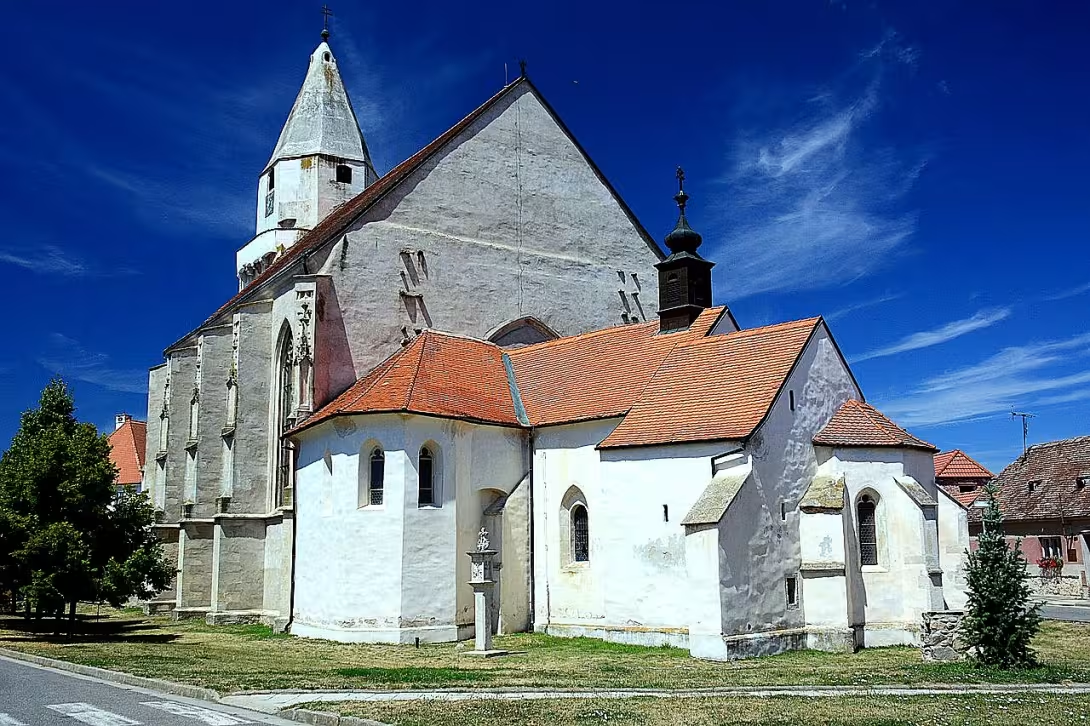
The Church of St. Wolfgang in Hnanice is a remarkable late Gothic church with historical significance, especially its miraculous holes in the chapel of St. Linhart. Located in the village Hnanice in Jihomoravský kraj, this three-boat building dates back to the end of the 15th century and serves as a pilgrimage site until the end of the 18th century. Its architectural development from Gothic origin to baroque modification reflects its rich history and cultural importance.
The church dates back to a small chapel dedicated to St. Wolfgang in the late 13th century, built over a well which is believed to have healing powers. This early structure laid the foundation for what would become an important pilgrimage place. By the end of the 15th century, the need for more space led to the construction of an existing Gothic church. This ambitious project, launched around 1480 by Abbot Pavel of the Loucký monastery, focused on accepting an increasing number of pilgrims and their victims. The building began with the tower in 1482, so the old church remained functional during the transition.
The architectural design of St. Wolfgang Church is a testament to its historical context. The late Gothic style is visible in its three-boat structure and elevated structure. Lorenz Spenning, known for his work on St. Stephen's Cathedral in Vienna, probably led the construction effort. Despite financial constraints and church challenges, the church was completed 1498 with planned but unfinished Chancel. The original Gothic vaults suffered damage in the fire around 1645, which led to its replacement by the lower baroque vaults during the reconstruction between 1657 and 1660.
The Church of St. Wolfgang has recorded various administrative changes throughout its history. In 1518 she obtained independent spiritual administration, while the clergy of the Loucký monastery served as parish priests. But the expansion of Protestantism in the mid-16th century led to the dissolution of this arrangement. The role evolved over time and moved from pilgrimage to parish in the late 18th century as part of Josephine's reforms.
The chapel in the church, known for its miracle well, was a central point of interest. The well, surrounded by a late Renaissance stone frame, was considered a healing property that drew pilgrims until the church status changed in the 18th century. Inside the chapel you will find Baroque elements such as the altar with the statue of St. Wolfgang from 1480 and the statue of the Virgin Mary from the beginning of the 18th century.
Today the Church of St. Wolfgang is a protected cultural monument that reflects its historical and architectural significance. Rebuilding efforts at the end of the 20th century has preserved much of its structure, although some internal elements remain unrestored. Visitors can explore this place to appreciate its mix of Gothic and Baroque styles, along with its historical past as a pilgrimage destination.
St. Wolfgang Church offers a unique view of the region's religious and architectural history. Its permanent legacy as a place of healing and worship makes it a useful visit for interested people to explore the rich tapestry of Czech cultural heritage.
Then and now
Drag the slider to compare how the landmark may have looked when it was built with the view today.
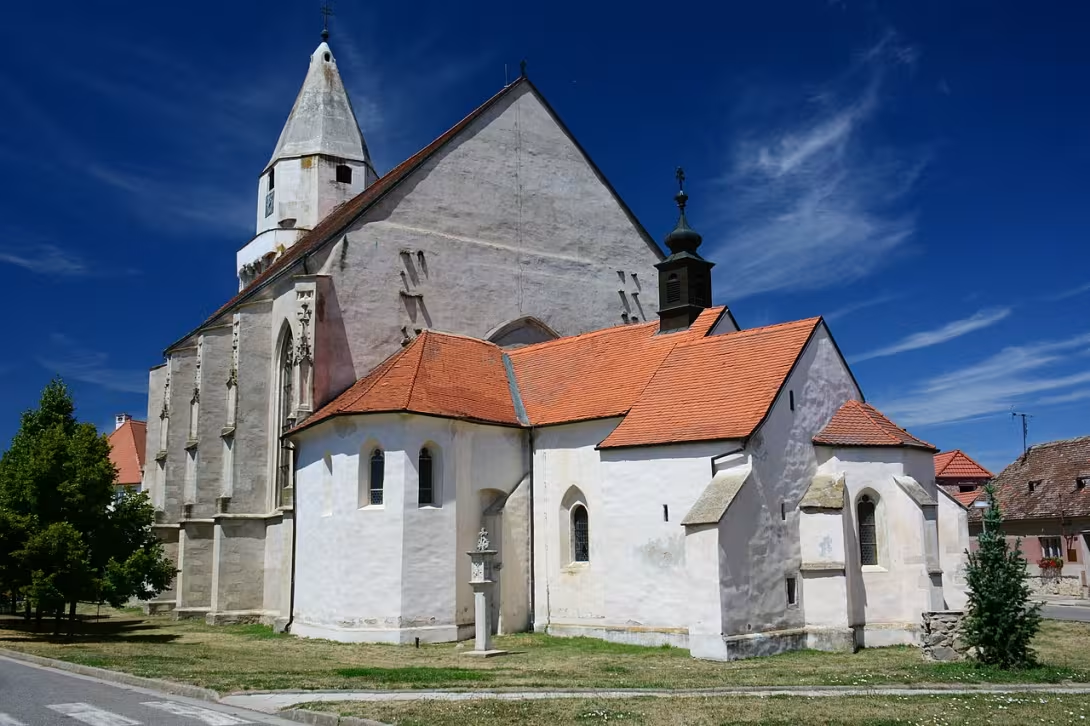

The historical appearance on the left is an AI-generated visualisation and serves as inspiration only.
Historical milestones
- End of 13th Century
- Construction of a small chapel of St. Wolfgang.
- 1480
- The launch of the Gothic skeleton.
- 1482
- The beginning of the tower construction.
- 1498
- Documentation of the construction of the church with invisible presbytery.
- Around 1645
- The fire caused damage to the gothic quantity.
- 1657-1660
- Reconstruction with the replacement of a baroque party.
Architectural development
The original small chapel was replaced by a church dedicated to St. Wolfgang at the end of the 13th century. At the end of the 15th century, a larger Gothic structure was built, with a tower that allowed the old church to remain functional during construction. The Baroque period saw modifications including lower arched ceiling, which replaced the original Gothic.
Historical events
1480: Opening of the new church by abbot Pavel from Loucký monastery.
1510: The consecration of the church by Martin, Bishop of Nikopolis.
1645-1657: The church suffered fire and subsequent reconstruction.
Points of interest
- St. Wolfgang's Church began as a small chapel dedicated to St. Wolfgang at the end of the 13th century, built over a well which is believed to have healing powers. This early structure has put the stage for its development in an important pilgrimage place.
- Despite financial and church challenges during construction, the church was completed 1498 with unfinished Chancel. The original Gothic vault was later replaced by the lower Baroque vault after the fire around 1645.
- The church of St. Wolfgang is remarkable for its late Gothic style, with three-boat structure and niche construction. Lorenz Spenning, known for his work on St. Stephen's Cathedral in Vienna, probably led his construction efforts.
- In 1518 the church gained independent spiritual administration with the clergy from the Loucký monastery serving as parish priests. But this arrangement fell apart during the spread of Protestantism in the mid-16th century.
- The chapel in the church is known for its miraculous well, surrounded by a late Renaissance stone frame and believes it has healing properties. This dragged the pilgrims until the status of the church changed behind Josephine's reforms in the late 18th century.
Guide
This guide is narrated by a synthetic voice generated by artificial intelligence.
Show guide text
This text was created by artificial intelligence and has not been editorially reviewed. It may contain inaccuracies.
Welcome to the historic St. Wolfgang Church in Hnanice! As you stand here, take a moment to absorb your surroundings. In front of you is an impressive late Gothic tripod church with a distinctive tower and chapel dedicated to Saint Linhart. Architectural grandeur reflects centuries of history and devotion.
Let's dive into his origins. At the end of the 13th century there was built a small chapel in honor of St. Wolfgang. This humble beginning laid the foundations for what would become an important pilgrimage. By 1480 the construction of this magnificent Gothic church began, when the work on the tower began two years later in 1482. The completion of the church in 1498 meant a new chapter, although it originally represented unused presbytery.
The architectural path of the church is fascinating. Although originally designed in late Gothic style Lorenz Spenning, its structure underwent significant changes after the fire around 1645, which damaged the original Gothic vault. Between 1657 and 1660 the church was reconstructed with a baroque roof replacing the previous one.
As you wander through this sacred space, note the chapel of St. Linhart. This area has a special place in history because of its connection to the miracle, he believed well that they had healing properties. The legend surrounding this well made a significant contribution to the position of the church as a pilgrimage place until the end of the 18th century.
Several historical figures are linked to the heritage of this church. Pavel, abbot from the monastery Louka and Jan Filipce, olomoucký biskup, played key roles in their history. Their influence is involved in the story of this sacred place.
Now let's explore the fascinating mystery surrounding this place. The legend of the miraculous well in the chapel has taken hold for many centuries. They say he has healing powers, attracting pilgrims from far and wide search for comfort and treatment. This interesting story adds mysteries to your visit.
As you conclude your survey of St. Wolfgang's Church, I urge you to continue to discover its stories and secrets. Every rock and horn holds a piece of history waiting to be discovered. Thank you for joining me on this journey of time and faith. Let your experience inspire reflection and wonder how you move forward.
Frequently asked questions
Can the monument be visited?
Religious buildings are usually open mainly during services; at other times a visit is normally arranged with the parish or the operator. We have not verified specific times.
Where is the monument?
Location: Hnanice, Jihomoravský kraj. The map on this page shows the exact spot.
Why is the monument protected?
It is listed in the Central List of Cultural Monuments of the Czech Republic as a cultural monument (register no. 36736/7-6303).
Businesses nearby
Do you run a restaurant, accommodation, shop, museum, rental, wellness or other visitor service near this monument? Show yourself directly to the people heading to it — this is how they will see you in the app and on the web:
Nearby
ITEX Show interactive overview of the surroundings - restaurants, accommodation, rentals and other places within a 15 km radius.
Data: OpenStreetMap contributors, 15 km radius.
‡ Historical monuments
- Museum Retz im Bürgerspital (5.1 km)
- New Hrade (7.4 km)
- 90 years since the creation of Czechoslovakia (7.8 km)
- Sign to create park (8.5 km)
- Altenberg (10.9 km)
- Kriegerdenkmal (11.1 km)
- Kalenderstein (12.7 km)
- Kriegerdenkmal (13.8 km)
Restaurant and catering
- Stadtcafé Retz (5.1 km - Náimerstraße 5)
- Bürgermeisterstüberl (5.2 km)
- Schlossgasthaus (5.3 km - Schloßplatz 5)
- Restaurant Pizzeria Styl (7.4 km)
- Bermuda Pajzl (8.1 km)
- Gin House (8.1 km)
- Phoenix (8.1 km)
- Premium (8.7 km - Prague 2133 / 100)
Accommodation
- Guesthouse U Hrnčír (0.2 km)
- Hotel Althof Retz (5.1 km - Althofgasse 14)
- Winzerhof Familia Fleischmann (5.5 km - Sommerseite 17)
- Hotel Dukla (7.4 km - Dutch 30)
- water camp Stará Vodárna (7.4 km)
- B & B Pension Grant LUX Znojmo (7.6 km)
- Residente Zvol (7.7 km)
- U Mikuláše (7.7 km)
› Rental and sports
- Sgradit Bike (5.3 km - Hauptplatz 15)
- Topbody (5.6 km - Kremserstraße 28)
- Adidas (6.6 km)
- Regatta Great Outdoors (6.6 km)
- Jan Šuler (7.7 km - Vienna class 7)
- Cyclo Kuchera (8.0 km)
- Sportisimo (8.0 km)
- Bike Service Kamil Jarmara (8.0 km - Pontassievská 16)
© Tourism and nature
- Above Taxation (1.1 km)
- O Dress (2.1 km)
- Shobes (vineyards) (2.2 km)
- Popice (guest.) (3.6 km)
- Pod Sobesem (3.7 km)
- Hrastation (edge) (7.6 km)
- Four Season (7.6 km)
- Tourist information centre (7.7 km)
Accommodation nearby
Themed route
Thematic tour of Itinerary: Hnanice and Surgeons
1. Kostel svatého Wolfganga (Hnanice) - Church Start your journey in the heart of Hnanice with the stunning Church of St. Wolfgang, a remarkable example of Gothic architecture. This church is famous for its historical significance and complex design, making it a mandatory visit for anyone interested in religious history or architectural beauty.
2. Hnanický pond - pond A short walk from the church will lead you to Serena Hnanický Pond. This picturesque pond offers a peaceful escape and is ideal for those who appreciate nature and quiet surroundings. It is an ideal place for a peaceful walk or just enjoy a peaceful atmosphere.
3. Civil Office Hnanice - Town Hall Continue your survey by visiting Obecka street Hnanice, located within walking distance of the church. This building is not only central to local administration but also contains architectural elements that reflect the history and development of the city over the years.
4. Historic houses in the center of town - Historic homes As you meander through the charming streets of Hnanice, time to admire historical houses (historic houses) in the heart of the city. These buildings offer a view of the past with their preserved facades and traditional designs that provide a view of the cultural heritage of the city.
5. Local markets - Local market Quit your tour to live local slush where you can experience local life in full swing. This market is the centre of activity where residents gather to buy fresh products, hand-made goods and interact with each other and offer the authentic taste of the community spirit Hnanice.
This itinerary provides a comprehensive view of the cultural and historical peaks of Hnanice, which ensures an unforgettable visit filled with discovery and appreciation of this charming location.
Seasonal recommendations
Spring: The Church of St. Wolfgang in Hnanice offers one spring experience, the surrounding event is revived by shrub and trees. The sun's rays muscle the interior of the cube in various shades, which means it has a duke function. The walls can expect my crowd, especially on Fridays and Saturdays, so they recommend to build a church in the early afternoon. It should be noted that this Decision is not intended for measures to be taken.
Summer: Summer in Hnanice recalculates large, sunny days that can be included in bone Wolfgang. In this zone, openness and warm atmosphere are ideal for the use of excursion. The walls should be adjusted according to the article at the beginning of the day or parties in order to avoid heat and davom during the summer peak trade.
Autumn: In autumn, they encourage the shareholders of St. Wolfgang's colored shutdown when they translate the leaves into gold and front colours. The sun's rays pass through the tree of the Klenba in none of the above, which gives the church a melancholy view. Wearing warm suits such as jackets or squares is a suitable amount of cold noon.
Winter: The winter visit to St. Wolfgang's skeleton offers a calm and quiet atmosphere. If you wish to ensure that the objective necessary to achieve the objective of common interest is achieved. The wall materials should be provided with such clothing, such as fur coats or blankets, and appropriate shoes for your own health. To build a church in the early afternoon is ideal for providing optimal light before setting the sun.
Visualizations and artistic views


The visualisations are generated by artificial intelligence and serve as inspiration.
Photos from the area
Real photos taken near the monument


Zdroj a licence jsou uvedeny u každého snímku.
Tips from visitors
No tips yet. Be the first!
Log in and add your tip.
Sources and literature
Photos: GuentherZ / CC BY 3.0 — Wikimedia Commons. The author and licence also appear when you hover over the image.
Faktickým podkladem tohoto textu byl článek na Wikipedii, jehož autory jsou přispěvatelé Wikipedie. Článek je dostupný pod licencí CC BY-SA 4.0.
Location on the map




Příběhy a pověsti
Legendy, pověsti a příběhy spjaté s touto památkou

Příběh: Kostel svatého Wolfganga (Hnanice)
Bylo to v pondělí ráno, kdy se Martin, biskup Nikopolis, vydal ke kostelu svatého Wolfganga s hlavou zatopenou obavami a neklidným srdcem. Jeho krok byl váha…
Číst příběh
Pověst: Kostel svatého Wolfganga (Hnanice)
Podle místní pověsti, která se v Hnanicích vypráví od nepaměti, vše začalo v době, kdy ves byla ještě mladá a lesy kolem znojemských strání husté jako temná …
Číst příběhFotografie návštěvníků
Zatím žádné fotografie. Buďte první, kdo přidá fotografii z návštěvy!
Log in a přidejte svou fotografii nebo hodnoťte.
Za ověřenou návštěvu v aplikaci získáte víc bodů — poznáme podle GPS, že jste na místě.
Reviews and comments