






Kostel svatého Zikmunda (Králova Lhota) Church
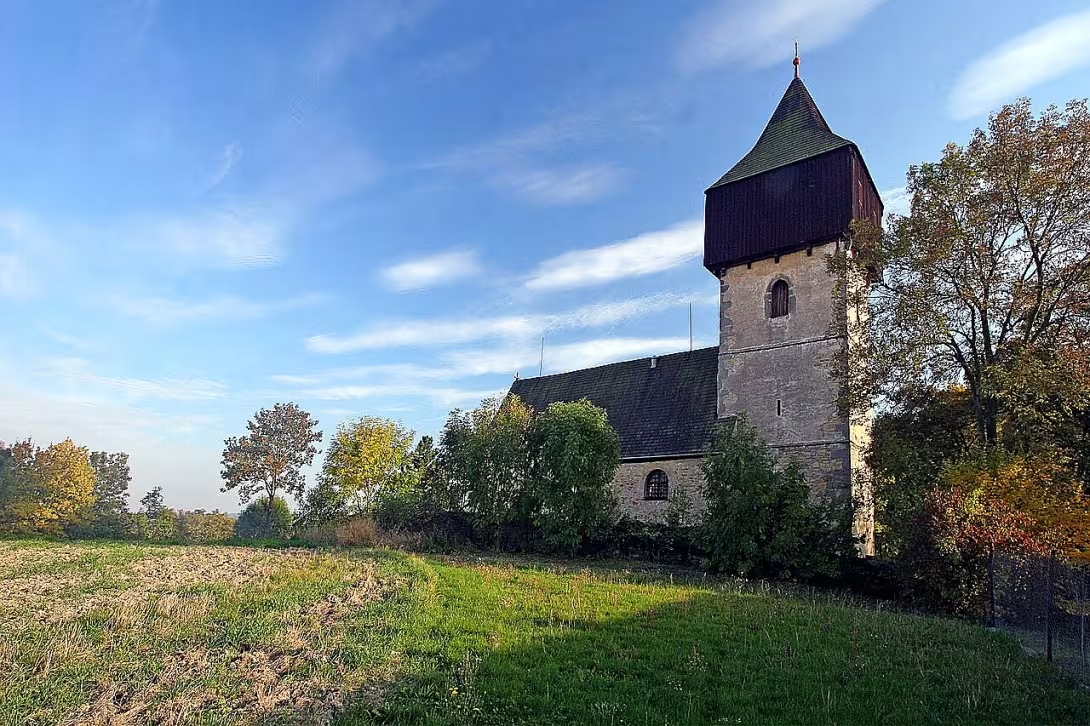
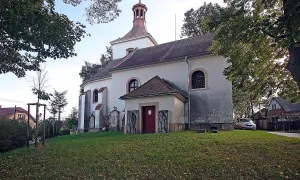
The Church of Saint Sigismund in Králova Lhota is a notable architectural feature within the Czech landscape, recognized for its historical significance and cultural heritage. Situated on elevated ground at the center of a cemetery in the village's eastern part, this Roman Catholic filial church belongs to the parish of České Meziříčí. Constructed in the mid-14th century, it has undergone several renovations over time, evolving from its Gothic origins to its current Baroque style by 1771. The church is designated as a cultural monument of the Czech Republic.
First mentioned in historical records in 1344, construction likely began around 1366 during Charles IV's reign. This era marked significant architectural and religious development across Europe, with Bohemia playing an important role under his rule. The initial Gothic design reflects contemporary architectural trends, featuring elements like latticed triumphal arches.
Throughout its history, the church has faced challenges requiring restoration. In 1641, it suffered fire damage but was restored by 1644. Another major incident in 1759 led to further damage and a transformation into its current Baroque form by 1771. These renovations have created a unique blend of Gothic origins with Baroque elements, including flat-roofed spaces and a wooden shingle roof.
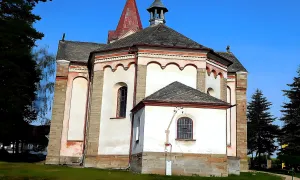
Architecturally, the Church began as a single-nave structure with an oblong sacristy. The presbytery ends in a right angle, while the presbytery, sacristy, and nave feature flat roofs. Notably, the triumphal arch retains its Gothic latticed design, and the loft rests on two columns. A modestly pointed entrance portal is located on the southern side. The western façade features a three-story bell tower with a barrel-vaulted belfry supported by corbels, topped with wooden shingles similar to those covering the rest of the structure. Rectangular windows are present, and the first two floors have narrow lancet windows.
The interior houses an altar dedicated to its patron saint, adorned with an intricately carved acanthus frame from 1679, accompanied by newer statues of saints. Baroque elements include a pulpit and organ dating back to around 1700, highlighting artistic evolution within the church's interior over time.
Surrounding the church is a historically valuable cemetery wall, also listed as a cultural monument. This wall replaced an original wooden cross in 1880 with a new sandstone one, adding historical depth. In 1934, the Rýdlo couple donated a new bell, known as an umíráček, enriching the church's legacy.
Today, the Church of Saint Sigismund remains a focal point in Králova Lhota, attracting visitors with its rich history and architectural beauty. Services are held on the first Sunday of each month at 2:00 PM, offering opportunities for worship and exploration. Its enduring presence as a cultural monument makes it a worthwhile destination for those interested in Czech heritage and Gothic-Baroque architecture.
Visiting the Church of Saint Sigismund offers a unique glimpse into Králova Lhota's historical tapestry, where architectural evolution and cultural significance converge. Its storied past and preserved beauty invite exploration, making it an enriching experience for history enthusiasts and casual visitors alike.
Then and now
Drag the slider to compare how the landmark may have looked when it was built with the view today.
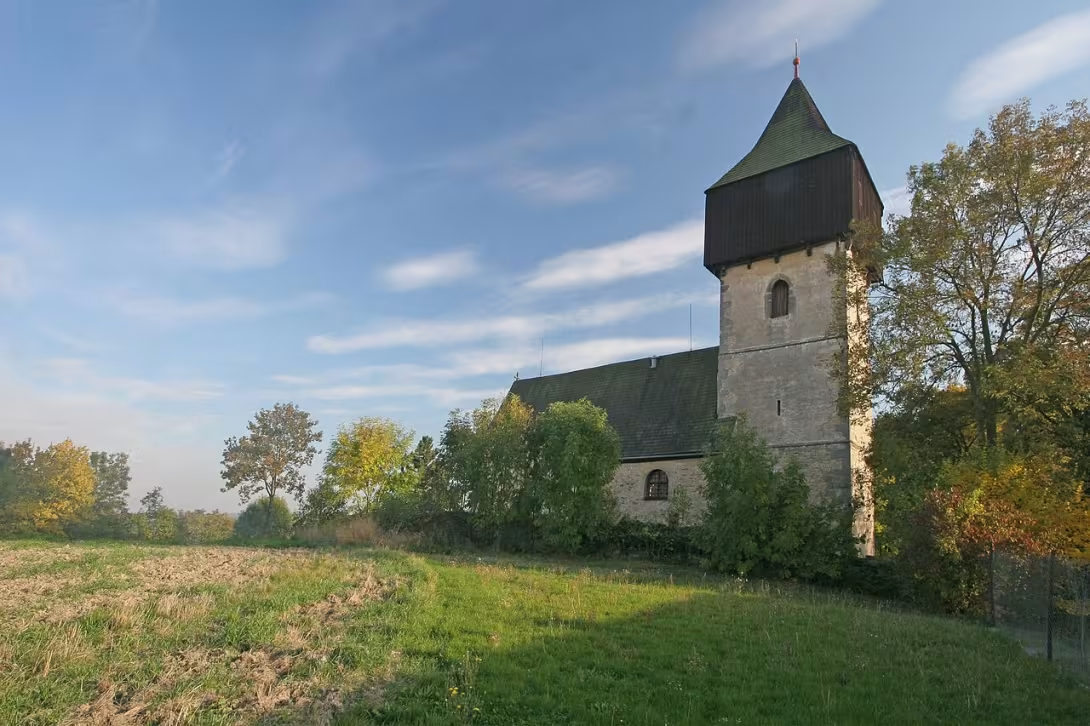

The historical appearance on the left is an AI-generated visualisation and serves as inspiration only.
Historical milestones
- 1344
- The original Gothic church is mentioned.
- 1641
- The church was damaged by fire.
- 1644
- Restoration of the church completed.
- 1759
- The church suffered damage again and was restored in Baroque style by 1771.
Architectural development
The Church of Saint Sigismund began as a Gothic structure with notable features such as a latticed triumphal arch. Over time, it has been rebuilt and renovated multiple times due to fires and other damages. The current Baroque style was established in the late 18th century, featuring flat-roofed spaces and a wooden shingle roof.
Historical events
The original Gothic church was mentioned in records from 1344, with construction believed to have started around 1366 during the reign of Charles IV.
The church suffered significant damage by fire in 1641 and underwent restoration by 1644.
In 1759, it was damaged again and restored to its current Baroque form by 1771.
Points of interest
- The Church of Saint Sigismund was originally constructed during the reign of Charles IV, a significant period for Bohemia's cultural and architectural development, reflecting trends seen across Europe at that time.
- Despite being restored multiple times, including after fire damage in 1641, the church retains its original Gothic latticed triumphal arch, showcasing resilience and historical continuity within its structure.
- The transformation to Baroque style in 1771 introduced unique elements such as a wooden shingle roof and flat-roofed spaces, blending with the original Gothic design to create a distinctive architectural fusion.
- In 1934, the church received a new bell known as an umíráček from the Rýdlo couple, adding to its cultural heritage and serving as a symbol of community involvement in preserving local history.
- The cemetery wall surrounding the church is also listed as a cultural monument, with its replacement of an original wooden cross by a sandstone one in 1880 reflecting evolving practices in memorialization and preservation.
Guide
This guide is narrated by a synthetic voice generated by artificial intelligence.
Show guide text
This text was created by artificial intelligence and has not been editorially reviewed. It may contain inaccuracies.
Welcome to the Church of Saint Sigismund in Králova Lhota, a remarkable testament to both history and architecture nestled within this picturesque locale. As you stand here, take a moment to absorb the serene presence of the church with its distinctive Gothic arches and flat-roofed spaces that characterize its design. This structure is not just any building; it's a witness to centuries of change and adaptation.
The origins of this church date back to the mid-14th century, during the reign of Charles IV—a period renowned for Bohemia’s cultural and architectural flourishing. The era was marked by significant developments across Europe, with influences that are still visible in structures like this one today. Initially constructed as a Gothic edifice, it has since evolved through various renovations, particularly after fires in 1641 and again in 1759. These events led to its transformation into the Baroque style we see now, completed by 1771.
As you look around, notice the intricate interplay of arches that frame your view—these are remnants of its Gothic roots. The flat-roofed spaces add a unique dimension to the church's silhouette against the landscape. Despite undergoing numerous restorations, including significant ones after fire damage in 1641 and later in Baroque style, the essence of the original architectural vision still resonates here.
While specific architects remain unknown, the church’s history is interwoven with the broader narrative of Králova Lhota and its surrounding regions. It stands as a filial to the parish of České Meziříčí, continuing to serve spiritual needs while also being protected for its historical significance.
One intriguing aspect of this church is its resilience through time—how it has withstood the test of both nature's fury and human intervention. This resilience speaks volumes about the community’s dedication to preserving their cultural heritage.
Now, as you continue your exploration, allow yourself to delve deeper into the stories that these walls might tell if they could speak. Imagine the countless footsteps that have crossed its threshold over centuries, each leaving a mark on history.
Thank you for joining me in this journey through time at the Church of Saint Sigismund. I hope it inspires you to discover more about the rich tapestry of history and architecture around us. Enjoy your visit!
Frequently asked questions
Can the monument be visited?
Religious buildings are usually open mainly during services; at other times a visit is normally arranged with the parish or the operator. We have not verified specific times.
Where is the monument?
Location: Králova Lhota, Královéhradecký kraj. The map on this page shows the exact spot.
Why is the monument protected?
It is listed in the Central List of Cultural Monuments of the Czech Republic as a cultural monument (register no. 45450/6-2313).
Businesses nearby
Do you run a restaurant, accommodation, shop, museum, rental, wellness or other visitor service near this monument? Show yourself directly to the people heading to it — this is how they will see you in the app and on the web:
Events nearby


Zdroj akcí: otevřená data měst a obcí ČR (Národní katalog otevřených dat) a kalendář akcí Národního památkového ústavu.
Nearby
The church stands on elevated ground at the center of a cemetery in the eastern part of Králova Lhota. It dominates the surrounding landscape and is accompanied by a historic cemetery wall.
Accommodation nearby
Themed route
Thematic Walking Tour: Králova Lhota and the Church of St. Sigismund
1. Church of St. Sigismund (Králova Lhota)
Type: Historical Landmark
Why Visit: The Church of St. Sigismund, situated on elevated ground at the heart of a cemetery in the eastern part of Králova Lhota, is an architectural gem that dominates the landscape. Its historical significance and stunning views make it a must-visit for anyone interested in religious architecture or local history.
2. Historic Cemetery
Type: Cultural Site
Why Visit: Surrounding the Church of St. Sigismund is a historic cemetery, enclosed by an ancient wall that adds to its serene and contemplative atmosphere. The cemetery offers a glimpse into the past with its well-preserved tombstones and epitaphs, providing insight into the lives of those who once lived in the area.
3. Cemetery Wall
Type: Architectural Feature
Why Visit: The historic cemetery wall is an impressive structure that not only serves as a boundary but also stands as a testament to the craftsmanship of its time. Walking along this wall offers a unique perspective on the church and cemetery, allowing visitors to appreciate the harmonious blend of nature and architecture.
This tour provides a focused exploration of Králova Lhota's central historical site, offering insights into its cultural heritage through architecture and history.
Seasonal recommendations
Spring: The arrival of spring at the Church of Saint Sigismund in Králova Lhota brings a refreshing atmosphere, with blossoming flowers and lush greenery framing this historic site. The gentle warmth of the sun enhances the natural beauty surrounding the church, making it an ideal time for photography enthusiasts to capture vibrant landscapes. As the weather is generally mild but can be unpredictable, visitors are advised to wear layers that can easily be adjusted to accommodate sudden temperature changes. While crowds are moderate during this season, arriving early in the morning allows one to enjoy a quieter experience and fully appreciate the serene environment.
Summer: Summer at the Church of Saint Sigismund offers long daylight hours and warm temperatures, perfect for exploring the church's architectural details and enjoying outdoor activities nearby. The lush greenery is at its peak, providing a picturesque backdrop that enhances the overall charm of Králova Lhota. However, this season also attracts more visitors, especially during weekends and holidays, so it’s wise to plan your visit on weekdays or arrive early to avoid the crowds. Comfortable walking shoes and light clothing are recommended due to the warmer weather, along with carrying water to stay hydrated while exploring.
Autumn: Autumn transforms the Church of Saint Sigismund into a stunning canvas of warm colors, as the leaves turn shades of red, orange, and gold. The crisp air adds a magical quality to the atmosphere, making it an enchanting time for photography or leisurely walks around the church grounds. While the weather can be variable with occasional rain showers, layers are advisable to adapt to changing conditions throughout the day. As the tourist season winds down, crowds become less dense, allowing visitors to enjoy a more peaceful experience and fully immerse themselves in the seasonal beauty.
Winter: Winter envelops the Church of Saint Sigismund in a serene blanket of snow, creating a picturesque and tranquil setting that is particularly enchanting during the holiday season. The church’s architecture stands out against the white landscape, offering unique photo opportunities and a sense of quiet reflection. Visitors should dress warmly with coats, hats, gloves, and scarves to comfortably explore the site. Although fewer people visit during this time, the cold weather can make outdoor exploration brief, making it a perfect season for those seeking a peaceful retreat.
Visualizations and artistic views


The visualisations are generated by artificial intelligence and serve as inspiration.
Photos from the area
Real photos taken near the monument


Zdroj a licence jsou uvedeny u každého snímku.
Tips from visitors
No tips yet. Be the first!
Log in and add your tip.
Sources and literature
Photos: Petr1888 / CC BY-SA 3.0 — Wikimedia Commons. The author and licence also appear when you hover over the image.
Faktickým podkladem tohoto textu byl článek na Wikipedii, jehož autory jsou přispěvatelé Wikipedie. Článek je dostupný pod licencí CC BY-SA 4.0.
Location on the map

Příběhy a pověsti
Legendy, pověsti a příběhy spjaté s touto památkou
Fotografie návštěvníků
Zatím žádné fotografie. Buďte první, kdo přidá fotografii z návštěvy!
Log in a přidejte svou fotografii nebo hodnoťte.
Za ověřenou návštěvu v aplikaci získáte víc bodů — poznáme podle GPS, že jste na místě.
Reviews and comments