






kostel svatého Zikmunda (Popice) Church
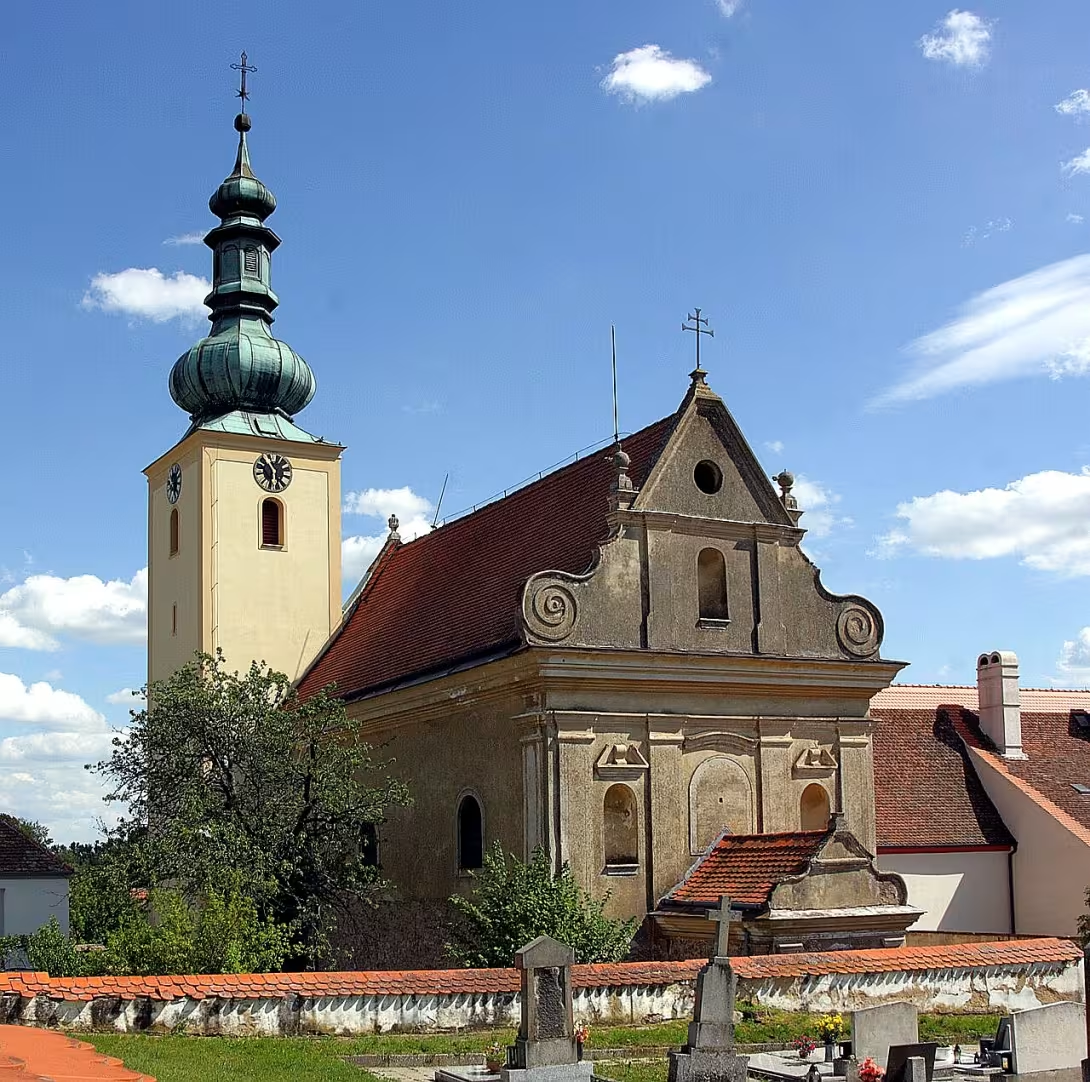
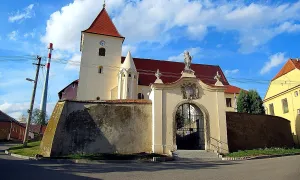
The Church of Saint Sigismund in Popice is a Roman Catholic parish church situated at the village's heart, part of Znojmo. This architectural gem features a manieristic style with an early Gothic core from the late 13th century. Its historical significance is underscored by its status as a cultural monument in the Czech Republic, along with surrounding structures like the parish house and cemetery wall. The church has undergone significant renovations over time, including a major reconstruction in 2015 that restored its façade and copper elements.
The origins of the Church of Saint Sigismund date back to the late 13th century during Bohemia's political and cultural developments under King Wenceslaus II. This era marked a shift from Romanesque to Gothic architectural styles across Europe, reflected in the church's early Gothic core. The chancel was built in the first quarter of the 14th century, followed by the tower at the end of the 15th century. Historical records indicate that the tower underwent significant renovations in 1752 and further repairs in 1902.
Architecturally, the church is an oriented longitudinal single-nave structure made from quarry stone and bricks. Its chancel features a five-sided closure with a cross-ribbed vault, while the nave has a net vault covered by a gable roof. The four-sided tower includes a rectangular sanctuary in its northern wall and a Gothic arched entrance to the bell chamber. Noteworthy elements within the church include two altars: one dedicated to Saint Sigismund and another to Our Lady of Help. The main altar dates back to 1725, while the side altar likely originates from the mid-18th century. Additionally, the church houses a monstrance from 1520 and four bells originally cast in 1698 but recast after World War I and again in 1923.
Throughout its history, the Church of Saint Sigismund has experienced various changes in ownership and administration, primarily under Roman Catholic jurisdiction. The parish house, built in the early 18th century, stands out with its decorative facade and grand entrance portal. In the mid-18th century, a protective wall with an entrance gate was constructed near the church.
The church is surrounded by a cemetery and lies close to Charles Sealsfield's museum, housed in his birthplace. This proximity adds cultural interest for visitors. The church itself houses significant artistic works, including a painting of Saint Sigismund from 1760 by Johann Leopold Daysigner and decorative paintings above the choir loft by Adalbert Radda around 1784.
Today, the Church of Saint Sigismund remains an accessible and cherished historical site. Its rich history, architectural evolution, and cultural significance make it a worthwhile visit for anyone interested in exploring Czech heritage. The church offers insights into the past and serves as a testament to the enduring legacy of religious and artistic traditions in the region. Visitors are invited to explore this remarkable monument and appreciate its historical and cultural value.
Then and now
Drag the slider to compare how the landmark may have looked when it was built with the view today.
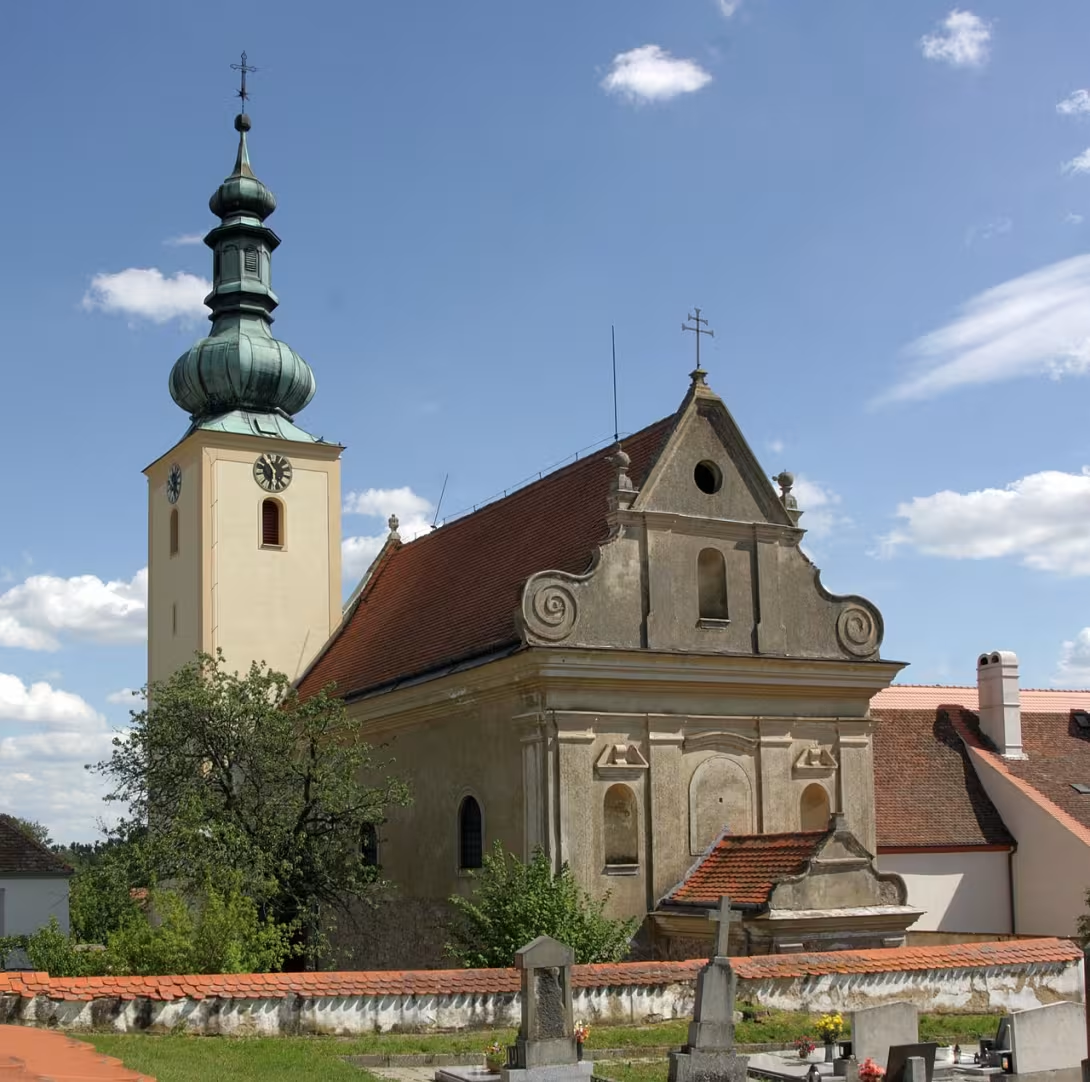
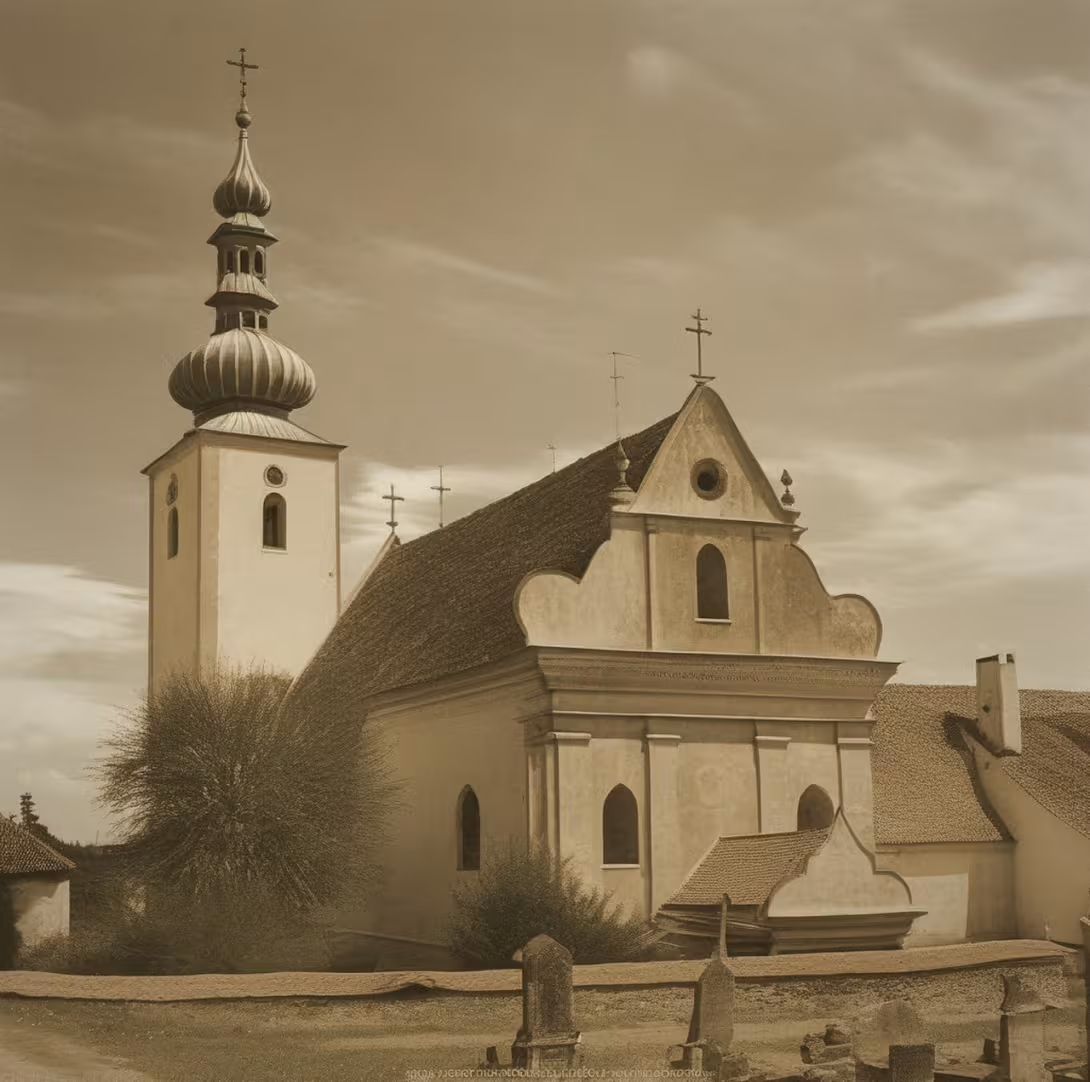
The historical appearance on the left is an AI-generated visualisation and serves as inspiration only.
Historical milestones
- 1290
- Založení kostela s gotickým jádrem.
- 1300
- Výstavba choru v první čtvrtině 14. století.
- 1490
- Postavení věže na konci 15. století.
- 1752
- Významné opravy věže provedeny.
- 1902
- Další opravy věže provedeny.
- 2015
- Hlavní rekonstrukce kostela, obnoveno fasáda a kovové prvky.
Architectural development
Originally featuring a late Gothic core from the late 13th century, the Church of Saint Sigismund underwent several architectural phases. The tower was added at the end of the 15th century and later rebuilt in 1752. In the 17th century, the nave was extended, and by the mid-18th century, a protective wall with an entrance gate was constructed near the church.
Historical events
The church's tower was added at the end of the 15th century.
A significant renovation occurred in 1752, followed by further repairs in 1902.
Points of interest
- The Church of Saint Sigismund's monstrance dates back to 1520, a rare artifact that has survived through centuries and witnessed multiple reconstructions of the church itself. - Johann Leopold Daysigner, who painted the image of Saint Sigismund in 1760, is not widely known outside art history circles, yet his work remains an integral part of the church's artistic heritage. - The four bells originally cast in 1698 were recast twice—once after World War I and again in 1923—highlighting their resilience and importance to the parish over centuries.
Guide
This guide is narrated by a synthetic voice generated by artificial intelligence.
Show guide text
This text was created by artificial intelligence and has not been editorially reviewed. It may contain inaccuracies.
Welcome to the heart of Popice, where history and spirituality converge at the Church of Saint Sigismund. As you stand before this architectural gem, take a moment to absorb its serene presence in the village center, part of Znojmo. The church's façade whispers tales from centuries past, inviting you into a world where artistry meets devotion.
The story of this sacred site begins in 1290 with the establishment of a church featuring an early Gothic core. As you gaze upon its structure, imagine craftsmen meticulously shaping stone in the late 13th century to create what would become a cornerstone of local faith and community life. By the first quarter of the 14th century, the choir was constructed, adding layers of spiritual depth and architectural complexity.
As we move through time, notice how the church's tower, erected at the end of the 15th century, stands as a testament to evolving architectural ambitions and techniques. The tower underwent significant modifications in 1752 and again in 1902, each phase reflecting broader historical narratives and local dedication to preserving this spiritual landmark.
The Church of Saint Sigismund is not just a structure; it's an embodiment of history with its manieristic style gracefully complementing the Gothic core. While exploring, pay attention to how these styles blend seamlessly, creating a unique aesthetic that has stood the test of time.
Though many architects who contributed to this church remain unknown, their legacy lives through every stone and stained glass window. The church's main reconstruction in 2015 revitalized its façade and metal elements, ensuring it continues to inspire awe and reverence for generations to come.
A hidden gem within this sacred space is the monstrance dating back to 1520. This rare artifact has survived numerous reconstructions of the church itself, silently witnessing centuries of devotion and change. It's a tangible connection to those who came before us, offering a glimpse into the spiritual life that has unfolded here over the years.
Johann Leopold Daysigner, an artist whose work may not be widely known outside art history circles, left his mark on this church in 1760 with his painting of Saint Sigismund. His contribution adds another layer to the rich tapestry of stories and artistic endeavors that have shaped this place.
As you prepare to leave, let the Church of Saint Sigismund linger in your mind as a symbol of resilience, artistry, and faith. We invite you to explore further, not just within these walls but also within yourself, reflecting on the history and spirituality that resonate through this remarkable site. Thank you for joining us today, and may your journey continue with curiosity and wonder.
---
This audio guide is designed to enrich your visit, offering insights into the historical and architectural significance of the Church of Saint Sigismund in Popice. We hope it enhances your appreciation of this cherished landmark.
Tips for visitors
The best time to visit the Church of Saint Sigismund in Popice is during late spring or early autumn when the weather is mild, and the surrounding landscape is lush with greenery. This period provides a pleasant atmosphere for exploring both the church's architectural beauty and its serene cemetery surroundings. Additionally, these seasons typically have fewer tourists compared to summer, allowing for a more tranquil experience.
Parking and transportation options are convenient at Popice. Visitors can park their vehicles near the village center or use public transport to reach the location. For those traveling by car, it's advisable to check local maps or GPS services for parking availability close to the church. Public transport details should be verified through a travel app or website to ensure smooth access.
When visiting the Church of Saint Sigismund, consider bringing comfortable walking shoes as you may want to explore the nearby cemetery and Charles Sealsfield's museum. A camera is recommended to capture the unique manieristic style of the church and its early Gothic core. Additionally, carrying a light jacket or umbrella might be useful in case of sudden weather changes.
For photography enthusiasts, the best spots around the Church of Saint Sigismund include the front facade with its decorative elements and the surrounding cemetery for capturing serene landscapes. The lighting is ideal during late morning or early afternoon when the sun illuminates the church's features without harsh shadows. Exploring the area at these times can provide excellent photo opportunities.
Nearby, within a 30-minute drive, visitors can explore Charles Sealsfield's museum, which offers insights into local history and culture. The museum is located close to the church and provides an enriching experience for those interested in regional heritage. For families with children, this area offers educational content that complements their visit to the historical site.
Businesses nearby
Do you run a restaurant, accommodation, shop, museum, rental, wellness or other visitor service near this monument? Show yourself directly to the people heading to it — this is how they will see you in the app and on the web:
Nearby
Located near the village center, the Church of Saint Sigismund is surrounded by a cemetery and lies close to Charles Sealsfield's museum. The area features a protected building serving as the parish house with distinctive decorative facades.
Accommodation nearby
Themed route
Thematic Walking Tour: Church of Saint Sigismund and Surroundings
1. Church of Saint Sigismund (Popice) - *Type:* Historical Landmark - *Why Visit:* The Church of Saint Sigismund stands as a central piece of Popice's architectural heritage, offering visitors a glimpse into the region's rich history with its distinctive design and serene atmosphere. Its proximity to the village center makes it an accessible starting point for exploring local culture.
2. Cemetery - *Type:* Historical Site - *Why Visit:* Adjacent to the Church of Saint Sigismund, the cemetery provides a tranquil space that complements the church's historical significance. It offers insights into the community's heritage and serves as a reflective area for visitors interested in local history.
3. Charles Sealsfield Museum - *Type:* Cultural Site - *Why Visit:* Located near the Church of Saint Sigismund, this museum celebrates the life and works of Charles Sealsfield, an influential figure known for his literary contributions. The museum provides a deeper understanding of cultural narratives that have shaped the region.
4. Parish House - *Type:* Protected Building - *Why Visit:* This distinctive building serves as the parish house with decorative facades that highlight the area's architectural charm. Its proximity to the church and museum makes it an ideal spot for appreciating local craftsmanship and historical architecture.
This tour offers a cohesive exploration of Popice, focusing on its cultural and historical landmarks while maintaining a manageable walking distance between sites.
Seasonal recommendations
Spring: Visiting the Church of Saint Sigismund during spring offers a unique experience as nature begins to awaken around Popice. The church is enveloped in soft pastel hues, with blooming flowers and budding trees creating a picturesque setting that enhances its historical charm. This season provides an opportunity for tranquil reflection amidst the gentle sounds of chirping birds and rustling leaves. For visitors planning their trip during this time, it's advisable to wear comfortable layers as temperatures can be mild but unpredictable. Arriving in the late morning allows you to avoid any residual dew on paths that might make early walks a bit slippery.
Summer: The summer months bring vibrant life to the Church of Saint Sigismund, with lush greenery and long daylight hours enhancing its architectural beauty. This is an ideal time for photography enthusiasts who wish to capture the church bathed in natural light. However, it's important to note that this season can attract larger crowds, especially during peak tourist times. To ensure a more serene visit, consider arriving early in the morning or later in the afternoon when the sun isn't as intense. Light and breathable clothing is recommended, along with sunscreen and a hat for protection against the summer heat.
Autumn: Autumn at the Church of Saint Sigismund offers a breathtaking display of colors as the foliage turns into shades of amber, gold, and crimson. The crisp air and softer light provide an almost mystical atmosphere, making it perfect for those seeking a peaceful retreat from the bustling world. This is also a great time to enjoy outdoor activities in the surrounding countryside before winter sets in. Visitors should dress warmly in layers as temperatures can drop significantly by late afternoon. Wearing sturdy shoes is advisable due to potentially slippery paths covered with fallen leaves.
Winter: The Church of Saint Sigismund takes on an ethereal quality during the winter months, when snow blankets the landscape and creates a serene, almost magical atmosphere. The stark contrast between the white surroundings and the church's historic architecture can be quite striking. However, winter visits require some practical considerations: shorter opening hours mean it’s wise to plan your visit early in the day. Dress warmly with thermal layers, gloves, and hats, as temperatures can be quite low. Snowy paths may also be slippery, so appropriate footwear is essential for a safe exploration of this historic site.
Visualizations and artistic views


The visualisations are generated by artificial intelligence and serve as inspiration.
Photos from the area
Real photos taken near the monument


Zdroj a licence jsou uvedeny u každého snímku.
Tips from visitors
No tips yet. Be the first!
Log in and add your tip.
Sources and literature
Fotografie: RomanM82 / CC BY-SA 3.0 — Wikimedia Commons. The author and licence also appear when you hover over the image.
Faktickým podkladem tohoto textu byl článek na Wikipedii, jehož autory jsou přispěvatelé Wikipedie. Článek je dostupný pod licencí CC BY-SA 4.0.
Location on the map




Příběhy a pověsti
Legendy, pověsti a příběhy spjaté s touto památkou

Fotografie návštěvníků
Zatím žádné fotografie. Buďte první, kdo přidá fotografii z návštěvy!
Přihlaste se a přidejte svou fotografii nebo hodnoťte.
Za ověřenou návštěvu v aplikaci získáte víc bodů — poznáme podle GPS, že jste na místě.
Reviews and comments