






Kostel svatých Petra a Pavla (Mnichov) Church
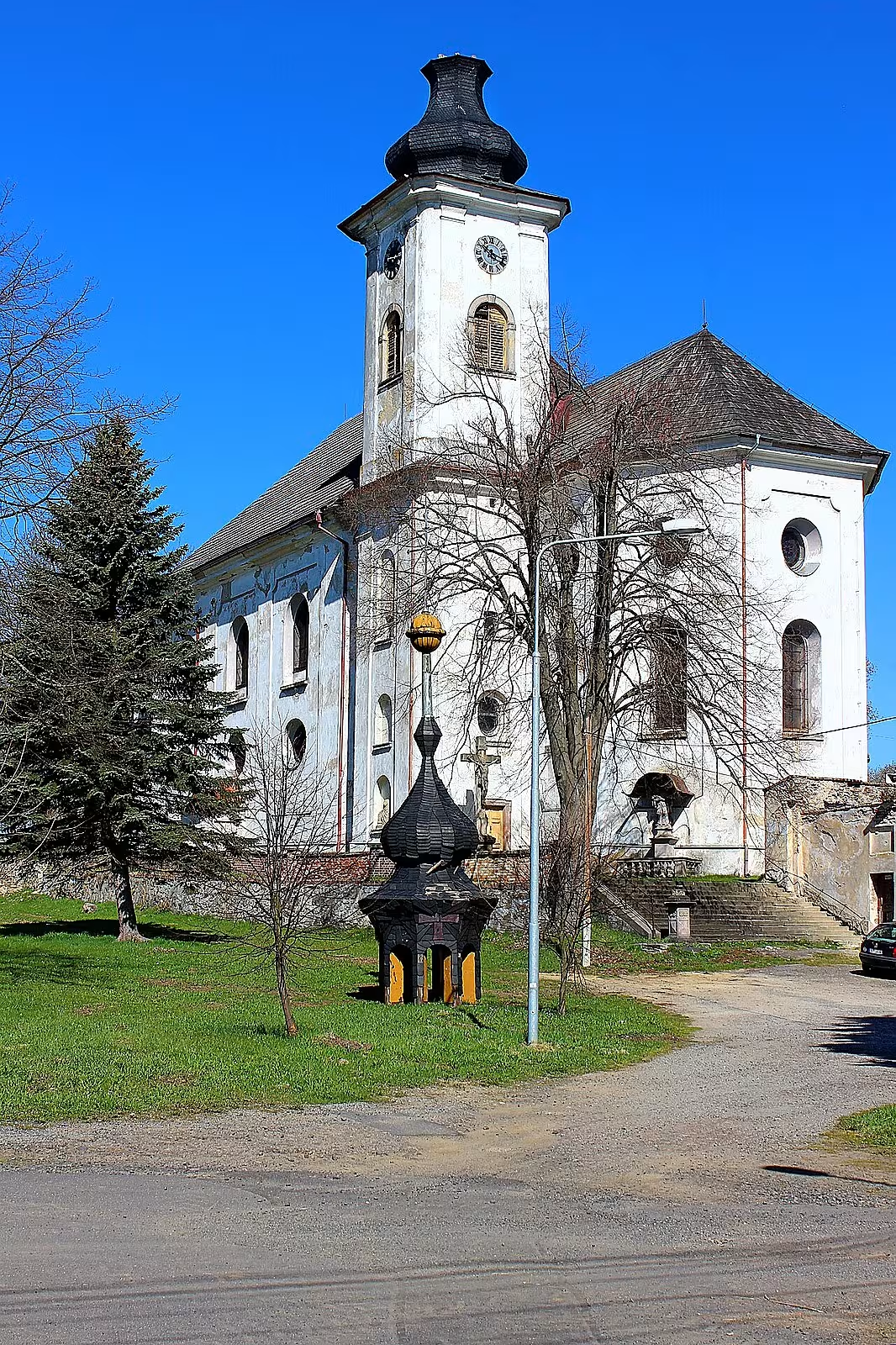
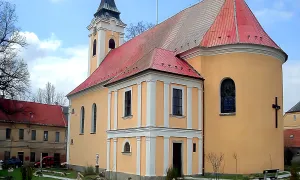
The Church of Saints Peter and Paul in Munich is a Roman Catholic filial church with historical significance dating back to at least the 13th century. Situated in the village of Munich within the Karlovarský kraj region, this baroque-style church has been recognized as a cultural monument since 1963. Originally built from wood, it underwent several transformations and expansions over time, becoming a parish church by the mid-14th century. The most notable reconstruction occurred between 1719 and 1725 under architect Johann Wolfgang Braunbock, marking its significance in architectural history.
The origins of the Church of Saints Peter and Paul can be traced back to an earlier settlement from the 12th century, centered around a pilgrimage chapel dedicated to Saint Siard. However, this initial structure was lost due to the plague, leaving only foundations and legends behind. By the 13th century, a wooden church dedicated to Saints Peter and Paul was established on its current site. This early church underwent significant changes by 1320 when it was expanded with masonry constructions. It became a parish church before 1384, serving several surrounding communities until administrative reforms in 1784.
Architecturally, the church reflects various phases of development. The initial wooden structure evolved into a more robust edifice with stone additions in 1320. Despite suffering damage during the Thirty Years' War in the early 17th century, it was later reconstructed in baroque style between 1719 and 1725 under Johann Wolfgang Braunbock's guidance. This reconstruction introduced significant changes, including a new bell tower replacing an older wooden one by 1609. The church features a nave with slightly skewed corners measuring 27 meters long and 19 meters wide, complemented by a three-aisled presbytery on the eastern side. Its façade is adorned with pilasters, while windows in both floors enhance its illumination.
Throughout its history, the Church of Saints Peter and Paul has seen various administrative changes and renovations. The church's tower received its final roofing in 2017 after six years of restoration work. A statue of Saint John Nepomuk from 1880, originally near the old bell tower, now stands by the apse, adding to the site’s historical charm.
Today, the Church of Saints Peter and Paul remains an architectural and cultural landmark in Munich. It is situated on a hill at the western edge of the village, dominating the landscape with its baroque features. The church's proximity to the former parish house and an abandoned old cemetery adds layers to its historical narrative. Visitors are drawn not only to its architectural beauty but also to its rich history that reflects broader cultural developments in Bohemia during the Habsburg Monarchy era.
The Church of Saints Peter and Paul is more than just a place of worship; it is a testament to resilience and transformation through centuries. Its preservation as a cultural monument underscores its importance, inviting visitors to explore its storied past and appreciate its architectural splendor. Whether you are an architecture enthusiast or simply curious about historical sites, this church offers a unique glimpse into the region's heritage.
Then and now
Drag the slider to compare how the landmark may have looked when it was built with the view today.
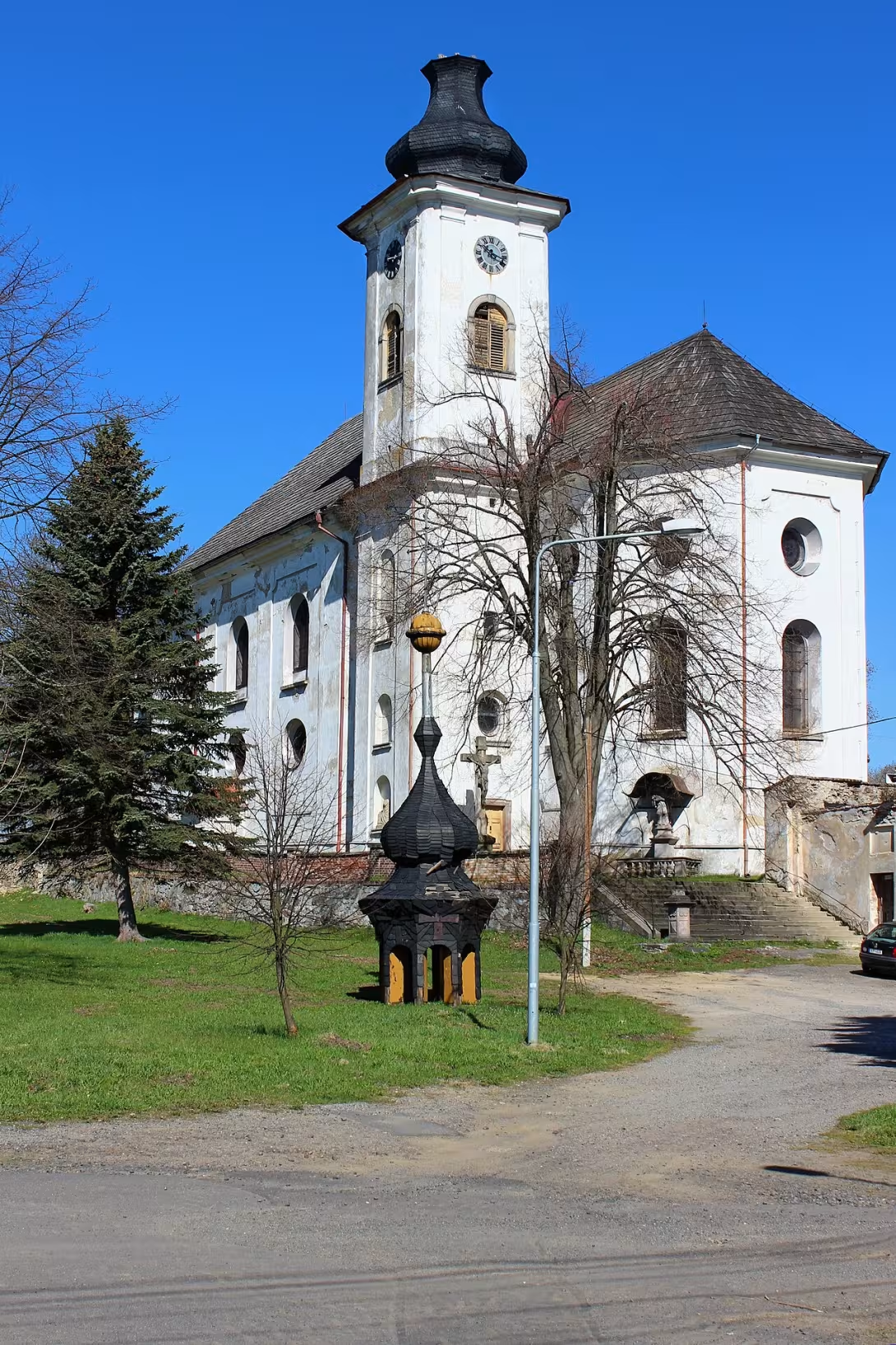

The historical appearance on the left is an AI-generated visualisation and serves as inspiration only.
Historical milestones
- 12th century
- Establishment of the pilgrimage chapel of Saint Siard.
- 13th century
- Construction of a wooden church dedicated to Saints Peter and Paul.
- 1320
- Expansion of the church with stone structures.
- c. 1350
- Becoming a parish church.
- 1719-1725
- Baroque reconstruction under the direction of architect Johann Wolfgang Braunbock.
- 1963
- Designation as a cultural monument.
Architectural development
Kostel svatých Petra a Pavla has undergone several architectural phases. Initially built as a wooden structure in the 13th century, it was expanded with masonry constructions in 1320. The church became a parish by 1384 and faced multiple damages during the Thirty Years' War. A significant baroque reconstruction took place from 1719 to 1725 under Johann Wolfgang Braunbock.
Historical events
- 1320
- The church was expanded with masonry constructions.
- 1719
- Major reconstruction of the church began, led by Johann Wolfgang Braunbock.
Points of interest
- The Church of Saints Peter and Paul was originally built from wood before transitioning to stone constructions in 1320, reflecting a shift in building techniques during that period.
- An earlier pilgrimage chapel dedicated to Saint Siard existed on the site but was lost due to the plague, leaving only its foundations and legends behind as remnants of this early structure.
- The church's bell tower underwent significant changes over time; an older wooden version was replaced by 1609, and it received a final roofing in 2017 after extensive restoration work spanning six years.
- During the Thirty Years' War, the church suffered damage but was later reconstructed in baroque style between 1719 and 1725 under architect Johann Wolfgang Braunbock, showcasing resilience through architectural transformation.
- A statue of Saint John Nepomuk from 1880, originally positioned near the old bell tower, now stands by the apse, adding historical charm and linking the site to broader religious narratives.
Guide
This guide is narrated by a synthetic voice generated by artificial intelligence.
Show guide text
This text was created by artificial intelligence and has not been editorially reviewed. It may contain inaccuracies.
Welcome to the historical monument Church of Saints Peter and Paul in Munich! You are standing before an impressive Mediterranean-style church that boasts a rich history dating back to the 13th century. This church is an important branch chapel of the Roman Catholic Church, and its origin story is a fascinating testament to the past.
Let's dive into its history. Originally built as wooden structures in the 13th century, reflecting common construction practices of the time. In 1320, there was a significant reconstruction when the wooden constructions were replaced with more permanent stone structures. This transition not only highlighted progress in architecture but also strengthened the church as a community center. Around 1350, this church became a parish center, emphasizing its important role in the spiritual life of Munich's inhabitants.
Now notice the architectural details that stand out. The church underwent a Baroque reconstruction between 1719 and 1725 under the direction of architect Johann Wolfgang Braunbock. This period brought elegant Baroque elements that still adorn its façade today. Look up at the front and you'll see the harmonious symmetry and complexity characteristic of the Baroque style of the time.
A key story associated with this place is its origin as a pilgrimage chapel to Saint Sigismund in the 12th century. Before becoming the Church of Saints Peter and Paul, this chapel served as a spiritual site for many visitors. Unfortunately, it was destroyed during a plague epidemic, paving the way for the construction of the current church.
There is also an interesting tidbit you can't afford to overlook. Imagine that once on this spot stood a smaller chapel dedicated to Saint Sigismund, whose existence is now barely recognizable beneath the modern church. This history adds a layer of mystique and intrigue to its already rich heritage.
Allow yourself to explore other captivating aspects of the Church of Saints Peter and Paul. Notice its cultural significance, which was recognized in 1963 when the church was officially designated as a cultural monument. This status confirms not only its architectural beauty and historical value but also its lasting influence on the local community.
Thank you for visiting the Church of Saints Peter and Paul. I hope you enjoyed this beautiful church and its rich history. May this place inspire you to further explore and discover Munich and its many stories.
Frequently asked questions
Can the monument be visited?
Religious buildings are usually open mainly during services; at other times a visit is normally arranged with the parish or the operator. We have not verified specific times.
Where is the monument?
Location: Mnichov, Karlovarský kraj. The map on this page shows the exact spot.
Why is the monument protected?
It is listed in the Central List of Cultural Monuments of the Czech Republic as a cultural monument (register no. 25604/4-68).
Businesses nearby
Do you run a restaurant, accommodation, shop, museum, rental, wellness or other visitor service near this monument? Show yourself directly to the people heading to it — this is how they will see you in the app and on the web:
Events nearby


Zdroj akcí: otevřená data měst a obcí ČR (Národní katalog otevřených dat) a kalendář akcí Národního památkového ústavu.
Nearby
The church stands on a hill at the western edge of Mnichov, dominating the area. Nearby features include the former parish house and an abandoned old cemetery where burials took place until 1895.
Accommodation nearby
Trips and activities nearby
Guided tours, tickets and activities nearby from GetYourGuide
Affiliate link: if you buy from the partner, we may receive a commission. The price for you does not change.
Search tours and activities →Themed route
Mnichov Thematic Walking Tour
1. Kostel svatých Petra a Pavla (Church) - Begin your tour at the stunning Kostel svatých Petra a Pavla, situated on a hill overlooking Mnichov. This church is not only an architectural marvel but also serves as a historical beacon, reflecting centuries of religious and cultural evolution in the region. Its commanding presence makes it a must-visit for anyone interested in ecclesiastical architecture.
2. Former Parish House (Historic Building) - A short walk from the church leads you to the former parish house. This building offers a glimpse into the past, showcasing how community life was organized around religious institutions. Its proximity to the church highlights its historical significance as part of the ecclesiastical complex that served the local population for generations.
3. Abandoned Old Cemetery (Historic Site) - Continue your journey towards the abandoned old cemetery, located nearby. This site holds a poignant place in Mnichov's history, with burials recorded until 1895. Walking through this area provides insight into the community’s past and offers a reflective space to contemplate the lives of those who once called Mnichov home.
This thematic walking tour allows you to explore the rich tapestry of Mnichov's religious heritage while appreciating its historical landmarks in a cohesive narrative journey.
Seasonal recommendations
Spring: Visiting the Church of Saints Peter and Paul in Munich during spring offers a rejuvenating experience as nature awakens around this historic site. The soft, warm light filtering through budding trees enhances the church's architectural beauty, creating an enchanting atmosphere perfect for photography enthusiasts. While the weather can be unpredictable with occasional showers, it's advisable to wear layers that can easily be adjusted and consider carrying an umbrella or raincoat. Spring sees moderate visitor numbers, making it a pleasant time to explore without the summer crowds.
Summer: In the heart of summer, the Church of Saints Peter and Paul becomes a vibrant backdrop against lush greenery and clear blue skies. The long daylight hours allow for extended visits, with the warm afternoon sun casting dramatic shadows that highlight the church's intricate details. However, this is also when visitor numbers peak, especially during weekends and holidays in the main summer season. Arriving early can help avoid the largest crowds, and wearing comfortable walking shoes along with light clothing suitable for warmer temperatures will enhance your experience.
Autumn: Autumn transforms the surroundings of the Church of Saints Peter and Paul into a tapestry of rich colors, offering a serene and picturesque setting that's particularly appealing to those who appreciate nature. The cooler weather makes it an ideal time for leisurely exploration without the discomfort of summer heat. This season also sees fewer visitors compared to summer, allowing for more intimate moments with this historic site. Dressing in layers is recommended to adjust comfortably as temperatures can vary throughout the day.
Winter: Winter cloaks the Church of Saints Peter and Paul in a quiet, almost mystical atmosphere, with snow often adding a magical touch to its already impressive architecture. The shorter days mean that visits should be planned earlier, taking advantage of the soft morning light for photography or simply enjoying the peaceful ambiance. Wearing warm clothing is essential to comfortably enjoy your visit during this season when temperatures can drop significantly.
Visualizations and artistic views


The visualisations are generated by artificial intelligence and serve as inspiration.
Photos from the area
Real photos taken near the monument


Zdroj a licence jsou uvedeny u každého snímku.
Tips from visitors
No tips yet. Be the first!
Log in and add your tip.
Sources and literature
Photos: Pavel Hrdlička (Czech Wikipedia user Packa) / CC BY-SA 3.0 — Wikimedia Commons. The author and licence also appear when you hover over the image.
Faktickým podkladem tohoto textu byl článek na Wikipedii, jehož autory jsou přispěvatelé Wikipedie. Článek je dostupný pod licencí CC BY-SA 4.0.
Location on the map
Příběhy a pověsti
Legendy, pověsti a příběhy spjaté s touto památkou

Fotografie návštěvníků
Zatím žádné fotografie. Buďte první, kdo přidá fotografii z návštěvy!
Log in a přidejte svou fotografii nebo hodnoťte.
Za ověřenou návštěvu v aplikaci získáte víc bodů — poznáme podle GPS, že jste na místě.
Reviews and comments