



Kostel Všech svatých (Dobříkov) Church
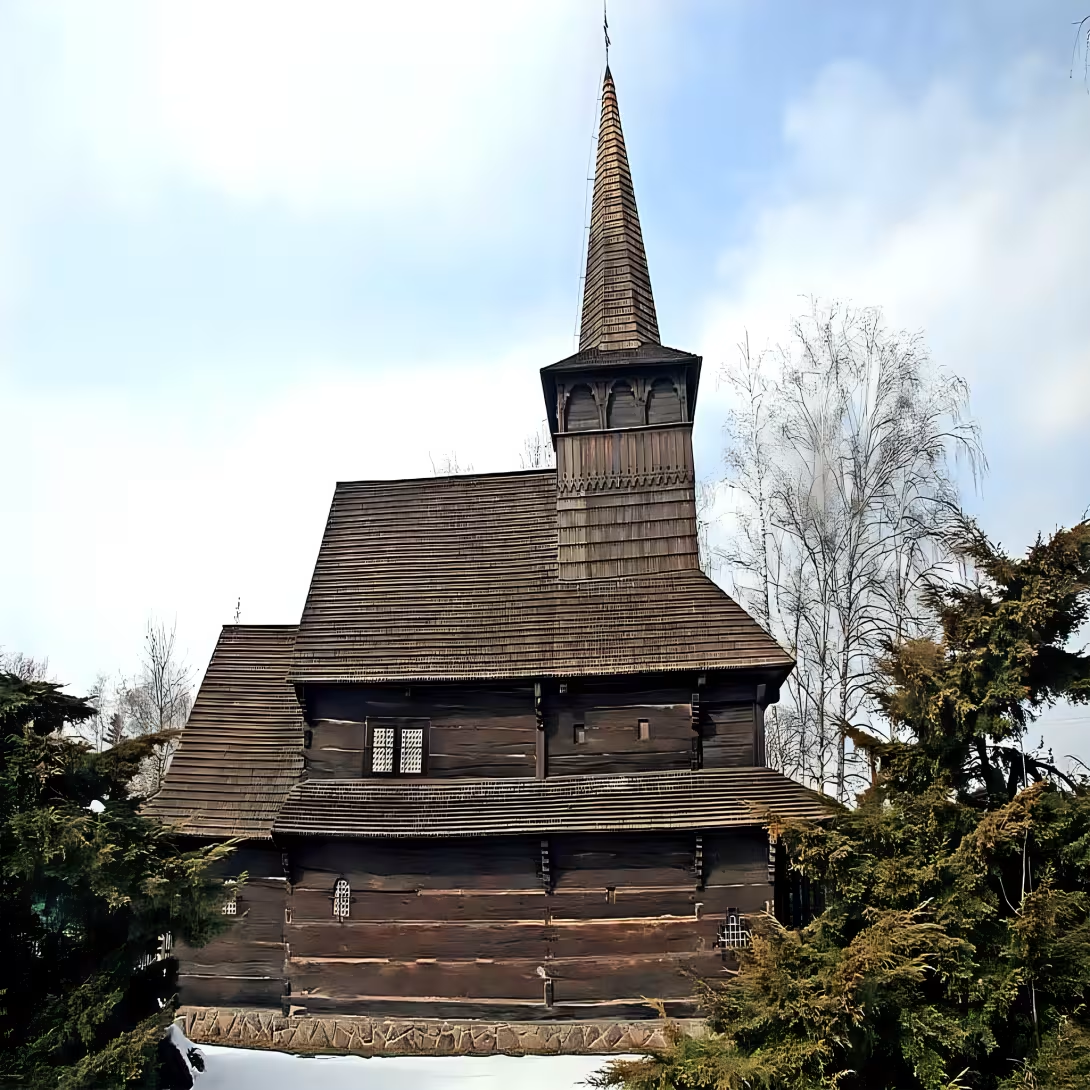
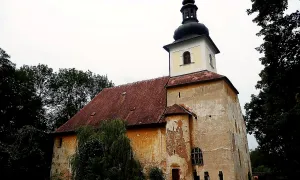
The Church of All Saints in Dobříkov is an impressive wooden Baroque structure that showcases architectural skill and historical endurance. Situated in the tranquil village of Dobříkov within Pardubický kraj, this church was originally built in 1679 on Subcarpathian Rus. Over time, it has served various religious communities, transitioning from a Greek Catholic place of worship to its current role for the Czechoslovak Hussite Church. Its cultural significance is highlighted by its designation as a monument since 1963.
The church's origins trace back to the late 17th century when Bohemia was part of the Habsburg Monarchy, an era marked by religious and political changes. During this period, the Baroque style flourished across Europe, influencing architectural designs, including churches. The Church of All Saints exemplifies these influences with its wooden construction and Baroque elements, reflecting artistic trends of that time.
Architecturally, it is notable as one of the few wooden Baroque churches in the region. Constructed mainly from wood, it features original fittings and intricately carved icons that offer insights into its historical use as a Greek Catholic place of worship. These elements highlight the craftsmanship of the period and provide a glimpse into the church's past religious affiliations.
Ownership and administration have changed significantly over the years. Initially serving as a Greek Catholic church, it was relocated from Velká Kopanina to Cholmouc in 1857 for 255 zlatých. In 1930, Václav Klofáč purchased the church for 16,000 Kč and arranged its move to Dobříkov. Since opening as a place of worship for the Czechoslovak Hussite Church in 1931, it has remained under their administration.
Key events include its relocation from Velká Kopanina to Cholmouc in 1857, followed by Václav Klofáč's purchase and subsequent move to Dobříkov in 1930. The church was officially opened for worship by the Czechoslovak Hussite Church in 1931 and later designated as a cultural monument in 1963. These milestones underscore its enduring significance and adaptability through changing times.
Today, the Church of All Saints is an accessible historical site that continues to attract visitors interested in its unique architectural style and rich history. Its designation as a cultural monument ensures its preservation for future generations. Visitors are invited to explore this remarkable wooden Baroque church, which offers insights into the past and serves as a symbol of cultural continuity and resilience.
Then and now
Drag the slider to compare how the landmark may have looked when it was built with the view today.
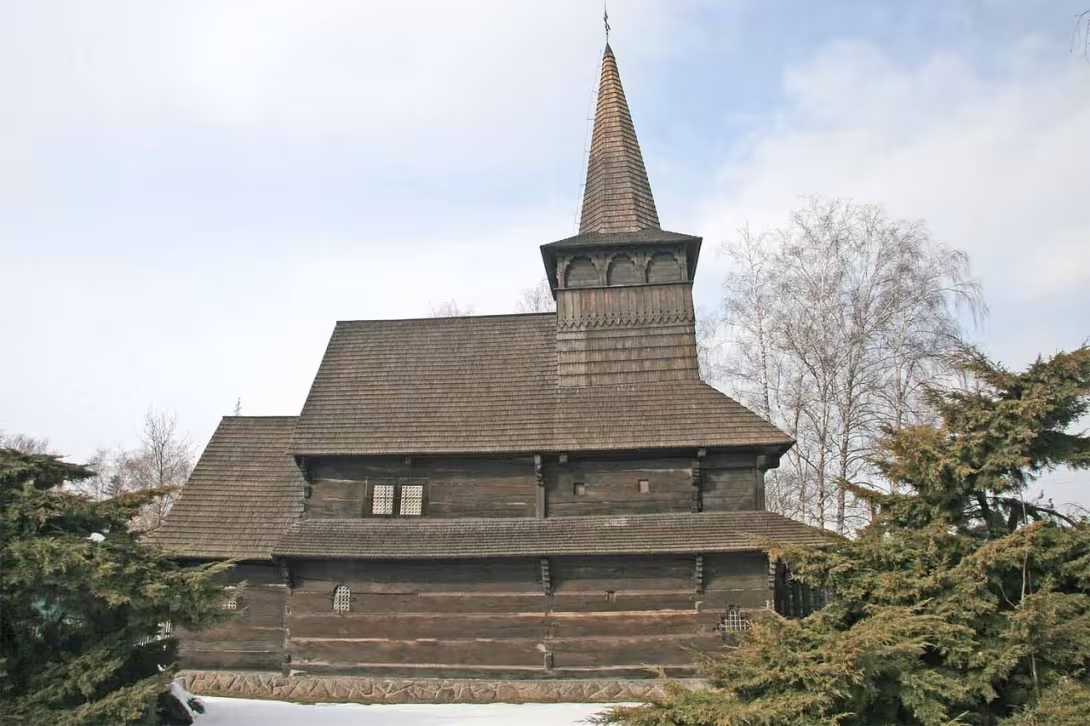

The historical appearance on the left is an AI-generated visualisation and serves as inspiration only.
Historical milestones
- 1857
- The church was relocated from Velká Kopanina to Cholmouc.
- 1930
- Purchased by Václav Klofáč and moved to Dobříkov.
- 1931
- Opened for the Czechoslovak Hussite Church.
- 1963
- Declared a cultural monument.
Architectural development
The church, originally built in 1679, underwent significant changes when it was moved to Dobříkov in 1930. It features Baroque architectural elements and is constructed primarily of wood. The interior includes original fittings and carved icons.
Historical events
1857: The church was moved from Velká Kopanina to Cholmouc for 255 zlatých.
1930: Purchased by Václav Klofáč and relocated to Dobříkov.
1931: Opened as a place of worship for the Czechoslovak Hussite Church.
1963: Designated as a cultural monument.
Owners
Originally a Greek Catholic church on Subcarpathian Rus; purchased by Václav Klofáč in 1930; since then, owned by the Czechoslovak Hussite Church.
Points of interest
- The Church of All Saints was originally constructed on Subcarpathian Rus in 1679 before being relocated to Dobříkov; this reflects the mobility and adaptability of religious structures during that era.
- Initially serving as a Greek Catholic church, it transitioned through ownership changes, including being sold by Václav Klofáč for 16,000 Kč in 1930—a significant transaction reflecting its value and importance at the time.
- The church's intricate wooden construction and Baroque elements are rare among regional churches, showcasing exceptional craftsmanship from a period when wood was a primary building material due to economic or resource considerations.
- Before settling in Dobříkov, the church was moved from Velká Kopanina to Cholmouc for 255 zlatých in 1857; this unusual transaction highlights how religious sites were sometimes seen as commodities that could be relocated and repurposed.
- Despite its various relocations and changes in religious affiliation, the Church of All Saints has maintained its cultural significance since being designated a monument in 1963, illustrating its resilience and enduring importance to local heritage.
Guide
This guide is narrated by a synthetic voice generated by artificial intelligence.
Show guide text
This text was created by artificial intelligence and has not been editorially reviewed. It may contain inaccuracies.
The Church of All Saints in Dobříkov near Chocně is a wooden structure of the so-called Gothic type from 1679. However, it did not originate in East Bohemia. Originally it stood as a Greek Catholic church in Subcarpathian Rus, in the village of Velyká Kopaň.
From there it was first moved already in 1857, when it was transported to Cholmovce for 255 gold pieces. It traveled for the second time many years later. In 1930, Václav Klofáč purchased it for 16 thousand crowns and had it brought all the way to Dobříkov. After renovation, the church was opened in 1931 and since then it has served the Czechoslovak Hussite Church.
Inside, the original furnishings with carved icons have been preserved. Since 1963, the church has been protected as a cultural monument.
Tips for visitors
The best time to visit the Church of All Saints in Dobříkov is during late spring or early autumn when the weather is mild, and the surrounding landscape is particularly beautiful. These seasons offer pleasant temperatures for walking around the area and provide a serene atmosphere without the crowds that might be present during peak tourist times like summer weekends. Additionally, visiting during these periods allows you to appreciate the natural beauty of Dobříkov's surroundings, which complement the historical charm of the church.
Public transport users should verify current routes and schedules through a reliable travel app or website to ensure convenient access to the church.
When planning your visit, consider bringing comfortable walking shoes as you may want to explore the surrounding area of Dobříkov. A camera is recommended to capture the unique architecture of the wooden Baroque church, especially during golden hour when the light enhances its intricate details. Additionally, carrying a map or using a GPS-enabled device can help navigate the serene landscape and nearby historical sites.
For photography enthusiasts, the best spots for capturing images of the Church of All Saints are from the front entrance where the architecture is fully visible, and from any elevated points around the church that offer a broader view of its setting. The soft morning or late afternoon light provides ideal conditions for highlighting the textures and details of the wooden structure.
In the vicinity of Dobříkov, within about 30 minutes' drive, visitors can explore other cultural heritage sites and natural attractions. These include additional historical landmarks in Pardubický kraj that offer a glimpse into the region's rich history. Families with children might enjoy these nearby locations as they often provide educational experiences along with opportunities for leisurely outdoor activities.
Frequently asked questions
Can the monument be visited?
Religious buildings are usually open mainly during services; at other times a visit is normally arranged with the parish or the operator. We have not verified specific times.
Where is the monument?
Location: Dobříkov, Pardubický kraj. The map on this page shows the exact spot.
Why is the monument protected?
It is listed in the Central List of Cultural Monuments of the Czech Republic as a cultural monument (register no. 35867/6-3859).
Businesses nearby
Do you run a restaurant, accommodation, shop, museum, rental, wellness or other visitor service near this monument? Show yourself directly to the people heading to it — this is how they will see you in the app and on the web:
Nearby
Dobříkov, located in Pardubický kraj, offers a serene landscape with nearby natural features. The area is rich in cultural heritage, including other historical sites.
Accommodation nearby
Themed route
Welcome to a thematic journey through the charming village of Dobříkov, located in the serene landscapes of Pardubický kraj. This itinerary will guide you through historical and cultural sites that enrich the area's heritage.
1. Kostel Všech svatých (Dobříkov) - Church Begin your exploration at the heart of Dobříkov with the majestic Kostel Všech svatých, a stunning example of local religious architecture. This church is renowned for its intricate design and historical significance, offering visitors a glimpse into the spiritual life of the region over centuries.
2. Dobříkov Village Square - Cultural Hub Just a short walk from the church, immerse yourself in the village atmosphere at the Dobříkov Village Square. This central area is perfect for experiencing local culture and history, with its traditional architecture and vibrant community life that reflect the essence of rural Czech Republic.
3. Local Historical Museum (if available) - Cultural Insight If there's a historical museum in Dobříkov, it’s worth visiting to delve deeper into the region's past. This site provides valuable insights through exhibits showcasing artifacts and stories from Dobříkov's rich history, enhancing your understanding of the area's cultural evolution.
4. Dobříkov Community Center - Gathering Place Conclude your journey at the Dobříkov Community Center, a hub for local gatherings and events. This venue highlights the communal spirit of Dobříkov, offering opportunities to engage with locals and learn about contemporary community life in this picturesque village.
This itinerary offers a comprehensive experience of Dobříkov’s cultural and historical treasures, ensuring an enriching visit to this beautiful part of Pardubický kraj.
Seasonal recommendations
Spring: Visiting the Church of All Saints in Dobříkov during spring offers a unique experience as nature begins to awaken from its winter slumber. The surrounding landscapes are adorned with vibrant wildflowers and budding trees, creating a picturesque backdrop that enhances the church's historical charm. This season often sees mild temperatures, making it an ideal time for leisurely exploration without the summer crowds. Visitors should wear comfortable walking shoes and perhaps carry a light jacket in case of cooler mornings or evenings.
Summer: Summer is when the Church of All Saints truly comes alive with natural beauty. The lush greenery around the church provides a serene atmosphere, perfect for a peaceful visit. This season attracts more visitors due to its favorable weather conditions, so arriving early in the morning can help avoid larger crowds and ensure a more tranquil experience. Comfortable clothing is recommended, along with sun protection such as hats or sunglasses, especially during peak sunlight hours.
Autumn: Autumn brings a magical transformation to Dobříkov, with the Church of All Saints set against a stunning canvas of fiery reds, oranges, and yellows. The crisp air and gentle breezes make it an enchanting time for photography enthusiasts and nature lovers alike. While the weather can be unpredictable, layers are advisable to accommodate varying temperatures throughout the day. This season generally sees fewer visitors than summer, allowing for a more intimate experience of the church's historical ambiance.
Winter: Winter offers a unique charm at the Church of All Saints in Dobříkov, with snow often blanketing the landscape and creating a serene, almost mystical atmosphere. The shorter days mean visiting hours are limited, so planning ahead is essential to make the most of your visit. Warm clothing, including coats, hats, gloves, and sturdy boots, is crucial for comfort during this season. While the church may be quieter than in other seasons, it's important to check opening times as they can vary due to weather conditions or maintenance activities.
Visualizations and artistic views


The visualisations are generated by artificial intelligence and serve as inspiration.
Photos from the area
Real photos taken near the monument


Zdroj a licence jsou uvedeny u každého snímku.
Tips from visitors
No tips yet. Be the first!
Log in and add your tip.
Sources and literature
Photos: cs:User:Zp (autor:Zp) / CC BY-SA 3.0, rozlišení zvýšeno umělou inteligencí — Wikimedia Commons. The author and licence also appear when you hover over the image.
Faktickým podkladem tohoto textu byl článek na Wikipedii, jehož autory jsou přispěvatelé Wikipedie. Článek je dostupný pod licencí CC BY-SA 4.0.
Location on the map

Příběhy a pověsti
Legendy, pověsti a příběhy spjaté s touto památkou
Fotografie návštěvníků
Zatím žádné fotografie. Buďte první, kdo přidá fotografii z návštěvy!
Log in a přidejte svou fotografii nebo hodnoťte.
Za ověřenou návštěvu v aplikaci získáte víc bodů — poznáme podle GPS, že jste na místě.
Reviews and comments