






kostel Všech svatých (Mohelno) Church
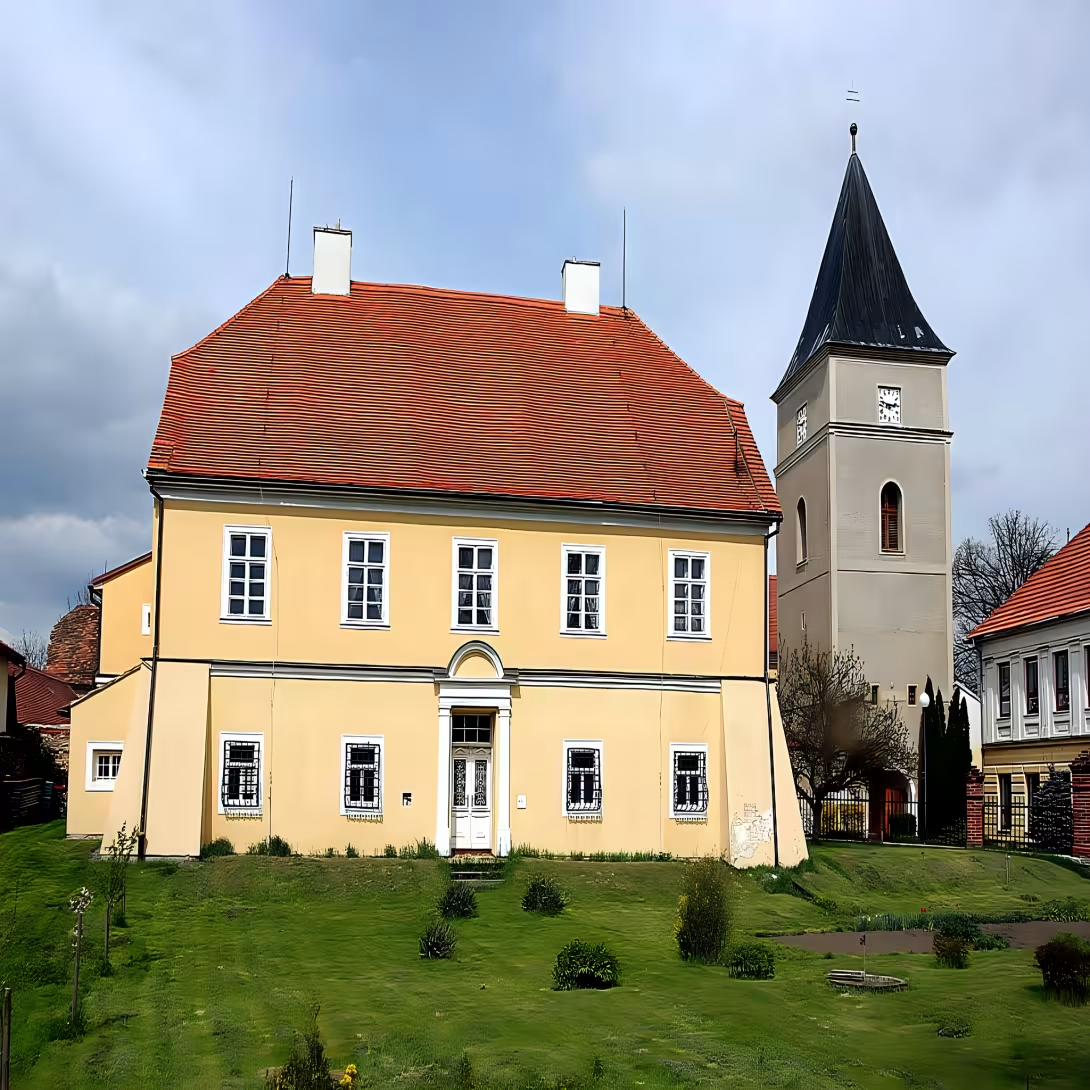
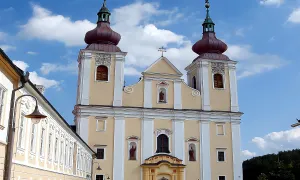
The Church of All Saints in Mohelno is a Roman Catholic church located in the town of Mohelno, within the Třebíč District of the Vysočina Region. It stands as a cultural monument of the Czech Republic and serves as the parish church for the local community. First mentioned in records in 1234, its core structure dates back to the mid-13th century, influenced by nearby stone quarries associated with the Oslavany Monastery. Over centuries, it has undergone several reconstructions due to fires and other damages, reflecting its resilience and historical significance.
The church's origins are rooted in a period when Bohemia was under the rule of the Přemyslid dynasty, experiencing significant Gothic architectural development. This era saw increased influence from neighboring regions and the Catholic Church, shaping cultural and religious life. The core structure of the Church of All Saints, dating to the mid-13th century, features a five-sided chancel with cross-ribbed vaulting and a star-shaped termination. Surrounding walls of the nave and an older sacristy, attached to the north wall of the presbytery, are also from this period.
Architecturally, the church is notable for its Gothic core structure, which was later modified in the classical style. In the second half of the 14th century, Albrecht z Cimburka added the Senoradská Chapel to the northern wall of the nave. The late 17th century saw further modifications when the nave was barrel-vaulted with lunettes and a music gallery was added. Subsequent renovations in the early 19th century included the construction of a porch in front of the main southern entrance in 1803, followed by a new sacristy and staircase to the gallery in 1836.
The churchyard is enclosed by a wall, featuring a separate bell tower in its southern part. This bell tower, dating from the 15th or 16th century, originally had wooden galleries and possibly a wooden belfry floor. Nearby, a Baroque parish house built in 1775 adds to the historical ambiance of the site.
Today, the Church of All Saints stands as a dominant feature within an enclosed area that was once a cemetery. It is part of an impressive classical architecture ensemble consisting of the church itself, a separate bell tower, and a baroque parish house. The church remains accessible to visitors who are interested in exploring its rich history and architectural beauty.
The Church of All Saints in Mohelno offers a unique glimpse into the historical and cultural evolution of the region. Its blend of Gothic origins with classical modifications makes it a fascinating site for those interested in architecture and history. Visitors are invited to explore this remarkable monument, which continues to serve as a spiritual center for the local community while preserving its historical legacy.
Then and now
Drag the slider to compare how the landmark may have looked when it was built with the view today.
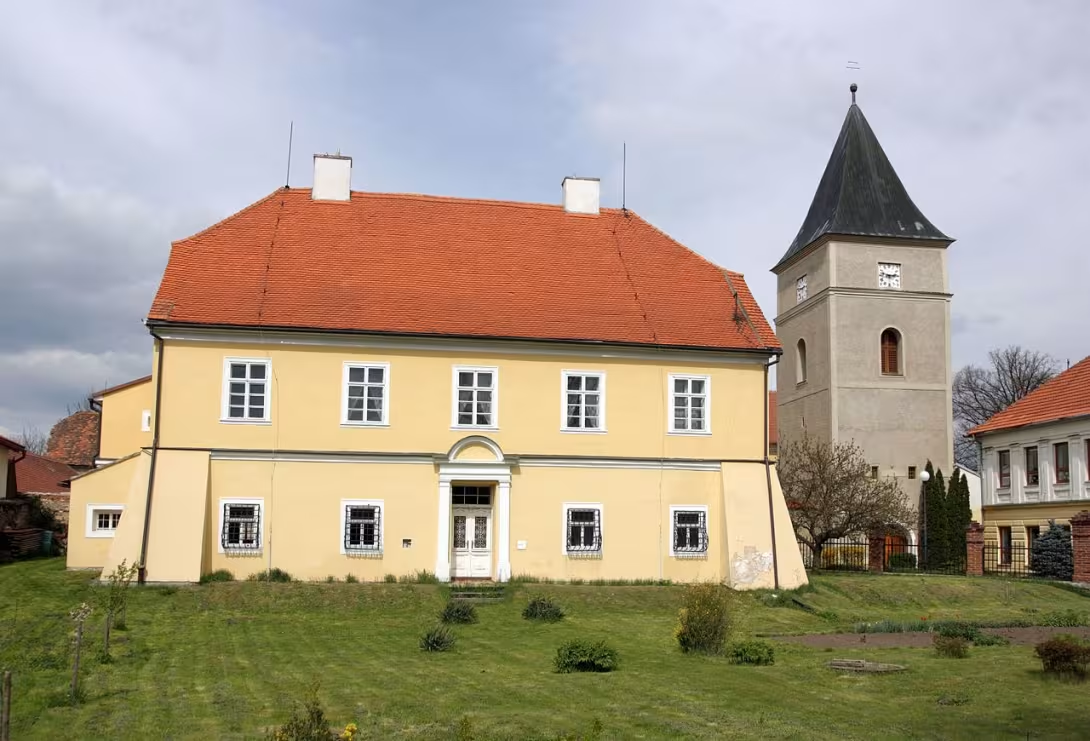

The historical appearance on the left is an AI-generated visualisation and serves as inspiration only.
Architectural development
The church's core structure from the mid-13th century features a five-sided chancel with cross-ribbed vaulting and a star-shaped termination. The surrounding walls of the nave and an older sacristy, attached to the north wall of the presbytery, are also from this period. In the late 17th century, the nave was barrel-vaulted with lunettes, and a music gallery was added. A porch was constructed in front of the main southern entrance in 1803, followed by a new sacristy and staircase to the gallery in 1836.
Historical events
First mentioned in records in 1234.
In the second half of the 14th century, Albrecht z Cimburka added the Senoradská Chapel to the northern wall of the nave.
Points of interest
- The Church of All Saints is linked to the nearby Oslavany Monastery through stone quarries that influenced its mid-13th-century construction, showcasing regional resource utilization. - Albrecht z Cimburka's addition of the Senoradská Chapel in the 14th century reflects the influence of local nobility on church architecture and their role in cultural patronage during this period.
- The bell tower, dating from the 15th or 16th century, originally featured wooden galleries and possibly a wooden belfry floor, highlighting medieval construction techniques before transitioning to more permanent materials.
- In the late 17th century, the nave was barrel-vaulted with lunettes and a music gallery added, indicating an era of musical development within church services that enhanced liturgical experiences.
- The construction of a new sacristy and staircase to the gallery in 1836 reflects early 19th-century trends towards functional improvements and accessibility within sacred spaces.
Guide
This guide is narrated by a synthetic voice generated by artificial intelligence.
Show guide text
This text was created by artificial intelligence and has not been editorially reviewed. It may contain inaccuracies.
The Church of All Saints is a Roman Catholic parish church in the market town of Mohelno in the Třebíč district. It is protected as a cultural monument of the Czech Republic.
The first mentions of the church date back to the year 1234. The core of the present building was created in the middle of the 13th century. It was most likely influenced by a masonry workshop that was working on the monastery in Oslavany at that time. From this period, a pentagonal presbytery with one field of cross-ribbed vault and a fan-shaped conclusion has been preserved. The perimeter walls of the nave and an old sacristy, which adjoins the northern wall of the presbytery, also date from the 13th century.
In the second half of the 14th century, Albrecht z Cimburka, the then owner of the village, had the Senoradská chapel built against the northern wall of the nave. In the following centuries, the church burned down several times and was repeatedly repaired. At the turn of the second and third third of the 17th century, the nave received a barrel vault with lunettes and also a music gallery. In 1803, a vestibule was added before the main southern entrance. In 1836, a new sacristy was created at the southern wall of the presbytery and stairs to the gallery at the western wall of the Senoradská chapel.
A cemetery once surrounded the church, its area still bounded by a wall. In its southern part stands a separate prismatic bell tower from the 15th or 16th century with a passage on the ground floor. It has three stories. Until the fire in 1835, it had a wooden gallery and probably also a wooden belfry floor.
Not far from the church stands a Baroque rectory from 1775.
Tips for visitors
The best time to visit the Church of All Saints in Mohelno is during late spring or early autumn, when the weather is pleasant for exploring the surrounding landscape. During these months, the rolling hills and agricultural fields are lush and vibrant, providing a picturesque backdrop for your visit. Additionally, visiting outside peak tourist seasons can offer a more tranquil experience, allowing you to appreciate the church's architecture and serene atmosphere without large crowds.
It's advisable to check current routes and schedules online before your visit to ensure a smooth journey.
When visiting the Church of All Saints, consider bringing comfortable walking shoes, especially if you plan to explore the historic cemetery and surrounding areas on foot. A camera is recommended for capturing the stunning architecture of the church and the picturesque landscape. Additionally, carrying a light jacket or sweater can be useful as temperatures may vary throughout the day.
For photography enthusiasts, the best spots around the Church of All Saints include the bell tower and the main facade of the church, particularly during golden hour in the late afternoon when the sunlight enhances the building's features.
Nearby attractions within 30 minutes' drive from Mohelno include the town of Třebíč, known for its UNESCO-listed Jewish quarter and historical sites such as St. Procopius Basilica. For families with children, consider visiting the nearby nature trails in the Vysočina Region, which offer opportunities for outdoor activities like hiking and exploring local flora and fauna.
Frequently asked questions
Can the monument be visited?
Religious buildings are usually open mainly during services; at other times a visit is normally arranged with the parish or the operator. We have not verified specific times.
Where is the monument?
Location: Mohelno, Kraj Vysočina. The map on this page shows the exact spot.
Why is the monument protected?
It is listed in the Central List of Cultural Monuments of the Czech Republic as a cultural monument (register no. 27737/7-2843). It is protected as part of a larger listed ensemble.
Businesses nearby
Do you run a restaurant, accommodation, shop, museum, rental, wellness or other visitor service near this monument? Show yourself directly to the people heading to it — this is how they will see you in the app and on the web:
Events nearby
Zdroj akcí: otevřená data měst a obcí ČR (Národní katalog otevřených dat) a kalendář akcí Národního památkového ústavu.
Nearby
Nearby features include a Baroque parish house built in 1775. The church is situated within an enclosed area that was once a cemetery.
Accommodation nearby
Themed route
Thematic Walking Tour: Mohelno
1. Kostel Všech svatých (Church of All Saints) - Type: Church - Why Visit: This stunning Baroque church, located in the heart of Mohelno, is a testament to the region's rich architectural heritage. The church features intricate designs and historical significance that draw visitors interested in religious architecture and history.
2. Enclosed Cemetery Area - Type: Historical Site - Why Visit: Once serving as the church’s cemetery, this enclosed area offers a serene environment to reflect on the past. Walking through its quiet paths provides insights into historical burial practices and the community's connection with this sacred site.
3. Baroque Parish House - Type: Historical Building - Why Visit: Built in 1775, this Baroque parish house stands as a remarkable example of period architecture. Its proximity to the church allows visitors to appreciate the cohesive architectural style and understand its role in supporting the religious community during that era.
Route Overview: Begin your tour at the Kostel Všech svatých, where you can explore its beautiful interiors and learn about its historical significance. From there, take a short walk through the tranquil enclosed cemetery area to gain a deeper understanding of the site's past. Conclude your visit at the nearby Baroque Parish House to admire its architectural beauty and reflect on its historical context within Mohelno’s community life. This thematic tour offers a comprehensive exploration of Mohelno's cultural heritage, focusing exclusively on these key sites.
Seasonal recommendations
Spring: Visiting the Church of All Saints in Mohelno during spring offers a unique experience as nature begins to awaken from its winter slumber. The surrounding landscape is adorned with vibrant wildflowers and fresh greenery, creating a picturesque backdrop for exploring this historical site. As daylight extends into the evening, visitors can enjoy the soft, natural light that enhances the church's architectural details. This time of year sees fewer tourists, allowing for a more tranquil visit. It’s advisable to wear comfortable walking shoes as paths may still be damp from spring rains and carry an umbrella or raincoat just in case.
Summer: Summer is the peak season for visiting Mohelno's Church of All Saints, when the weather is warm and inviting. The lush landscape around the church comes alive with a riot of colors, making it ideal for outdoor photography enthusiasts. Given the popularity of summer tourism, expect larger crowds, especially on weekends and holidays. To avoid long waits, consider arriving early in the morning or later in the afternoon. Dressing in light clothing is recommended to stay comfortable during your visit, and don't forget sunglasses and sunscreen.
Autumn: Autumn brings a magical ambiance to Mohelno's Church of All Saints as the foliage transforms into rich hues of red, orange, and yellow. The crisp air and golden sunlight create an enchanting atmosphere perfect for leisurely exploration. This season is less crowded than summer, offering a more serene experience. Visitors should be prepared for cooler temperatures, especially in the evenings, by wearing layers that can easily be adjusted. Carrying a light jacket or sweater will ensure comfort during your visit.
Winter: The winter months offer a quieter and more introspective time to explore the Church of All Saints in Mohelno. Snow-covered landscapes provide a serene and picturesque setting, with the church's architecture standing out starkly against the white backdrop. Natural lighting is limited, so visitors should plan their visits during daylight hours for the best viewing experience. Dress warmly in layers, including a hat and gloves, to stay comfortable while exploring this historic site amidst the winter chill.
Visualizations and artistic views


The visualisations are generated by artificial intelligence and serve as inspiration.
Photos from the area
Real photos taken near the monument

Zdroj a licence jsou uvedeny u každého snímku.
Tips from visitors
No tips yet. Be the first!
Log in and add your tip.
Sources and literature
Photos: RomanM82 / CC BY-SA 4.0, rozlišení zvýšeno umělou inteligencí — Wikimedia Commons. The author and licence also appear when you hover over the image.
Faktickým podkladem tohoto textu byl článek na Wikipedii, jehož autory jsou přispěvatelé Wikipedie. Článek je dostupný pod licencí CC BY-SA 4.0.
Location on the map



Příběhy a pověsti
Legendy, pověsti a příběhy spjaté s touto památkou
Fotografie návštěvníků
Zatím žádné fotografie. Buďte první, kdo přidá fotografii z návštěvy!
Log in a přidejte svou fotografii nebo hodnoťte.
Za ověřenou návštěvu v aplikaci získáte víc bodů — poznáme podle GPS, že jste na místě.
Reviews and comments