



Kostel Všech svatých (Probluz) Church
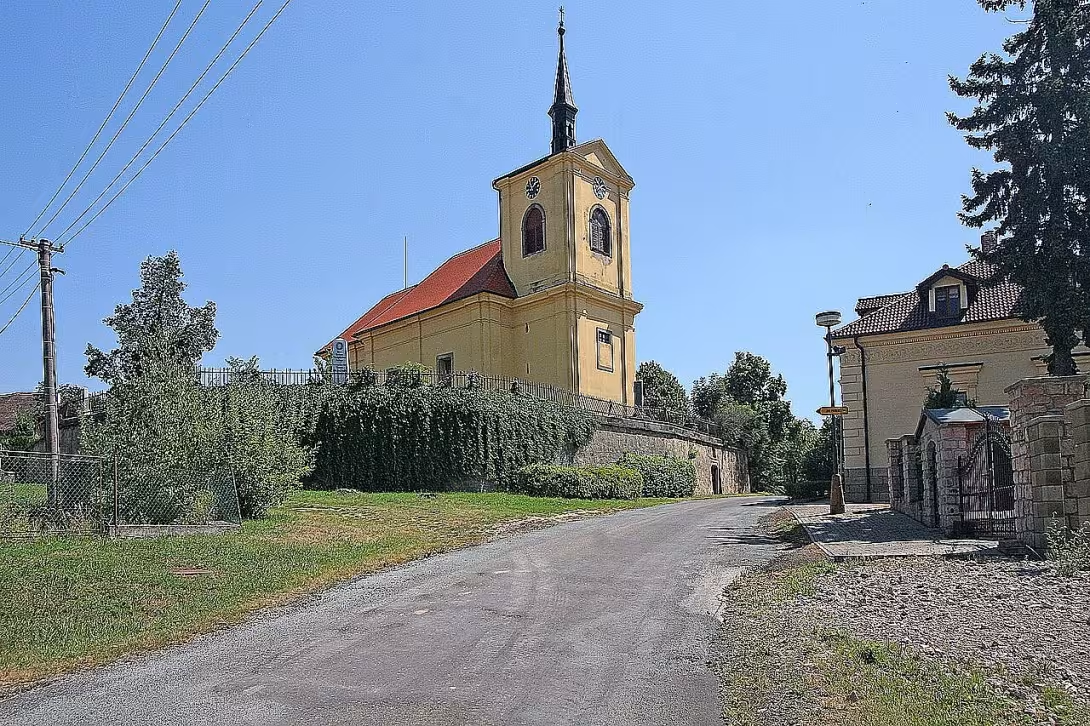
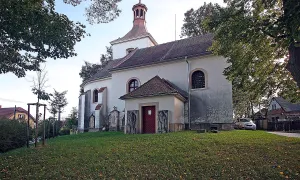
The Baroque Church of All Saints in Probluz is a notable historical monument situated in the village of Probluz, part of the Dolní Přím municipality in the Hradec Králové District. Built between 1690 and 1691 by the Jesuits, this church is a dominant feature of the surrounding landscape and has a rich history tied to the Battle of Hradec Králové. The church's tower was damaged during the battle, with two cannonballs still embedded in its facade.
The Church of All Saints in Probluz was constructed as a parish church by the Jesuits, who were active in Bohemia during the 17th century. The church's construction was led by K. Labuška, a builder who worked on several projects for the Jesuits. The church served as a place of worship for the local community.
The church's architecture is characteristic of the Baroque style, featuring a single-nave building with a rectangular nave, a rectangular presbytery, a sacristy on the north side, and a square tower on the west side. The roof is covered with two vaulted ceilings, and the interior is decorated with early Baroque furnishings from the late 17th century. The main altar is a rectangular altar with a rosette, featuring an image of All Saints from 1690. Two side altars have acanthus-leaf adorned oval frames.
The church's tower bears the scars of the Battle of Hradec Králové, a significant event in Czech history that took place in 1866. The church underwent restoration work after the battle, during which the tower was lowered. The church's interior features a pulpit with bolt-shaped ornaments and a sculpture of Christ as the Savior of the World from 1690.
Today, the Church of All Saints in Probluz is a filial church of the Nechanice parish and is worth visiting for its historical significance and architectural beauty. The church is situated in a rural area with fields and forests, offering a peaceful atmosphere. Visitors can explore the church's interior and exterior, taking in the details of its Baroque architecture and the remnants of its history.
Then and now
Drag the slider to compare how the landmark may have looked when it was built with the view today.
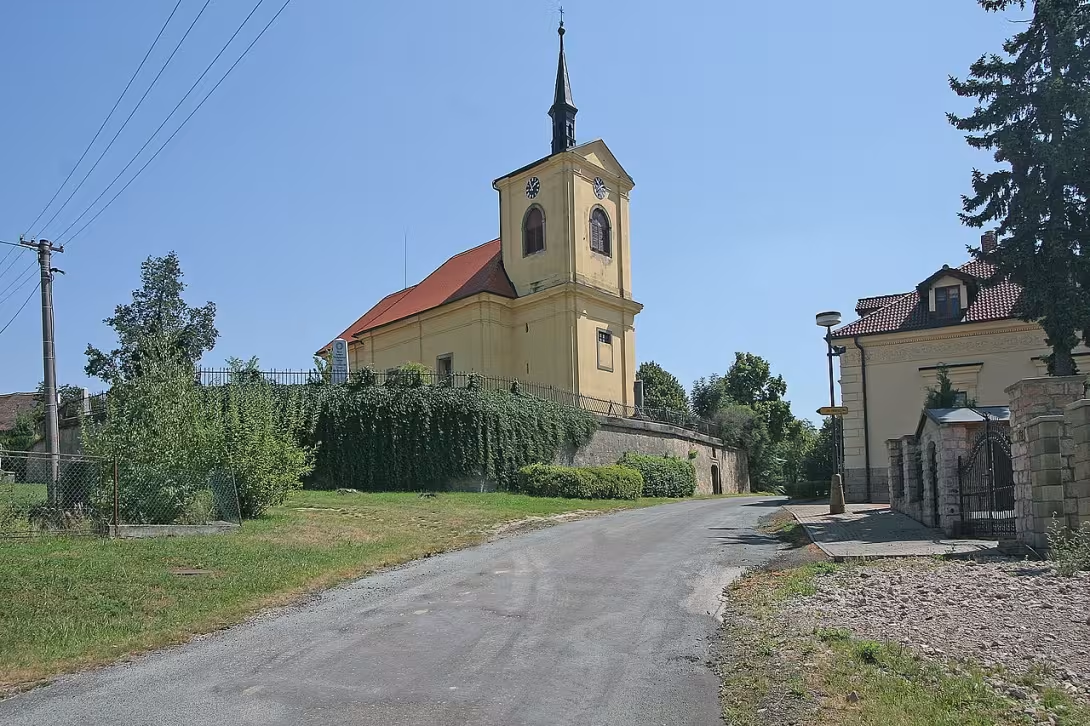
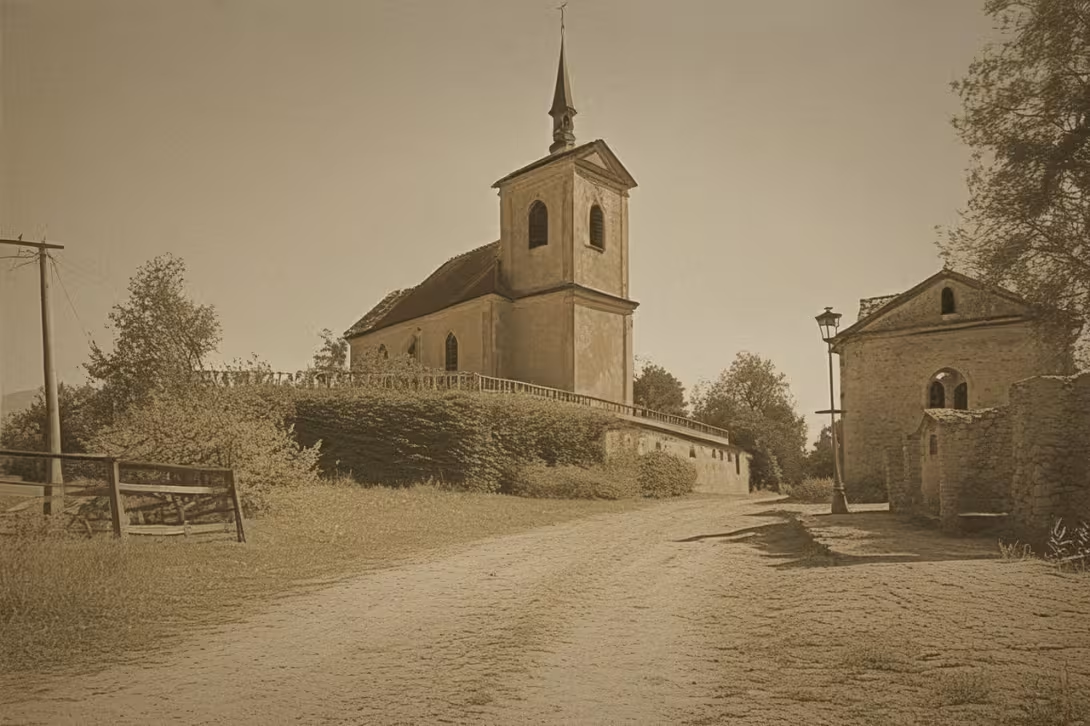
The historical appearance on the left is an AI-generated visualisation and serves as inspiration only.
Historical milestones
- 1690
- Built
- 1866
- Damaged during the Battle of Hradec Králové
- 1690
- Main altar and kazatelna created
Architectural development
The church is a single-nave building with a rectangular nave, a rectangular presbytery, a sacristy on the north side, and a square tower on the west side. The roof is covered with two vaulted ceilings. The church's interior is decorated with early Baroque furnishings from the late 17th century.
Historical events
Built between 1690 and 1691
Damaged during the Battle of Hradec Králové in 1866
Restored after the battle
Owners
Jesuits, Nechanice parish
Points of interest
– The Church of All Saints in Probluz was built between 1690 and 1691 by the Jesuits, who were active in Bohemia during the 17th century. The Jesuits were a powerful and influential Catholic order that played a significant role in shaping the spiritual and cultural landscape of Central Europe during this period.
– The church's tower was damaged during the Battle of Hradec Králové, a significant event in Czech history that took place in 1866. The battle was a decisive victory for the Prussian army, which defeated the Austrian army in the Austro-Prussian War.
– The church's tower still bears the scars of the Battle of Hradec Králové, with two cannonballs still embedded in its facade. This is a unique and poignant reminder of the church's history and the events that have shaped its architecture.
– The Church of All Saints in Probluz is a filial church of the Nechanice parish, meaning that it is a smaller church that is subordinate to a larger parish church. This is a common arrangement in the Catholic Church, where smaller churches are often affiliated with larger ones for administrative and spiritual purposes.
– The church's interior features a pulpit with bolt-shaped ornaments, which are a distinctive feature of Baroque architecture. The pulpit is a raised platform from which the priest delivers sermons to the congregation, and the bolt-shaped ornaments are a decorative element that adds to the church's ornate and elaborate interior.
Guide
This guide is narrated by a synthetic voice generated by artificial intelligence.
Show guide text
This text was created by artificial intelligence and has not been editorially reviewed. It may contain inaccuracies.
The Baroque Church of All Saints stands in the village of Probluz, which is a local part of the municipality of Dolní Přím in the Hradec Králové district. It is a far-visible landmark of the entire surrounding area.
It was built in the years 1690 to 1691 as a parish church. The construction was led by Labuška, the superior of the Jesuits and also a builder. Today the church is a filial church of the Nechanice parish.
The Battle of Hradec Králové on July 3, 1866 significantly impacted its history. During it, the original dome of the church tower was damaged. The tower was lowered during subsequent repairs and two cannonballs are walled into its facade to this day. The battle is also commemorated by monuments to the fallen in the old cemetery around the church, which is no longer in use. On the outer wall of the church are mounted two funeral stones, a figural one from 1566 and a heraldic one from 1575.
The church is single-aisled. The rectangular nave is divided by pillars with clustered pilasters and is vaulted with two sections of barrel vault. The nave is followed by a rectangular presbytery. On the northern side stands a rectangular sacristy and on the western side a prismatic tower.
The furnishings of the church are early Baroque from the end of the 17th century. The main altar is rectangular, decorated with scrollwork, and bears a painting of All Saints from 1690. On consoles are placed statues of Saint Wenceslaus and Saint Ludmila from the years 1730 to 1740. The altar is complemented by a Rococo wooden carving of the Death of Saint Ignatius of Loyola with two donors. Beside the main altar are two side altars with oval acanthus frames. In the right one is a painting of Saint Ignatius, in the left one a painting of the Holy Family with Saint Anne.
The pulpit is decorated with boltwork ornaments. On its canopy stands a statue of Christ as Saviour of the World from 1690.
Tips for visitors
The best time to visit the Church of All Saints in Probluz is during the spring and summer months when the weather is pleasant and the surrounding landscape is in full bloom.
Visitors are advised to bring comfortable shoes and clothing as they will need to walk around the church and its surroundings.
The best spots for photography are around the church's facade and in the surrounding fields, where the sunlight is ideal for taking pictures.
For families with children, there are plenty of open spaces to run around and explore, but it's worth noting that the church itself is a place of worship, so visitors should be respectful of the surroundings.
Frequently asked questions
Can the monument be visited?
Religious buildings are usually open mainly during services; at other times a visit is normally arranged with the parish or the operator. We have not verified specific times.
Where is the monument?
Location: Probluz, Královéhradecký kraj. The map on this page shows the exact spot.
Businesses nearby
Do you run a restaurant, accommodation, shop, museum, rental, wellness or other visitor service near this monument? Show yourself directly to the people heading to it — this is how they will see you in the app and on the web:
Events nearby


Zdroj akcí: otevřená data měst a obcí ČR (Národní katalog otevřených dat) a kalendář akcí Národního památkového ústavu.
Nearby
The church is located in the village of Probluz, a part of the Dolní Přím municipality in the Hradec Králové District. The surrounding landscape is a rural area with fields and forests.
Accommodation nearby
Themed route
Trasa: Probluz and Surroundings
1. Church of All Saints (Probluz) - the main destination on this route, worth visiting for its unique architecture and history. The church dominates the village of Probluz and stands where the original church once was.
2. Probluz - a local area in Dolní Přím, worth visiting for its peaceful atmosphere and opportunity to explore the surroundings of the church.
3. Dolní Přím - a local area with shops and restaurants, worth visiting for purchasing food and drinks.
Seasonal recommendations
Jaro
In the spring season, St. Vitus Church is surrounded by blooming trees and flowers, creating a pleasant atmosphere. The lighting is soft and warm, providing comfortable conditions for touring. We recommend visiting the church in the early morning or late afternoon during the spring season to avoid crowds of tourists. The best time to visit is from April to May when the weather is enjoyable and nature is in full bloom.
Summer
In summer, St. Vitus Church is surrounded by green trees and flowers, creating a pleasant atmosphere. The lighting is bright and clear, allowing for good views of the church's architecture. We recommend visiting the church early in the morning or late afternoon during the summer to avoid crowds of tourists. The best time to visit is from June to August when the weather is warm and sunny.
Autumn
In autumn, St. Vitus Church is surrounded by colorful leaves on trees, creating a pleasant atmosphere. The lighting is soft and warm, providing comfortable conditions for touring. We recommend visiting the church in the early morning or late afternoon during the autumn season to avoid crowds of tourists. The best time to visit is from September to October when the weather is cool and nature is in full autumnal splendor.
Winter
In winter, St. Vitus Church is surrounded by snow and ice, creating a calm and quiet atmosphere. The lighting is soft and warm, providing comfortable conditions for touring. We recommend visiting the church in the early morning or late afternoon during the winter season to avoid crowds of tourists. The best time to visit is from December to February when the church is open only during limited hours, so it's best to visit early in the morning or late in the afternoon.
Visualizations and artistic views


The visualisations are generated by artificial intelligence and serve as inspiration.
Photos from the area
Real photos taken near the monument


Zdroj a licence jsou uvedeny u každého snímku.
Atmosphere of the place
This atmospheric visualisation of the place and period was generated by artificial intelligence. It is not real footage of the location.
Tips from visitors
No tips yet. Be the first!
Log in and add your tip.
Sources and literature
Photos: Petr1888 / CC BY-SA 3.0 — Wikimedia Commons. The author and licence also appear when you hover over the image.
Faktickým podkladem tohoto textu byl článek na Wikipedii, jehož autory jsou přispěvatelé Wikipedie. Článek je dostupný pod licencí CC BY-SA 4.0.
Location on the map

Příběhy a pověsti
Legendy, pověsti a příběhy spjaté s touto památkou

Fotografie návštěvníků
Zatím žádné fotografie. Buďte první, kdo přidá fotografii z návštěvy!
Log in a přidejte svou fotografii nebo hodnoťte.
Za ověřenou návštěvu v aplikaci získáte víc bodů — poznáme podle GPS, že jste na místě.
Reviews and comments