



Kostel Všech svatých (Vyšehorky) Church
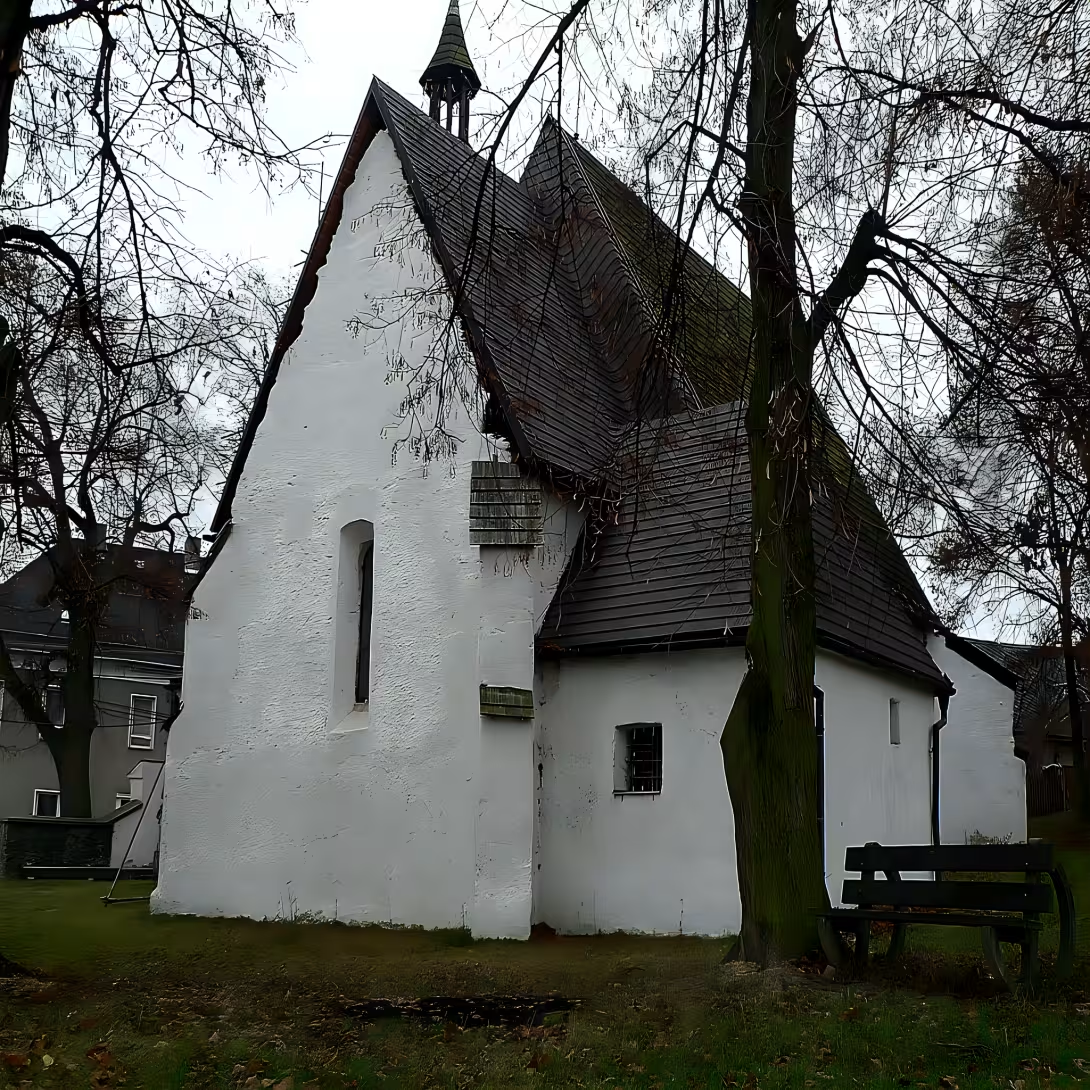
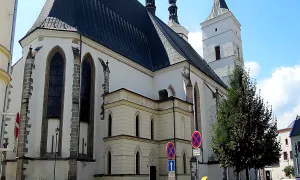
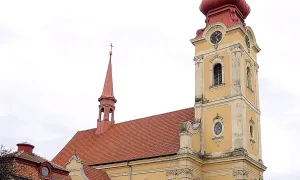
The Church of All Saints is one of the oldest and most valuable buildings in the region. According to the construction-historical survey, it was built during the second half of the 13th century when it was built as a small one-ship temple. Its construction took place gradually in several stages and was completed in the 1940s by adding a side boat with a tower and subsedition. The first written mention of the village and church appeared only in 1369 in the papers, although the construction probably existed longer.
In the oldest times, the church belonged together with all the Vyšehorky owners of the hazel farm. Since 1494 he became the property of Haugvický of Biškác. During the 16th century, more owners were in his possession, until he reached the hands of the Kobylks of Kobyli, known for his support to the Protestant faith. Their property was confiscated after the defeat of the state uprising, and so Olomouc Bishop František z Dietrichštejna took over the church. In the period of reCatholisation, Mohelnice was handed over to the parish in 1636. The parish was not restored until 1663.
The construction itself has undergone gradual changes. At the beginning of the 15th century, the sacristy was connected with a stone vaulted vault on the north side of the ship's connection and presbytery. From the 17th century comes another southern sacristy attached to the tower. The baroque reconstruction in 1768, when the ceiling was adjusted, a triumphant arch was picked up and a circle with a bowling ball was set up. The facade of the tower is carried by a sandstone portal with engraved year MDXXIX and the characteristics of masonry tools.
For centuries, the church stood in the middle of the village, originally surrounded by a wall that was partially damaged during the First World War; only a part of the baroque gate survived. In the space between the wall and the church he found his last rest village cemetery until 1879. Between the entrance gate and the church stands a sandstone cross from 1807 with the body of Christ.
The fatal twist came on July 8, 1957, when lightning struck the church and set it on fire. The roof with bell tower and wooden setting of the bell tower completely burned, as well as almost all inventory, including two bells from the beginning of the 16th century. After this disaster, the roof was replaced by shingles cover and in the 1960s, a building-historical survey and restoration research of wall paintings were carried out.
The extensive reconstruction came only in 1994, when an archaeological survey of the interior was carried out. It found a ceramic container from the second half of the 13th century and construction fittings to attest to the real age of the construction. There were restored wall paintings, laid new tiles, assembled new wooden bark and opened gothic windows that were walled up during the Baroque period. The restoration was completed in 1997, when the church was reconsecrated. Since 1964, the whole area - a church with a gate, a fenced wall and a stone cross - has been listed on the list of cultural monuments.
Then and now
Drag the slider to compare how the landmark may have looked when it was built with the view today.
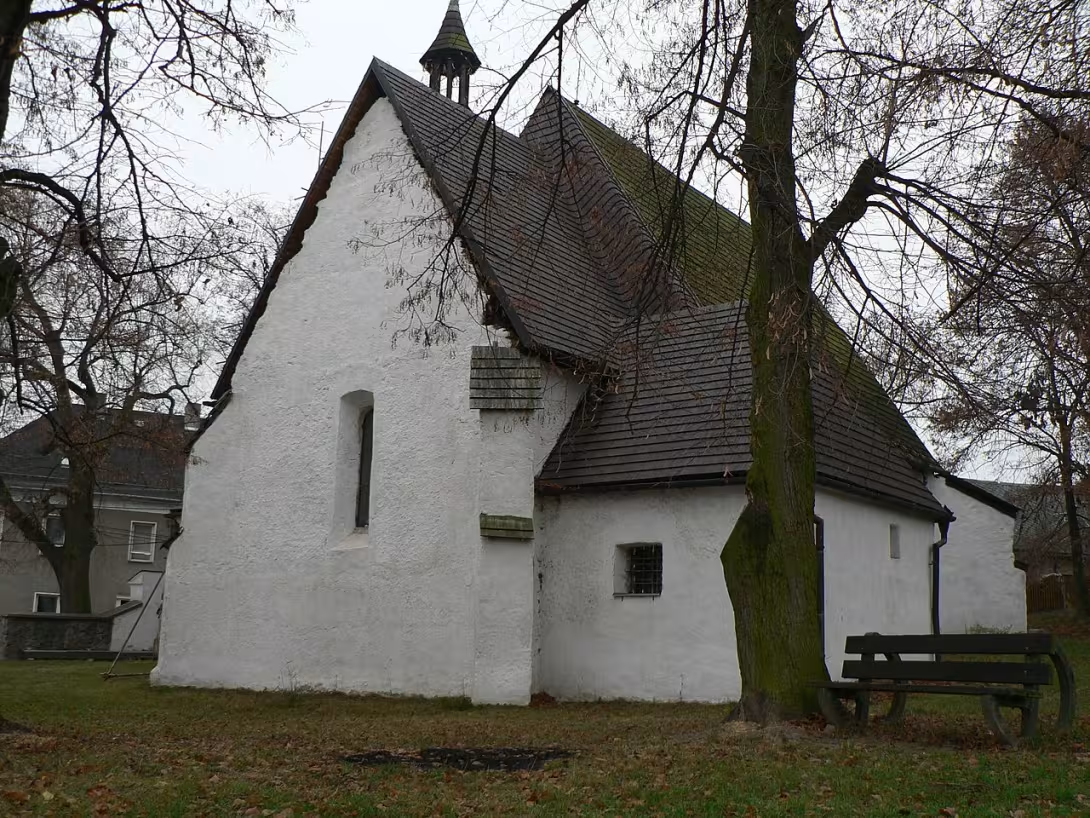

The historical appearance on the left is an AI-generated visualisation and serves as inspiration only.
Historical milestones
- 1369
- First written mention of the village and church.
- 1494
- The church becomes the property of the Haugvice of Biškouc.
- 1620
- The church is connected within the peaceful estate under the Olomouc Bishop.
- 1964
- Listing the church area with a gate and wall to the list of cultural monuments.
Architectural development
The construction was built in stages, and in the quarter of the 14th century a side boat was added with subsedition. In the early 15th century the sacristy was added and in the mid 17th century the southern sacristy was added. In the 18th century, the interior was baroque, which included adjustment of the ceiling and construction of the circle.
Historical events
1369: first written mention of the church, 1768: baroque reconstruction of the interior, 1957: lightning and roof fire, 1994: extensive reconstruction and archaeological research.
Owners
Líšnický farmhouse (gentlemen from Kunštát), Haugvics from Bistrác (since 1494), Kobylková from Kobylí (second half of the 16th century), Olomouc bishop (since 1620).
Points of interest
- The church was created during the second half of the 13th century as a small one-boat temple and its construction was completed in the 1940s. - The first written mention of the village and church appears in 1369. - The facade of the tower carries a sandstone portal with engraved year MDXXIX and the characteristics of masonry tools. - On 8 July 1957 the church struck by lightning and ignited it, burning the roof with bell tower, wooden superstructure bell tower, almost all inventory and two bells from the beginning of the 16th century. - In the archaeological survey of the interior in 1994, a ceramic container from the second half of the 13th century and construction fittings were found.
Guide
This guide is narrated by a synthetic voice generated by artificial intelligence.
Show guide text
This text was created by artificial intelligence and has not been editorially reviewed. It may contain inaccuracies.
The Church of All Saints in Vyšehorky is an early Gothic structure from the second half of the thirteenth century. It belongs to the oldest and most valuable architectural monuments in the region. It has retained its medieval character despite later modifications. Since nineteen sixty-four, it has been a cultural monument along with the gate, the enclosing wall, and the stone cross.
The church stands in the middle of the village square. The village and the church are documented in writing for the first time in thirteen sixty-nine. Initially, Vyšehorky belonged to the Lišnický estate, and the lords of Kunštát repeatedly bequeathed property to the church. In fourteen ninety-four, it was acquired by the Haugvices of Biskupice. In the second half of the sixteenth century, it passed to the Kobylas of Kobylí, who supported Protestant teachings. After the defeat of the Estates' Rebellion, they lost the property, and the church fell to the Olomouc bishop František of Dietrichstein. During the recatholicization, the local parish was administered from sixteen thirty-six by Mohelnice. An independent parish was restored in sixteen sixty-three.
The church was built gradually. Its foundation is a rectangular nave with a smaller square presbytery. In the fourteenth century, a tower was added to its southern side, which is also called a side aisle. Its attic floor has a gallery, that is, a defensive passage under the roof. A sandstone portal with the date fifteen twenty-nine carved in Roman numerals has been preserved in the tower's facade, along with the mark of a mason's trowel and hammer. People enter the church through this doorway to this day. At the beginning of the fifteenth century, a sacristy with a stone vault was added on the north side, and in the middle of the seventeenth century, another sacristy on the south side. In seventeen sixty-eight, the interior received a Baroque appearance, with a new ceiling, a triumphal arch, and a gallery with a balustrade made of pegs. Gothic windows were bricked up at that time.
On the eighth of July nineteen fifty-seven, a lightning bolt struck the church. The roof burned, the wooden bell tower and almost all of the interior furnishings were destroyed, including two bells from the early sixteenth century. In the sixties, the church received a wooden-shingle roof. Extensive restoration began only in nineteen ninety-four. Archaeologists found pottery fragments inside at that time, the oldest from the second half of the thirteenth century. Restorers renewed the wall paintings and reopened the Gothic windows. The restoration ended in nineteen ninety-seven and the church was consecrated again that same year.
A cemetery surrounded the church until eighteen seventy-nine. The enclosing wall stood until the First World War, today only a small part of it remains with a Baroque gate. Between the gate and the church stands a sandstone cross with the body of Christ from eighteen hundred and seven.
Tips for visitors
The best time to visit the Church of All Saints in Vyšehorky is during the spring and summer months, when the surrounding nature in Olomouc Region encourages trips and the monument is set in a picturesque rural environment. For quiet atmosphere and contemplation, we recommend the morning hours, when the sunlight ideally illuminates this exceptional early Gothic building from the second half of the 13th century.
The location is easily accessible by car.
Pack your comfortable shoes for walking on the rural surface on the beach and in the surroundings. Since it is a historical sacral object, we recommend choosing suitable and moderate clothing. Do not forget the drinking regime, especially in warm summer days, as a wide range of refreshments may not be available directly on the premises.
For photography lovers, the location of the church in the middle of the village offers great composite possibilities from all angles. The best light for capturing authentic details of early Gothic architecture and surrounding rural character is early in the morning or during the late afternoon, when the sun creates fine shadows on the historic wall.
Due to the strict rule of not inventing any other places in the area that are not listed in the supporting documents, the main focus is on the village itself in Vyšehorky and this extremely valuable regional church. Families with children appreciate a quiet environment without busy urban traffic, where small visitors can see the traditional rural area.
Frequently asked questions
Can the monument be visited?
Religious buildings are usually open mainly during services; at other times a visit is normally arranged with the parish or the operator. We have not verified specific times.
Where is the monument?
Location: Vyšehorky, Olomoucký kraj. The map on this page shows the exact spot.
Why is the monument protected?
It is listed in the Central List of Cultural Monuments of the Czech Republic as a cultural monument (register no. 14170/8-998).
For kids
Imagine going back to the past to a small village called Vyšehorky, where everything was quiet and a quiet morning, lightning broke over the Church of All Saints. The church is like an old friend who can tell you history from a long time. It's one of the oldest buildings in the area, and when you're inside, you feel like you're becoming part of a great adventure.
Businesses nearby
Do you run a restaurant, accommodation, shop, museum, rental, wellness or other visitor service near this monument? Show yourself directly to the people heading to it — this is how they will see you in the app and on the web:
Events nearby
Zdroj akcí: otevřená data měst a obcí ČR (Národní katalog otevřených dat) a kalendář akcí Národního památkového ústavu.
Nearby
🏰 Historic sites (103)
- Líšnice 1.3 km
- sv. Jan Nepomucký 3.1 km
- Kryštof Alois Lautner 3.1 km
- Morový sloup 3.2 km
- Panna Maria 3.3 km
- Muzeum Mohelnice 3.3 km
- Pieta 3.4 km web
- Panna Maria Neposkvrněná 3.5 km
- Žádlovice 3.5 km
- Boženka Trudová 3.6 km
- Mírov 3.7 km
- Panna Maria Bolestná 3.9 km
- Pomník padlým 4.1 km
- Hřebečský grunt 4.2 km web
- sv. Jan Nepomucký 4.2 km
- Památník Adolfa Kašpara v Lošticích 4.3 km web
- Madona 4.4 km web
- Muzeum Olomouckých tvarůžků A. W. 4.5 km web
- památník padlým v 1. a 2. světové válce 4.7 km
- Hradiště Obersko 4.9 km
🍽️ Restaurants and dining (79)
- Escobar 3.0 km
- Brusův šenk 3.0 km web
- U Pechů 3.1 km
- Hradební restaurace 3.1 km
- U Cechmistra 3.1 km
- kavarna a cukrarna 3.1 km
- Božolé 3.1 km
- Za starých časů 3.2 km
- Kafe 3 3.2 km
- Kavárna U Kašny 3.2 km
- Na Pešti 3.4 km
- Pivnice Mírovský grunt 3.4 km
- Loštický pozdrav - olomoucké syrečky 4.0 km +420603547521; +420739477443
- Motorest Studená Loučka 4.0 km +420603547521; +420739477443
- Hospůdka Na koupališti 4.0 km
- Hospůdka u Čápa 4.2 km
- u Coufalů 4.5 km nám. Míru 62/9 web
- U Lišky Bystroušky 4.6 km nám. Míru 54/13
- G-Bar 4.6 km
- U rytíře 4.6 km nám. Míru 115/2
🏨 Accommodation (25)
- MoravaCamp 3.0 km +420 775 111 721 web
- u Coufalů 4.5 km web
- Ubytovna 4.7 km Hradská 107/21 602 165 046 web
- Střelnice 5.0 km web
- Vila Háj 6.0 km
- Světnička v podhradí 7.2 km web
- Valáškův grunt 7.2 km +420 585 346 312 web
- Old Mill Glamp 7.2 km Kozov 8 +46722244244 web
- Vodácké tábořiště Tydra 7.3 km +420 775 766 767 web
- Hotel Bouzov 7.3 km
- Rekreační areál Motýlek 7.7 km web
- Tábořiště Tydra 7.7 km
- Chata Jeskyňka 11.2 km
- Na Hřišti 11.4 km
- Romeo 12.3 km
- Hotel Amco Zábřeh 12.7 km Masarykovo náměstí 43/3
- Penzion Tučňák 12.7 km
- Trnavský grunt 12.7 km +420604316913
- U Kováře 13.0 km web
- U Sedláka 13.2 km
🚲 Rentals and sport (11)
- Bikesport Mohelnice 3.2 km web
- Sportisimo 4.3 km
- Skatepark 4.9 km
- SK Loštice 1923 5.0 km web
- Půjčovna lodí Samba s.r.o. 6.0 km
- Plavecký areál Zábřeh 12.1 km
- Sportisimo 12.1 km
- DENALI SPORT 12.5 km Československé armády 651/9
- Tenisová hala 12.7 km
- Severka 13.1 km
- TJ Postřelmov 15.0 km web
🥾 Hiking and nature (174)
- Líšnická tvrz 1.3 km
- Starozámecký pramen 1.3 km
- Městský park 3.0 km
- Vraní kopec 3.0 km
- Vyšehorský vrch 3.1 km
- Kamenná 3.5 km
- parčík spartakiádní 4.0 km
- Hekelův kopec 4.1 km
- Hrušky 4.1 km
- Studánka zemřelých 4.1 km
- Studničná 4.2 km
- Větrník 4.6 km
- Vítejte v Lošticích 4.8 km
- Pramen Radničky 4.8 km
- Zámeček 4.9 km
- Žernůvka 5.2 km
- Placvara 5.7 km
- Čížová 5.8 km
- Lojzův pramen 5.9 km
- Srnčí hřbet 6.2 km
Accommodation nearby
Themed route
Design of the cruise route:
1. Church of All Saints - Type: church - Why is it worth visiting: This historical sacral monument stands in the middle of the village in Vyšehorky and forms the main destination of the whole trip.
2. The village in VyŠehorky - Type: space - Why is it worth a visit: The immediate surroundings of the church directly on the beach offer a quiet atmosphere of the rural residence, where the best view of the building is.
Seasonal recommendations
Spring brings the awakening nature of the Olomouc Region, when the surrounding sides and meadows of Vyšehorek bloom with spring greenery and the first wild flowers. The lighting is very clean and sharp in this period, which creates ideal conditions for shooting details of ancient architecture. The atmosphere is quiet, contemplative and permeated by the singing of birds. You will meet tourists only a minimum, so you will enjoy the peace of the cemetery and the surrounding church in complete privacy. Put on fixed shoes in any spring mud and waterproof jacket because the weather is changing. The best time to visit is in the morning when the sun slowly rises above the horizon.
Summer offers lush vegetation, which picturestively complements the silhouette of the sacral structure in the landscape. Sun rays fall at a steeper angle and create deep shadows that underline the plasticity of Gothic and Renaissance elements. The atmosphere of the main summer season attracts long walks, while the surrounding trees provide a welcome shade. On holiday weekends, cyclists and travellers sometimes stop here, so it is more busy around noon. We recommend you leave early in the morning or in the evening to avoid the biggest temperatures of the day. Don't forget to wear your headgear, enough drinking water and insect repellent.
Autumn turns Vyšehorky into a colourful palette of warm shades of brown, yellow and red, creating an unrepeatable scenery with melancholy magic of the church. The sun is falling down to the horizon, watering the memory with a soft, golden light that all landscape photographers love. The air is fresh and the misty blow gives the place a mysterious blow. Visitors are losing ground, which ensures a peaceful tour. Due to the frequent cold wind and morning gloom, it is worth wearing a warm layer of clothing and windbreaker. The ideal time for arrival is around noon, when any fog will disperse.
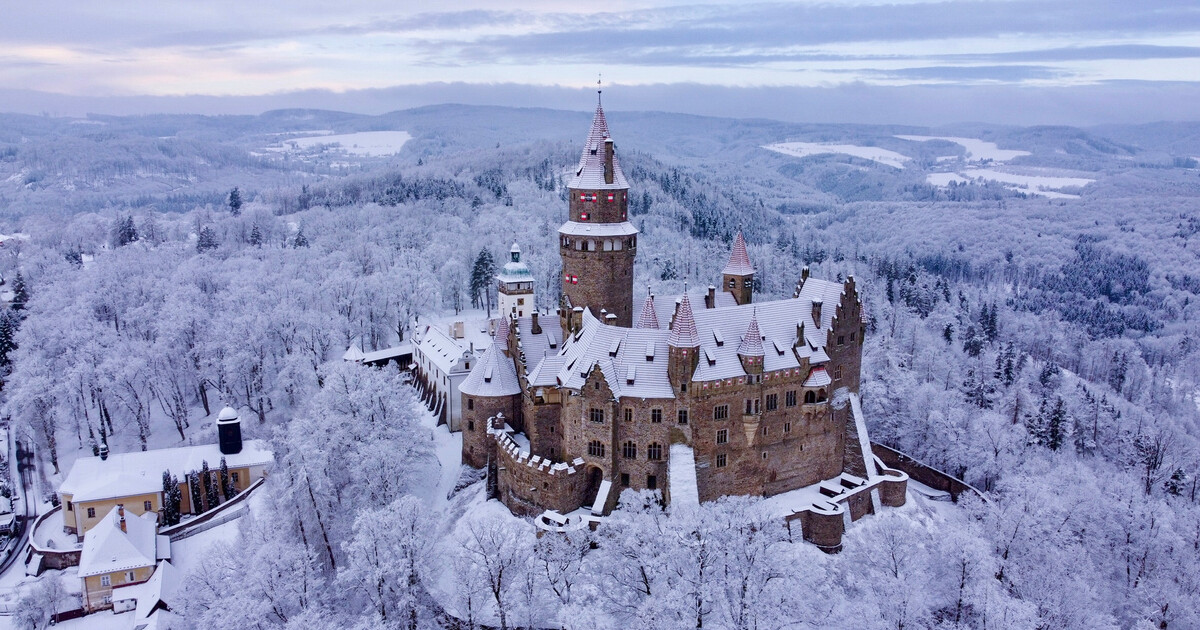
Winter covers Vyšehorky into a quiet snow blanket and isolates the memory of the outside world with a truly fabulous atmosphere. Low sun and white snow reflections create sharp, contrast lighting, which soon in the afternoon passes into blue twilight. In Advent Time, there is a deep calm and an atmosphere that encourages silence. Due to the shorter day it is necessary to schedule a visit to the morning or early afternoon. The roads in the area can be frozen or deeply snowy, therefore solid winter shoes with anti-slip soles and warm laminated clothing including hat and gloves are essential.
Visualizations and artistic views


The visualisations are generated by artificial intelligence and serve as inspiration.
Photos from the area
Real photos taken near the monument


Zdroj a licence jsou uvedeny u každého snímku.
Atmosphere of the place
This atmospheric visualisation of the place and period was generated by artificial intelligence. It is not real footage of the location.
Tips from visitors
No tips yet. Be the first!
Log in and add your tip.
Sources and literature
Photos: Martin Vavřík / Public domain, rozlišení zvýšeno umělou inteligencí — Wikimedia Commons. The author and licence also appear when you hover over the image.
Faktickým podkladem tohoto textu byl článek na Wikipedii, jehož autory jsou přispěvatelé Wikipedie. Článek je dostupný pod licencí CC BY-SA 4.0.
Location on the map
Příběhy a pověsti
Legendy, pověsti a příběhy spjaté s touto památkou
Fotografie návštěvníků
Zatím žádné fotografie. Buďte první, kdo přidá fotografii z návštěvy!
Log in a přidejte svou fotografii nebo hodnoťte.
Za ověřenou návštěvu v aplikaci získáte víc bodů — poznáme podle GPS, že jste na místě.
Reviews and comments