



kostel Zvěstování Páně Castle / castle chapel
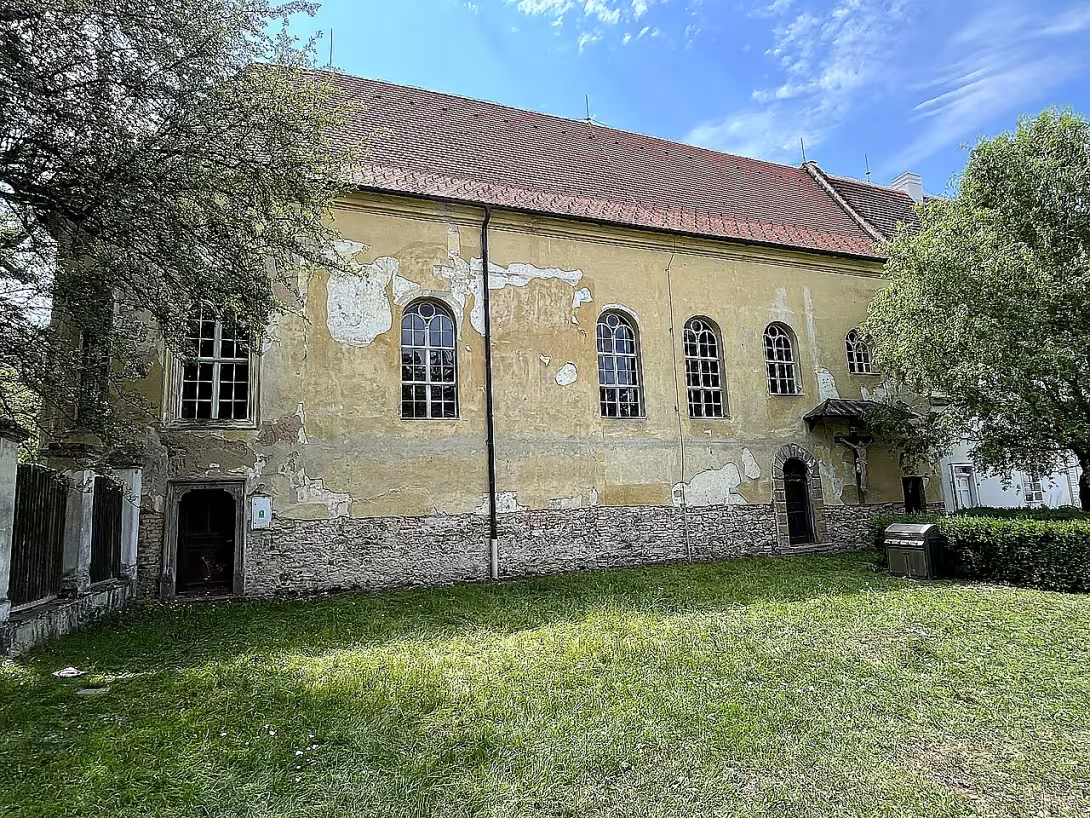
Church of the Annunciation The Lord of the Rachic is a Renaissance one-ship building from the beginning of the 17th century, which today serves as a parish church of a extinct parish. This cultural monument of the Czech Republic is located in the village Račice, which is part of the village Račice-Pístovice, and forms an integral part of the area of the local castle. It is particularly remarkable in its development. First it served as a prayer room and later it was rebuilt into a Roman Catholic chapel while maintaining a unique connection with the castle building.
This church was built probably in the early 17th century under Hanuš Petřvaldský of Petřvald, originally as a prayer house of the Czech brothers. These events took place in the historical context of the period before the 30-year war and the tension between Catholics and non-Catholics in Czech countries. The subsequent reconstruction in the 17th and 18th centuries took place during the gradual consolidation of the Baroque Catholic cultivation of landscapes and noble settlements in the Habsburg monarchy.
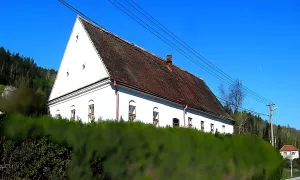
From the point of view of architecture, it is a single-boat oriented building with a semi-circular finish, which directly connects to the western building with a forefront and has a saddle roof. On the north facade there is a main entrance, a smaller entrance to the sacristy with the edge and a total of three high and two smaller windows. The south facade, however, is smooth. Part of the construction is an added support column, which carries a covered connecting corridor leading to the castle. The sacristy has a semi-circular plan and four windows decorated with a profile shampoo, over which are placed smaller circular windows.
During its history, the object has undergone a number of changes of owners. These included Hanuš Petřvaldský z Petřvaldu, Karel František de Forno, Julián Braida z Ronsecca a Cornigliana, Antonín Pavel Braida and the Baron Johann Mundy in the 19th century. In the 17th century the object was perhaps rebuilt into a Roman Catholic castle chapel and this transformation continued in the 18th century. In 1741 he acquired the manor Antonín Pavel Braida, which began the reconstruction of the church. Subsequently in 1773 he added a sacristy and on the west side he built a covered connecting corridor to the castle. In 1830, Baron Johann Mundy bought the Rychic Manor, which carried out an extensive reconstruction of the entire castle during which the castle complex acquired its present form.
Among the key points are the unusual direction of the altar in the southeast direction. The centre of the altar forms an image with the theme of the Annunciation of the Virgin Mary by Archangel Gabriel. His author is not known, but his data are recorded in the survivor's inventory of the castle from 1735, which makes it possible to determine approximately the age of this work.
Today the church is protected as a cultural monument and is located in the area of the cultural protected castle in Rachic. This monument represents valuable evidence of the transformation of noble structures and religious conditions in the region. Visiting this place offers a view of the history of architecture associated with the development of a noble residence.
Historical milestones
- 1735
- First data on the altar image were recorded in the survivor's inventory of the castle.
- 1741
- Antonín Pavel Braida acquired the estate and began to rebuild the church.
- 1773
- A sacristy was built and a covered connecting corridor leading to the castle.
- 1830
- The estate was bought by Baron Johann Mundy, who started a large reconstruction of the entire castle.
Architectural development
The church was built at the beginning of the seventeenth century as a prayer house of the Czech brothers and during the seventeenth and eighteenth centuries the owners of the estate rebuilt it into a chapel. It is a single-boat building with a semi-circular finish, a saddle roof and a smooth south facade, with high and smaller windows on the north side. In 1773, the sacristy was added with a semi-circular plan and a covered connecting corridor on the west side, carried by an added support pillar.
Historical events
In the seventeenth century, the church was rebuilt into a Roman Catholic chapel. In 1741 he acquired the estate Antonín Pavel Braida and started further reconstruction. In 1773, a sacristy was added and a covered connecting corridor leading to the castle. In 1830, Baron Johann Mundy bought the estate, which carried out extensive reconstruction of the castle.
Owners
Hanuš Petřvaldský z Petřvaldu, Karel František de Forno, Julián Braida z Ronsecca a Cornigliana, Antonín Pavel Braida, Baron Johann Mundy
Points of interest
- The construction was built probably at the beginning of the seventeenth century by Hanuš Petřvaldský of Petřvald, originally as a prayer house of the Czech brothers. - Among the main attractions are the unusual direction of the altar in the southeast direction. - The centre of the altar forms an image with the theme of the Annunciation of the Virgin Mary by Archangel Gabriel, whose author is not known, but the data about it are recorded in the survivor's inventory of the castle from the year seventeen hundred thirty-five.
Guide
Show guide text
This text was created by artificial intelligence and has not been editorially reviewed. It may contain inaccuracies.
Welcome to listening to our guide. You are standing right in front of the Church of the Annunciation of the Lord in Rachic, which is a parish church of a defunct parish and a protected cultural monument of the Czech Republic. When you look ahead, you see a one-ship structure that breathes its long history on you. This building is directly connected to the western building of the local castle and forms a whole with it. Feel the calm atmosphere of this place where the spiritual legacy is bound with the mansion.
Let's look into the past how this shrine was created. The construction was built probably at the beginning of the seventeenth century during the then owner of the estate, which was Hanuš Petřvaldský z Petřvaldu. The interesting thing is that it did not originally serve as a Catholic church, but as a prayer room of the Czech brothers. Over the centuries, a number of owners and noble families have been replaced here, leaving their mark on the shape of the place. Among the important historical figures associated with this estate were also Karel František de Forno, Julián Braida z Ronsecca a Cornigliana, or Antonín Pavel Braida, which won the manor in the year of the thousand seven setSearch and forty-one and started a great reconstruction of the church. In the year one thousand seven hundred and seventy-three the sacristy was built and also the covered connecting corridor, which led directly to the castle. Later, in the year one thousand eight hundred thirty, Baron Johann Mundy bought the estate, which started a large reconstruction of the entire castle, which also affected this area. We learn about what the interior looked like in earlier times from historical sources. For example, in the year of a thousand and seven hundred thirty, the first written data on the local altar painting was recorded in the residual inventory of the castle.
Now pay attention to the architecture of the building you are facing. As has already been said, it is a single-boat oriented structure with a semi-circular conclusion that is closely related to the adjacent castle. When you look at the layout of the entire object, notice one very special feature. The altar of this church is in an unusually southeast direction, which is out of the ordinary practice of building at that time. The centre of this altar forms an image with the theme of the Annunciation of the Virgin Mary, which gives the whole place its main name and spiritual content.
When you think about the stories of the people associated with this place, a picture of the life of the nobles and a change of faith in the Czech lands opens up to you. At the beginning of the seventeenth century, Hanuš Petřvaldský z Petřvaldu wanted to provide space for prayers according to the then extended creed. Decades later, under the reign of Antonín Pavel Braida, or later under Baron Johann Mundy, the manor changed according to the new fashion directions and needs of noble families. Each of these personalities has printed a piece of its time in the form of a seagull castle complex and its church.
Stop for a moment with the interesting things that make this place special. It is fascinating that the prayer room of the Czech brothers turned into a Catholic parish church and became a solid part of the castle complex. To this day, the unusual direction of the altar towards the southeast lures to wonder why the builders chose this orientation. The picture of the Annunciation of the Virgin Mary at the centre of the altar, first documented in the inventory of the year seven hundred thirty, is a silent witness to the prayers of many generations before us.
We hope you enjoyed stopping by the Rachic Church tonight. We call on you to explore further the surroundings, to see historical details and to discover other interesting places in this region. Thank you for your attention and have a nice day.
Tips for visitors
Best time to visit the church The Annunciation of the Lord in Racice is autumn or spring, when it is quieter and nature offers beautiful colors. In addition, the sun illuminates the construction so that the decorated elements on the facade stand out.
When you visit, you should bring sun glasses so that the light does not dazzle you during photography. It is also good to have a camera or mobile phone to capture the beautiful details of the church.
For photographers are ideal places around the end of the church where the sun illuminates the interior in the semicircle. The best light is usually the afternoon when the shadow moves and the decorated elements on the walls stand out.
In the vicinity of the church you can visit the culturally protected castle in Rachic. The castle park offers beautiful walks and is suitable for families with children, where they can enjoy nature.
Frequently asked questions
Can the monument be visited?
Religious buildings are usually open mainly during services; at other times a visit is normally arranged with the parish or the operator. We have not verified specific times.
Where is the monument?
Location: Račice, Jihomoravský kraj. The map on this page shows the exact spot.
Why is the monument protected?
It is listed in the Central List of Cultural Monuments of the Czech Republic as a cultural monument (register no. 1000125264_0003). It is protected as part of a larger listed ensemble.
Businesses nearby
Do you run a restaurant, accommodation, shop, museum, rental, wellness or other visitor service near this monument? Show yourself directly to the people heading to it — this is how they will see you in the app and on the web:
Nearby
Kostel je součástí areálu kulturně chráněného zámku v Račicích, který se nachází v obci Račice-Pístovice.
Accommodation nearby
Trips and activities nearby
Guided tours, tickets and activities nearby from GetYourGuide
Affiliate link: if you buy from the partner, we may receive a commission. The price for you does not change.
Search tours and activities →Themed route
Thematic cruise route Račice-Pístovice
1. Church of the Annunciation of the Lord - Type: Church - Why is it worth a visit: This church is a key part of the culturally protected castle in Rachic. Its architecture and historical significance attract lovers of history and art.
2. Castle complex - Type: Culturally protected lock - Why is it worth a visit: The area includes not only a church, but also other historical buildings and a park greenery. It is an ideal place to walk and discover the beauty of the rural environment.
3. Park by the castle - Type: Park - Why is it worth a visit: The park offers quiet walkways for relaxing and listening to natural sounds. It is an ideal place to relax after a tour of the church and castle.
4. Castle courtyard - Type: Tanks - Why it is worth a visit: Here you can enjoy the historical architecture of the castle and its surroundings. It is also a place where various cultural events take place.
5. Exhibition on the premises - Type: Exhibition - Why is it worth visiting: There are regularly exhibitions related to the history and culture of the region. They're a great addition to understanding local heritage.
This route offers a comprehensive view of the cultural wealth of Racic-Pístovic, mainly focused on kostel Zvěstování Páně and its immediate surroundings.
Seasonal recommendations
Spring season offers a unique charm, when the surrounding nature awakens to life and the fresh green creates a wonderful contrast to the ancient walls of the Church of the Annunciation of the Lord in Racice. The morning sun creates fine lighting that highlights the architectural details of the building, and in the place the calm, restoring atmosphere reigns. Visitors are relatively few at this time, so you can see the sacral space in silence. We recommend layered clothes with a light windbreaker, because spring wind is usually cold, and the best time to visit is in the morning when the light is the most dispersed.
During the main summer season, the building is covered with bright sunlight, which highlights the facade in its whole beauty, while the massive stone walls inside offer pleasant cooling before the outdoor heat. The surroundings are full of life and the atmosphere is very welcoming. However, a higher number of incoming people must be counted on, especially on weekends. Light air clothing is suitable, but it respects the dignity of the sacral space and covers the shoulders and knees. The best time to visit is early morning hours or late afternoon, when crowds shrink and sharp noon heat retreats.
Autumn moons bring an unrepeatable nostalgic atmosphere, where trees in the surrounding area turn into golden and red shades. The morning mist often covers the surrounding landscape and gives the historic place a mysterious character that turns into a warm autumn light after the fog has disappeared. The number of visitors is falling significantly, allowing for uninterrupted contemplation. The practical advice for this period is warmer clothes, including scarves and solid shoes, because the surrounding paths are moist and slippery. The best time to arrive is around the early afternoon, when the sun's rays best light the colored leaves.
In winter, especially in advent time, this place is quiet and festive. The sharp winter light and possible snow cover underline clean lines of historical buildings and create a fairy tale scenery. The rest here is almost absolute, as the traffic is at a minimum during this period. Since indoor stone spaces are often heavily cold, very warm winter clothes, gloves and warm shoes are essential. Due to shorter days and early dimming, it is best to plan a visit to early noon when the most natural daylight is available.
Visualizations and artistic views


The visualisations are generated by artificial intelligence and serve as inspiration.
Photos from the area
Real photos taken near the monument


Zdroj a licence jsou uvedeny u každého snímku.
Tips from visitors
No tips yet. Be the first!
Log in and add your tip.
Sources and literature
Photos: PETRSTE / CC BY 4.0 — Wikimedia Commons. The author and licence also appear when you hover over the image.
Faktickým podkladem tohoto textu byl článek na Wikipedii, jehož autory jsou přispěvatelé Wikipedie. Článek je dostupný pod licencí CC BY-SA 4.0.
Location on the map


Příběhy a pověsti
Legendy, pověsti a příběhy spjaté s touto památkou
Fotografie návštěvníků
Zatím žádné fotografie. Buďte první, kdo přidá fotografii z návštěvy!
Log in a přidejte svou fotografii nebo hodnoťte.
Za ověřenou návštěvu v aplikaci získáte víc bodů — poznáme podle GPS, že jste na místě.
Reviews and comments