



Kostelní Bříza Chateau
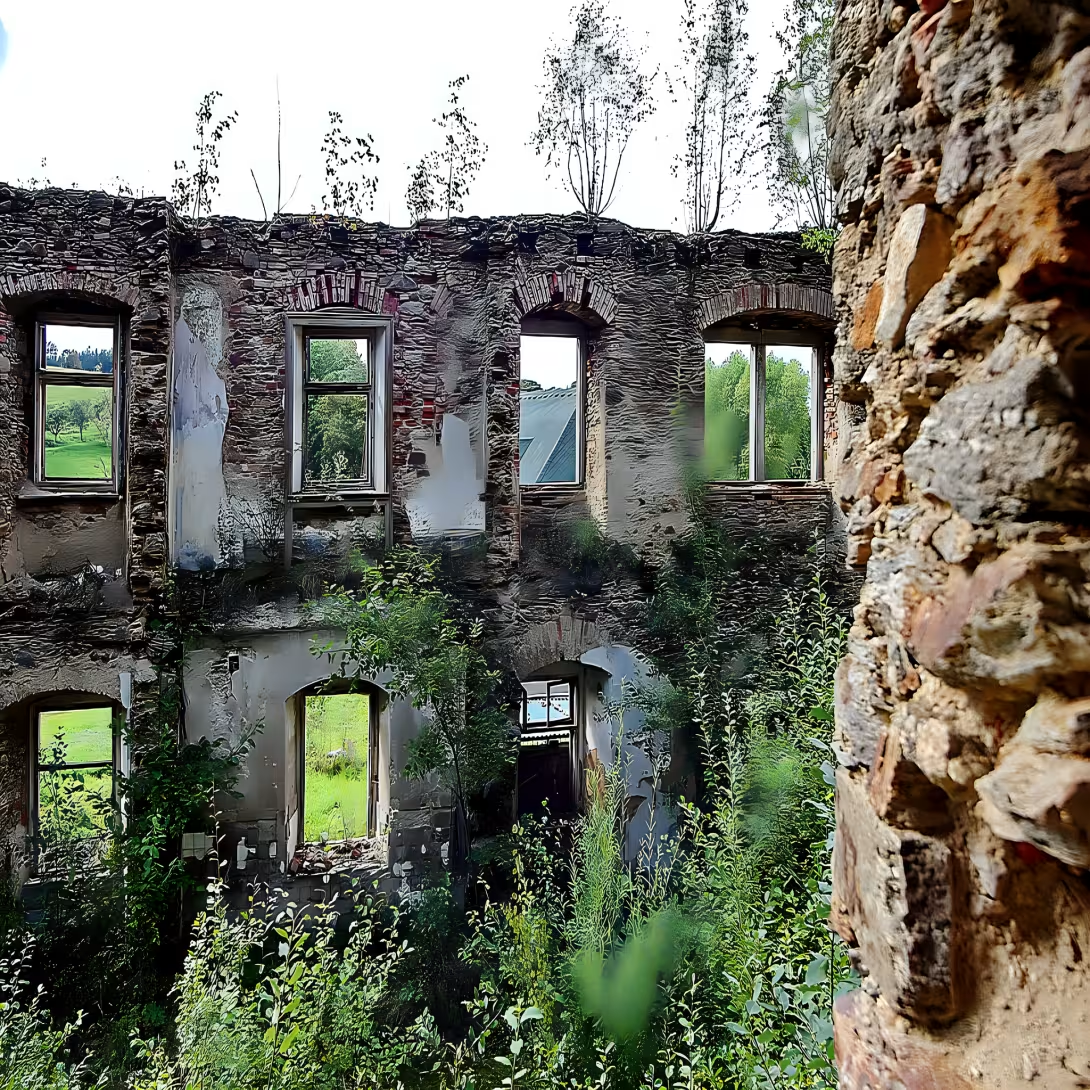
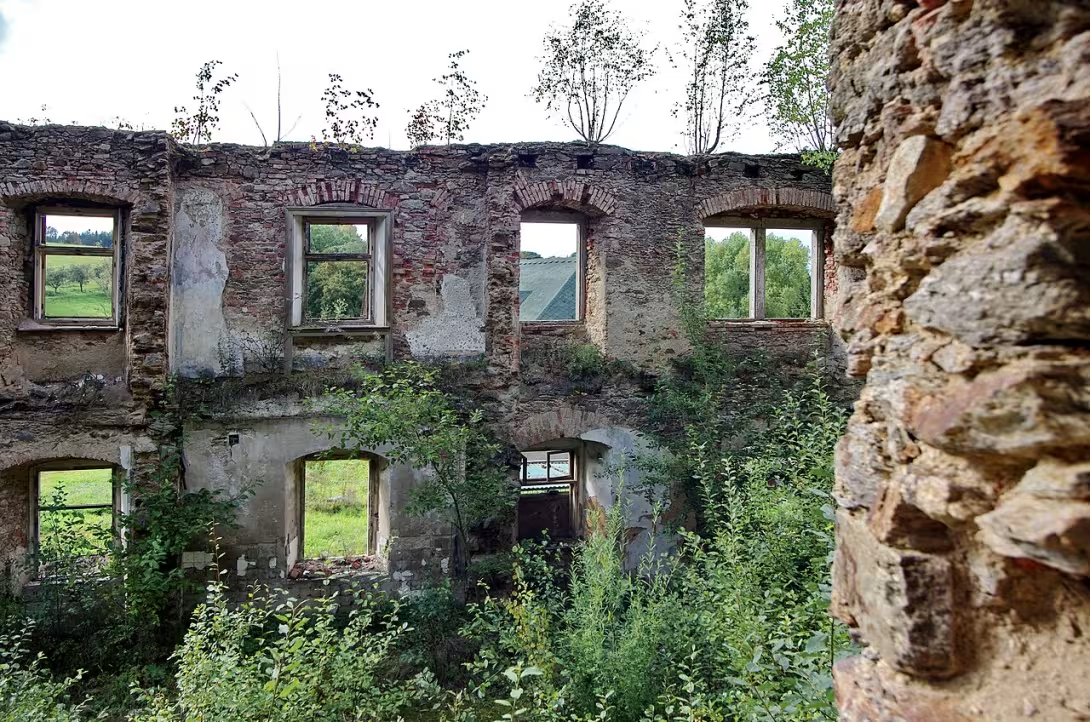
The ruin of the castle Kostelní Bříza is situated in the complex of the sailing yard in the small village of the district Sokolov. The visitor will not find a restored residential building here, but the remains of the building, which in dramatic remains tells the story of the Baroque period and then the gradual decline.
The site had a rich building history. The oldest mansion was a Gothic fortress - its fortress was preserved northwest of St. Peter and Paul's church. Subsequently, there was a Renaissance fortress whose location is now unknown. The Baroque castle was built gradually from the fifties of the seventeenth century when it was probably founded by Jan Friedrich Winkler after taking over his father Wilhelm's estate. The construction work took a long time and the castle was completed only in 1679, during the Anna Marie Winkler period. Evidence of dating was cast iron plate on the building. The creation of the building at this time is also supported by the different thickness of the masonry - some parts are up to 1.5 metres, which shows different stages of the construction.
The following two and a half centuries belonged to a number of different owners. Aristocratic and urban families bought and sold it - among them Winkler, Spiegles, Turbos, Auerspergs and others. Sales prices were in the order of thousands of gold. In 1917, the last owner of the Kopal family died, after which the estate was taken over by a relative of Viktor Brand- Kopal. He owned it until 1945, when the Communist government seized the property in February 1946 and forced Viktor to leave Czechoslovakia. Viktor died in 1959 in Litschau, Austria.
After World War II, the premises were used by state farms - State goods Sokolov and Agrokombinat. Maintenance was neglected until part of the roof collapsed in 1980-1986. Since then the castle has not been restored and the building has been preserved mainly by the perimeter masonry and some internal partitions. In 2007, it was bought by a Dagestani businessman, Lukman Lukmanov, who began repairs to the economic building. The castle park adjacent to the site on the east side remains protected as a cultural monument of the Czech Republic and recalls the extent and glory of the former residence.
Then and now
Drag the slider to compare how the landmark may have looked when it was built with the view today.
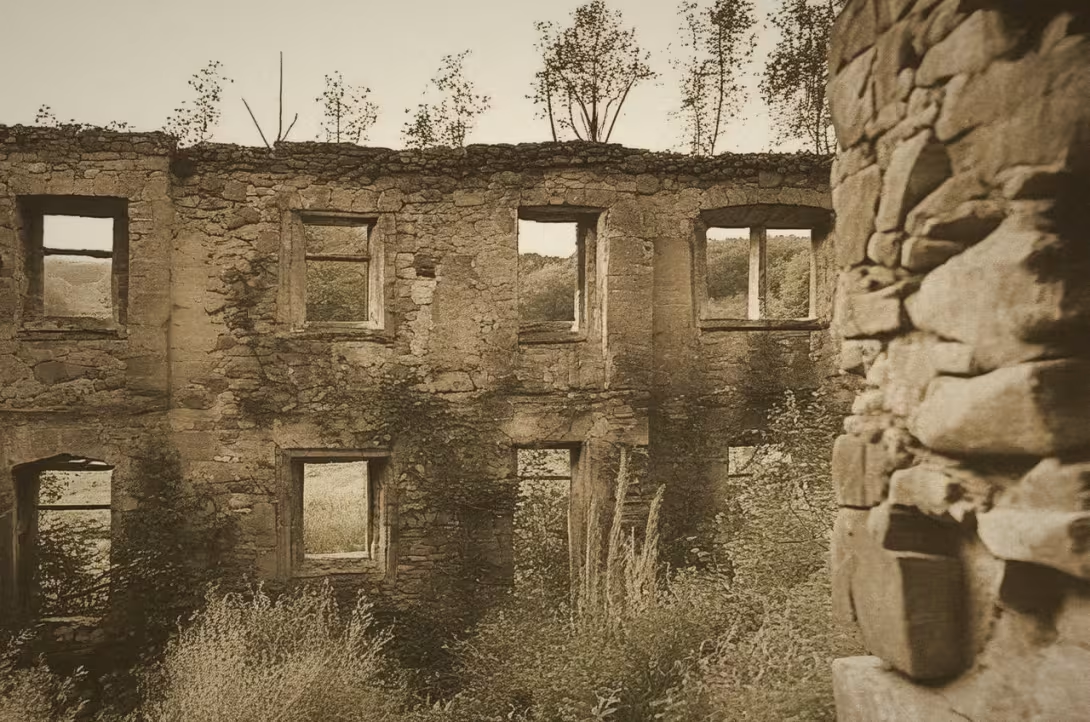
The historical appearance on the left is an AI-generated visualisation and serves as inspiration only.
Historical milestones
- 1679
- Complete the castle under Anna Marie Winkler.
- 1767
- Adjusting the lock.
Architectural development
The castle was originally a Renaissance fortress, which was converted into a Baroque castle in the 17th century. The construction was modified in 1767. The masonry of some parts reaches a thickness of up to 1.5 meters, which supports the theory of its formation at this time.
Historical events
Since the eighteenth century, the castle stood
Points of interest
- The ruins of the castle Kostelní Bříza are located in the complex of the sailing yard in the small village of the district Sokolov.
- The oldest manor was a Gothic fortress - its fortress was preserved northwest of St. Peter and Paul's church.
- The Baroque castle was established gradually from the 1950s when it was probably founded by Jan Friedrich Winkler after taking over his father Wilhelm's estate. Construction works lasted a long time and the castle was completed only in 1679.
- The prices of the estate were in the order of thousands of gold, and after World War II, the property was confiscated by the Communist government in February 1946.
- In 2007, the Dagestan entrepreneur Lukman Lukmanov bought the premises, which began repairs of the economic building. The castle park adjacent to the area on the east side remains protected as a cultural monument of the Czech Republic.
Guide
This guide is narrated by a synthetic voice generated by artificial intelligence.
Show guide text
This text was created by artificial intelligence and has not been editorially reviewed. It may contain inaccuracies.
Kostelní Bříza near Březová in the Sokolov region is today a castle ruin. Since the eighteenth century it has stood in the area of a farm courtyard and from the east a castle park adjoins it, which is protected as a cultural monument.
The castle had a predecessor. The oldest noble residence was a Gothic fortified tower. From it a fortified tower mound remained northwest of the Church of Saint Peter and Paul. Later a Renaissance fortified tower stood here, whose location we do not know. It is possible it was located precisely in the place of the farm courtyard.
In sixteen thirty Wilhelm Winkler of Heimfeld acquired the village. In the fifties of the seventeenth century the feudal obligation to Loket Castle was abolished and perhaps a new Baroque castle was built then. It was completed in sixteen seventy-nine, when the estate belonged to Anna Maria Winklerová. A cast iron plaque, originally placed on the castle building, documented this date. The varying thickness of the masonry, which in places reaches up to one and a half meters, also corresponds to this period.
The owners then changed frequently. George Julius Multz of Valdov got into financial difficulties and after a village fire in sixteen eighty-eight he sold the estate to Julius Erdmann Anton of Grouppau. He founded a hospital of All Saints by the church and in seventeen thirty-two he bequeathed the estate to John Francis of Turby. The Turbys are indeed also considered the founders of the castle. After them the estate was held by the Spiegels, Henneberg-Spiegels and Auerspergs.
After nineteen seventeen the castle was acquired by Victor Brand-Kopal. The land reform after nineteen twenty-one affected it only partially and the castle remained his. He managed his property from here until nineteen forty-five. In February nineteen forty-six national administration was imposed on the property, the castle was confiscated from him and Victor had to go to Austria. He died in Litschau in nineteen fifty-nine.
In the second half of the twentieth century the complex was used by State Farms Sokolov and Agrokombinát Sokolov. They neglected maintenance and in nineteen eighty-five to nineteen eighty-six part of the roof collapsed. Repairs did not come and so only the perimeter masonry and some internal partitions of the castle survived.
After two thousand a Dagestani businessman Lukman Lukmanov bought the ruin along with the farm buildings. At his request the complex was struck from the list of cultural monuments in February two thousand seven, with the exception of the park. The new owner began to repair the farm building of the estate, which he wanted to use as his residence.
Tips for visitors
Best time to visit The church birch is in the spring or autumn season when vegetation is full of blood and sunlight gives the ruins a special atmosphere. This time of year also offers mild weather compared to hot summer months.
The current connection should be checked in the traffic search engine.
When visiting the Kostelní Bříza Castle, wear a suitable suit because the room will be cold and in winter conditions. Don't forget to wear protective shoes if you plan to explore the surrounding terrain.
Photography is one of the best activities in the Church March. The best light offers morning and evening when the sun illuminates the outlines of the ruins in living colors. For interesting angles we recommend exploring the surrounding terrain, which can provide views from the front or side.
For families with children, Kostelní Bříza is an ideal place to walk and play in nature. Children will look forward to exploring historical ruins and having fun outside. In addition, if you have time, we recommend visiting nearby Karlovy Vary, which is within 30 minutes' drive of the castle.
Frequently asked questions
Can the monument be visited?
This is a ruin. Such sites are often freely accessible, but some can only be visited with a guide or are closed for safety reasons. We have not verified the current situation – take care and respect any restrictions.
Where is the monument?
Location: Kostelní Bříza, Karlovarský kraj. The map on this page shows the exact spot.
Why is the monument protected?
It is listed in the Central List of Cultural Monuments of the Czech Republic as a cultural monument (register no. 31899/4-619). It is protected as part of a larger listed ensemble.
For kids
Imagine going back to when the Kostelní Bříza Manor was the most sought after place in the area. There stood a beautiful castle, which was the seat of the masters of Church March.
How did it look here? Who lived here? What happened here? The castle was home to rich nobles who built their mansion here. They walked quietly around ponds and forests where they hunted and collected crops. There were trees and bushes around the castle that were amazing. People lived in peace and peace.
Businesses nearby
Do you run a restaurant, accommodation, shop, museum, rental, wellness or other visitor service near this monument? Show yourself directly to the people heading to it — this is how they will see you in the app and on the web:
Events nearby
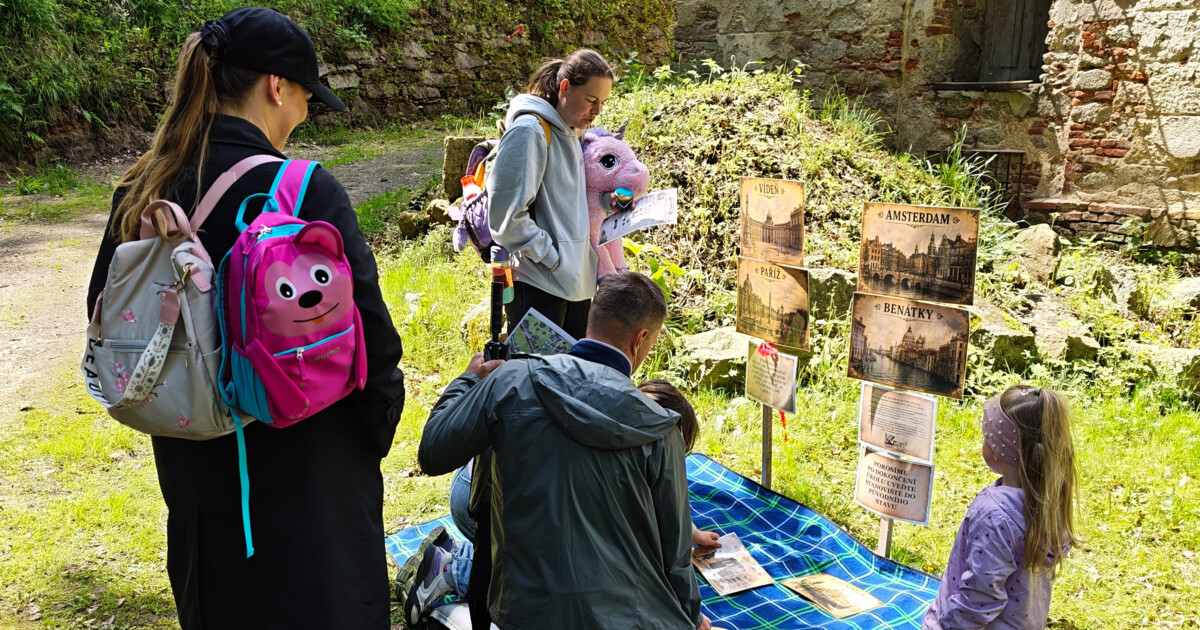

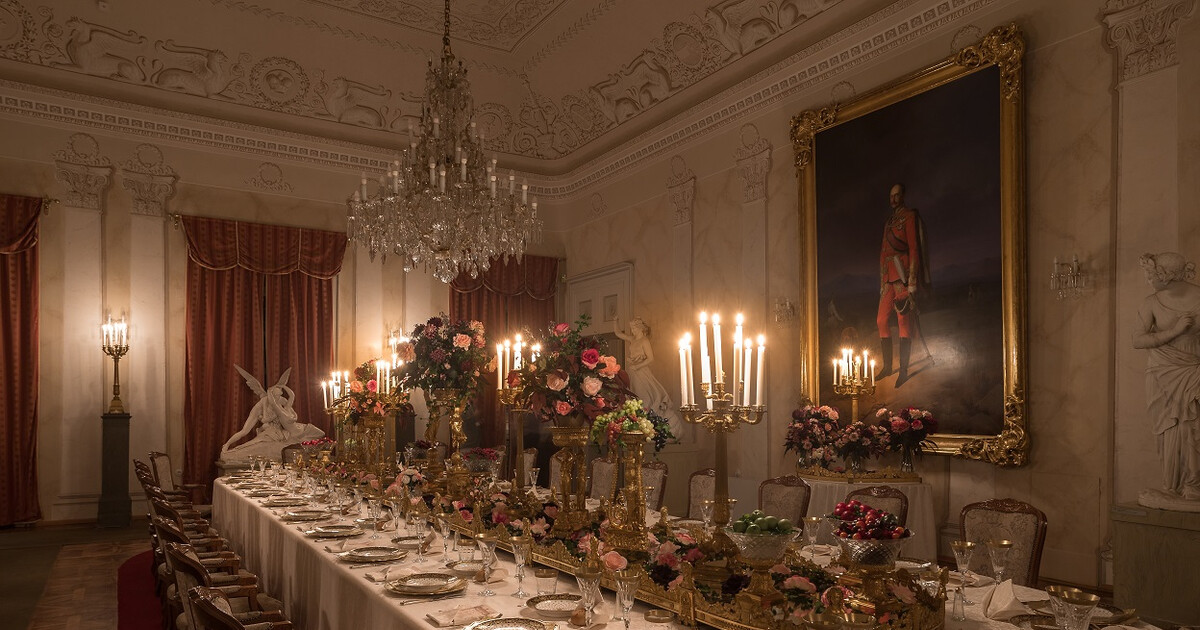
Zdroj akcí: otevřená data měst a obcí ČR (Národní katalog otevřených dat) a kalendář akcí Národního památkového ústavu.
Nearby
Ambient landscape, other sights, natural elements up to 5 km
Accommodation nearby
Trips and activities nearby
Guided tours, tickets and activities nearby from GetYourGuide
Affiliate link: if you buy from the partner, we may receive a commission. The price for you does not change.
Search tours and activities →Themed route
Thematic cruise route around the Church's Birch
1. Kostelní Bříza (lock) - Type: Historical castle - Why is it worth a visit: This Baroque castle, built in the 18th century, is an excellent example of the architecture of the time and offers a view of the rich history of the region. Its parks and halls are an ideal place to understand the cultural heritage of the area.
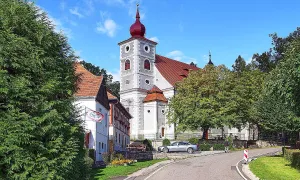
2. School in Kostní Bříze - Type: Historical buildings - Why is it worth a visit: This school, located near the castle, is a reminder of the importance of education in the region. Its architecture and history are a fascinating addition to learning about life in the village.
3. Church of St. Wenceslas - Type: Church - Why is it worth visiting: This church is not only the spiritual centre of the village, but also an architectural monument. Its interior and history represent a rich cultural context of the local community.
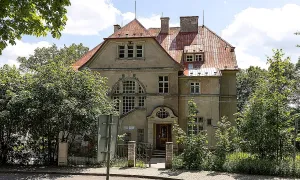
4. Municipal Office in Kostelní Bře - Type: Historical buildings - Why is it worth a visit: This building, which served as a local administrative centre, is an important historical element of the village. Its design and use reflect changes in the social organisation of the region.
5. Old vinice - Type: Historical vineyards - Why is it worth visiting: These vineyards are witnessing a long tradition of winery in the area. They are an ideal place to understand the economic and cultural aspects of rural life.
This route offers a view of the history, culture and tradition of the Church's March and its surroundings.
Seasonal recommendations
Spring: In spring, Kostelní Bříza is fertilized by a new life when flowering shrubs and trees form a rich green canvas around the ruins. The sun rays illuminating ancient walls add magic, which even more emphasizes the historical beauty of this place. Visitors can expect calmer days without a significant tourist stream, making the visit an ideal opportunity for intimate exploration. It is recommended to wear comfortable shoes because of possible wet conditions and do not forget the camera to capture beautiful spring colors.
Summer: Summer brings the Church's March in full splendor with long days and warm sunlight, which illuminates every stone of the castle. The atmosphere is full of vitality, which makes this time ideal for a visit, although more people may appear in the main summer season. To ensure comfort and pleasant stay, it is advisable to visit early in the morning or evening to avoid eager tourists. Wearing light clothes and a sun protective tie, as well as plenty of drinking water, is crucial for the use of the summer day.
Autumn: In autumn, Kostelní Bříza turns into melancholy beauty with coloured carpet of golden and red leaves that fall around ancient castle ruins. Sunshine days are usually warm, but evenings can cool down quickly, adding mild romanticism to the atmosphere. This is the perfect time to visit, because it avoids crowds and provides a quieter environment to explore. It is recommended to wear layered clothes so that you can adjust the temperature changes, and do not forget the camera to capture beautiful autumn colors.
Winter: Winter Kostelní Bříza offers a unique atmosphere with a completely different impact, where the castle is covered with snow and the trees appear to be carved from the glacier. Sunrise creates wild lighting on the castle walls, giving the place an almost fantastic character. Visiting the morning is ideal for keeping calm before increasing the tourist stream in the afternoon.
Visualizations and artistic views


The visualisations are generated by artificial intelligence and serve as inspiration.
Photos from the area
Real photos taken near the monument

Zdroj a licence jsou uvedeny u každého snímku.
Atmosphere of the place
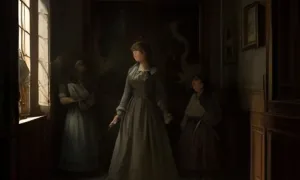
This atmospheric visualisation of the place and period was generated by artificial intelligence. It is not real footage of the location.
Tips from visitors
No tips yet. Be the first!
Log in and add your tip.
Sources and literature
Photos: Lubor Ferenc / CC BY-SA 4.0, rozlišení zvýšeno umělou inteligencí — Wikimedia Commons. The author and licence also appear when you hover over the image.
Faktickým podkladem tohoto textu byl článek na Wikipedii, jehož autory jsou přispěvatelé Wikipedie. Článek je dostupný pod licencí CC BY-SA 4.0.
Location on the map
Příběhy a pověsti
Legendy, pověsti a příběhy spjaté s touto památkou
Fotografie návštěvníků
Zatím žádné fotografie. Buďte první, kdo přidá fotografii z návštěvy!
Log in a přidejte svou fotografii nebo hodnoťte.
Za ověřenou návštěvu v aplikaci získáte víc bodů — poznáme podle GPS, že jste na místě.
Reviews and comments