






Kozí hřbet Ruin
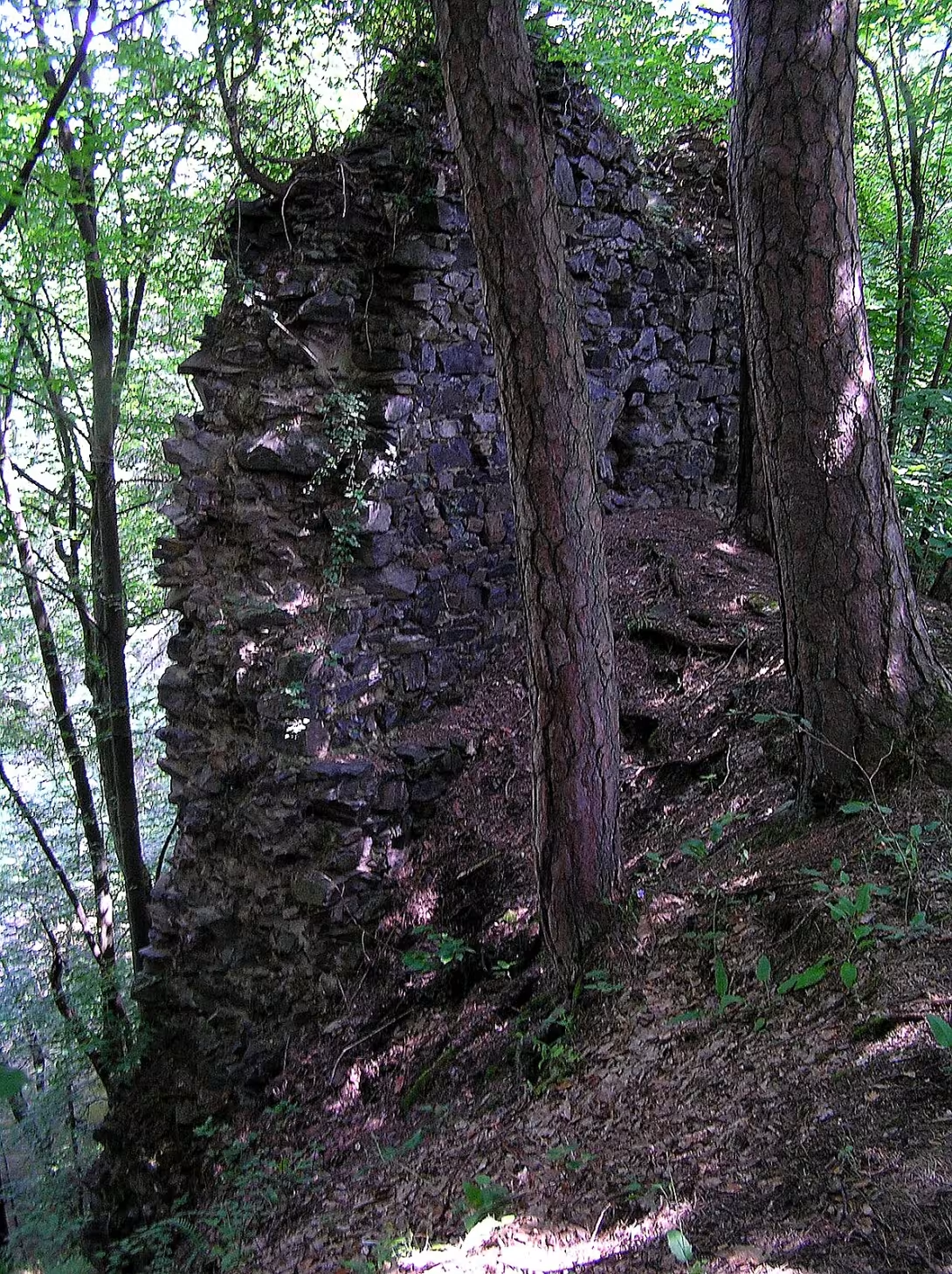
Kozí hřbet, also called Hrádek, is a ruin of the chateau in Sedlčanska. It stands on a narrow rocky ridge at an altitude of about 300 metres in a dense forest landscape near the village Radíč above the meander of the Mastník stream, which flows into the Vltava district of Příbram. From a once significant building, the remains of walls, towers, gates and palaces - protected as a cultural monument - have been preserved today.
Archaeological findings allowed the creation of the chateau to date back to the 13th century. The first written mention dates back to 1369 from the home of Volkér from Hrádek, which is listed as the owner between 1369 and 1375. Then the chateau was owned by Olbram z Hrádku. Since 1392 he became master of the castle Bohuslav Břekovec, who died in 1417 or shortly afterwards. The chateau was inherited by his sons Peter and Hašek Bříková.
The brothers entered history mainly during Hussite wars, when they belonged to the camp union. Their policies changed with circumstances. In 1430, they first made a truce with Oldřich of Rožmberk, but in other conflicts Petr Břekovec came to the camp side. On 24 February 1430 he signed a truce with the Rožmberks for eight weeks. Later, the orientation changed again - on 29 January 1440 Petr Břekovec signed general peace in Prague and joined the moderate sludges. This decision has caused resistance to the remaining camps. In 1441 they attempted to conquer the chateau, but Petr Břekovec successfully reflected it with his crew. Petr Břekovec lived in 1473 when the chateau was divided between him and his brother Hašek's sons - Bohuslav and Lev.
Shortly after 1475 the chateau was sold, it is expected to new owners from the Osecan owners. Since then, the chateau has gradually begun to decay. Later, Henry of Ossečanský of Ossečan sold it to John of Pabenice, who called it desolate.
The chateau had a double structure. In the first part there was a prepayment with unknown installation. From there it led the way through the second moat with the tower gate directly to the chateau core. Behind the gate stood in the highest place fragmentally preserved square tower. The access path to the courtyard was switched by another wall with the second gate. According to the 19th century plan, there was also a small round tower. Behind the second gate, a rectangular courtyard was spread along longer sides. A part of the corners of the outer wall with pockets on the ceiling beams was preserved from the building on the east side, while the construction on the west side remained only as an off-road relic. Behind the courtyard, the chateau was closed with another moat.
The ruin of Goat Ridge is freely accessible on the blue marked tourist route from Radíče is heading for Hrazan. The protected remains of the medieval mansion tell of a rich history - from the uncertain origin of the 13th century to the dramatic Hussite period to the gradual demise. The visitor can follow the construction of the medieval chateau and imagine the dramatic moments that took place in these places.
Then and now
Drag the slider to compare how the landmark may have looked when it was built with the view today.
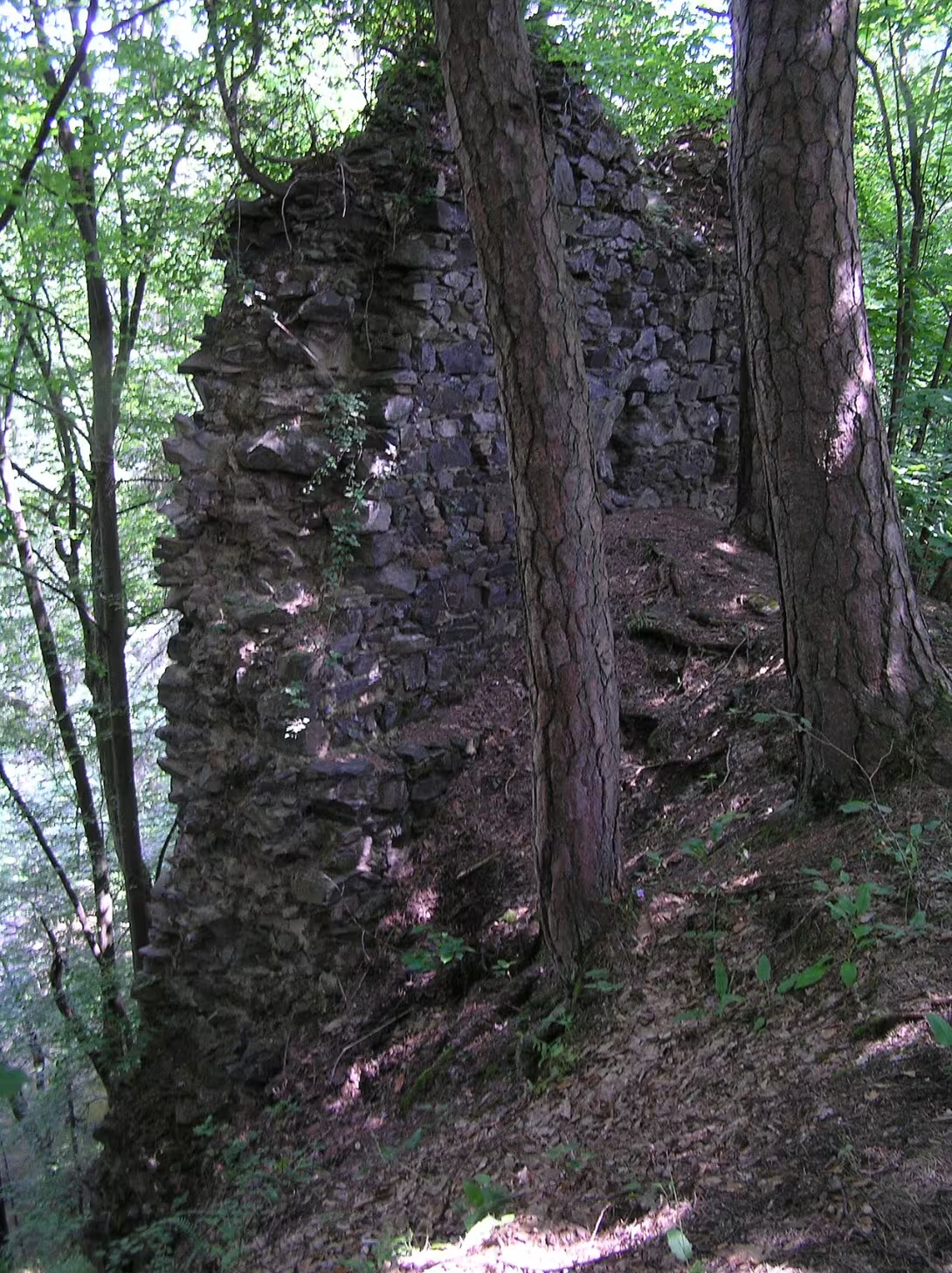

The historical appearance on the left is an AI-generated visualisation and serves as inspiration only.
Historical milestones
- 1369
- First written mention of Goat's Back.
- 1430
- Petr Břekovec made a truce with Oldřich of Rožmberk.
Architectural development
The chateau had a two-dimensional structure with a foothold, a tower gate, a square tower and a rectangular courtyard. Only fragments of walls, towers and other structures have been preserved from the chateau.
Historical events
- 1430
- Petr Břekovec made a truce with Oldřich of Rožmberk.
- 1441
- The camps tried to conquer the chateau, but they were discouraged by Peter Břekovka and his crew.
Owners
The first written mention of Goat's back dates back to 1369 with Volkář from Hrádek as owner. They followed Olbram z Hrádku, Bohuslav Břekovec (1392-1417), and his sons Peter and Hasek Bříková. After the death of Peter Bříkovka ownership passed to his sons Bohuslav and Léva.
Points of interest
- Kozí hřbet is a ruin of the chateau also known as Chateau in Sedlčanska.
- The remains of walls, towers, gates and palaces are protected as a cultural monument.
- The first written mention of the chateau dates back to 1369 with the owner Volkář from Hrádek.
- During the Hussite wars, the brothers Petr and Hašek Břekovka became involved in the conflicts when they belonged to the camp union.
- Since 1475, the chateau began to gradually lose its sale to new owners from the Osecan owners.
Guide
This guide is narrated by a synthetic voice generated by artificial intelligence.
Show guide text
This text was created by artificial intelligence and has not been editorially reviewed. It may contain inaccuracies.
Welcome to Goat Ridge, the historical mystery that awaits you at the village Radíč. You are standing in front of these medieval relics, where rocky mountains and dense forests unite into a unique panorama. You see the remnants of the walls that once protected this strategic point. It's a place full of silent stories of the past that seem to speak through every stone plate.
Let's dive into the history of this ruin. Kozí hřbet, also known as Chateau in Sedlčanska, has its first written shadow in 1369. It was a period of change and conflict when Volkéř z Hrádku was its owner. This chateau built on a rocky ridge served as a defensive mansion, especially during Hussite wars. In these stormy times, the brothers Petr and Hasek Břekovc became important figures who worked here.
Look up at the remnants of the walls that once protected this chateau. Notice the shape of the towers and gates, whose structure is indicative of medieval architectural art. Even though the remains are now merely traces of the past, they can give an idea of the ancient glory and defence capabilities of this place.
Interesting historical events took place on Goat's back. In 1430, Petr Břekovec concluded a truce with Oldřich of Rožmberk, a major political event during the Hussite wars. These events point to the strategic importance of Goat's back and its owners.
The interesting thing is that even though the remains are now protected as a cultural monument, many mysteries about this place still persist. Who were the real architects who built this chateau? What kind of life did those people who once lived and worked in these walls go through?
Now that you've looked at the remains of Goat's back, we invite you to immerse yourselves in other stories and secrets of our region. We have many other historical monuments that await your discovery. We hope that this guide approached you and inspired you to explore more of our cultural treasures.
Thank you for your visit to Goat's Back. We hope you enjoyed it and read more historical stories about our region. When you come back to us, we will be glad if you look into other miracles of the Central Bohemia Region.
Tips for visitors
Best time to visit The goat's back is in the spring or autumn period when the forests are green until November. This time of the year offers the most beautiful views of the ruins and surrounding landscape without a large number of tourists.
Transport by public transport is also an option; it is recommended to use online search engines or mobile applications for the current connection.
When visiting the ruins we recommend to bring firm shoes because the terrain is uneven and sometimes rocky. Also remember protective clothing, especially in colder times of the year.
For shooting ruins Goat spine is best to choose a time close to noon for maximum lighting. The best places for photography are the east side of the chateau, where the view of the river Mastník and surrounding forests is opened.
In the vicinity of the ruins you can visit the village Radíč, which offers a picturesque rural environment. For families with children is an interesting place for a short trip also the brook Mastník, where you can use natural regions and perhaps some toys.
Frequently asked questions
Can the monument be visited?
This is a ruin. Such sites are often freely accessible, but some can only be visited with a guide or are closed for safety reasons. We have not verified the current situation – take care and respect any restrictions.
Where is the monument?
Location: Radíč, Středočeský kraj. The map on this page shows the exact spot.
Why is the monument protected?
It is listed in the Central List of Cultural Monuments of the Czech Republic as a cultural monument (register no. 22222/2-2549).
For kids
Imagine going back to the past until there was a big mountain and there were woods around it. Kozí hřbet was a small hill back then, but people lived here a long time ago. They were hunters and fishermen who fed off the woods and rivers. Those first inhabitants of Kozín may have thought their village was the best place in the world.
But time passed, and one family, gentlemen of Goat, began to build a chateau on top of a hill. They built it to be strong and safe. And when the work was done, the chateau became their home and administrative center of the estate.
Businesses nearby
Do you run a restaurant, accommodation, shop, museum, rental, wellness or other visitor service near this monument? Show yourself directly to the people heading to it — this is how they will see you in the app and on the web:
Nearby
The ruin is freely accessible by tourist sign from Radíče to Hrazan. It is located in the seedlings' woods and near the stream of Mastnik.
Accommodation nearby
Themed route
Thematic cruise route "Kozí hřbet and saddlery forests"
1.Radíč - Type: Local center - Why is it worth a visit: Radíč is an idyllic place where you can enjoy quiet moments and prepare for a trip. It is an ideal place for an initial stop where you can find information about the route or buy food.
2. The brook Greasy - Type: Natural formation - Why it is worth a visit: The Mattress stream is a beautiful nature full of space for relaxing and observing wild flora and fauna. Its peaceful watercourses provide an ideal environment for a view of the surrounding woodland.
3. Kozí hřbet (ruin) - Type: Historical ruins - Why is it worth a visit: Kozí hřbet is a fascinating historical place that offers a view of the past and natural beauty of the surrounding peasant forests. The freely accessible brand follows a tourist-marked route, which allows you to safely explore this view of history.
4. Broad - Type: Destination of route - Why is it worth a visit: Hrazan is the final point of the tourist brand that leads from Radíče to Goat Ridge. This place serves as an ideal place to end your trip and to enjoy quiet moments when returning or continuing to other parts of the Central Bohemia region.
This route offers a combination of historical and natural experiences, making it ideal for lovers of landscape and history.
Seasonal recommendations
Spring: In the spring period Kozí hřbet offers a unique experience where the warm sun is spread on the ruins and illuminates ancient architecture. Flowers begin to bloom in the surrounding fields and forests, which adds to the atmosphere a colorful touch. It is advisable to visit a monument at the beginning or in the middle of the spring period, when we are still avoiding crowds and nature is beginning to gain life. We recommend wearing comfortable shoes for walking on uneven terrain and some light jacket, because the temperature can be medium with the possibility of a shower.
Summer: The Kozí hřbet is a popular destination for tourists, which means a higher number of visitors. The sun illuminates ruins in full beauty and adds dramatic shadows to historical structures. Nature is at its peak, with thick leaves and flowering fields around it. It is recommended to visit early in the morning or late in the afternoon to minimise the impact of heat and crowds. Don't forget the protective sunglasses, UV cream and plenty of drinking water.
Autumn: In the autumn period, Kozí hřbet offers views in darker colours when forest vegetation leaves go into golden and red shades. The atmosphere is calm and slightly cold, which creates ideal conditions for understanding the historical nature of the monument without crowd interference. The best time to visit is to choose in the early months when nature has not yet shot itself with snow. Choose warm clothes and suitable shoes for walking on dry and possibly wet terrain.
Winter: During winter, Kozí hřbet is transformed into a slightly melancholic retreat, where architecture is covered with snow and trees are without leaves. Sun rays illuminate the winter landscape in a quiet atmosphere, allowing you to enjoy solitude and peace. Visiting ruins is best for sunny days when snow is lit while protecting the soil from freezing. It is necessary to be equipped with warm clothes, protective shoes with good elastic soles and perhaps ball skis for easier transition on covered roads. The opening time of the monument can be limited, so it is advisable to check the current condition first.
Visualizations and artistic views


The visualisations are generated by artificial intelligence and serve as inspiration.
Photos from the area
Real photos taken near the monument

Zdroj a licence jsou uvedeny u každého snímku.
Tips from visitors
No tips yet. Be the first!
Log in and add your tip.
Sources and literature
Photos: MartinVeselka / CC BY-SA 4.0 — Wikimedia Commons. The author and licence also appear when you hover over the image.
Faktickým podkladem tohoto textu byl článek na Wikipedii, jehož autory jsou přispěvatelé Wikipedie. Článek je dostupný pod licencí CC BY-SA 4.0.
Location on the map

Příběhy a pověsti
Legendy, pověsti a příběhy spjaté s touto památkou

Fotografie návštěvníků
Zatím žádné fotografie. Buďte první, kdo přidá fotografii z návštěvy!
Log in a přidejte svou fotografii nebo hodnoťte.
Za ověřenou návštěvu v aplikaci získáte víc bodů — poznáme podle GPS, že jste na místě.
Reviews and comments