






Krematorium ve Slezské Ostravě Crematorium
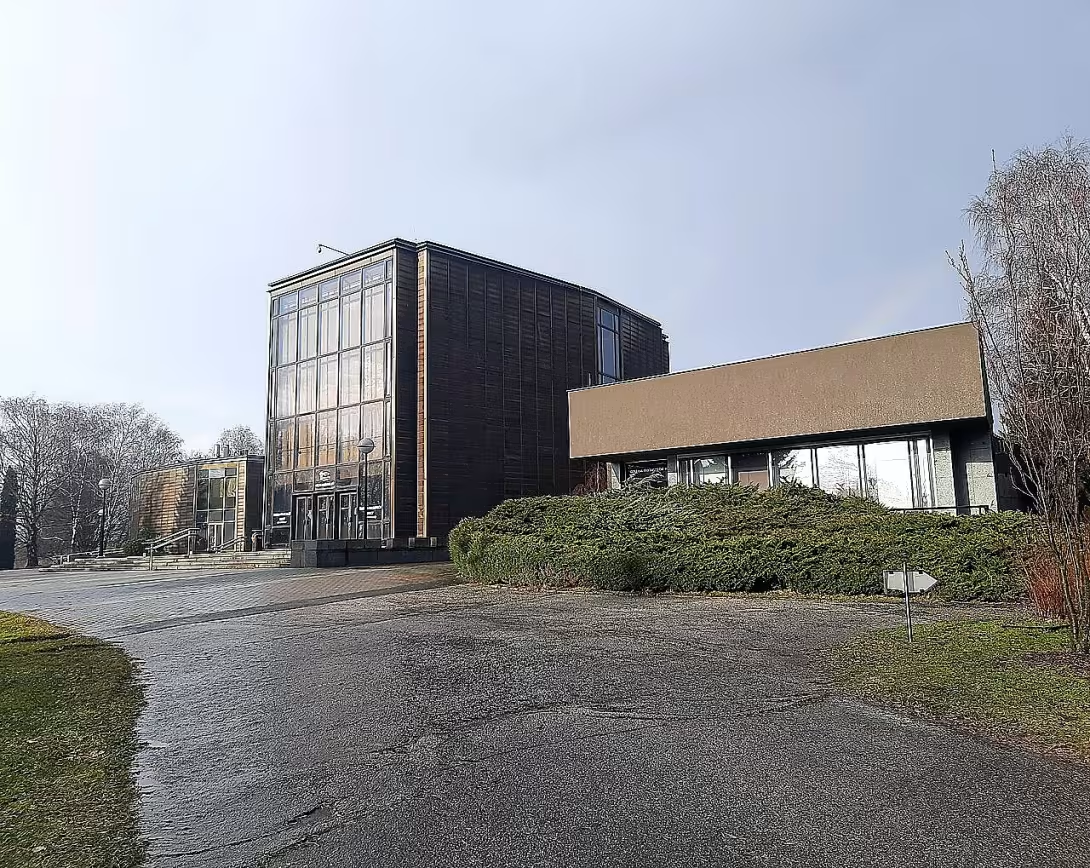
Krematorium ve Slezské Ostravě is a historical monument located in the central cemetery in the street Tesínská. It was created as part of a new central cemetery, founded by the city of Ostrava in 1961, and opened to the public in November 1970. This object is manifested by abstract forms of international style and modern materials such as steel and glass.
The need to replace the original Ostrava crematorium, the construction of which began in 1961, led to the construction of a new central cemetery in the underpowered territory. This project followed the old local cemetery with the church of St. Joseph. The construction of the new crematorium was complicated because of the need to undermine the entire area, which caused it to last nine years. The architecture reflects the search for new solutions in the 1960s, characterized by socialist modernization and urban changes.
Architectural is a crematorium in Silesian Ostrava known for its abstract style with steel structures, glass and new materials. The entrance part has a wide diagonal staircase, while the ceremonial building on a rectangular plan is high with slightly bevelled side edges lined with tin templates. The front of the ceremonial hall is completely glazed and the interior is covered with wood, illuminated by side windows with abstract coloured windows. In the 1980s, the site was rebuilt, which included an extension of the technical part.
The crematorium is home to works of art as a mosaic of Peace Haber and the sculpture of "Greek angels" Josef Jankovic. On the terrace there is a high sculpture made of mussel limestone "Cemetery Stele," a statue of Vladislav Gajda, which adds another aesthetic value to the building.
Today the crematorium in Silesian Ostrava is actively used and accessible to visitors. Its history and architectural value make it an interesting place to visit. Exploration of this object offers an opportunity to understand the history of the local funeral ritual and appreciate the modern architectural solution from the period of socialist modernization.
Then and now
Drag the slider to compare how the landmark may have looked when it was built with the view today.
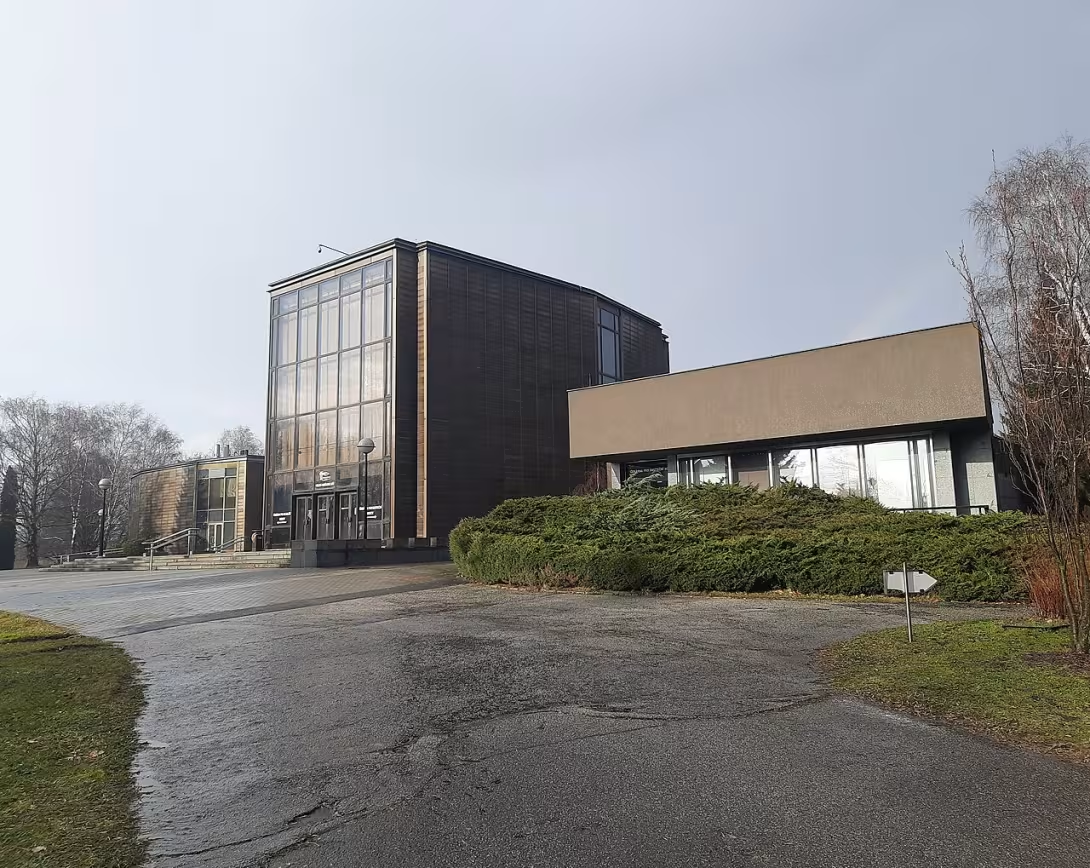
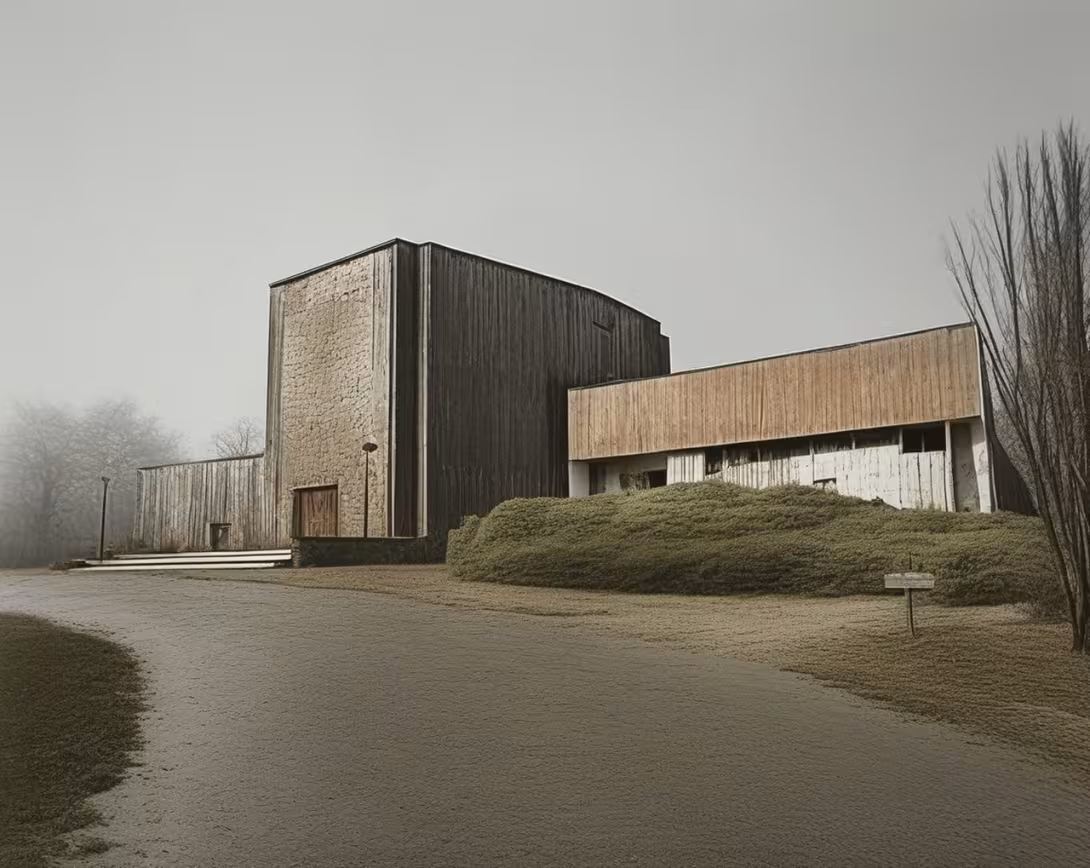
The historical appearance on the left is an AI-generated visualisation and serves as inspiration only.
Historical milestones
- 1961
- Establishment of a new central cemetery in Silesian Ostrava.
- 1970
- Opening of the crematorium in Silesian Ostrava.
- around 1961- 1970
- Construction of a new central cemetery and crematorium for nine years due to the need for undermining.
- 1980
- Rebuilding the premises with the extension of the technical part of the crematorium.
Architectural development
The crematorium was built with regard to the submining of the territory and its architecture is influenced by an international style. There was a reconstruction in the 1980s, which included the expansion of the technical part.
Historical events
- 1961
- The creation of a new central cemetery.
- 1970
- Opening the crematorium after nine years of construction.
Points of interest
- Krematorium ve Slezské Ostravě is a historical monument located in the central cemetery in the street Tesínská. - It was created as part of a new central cemetery, founded by the city of Ostrava in 1961, and opened to the public in November 1970. - Architecture reflects the search for new solutions in the 1960s, characterized by socialist modernization and urban changes. - The crematorium is home to works of art like the Mosaic Peace Haber and the sculpture "Greek angels" of Josef Jankovic. - On the terrace there is a high sculpture made of mussel limestone "Cemetery Stele," statue of Vladislav Gajda, which adds another aesthetic value to the building.
Guide
Show guide text
This text was created by artificial intelligence and has not been editorially reviewed. It may contain inaccuracies.
Welcome to a place that requires peace, discretion and a moment of silence. You are standing in front of the crematorium building, which is a solid part of the central cemetery in Silesian Ostrava. While you're looking at this structure, try to perceive the whole atmosphere of where you are. You are in the street of Teschín, in the space that serves to remember and say goodbye. The first impression of this building may be incoherent, but that is what its strength lies in. It's not just an ordinary building, it's a symbol of a certain era that's been trying to connect human needs to new technologies and modern world views.
Now let's move forward in time and understand why this building looks just like this and what effort it had to go through. The whole story of this place begins in a thousand nine hundred sixty-one. In that year, the city of Ostrava decided to establish a new central cemetery, including this crematorium. The need was to replace an old surveillance facility that was no longer sufficient for a growing city. However, the way to complete this construction was neither easy nor fast. If you look under your feet now, you will realize that the construction took place in a very difficult environment.
The thing that has fundamentally affected the creation of this place is subdolling. The industrial history of this region is very strong, and it is work in the depths of the country below that place that has caused the construction to last for an unexpected time. It was built for nine years because the soil was unstable and it had to be addressed how to ensure that the building remained solid and safe. This struggle with the invisible power of the earth below has extended the process for many years. Thanks to this persistence, the crematorium was finally officially opened to the public in November of the year nine hundred and seventy.
Now pay attention to the very form of the building that is surrounding you. If you look at her shapes, you'll notice that they're neither classic nor decorative in the old sense. The architecture you are currently observing is characteristic of the international style, which in the 1960s brought a whole new view of how the building should look. Instead of complex ornaments, you'll see abstract shapes. They are lines and surfaces that do not represent specific figures or flowers, but rather pure geometry and movement.
Note the materials from which the construction is carried out. You see steel and glass here. These materials were a symbol of progress at the time and of the modern world. Steel provides strength and bright, sharp edges, while glass allows light to penetrate inside while creating a sense of lightness that contrasts with the heavy matter of the surrounding environment. This combination of modern materials and abstract forms was an attempt not only to reflect the past but also the future and the eternal movement of time.
Although it may seem to you that the construction looks what it looks like, its history did not stop in '70. In a thousand and nine hundred and eighty, another important phase occurred. The area was then rebuilt and expanded, especially in the technical part of the crematorium. It was necessary for the building to be able to perform its tasks effectively in a growing city and for the technical facilities to meet the standards at the time. This later adjustment has thus further deepened the construction as a functional whole, which must serve people in their most difficult moments.
You may now be interested to know whether there are any specific fatalities or known personalities associated with this place. Although there are many people whose lives were important to the city, the construction of the crematorium itself remains a silent witness rather than a place where names are told. It's a place that's meant for general memories rather than celebrating individuals. His secret is not who was here, but how this space can align with the surrounding landscape and how it can induce a sense of peace through its pure, impersonal shapes.
The interesting thing you can take with you is the contrast between what you see above the ground and what happened below it. While the architect tried to create beautiful, clean and modern shapes of steel and glass, the workers had to fight the constant movement of the country caused by mining in the surrounding area. This building is therefore a victory of the human will and technical precision over an unstable foundation. It is a monument that stands firmly by being able to adapt to the demands of this specific, industrial environment.
Now that you've been through basic history and understood the nature of this architecture, I suggest you continue your walk through the cemetery. Take a look at other parts of the complex and try to see how this modern element of the crematorium has worked into the overall picture of the central cemetery. Every corner of this place has its own atmosphere and its own history, which is told in a quiet way.
Thank you for spending this moment with us and paying attention to this historic monument. We hope that this view of the crematorium in Silesian Ostrava helped you better understand its importance and beauty in its modern forms. We wish you a peaceful and thoughtful walk through the rest of this place. Goodbye.
Tips for visitors
The best time to visit the Krematorium in Silesian Ostrava is in the spring or autumn period when the weather is favourable and mild. This time of year also offers beautiful lighting conditions for photography architecture.
Parking in the vicinity of the cemetery can be limited, therefore we recommend using public transport. Local buses and trams are available and allow easy access to the location. The current connection should be verified in the online search engine.
When visiting take with you clothes suitable for weather, shoes on dry pads and basic food or drink. It may also be useful to carry a map or GPS device for orientation in the surroundings.
Photography of the Krematorium offers several interesting perspectives, especially from its front and the surrounding pavement. The best light for photography is in the early morning or late afternoon when the sun is not directly above the head.
There is a central cemetery in Silesian Ostrava, which can be an interesting addition for visitors. The cemetery offers historical architecture and quiet corridors suitable for walking.
Businesses nearby
Do you run a restaurant, accommodation, shop, museum, rental, wellness or other visitor service near this monument? Show yourself directly to the people heading to it — this is how they will see you in the app and on the web:
Events nearby
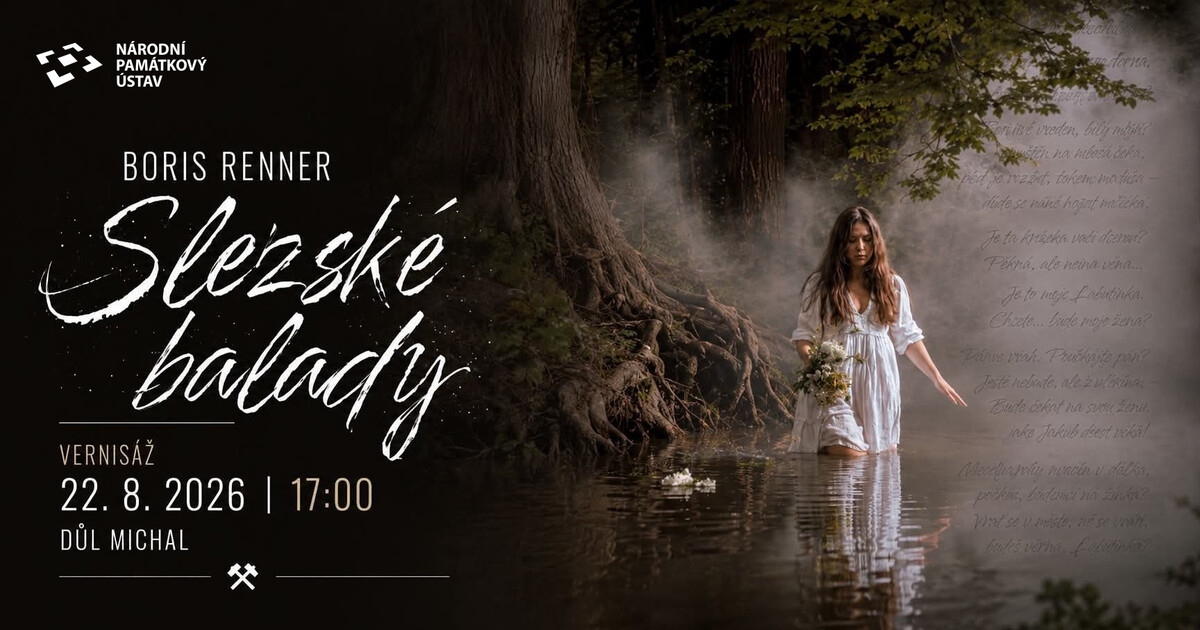
Zdroj akcí: otevřená data měst a obcí ČR (Národní katalog otevřených dat) a kalendář akcí Národního památkového ústavu.
Nearby
🏰 Historic sites (214)
- Shromažďovací prostor s řeckým ohněm, obřadním stolem a tři plastiky pro Háj vzpomínek 0.3 km
- Řečtí andělé 0.3 km
- hřbitovní stéla 0.4 km
- dekorativní stěna 0.4 km
- Místo vzpomínek 0.4 km
- Vojenské muzeum 0.5 km +420 731 097 447 web
- Hrdinové neumírají / Památník padlým a umučeným 0.6 km
- Žena a Muž / Naděje a Osud 0.6 km
- Obětem hornické stávky u Dolu Trojice 0.8 km
- Slezskoostravský hrad 1.0 km web
- Jáma Zárubek 1.1 km
- Muzeum Keltičkova kovárna 1.1 km web
- Petr Bezruč 1.1 km
- Petr Bezruč 1.2 km
- Pomník osvobození Rudou armádou 1.2 km
- Pomník Miloše Sýkory 1.2 km
- sv. Jan Nepomucký 1.3 km
- Hermine Wechsbergová 1.4 km
- Otto Pick 1.4 km
- Greta Picková 1.4 km
🍽️ Restaurants and dining (895)
- Stará Kuželna 0.9 km web
- Jan Maria 1.0 km web
- Na Salmě 1.1 km
- Babetti Ristorante 1.2 km +420 722 131 211 web
- Mamasita Tapas Bar 1.2 km
- BUMBUM 1.2 km Havlíčkovo nábřeží 101/28 web
- Křupavý Frank 1.2 km
- Dock 1.2 km web
- Rajská zahrada 1.3 km 28. října 102/1 +792 685 039
- Čajovna U Sýkorova mostu 1.3 km 28. října 2 +420596120105 web
- Lajka žije 1.3 km 28. října 572/4 web
- POKE BO centrum 1.3 km Střelniční 75/8
- Šambala Bar 1.3 km web
- Cafe Trieste 1.3 km web
- Ibo Kebab 1.4 km
- Babylon Café 1.4 km +420 739 244 120
- Mléčný bar NAPROTI 1.4 km web
- Cafe no. 10 1.4 km
- Vinárna U Bielase 1.4 km
- Belvedér 1.4 km U Staré elektrárny 2050/38
🏨 Accommodation (78)
- Jan Maria 1.0 km web
- Hotel Slezská 1.1 km Keltičkova 1297/60 web
- Studentská Residence Slezská, a.s. 1.6 km +420555558231 web
- Hotel Imperial 1.6 km Tyršova 211/4 +420 599 099 099 web
- Kampus Palace 1.6 km +420 777 101 615 web
- Hotel Mercure Ostrava Center 1.9 km
- Hotel Maria 1.9 km
- Hotel Brioni 2.0 km web
- Hotel Taurus 2.0 km Těšínská 1382/260 web
- Polský dům 2.3 km Poděbradova 1152/53
- Hotel Na Kafkové 2.5 km Kafkova 1380/15
- Nikolas 2.8 km +420 596 134 000 web
- VP1 3.1 km web
- Quality Hotel Ostrava City 3.3 km +420 595 195 000 web
- city-city 3.3 km web
- Ubytovací středisko Výstavní 3.5 km
- Hotel Max Šimek 3.6 km Nádražní 839/186 web
- Harmony Club hotel Ostrava 3.7 km +420 596 652 111 web
- Veronika 3.9 km
- Ubytovna Nerudova 23 4.1 km Nerudova 499/23
🚲 Rentals and sport (126)
- Via ferrata Bazaly 1.4 km
- HUDYsport 1.6 km +420596115176 web
- D-Sport Outlet 1.6 km
- D-Sport 1.6 km
- Joma 1.6 km Na Hradbách 1161/5 web
- Bang bang 1.6 km +420 734 876 767 web
- Cargo Bike Daddy 1.8 km Sokolská třída 318/39 +420 721 573 679 web
- Husky 1.8 km web
- Alpsport 1.9 km web
- Trojhalí Karolina - Ústředna 1.9 km
- Intersport 1.9 km
- A3 SPORT 1.9 km
- Kilpi 2.0 km
- D-Sport 2.0 km
- Bicykly.cz 2.0 km Nádražní 385 +420 773 594 957 web
- Bazénové centrum 2.2 km web
- Koupaliště 2.2 km
- SC Ostrava 2.3 km web
- Bonver aréna 2.3 km
- Čapkova sokolovna 2.3 km web
🥾 Hiking and nature (212)
- Halda Ema 0.7 km
- halda Ema 0.8 km
- 306 0.9 km
- vodárna Hladnov 1.2 km Nejedlého 1844/14
- Farská zahrada 1.2 km
- Poníci a oslíci 1.3 km
- Plameňáci 1.3 km
- Čínská zahrada 1.3 km
- Voliéra výrů 1.3 km
- Jeřábi 1.3 km
- Ptáci Tibetu a Číny 1.3 km
- Všehrdův sad 1.3 km
- Rovninské balvany 1.3 km
- Tylův sad 1.3 km
- Panda červená 1.4 km
- Výhled na celou Ostravu 1.4 km
- Golíkův sad 1.4 km
- orloj 1.5 km
- Jeleni 1.5 km
- Svět vody 1.5 km
Accommodation nearby
Themed route
Thematic cruise route around the Krematorium in Silesian Ostrava
1. Krematorium ve Slezské Ostravě - Memorial, peace box The main objective is the crematorium, which is not only a modern architectural monument, but also a place for relaxation and reflection. It offers a unique view of the contemporary architecture of the conciliation with the use of natural materials.
2. Crematorium area - Park, relaxation area The surrounding park green offers a quiet atmosphere for relaxation and reflection. It is a place where you can enjoy the natural environment and a beautiful view of the surrounding landscape.
3. Public Library in Silesian Ostrava - Cultural institutions After visiting the crematorium you can look at the library, which offers an extensive collection and various cultural events. It is an ideal place for those who enjoy reading or want to see the current exhibitions.
4. Mesta Silesian Ostrava Stadium - Sports complex If you like sports, you can visit the stadium where various events and matches take place. It's a place full of energy and enthusiasm for people of all ages.
5. Swimming pool in Silesian Ostrava - Sport equipment A visit to the swimming pool can be a complement to the route where you can enjoy relaxation or active leisure. It offers options for various water sports and is an ideal place for a family day.
This route offers a combination of cultural, recreational and relaxation activities in Silesian Ostrava.
Seasonal recommendations
Spring: In the spring period, the crematorium in Silesian Ostrava is revived by flowering trees and bushes, which add a colorful impression of this historical object. Sun rays penetrate through the nebula, creating fine lighting that emphasizes the architectural beauty of the monument. At this time the atmosphere is calm and natural sounds are at the forefront. We recommend visiting the crematorium at early spring noon to avoid weather that can suddenly be variable. Put on a suitable suit because temperatures can vary between cold and warmer days.
Summer: In summer the crematorium in Silesian Ostrava is a popular destination for tourists and locals. The sunny days bring a long dawn that illuminates architectural details of the monument in the most beautiful colours. The atmosphere is full of energy and activities, which can lead to a higher number of visitors. We recommend arriving earlier on the day to avoid long fronts at the entrance. Study your warm clothes and don't forget your protective sunglasses and dry drops.
Autumn: Autumn brings the crematorium in Silesian Ostrava an exceptional atmosphere. Leaves change in colors, which makes a beautiful background for a historical object. Sun rays are warm and the presence of fog in the morning gives a mystical feeling. This season, the number of visitors is usually lower, which allows for a quieter tour. We recommend visiting the crematorium in half-day time and preparing your warmer clothes because autumn weather can be cold.
Winter: Winter visit to the crematorium in Silesian Ostrava offers a unique view of the monument covered with snow. Sun rays create a contrast between white snow and black and white architecture, which gives the picture magical breaths. The atmosphere is calm and peaceful, with fewer visitors compared to other seasons. We recommend you visit the crematorium on a day with rain or snow to enjoy a quiet tour. Prepare for cold temperatures and dress warm to make you feel as comfortable as possible.
Visualizations and artistic views


The visualisations are generated by artificial intelligence and serve as inspiration.
Photos from the area
Real photos taken near the monument


Zdroj a licence jsou uvedeny u každého snímku.
Tips from visitors
No tips yet. Be the first!
Log in and add your tip.
Sources and literature
Photos: Anatol Svahilec / CC BY-SA 4.0 — Wikimedia Commons. The author and licence also appear when you hover over the image.
Faktickým podkladem tohoto textu byl článek na Wikipedii, jehož autory jsou přispěvatelé Wikipedie. Článek je dostupný pod licencí CC BY-SA 4.0.
Location on the map
More monuments – Slezská Ostrava
Show all in the municipality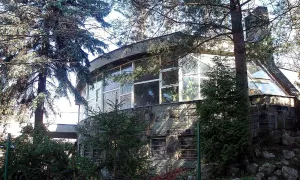
Příběhy a pověsti
Legendy, pověsti a příběhy spjaté s touto památkou
Fotografie návštěvníků
Zatím žádné fotografie. Buďte první, kdo přidá fotografii z návštěvy!
Log in a přidejte svou fotografii nebo hodnoťte.
Za ověřenou návštěvu v aplikaci získáte víc bodů — poznáme podle GPS, že jste na místě.
Reviews and comments