






Křížová cesta na horu Tábor Way of the cross
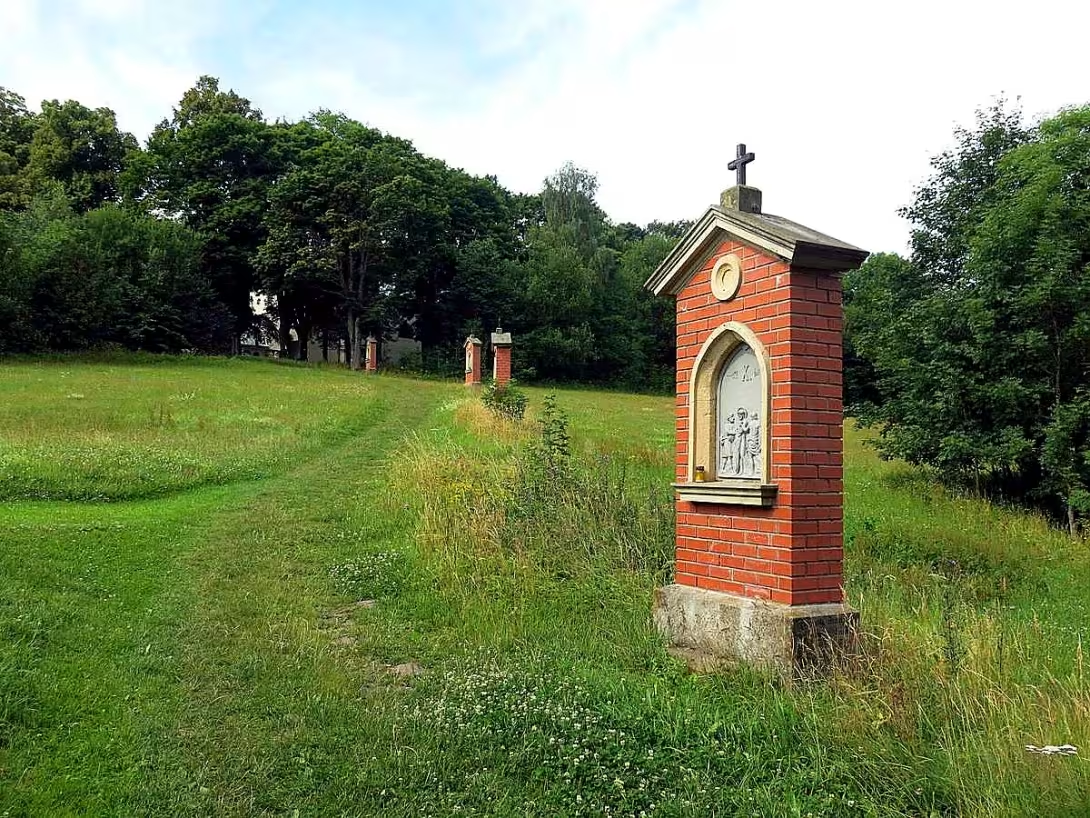
The cross road on the hill Tábor in the village Chlum near Lomnice nad Popelkou is a protected real estate cultural monument of the Czech Republic, built in 1898. This historical whole connects the niche chapel above the well of the Cross and the chapel of God's tomb and makes it a total of fourteen stops.
The pilgrimage site was created in connection with a well whose water was considered miraculous. Since the spring was polluted, the factories Theodor Mastva and Václav Hornych decided to finance the rallying of the Cross and the construction of the statue of Christ healing the sick. The whole complex was consecrated on 22 August 1898. In the first half of the 20th century, the pilgrimage festivities took place here on Holy Monday and on Sunday after the Lord's Day.
The journey begins at the niche chapel above the well. This walled building has a ground plan of a rectangle and is exhibited from regularly worked sandstone blocks with a saddlestone roof. A sculpture of the blessing God Father is placed in the front niche. Above the well is a statue of Christ whose model was made by Professor Stanislav Sucharda and carved by his father in Nová Pace. The chapel contains various engraved inscriptions, the names of the donors, the date of the consecration and the name of the builder, the stonemason Alois White of the Tribe, the Bottom.
The individual stops consist of 13 brick niche chapels on regular rough red sandstone sockets with stone saddle roofs. Their niche is decorated with polychrome cast iron embossed plates showing individual scenes of the Cross Way, which was developed by the lomonic Chaplain of the Book. On the right-hand side of each stop, there's a name of the donor.
The last, fourteenth stop is the basalt chapel of the tomb of God, in which there is a wooden statue of Christ from Tyrolean sculptor Ferdinand Stuflesser. The whole complex is located near the Baroque pilgrimage church of the Lord's Change from 1704.
Between 1995 and 2000, the place of pilgrimage was repaired. The Cross Way represents an important example of historism, which combined elements of various epoch in the late 19th century. Her visit offers insight into the then religious piety and craft work of local and foreign artists.
Then and now
Drag the slider to compare how the landmark may have looked when it was built with the view today.
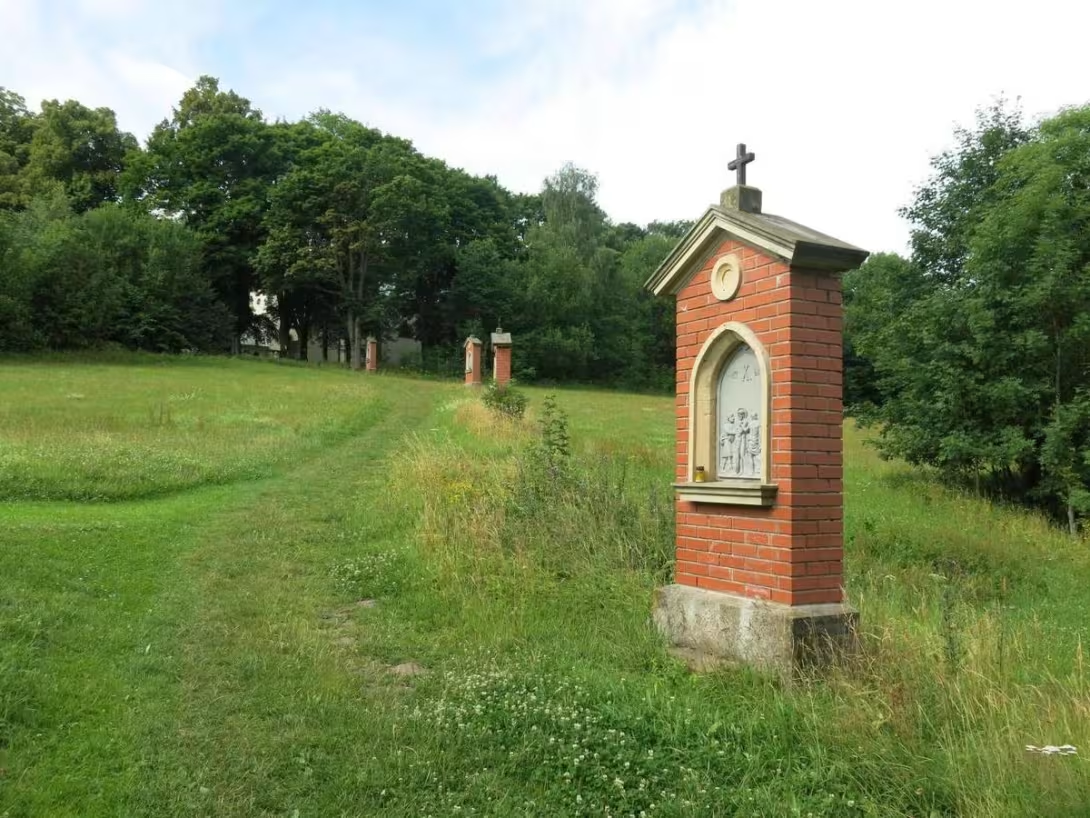
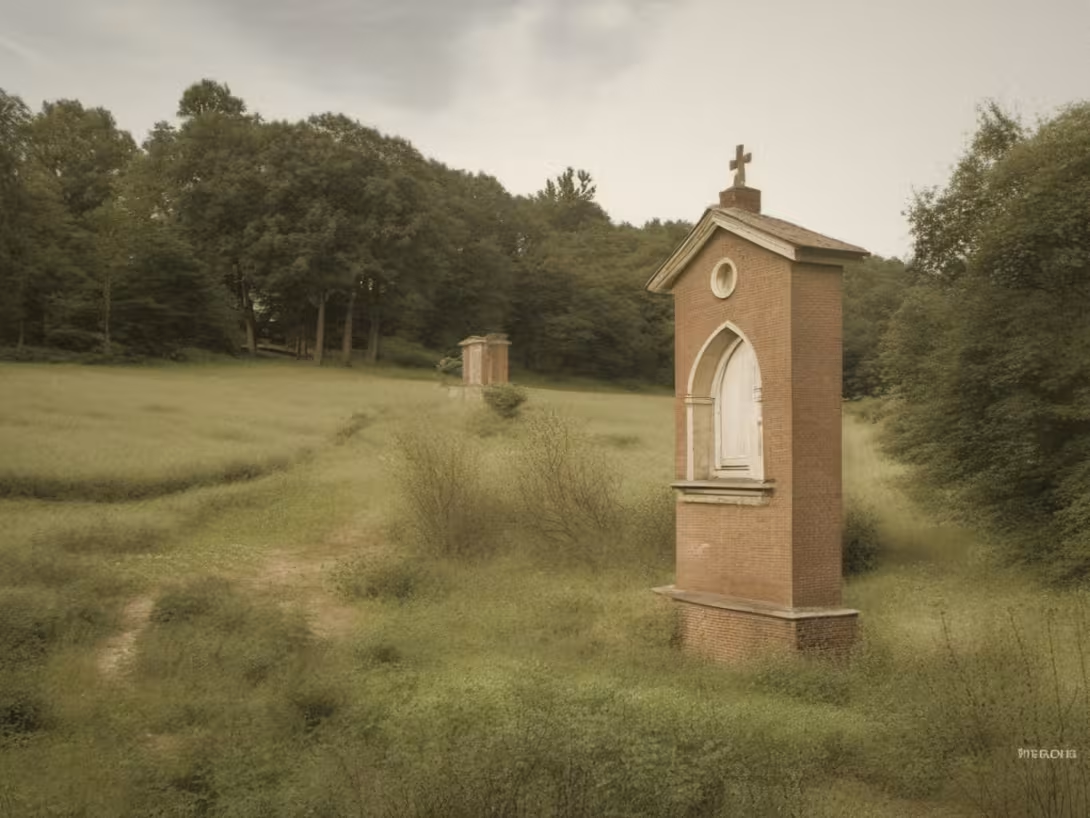
The historical appearance on the left is an AI-generated visualisation and serves as inspiration only.
Historical milestones
- 1704
- The creation of a baroque pilgrimage church The Lord's Transformation nearby.
- 1898
- The ordination of the cross road and the chapel of the Maid and Hornych.
- 1925
- The course of pilgrimage festivities in Holy Spirit Monday (1st half of 20th century).
- 1995
- The beginning of extensive repair of the pilgrimage site and the whole complex.
- 2000
- Completion of the reconstruction of the historical cross-road whole.
Architectural development
The construction combines various materials, including sandstone blocks, brick masonry and basalt stone at the grave of God. The stops are decorated with polychrome cast iron plates. The whole complex was renovated in 1995- 2000.
Historical events
1898: Construction and consecration of the cross road; 1998-2000: Repair of the pilgrimage site.
Points of interest
The cross road begins at the well with supposedly miraculous water, which was financed by the factories Theodor Mastva and Václav Hornych. The cast-iron reliefs in the chapel were polychromed by the Lomnian Chaplain. In the chapel of God's tomb there is a wooden statue of Christ from Tyrol.
Guide
Show guide text
This text was created by artificial intelligence and has not been editorially reviewed. It may contain inaccuracies.
Welcome to Chlum at Lomnice over Cinderella. You have just stood in a place where the earth meets faith and where history speaks through stone, brick and cast iron. In front of you, there is a cross road on top of Tabor, a place that radiates peace and deep meaning. Take a deep breath and feel the atmosphere of this space. You stand at a point where your journey begins up, a path that is not only a physical climb up the hill, but also a spiritual journey. Look around you. Right here at the well of the Cross, everything begins. This water that is developing here is not an ordinary source. According to local legends and traditions, the water here is miraculous, and it is this belief in its healing and holy effects that has become a fundamental impulse for the creation of this whole complex.
Now let's stop at how people got to this place over a century ago. Imagine the end of the nineteenth century, 1898 in particular. At that time there were two important men, the factories Theodor Mastva and Václav Hornych. They were people who, through their workmanship and success in the industry, gained resources, but at the same time carried deep gratitude and religious sentiment. They have therefore decided to finance the construction of this cross-road to create room for prayer and reflection for all pilgrims and locals. But this whole pilgrimage place was not created in total vacuum. If you look in the wider surroundings, you will find that in the vicinity already in 1704 a Baroque pilgrimage church was founded. The crossing path from 1898 thus came as a natural extension and addition of the already existing spiritual map of this site.
Now, when you're about to take the first step, pay attention to the architecture that will accompany you. The whole complex is designed very carefully. You begin at the entrance chamber, which stands above the mentioned well. From there, you will find a path where you will meet 13 brick stops. Notice this material. The red brick gives construction a certain affinity and also connects them with the craft tradition of that time. Each of these stops is not just an ordinary construction, but in each one you will find cast iron reliefs. These images in metal tell the story of suffering and journey, and they are the key element you should focus on while walking.
But who was behind these structures? Here enter the game names that are legendary in Czech art. The architect of the whole idea was Alois Bílek, a master of symbolism, who was able to combine functionality with a deep spiritual dimension. But White wasn't alone. Other majors, such as Stanislav Sucharda and Ferdinand Stuflesser, were involved in the implementation of cast iron reliefs. When you go through individual construction, feel the precision of their work. The cast iron, which can be cold, is gaining human dimension and sensitivity. An interesting detail that you might have overlooked at first sight is the colour of these reliefs. They were polychrome, which means they were colored. This work was done by the lomonic Chaplain of the Book, who wanted the images in the chapel to speak to the people more and be more understandable.
Let us now move forward in time and look at how this place lived in the next decades. The cross road was not only a silent monument, but a living center of faith. In the first half of the twentieth century, for example in 1925, there were great pilgrimage festivities. Imagine thousands of people converging to Mount Tabor on Holy Monday to pray together, sing and seek solace. It was a period when pilgrimage was the backbone of the social and spiritual life of the countryside.
However, time is relentless and yet resistant materials such as brick and cast iron are subject to decomposition. After years of neglect and influence of weather, there was a moment when action was needed. In 1995, an extensive repair of the whole pilgrimage site began. It was not just cosmetic treatment, but an in-depth restoration of the entire historical whole. This work path to recovery lasted several years and was definitively completed in 2000. Thanks to this, you can stand before these monuments today and see them in a form that is very close to the original from 1898.
I now accompany you to the final and most important part of the complex. After 13 stops you will reach the chapel of God's grave. It's a place of the highest tension and also the greatest peace. Once you enter this space, feel its intimacy. In the chapel of God's tomb there is one of the most valuable pieces of the whole place - a wooden statue of Christ, which comes from Tyrol. This statue brings to the Czech landscape a touch of Alpine art and with its distinctive appearance it reminds of the universality of faith, which goes beyond the borders of states and languages.
Stop here for a moment. Try to imagine all the people who stood before you. People who came for miraculous water from the well, people who, in difficult times, sought answers from cast iron reliefs, and people who found peace in the silence of the chapel of God's grave. It is a fascinating combination of the industrial success of the factories, the visionaries of architects and the deep devotion of local teachers and believers.
This cross road is today a protected cultural monument, for good reason. It's not just a set of buildings, it's a monument to human hope. From the Baroque church of 1704 to the construction of a journey at the turn of the century to a modern renewal in 2000, this place constitutes a constant dialogue between the past and the present.
Now it's time for you to take your own path. I suggest you take your time. Stop at each of the thirteen stops, look at the details of cast iron paintings and see how each step changes your perspective on the surrounding landscape. Let yourself be guided by the path that thousands of pilgrims have passed before you, and finish your walk in the silence of the chapel of God's tomb at the Tyrolean statue.
Thank you for taking me on this short journey through history and faith. I wish you a peaceful and inspiring exploration of the cross path to Mount Tabor. Goodbye.
Tips for visitors
The best time to visit is early in the morning or late in the afternoon when the light is soft and fewer visitors, which allows a peaceful reflection at the chapel and a view of the surrounding countryside. In the summer months it is advisable to choose cooler days to avoid heat on the open parts of the journey. Parking is possible at reserved points at the entrance to the pilgrimage path; if you arrive by car, we recommend you use free parking areas near the chapel. Public transport to Chlum is provided by bus from Lomnice nad Popelka, check the current connection in the timetable. What to take with you: comfortable shoes on uneven terrain, water or umbrella or raincoat, because part of the way leads along open surfaces. We also recommend a small bag with refreshments and possibly a blanket for rest at the well of the Cross. Photography: The most beautiful light is during the golden hour - shortly after sunrise and before sunset - when the chapel and views of Mount Tabor get a warm feel. The best places for pictures are the front of the chapel overlooking the well and the observation platform above the chapel of God. What to visit in the area: near is the Baroque pilgrimage church of the Lord's Change from 1704, which is worth a short walk. The historic centre of Lomnice nad Popelka with picturesque streets and local cafés is also nearby, ideal for relaxation after a hike. Tips for families with children: the journey is also suitable for smaller children, but it is good to remember that some sections are steep. We recommend to bring a child carrier or pram with good suspension. In the chapel you will find an information board with a story of the cross road that can impress children and make the walk more fun.
Businesses nearby
Do you run a restaurant, accommodation, shop, museum, rental, wellness or other visitor service near this monument? Show yourself directly to the people heading to it — this is how they will see you in the app and on the web:
Nearby
Baroque pilgrimage church of the Lord's Transformation from 1704, the city of Lomnice nad Popelka.
Accommodation nearby
Themed route
Thematic cruise route from the village Chlum
1.Křížová cesta na horu Tábor (chapel) - Type: Historical landmark - Why is it worth a visit: The Cross Road is a key part of the spiritual and historical heritage of the area. The chapel at the top of the mountain offers an impressive view of the surroundings and provides a place for peaceful meditation.
2. Baroque pilgrimage church - Type: Religious monument - Why is it worth a visit: This church, built in 1704, is an example of Baroque architecture and rich history of local pilgrimage tourism. Its interior and artistic elements are fascinating for lovers of history and art.
3. The City of Lomnice over Cinderella - Type: Historical site - Why it is worth a visit: The city offers a view of the historical centre with its characteristic streets and buildings. It is an ideal place to explore local culture and traditions as well as to explore regional gastronomic specialties.
This route will guide you through beautiful historical and religious monuments that reflect the rich past area around Chlum.
Seasonal recommendations
In spring nature comes alive around the road and chapel, when the first flowers bloom and the trees gain fresh green color. The atmosphere is full of hope and pure air. We recommend to dress in layered clothes because the weather is variable, and set off in the morning to enjoy your journey in peace.
The summer season offers dense greenery and bright sun, which illuminates the details of the monument beautifully. The air is hot and the surroundings are very lively. Due to high season and high attendance, it is best to arrive very early in the morning. Don't forget light, breathable clothes and plenty of fluids.
Autumn brings to the landscape colorful colors of leaves and morning fog, which give the place a mysterious and melancholy touch. The lighting is softer and more pleasant to observe the surroundings. Practical is the shoe with anti-slip sole for wet leaves and warm jacket for cooler evenings.
In winter the road is covered with snow and silence, creating a mystical and calm atmosphere. The landscape is silver and minimalist. It is necessary to wear warm thermal clothing and waterproof shoes. Due to the short day we recommend visiting in the morning.
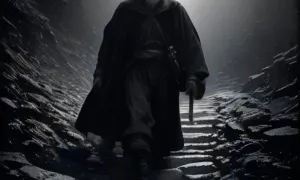
Visualizations and artistic views


The visualisations are generated by artificial intelligence and serve as inspiration.
Photos from the area
Real photos taken near the monument


Zdroj a licence jsou uvedeny u každého snímku.
Tips from visitors
No tips yet. Be the first!
Log in and add your tip.
Sources and literature
Fotografie: Barocco / CC0 — Wikimedia Commons. The author and licence also appear when you hover over the image.
Faktickým podkladem tohoto textu byl článek na Wikipedii, jehož autory jsou přispěvatelé Wikipedie. Článek je dostupný pod licencí CC BY-SA 4.0.
Location on the map
More monuments – Chlum
Show all in the municipality
Příběhy a pověsti
Legendy, pověsti a příběhy spjaté s touto památkou
Fotografie návštěvníků
Zatím žádné fotografie. Buďte první, kdo přidá fotografii z návštěvy!
Přihlaste se a přidejte svou fotografii nebo hodnoťte.
Za ověřenou návštěvu v aplikaci získáte víc bodů — poznáme podle GPS, že jste na místě.
Reviews and comments