






křížová cesta (Nové Hrady, okres Ústí nad Orlicí) Way of the cross
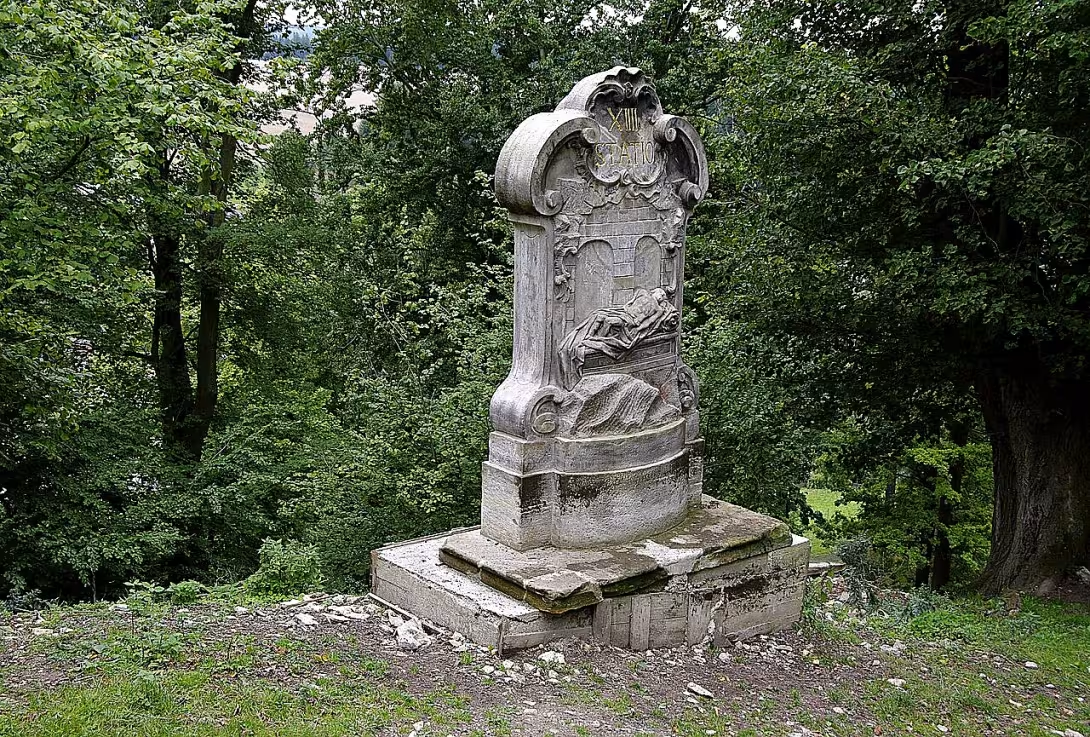
The cross road in Nové Hrady, situated on the hill above the castle in Ústí nad Orlicí district, represents a unique cultural heritage of the Czech Republic. This real estate monument boasts Rococo architecture and historical significance dating back to the enlightenment period of the 18th century. It is not only an important work of art, but also an important part of local history.
Its history begins in 1767 when it was set up by the cargo of Countess Anna Barbara Chamaré. The whole is closely connected with the rococo era, which has fundamentally influenced architecture and cultural life in Bohemia. It consists of fourteen stops carved into sandstone fries, the twelfth being a wooden cross. The uniqueness of this place lies in its artistic design and historical context.
Rococo decorations were designed by the brothers Bartholomew and Václav Hendrich of Litomysl. Used material - sandstone - adds durability and elegance to the memory. In addition to aesthetic value, the cross road is also an important element of the local cultural environment, which also consists of the surrounding castle Nové Hrady and the ruins of the castle house of God.
The foundation and administration of the monument was a major part of Countess Anna Barbora Chamaré. Its investments reflect not only the personal religious sense, but also the wider cultural and artistic aspirations of the Enlightenment period.
Today the cross road is accessible to visitors who can admire it in a picturesque environment. The location of the castle and castle ruins increases its attractiveness and offers an opportunity to explore other historical places around.
This monument is therefore not only a valuable cultural heritage, but also a witness to the rich history and artistic efforts of the 18th century. Her visit offers a view of the past and space to reflect on the importance of historical monuments for the present.
Then and now
Drag the slider to compare how the landmark may have looked when it was built with the view today.
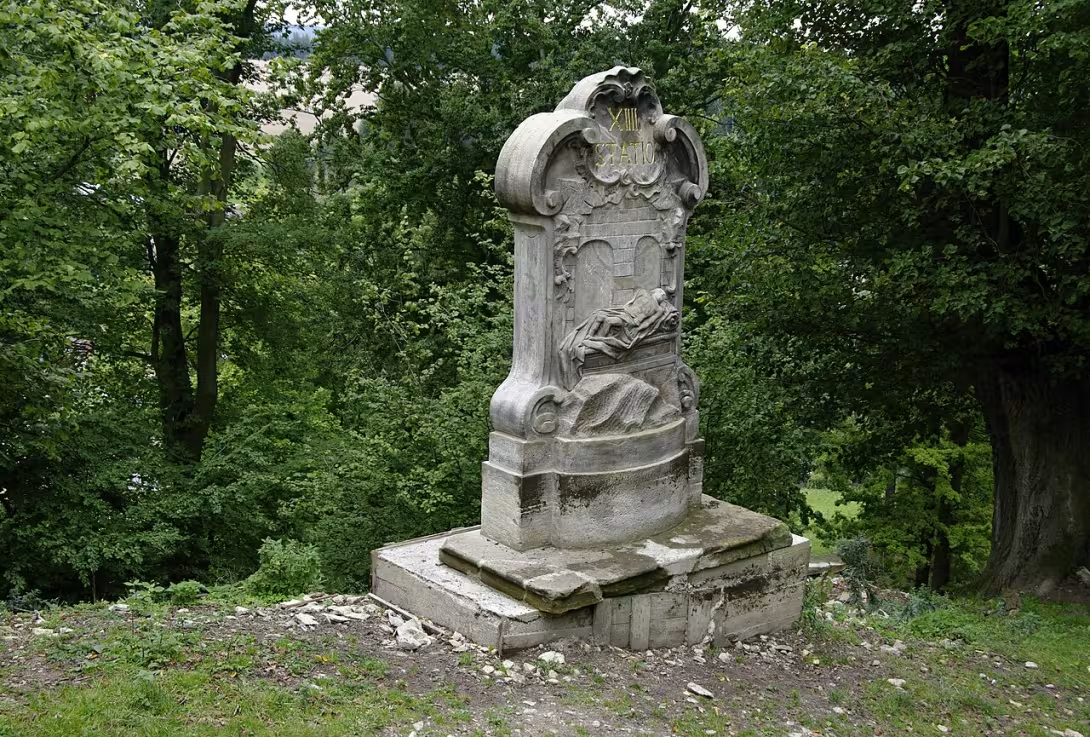
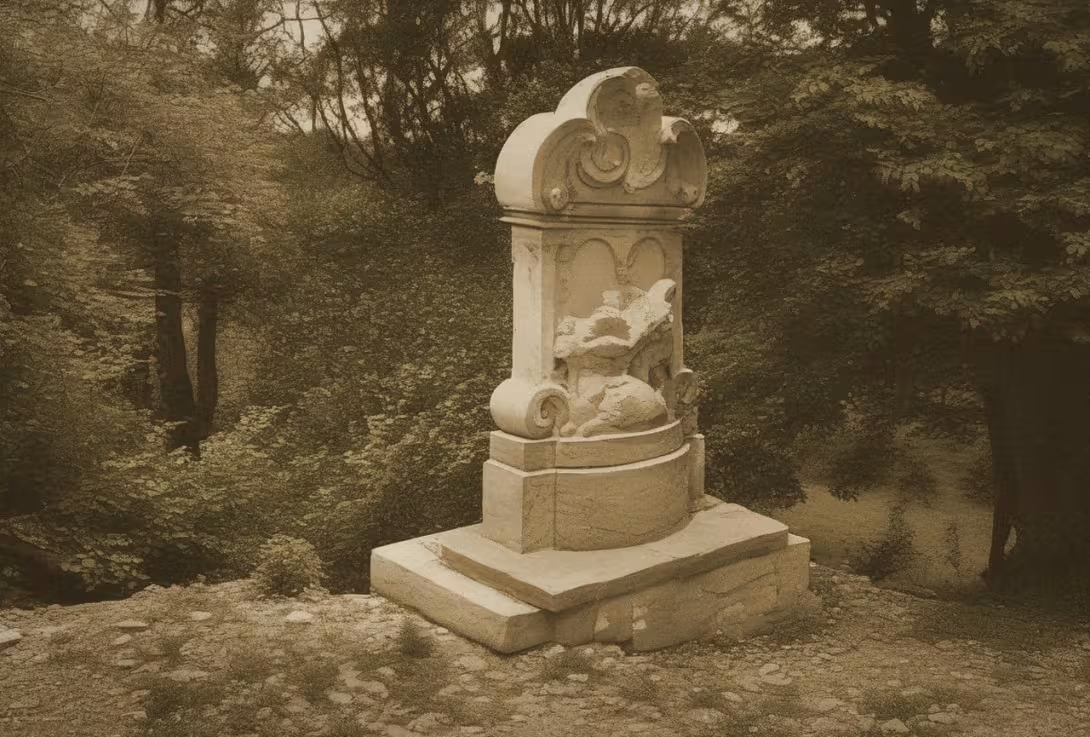
The historical appearance on the left is an AI-generated visualisation and serves as inspiration only.
Historical milestones
- 1767
- Setting up a cross road with the cargo of Countess Anne Barbara Chamaré
- 1767
- Implementation of Rococo decorations by the brothers Bartholomew and Václav Hendrich
- 18th Century
- The influence of the Enlightenment period on architecture and cultural life in Bohemia
- Present
- The monument is accessible to visitors in a picturesque environment
Architectural development
The cross road was built as a rococo accompanying complex designed by the Hendrich brothers. The stops are carved into sandstone fries and supplemented with a wooden cross.
Historical events
- 1767
- Setting up a cross road with the cargo of Countess Anne Barbara Chamaré.
- 1765
- Year of creation of related monuments and castle.
Points of interest
- The cross road was set up in 1767 with a load of Countess Anna Barbara Chamaré. - The monument represents Rococo architecture from the enlightenment period of the 18th century. - It consists of fourteen stops carved into sandstone chips, the 12th being a wooden cross. - Rococo decorations were designed by the Bartholomew brothers and the Václav Hendrich of Litomysl. - It is located on the hill above the castle in Ústí nad Orlicí district.
Guide
Show guide text
This text was created by artificial intelligence and has not been editorially reviewed. It may contain inaccuracies.
Welcome to New Castles. You just put your headphones on so you can fully immerse yourself in the history and beauty of this special place. You are standing on the top that offers a wonderful view and a quiet, thoughtful environment. In front of you, a path that is not just an ordinary path in the landscape but a real cultural heritage that will take you deep into the past. Feel the atmosphere of this place where nature, spiritual traditions and artistic expression are mixed. Do you feel the calm that exists here? This cross road will now guide you through the historical landscape and connect two important places in this area.
Let's go back together to when everything started to form. To understand why this place looks what it looks like, we have to move back several centuries to the eighteenth century. It is a period of enlightenment, an era that has brought a new perspective to Czech countries on culture, science and art. In this fascinating context, namely in 1767, this unique monument was created. Her creation was deeply linked to Countess Anna Barbora Chamaré. It was not just an ordinary initiative, but a project carried out with great care and personal commitment of the Countess, which wanted to enrich this neighborhood with a deep spiritual and artistic element. Thanks to her visionary and financial support, this journey has become a permanent part of the local landscape.
Now pay attention to what's right in front of you. The path you intend to take will lead you from the church of St. James the Greater towards the ruins of the castle of God's house. Note how this route naturally penetrates the terrain with the surface. The entire crossing is made up of fourteen stops. Look at their essence. They're carved into sandstone fries. This material you see here is very typical of this area. Sandstone has its specific texture and colour, which over the years has acquired its own patina, making the monument a part of the country itself. The architecture you can observe here is typical of rococo style. Rococo is known for its fineness, decoration and certain ease, which in this case is perfectly supplemented with natural environment. Feel the harmony between the strength of the stone and the curves of the rococo decoration visible at the stops.
Looking at the details, you can realize the efforts of the masters behind this work. Rococo decoration was designed and realized by the brothers Bartholomew and Václav Hendrich. They were artists of their time who were great at connecting religious symbolism with high artistic style. Imagine their work in 1767 as they carved individual shapes into hard sandstone to create one harmonious whole. The work of these two brothers gives the whole cross path its unique character. Each cut into stone, every fine line of decoration is proof of their craft and artistic feeling. It is a fascinating combination of the visionary intent of Countess Chamaré and the precise execution of the Hendrich brothers.
During your walk, however, you may expect something unexpected, something that deviates from the overall pattern. While most stops are made up of those sandstone fries you've just been looking at, the 12th stop is different. Note that you will see a wooden cross here instead of a stone. This change of material is very interesting throughout the cross road and creates an unexpected contrast in the eyes of the visitor. Why was this particular combination chosen? Why did a wood element appear in one chain of stone stops? It is a small mystery that can motivate you to reflect on the fleeting and durability of the house during your journey to the ruins of the castle.
We now urge you to further explore. Continue along the way, feel the calm of this hill and watch how the view of the surrounding landscape changes as you approach your destination. The road will guide you through a picturesque environment and accompany you to the ruins themselves. Enjoy every step, every stop and beauty of this rococo heritage waiting for you. Thank you for taking this historic journey with us. We'll wait you out for another survey of history.
Tips for visitors
The best time to visit the cross road in Nové Hrady is early spring or late autumn season, when the weather is pleasant and fewer people. This time of year also offers ideal lighting conditions for photography, especially in the afternoon, when the sun illuminates the way by stopping in beautiful light.
Parking can be found at the castle Nové Hrady itself. For those who prefer public transport, the place is also available by bus or tram; verify specific connections and times in previous planning of the visit. The cross-road transport is also possible through roads leading to New Castles.
When visiting to take with you suitable shoes because sandstone cover room can be irregular. Don't forget also the umbrella and sun protection clothes, especially in summer, and enough drinking if you plan to spend this beautiful garden for several hours.
For families with children the cross road is an interesting place for an educational walk. Children can learn about the history and symbolism of each stop, which adds interesting to the walk. In addition, the surrounding terrain is suitable for short sightseeing walks.
In the vicinity of the cross road there is a historically rich area, supplemented by the castle Nové Hrady and the ruins of the castle house of God. These places are an ideal addition to visit the cross road and offer an additional view of the history and architecture of the region.
Businesses nearby
Do you run a restaurant, accommodation, shop, museum, rental, wellness or other visitor service near this monument? Show yourself directly to the people heading to it — this is how they will see you in the app and on the web:
Nearby
In addition to the cross road itself there is a castle Nové Hrady and ruins of the castle house of God, which makes the area rich in historical places.
Accommodation nearby
Themed route
Thematic cruise route Nové Hrady
1. Cross Path (Nové Hrady) * Type: * Historical landmark This cross road is a unique architectural monument that leads visitors through beautiful regions and provides a view of the history of the region. It is an ideal place for those who are interested in spiritual and cultural heritage.
2. Castle Nové Hrady * Type: * Historical lock The castle is an important historical building that attracts many visitors with its architectural wealth and beautiful interiors. It is an ideal place to know the history of the family from Kolovrat, which has long lived here.
3. The ruins of the castle of God's house * Type: * Historical ruins These ruins are a fascinating place for those interested in history and archaeology. Although the castle is in ruins, it still retains its original majesty and offers pleasant walks between ancient walls.
4. Park near the castle * Type: * Garden / Park The park around the castle is an ideal place for relaxation and a beautiful walk in nature. Its large courtyard offers a comfortable place to relax and provides an impressive view of the castle and surrounding countryside.
5. Chapel by the castle * Type: * Religious construction The chapel is a key part of the castle complex and offers a place for meditation and peace. It is a beautiful example of Baroque architecture, which illustrates the rich history and spiritual importance of the area.
This route allows you to know not only the cross roads themselves, but also other historical and cultural monuments of the New Castle region.
Seasonal recommendations
Spring on the cross road in Nové Hrady brings a particularly calm and thoughtful atmosphere where nature awakens to life. Young leaves and flowering trees around the trail create a gentle contrast with the stone structure of the monument, which strengthens the spiritual dimension of the walk. Light can be soft and scattered at this time, ideal for shooting without sharp shadows. In fact, spring is a great choice for those who want to escape the summer crowds because the number of visitors is still low. It is recommended to wear layered clothes as spring weather is usually variable and it may be cold in the morning or evening. The best time to visit is in the morning when the air is fresh and the journey is less disturbed.
Summer brings a cross road full of sun and rich green vegetation, which provides a pleasant shadow in the noon hours. The atmosphere is more lively, but at the same time it can be louder due to a higher number of tourists and locals. The light is intense, so it's important to think about the sun protection. From a practical point of view, it is crucial to come as early as possible in the morning, ideally before nine o'clock, to avoid the biggest crowds and enjoy the memory in peace. Clothes should be light and breathable, suitable for warm movement, and sufficient hydration is necessary. In the main summer season the surroundings are often busy, so it is good to plan the route so that it is not too demanding on the feet.
Autumn on the cross road offers unique aesthetics thanks to the changing colour of leaves, which creates a warm and golden palette around stone stations. Light is lower and warmer, which gives the whole space an intimate and nostalgic character. Nature is slowly stored in winter sleep, which underlines the subject of relaxation and reflection. For visitors, autumn is practically very suitable because temperatures are still pleasant, but the crowds are already significantly smaller than in summer. It is recommended to wear a warm jacket and comfortable shoes as the roads can be wet and slippery after rain. The best time is the late afternoon, when light hits the memory at an angle and creates dramatic shadows.
Winter brings a cross path with a quiet, almost mystical atmosphere, often reinforced by snow, which covers the surrounding landscape and highlights stone elements. The light is short and pale, which creates a cold but pure visual impression. Nature is calm, without leaves, which allows you to better see the very structure of the monument and its surroundings. Practically winter visit is suitable for lovers of peace and solitude, but requires thorough preparation. It is necessary to wear very warm clothes, including gloves and hats, and shoes with good anti-slip equipment. Opening times or accessibility may be limited, so it is appropriate to inform yourself in advance. The best is a short walk after noon, when the day is warmer and the light is brightest.
Visualizations and artistic views


The visualisations are generated by artificial intelligence and serve as inspiration.
Photos from the area
Real photos taken near the monument


Zdroj a licence jsou uvedeny u každého snímku.
Tips from visitors
No tips yet. Be the first!
Log in and add your tip.
Sources and literature
Fotografie: Taita / CC BY-SA 4.0 — Wikimedia Commons. The author and licence also appear when you hover over the image.
Faktickým podkladem tohoto textu byl článek na Wikipedii, jehož autory jsou přispěvatelé Wikipedie. Článek je dostupný pod licencí CC BY-SA 4.0.
Location on the map
Příběhy a pověsti
Legendy, pověsti a příběhy spjaté s touto památkou
Fotografie návštěvníků
Zatím žádné fotografie. Buďte první, kdo přidá fotografii z návštěvy!
Přihlaste se a přidejte svou fotografii nebo hodnoťte.
Za ověřenou návštěvu v aplikaci získáte víc bodů — poznáme podle GPS, že jste na místě.
Reviews and comments