






Křížová cesta Stárkov Way of the cross
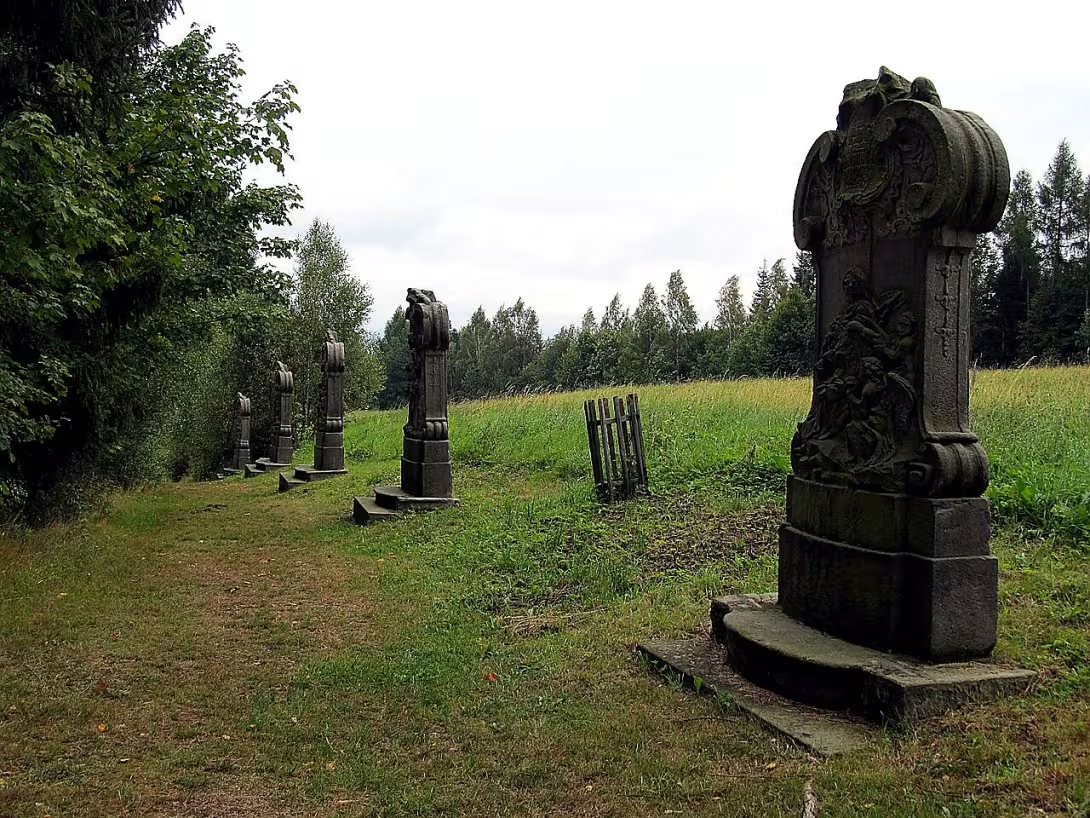
The cross road in Stárkov is a Baroque pilgrimage place founded in 1755. It consists of a set of stone stops that lead from the local cemetery to the chapel of the Fourteen Holy Helpers. This cultural monument is an important proof of late Baroque piety and is protected under registration number 11956 / 6-5578.
City councilman Johannes Schroll initiated the journey in the middle of the 18th century. The creation of the monument falls within the period of the reign of Marie Teresa, when the Czech Baroque went through its late phase, strongly influenced by the Catholic counterreform. The construction of crossroads and pilgrims became a frequent manifestation of popular faith at the time, which led to the implementation of the project also in Stárkov.
Architecturally, the cross road consists of a series of blocks of grey sandstone. The relief decoration of individual stops was created by sculptor Bartoloměj Heinrich from Litomysla. The whole set is designed as a journey through the landscape, which is symbolically completed by Chapel Fourteen of the Holy Helpers.
A significant element of the monument is the inscription carved at the opening stop. It directly addresses the pilgrims and invites them to reflect on their own pain compared to Christ's suffering. The text is: "For those of you who go with the pain of the soul this way, ask if yours is as big as mine."
Today the Old Age Cross is guided as a real-estate cultural monument of the Czech Republic. Its location in nature and historical character completes the spiritual character of the landscape. It represents a place for visitors to connect the recognition of Baroque sculpture with the history of local piety. Visiting this pilgrimage area offers an opportunity to see how the landscape was shaped in the 18th century as a space for spiritual reflection.
Then and now
Drag the slider to compare how the landmark may have looked when it was built with the view today.
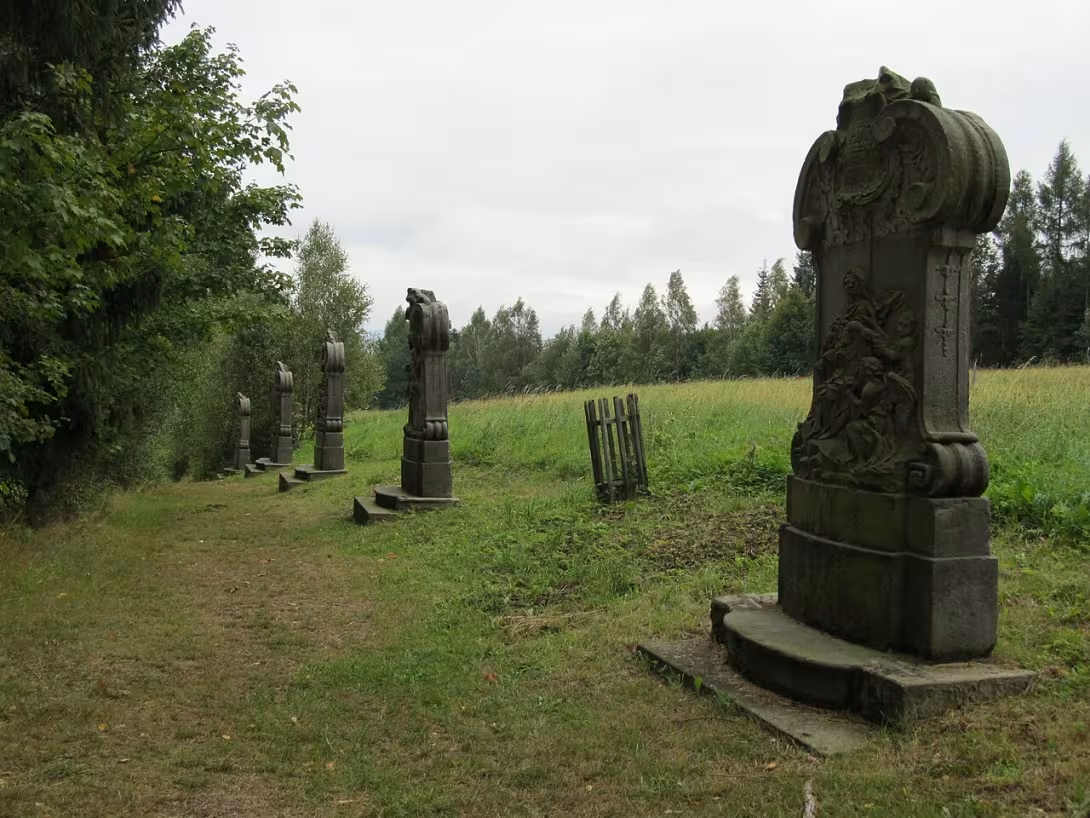
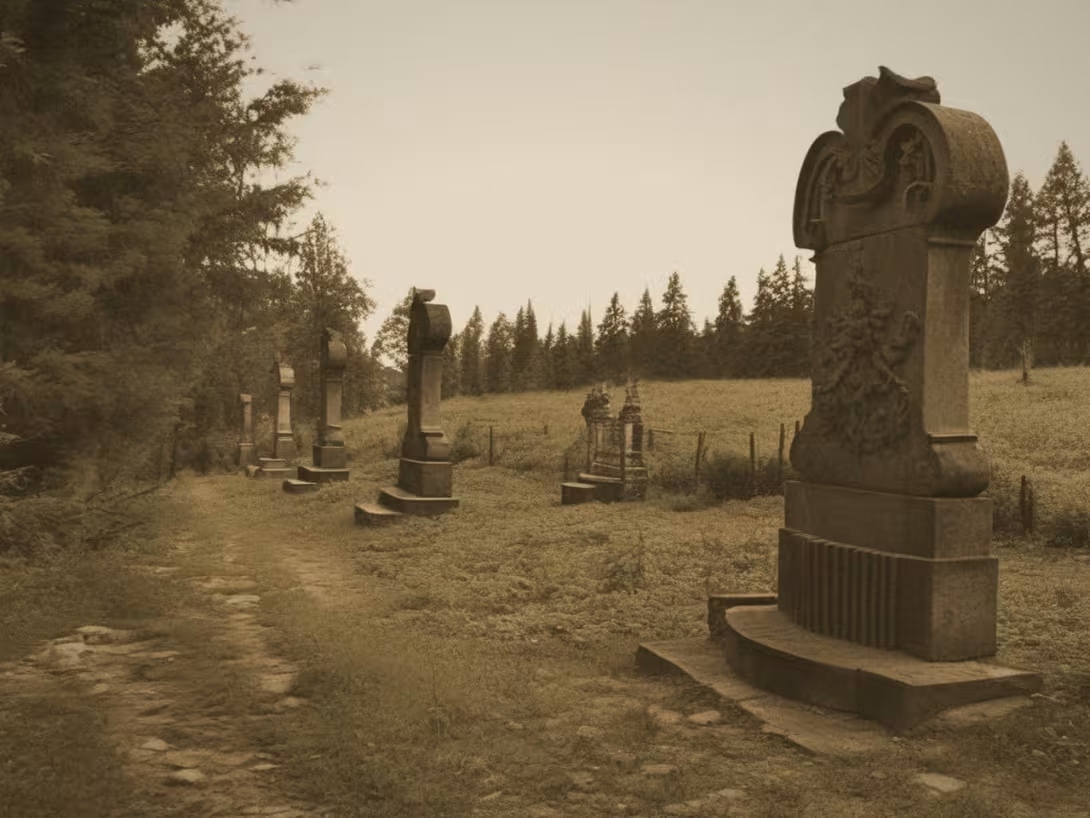
The historical appearance on the left is an AI-generated visualisation and serves as inspiration only.
Historical milestones
- 1750
- Project initialization by city councilman Johannes Schroll
- 1755
- Establishment and construction of baroque cross-roads
- 1755
- Creating embossed decoration by sculptor Bartholomew Heinrich
- 2000
- Writing a cross path into the list of cultural monuments
Architectural development
The cross road was built in Baroque style in the middle of the 18th century. The stops are made of grey sandstone and supplemented with embossed decoration. The entire ensemble ends with the Chapel of Fourteen Holy Helpers.
Historical events
1755: Establishing a cross road by city councilman Johannes Schroll.
Points of interest
- The cross road was founded in 1755 and its initiator was city councilwoman Johannes Schroll. - The stoppage file consists of blocks of grey sandstone whose embossed decoration was created by sculptor Bartoloměj Heinrich from Litomysle. - The road leads from the local cemetery to the chapel of Fourteen Holy Helpers. - At the opening stop, there is a inscription that invites pilgrims to reflect on their own pain compared to Christ's suffering. - The monument is protected under registration number 11956 / 6-5578.
Guide
Show guide text
This text was created by artificial intelligence and has not been editorially reviewed. It may contain inaccuracies.
Welcome to Stárkov. You have just entered a space that, after more than 200 years, serves as a place of silence, deep contemplation and spiritual journey. You are standing at the beginning of a path that will guide you through a peaceful landscape and guide you through stories that are carved directly into the ground. In front of you is a path that is not just a simple sidewalk, but a symbol of the human search, faith and connection to what is above and beyond. Feel this atmosphere, the calm of the surrounding nature and the silence that rules here. Before you go on your journey, stop for a moment and feel the surroundings. This path will guide you from the local cemetery, the symbol of fleeting, to the goal itself, to the chapel of the Fourteen Holy Helpers, which represents hope and protection.
To understand why this place exists and why it is so special, we must return together to the mid-eighteenth century. Imagine the period around 1750. At that time, large spiritual projects were being formed in our countries to strengthen the people's faith and create places for pilgrims. The main mover of everything you see around you right now was a man named Johannes Schroll. It was not just a population, but an important city councilman who had influence, power and, above all, vision. It was his initiative and personal determination that allowed this project to be born from pure thought into reality. Schroll believed that such a journey would bring spiritual support to the people and serve as a pilgrimage place that would unite the community and individuals in silent prayer. In 1755 the cross road was officially established and its construction was completed, making Stárkov an important point on the map of the then pilgrims.
Now look closer at what's right in front of your eyes. Pay attention to the material that forms the very basis of this work. Every stop on this road is made up of a massive block. Notice what these blocks are carved out of. It's gray sandstone. This stone has a special power and weight in it. It is a material that endures time perfectly, but at the same time it has traces of every rain and sunshine that has come to its surface in the last centuries. If you approach these blocks, you'll see that they're not just simple stone pieces. They're carved with reliefs that tell stories. These embossed decorations are not the work of a random craftsman, but the work of a sculptor named Bartoloměj Heinrich. He came from Litomysl and left his art here permanently. Feel the lines, the faces and the scenes that are carved into the sandstone. Every notch in the stone was the result of patient and precise hand work, trying to capture the highest and most important human and spiritual experience.
It's fascinating to think about the cooperation that had to take place between those two men. On the one hand was Johannes Schroll, a man of politics and administration who had to provide resources, organise work and have faith that this project would make sense for future generations. On the other hand was Bartoloměj Heinrich, an artist who had to take in the hands of tools and in the hard sandstone look for shapes that will talk to people for centuries. This connection between visionary and artist created a work that survived both generations and generations of people. Schroll gave meaning to the road and Schroll gave form to the road. Without their joint efforts, this landscape would not look so rich and spiritual today.
You might wonder how this collection of monuments has kept in such good shape for so long. It's the combination of quality material and the deep meaning people have always felt for this place. It is also proof that it is the real treasure of our culture. It is important to recognise that this cross road is not only a historical remnant but a living witness to the past. This is why it was officially included in the list of cultural monuments in 2000. This is not only a formal notation, but recognition of its historical and artistic value, which now allows us to protect and admire it.
We now invite you to continue your journey. The road awaits you. Take a slow step from the local cemetery to the destination, to the chapel of Fourteen Holy Helpers. Let yourself be carried by the rhythm of your steps and feel every stop. Observe every relief created by Master Heinrich, and try to find peace in his faces carved into the grey sandstone. Take your time, let these paintings in stone enter your mind. Let yourself be inspired by the history that is with you right now. Thank you for choosing to visit this history and devote your time to exploring it. We wish you a peaceful, beautiful and inspiring journey.
Tips for visitors
The best time to visit is spring or autumn when the landscape is around Stárkova is the most photogenic and weather ideal for hiking. Avoid the midday heat in the summer months as the route leads through an open landscape.
You can easily reach Stárkova by car. Parking is possible near the city cemetery, where the cross road begins. If you travel by public transport, check the current connection in the respective connection search engine.
Pack solid shoes suitable for the trip and plenty of fluids. As it is a pilgrimage place in nature, do not forget to protect against the sun or light clothes until the discomfort. It is ideal for photographers to have a soft light at sunrise or sunset, which beautifully paints the details of stopping the cross road.
In the immediate surroundings we recommend visiting the city Stárkov itself with its historic atmosphere and chapel of Fourteen Holy Helpers, which complements the spiritual nature of the place. Walk around the city cemetery offers a quiet environment for contemplation.
The route is also suitable for families with children who like nature and history. The journey is not very demanding, but we recommend that you take it with children who can already take a longer walk in the field. It's a great opportunity to bring the children closer to their local cultural heritage.
Businesses nearby
Do you run a restaurant, accommodation, shop, museum, rental, wellness or other visitor service near this monument? Show yourself directly to the people heading to it — this is how they will see you in the app and on the web:
Events nearby
Zdroj akcí: otevřená data měst a obcí ČR (Národní katalog otevřených dat) a kalendář akcí Národního památkového ústavu.
Nearby
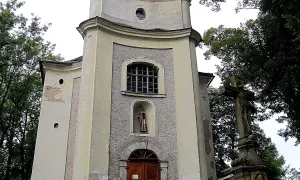
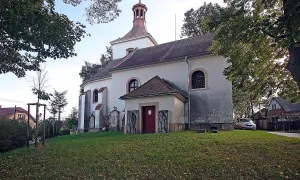
City of Stárkov, chapel of Fourteen Holy Helpers, city cemetery.
Accommodation nearby
Themed route
1. City Stárkov (municipality) - The entry point of the route, which serves for orientation in the area of the village. 2. Chapel of Fourteen Holy Helpers (sacral building) - Maleable object with spiritual atmosphere. 3. City cemetery (cemetery) - Instead of peace and respect for local ancestors. 4. Křížová cesta Stárkov (other) (religious monument) - The main destination of the trip, which offers space for reflection and prayer.
Seasonal recommendations
Spring: During the spring season Křížová cesta Stárkov gets special beauty when nature wakes up from its winter sleep. Flowers and trees begin to bloom, creating a living and colorful background for the historic journey. The sunny days are ideal for walking, but a few rainy days may also appear, so bring some protective clothes. Spring is a period of middle-class visitors, which means you can explore the road more slowly and without any major obstacles. The best time to visit is usually the afternoon when the sun illuminates the path and provides ideal conditions for photography.
Summer: Summer brings long sunny days and high temperatures, making the Stárkov cross road a attraction for visitors. Nature is in full bloom, but it can also be hot and dry, so don't forget your sun helmet, protective tie and plenty of drinking water on the way. Summer is the main season for tourists, so you can meet with a higher frequency of visitors especially on Wednesday. The recommended time for a walk is either early in the morning or late in the afternoon, when the temperature drops slightly and fewer people go for walks.
Autumn: In autumn Křížová cesta Stárkov becomes melancholic beauty, when the leaves pass into golden and red shades. Sunshine days are still common, but colder and rainy days may also appear, so it is advisable to bring warmer clothes. The atmosphere is calmer than in the summer, which allows you to explore the memory more easily without unnecessary crowd pressure. The best time to visit is early afternoon when the colour of leaves changes and the sun lights the way in warm lights.
Winter: In winter Křížová cesta Stárkov becomes mysterious and calm. Sundays are short, so make sure you have enough warm clothes and cold protective equipment. Views on the road may be strange in gloomy light or behind snow sheets, but remember that some parts may be closed due to adverse weather conditions. Winter is a period of lower visitors, which means you have more time to explore the sights in peace. The best time to visit is the sunny days of the afternoon, when the temperature rises slightly and it is possible to enjoy the journey without obstacles.
Visualizations and artistic views


The visualisations are generated by artificial intelligence and serve as inspiration.
Photos from the area
Real photos taken near the monument


Zdroj a licence jsou uvedeny u každého snímku.
Tips from visitors
No tips yet. Be the first!
Log in and add your tip.
Sources and literature
Photos: Ewwwa / CC BY-SA 3.0 — Wikimedia Commons. The author and licence also appear when you hover over the image.
Faktickým podkladem tohoto textu byl článek na Wikipedii, jehož autory jsou přispěvatelé Wikipedie. Článek je dostupný pod licencí CC BY-SA 4.0.
Location on the map

Příběhy a pověsti
Legendy, pověsti a příběhy spjaté s touto památkou

Fotografie návštěvníků
Zatím žádné fotografie. Buďte první, kdo přidá fotografii z návštěvy!
Log in a přidejte svou fotografii nebo hodnoťte.
Za ověřenou návštěvu v aplikaci získáte víc bodů — poznáme podle GPS, že jste na místě.
Reviews and comments