






Krucifix (Bylany) Wayside cross
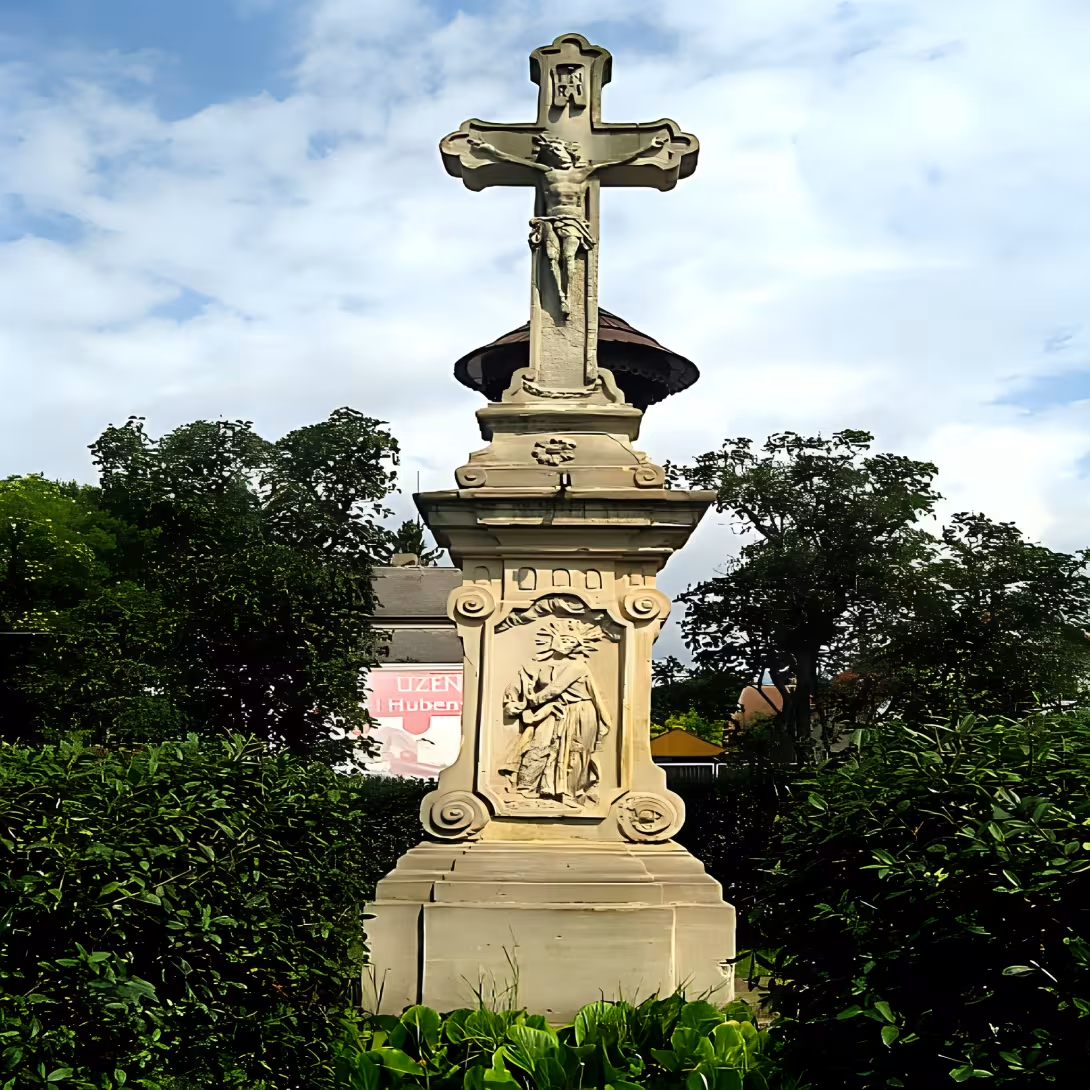
The Late Baroque Crucifix in Bylany
In the heart of Bylany village lies a remarkable monument - a late Baroque crucifix that has stood tall since 1800. This striking structure not only testifies to the region's rich cultural heritage but also serves as a poignant reminder of the community's devotion and resilience.
Origin and Historical Context The crucifix was erected at the expense of the entire community, under the direction of Josef Radouss, Jan Dobruski, and others. Little is recorded about its earliest history, yet it is clear that this monument holds significant importance for the local population.
Architecture and Artistic Form The crucifix features a simple pedestal with volutes and a relief of the Virgin Mary on the front. The inscription on the back reads: 'This cross was erected at the expense of the entire community of Bylany, under the direction of Josef Radouss, Jan Dobruski, and others, in the year 1800.' The crucifix stands on a profiled pedestal adorned with volutes and a relief of a flower. At its center is a Baroque-style cross featuring a corpus of Christ with a shroud draped across his body.
Ownership and Administration The community of Bylany has always been proud owner of this monument, with contributions from Josef Radouss, Jan Dobruski, and others.
Key Events and Curiosities In 1800, the crucifix was erected, marking a significant moment in the village's history. In 2012, it was designated as a national cultural monument, recognizing its importance to the nation's heritage. Most recently, in 2021, the crucifix underwent thorough restoration.
Today The crucifix remains an integral part of Bylany's landscape, standing proudly in the center of the village surrounded by a winter jasmine plot. Visitors can still marvel at its beauty and significance, making it a must-see attraction for anyone interested in exploring the region's rich cultural heritage.
Then and now
Drag the slider to compare how the landmark may have looked when it was built with the view today.
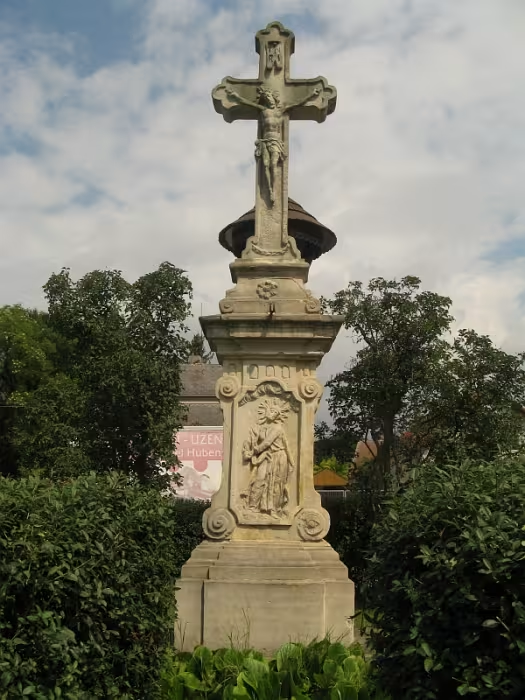
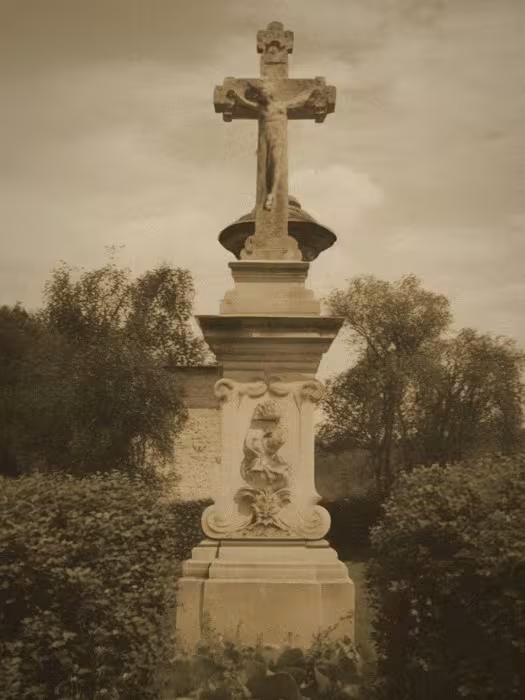
The historical appearance on the left is an AI-generated visualisation and serves as inspiration only.
Historical milestones
- 1800
- The crucifix was erected
- 2012
- Designated as a national cultural monument
- 2021
- Underwent thorough restoration
Architectural development
The crucifix features a simple pedestal with volutes and a relief of the Virgin Mary. The inscription on the back reads: 'This cross was erected at the expense of the entire community of Bylany, under the direction of Josef Radouss, Jan Dobruski, and others, in the year 1800.'
Historical events
- 1800
- Erection of the crucifix
- 2012
- Designation as a national cultural monument
- 2021
- Restoration of the crucifix
Owners
The community of Bylany, with contributions from Josef Radouss, Jan Dobruski, and others.
Points of interest
– The Late Baroque Crucifix in Bylany has stood tall since 1800.
– In 2012, it was designated as a national cultural monument, recognizing its importance to the nation's heritage.
– Most recently, in 2021, the crucifix underwent thorough restoration.
Guide
Show guide text
This text was created by artificial intelligence and has not been editorially reviewed. It may contain inaccuracies.
Welcome to Bylany. As you stand here in the heart of the village, take a moment to simply breathe and take in your surroundings. You are standing before a silent, steadfast witness to the passage of time—the Late Baroque crucifix. It stands as a central landmark in this landscape, a point of stillness amidst the changing seasons. Notice how it is nestled within its plot of winter jasmine. Even as the seasons shift, this greenery provides a soft, natural frame for the monument, grounding the sacred structure within the living, breathing environment of the village.
As you look at the crucifix, you are not just looking at a piece of religious art, but at a profound expression of community identity. To understand why this monument stands here, we must travel back in time to the year 1800. Imagine the village at the turn of the nineteenth century, a time of great transition. This was not a monument commissioned by a distant monarch or a wealthy aristocrat to display their own power. Instead, this cross was a collective labor of love and faith. The inscription on the back tells us a story of shared responsibility and local pride: it was erected at the expense of the entire community of Bylany. This was a project born from the hands and the hearts of the people who lived, worked, and prayed in this very place.
Now, let your eyes wander over the architectural details of the monument. The crucifix is designed in the Late Baroque style, a period known for its elegance and its ability to evoke emotion through graceful, flowing lines. Even in its relatively simple form, you can sense that stylistic influence. Direct your attention to the pedestal upon which the cross rests. Notice the volutes—those beautiful, scroll-like curves that adorn the base. These elements add a sense of movement and sophistication to the structure, lifting it from a mere marker to a work of art.
If you move closer, look for the relief of the Virgin Mary. This delicate detail serves as a focal point for contemplation, offering a sense of grace and protection to those who pass by. Every curve and every carved line was intended to inspire a sense of reverence. And as you stand there, perhaps you can almost hear the voices of the men who guided this project over two centuries ago. The inscription specifically names Josef Radouss and Jan Dobruski, along with others, as the directors of this communal effort. While their names are etched in stone, their true legacy is the very existence of this monument, which has survived through wars, changing political eras, and the relentless march of time.
It is easy to look at such a monument and see only the past, but this crucifix is also a vital part of our living heritage. Its importance was officially recognized in 2012, when it was designated as a national cultural monument. This was a significant moment, a formal acknowledgment from the nation that what the people of Bylany built in 1800 is a treasure that belongs to the history of the entire country. It is a testament to the enduring value of local traditions and the importance of preserving the landmarks that define our cultural landscape.
The story of this crucifix did not pause in the nineteenth or even the twentieth century. It continues into the present day. Most recently, in 2021, the monument underwent a thorough restoration. This was a crucial undertaking, ensuring that the craftsmanship of the past is protected against the wear of the elements. Because of these careful efforts, the details you see today—the clarity of the inscription, the integrity of the relief, and the strength of the pedestal—remain as vibrant as possible, allowing future generations to stand exactly where you are standing now and feel that same connection to the past.
As you prepare to continue your journey through Bylany, take one last look at the crucifix. Reflect on the fact that for over two hundred years, this single point has remained a constant in the lives of the villagers. It has watched generations grow, seen the village change, and yet it remains, anchored by the collective will of a community that refused to let its history fade away.
Thank you for joining us on this brief walk through time. We invite you to keep exploring the beautiful surroundings of Bylany and to discover the many other stories waiting to be told in this remarkable landscape. Enjoy the rest of your visit.
Tips for visitors
The best time to visit the Bylanys' Crucifix is during the spring and summer months when the surrounding winter jasmine plot is in full bloom, making for a picturesque backdrop.
Parking is available near the monument, with ample space for cars and buses. You can also reach the site by public transportation, with regular bus services connecting to nearby towns.
Be sure to bring comfortable walking shoes and sun protection, as you'll want to take your time exploring the area and taking in the views.
For photography enthusiasts, the late afternoon sunlight creates a beautiful golden glow that's perfect for capturing stunning images. Look out for interesting angles and compositions amidst the winter jasmine plot.
If you're looking for something to do nearby, consider visiting the charming village center within walking distance of the monument. You can also explore the surrounding countryside, which offers scenic views and peaceful atmosphere.
Businesses nearby
Do you run a restaurant, accommodation, shop, museum, rental, wellness or other visitor service near this monument? Show yourself directly to the people heading to it — this is how they will see you in the app and on the web:
Events nearby
Zdroj akcí: otevřená data měst a obcí ČR (Národní katalog otevřených dat) a kalendář akcí Národního památkového ústavu.
Nearby
The monument is situated in the center of the village, surrounded by a winter jasmine plot.
Accommodation nearby
Themed route
Thematic Tour Route
Main Goal: Krucifix (Bylany) (Cross in the Landscape)
Route:
1. Winter Jasmine Garden: A picturesque winter jasmine plot surrounding the monument, offering a serene atmosphere and beautiful views. 2. Village Center: Explore the charming village center, with its quaint architecture and lively atmosphere. 3. Monumental Complex: Visit the Krucifix (Bylany) itself, a unique and historic landmark that stands out in the landscape.
Approximate Distances: The route is approximately 1 km long, with each stop within walking distance of the previous one.
This thematic tour route takes you on a journey through the heart of the village, showcasing its natural beauty and rich history.
Seasonal recommendations
Spring
As you visit the Krucifix (Bylany) during the spring season, take note of the lush greenery surrounding the monument. The atmosphere is filled with the sweet scent of blooming flowers and the gentle chirping of birds. The sun shines brightly, casting a warm glow over the entire area.
Practical tips: Be prepared for larger crowds as it's a popular spot during this time. Wear comfortable shoes and clothing suitable for the mild spring weather. Try to visit early in the morning or late in the afternoon to avoid the peak tourist hours.
Summer
The summer season brings long days and warm temperatures to Krucifix (Bylany). The landscape is in full bloom, with vibrant wildflowers adding a pop of color to the scenery. As you explore the area, take in the sounds of children playing and laughter filling the air.
Practical tips: Arrive early to beat the crowds, as this is a peak tourist season. Wear sunscreen, a hat, and comfortable clothing suitable for the warm weather. Don't forget your camera to capture the stunning views.
Autumn
As autumn arrives at Krucifix (Bylany), the landscape transforms into a kaleidoscope of colors. The air is crisp and cool, filled with the scent of ripe fruits and leaves. The atmosphere is peaceful, with the gentle rustling of leaves creating a soothing background noise.
Practical tips: Visit during the weekdays to avoid larger crowds. Wear layers for the changing weather, and don't forget your camera to capture the stunning fall foliage. Try to visit early in the morning or late in the afternoon when the light is soft and golden.
Winter
The winter season brings a serene silence to Krucifix (Bylany). The landscape is blanketed with snow, creating a peaceful atmosphere. The air is crisp and cold, but the monument's grandeur shines through despite the frosty weather.
Practical tips: Be prepared for shorter opening hours due to the colder weather. Wear warm clothing and comfortable shoes suitable for the snowy terrain. Try to visit during the weekdays to avoid larger crowds, and don't forget your camera to capture the stunning winter scenery.
Visualizations and artistic views


The visualisations are generated by artificial intelligence and serve as inspiration.
Photos from the area
Real photos taken near the monument


Zdroj a licence jsou uvedeny u každého snímku.
Tips from visitors
No tips yet. Be the first!
Log in and add your tip.
Sources and literature
Fotografie: Sovicka169 / CC BY-SA 4.0, rozlišení zvýšeno umělou inteligencí — Wikimedia Commons. The author and licence also appear when you hover over the image.
Faktickým podkladem tohoto textu byl článek na Wikipedii, jehož autory jsou přispěvatelé Wikipedie. Článek je dostupný pod licencí CC BY-SA 4.0.
Location on the map
More monuments – Pardubický kraj
Show all in the region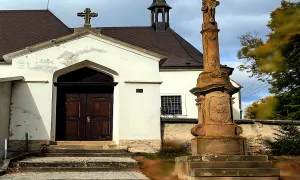

Příběhy a pověsti
Legendy, pověsti a příběhy spjaté s touto památkou
Fotografie návštěvníků
Zatím žádné fotografie. Buďte první, kdo přidá fotografii z návštěvy!
Přihlaste se a přidejte svou fotografii nebo hodnoťte.
Za ověřenou návštěvu v aplikaci získáte víc bodů — poznáme podle GPS, že jste na místě.
Reviews and comments