






Kubiasova vila Villa
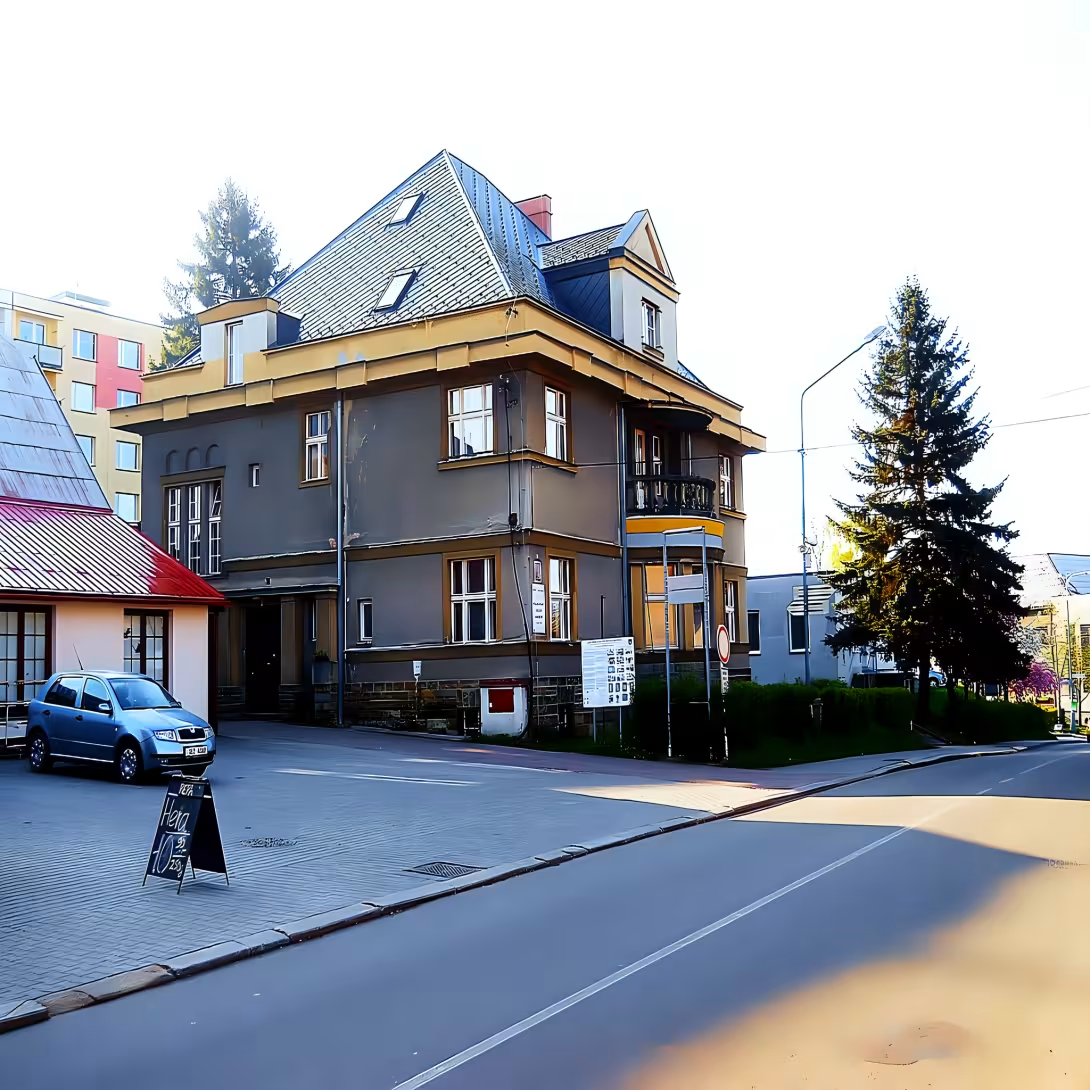
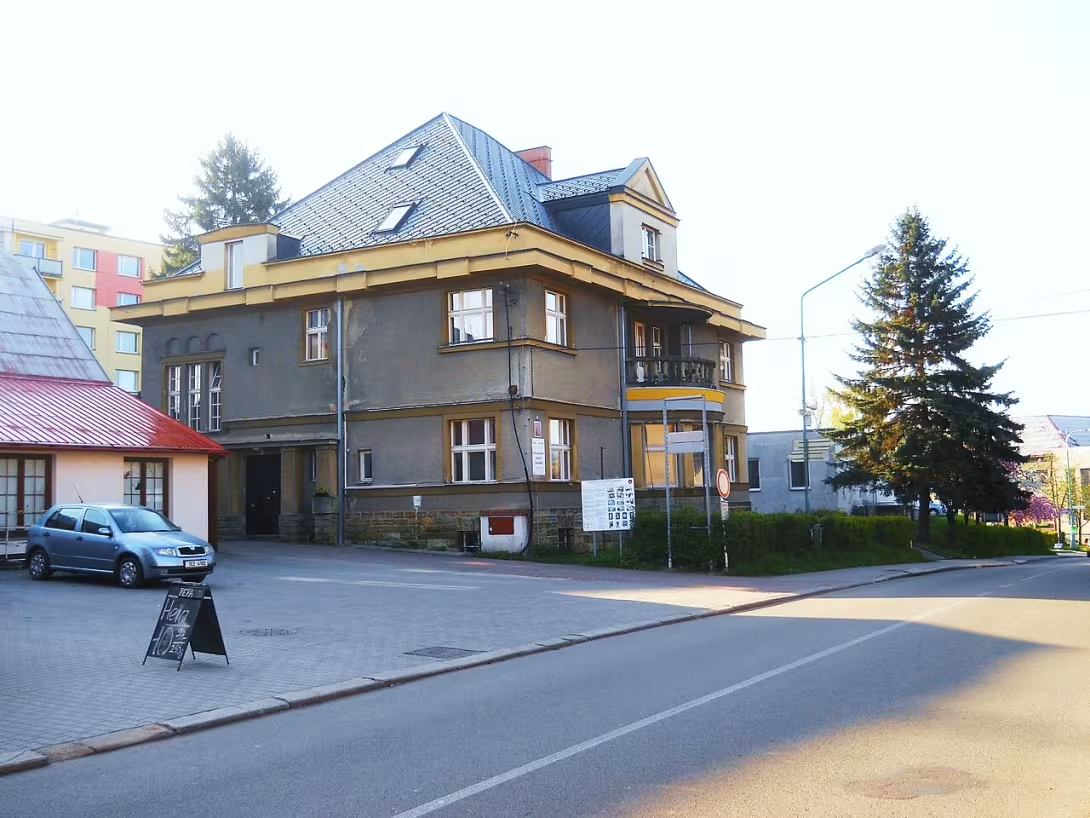
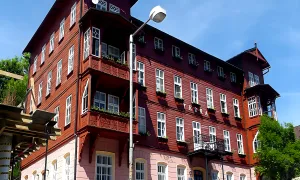
Kubiasova vila is a notable modernist building in Vamberk, Královéhradecký region, Czech Republic. Built in 1923 for industrialist Jindřich Kubiase, it features secession architectural style and has been recognized as a cultural monument since 2008. Its significance lies not only in its design but also in its varied roles over the decades, reflecting socio-economic changes.
The villa's origins date back to early 20th century Bohemia, part of the Austro-Hungarian Empire—a time of cultural and architectural innovation. Architect Oldřich Liska designed it for Kubiase, who wanted a modern residence embodying contemporary artistic movements. The secession style, marked by its shift from historicism towards modernity and artistic expression, influenced its design.
Architecturally, Kubiasova vila exemplifies the secession style through modernist elements. While specific materials and details are not extensively documented, its adaptation over time highlights functional versatility. Initially a private residence, it transformed in response to societal needs. After nationalization in the 1950s, it became a kindergarten, reflecting post-war shifts towards communal living and public services. In the 1970s, an annex was added for a nursery.
Ownership transitioned from Jindřich Kubiase in 1923 to state control during the 1950s nationalization. This shift marked a change in function and accessibility as it began serving public purposes. It also hosted a lace-making school, illustrating its relevance in local cultural and educational activities. Its designation as a protected cultural monument in 2008 underscores its historical and architectural importance.
Throughout its history, Kubiasova vila has witnessed key events highlighting its adaptability and enduring significance. Constructed for Kubiase in 1923, it became a kindergarten after nationalization in the 1950s. The annex added in the 1970s to house a nursery exemplifies its evolving community role. These transformations reflect broader historical trends and societal changes, making Kubiasova vila not just a building but a living chronicle of Vamberk's history.
Today, it remains accessible as a cultural monument, offering insights into both its architectural heritage and varied past uses. Its protected status ensures preservation while allowing contemporary purposes like hosting cultural events. This blend of historical significance and modern utility makes Kubiasova vila an intriguing destination for those interested in architecture, history, or local culture.
Kubiasova vila stands as a testament to the dynamic interplay between architectural innovation and societal change. Its journey from private residence to public institution reflects broader historical narratives while preserving its unique secession style. Visitors are invited to explore this cultural monument, where each corner tells a story of adaptation and resilience, offering insights into both Vamberk's past and present.
Then and now
Drag the slider to compare how the landmark may have looked when it was built with the view today.

The historical appearance on the left is an AI-generated visualisation and serves as inspiration only.
Historical milestones
- 1923
- Vila postavena pro Jindřicha Kubiase.
- 1950
- Nacionalizace vily a přeměna na mateřskou školu.
- 1970
- Přidání přístavby pro jeslíčka.
- 2008
- Vila uznána jako kulturní památka.
Architectural development
Kubiasova vila was designed by Oldřich Liska and built in 1923. The building reflects the secession style, characterized by its modernist elements. Over time, it has been adapted for various uses including educational purposes.
Historical events
Constructed for Jindřich Kubiase in 1923.
Nationalized in the 1950s and repurposed as a kindergarten.
In the 1970s, an annex was added to accommodate a nursery.
Designated as a protected cultural monument in 2008.
Owners
Originally owned by industrialist Jindřich Kubiase in 1923; after nationalization in the 1950s, it served public functions including a kindergarten and later a lace-making school.
Guide
This guide is narrated by a synthetic voice generated by artificial intelligence.
Show guide text
This text was created by artificial intelligence and has not been editorially reviewed. It may contain inaccuracies.
Kubiasova vila is a modernist building in Vamberku in the Králové Hradec region. It was created in 1923 for the factory owner Jindřich Kubiase and was designed by architect Oldřich Líska.
The villa served its owners only until the nineteen fifties when it was nationalized. It became a kindergarten and in the nineteen seventies a nursery was added to it. Later the building was used by a lace-making school.
In the twenty-first century, cultural events are occasionally held in the villa. Since 2008 it has been protected as a cultural monument.
Tips for visitors
The best time to visit Kubiasova vila is during the late spring or early autumn months, from May to September. During these times, the weather is generally mild and pleasant, making it ideal for exploring both the villa and its surrounding natural landscapes. The region's flora is in full bloom during this period, adding a picturesque backdrop to your visit.
Visitors can drive their own vehicles or use public transport to reach Vamberk.
When planning your visit, consider bringing comfortable walking shoes as there may be some walking involved when exploring the site and its surroundings. A camera is also recommended to capture the villa's architectural beauty and the natural scenery around Vamberk. Don’t forget a hat or sunscreen if visiting during the warmer months, along with water to stay hydrated.
For photography enthusiasts, the best spots for capturing Kubiasova vila are from the front entrance where its modernist architecture can be fully appreciated. Early morning light provides soft shadows and highlights the villa’s unique design features, while late afternoon offers warm lighting that enhances textures and colors. The surrounding natural landscapes also offer excellent opportunities for landscape photography.
Nearby attractions within a 30-minute drive include other historical sites in the Královéhradecký region. While specific details are not documented, exploring these areas can provide additional context to the cultural heritage of Vamberk and its surroundings.
Frequently asked questions
Can the monument be visited?
This is a residential or farm building, not a museum with opening hours. Please view it from public space and respect the owners' privacy. We have no information about access to the interior.
Where is the monument?
Location: Vamberk, Královéhradecký kraj. The map on this page shows the exact spot.
Why is the monument protected?
It is listed in the Central List of Cultural Monuments of the Czech Republic as a cultural monument (register no. 1490553387).
Businesses nearby
Do you run a restaurant, accommodation, shop, museum, rental, wellness or other visitor service near this monument? Show yourself directly to the people heading to it — this is how they will see you in the app and on the web:
Events nearby
Zdroj akcí: otevřená data měst a obcí ČR (Národní katalog otevřených dat) a kalendář akcí Národního památkového ústavu.
Nearby
Vamberk is situated in the Královéhradecký region of the Czech Republic. The area around Kubiasova vila includes natural landscapes and other historical sites, though specific details within a 5 km radius are not documented.
Accommodation nearby
Themed route
Tematická výletní trasa: Kubiasova vila a okolí
1. Kubiasova vila (Vila)
Proč stojí za návštěvu: Kubiasova vila je architektonickou perli ve Vamberku, nabízející pohled na historii a elegance regionu Královéhradecký. Je to ideální místo pro ty, kdo mají zájem o dědictví a krásnou architekturu.
2. Nádvoří Kubiasovy vily
Proč stojí za návštěvu: Nádvoří nabízí klidné prostory k procházce, kde můžete užít si přírodním prostředím a historickou atmosféru. Je to perfektní místo pro relaxaci a fotografii.
3. Park Kubiasovy vily
Proč stojí za návštěvu: Park okolo vily je ideální pro krátkou procházku, nabízející přírodní krajiny a místa na odpočinek. Je to skvělý způsob, jak si užít klidné chvilky ve venkovním prostředí.
4. Vzhledy z Kubiasovy vily
Proč stojí za návštěvu: Od Kubiasovy vily máte možnost prohlédnout se na okolní krajinu, což nabízí krásné pohledy a příležitosti k pořizování fotografií. Je to ideální místo pro ty, kdo milují panoramatické výhledy.
Tato trasa zahrnuje hlavní cíl Kubiasovu vilu a její bezprostřední okolí, nabízející kombinaci historie, architektury a přírody.
Seasonal recommendations
Spring: Visiting Kubiasova vila during spring offers a unique experience as the surrounding landscape bursts into life with vibrant colors. The blooming gardens and fresh greenery create an enchanting atmosphere, perfect for photography enthusiasts who wish to capture nature's revival. As flowers begin to blossom, the villa is often adorned with floral displays that enhance its historical charm. During this time of year, it's advisable to dress in layers as temperatures can fluctuate between warm days and cooler evenings. While visitor numbers are generally moderate, arriving early in the morning can provide a more tranquil experience before the day crowds arrive.
Summer: Summer at Kubiasova vila is characterized by its lively atmosphere and extended daylight hours, making it an ideal time for longer explorations of both the villa's interiors and its scenic gardens. The lush greenery and warm sunshine create a welcoming environment for outdoor activities. However, this season also attracts more visitors, so planning your visit during off-peak hours, such as early morning or late afternoon, can help avoid crowds. Wearing comfortable, breathable clothing is recommended to stay cool under the summer sun, and don't forget to bring sunscreen and a hat for protection.
Autumn: Autumn brings a magical transformation to Kubiasova vila with its rich tapestry of reds, oranges, and yellows as the leaves change color. The cooler temperatures make it an ideal time for leisurely strolls through the villa's gardens, where you can enjoy the serene beauty of nature in transition. This season is also less crowded compared to summer, offering a more peaceful visit. Dressing warmly with layers will ensure comfort during your exploration, and carrying a light jacket or sweater might be necessary as temperatures can drop, especially in the evenings.
Winter: Winter at Kubiasova vila provides a quiet and introspective experience, with snow often blanketing the grounds to create a picturesque setting reminiscent of postcard scenes. The villa's architecture is particularly striking against the white backdrop, offering unique photographic opportunities. During this season, visitor numbers are typically lower, allowing for a more intimate encounter with history. It's important to dress warmly in layers and wear waterproof boots to navigate snowy paths comfortably.
Visualizations and artistic views


The visualisations are generated by artificial intelligence and serve as inspiration.
Photos from the area
Real photos taken near the monument


Zdroj a licence jsou uvedeny u každého snímku.
Atmosphere of the place
This atmospheric visualisation of the place and period was generated by artificial intelligence. It is not real footage of the location.
Tips from visitors
No tips yet. Be the first!
Log in and add your tip.
Sources and literature
Photos: Stanislav Holoubek / CC BY-SA 4.0, rozlišení zvýšeno umělou inteligencí — Wikimedia Commons. The author and licence also appear when you hover over the image.
Faktickým podkladem tohoto textu byl článek na Wikipedii, jehož autory jsou přispěvatelé Wikipedie. Článek je dostupný pod licencí CC BY-SA 4.0.
Location on the map


Příběhy a pověsti
Legendy, pověsti a příběhy spjaté s touto památkou

Fotografie návštěvníků
Zatím žádné fotografie. Buďte první, kdo přidá fotografii z návštěvy!
Log in a přidejte svou fotografii nebo hodnoťte.
Za ověřenou návštěvu v aplikaci získáte víc bodů — poznáme podle GPS, že jste na místě.
Reviews and comments